- It isa complex human phenomenon that serves
as a systematic means of communicating ideas,
feelings, and information.
What is Language?
3.
- It isa variety of a language that differs in
grammar, vocabulary, pronunciation, and other
features from other varieties of the same
language.
What is Dialect?
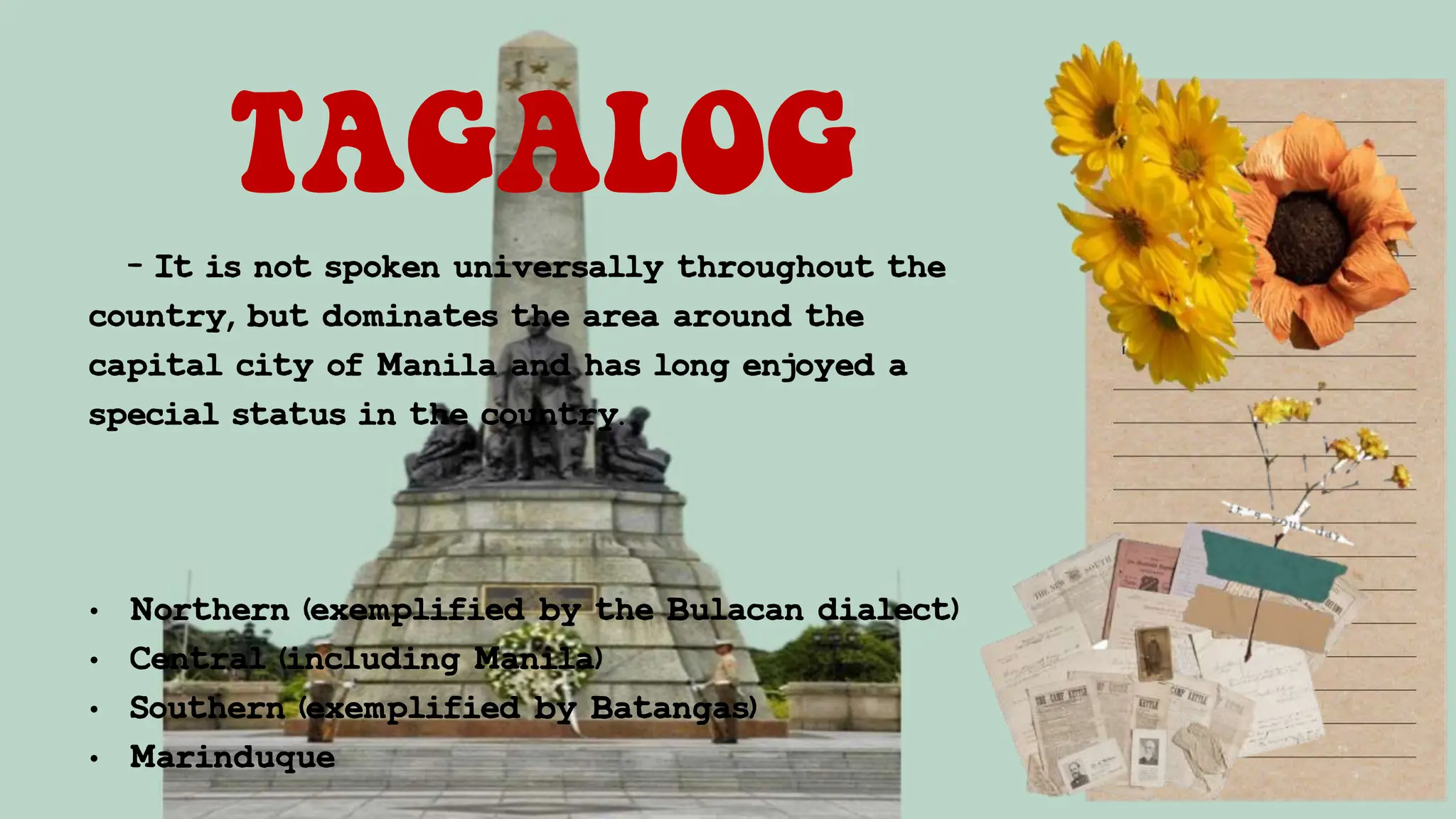
TAGALOG
Four main dialectsof Tagalog:
• Northern (exemplified by the Bulacan dialect)
• Central (including Manila)
• Southern (exemplified by Batangas)
• Marinduque
- It is not spoken universally throughout the
country, but dominates the area around the
capital city of Manila and has long enjoyed a
special status in the country.
TAGALOG
7.
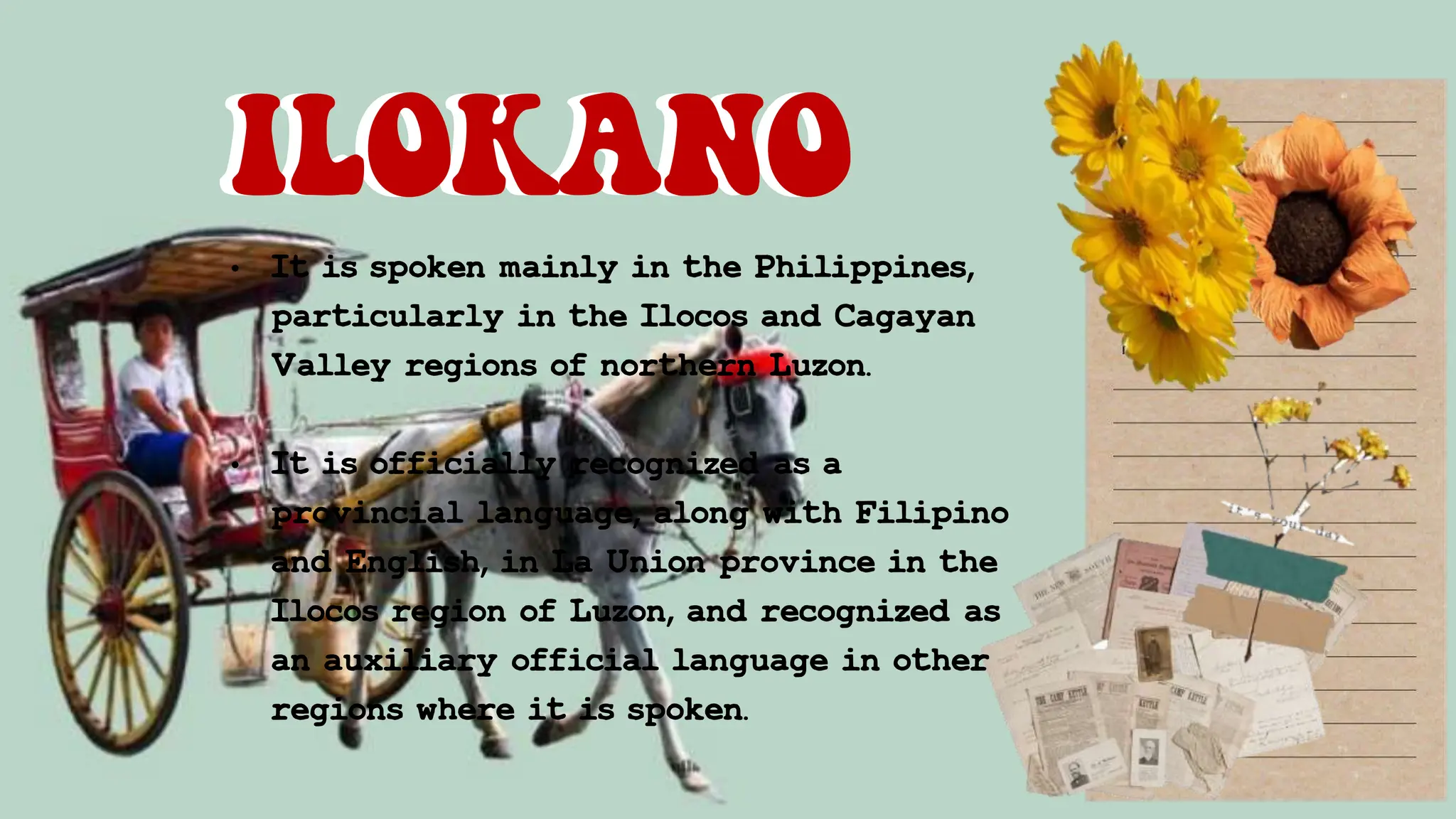
• It isspoken mainly in the Philippines,
particularly in the Ilocos and Cagayan
Valley regions of northern Luzon.
• It is officially recognized as a
provincial language, along with Filipino
and English, in La Union province in the
Ilocos region of Luzon, and recognized as
an auxiliary official language in other
regions where it is spoken.
ILOKANO
ILOKANO
8.
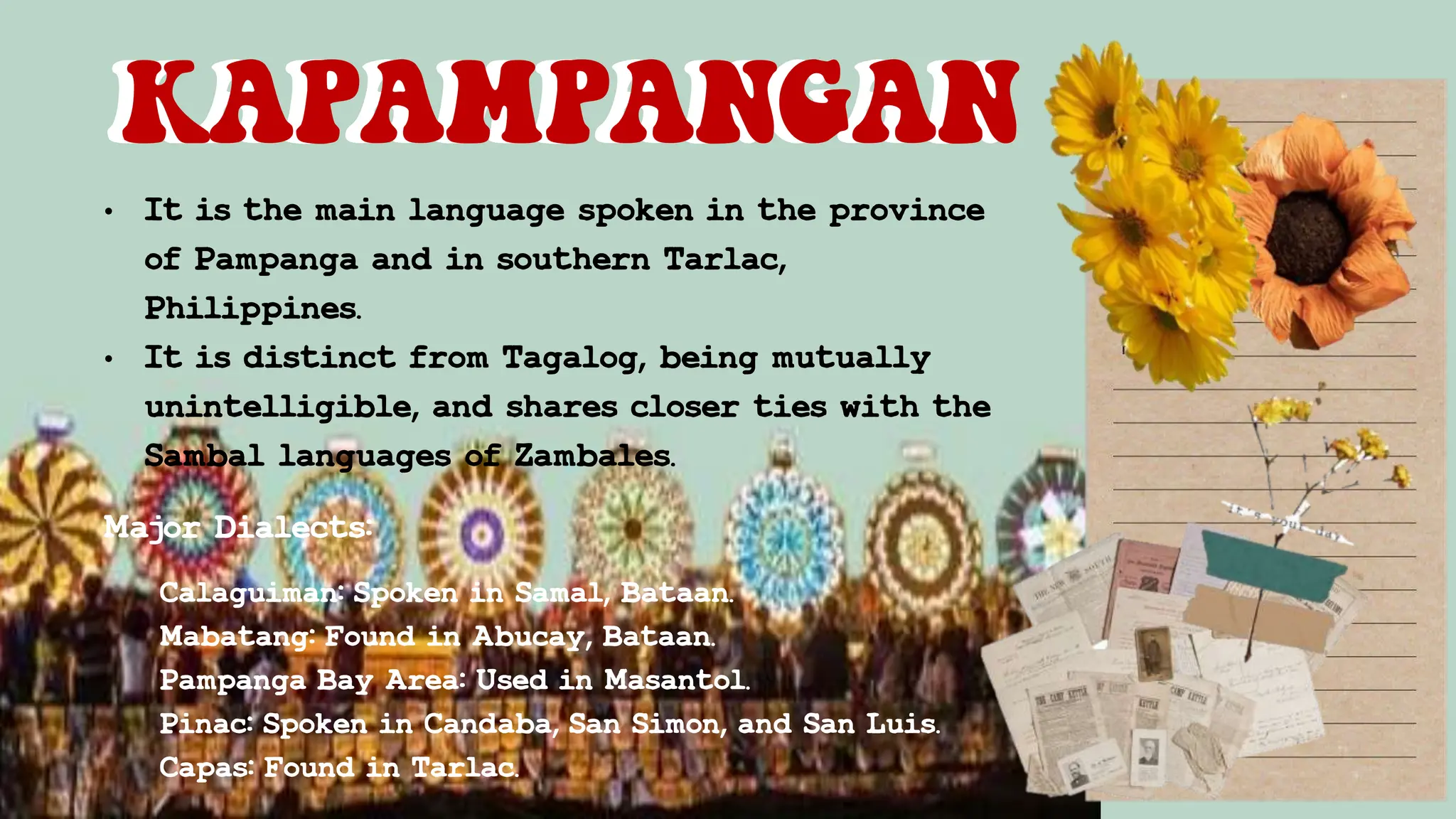
• It isthe main language spoken in the province
of Pampanga and in southern Tarlac,
Philippines.
• It is distinct from Tagalog, being mutually
unintelligible, and shares closer ties with the
Sambal languages of Zambales.
KAPAMPANGAN
KAPAMPANGAN
Major Dialects:
Calaguiman: Spoken in Samal, Bataan.
Mabatang: Found in Abucay, Bataan.
Pampanga Bay Area: Used in Masantol.
Pinac: Spoken in Candaba, San Simon, and San Luis.
Capas: Found in Tarlac.
9.
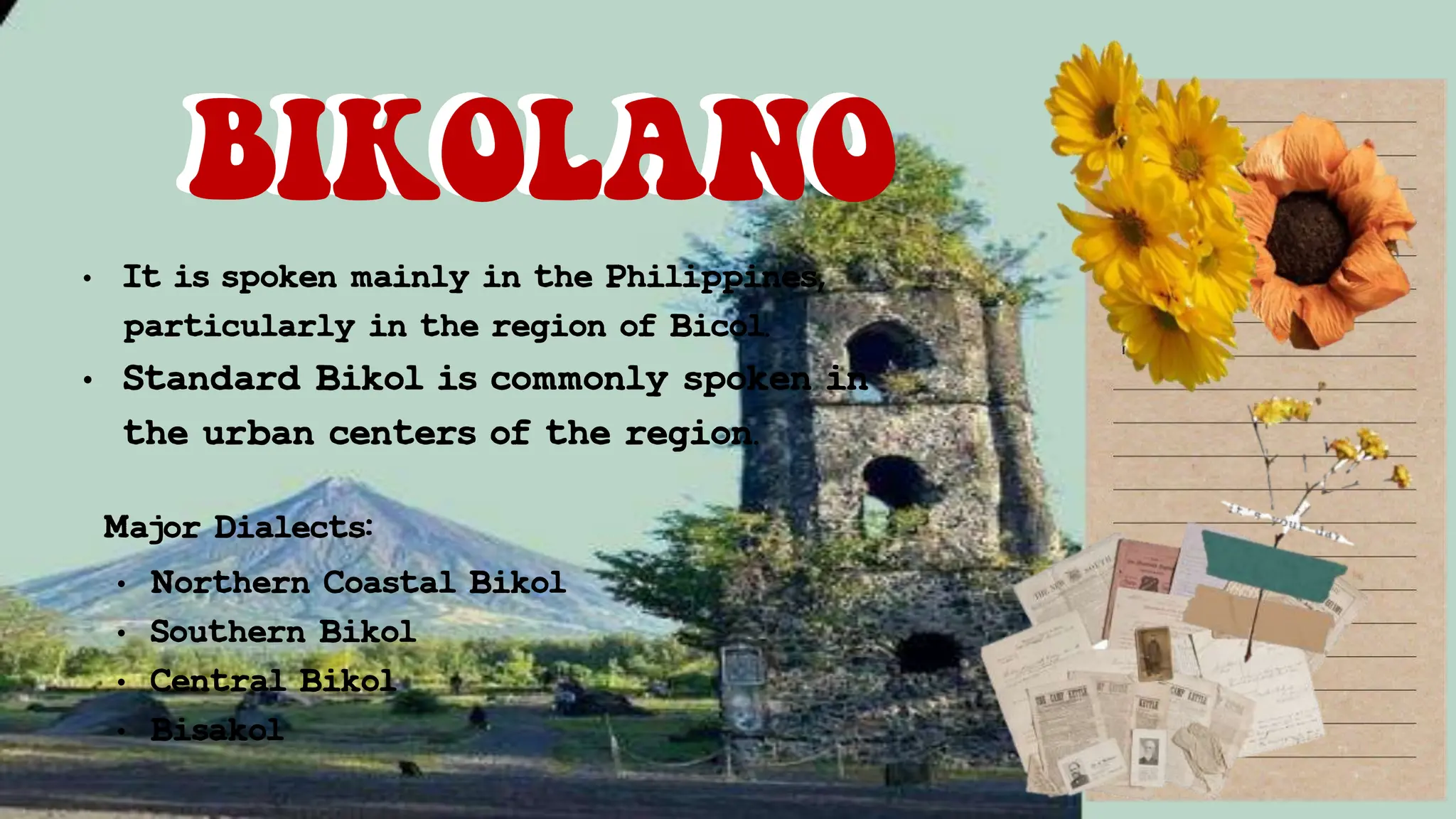
• It isspoken mainly in the Philippines,
particularly in the region of Bicol.
• Standard Bikol is commonly spoken in
the urban centers of the region.
BIKOLANO
BIKOLANO
Major Dialects:
• Northern Coastal Bikol
• Southern Bikol
• Central Bikol
• Bisakol
10.
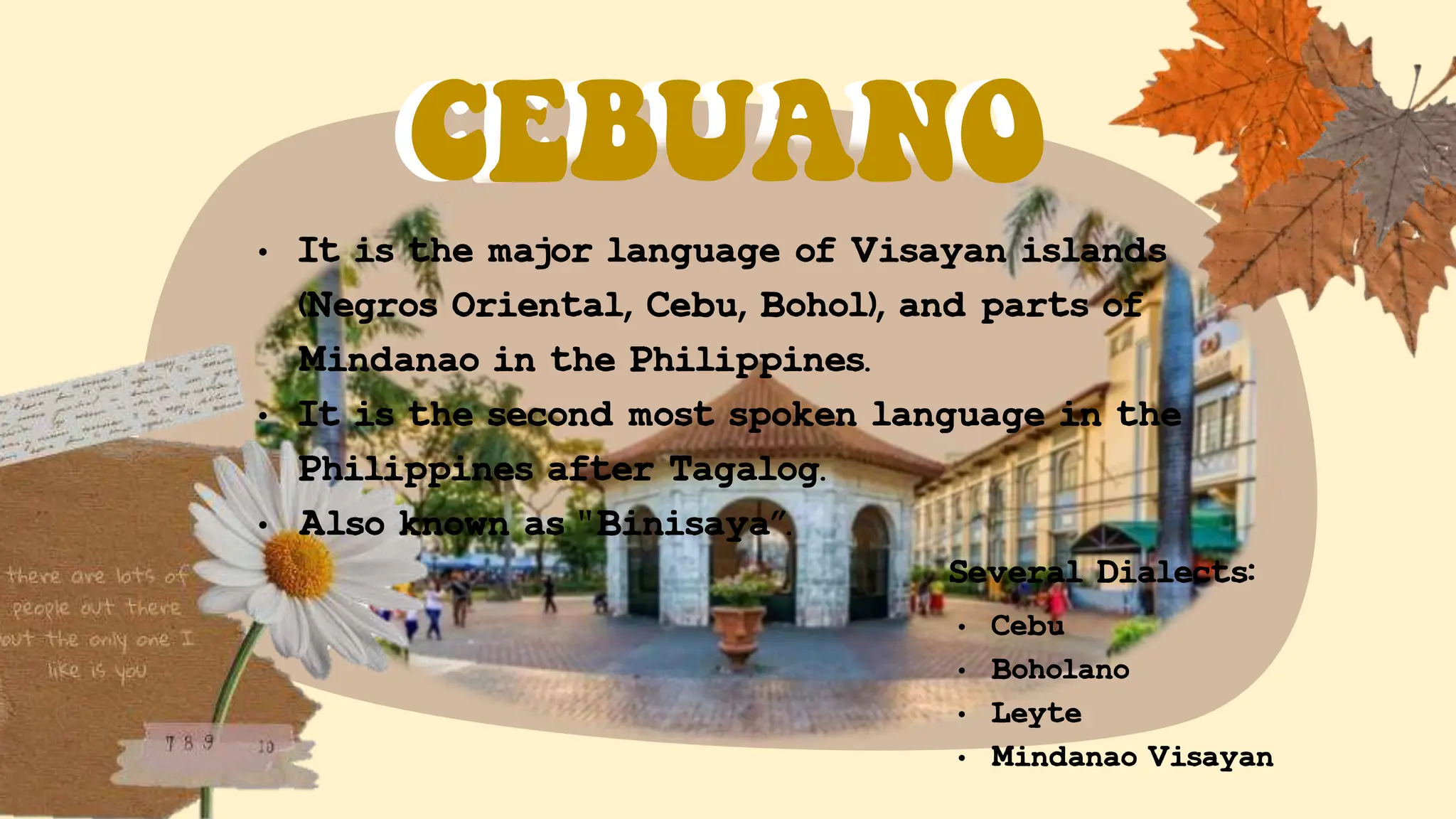
CEBUANO
• Cebu
• Boholano
•Leyte
• Mindanao Visayan
Several Dialects:
CEBUANO
• It is the major language of Visayan islands
(Negros Oriental, Cebu, Bohol), and parts of
Mindanao in the Philippines.
• It is the second most spoken language in the
Philippines after Tagalog.
• Also known as "Binisaya”.
11.
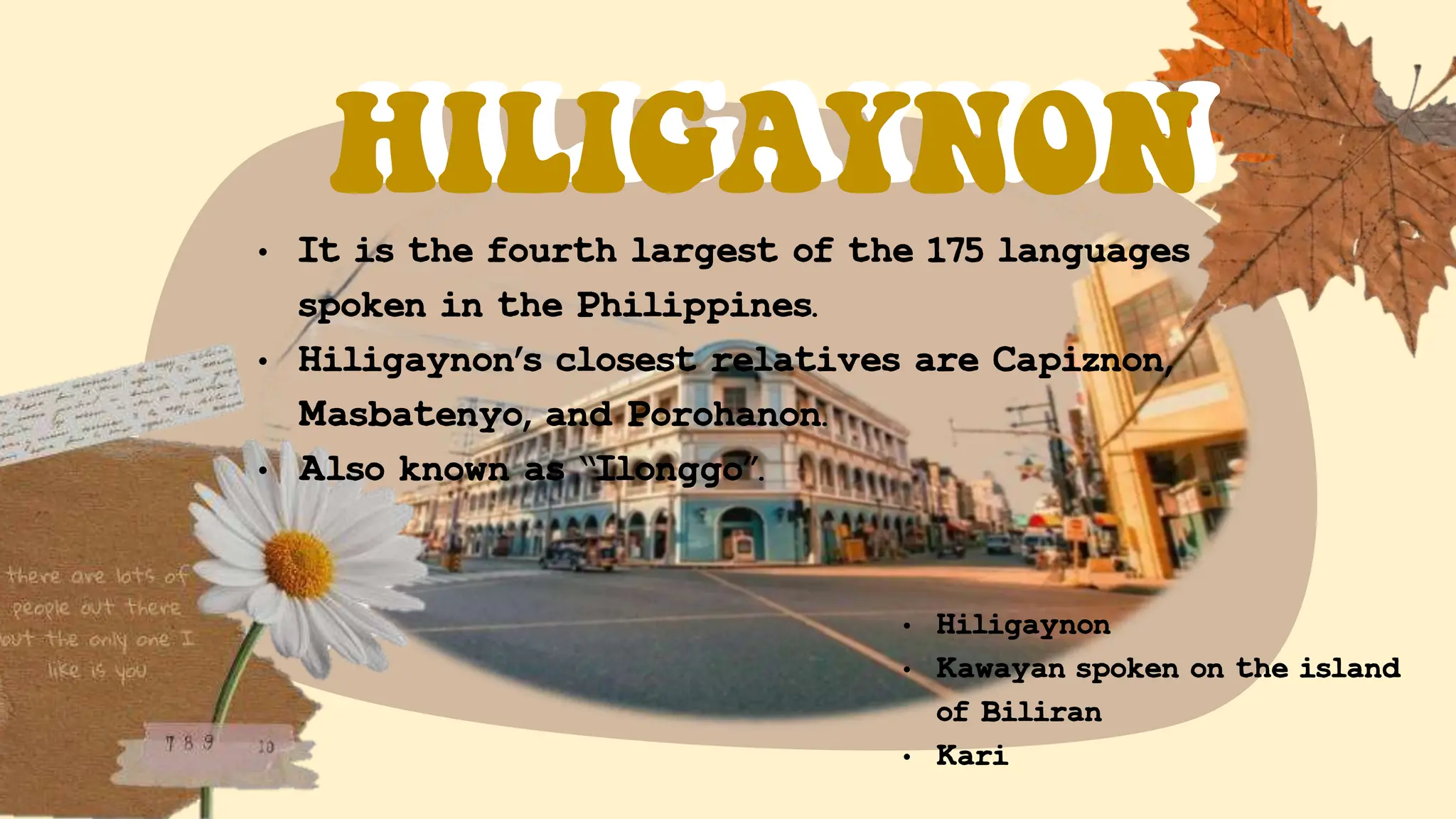
Several Dialects:
• Hiligaynon
•Kawayan spoken on the island
of Biliran
• Kari
• It is the fourth largest of the 175 languages
spoken in the Philippines.
• Hiligaynon’s closest relatives are Capiznon,
Masbatenyo, and Porohanon.
• Also known as “Ilonggo”.
HILIGAYNON
HILIGAYNON
12.
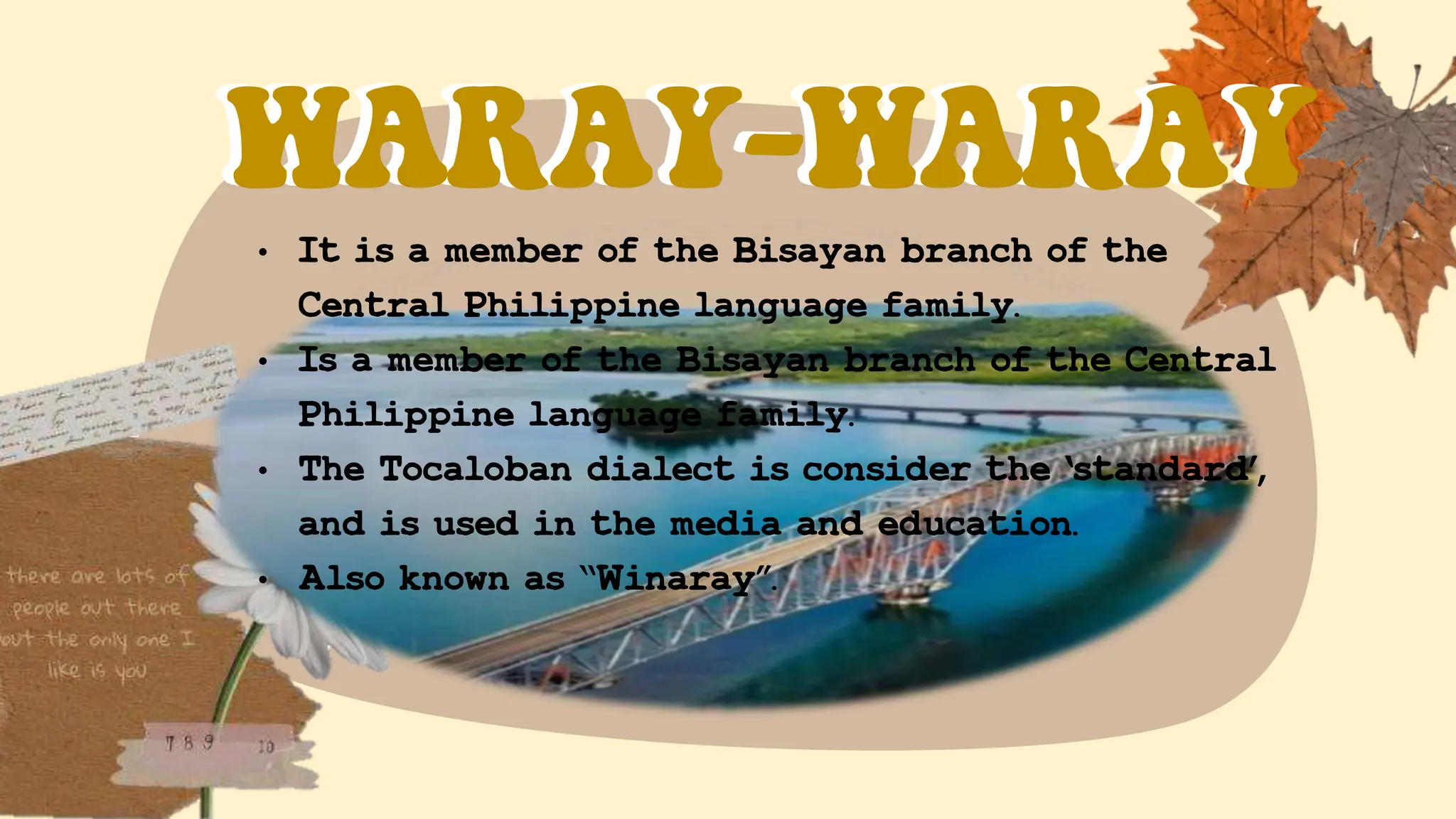
WARAY-WARAY
WARAY-WARAY
• It isa member of the Bisayan branch of the
Central Philippine language family.
• Is a member of the Bisayan branch of the Central
Philippine language family.
• The Tocaloban dialect is consider the ‘standard’,
and is used in the media and education.
• Also known as “Winaray”.
13.
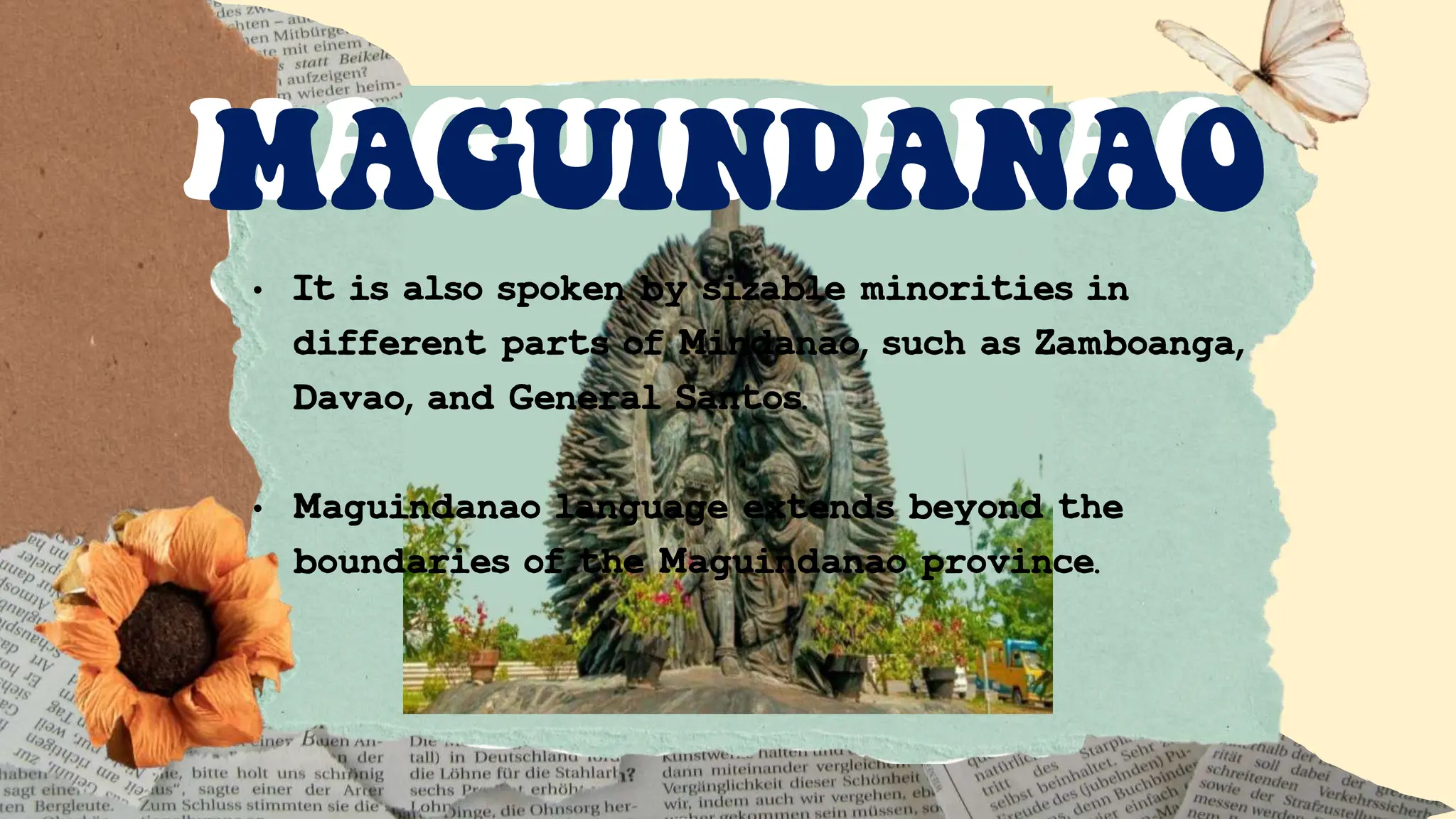
• It isalso spoken by sizable minorities in
different parts of Mindanao, such as Zamboanga,
Davao, and General Santos.
• Maguindanao language extends beyond the
boundaries of the Maguindanao province.
MAGUINDANAO
MAGUINDANAO
14.
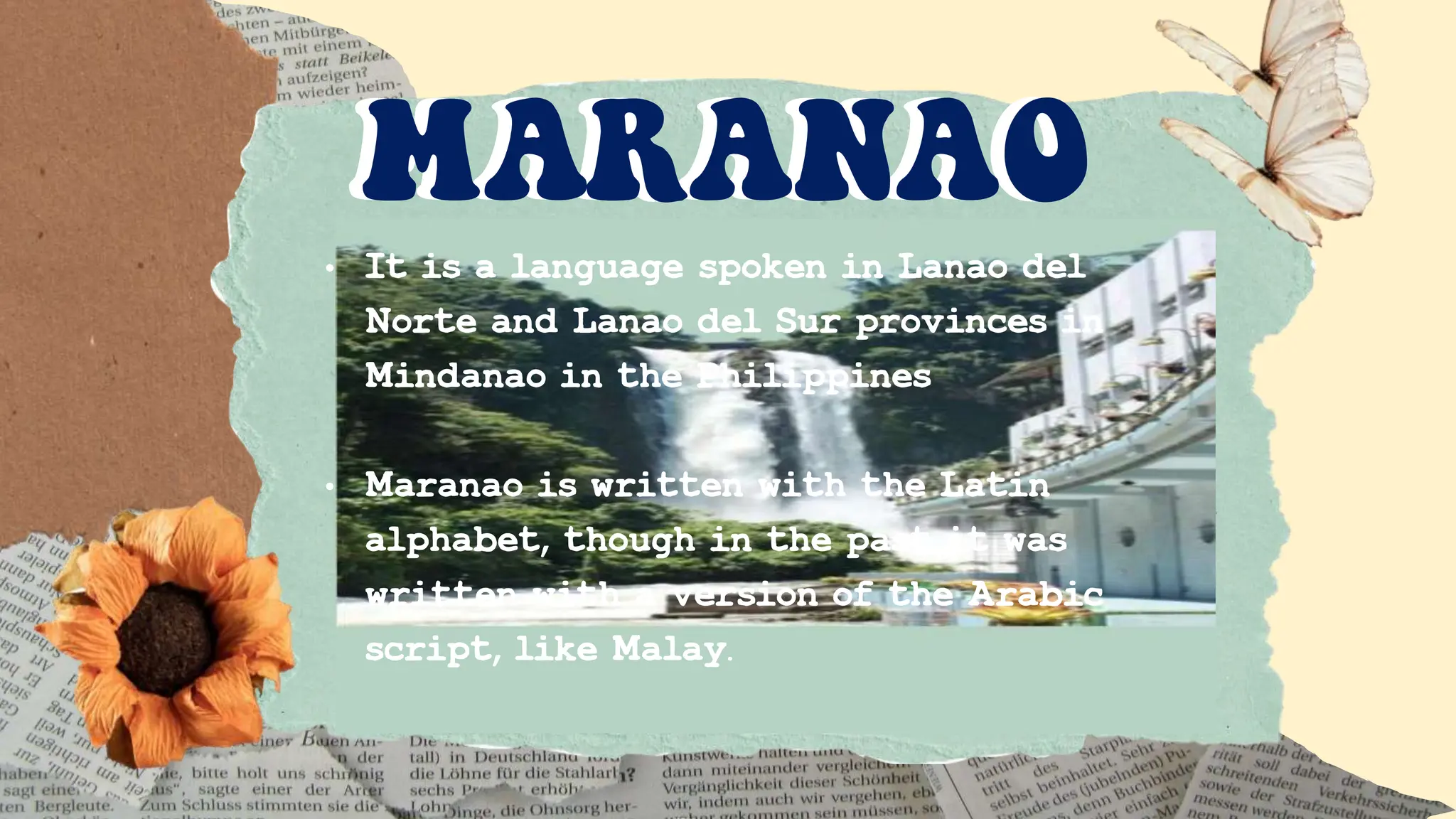
• It isa language spoken in Lanao del
Norte and Lanao del Sur provinces in
Mindanao in the Philippines
• Maranao is written with the Latin
alphabet, though in the past it was
written with a version of the Arabic
script, like Malay.
MARANAO
MARANAO
15.
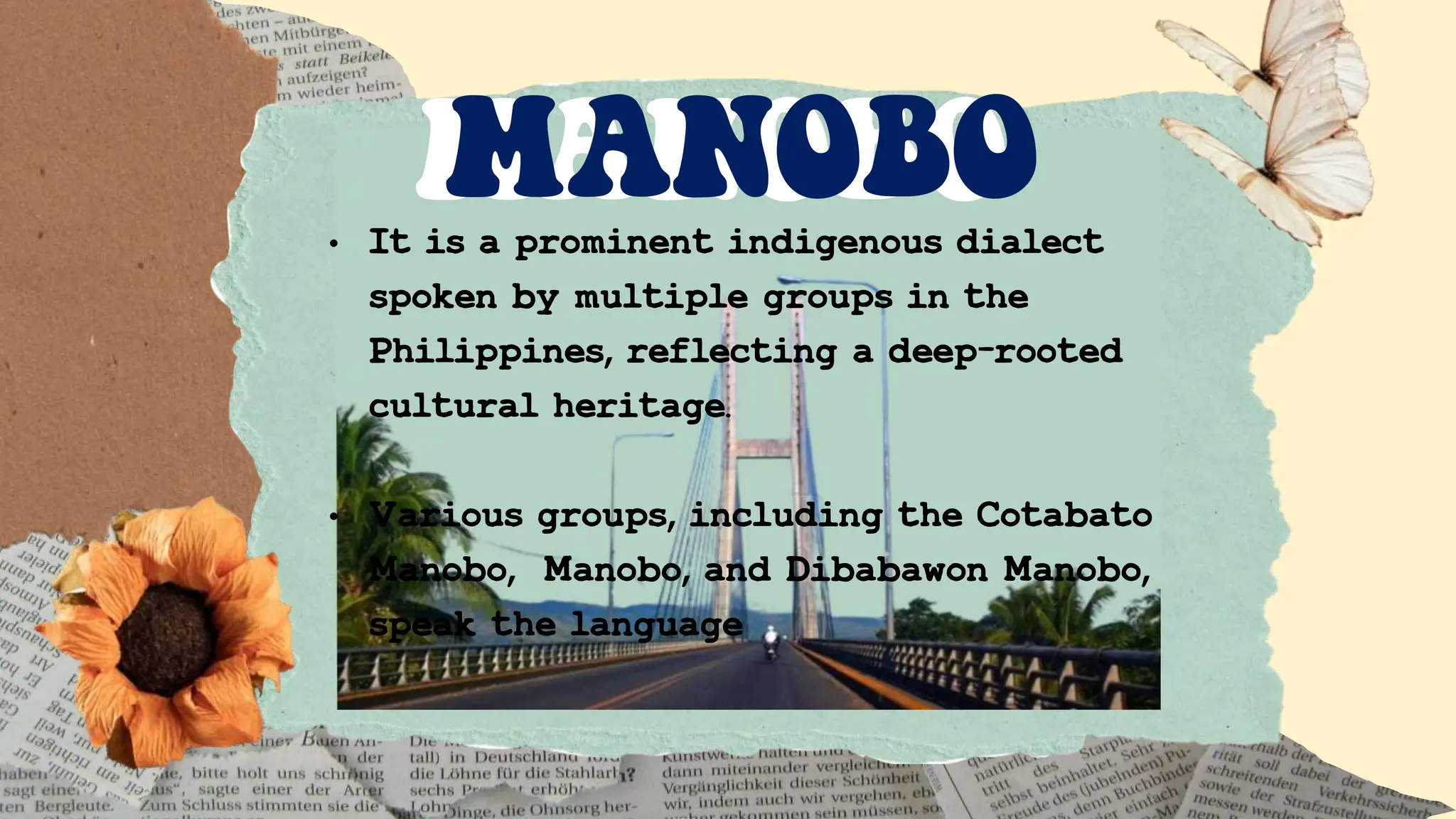
• It isa prominent indigenous dialect
spoken by multiple groups in the
Philippines, reflecting a deep-rooted
cultural heritage.
• Various groups, including the Cotabato
Manobo, Manobo, and Dibabawon Manobo,
speak the language
MANOBO
MANOBO
16.
AS A CULTURE:
•Language and culture are deeply interconnected,
with language serving as a primary means of
expressing and transmitting cultural values,
beliefs, and practices.
AS A CULTURE:
1. Cultural Identity
2. Mutual Influence
3. Transmission of Culture