Performance Management

      March 2012
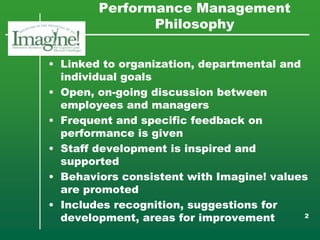
Performance Management
               Philosophy

• Linked to organization, departmental and
  individual goals
• Open, on-going discussion between
  employees and managers
• Frequent and specific feedback on
  performance is given
• Staff development is inspired and
  supported
• Behaviors consistent with Imagine! values
  are promoted
• Includes recognition, suggestions for
  development, areas for improvement       2
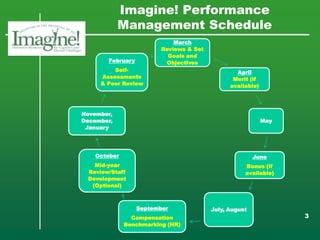
Imagine! Performance
            Management Schedule
                             March
                         Reviews & Set
                           Goals and
       February           Objectives
         Self-                                   April
     Assessments                                Merit (if
     & Peer Review                             available)


November,
December,                                                   May
 January


    October                                             June
   Mid-year                                         Bonus (if
 Review/Staff                                       available)
 Development
  (Optional)


                  September              July, August
                Compensation                                      3
              Benchmarking (HR)
Performance Management
                  Process


• Setting Objectives
   – Employee or manager can input
     objectives
   – Manager reviews
   – Objectives can be updated throughout
     cycle

• Mid-Year/Interim Review are optional


                                            4
Performance Management
                  Process


• Employee Self-Assessment – optional and
  not weighted
   – Document performance against
     objectives

• Peer Review– optional and not weighted
   – Employee identifies 3-4 raters
   – Managers approve the raters
   – Feedback is integrated into employee’s
     review but is not weighted
   – Non-Imagine! (external) input from
     peers is also collected                5
2012 Schedule


•   Supervisors complete evaluations –
    03/21/12 – 04/06/12

•   Executive review of evaluations – 04/09/12
    – 04/13/12

•   Supervisors hold performance discussion with
    employees – 04/16/12 – 05/04/12

•   Merit increase planning begins using
    evaluation ratings – 05/07/12


                                                   6
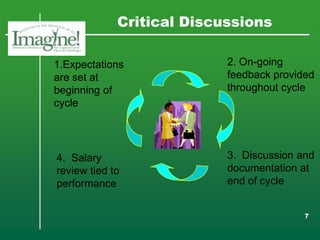
Critical Discussions

1.Expectations             2. On-going
are set at                 feedback provided
beginning of               throughout cycle
cycle


4. Salary                  3. Discussion and
review tied to             documentation at
performance                end of cycle


                                          7
Employees Included in
            Evaluation Process


–   Full-time, Part-time, or Casual
    employees who have been employed
    for at least 3 months
–   Active employees and employees on a
    leave status


Interns, Temporary, or Substitute may be
     evaluated, but it is not required

                                           8
Performance Evaluation Form


• Components and Weightings for 2012:
   – Imagine Career Competencies – 25% weighted
     value
      • Consistent Across Imagine!
         – Integrity
         – Creativity
         – Teambuilding
         – Communication
   – Essential Job Functions – 75% weighted value
      • Come directly from employee’s job
        description
   – Optional Components – not weighted:
      • Self Evaluation
      • Peer Review                                 9
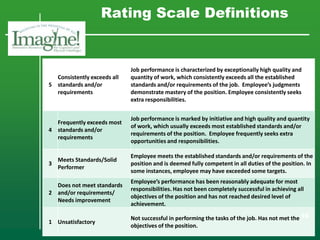
Rating Scale Definitions


                             Job performance is characterized by exceptionally high quality and
  Consistently exceeds all   quantity of work, which consistently exceeds all the established
5 standards and/or           standards and/or requirements of the job. Employee’s judgments
  requirements               demonstrate mastery of the position. Employee consistently seeks
                             extra responsibilities.


                             Job performance is marked by initiative and high quality and quantity
  Frequently exceeds most
                             of work, which usually exceeds most established standards and/or
4 standards and/or
                             requirements of the position. Employee frequently seeks extra
  requirements
                             opportunities and responsibilities.

                             Employee meets the established standards and/or requirements of the
  Meets Standards/Solid
3                            position and is deemed fully competent in all duties of the position. In
  Performer
                             some instances, employee may have exceeded some targets.
                             Employee’s performance has been reasonably adequate for most
  Does not meet standards
                             responsibilities. Has not been completely successful in achieving all
2 and/or requirements/
                             objectives of the position and has not reached desired level of
  Needs improvement
                             achievement.

                             Not successful in performing the tasks of the job. Has not met the 10
1 Unsatisfactory
                             objectives of the position.
Rating Scale Definitions


   Meets Standards/Solid Performer

• Employee meets the established
 standards and/or requirements of the
 position and is deemed fully competent in
 all duties of the position. In some
 instances, employee may have exceeded
 some targets.


                                         11
Performance Management
              Outcomes


– Accelerate Salary Growth of Higher
  Performers

– Employees receive useful feedback,
  goals, and support throughout cycle

– Employees who are not meeting
  expectations may be placed on
  Performance Improvement Plan

                                        12
Roles & Responsibilities


Supervisors                           Employees
•   Create an environment that        •   Establish job-related
    encourages two-way                    objectives with your
    communication with                    manager
    employees                         •   Complete a candid self-
•   Establish realistic job-related       assessment
    objectives                        •   Be responsive to
•   Provide meaningful feedback,          performance feedback
    coaching, and counseling to
    employees
                                      Human Resources
•   Assess and differentiate
                                      •   Oversees implementation
    performance within peer
    groups                            •   Provide access to training
•   A rating of unsatisfactory        •   Review performance
    also requires a Performance           ratings to ensure
    Improvement Plan                      compliance
•   Consider final performance
                                                                    13
    assessment during the annual
    merit review process
Questions?

Performance mgmt 04.04.12

  • 1.
  • 2.
    Performance Management Philosophy • Linked to organization, departmental and individual goals • Open, on-going discussion between employees and managers • Frequent and specific feedback on performance is given • Staff development is inspired and supported • Behaviors consistent with Imagine! values are promoted • Includes recognition, suggestions for development, areas for improvement 2
  • 3.
    Imagine! Performance Management Schedule March Reviews & Set Goals and February Objectives Self- April Assessments Merit (if & Peer Review available) November, December, May January October June Mid-year Bonus (if Review/Staff available) Development (Optional) September July, August Compensation 3 Benchmarking (HR)
  • 4.
    Performance Management Process • Setting Objectives – Employee or manager can input objectives – Manager reviews – Objectives can be updated throughout cycle • Mid-Year/Interim Review are optional 4
  • 5.
    Performance Management Process • Employee Self-Assessment – optional and not weighted – Document performance against objectives • Peer Review– optional and not weighted – Employee identifies 3-4 raters – Managers approve the raters – Feedback is integrated into employee’s review but is not weighted – Non-Imagine! (external) input from peers is also collected 5
  • 6.
    2012 Schedule • Supervisors complete evaluations – 03/21/12 – 04/06/12 • Executive review of evaluations – 04/09/12 – 04/13/12 • Supervisors hold performance discussion with employees – 04/16/12 – 05/04/12 • Merit increase planning begins using evaluation ratings – 05/07/12 6
  • 7.
    Critical Discussions 1.Expectations 2. On-going are set at feedback provided beginning of throughout cycle cycle 4. Salary 3. Discussion and review tied to documentation at performance end of cycle 7
  • 8.
    Employees Included in Evaluation Process – Full-time, Part-time, or Casual employees who have been employed for at least 3 months – Active employees and employees on a leave status Interns, Temporary, or Substitute may be evaluated, but it is not required 8
  • 9.
    Performance Evaluation Form •Components and Weightings for 2012: – Imagine Career Competencies – 25% weighted value • Consistent Across Imagine! – Integrity – Creativity – Teambuilding – Communication – Essential Job Functions – 75% weighted value • Come directly from employee’s job description – Optional Components – not weighted: • Self Evaluation • Peer Review 9
  • 10.
    Rating Scale Definitions Job performance is characterized by exceptionally high quality and Consistently exceeds all quantity of work, which consistently exceeds all the established 5 standards and/or standards and/or requirements of the job. Employee’s judgments requirements demonstrate mastery of the position. Employee consistently seeks extra responsibilities. Job performance is marked by initiative and high quality and quantity Frequently exceeds most of work, which usually exceeds most established standards and/or 4 standards and/or requirements of the position. Employee frequently seeks extra requirements opportunities and responsibilities. Employee meets the established standards and/or requirements of the Meets Standards/Solid 3 position and is deemed fully competent in all duties of the position. In Performer some instances, employee may have exceeded some targets. Employee’s performance has been reasonably adequate for most Does not meet standards responsibilities. Has not been completely successful in achieving all 2 and/or requirements/ objectives of the position and has not reached desired level of Needs improvement achievement. Not successful in performing the tasks of the job. Has not met the 10 1 Unsatisfactory objectives of the position.
  • 11.
    Rating Scale Definitions Meets Standards/Solid Performer • Employee meets the established standards and/or requirements of the position and is deemed fully competent in all duties of the position. In some instances, employee may have exceeded some targets. 11
  • 12.
    Performance Management Outcomes – Accelerate Salary Growth of Higher Performers – Employees receive useful feedback, goals, and support throughout cycle – Employees who are not meeting expectations may be placed on Performance Improvement Plan 12
  • 13.
    Roles & Responsibilities Supervisors Employees • Create an environment that • Establish job-related encourages two-way objectives with your communication with manager employees • Complete a candid self- • Establish realistic job-related assessment objectives • Be responsive to • Provide meaningful feedback, performance feedback coaching, and counseling to employees Human Resources • Assess and differentiate • Oversees implementation performance within peer groups • Provide access to training • A rating of unsatisfactory • Review performance also requires a Performance ratings to ensure Improvement Plan compliance • Consider final performance 13 assessment during the annual merit review process
  • 14.