P.D.C.A.
 a cycle to better
Created by Tom Curtis 2011
Blog: www.onimproving.blogspot.com
Presentations: www.slideshare.net/onimproving 
Email: ideamerchants@gmail.com
Twitter: @onimproving
Use PDCA in your work and play,
 and you will craft a better way.
Introduction
 PDCA stands for Plan Do Check Act. It is an
  improvement cycle that was first taught by
 William Shewhart and Edward Deming over
50 years ago. There is nothing tricky about it,
one sets a plan, tests it, reviews it, and adjusts
it. What follows is a discussion of each of the
   phases in the cycle. Give them a read and
 then try it yourself. It works and yields real
  results with consistent use. Let’s get using.
               --Tom Curtis 2011
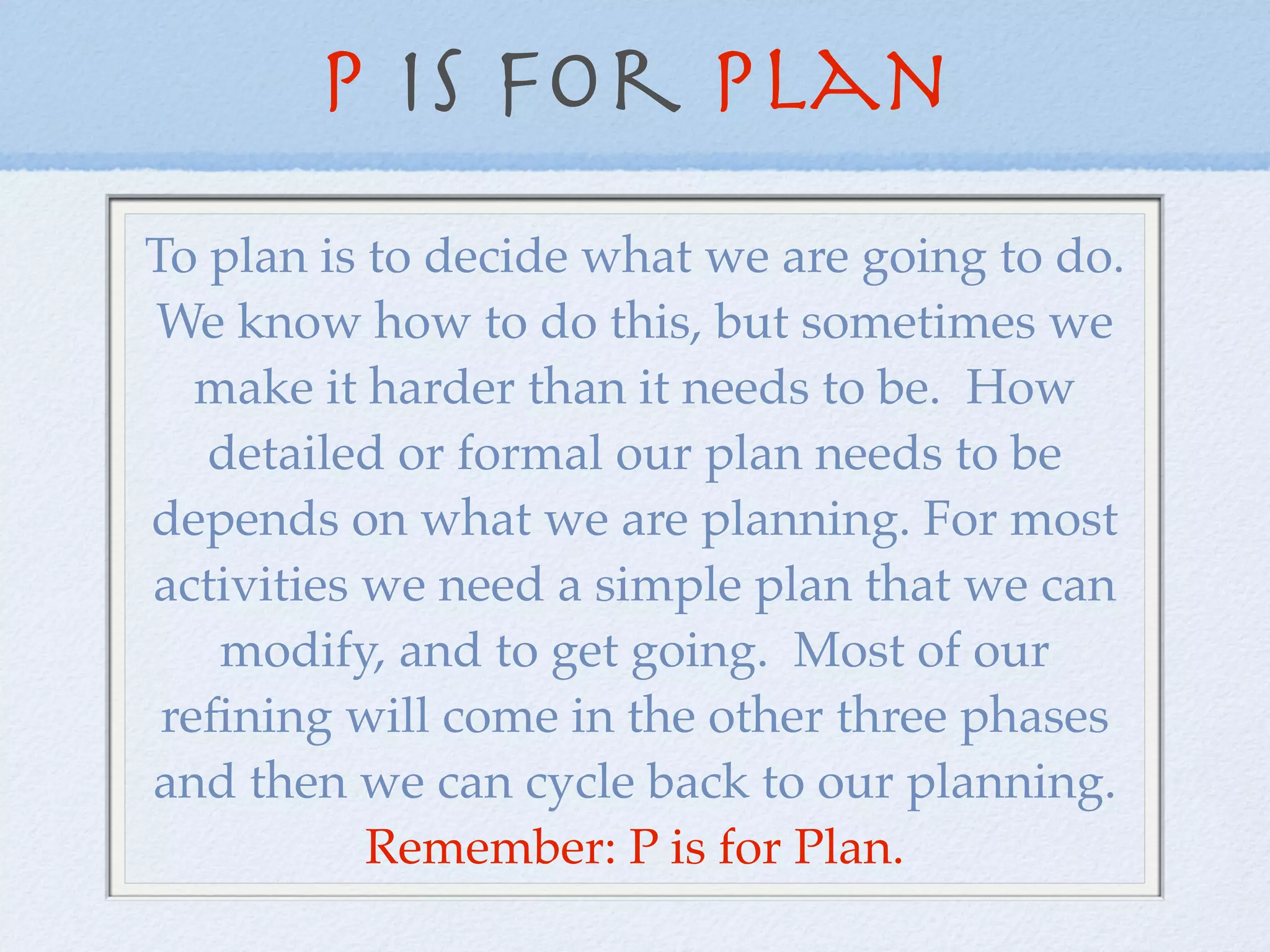
P is for Plan
To plan is to decide what we are going to do.
We know how to do this, but sometimes we
   make it harder than it needs to be. How
   detailed or formal our plan needs to be
depends on what we are planning. For most
activities we need a simple plan that we can
    modify, and to get going. Most of our
 refining will come in the other three phases
and then we can cycle back to our planning.
           Remember: P is for Plan.
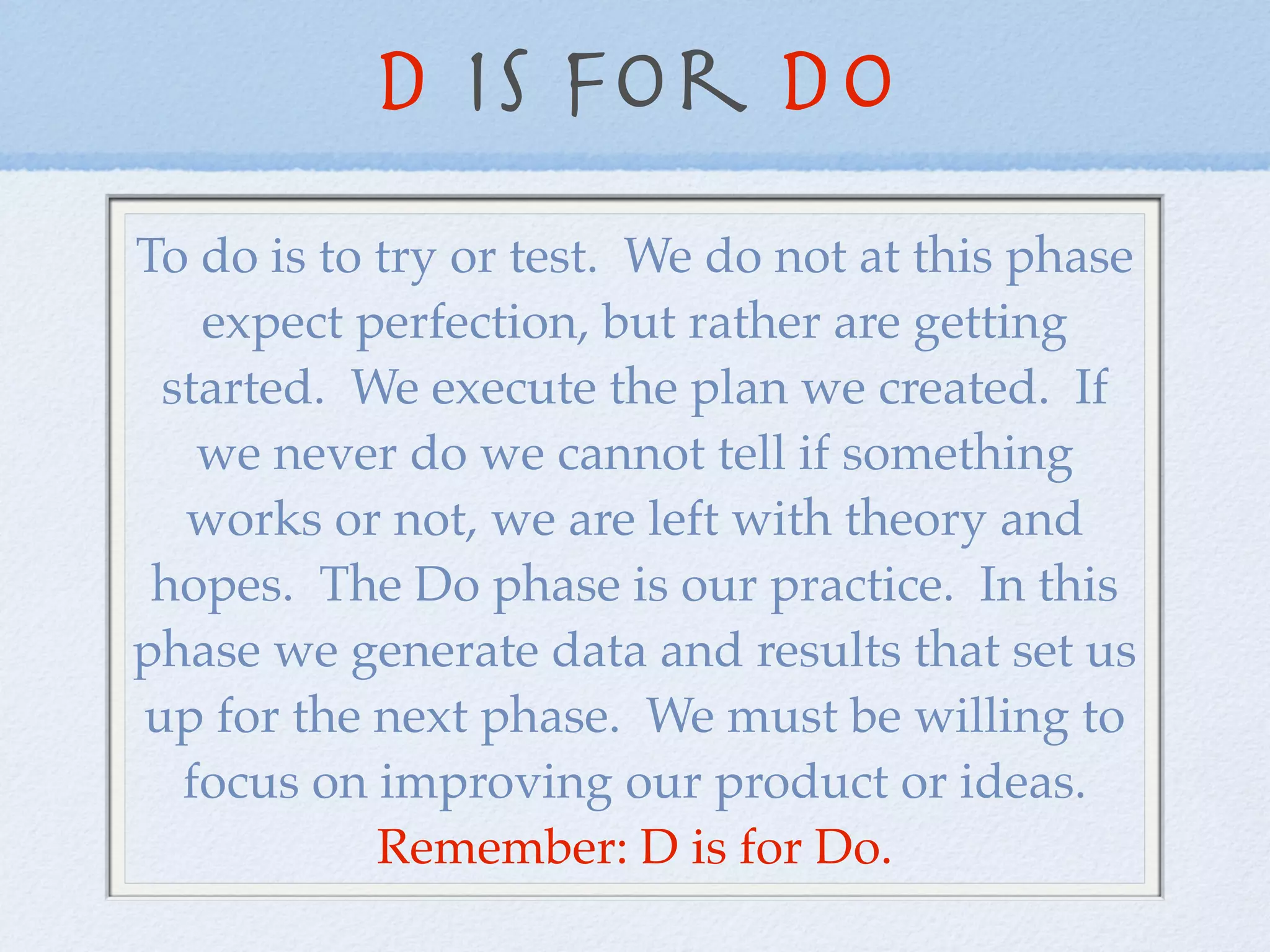
D is for DO
To do is to try or test. We do not at this phase
   expect perfection, but rather are getting
 started. We execute the plan we created. If
   we never do we cannot tell if something
  works or not, we are left with theory and
 hopes. The Do phase is our practice. In this
phase we generate data and results that set us
up for the next phase. We must be willing to
  focus on improving our product or ideas.
            Remember: D is for Do.
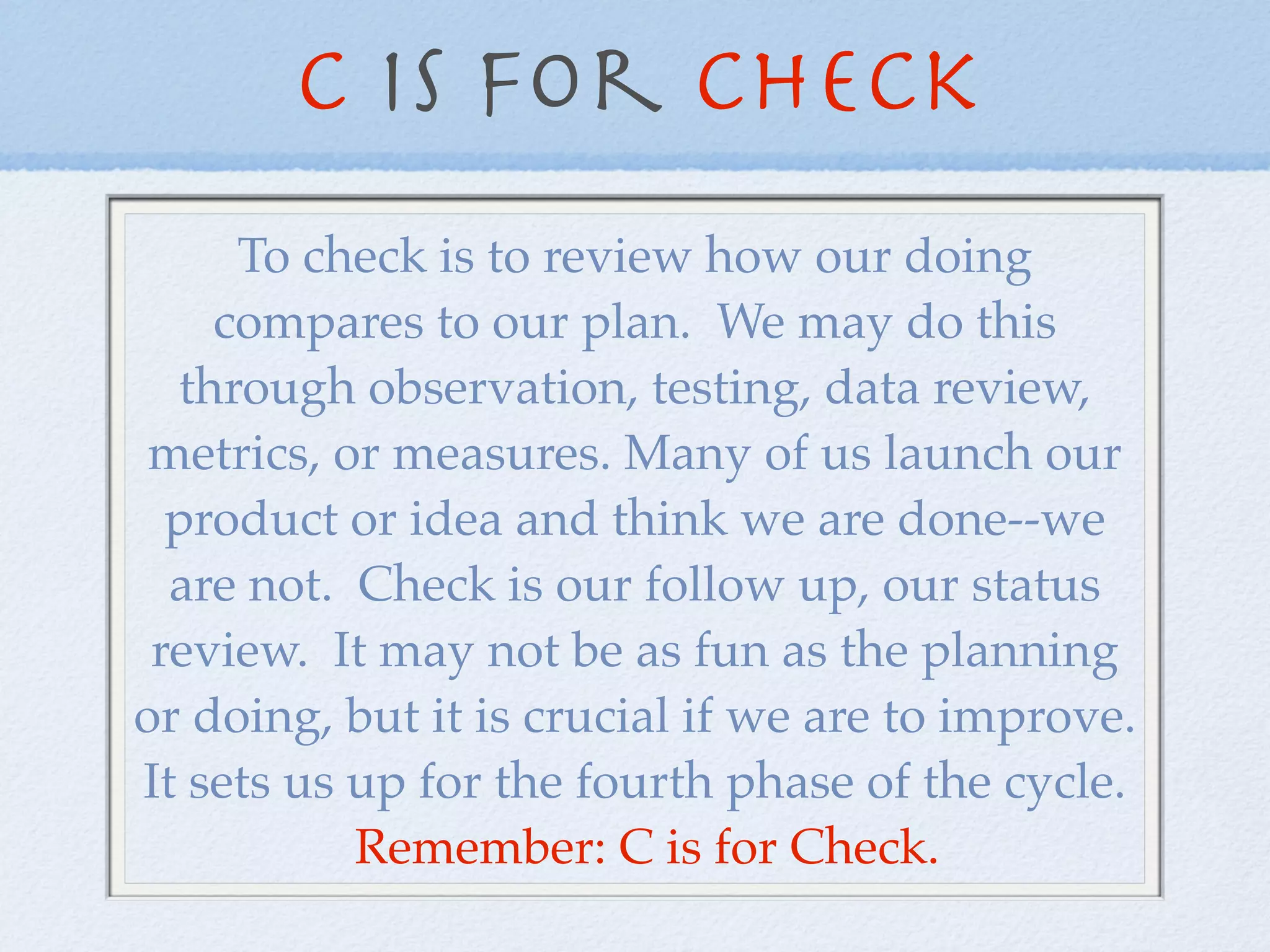
C is for Check
     To check is to review how our doing
    compares to our plan. We may do this
  through observation, testing, data review,
 metrics, or measures. Many of us launch our
  product or idea and think we are done--we
  are not. Check is our follow up, our status
 review. It may not be as fun as the planning
or doing, but it is crucial if we are to improve.
It sets us up for the fourth phase of the cycle.
           Remember: C is for Check.
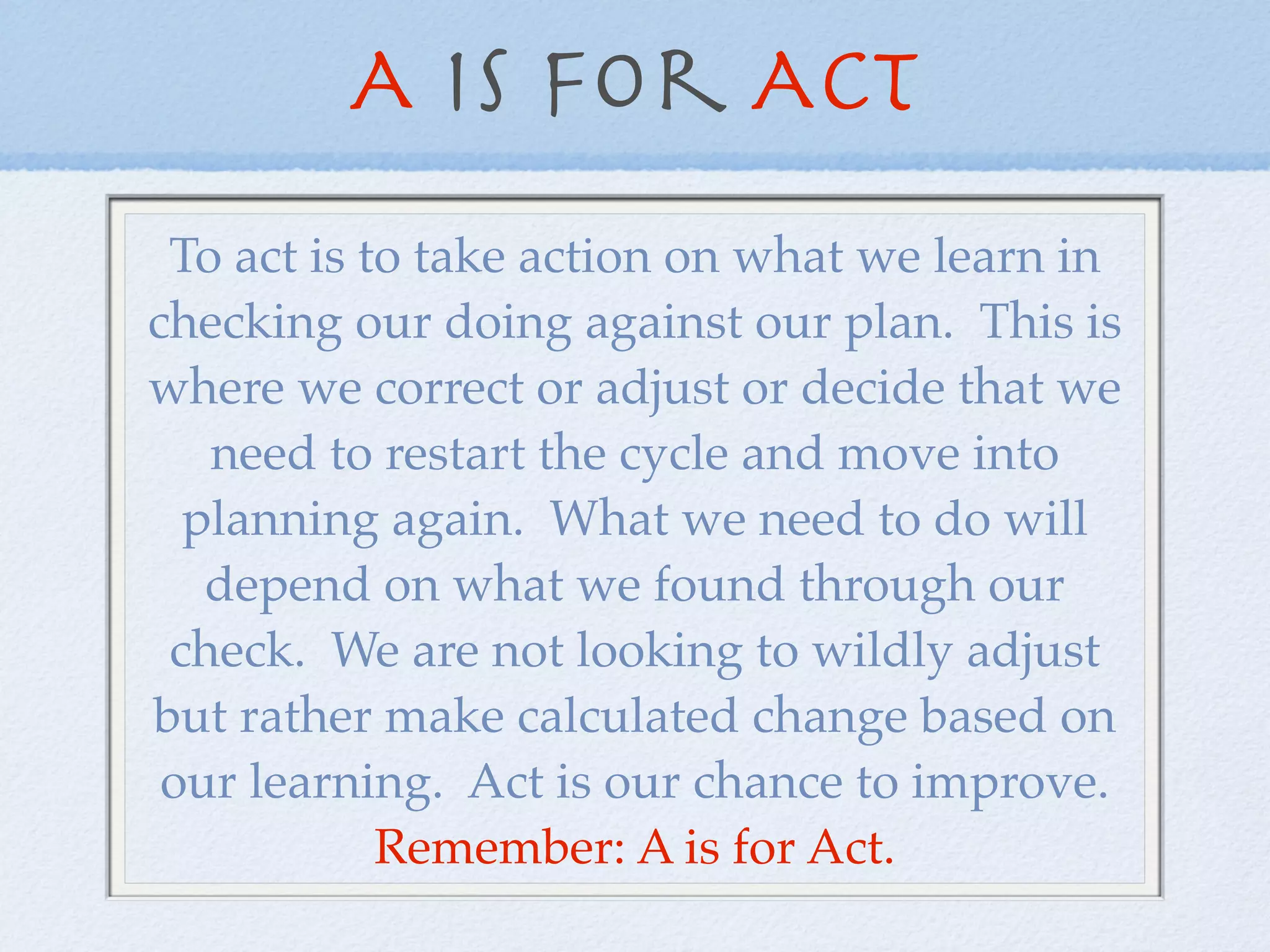
A is for Act
 To act is to take action on what we learn in
checking our doing against our plan. This is
where we correct or adjust or decide that we
   need to restart the cycle and move into
  planning again. What we need to do will
   depend on what we found through our
 check. We are not looking to wildly adjust
but rather make calculated change based on
 our learning. Act is our chance to improve.
            Remember: A is for Act.
PDCA is For Getting Better
   Many of the projects and tasks that we take
   one will require more than one PDCA cycle.
    This is perfectly normal. We need to keep
     cycling until we reach our goal. PDCA is
    about getting better each cycle by learning
   what works and what does not and making
  the improvement. PDCA is work. PDCA will
      help us move forward if we will use it.
               Use PDCA every day.
      Remember: PDCA is for Getting Better.

PDCA A Cycle to Better

  • 1.
  • 2.
    Created by TomCurtis 2011 Blog: www.onimproving.blogspot.com Presentations: www.slideshare.net/onimproving  Email: ideamerchants@gmail.com Twitter: @onimproving
  • 3.
    Use PDCA inyour work and play, and you will craft a better way.
  • 4.
    Introduction PDCA standsfor Plan Do Check Act. It is an improvement cycle that was first taught by William Shewhart and Edward Deming over 50 years ago. There is nothing tricky about it, one sets a plan, tests it, reviews it, and adjusts it. What follows is a discussion of each of the phases in the cycle. Give them a read and then try it yourself. It works and yields real results with consistent use. Let’s get using. --Tom Curtis 2011
  • 5.
    P is forPlan To plan is to decide what we are going to do. We know how to do this, but sometimes we make it harder than it needs to be. How detailed or formal our plan needs to be depends on what we are planning. For most activities we need a simple plan that we can modify, and to get going. Most of our refining will come in the other three phases and then we can cycle back to our planning. Remember: P is for Plan.
  • 6.
    D is forDO To do is to try or test. We do not at this phase expect perfection, but rather are getting started. We execute the plan we created. If we never do we cannot tell if something works or not, we are left with theory and hopes. The Do phase is our practice. In this phase we generate data and results that set us up for the next phase. We must be willing to focus on improving our product or ideas. Remember: D is for Do.
  • 7.
    C is forCheck To check is to review how our doing compares to our plan. We may do this through observation, testing, data review, metrics, or measures. Many of us launch our product or idea and think we are done--we are not. Check is our follow up, our status review. It may not be as fun as the planning or doing, but it is crucial if we are to improve. It sets us up for the fourth phase of the cycle. Remember: C is for Check.
  • 8.
    A is forAct To act is to take action on what we learn in checking our doing against our plan. This is where we correct or adjust or decide that we need to restart the cycle and move into planning again. What we need to do will depend on what we found through our check. We are not looking to wildly adjust but rather make calculated change based on our learning. Act is our chance to improve. Remember: A is for Act.
  • 9.
    PDCA is ForGetting Better Many of the projects and tasks that we take one will require more than one PDCA cycle. This is perfectly normal. We need to keep cycling until we reach our goal. PDCA is about getting better each cycle by learning what works and what does not and making the improvement. PDCA is work. PDCA will help us move forward if we will use it. Use PDCA every day. Remember: PDCA is for Getting Better.