Antibodies often termed immunoglobulin. They
are glycoprotein that bind antigens with high
specificity and affinity
They are molecules originally identified in
serum
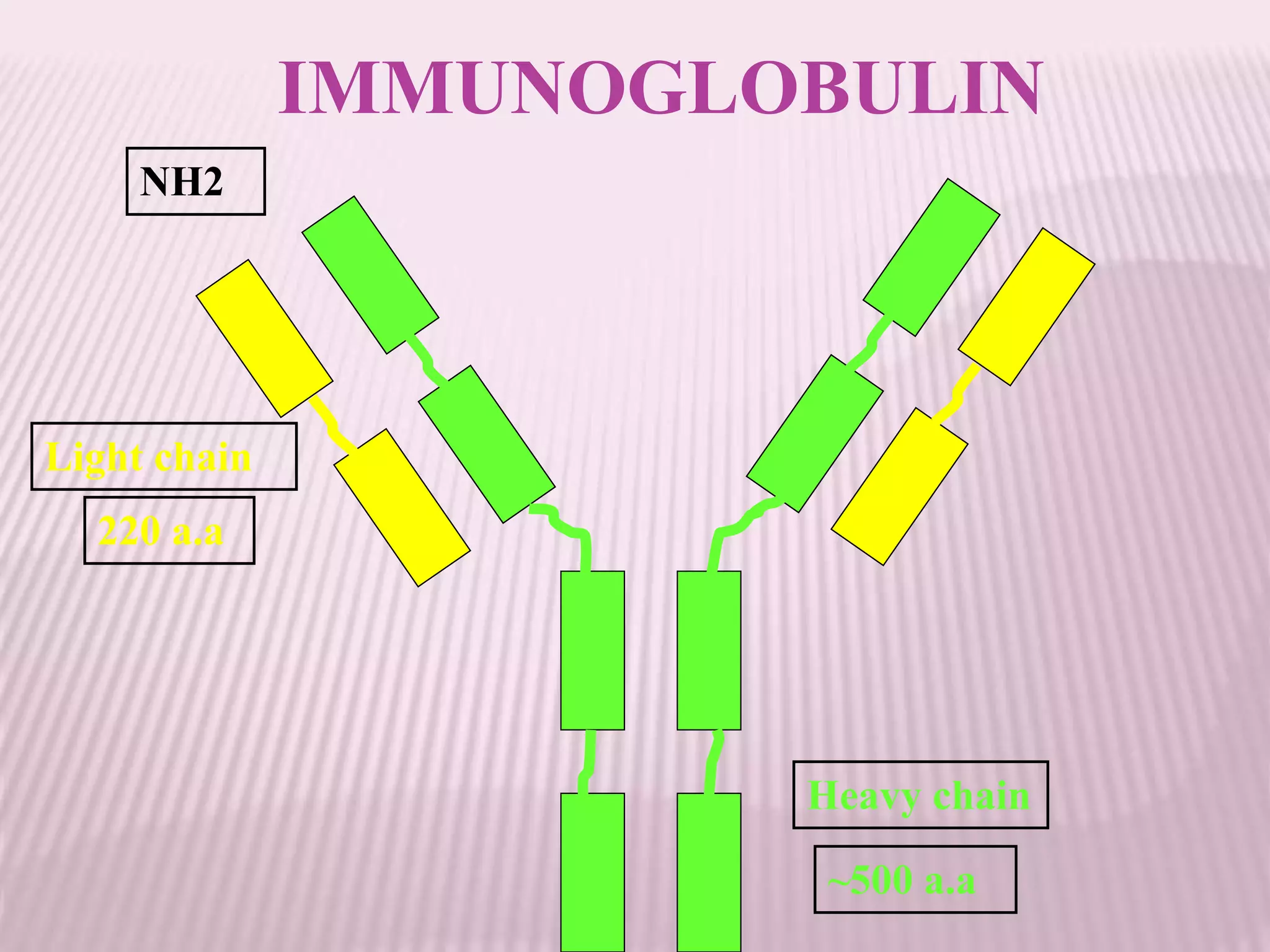
Heavy chain
Light chain
220 a.a
~500 a.a
NH2
IMMUNOGLOBULIN
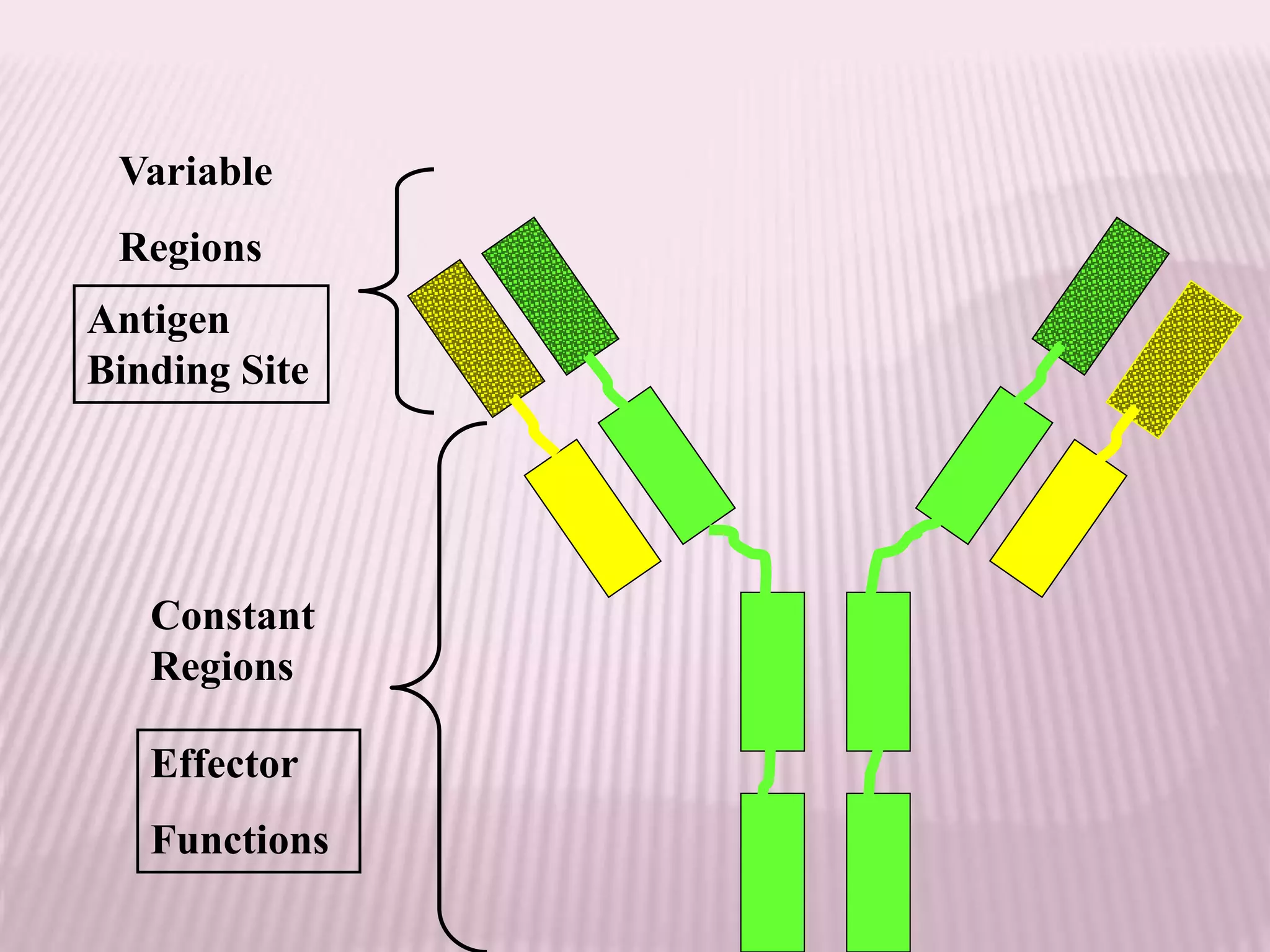
Antigen
Binding Site
Variable
Regions
Constant
Regions
Effector
Functions
Antibodyengineeringservices, involvesmost formsof recombinant antibodygene
manipulation. These include v-region discovery and sequencing,isotype switching, discovery
of enhancedbindingvariantsthroughin vitroaffinitymaturation
Fullyintegrated workpackages involving
Humanization
Productionof cell line development
Productionof the purified antibody
Antibodyengineeringhas been an extremelyintensive research
areafor manyyears
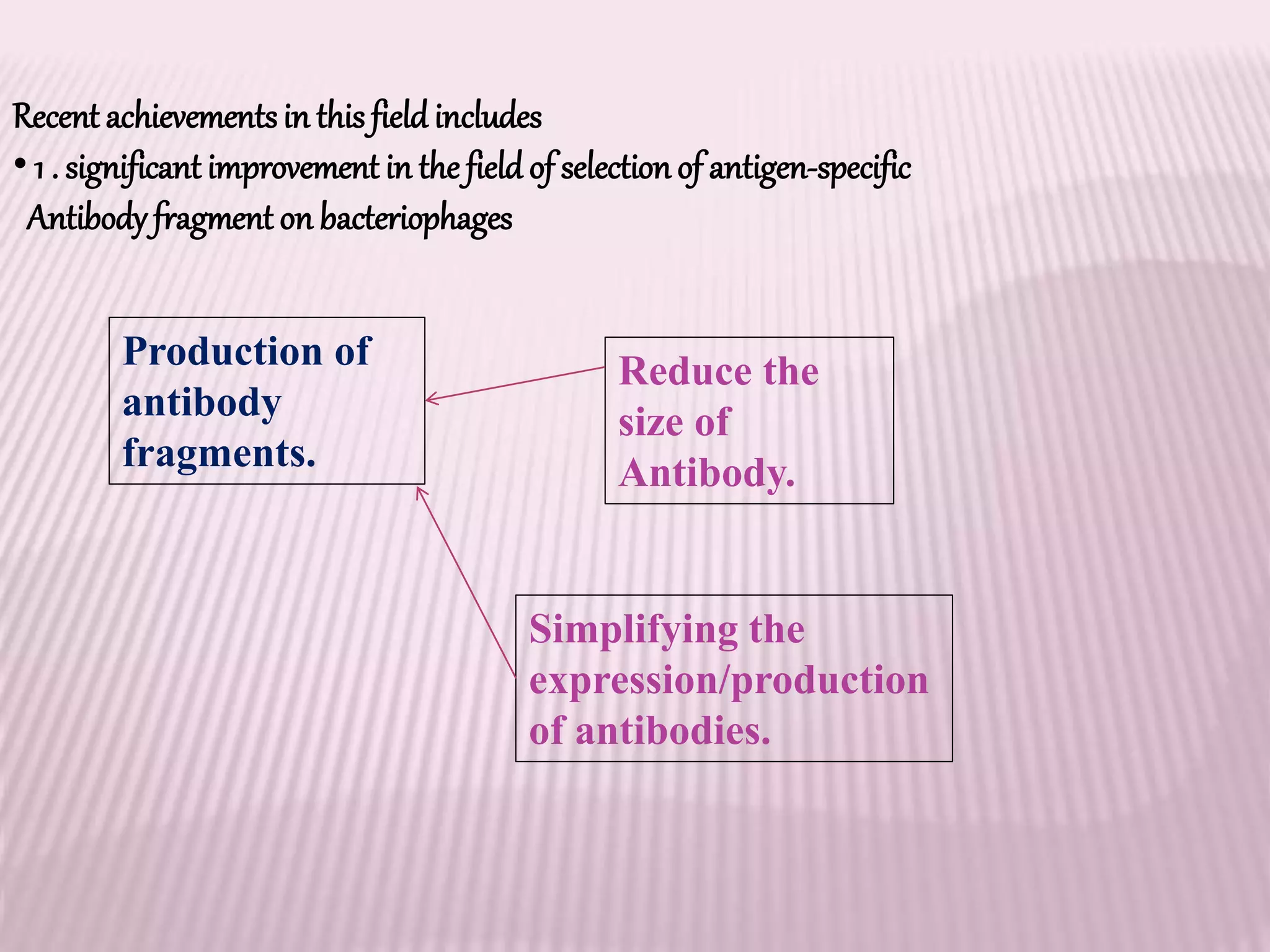
Recent achievementsin this field includes
• 1 . significant improvement in the field of selection of antigen-specific
Antibody fragment on bacteriophages
Production of
antibody
fragments.
Reduce the
size of
Antibody.
Simplifying the
expression/production
of antibodies.
•2. New structural network ,in particularusingNMR
• 3. The cloningof essentiallythe completeset of human VHgenes
• 4. The use of antibodiesto catalyze complicatedchemical
reactions
• 5. Novelantibodyfusion proteins to potentiateimmunetherapy
• 6. Newdevelopment is the replacement of antibodies withmore stable protein scaffold
for manyfuture biotechnological
Applications
RECOMBINANT DNA TECHNOLOGY FOR ANTIBODY
ENGINEERING
•The work of Cesar Milstein has paved the way to design and construct
genes that encode Ig molecule in which the variable region genes come
from one species to and constant gene come from another
•By this technique molecular hybrids or chimers can be made to deliver
a powerful toxin to a particulate antigenic target such as tumour cell
•Transplanted Ig genes have endured receiver to respond to immunization
by producing antibodies encoded that of the donor
•The entire antibodies repertoire of individuals may be reconstructed
by the selected L & M chain variable region genes
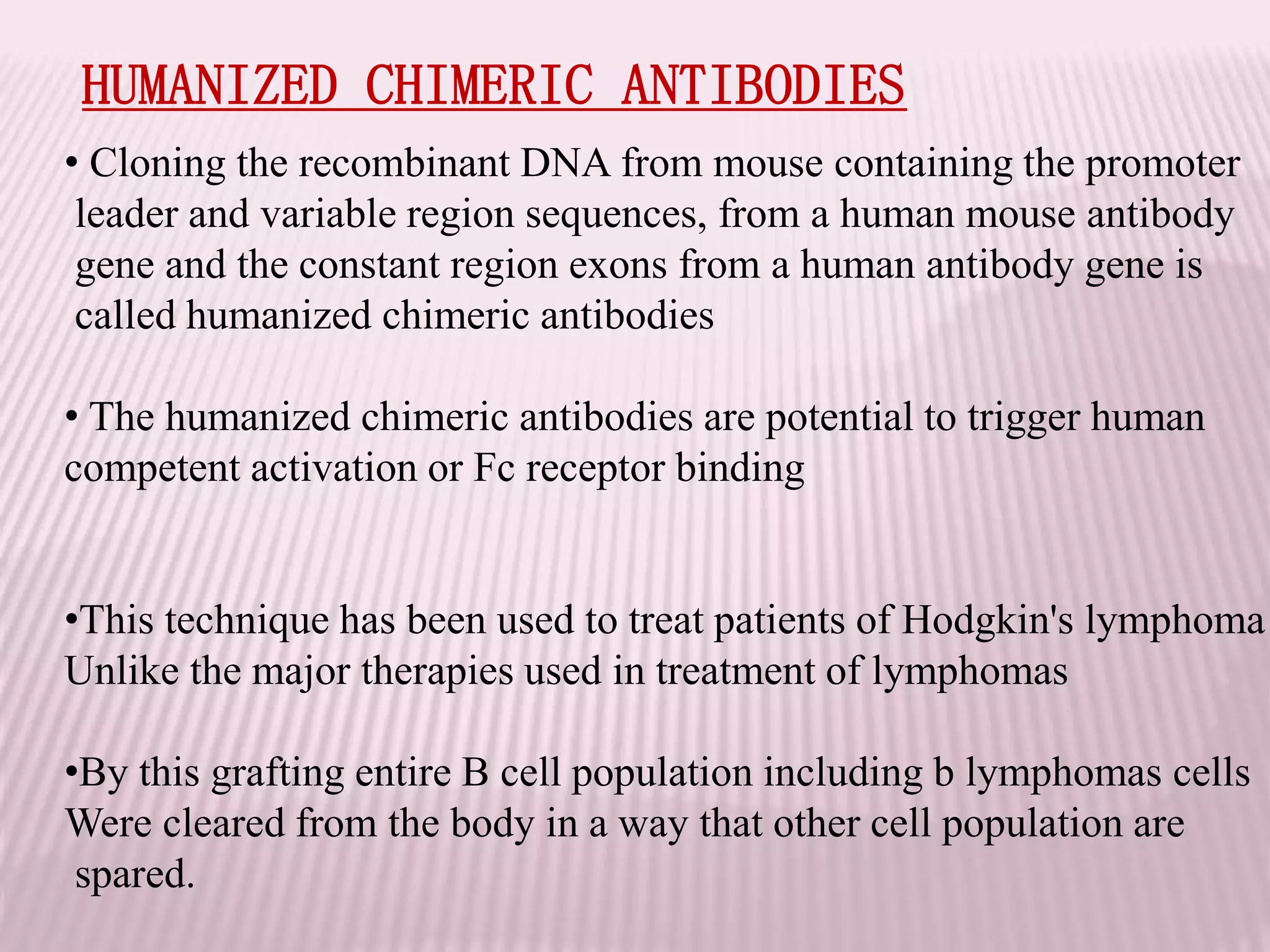
ADDITIONAL APPRORACHES TO r -DNA TECHNOLOGY
1. HUMANIZED CHIMERIC ANTIBODIES
2. BISPECIFIC ANTIBODIES ( HETEROCONJUGATES)
3. DERIVATION AND USE OF IG –GENE COMBINATORIAL
LIBRARIES ( H & L LIBRARIES)
HUMANIZED CHIMERIC ANTIBODIES
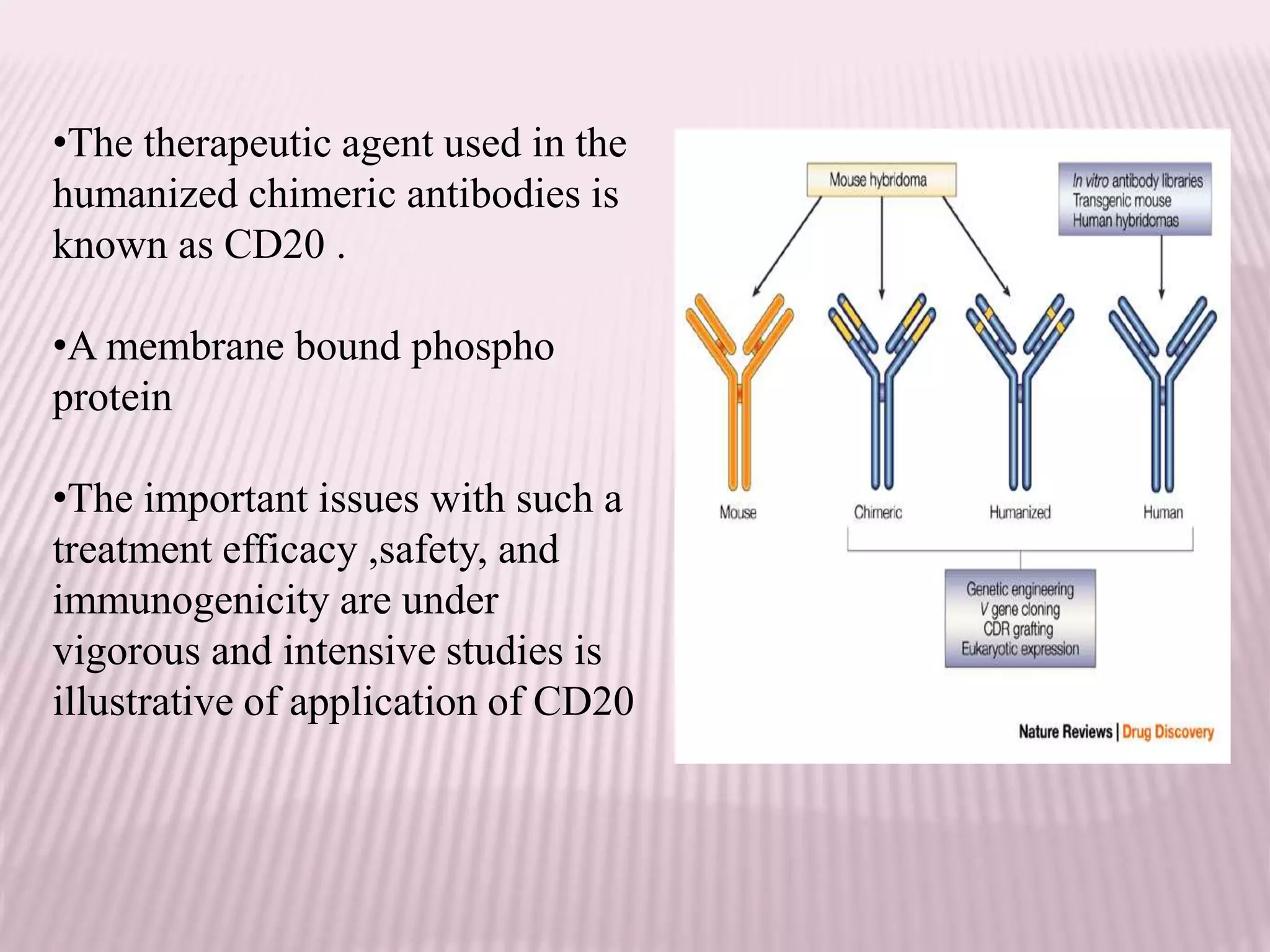
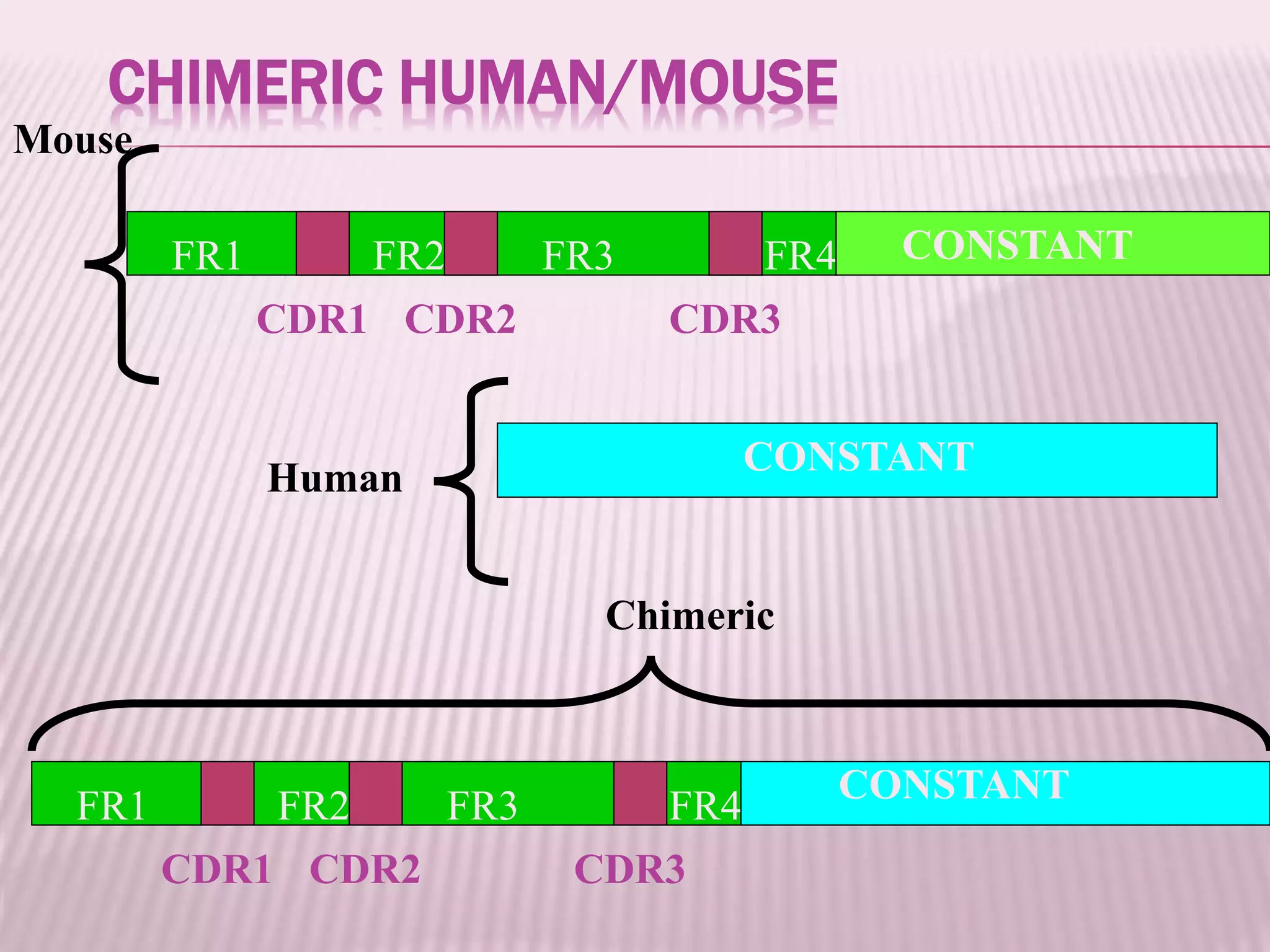
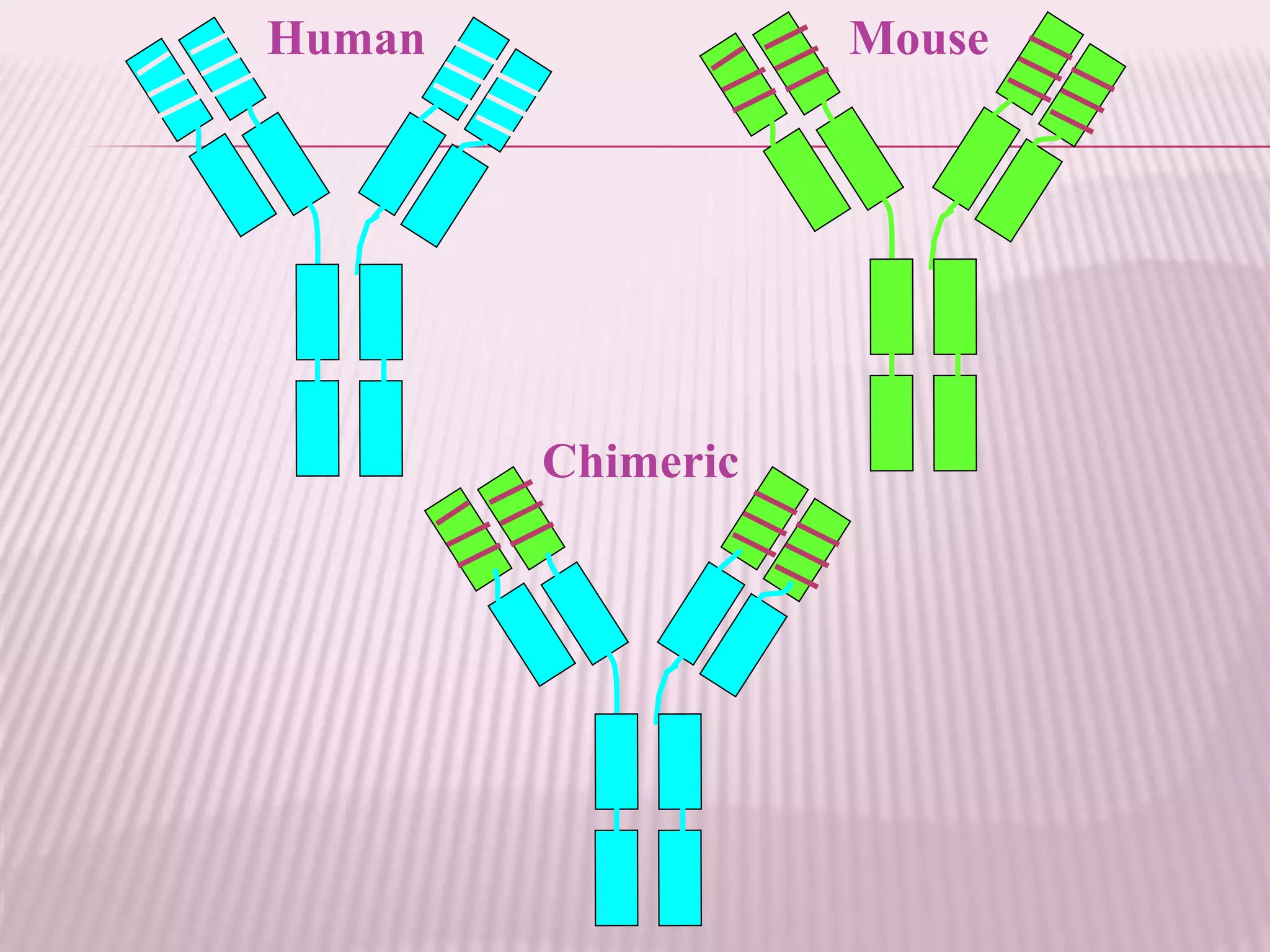
• Cloning the recombinant DNA from mouse containing the promoter
leader and variable region sequences, from a human mouse antibody
gene and the constant region exons from a human antibody gene is
called humanized chimeric antibodies
• The humanized chimeric antibodies are potential to trigger human
competent activation or Fc receptor binding
•This technique has been used to treat patients of Hodgkin's lymphoma
Unlike the major therapies used in treatment of lymphomas
•By this grafting entire B cell population including b lymphomas cells
Were cleared from the body in a way that other cell population are
spared.
•The therapeutic agent used in the
humanized chimeric antibodies is
known as CD20 .
•A membrane bound phospho
protein
•The important issues with such a
treatment efficacy ,safety, and
immunogenicity are under
vigorous and intensive studies is
illustrative of application of CD20
BISPECIFIC ANTIBODIES ( HETEROCONJUGATES)
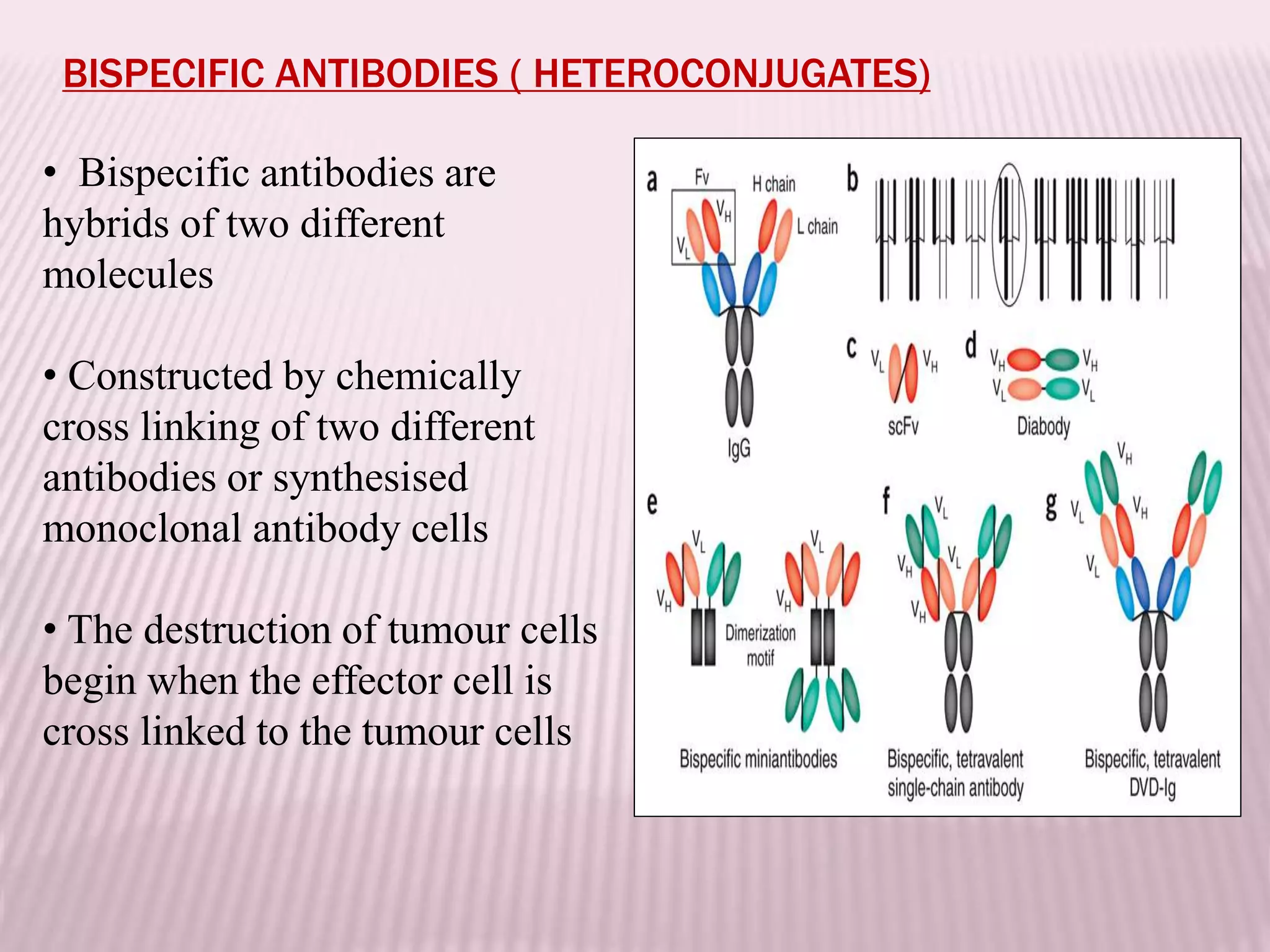
• Bispecific antibodies are
hybrids of two different
molecules
• Constructed by chemically
cross linking of two different
antibodies or synthesised
monoclonal antibody cells
• The destruction of tumour cells
begin when the effector cell is
cross linked to the tumour cells
DERIVATION AND USE OF Ig GENE
COMBINATORIAL LIBRARIES
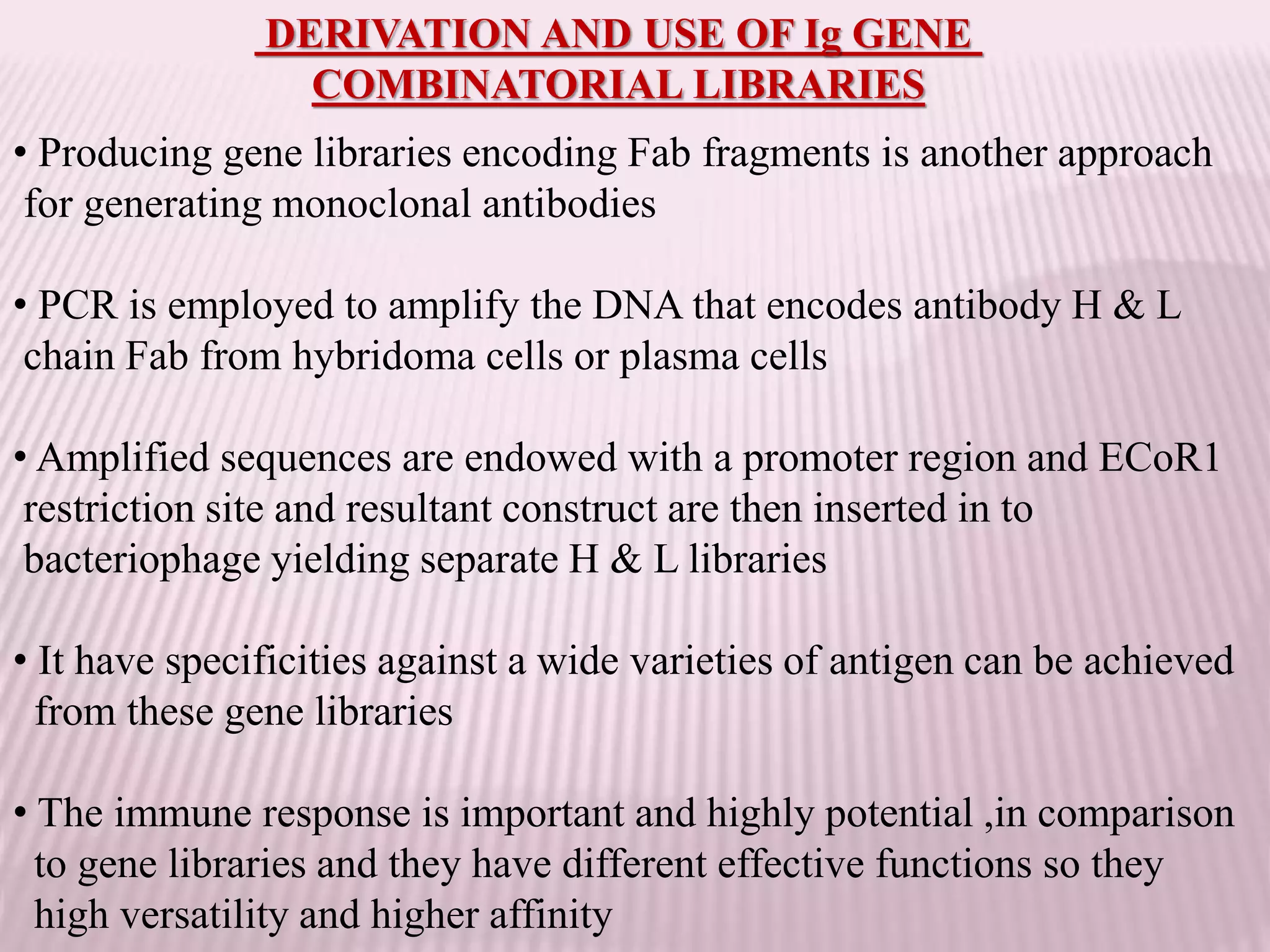
• Producing gene libraries encoding Fab fragments is another approach
for generating monoclonal antibodies
• PCR is employed to amplify the DNA that encodes antibody H & L
chain Fab from hybridoma cells or plasma cells
• Amplified sequences are endowed with a promoter region and ECoR1
restriction site and resultant construct are then inserted in to
bacteriophage yielding separate H & L libraries
• It have specificities against a wide varieties of antigen can be achieved
from these gene libraries
• The immune response is important and highly potential ,in comparison
to gene libraries and they have different effective functions so they
high versatility and higher affinity
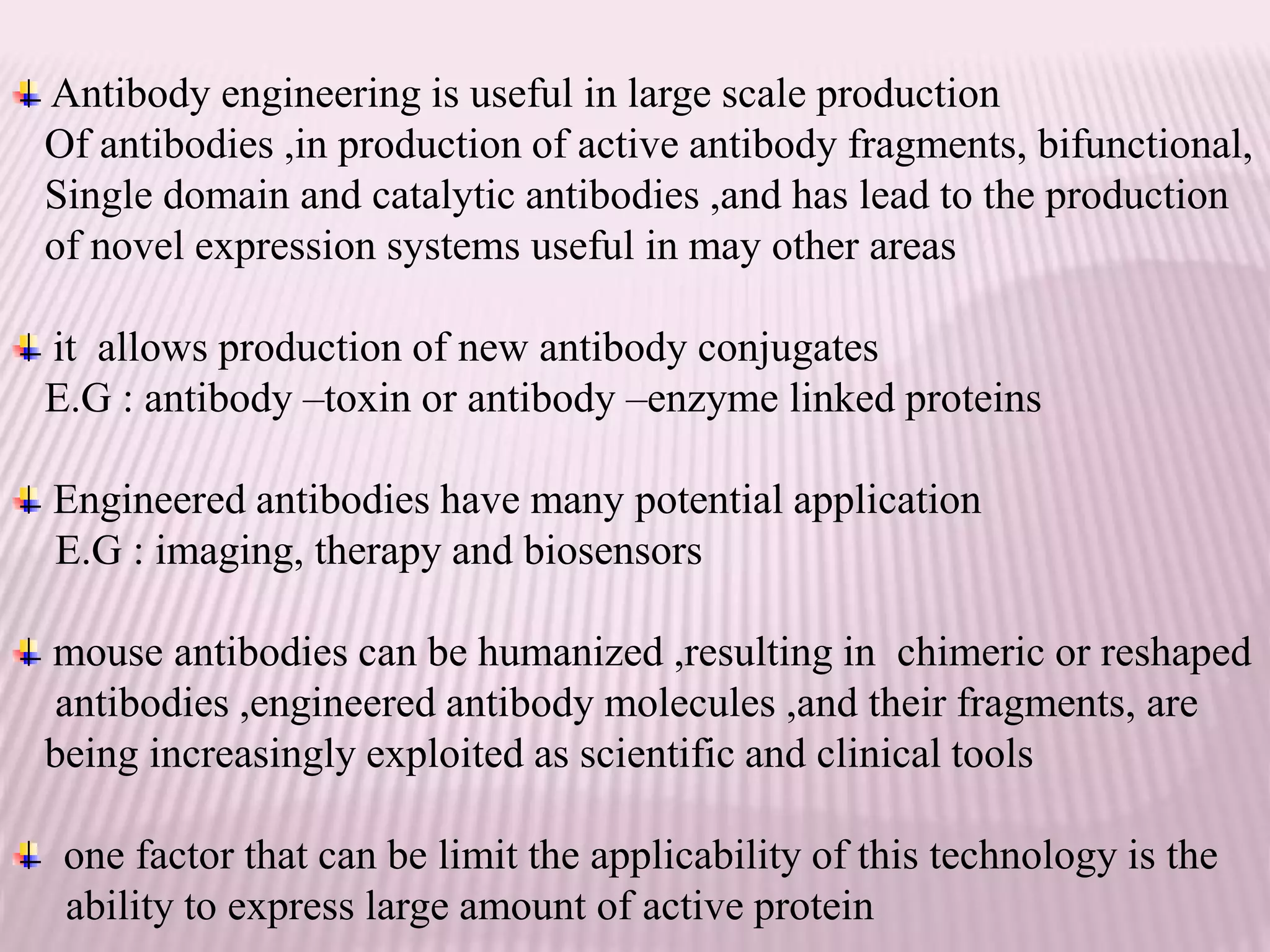
Antibody engineering is useful in large scale production
Of antibodies ,in production of active antibody fragments, bifunctional,
Single domain and catalytic antibodies ,and has lead to the production
of novel expression systems useful in may other areas
it allows production of new antibody conjugates
E.G : antibody –toxin or antibody –enzyme linked proteins
Engineered antibodies have many potential application
E.G : imaging, therapy and biosensors
mouse antibodies can be humanized ,resulting in chimeric or reshaped
antibodies ,engineered antibody molecules ,and their fragments, are
being increasingly exploited as scientific and clinical tools
one factor that can be limit the applicability of this technology is the
ability to express large amount of active protein
CHIMERIC HUMAN/MOUSE
FR1 FR2 FR3 FR4
CDR1 CDR2 CDR3
CONSTANT
CONSTANT
CONSTANT
FR1 FR2 FR3 FR4
CDR1 CDR2 CDR3
Mouse
Human
Chimeric
Human Mouse
Chimeric
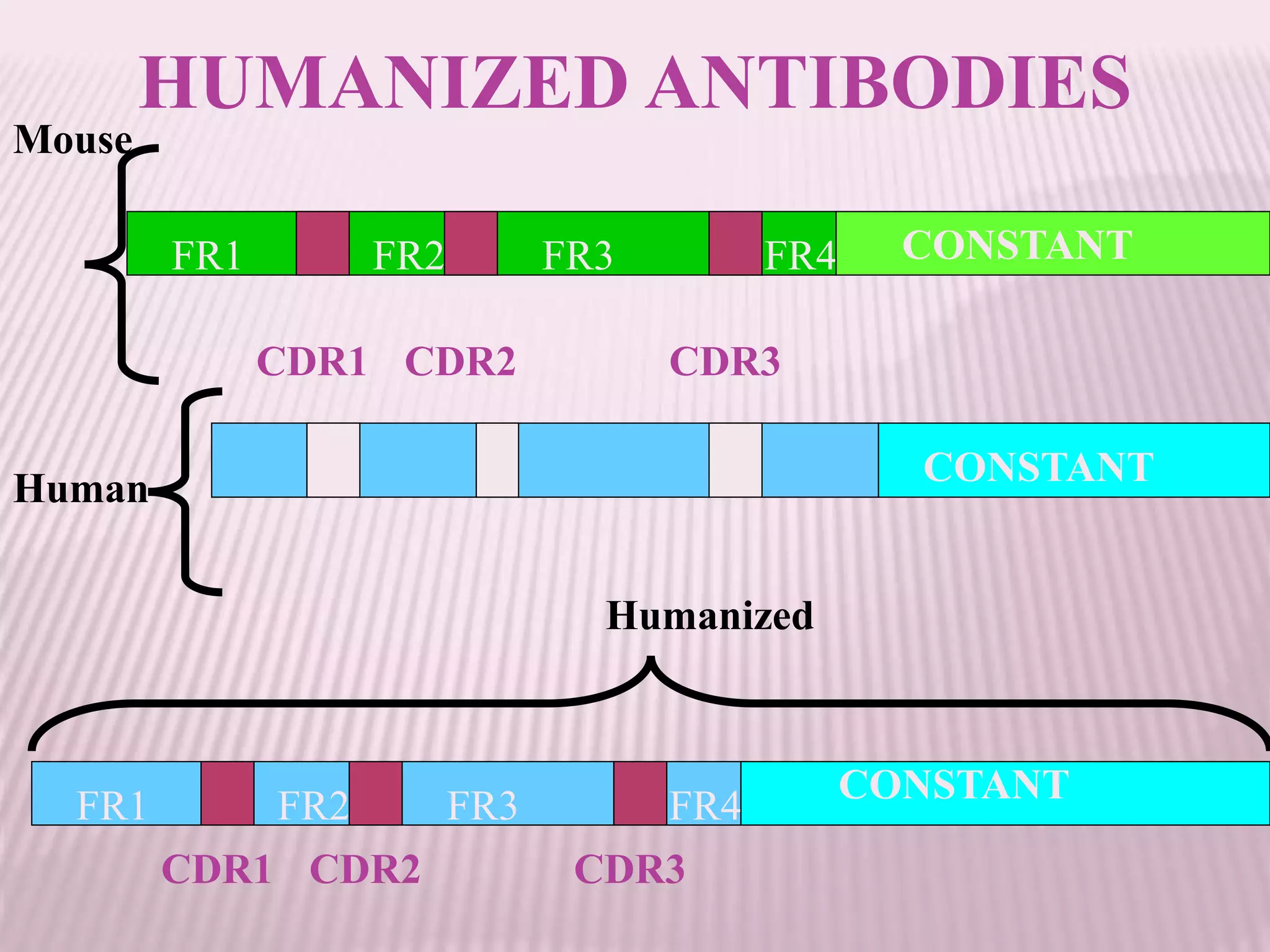
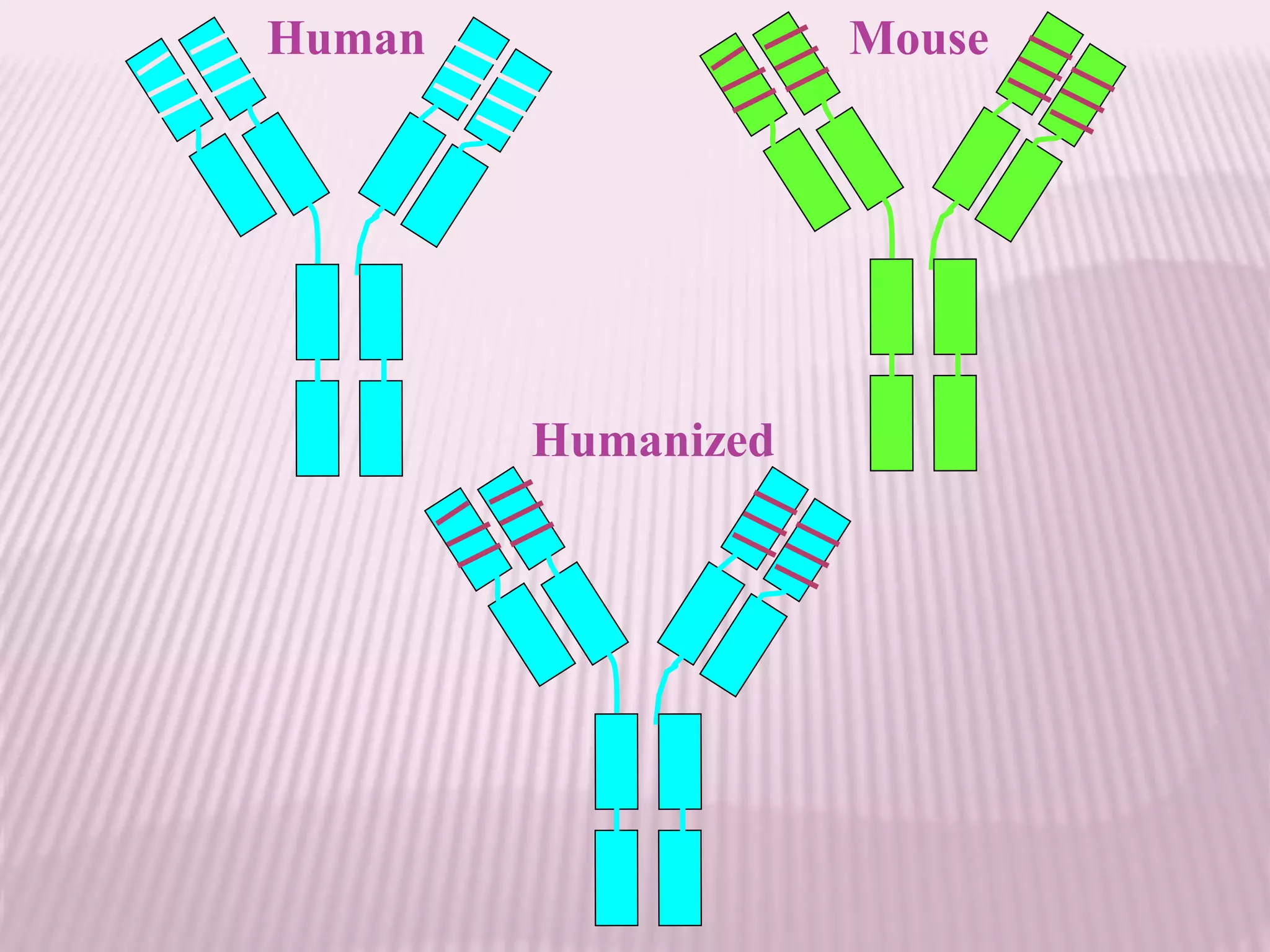
HUMANIZED ANTIBODIES
FR1 FR2 FR3 FR4
CDR1 CDR2 CDR3
CONSTANT
CONSTANT
CONSTANT
FR1 FR2 FR3 FR4
CDR1 CDR2 CDR3
Mouse
Human
Humanized
Human Mouse
Humanized
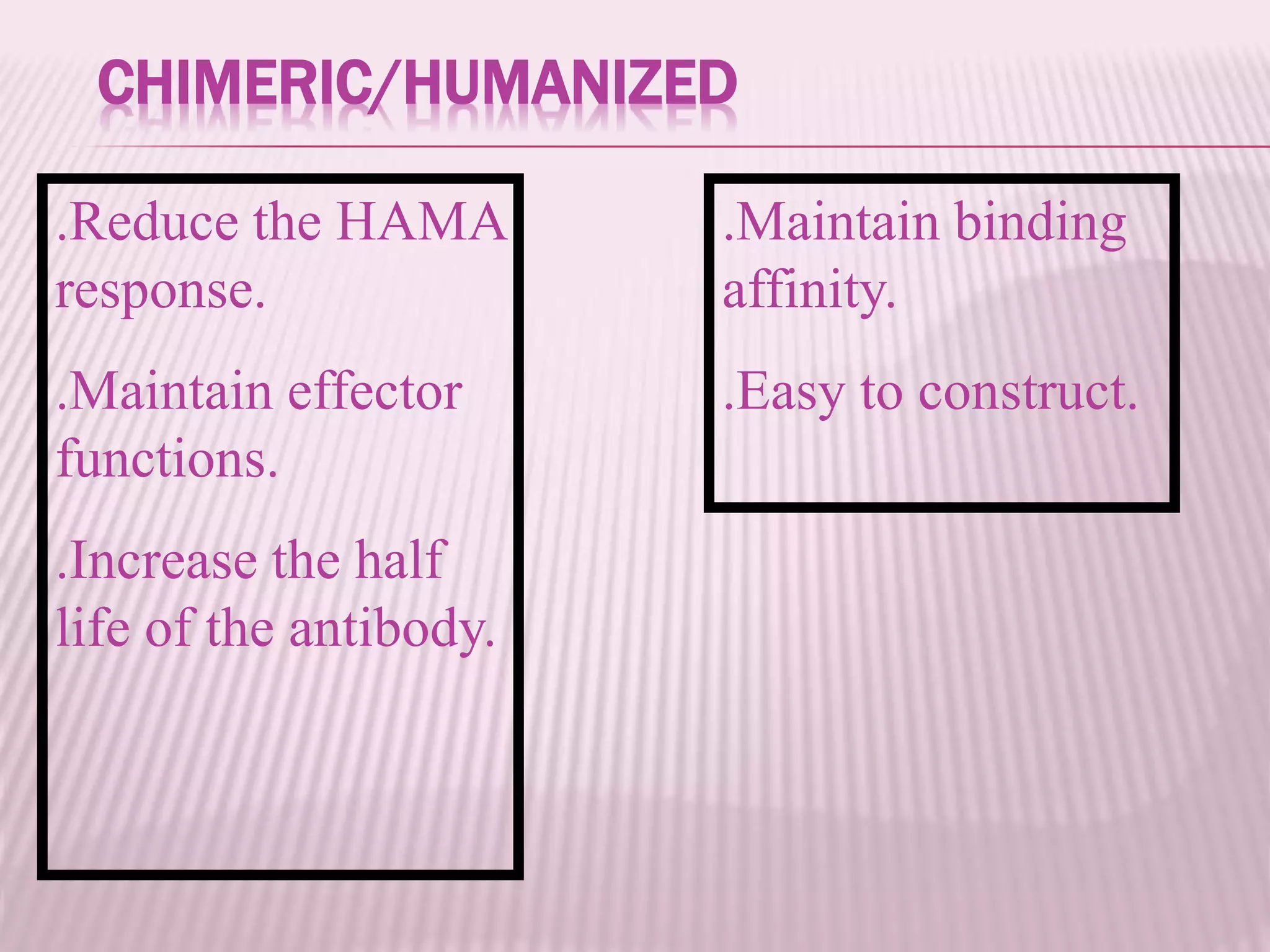
CHIMERIC/HUMANIZED
.Reduce the HAMA
response.
.Maintain effector
functions.
.Increase the half
life of the antibody.
.Maintain binding
affinity.
.Easy to construct.
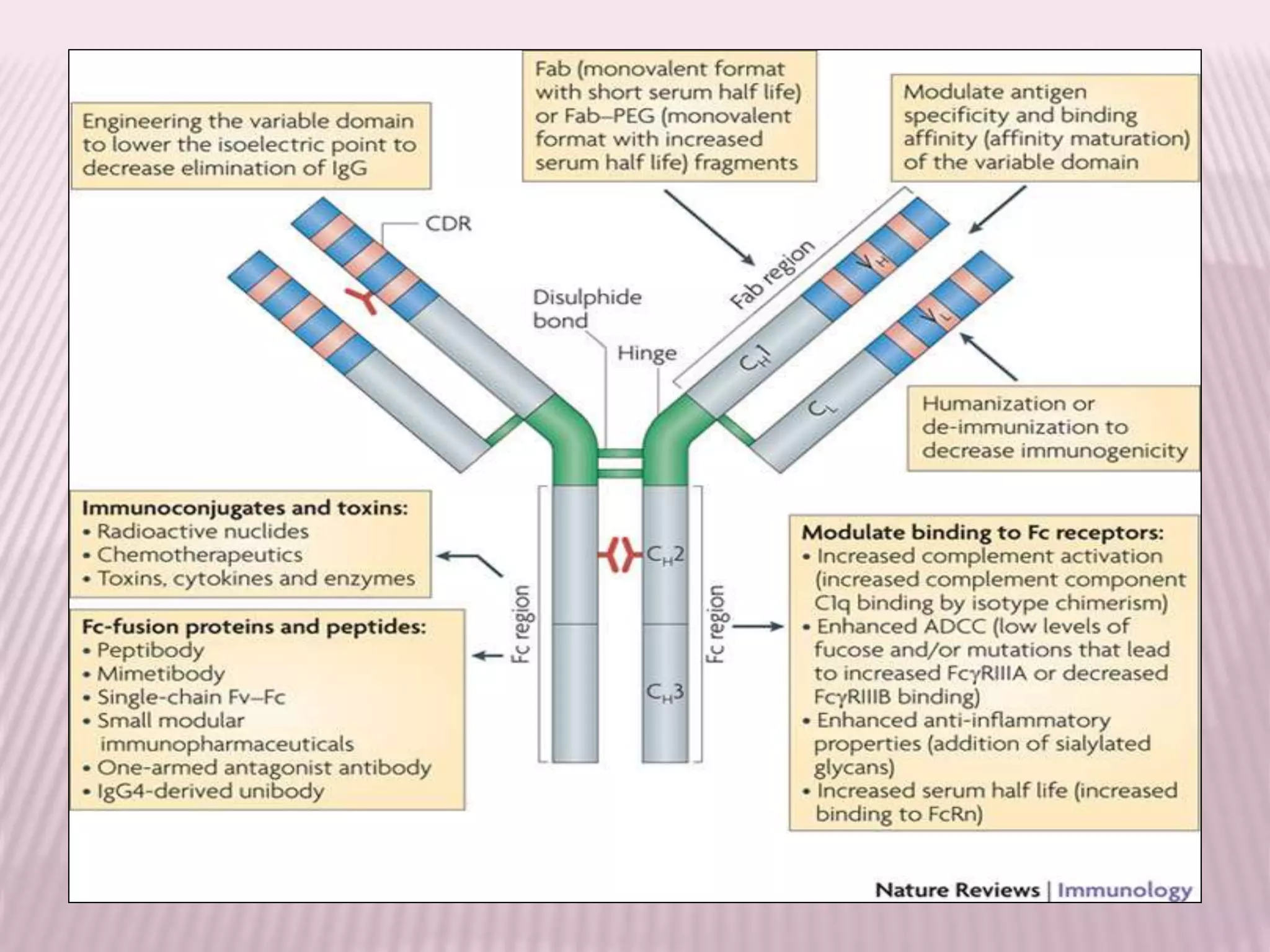
Antibodies are other proteins have been engineered using a
variety of immunogenicity evaluation strategies and some have
advanced in to clinical development
The characteristics of an antibody that may prevent its use , or
reduce its efficacy as an immunotherapy, can be altered through
genetic engineering
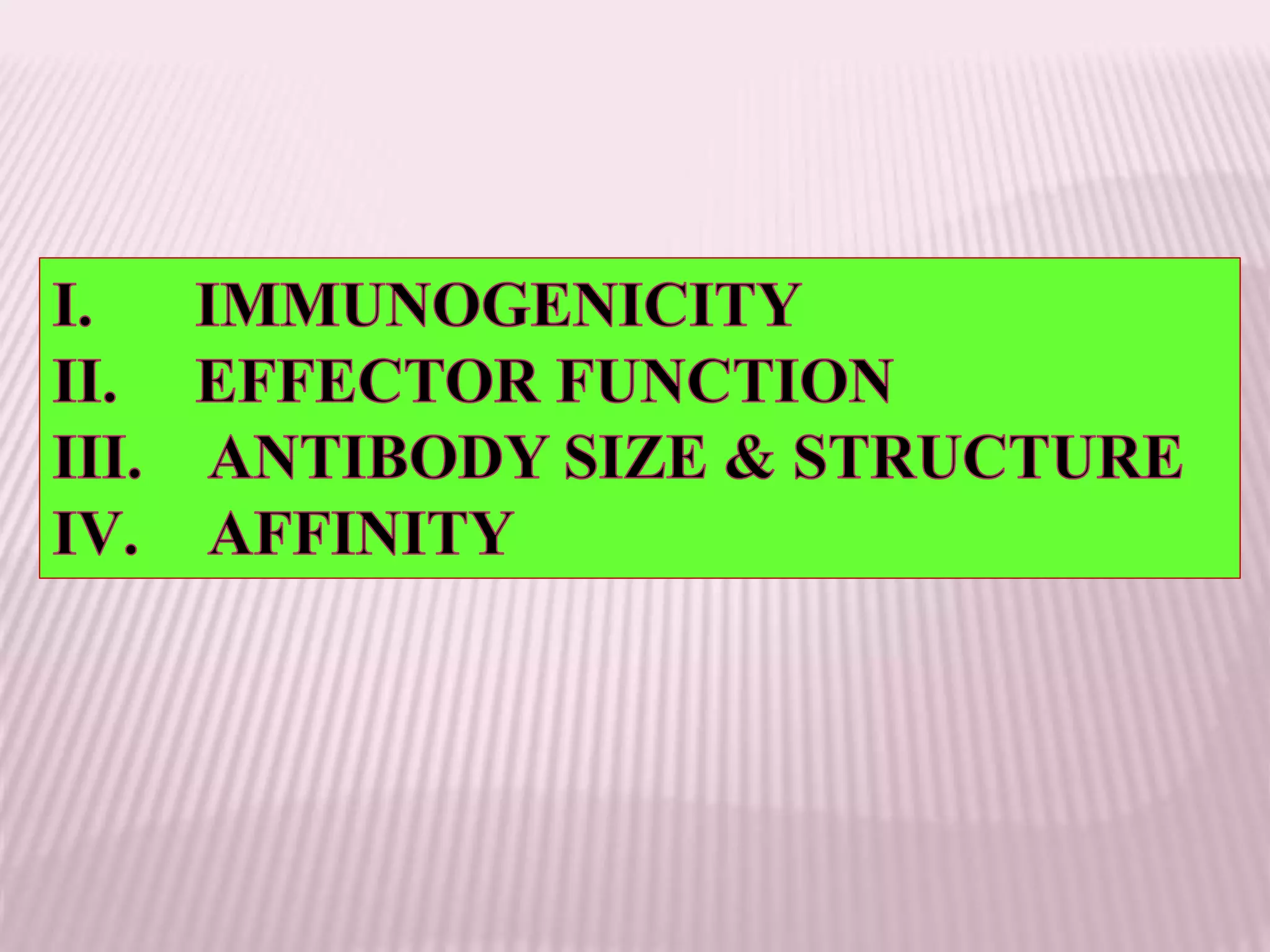
Thus the immunogenicity of an antibody can be reduced or
eliminated and the effector function ,size, structure, and affinity of
the antibody can be altered
Four key characteristics of relating to the efficacy
of therapeutic antibody
1. The antibodies that are used in research and as cancer therapies
are monoclonal antibodies.
2. Which are identical antibodies derived originally from mouse cells
3. Monoclonal antibodies can generate an anti mouse antibody
response in patients
4. It rapidly clearing the injected antibodies from the blood and
Rendering it useless
5. Then depending upon the manner in which it will be used
6. Therapeutic antibody may need a stronger or weaker effector
Function, increased or decreased antibody affinity ,and / or
reduction in size , for maximum efficacy
IMMUNOGENICITY
• Most mAbs are originally produced in a mouse cell system, because i
produces large amount of antibodies
• The human immune system may recognize the mAbs as foreign
even though mouse and human mAbs are structurally identical
• A mAb be found to be immunogenic during clinical characterisation
• Genetic engineering techniques substitutes mouse gene sequences
With the corresponding human gene sequence, by altering the
Protein sequence of immunogenic mouse derive mAbs
• the risk that the patients own immune system will reject the therapy
can be reduced or eliminated .Alternatively scientists may generate
fully human antibody that targets the same antigen as the mouse
mAbs
EFFECTOR FUNCTION
Genetic engineering methods to enhance or reduce the effector
function of an antibody in order to suit the strategy for its
clinical application
A strong effector function is required for a naked antibody therapy,
in which the antibody is designed to be cytotoxic
The antibody can be engineered to enhance the effector function so
that the cytotoxicity is via complement dependent cytotoxicity ,
which is a part of humoral response, or via immune response
ANTIBODY SIZE AND STRUCTURE
The size of an antibody has direct impact on its ability to penetrate
the tumour and other tissues, as well as pharmacokinetics
Scientist reduce the size of antibody by removing non essential
components through genetic engineering ,to increase its tumour
penetration and improve its pharmacokinetics
Therapies that utilize the delivery of a toxin or radioisotope have
comprised of an antibody with a conjugated toxin or radio isotope
Scientist now fuse the toxin and radioisotope directly to the antibody
structure ,minimizing the potential for loss of the toxin from the
antibody and thus maximizing the delivery of antibody –toxin
conjugate to the tumour
AFFINITY
The affinity of an antibody for its
antigen can also be increased or
decreased through genetic engineering
,by altering the amino acids within the
antibody’s binding site
V –region discovery is a critical step in the commencement
of an antibody engineering project
Capture of the correct v- region sequences from a starting
hybridoma can lead to a number of project outcomes depending
On the study objectives
These may include the development of a lead therapeutic
candidate with enhanced properties such as
Better potency
Productivity
Reduced antigenicity
1. Short primers to consensus sequences in heavy and light chain
variable regions of immunoglobulin genes are used to generate
a library of heavy and light chain v-region DNA’S by PCR. with
spleen DNA as the starting material .
2. These heavy and light chain v region genes are cloned randomly
into a filamentous phage such that each phage expresses one
heavy chain and one light chain v region as a surface fusion
protein with antibody like properties
3. The resulting phage display library is multiplied in bacteria, and
the phage are then bound to a surface coated with antigen. The
bounded phages are washed away , the bound phage are recovered
,multiplied in bacteria, and again bound to antigen
4. After a few cycles, only specific high affinity antigen binding
phage are left .these can be used like antibody molecules or their
v genes can be recovered and engineered into antibody genes to
produce genetically engineered antibody molecule
5. this technology may replace the hybridoma technology for
producing mAbs and has advantage that humans can be use as
the source of DNA
ANTIBODY ENGINEEERING  ITS APPLICATIONS

ANTIBODY ENGINEEERING ITS APPLICATIONS

  • 2.
    Antibodies often termedimmunoglobulin. They are glycoprotein that bind antigens with high specificity and affinity They are molecules originally identified in serum
  • 3.
    Heavy chain Light chain 220a.a ~500 a.a NH2 IMMUNOGLOBULIN
  • 4.
  • 5.
    Antibodyengineeringservices, involvesmost formsofrecombinant antibodygene manipulation. These include v-region discovery and sequencing,isotype switching, discovery of enhancedbindingvariantsthroughin vitroaffinitymaturation Fullyintegrated workpackages involving Humanization Productionof cell line development Productionof the purified antibody Antibodyengineeringhas been an extremelyintensive research areafor manyyears
  • 6.
    Recent achievementsin thisfield includes • 1 . significant improvement in the field of selection of antigen-specific Antibody fragment on bacteriophages Production of antibody fragments. Reduce the size of Antibody. Simplifying the expression/production of antibodies.
  • 7.
    •2. New structuralnetwork ,in particularusingNMR • 3. The cloningof essentiallythe completeset of human VHgenes • 4. The use of antibodiesto catalyze complicatedchemical reactions • 5. Novelantibodyfusion proteins to potentiateimmunetherapy • 6. Newdevelopment is the replacement of antibodies withmore stable protein scaffold for manyfuture biotechnological Applications
  • 8.
    RECOMBINANT DNA TECHNOLOGYFOR ANTIBODY ENGINEERING •The work of Cesar Milstein has paved the way to design and construct genes that encode Ig molecule in which the variable region genes come from one species to and constant gene come from another •By this technique molecular hybrids or chimers can be made to deliver a powerful toxin to a particulate antigenic target such as tumour cell •Transplanted Ig genes have endured receiver to respond to immunization by producing antibodies encoded that of the donor •The entire antibodies repertoire of individuals may be reconstructed by the selected L & M chain variable region genes
  • 9.
    ADDITIONAL APPRORACHES TOr -DNA TECHNOLOGY 1. HUMANIZED CHIMERIC ANTIBODIES 2. BISPECIFIC ANTIBODIES ( HETEROCONJUGATES) 3. DERIVATION AND USE OF IG –GENE COMBINATORIAL LIBRARIES ( H & L LIBRARIES)
  • 10.
    HUMANIZED CHIMERIC ANTIBODIES •Cloning the recombinant DNA from mouse containing the promoter leader and variable region sequences, from a human mouse antibody gene and the constant region exons from a human antibody gene is called humanized chimeric antibodies • The humanized chimeric antibodies are potential to trigger human competent activation or Fc receptor binding •This technique has been used to treat patients of Hodgkin's lymphoma Unlike the major therapies used in treatment of lymphomas •By this grafting entire B cell population including b lymphomas cells Were cleared from the body in a way that other cell population are spared.
  • 11.
    •The therapeutic agentused in the humanized chimeric antibodies is known as CD20 . •A membrane bound phospho protein •The important issues with such a treatment efficacy ,safety, and immunogenicity are under vigorous and intensive studies is illustrative of application of CD20
  • 12.
    BISPECIFIC ANTIBODIES (HETEROCONJUGATES) • Bispecific antibodies are hybrids of two different molecules • Constructed by chemically cross linking of two different antibodies or synthesised monoclonal antibody cells • The destruction of tumour cells begin when the effector cell is cross linked to the tumour cells
  • 13.
    DERIVATION AND USEOF Ig GENE COMBINATORIAL LIBRARIES • Producing gene libraries encoding Fab fragments is another approach for generating monoclonal antibodies • PCR is employed to amplify the DNA that encodes antibody H & L chain Fab from hybridoma cells or plasma cells • Amplified sequences are endowed with a promoter region and ECoR1 restriction site and resultant construct are then inserted in to bacteriophage yielding separate H & L libraries • It have specificities against a wide varieties of antigen can be achieved from these gene libraries • The immune response is important and highly potential ,in comparison to gene libraries and they have different effective functions so they high versatility and higher affinity
  • 14.
    Antibody engineering isuseful in large scale production Of antibodies ,in production of active antibody fragments, bifunctional, Single domain and catalytic antibodies ,and has lead to the production of novel expression systems useful in may other areas it allows production of new antibody conjugates E.G : antibody –toxin or antibody –enzyme linked proteins Engineered antibodies have many potential application E.G : imaging, therapy and biosensors mouse antibodies can be humanized ,resulting in chimeric or reshaped antibodies ,engineered antibody molecules ,and their fragments, are being increasingly exploited as scientific and clinical tools one factor that can be limit the applicability of this technology is the ability to express large amount of active protein
  • 15.
    CHIMERIC HUMAN/MOUSE FR1 FR2FR3 FR4 CDR1 CDR2 CDR3 CONSTANT CONSTANT CONSTANT FR1 FR2 FR3 FR4 CDR1 CDR2 CDR3 Mouse Human Chimeric
  • 16.
  • 17.
    HUMANIZED ANTIBODIES FR1 FR2FR3 FR4 CDR1 CDR2 CDR3 CONSTANT CONSTANT CONSTANT FR1 FR2 FR3 FR4 CDR1 CDR2 CDR3 Mouse Human Humanized
  • 18.
  • 19.
    CHIMERIC/HUMANIZED .Reduce the HAMA response. .Maintaineffector functions. .Increase the half life of the antibody. .Maintain binding affinity. .Easy to construct.
  • 20.
    Antibodies are otherproteins have been engineered using a variety of immunogenicity evaluation strategies and some have advanced in to clinical development The characteristics of an antibody that may prevent its use , or reduce its efficacy as an immunotherapy, can be altered through genetic engineering Thus the immunogenicity of an antibody can be reduced or eliminated and the effector function ,size, structure, and affinity of the antibody can be altered
  • 21.
    Four key characteristicsof relating to the efficacy of therapeutic antibody 1. The antibodies that are used in research and as cancer therapies are monoclonal antibodies. 2. Which are identical antibodies derived originally from mouse cells 3. Monoclonal antibodies can generate an anti mouse antibody response in patients 4. It rapidly clearing the injected antibodies from the blood and Rendering it useless 5. Then depending upon the manner in which it will be used 6. Therapeutic antibody may need a stronger or weaker effector Function, increased or decreased antibody affinity ,and / or reduction in size , for maximum efficacy
  • 23.
    IMMUNOGENICITY • Most mAbsare originally produced in a mouse cell system, because i produces large amount of antibodies • The human immune system may recognize the mAbs as foreign even though mouse and human mAbs are structurally identical • A mAb be found to be immunogenic during clinical characterisation • Genetic engineering techniques substitutes mouse gene sequences With the corresponding human gene sequence, by altering the Protein sequence of immunogenic mouse derive mAbs • the risk that the patients own immune system will reject the therapy can be reduced or eliminated .Alternatively scientists may generate fully human antibody that targets the same antigen as the mouse mAbs
  • 24.
    EFFECTOR FUNCTION Genetic engineeringmethods to enhance or reduce the effector function of an antibody in order to suit the strategy for its clinical application A strong effector function is required for a naked antibody therapy, in which the antibody is designed to be cytotoxic The antibody can be engineered to enhance the effector function so that the cytotoxicity is via complement dependent cytotoxicity , which is a part of humoral response, or via immune response
  • 25.
    ANTIBODY SIZE ANDSTRUCTURE The size of an antibody has direct impact on its ability to penetrate the tumour and other tissues, as well as pharmacokinetics Scientist reduce the size of antibody by removing non essential components through genetic engineering ,to increase its tumour penetration and improve its pharmacokinetics Therapies that utilize the delivery of a toxin or radioisotope have comprised of an antibody with a conjugated toxin or radio isotope Scientist now fuse the toxin and radioisotope directly to the antibody structure ,minimizing the potential for loss of the toxin from the antibody and thus maximizing the delivery of antibody –toxin conjugate to the tumour
  • 26.
    AFFINITY The affinity ofan antibody for its antigen can also be increased or decreased through genetic engineering ,by altering the amino acids within the antibody’s binding site
  • 27.
    V –region discoveryis a critical step in the commencement of an antibody engineering project Capture of the correct v- region sequences from a starting hybridoma can lead to a number of project outcomes depending On the study objectives These may include the development of a lead therapeutic candidate with enhanced properties such as Better potency Productivity Reduced antigenicity
  • 28.
    1. Short primersto consensus sequences in heavy and light chain variable regions of immunoglobulin genes are used to generate a library of heavy and light chain v-region DNA’S by PCR. with spleen DNA as the starting material . 2. These heavy and light chain v region genes are cloned randomly into a filamentous phage such that each phage expresses one heavy chain and one light chain v region as a surface fusion protein with antibody like properties
  • 29.
    3. The resultingphage display library is multiplied in bacteria, and the phage are then bound to a surface coated with antigen. The bounded phages are washed away , the bound phage are recovered ,multiplied in bacteria, and again bound to antigen 4. After a few cycles, only specific high affinity antigen binding phage are left .these can be used like antibody molecules or their v genes can be recovered and engineered into antibody genes to produce genetically engineered antibody molecule 5. this technology may replace the hybridoma technology for producing mAbs and has advantage that humans can be use as the source of DNA