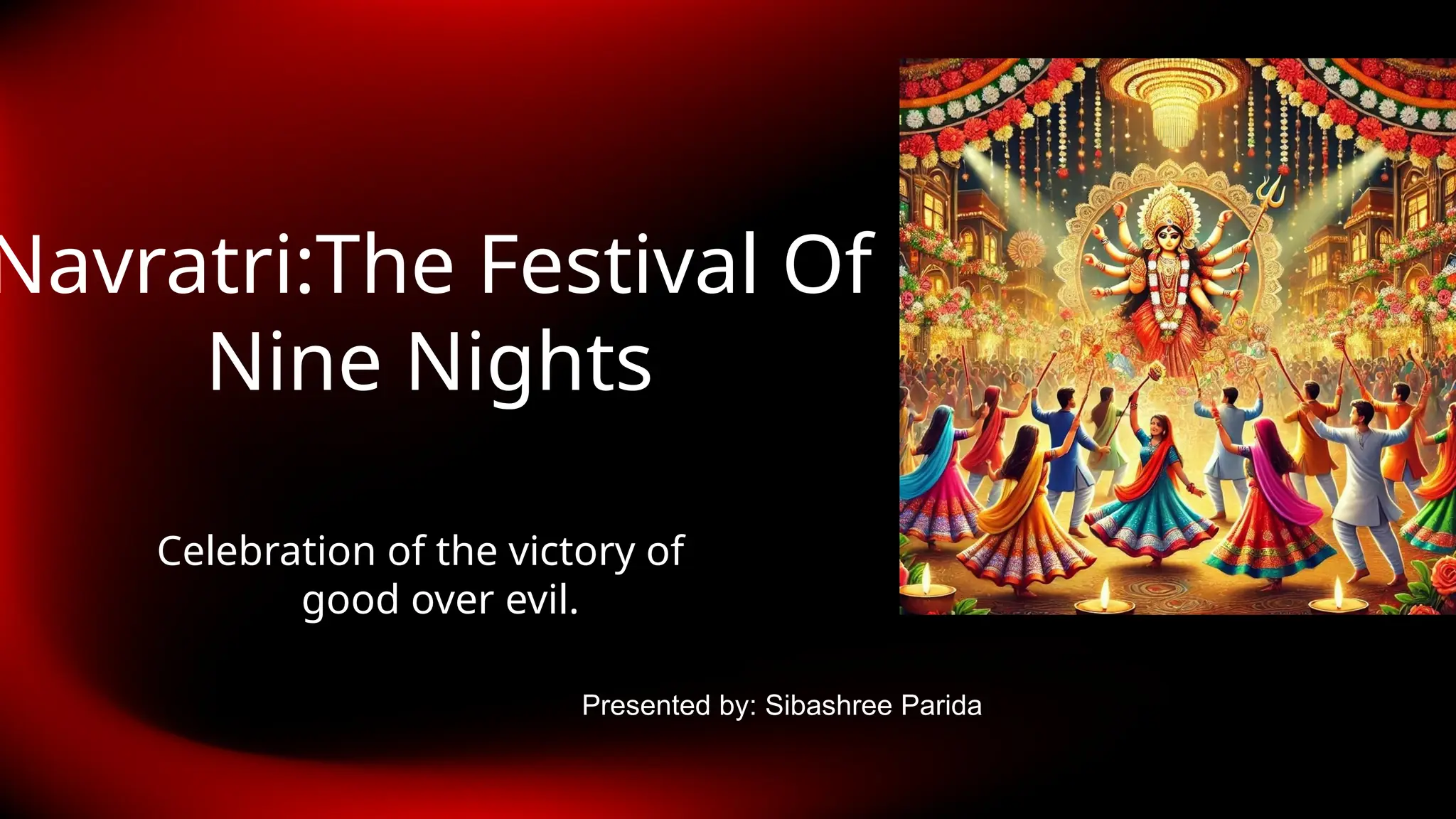
Navratri:The Festival Of
Nine Nights
Celebration of the victory of
good over evil.
Presented by: Sibashree Parida
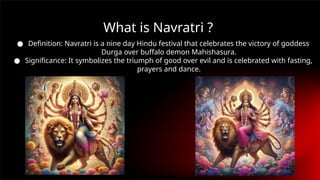
● Definition: Navratri is a nine day Hindu festival that celebrates the victory of goddess
Durga over buffalo demon Mahishasura.
● Significance: It symbolizes the triumph of good over evil and is celebrated with fasting,
prayers and dance.
What is Navratri ?
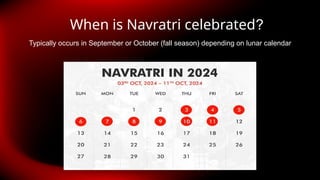
When is Navratri celebrated?
Typically occurs in September or October (fall season) depending on lunar calendar
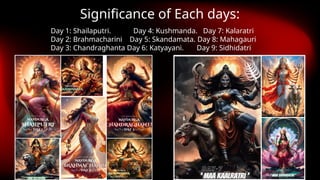
Significance of Each days:
Day 1: Shailaputri. Day 4: Kushmanda. Day 7: Kalaratri
Day 2: Brahmacharini Day 5: Skandamata. Day 8: Mahagauri
Day 3: Chandraghanta Day 6: Katyayani. Day 9: Sidhidatri
How Navratri is celebrated?
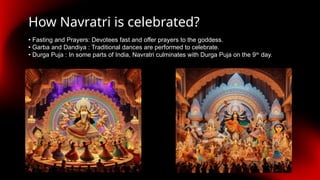
• Fasting and Prayers: Devotees fast and offer prayers to the goddess.
• Garba and Dandiya : Traditional dances are performed to celebrate.
• Durga Puja : In some parts of India, Navratri culminates with Durga Puja on the 9th
day.
Regional Celebration:
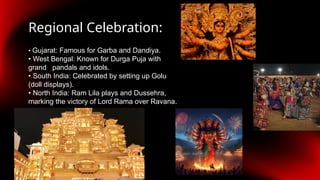
• Gujarat: Famous for Garba and Dandiya.
• West Bengal: Known for Durga Puja with
grand pandals and idols.
• South India: Celebrated by setting up Golu
(doll displays).
• North India: Ram Lila plays and Dussehra,
marking the victory of Lord Rama over Ravana.
The Navratri Colours:
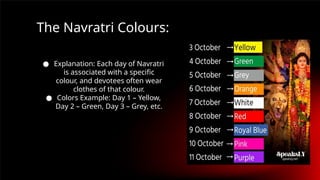
● Explanation: Each day of Navratri
is associated with a specific
colour, and devotees often wear
clothes of that colour.
● Colors Example: Day 1 – Yellow,
Day 2 – Green, Day 3 – Grey, etc.
Fasting and Rituals:
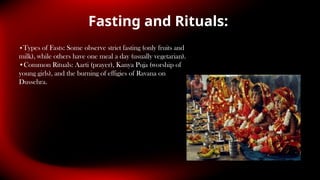
•Types of Fasts: Some observe strict fasting (only fruits and
milk), while others have one meal a day (usually vegetarian).
•Common Rituals: Aarti (prayer), Kanya Puja (worship of
young girls), and the burning of effigies of Ravana on
Dussehra.
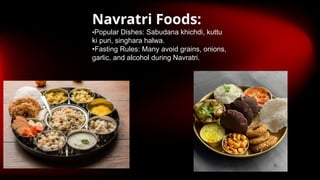
Navratri Foods:
•Popular Dishes: Sabudana khichdi, kuttu
ki puri, singhara halwa.
•Fasting Rules: Many avoid grains, onions,
garlic, and alcohol during Navratri.
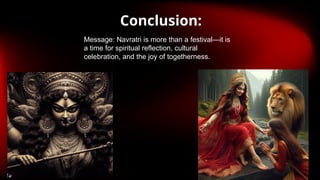
Conclusion:
Message: Navratri is more than a festival—it is
a time for spiritual reflection, cultural
celebration, and the joy of togetherness.

Paraphilia Case Study a study on paraphilia

  • 1.
    Navratri:The Festival Of NineNights Celebration of the victory of good over evil. Presented by: Sibashree Parida
  • 2.
    ● Definition: Navratriis a nine day Hindu festival that celebrates the victory of goddess Durga over buffalo demon Mahishasura. ● Significance: It symbolizes the triumph of good over evil and is celebrated with fasting, prayers and dance. What is Navratri ?
  • 3.
    When is Navratricelebrated? Typically occurs in September or October (fall season) depending on lunar calendar
  • 4.
    Significance of Eachdays: Day 1: Shailaputri. Day 4: Kushmanda. Day 7: Kalaratri Day 2: Brahmacharini Day 5: Skandamata. Day 8: Mahagauri Day 3: Chandraghanta Day 6: Katyayani. Day 9: Sidhidatri
  • 5.
    How Navratri iscelebrated? • Fasting and Prayers: Devotees fast and offer prayers to the goddess. • Garba and Dandiya : Traditional dances are performed to celebrate. • Durga Puja : In some parts of India, Navratri culminates with Durga Puja on the 9th day.
  • 6.
    Regional Celebration: • Gujarat:Famous for Garba and Dandiya. • West Bengal: Known for Durga Puja with grand pandals and idols. • South India: Celebrated by setting up Golu (doll displays). • North India: Ram Lila plays and Dussehra, marking the victory of Lord Rama over Ravana.
  • 7.
    The Navratri Colours: ●Explanation: Each day of Navratri is associated with a specific colour, and devotees often wear clothes of that colour. ● Colors Example: Day 1 – Yellow, Day 2 – Green, Day 3 – Grey, etc.
  • 8.
    Fasting and Rituals: •Typesof Fasts: Some observe strict fasting (only fruits and milk), while others have one meal a day (usually vegetarian). •Common Rituals: Aarti (prayer), Kanya Puja (worship of young girls), and the burning of effigies of Ravana on Dussehra.
  • 9.
    Navratri Foods: •Popular Dishes:Sabudana khichdi, kuttu ki puri, singhara halwa. •Fasting Rules: Many avoid grains, onions, garlic, and alcohol during Navratri.
  • 10.
    Conclusion: Message: Navratri ismore than a festival—it is a time for spiritual reflection, cultural celebration, and the joy of togetherness.