Travel and
Transportation
Exploring various modes of transport and their effects on society.
Introduction
This presentation delves into the various types of transportation available today and
explores their societal impacts. We will examine public transportation systems, private
vehicle usage, and alternative methods of transport, focusing on their respective
advantages and challenges. Additionally, we will discuss the effects of these modes of
transport on the environment, economy, and social dynamics.
Types
01
Public
Transportation
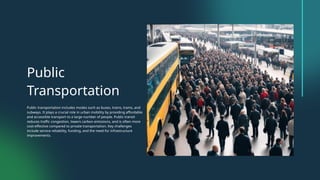
Public transportation includes modes such as buses, trains, trams, and
subways. It plays a crucial role in urban mobility by providing affordable
and accessible transport to a large number of people. Public transit
reduces traffic congestion, lowers carbon emissions, and is often more
cost-effective compared to private transportation. Key challenges
include service reliability, funding, and the need for infrastructure
improvements.
Private Vehicles
Private vehicles include cars, motorcycles, and bicycles, offering flexibility and convenience for
individual travel. However, their extensive use contributes to traffic congestion, higher carbon
emissions, and increased urban sprawl. While private transport can enhance personal mobility, it
raises concerns over fuel dependency, parking space, and overall environmental impact. The shift
towards electric vehicles is a growing trend that aims to mitigate these issues.
Alternative Transport
Methods
Alternative transport methods include bicycles, scooters, and walking, which promote a healthier
lifestyle and reduce carbon footprints. Innovations like car-sharing and ride-sharing apps also fall
under this category, providing flexible, cost-effective solutions for short-distance travel. Investment
in infrastructure for alternatives like bike lanes and pedestrian pathways is crucial for encouraging
their widespread adoption and enhancing urban mobility.
Impacts
02
Environmental Effects
Transportation significantly influences the environment, contributing to greenhouse gas emissions and air
pollution. Public transport options tend to have a lower environmental impact compared to private vehicles,
leading to sustainable urban development. The push for electric vehicles and investment in renewable energy
sources for transit systems are steps towards reducing the ecological footprint of transportation. Additionally,
effective urban planning can minimize travel distances, thus contributing to environmental conservation.
Economic Impact
The transportation sector is a vital component of the economy, facilitating trade, commerce, and
employment. Efficient transport systems reduce costs for businesses and increase productivity by enabling
swift movement of goods and services. However, inadequate transport infrastructure can hinder economic
growth and lead to increased poverty levels. Investments in public transit can yield significant returns by
enhancing accessibility and stimulating local economies through job creation and improved connectivity.
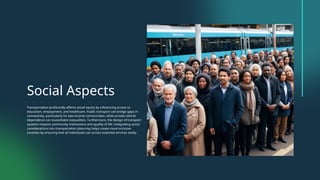
Social Aspects
Transportation profoundly affects social equity by influencing access to
education, employment, and healthcare. Public transport can bridge gaps in
connectivity, particularly for low-income communities, while private vehicle
dependence can exacerbate inequalities. Furthermore, the design of transport
systems impacts community interactions and quality of life. Integrating social
considerations into transportation planning helps create more inclusive
societies by ensuring that all individuals can access essential services easily.
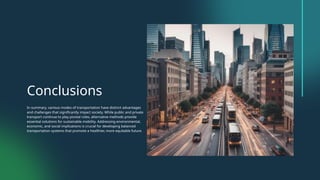
Conclusions
In summary, various modes of transportation have distinct advantages
and challenges that significantly impact society. While public and private
transport continue to play pivotal roles, alternative methods provide
essential solutions for sustainable mobility. Addressing environmental,
economic, and social implications is crucial for developing balanced
transportation systems that promote a healthier, more equitable future.
CREDITS: This presentation template was created by Slidesgo, and
includes icons by Flaticon, and infographics & images by Freepik
Thank you!
Do you have any questions?

Parallel Desktop Crack Free Download 2025

  • 1.
    Travel and Transportation Exploring variousmodes of transport and their effects on society.
  • 2.
    Introduction This presentation delvesinto the various types of transportation available today and explores their societal impacts. We will examine public transportation systems, private vehicle usage, and alternative methods of transport, focusing on their respective advantages and challenges. Additionally, we will discuss the effects of these modes of transport on the environment, economy, and social dynamics.
  • 3.
  • 4.
    Public Transportation Public transportation includesmodes such as buses, trains, trams, and subways. It plays a crucial role in urban mobility by providing affordable and accessible transport to a large number of people. Public transit reduces traffic congestion, lowers carbon emissions, and is often more cost-effective compared to private transportation. Key challenges include service reliability, funding, and the need for infrastructure improvements.
  • 5.
    Private Vehicles Private vehiclesinclude cars, motorcycles, and bicycles, offering flexibility and convenience for individual travel. However, their extensive use contributes to traffic congestion, higher carbon emissions, and increased urban sprawl. While private transport can enhance personal mobility, it raises concerns over fuel dependency, parking space, and overall environmental impact. The shift towards electric vehicles is a growing trend that aims to mitigate these issues.
  • 6.
    Alternative Transport Methods Alternative transportmethods include bicycles, scooters, and walking, which promote a healthier lifestyle and reduce carbon footprints. Innovations like car-sharing and ride-sharing apps also fall under this category, providing flexible, cost-effective solutions for short-distance travel. Investment in infrastructure for alternatives like bike lanes and pedestrian pathways is crucial for encouraging their widespread adoption and enhancing urban mobility.
  • 7.
  • 8.
    Environmental Effects Transportation significantlyinfluences the environment, contributing to greenhouse gas emissions and air pollution. Public transport options tend to have a lower environmental impact compared to private vehicles, leading to sustainable urban development. The push for electric vehicles and investment in renewable energy sources for transit systems are steps towards reducing the ecological footprint of transportation. Additionally, effective urban planning can minimize travel distances, thus contributing to environmental conservation.
  • 9.
    Economic Impact The transportationsector is a vital component of the economy, facilitating trade, commerce, and employment. Efficient transport systems reduce costs for businesses and increase productivity by enabling swift movement of goods and services. However, inadequate transport infrastructure can hinder economic growth and lead to increased poverty levels. Investments in public transit can yield significant returns by enhancing accessibility and stimulating local economies through job creation and improved connectivity.
  • 10.
    Social Aspects Transportation profoundlyaffects social equity by influencing access to education, employment, and healthcare. Public transport can bridge gaps in connectivity, particularly for low-income communities, while private vehicle dependence can exacerbate inequalities. Furthermore, the design of transport systems impacts community interactions and quality of life. Integrating social considerations into transportation planning helps create more inclusive societies by ensuring that all individuals can access essential services easily.
  • 11.
    Conclusions In summary, variousmodes of transportation have distinct advantages and challenges that significantly impact society. While public and private transport continue to play pivotal roles, alternative methods provide essential solutions for sustainable mobility. Addressing environmental, economic, and social implications is crucial for developing balanced transportation systems that promote a healthier, more equitable future.
  • 12.
    CREDITS: This presentationtemplate was created by Slidesgo, and includes icons by Flaticon, and infographics & images by Freepik Thank you! Do you have any questions?