PHARMACOTHERAPY
Dr.R.GOPINATH
M.D.,GDipDC
(GDM)
INTRODUCTION
• The incidence of GDM is still rising, and this pathological condition is
strongly associated with serious adverse pregnancy outcomes
• During pregnancy, maternal hyperglycaemia must be avoided by all means
• Aside from the short-term maternal, fetal and neonatal consequences
associated with GDM, there are long-term consequences for both
mother and child
• Thus, pharmacotherapy of GDM for tight glycaemic control is needed to
reduce foetal adverse outcomes
Int J Environ Res Public Health. 2022 Dec; 19(24): 16827.
DIABETES IN PREGNANCY STUDY GROUP
INDIA (DIPSI) 2021
• GDM can be diagnosed if 2hr PG ≥ 140 mg/dl with 75g oral glucose
after dissolving in approximately 300 ml water administered to
pregnant women in the fasting or non-fasting state, irrespective of the
last meal timing
• Accu-Chek glucometer Performa/ Active of Roche
S P E C T R U M . D I A B E T E S V O L U M E 2 9 , N U M B E R 2 , S P R I N G 2 0 1 6
(California Diabetes and Pregnancy Program)
Front. Endocrinol. 14:1193271. doi: 10.3389/fendo.2023
(Australasian
Diabetes in
Pregnancy Society)
GLYCATED HEMOGLOBIN (A1C)
• Higher values: increased risks for first-trimester
miscarriage, congenital anomalies, higher risk for
preeclampsia and high birth weight
• Usually monitor A1C at four- to eight-week intervals or
at least each trimester
Diabetes Care 2022;45:1046–1048
Maternal HbA1c and rates of obstetric and neonatal
complications in pregnant women with T2D
CONTINUOUS GLUCOSE MONITORING
SYSTEMS
• Target range 63 to 140 mg/dL (3.5 to 7.8 mmol/L):
• Time in range, goal >70 percent (ie, >16.8 hours)
• Time below range (<63 mg/dL [3.5 mmol/L]), goal <4 percent (ie, <1 hour)
• Time below range (<54 mg/dL [3.0 mmol/L]), goal <1 percent (ie, <0.24 hour)
• Time above range (>140 mg/dL [7.8 mmol/L]), goal <25 percent (ie, <6 hours)
WHEN TO TEST FOR KETONURIA
• In patients with nausea and vomiting
• If blood glucose values exceed 200 mg/dL
• During periods of illness or stress
• (meters are available to measure capillary blood beta-hydroxybutyrate
directly)
• (Ten to 30 percent of cases of DKA in pregnancy have been observed
with blood glucose levels <250 mg/dL (13.9 mmol/L)(Euglycemic DKA)
RELATIONSHIP BETWEEN ABNORMAL
KETONE BODY LEVELS AND DIFFERENT
ADVERSE PREGNANCY OUTCOMES
• Embryonic malformations.
• Impaired CNS Development
• Macrosomia
• Complications During Childbirth (FHR III, third degree amniotic fluid contamination, and
postpartum hemorrhage)
• The rate of fetal demise after DKA in pregnancy was 15%
PHARMACOTHERAPY
• Based primarily on insulin.
• Non-insulin hypoglycemic agents: Metformin, Glyburide
and Acarbose. (Failure to attain glycemic control appears
in around 20% of women)
• Other classes of diabetic medications are not
recommended in pregnancy
INTERNATIONAL JOURNAL OF DIABETES IN
DEVELOPING COUNTRIES (JULY–AUGUST 2023)
43(4):485–501
Ketonuria,
Antenatal
corticosteroid
therapy
INSULIN IN GDM
• The recommended gold standard first-line drug
• Does not cross the placenta unless at extremely high doses
• Great fetal safety profile
• Not teratogenic
• No evidence that any of them are excreted in human milk
• Has several downsides
• The absence of a clear dose definition, the need for multiple daily injections, the risk of
hypoglycemia, and elevated maternal weight gain
Copyrights apply
RAPID- OR SHORT-ACTING INSULINS
• Regular human insulin
• Lispro
• Aspart
• Glulisine?
INTERMEDIATE-ACTING INSULIN
• Neutral protamine Hagedorn (NPH)
• If a patient on a long-acting insulin has good
glycemic control prepregnancy or at their first
prenatal visit, do not switch them to NPH just
because they are planning to conceive or are
pregnant.
LONG-ACTING INSULINS
• Detemir
• Glargine
• Degludec
INSULIN THERAPY:BASIC FACTS
• Prefer the pharmacokinetics of NPH for patients with type 2 diabetes.
• No compelling evidence to support switching patients from MDI to an
insulin pump before or during pregnancy.
• Patients using continuous subcutaneous insulin infusion (insulin pump)
effectively prepregnancy can continue this therapy.
• Insulin requirements will increase in pregnancy.
• The major variables that affect the degree of glycemic control: the insulin
preparation, the size of the subcutaneous depot, injection technique, the
site of injection, and subcutaneous blood flow.
INSULIN IN PREGNANT WOMEN WITH T1DM
• Insulin analogues are the first choice compared with human insulins
because the fast-acting insulin analogues offer more flexibility and
reduce the risk of hypoglycaemia and the long-acting insulin
analogues are active for up to 24–42 h with lower risk of nocturnal
hypoglycaemia.(Lancet Diabetes Endocrinol , June 5, 2023 )
ARCHIVES OF GYNECOLOGY AND OBSTETRICS
VOLUME 292, PAGES 749–756, (2015)
• Safety of insulin analogs during pregnancy: a meta-analysis
• Aspart, Glargine (U100,U300) and Detemir are safe treatment options
• Lispro was related to higher birth weight and increased rate of LGA in neonates.
• Glulisine is not approved for use in pregnancy
• European approval for the use of ultra-rapid acting aspart (Fiasp®) and rapid-acting lispro
(Lyumjev®) in pregnancy.
• Degludec has recently been approved for use in pregnancy in Europe, the USA and Canada
INSULIN DOSING: T1DM
• 0.7 units/kg in the first trimester
• 0.8 units/kg for weeks 13 to 28
• 0.9 units/kg for weeks 29 to 34
• 1 unit/kg for weeks 35 to term
• Patients with obesity may need as high as 1.5 to 2 units/kg to overcome the insulin resistance
that results from the combination of pregnancy and adiposity
• Approximately 50 percent of the total insulin dose is administered as a rapid-acting insulin
(lispro or aspart) before each meal, and the other 50 percent is administered as basal coverage
using an intermediate- or long-acting insulin (NPH or detemir) twice daily.(Basal-Bolus therapy)
INSULIN DOSING: T1DM (BASAL-
BOLUS)
• A weight-based strategy
• Each premeal dose: The current weight in kg X 0.15
• The basal dose = The current weight in kg X 0.45
• Basal insulin can be given BID
• For patients who do not maintain a fixed carbohydrate intake, carbohydrate
counting can help guide prandial insulin dosing (1:5 to 1:13)
• For MDI, use lispro or aspart as bolus insulin in combination with either
NPH insulin or insulin detemir for basal requirements
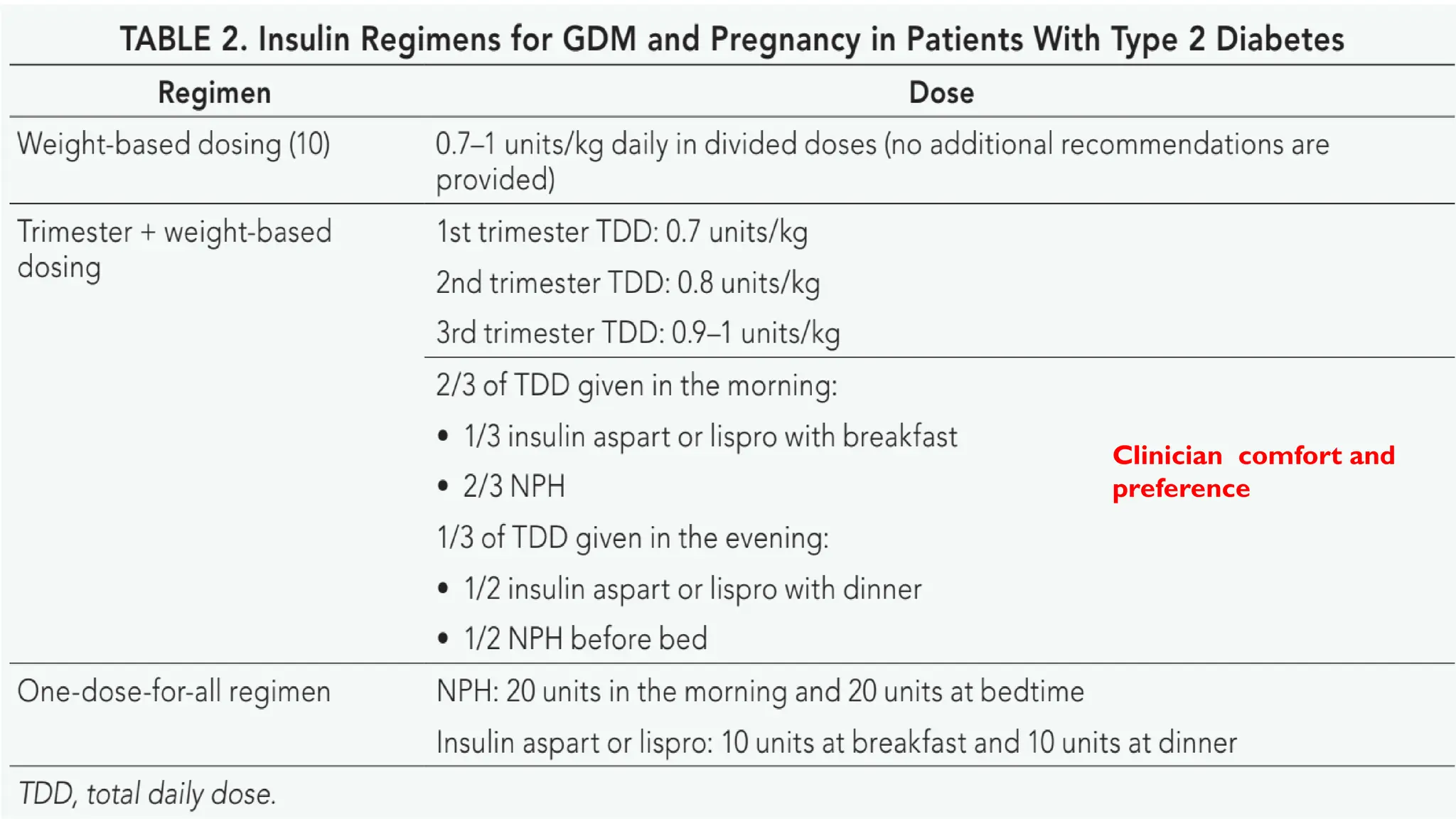
TYPE 2 DIABETES: INSULIN DOSING
• Insulin requirements during the first trimester are similar
to those prior to pregnancy in patients with type 2
diabetes, but then requirements increase.
• During the second half of pregnancy, insulin requirements
increase disproportionately in patients with type 2
diabetes compared with those with type 1 diabetes, likely
due to additional insulin resistance at baseline.
Clinician comfort and
preference
INSULIN TITRATION
• Pregnancy does not have the luxury of time because the risk of fetal
harm develops rapidly, and quick control is imperative
• Changes by 2–4 units (~10%) in short- and intermediate-acting
insulins every 2–3 days.
• Patients with type 2 diabetes or GDM may test up to 10 times daily
to achieve euglycemia while on insulin.
CONTINUOUS SUBCUTANEOUS INSULIN
INFUSION (INSULIN PUMP)
• If a patient is using continuous subcutaneous insulin infusion (CSII with
an insulin pump) effectively prepregnancy, there is no need to
discontinue this approach.
• Generally do not start patients on insulin pumps during pregnancy,
both because they have not been proven to provide superior
pregnancy outcomes and because of the logistical challenges of the
transition from MDI to pumps.
• For CSII, use either lispro or aspart insulin.
IMPLICATIONS OF FALLING INSULIN
REQUIREMENT
• Placental insufficiency
• Decreased maternal consumption
• Vomiting
• Increased fetal demand for glucose
• Increased maternal sensitivity to insulin in the fasting state
ORAL ROUTE OF ADMINISTRATION
• Low cost
• Need for less intensive monitoring
• Easy dose titration
• Low risk of hypoglycemia
PATIENTS ON METFORMIN OR
GLYBURIDE
• Metformin can be continued safely and effectively as
the transition to insulin is initiated and until the dose
of injected insulin is sufficient to achieve metabolic
control
• Patients with type 2 diabetes who are treated
with glyburide should be transitioned to insulin as
soon as feasible
METFORMIN
• A reasonable and safe first-line alternative to insulin.
• Safer than glyburide
• Metformin is, at least, comparable to insulin for the treatment of GDM. (Pharmacological
Research Volume 167, May 2021, 105546)
• FDA’s Pregnancy Category B
• 5 - 15% of women experienced gastrointestinal side effects, such as flatulence, nausea,
diarrhea, and vomiting.
METFORMIN…..
• Possible altered fetal programming and predisposition to childhood obesity
and metabolic syndrome during adulthood after use of metformin in
pregnancy
• If pregnant women are not willing for insulin, metformin can be
recommended provided gestational week is more than 12 weeks
• If Insulin is required in high doses, metformin may be added to the
treatment.
ENDOCRINE (2024) 83:259–269
• Efficacy and safety of metformin during pregnancy:
an update
• Control: Insulin or placebo
•
Vitamin B12 and folate/folic acid supplementation may be an effective prophylactic
approach to reduce the adverse effects of metformin on offspring
WHICH GDM CANDIDATES ARE UNLIKELY
TO RESPOND TO METFORMIN
1. Higher fasting glucose at diagnosis
2. Early detection of GDM
3. Past history of GDM
4. Older age at diagnosis
5. Higher baseline HbA1c or serum fructosamine concentration
6. Elevated BMI
Metformin may confer protection from
later diabetes in offspring
Drugs in Context 2018; 7:212523.
Drugs in Context 2018; 7:212523. The ADA: avoid metformin in patients
with hypertension, preeclampsia, or at
risk for IUGR
METFORMIN GUIDE DRUGS IN
CONTEXT 2018; 7: 212523.
• Metformin can be initiated in divided doses of 500 mg twice a
day and the dose up-titrated at weekly intervals to 2500 mg
per day in divided doses.
• Therapy should be guided by SMBG records, and in case
glycemic targets are not achieved in 1–2 weeks, insulin should
be added.
GLYBURIDE
• Low-cost oral agent
• Easy and relatively infrequent administration
• Higher rates of Macrosomia (increased shoulder dystocia and Cesarean delivery), Neonatal
hypoglycemia,Hyperbilirubinemia, respiratory distress syndrome, preeclampsia, and gestational hypertension
• Transplacental transfer of glyburide can reach 50% to 70% of maternal plasma concentration , potentially
causing direct stimulation of fetal insulin production
JAMA Pediatr. 2015;169(5):452-458
JAMA NETW OPEN. 2022 MAR; 5(3): E225026.
• Association of Glyburide and Subcutaneous Insulin With Perinatal
Complications Among Women With Gestational Diabetes
• 11 321 patients (2007 to 2017)
• Conclusions and Relevance
• Using data from a clinical setting and contemporary causal inference
methods, our findings do not provide evidence of a difference in the
outcomes examined between patients with GDM initiating glyburide
compared with those initiating insulin.
OBSTETRIC MEDICINE
2023, VOL. 16(2) 98–103
• Effects of oral glibenclamide versus subcutaneous insulin on perinatal
outcome of patients with GDM : A randomized clinical trial
• Conclusion: The results of the current study demonstrate that oral
glibenclamide is as effective and safe as subcutaneous insulin in
glycemic control and maternal and neonatal outcomes in women
with GDM. Thus, it could be used as first-line treatment of
gestational diabetes mellitus.
GLYBURIDE (GLIBENCLAMIDE)
• The initial dose is 2.5 mg once or twice a day and can be increased after
titration with blood glucose values up to a maximum of 20 mg/day, but no more
than 7.5 mg should be taken at a single time.
• Should be taken at least 30 minutes, preferably 60 minutes, before meals so that
the peak action covers the postprandial glucose surge
• Maternal hypoglycemia is the most common side effect, and the risk was higher
than that in patients using insulin
•
ACARBOSE
• An alpha-glucosidase inhibitor
• Prevents enzymes found on the small intestine’s brush border from breaking down
complex starches into oligosaccharides and oligosaccharides, trisaccharides, and
disaccharides into glucose.
• Rise in postprandial glucose concentrations is lowered.
• Usually linked to gastrointestinal complications.
• Although just 2% of acarbose is absorbed as an active medication, 34% of its metabolites
were found in the systemic circulation
CUREUS 12(12): E12283 2020
• Comparison of Fetomaternal Outcomes in Patients With Gestational
Diabetes Mellitus Treated With Insulin Versus Acarbose: Results of a
Prospective, Open Label, Controlled Study
• Indian study. Fifty patients in each group
• Conclusion
• Acarbose can be an effective and well tolerated option for
treatment of GDM
BMJ OPEN DIAB RES CARE 2022
• Flexible treatment of GDM adjusted according to intrauterine fetal growth versus treatment
according to strict maternal glycemic parameters: a randomized clinical trial
• The glycemic targets in the control group were blood glucose levels when fasting and 1 hour PP (<95/140
mg/dL).
• In the experimental group, glycemic targets depended on the percentile (p) of fetal AC: if AC p <75th, then
blood glucose targets when fasting and at 1 hour PP were <120/180 mg/dL; and if AC p ≥75th, then the
glycemic targets were <80/120 mg/dL.
• Conclusions The treatment of flexible GDM according to the measurement of fetal AC is safe for the
mother and the fetus and almost halves the number of pregnant women who require insulin treatment,
without increasing the number of ultrasound checks or medical visits.
SUPPLEMENTATION AND TRADITIONAL
TREATMENT OPTIONS BMC ENDOCRINE
DISORDERS (2021) 21:106
• Conclusions: Glucose metabolism, anti-inflammatory, and
anti-oxidative stress have been all positively regulated after
vitamin D, Calcium, vitamin E, Magnesium, and Selenium
supplementation
• Myoinositol (1000 mg twice daily, per os)
Food Sci Nutr. 2022;10:3193–3202
Glutathione (GSH), Total antioxidant capacity (TAC), Food Sci Nutr. 2022;10:3193–3202
J DIABETES INVESTIG 2019; 10: 163–170
• Effects of probiotic supplements on insulin resistance in gestational diabetes mellitus: A double-blind
randomized controlled trial
• Conclusions: Four weeks of probiotic supplements in women with diet-controlled gestational diabetes in
the late second and early third trimester lowered fasting glucose and increased insulin sensitivity.
Probiotic supplements may be considered as an adjunct treatment for glycemic control in these patients
• Each capsule daily contained 1,000 million CFU of Lactobacillus acidophilus and 1,000 million CFU of
Bifidobacterium bifidum
INT. J. MOL. SCI. 2022, 23, 10101.
• Incretins as a Potential Treatment Option for GDM
• Glucagon-like peptide-1 (GLP-1) receptor agonist and dipeptidyl
peptidase-4 (DPP-4) inhibitor are among the drugs targeting the
incretin system and are currently receiving significant attention.
• It seems that both groups may be successful in the GDM
management used alone or as an addition to better-known drugs,
including metformin and glyburide.
MANAGEMENT OF HYPOGLYCEMIA
• We treat symptomatic hypoglycemia with 15 grams of fast-acting carbohydrate
as it should raise the blood glucose into the target range without inducing
hyperglycemia.
• Alternatives include measured 4 ounces of fruit juice or 1 cup of milk.
• Glucagon can be administered if the patient is unable to take carbohydrate orally.
• Patients should be instructed to retest their glucose level by BGM after 15
minutes to ensure correction of hypoglycemia. CGM should not be used to
evaluate correction of hypoglycemia
THANKS

ORAL DRUGS & INSULINS IN THE MAMAGEMENT of GDM.ppt

  • 1.
  • 2.
    INTRODUCTION • The incidenceof GDM is still rising, and this pathological condition is strongly associated with serious adverse pregnancy outcomes • During pregnancy, maternal hyperglycaemia must be avoided by all means • Aside from the short-term maternal, fetal and neonatal consequences associated with GDM, there are long-term consequences for both mother and child • Thus, pharmacotherapy of GDM for tight glycaemic control is needed to reduce foetal adverse outcomes
  • 5.
    Int J EnvironRes Public Health. 2022 Dec; 19(24): 16827.
  • 9.
    DIABETES IN PREGNANCYSTUDY GROUP INDIA (DIPSI) 2021 • GDM can be diagnosed if 2hr PG ≥ 140 mg/dl with 75g oral glucose after dissolving in approximately 300 ml water administered to pregnant women in the fasting or non-fasting state, irrespective of the last meal timing • Accu-Chek glucometer Performa/ Active of Roche
  • 13.
    S P EC T R U M . D I A B E T E S V O L U M E 2 9 , N U M B E R 2 , S P R I N G 2 0 1 6 (California Diabetes and Pregnancy Program)
  • 14.
    Front. Endocrinol. 14:1193271.doi: 10.3389/fendo.2023 (Australasian Diabetes in Pregnancy Society)
  • 15.
    GLYCATED HEMOGLOBIN (A1C) •Higher values: increased risks for first-trimester miscarriage, congenital anomalies, higher risk for preeclampsia and high birth weight • Usually monitor A1C at four- to eight-week intervals or at least each trimester
  • 16.
    Diabetes Care 2022;45:1046–1048 MaternalHbA1c and rates of obstetric and neonatal complications in pregnant women with T2D
  • 17.
    CONTINUOUS GLUCOSE MONITORING SYSTEMS •Target range 63 to 140 mg/dL (3.5 to 7.8 mmol/L): • Time in range, goal >70 percent (ie, >16.8 hours) • Time below range (<63 mg/dL [3.5 mmol/L]), goal <4 percent (ie, <1 hour) • Time below range (<54 mg/dL [3.0 mmol/L]), goal <1 percent (ie, <0.24 hour) • Time above range (>140 mg/dL [7.8 mmol/L]), goal <25 percent (ie, <6 hours)
  • 18.
    WHEN TO TESTFOR KETONURIA • In patients with nausea and vomiting • If blood glucose values exceed 200 mg/dL • During periods of illness or stress • (meters are available to measure capillary blood beta-hydroxybutyrate directly) • (Ten to 30 percent of cases of DKA in pregnancy have been observed with blood glucose levels <250 mg/dL (13.9 mmol/L)(Euglycemic DKA)
  • 19.
    RELATIONSHIP BETWEEN ABNORMAL KETONEBODY LEVELS AND DIFFERENT ADVERSE PREGNANCY OUTCOMES • Embryonic malformations. • Impaired CNS Development • Macrosomia • Complications During Childbirth (FHR III, third degree amniotic fluid contamination, and postpartum hemorrhage) • The rate of fetal demise after DKA in pregnancy was 15%
  • 22.
    PHARMACOTHERAPY • Based primarilyon insulin. • Non-insulin hypoglycemic agents: Metformin, Glyburide and Acarbose. (Failure to attain glycemic control appears in around 20% of women) • Other classes of diabetic medications are not recommended in pregnancy
  • 23.
    INTERNATIONAL JOURNAL OFDIABETES IN DEVELOPING COUNTRIES (JULY–AUGUST 2023) 43(4):485–501
  • 24.
  • 25.
    INSULIN IN GDM •The recommended gold standard first-line drug • Does not cross the placenta unless at extremely high doses • Great fetal safety profile • Not teratogenic • No evidence that any of them are excreted in human milk • Has several downsides • The absence of a clear dose definition, the need for multiple daily injections, the risk of hypoglycemia, and elevated maternal weight gain
  • 26.
  • 27.
    RAPID- OR SHORT-ACTINGINSULINS • Regular human insulin • Lispro • Aspart • Glulisine?
  • 28.
    INTERMEDIATE-ACTING INSULIN • Neutralprotamine Hagedorn (NPH) • If a patient on a long-acting insulin has good glycemic control prepregnancy or at their first prenatal visit, do not switch them to NPH just because they are planning to conceive or are pregnant.
  • 29.
  • 30.
    INSULIN THERAPY:BASIC FACTS •Prefer the pharmacokinetics of NPH for patients with type 2 diabetes. • No compelling evidence to support switching patients from MDI to an insulin pump before or during pregnancy. • Patients using continuous subcutaneous insulin infusion (insulin pump) effectively prepregnancy can continue this therapy. • Insulin requirements will increase in pregnancy. • The major variables that affect the degree of glycemic control: the insulin preparation, the size of the subcutaneous depot, injection technique, the site of injection, and subcutaneous blood flow.
  • 31.
    INSULIN IN PREGNANTWOMEN WITH T1DM • Insulin analogues are the first choice compared with human insulins because the fast-acting insulin analogues offer more flexibility and reduce the risk of hypoglycaemia and the long-acting insulin analogues are active for up to 24–42 h with lower risk of nocturnal hypoglycaemia.(Lancet Diabetes Endocrinol , June 5, 2023 )
  • 32.
    ARCHIVES OF GYNECOLOGYAND OBSTETRICS VOLUME 292, PAGES 749–756, (2015) • Safety of insulin analogs during pregnancy: a meta-analysis • Aspart, Glargine (U100,U300) and Detemir are safe treatment options • Lispro was related to higher birth weight and increased rate of LGA in neonates. • Glulisine is not approved for use in pregnancy • European approval for the use of ultra-rapid acting aspart (Fiasp®) and rapid-acting lispro (Lyumjev®) in pregnancy. • Degludec has recently been approved for use in pregnancy in Europe, the USA and Canada
  • 33.
    INSULIN DOSING: T1DM •0.7 units/kg in the first trimester • 0.8 units/kg for weeks 13 to 28 • 0.9 units/kg for weeks 29 to 34 • 1 unit/kg for weeks 35 to term • Patients with obesity may need as high as 1.5 to 2 units/kg to overcome the insulin resistance that results from the combination of pregnancy and adiposity • Approximately 50 percent of the total insulin dose is administered as a rapid-acting insulin (lispro or aspart) before each meal, and the other 50 percent is administered as basal coverage using an intermediate- or long-acting insulin (NPH or detemir) twice daily.(Basal-Bolus therapy)
  • 34.
    INSULIN DOSING: T1DM(BASAL- BOLUS) • A weight-based strategy • Each premeal dose: The current weight in kg X 0.15 • The basal dose = The current weight in kg X 0.45 • Basal insulin can be given BID • For patients who do not maintain a fixed carbohydrate intake, carbohydrate counting can help guide prandial insulin dosing (1:5 to 1:13) • For MDI, use lispro or aspart as bolus insulin in combination with either NPH insulin or insulin detemir for basal requirements
  • 35.
    TYPE 2 DIABETES:INSULIN DOSING • Insulin requirements during the first trimester are similar to those prior to pregnancy in patients with type 2 diabetes, but then requirements increase. • During the second half of pregnancy, insulin requirements increase disproportionately in patients with type 2 diabetes compared with those with type 1 diabetes, likely due to additional insulin resistance at baseline.
  • 36.
  • 37.
    INSULIN TITRATION • Pregnancydoes not have the luxury of time because the risk of fetal harm develops rapidly, and quick control is imperative • Changes by 2–4 units (~10%) in short- and intermediate-acting insulins every 2–3 days. • Patients with type 2 diabetes or GDM may test up to 10 times daily to achieve euglycemia while on insulin.
  • 38.
    CONTINUOUS SUBCUTANEOUS INSULIN INFUSION(INSULIN PUMP) • If a patient is using continuous subcutaneous insulin infusion (CSII with an insulin pump) effectively prepregnancy, there is no need to discontinue this approach. • Generally do not start patients on insulin pumps during pregnancy, both because they have not been proven to provide superior pregnancy outcomes and because of the logistical challenges of the transition from MDI to pumps. • For CSII, use either lispro or aspart insulin.
  • 40.
    IMPLICATIONS OF FALLINGINSULIN REQUIREMENT • Placental insufficiency • Decreased maternal consumption • Vomiting • Increased fetal demand for glucose • Increased maternal sensitivity to insulin in the fasting state
  • 41.
    ORAL ROUTE OFADMINISTRATION • Low cost • Need for less intensive monitoring • Easy dose titration • Low risk of hypoglycemia
  • 42.
    PATIENTS ON METFORMINOR GLYBURIDE • Metformin can be continued safely and effectively as the transition to insulin is initiated and until the dose of injected insulin is sufficient to achieve metabolic control • Patients with type 2 diabetes who are treated with glyburide should be transitioned to insulin as soon as feasible
  • 43.
    METFORMIN • A reasonableand safe first-line alternative to insulin. • Safer than glyburide • Metformin is, at least, comparable to insulin for the treatment of GDM. (Pharmacological Research Volume 167, May 2021, 105546) • FDA’s Pregnancy Category B • 5 - 15% of women experienced gastrointestinal side effects, such as flatulence, nausea, diarrhea, and vomiting.
  • 44.
    METFORMIN….. • Possible alteredfetal programming and predisposition to childhood obesity and metabolic syndrome during adulthood after use of metformin in pregnancy • If pregnant women are not willing for insulin, metformin can be recommended provided gestational week is more than 12 weeks • If Insulin is required in high doses, metformin may be added to the treatment.
  • 45.
    ENDOCRINE (2024) 83:259–269 •Efficacy and safety of metformin during pregnancy: an update • Control: Insulin or placebo •
  • 49.
    Vitamin B12 andfolate/folic acid supplementation may be an effective prophylactic approach to reduce the adverse effects of metformin on offspring
  • 50.
    WHICH GDM CANDIDATESARE UNLIKELY TO RESPOND TO METFORMIN 1. Higher fasting glucose at diagnosis 2. Early detection of GDM 3. Past history of GDM 4. Older age at diagnosis 5. Higher baseline HbA1c or serum fructosamine concentration 6. Elevated BMI
  • 51.
    Metformin may conferprotection from later diabetes in offspring
  • 52.
    Drugs in Context2018; 7:212523.
  • 55.
    Drugs in Context2018; 7:212523. The ADA: avoid metformin in patients with hypertension, preeclampsia, or at risk for IUGR
  • 56.
    METFORMIN GUIDE DRUGSIN CONTEXT 2018; 7: 212523. • Metformin can be initiated in divided doses of 500 mg twice a day and the dose up-titrated at weekly intervals to 2500 mg per day in divided doses. • Therapy should be guided by SMBG records, and in case glycemic targets are not achieved in 1–2 weeks, insulin should be added.
  • 57.
    GLYBURIDE • Low-cost oralagent • Easy and relatively infrequent administration • Higher rates of Macrosomia (increased shoulder dystocia and Cesarean delivery), Neonatal hypoglycemia,Hyperbilirubinemia, respiratory distress syndrome, preeclampsia, and gestational hypertension • Transplacental transfer of glyburide can reach 50% to 70% of maternal plasma concentration , potentially causing direct stimulation of fetal insulin production
  • 58.
  • 59.
    JAMA NETW OPEN.2022 MAR; 5(3): E225026. • Association of Glyburide and Subcutaneous Insulin With Perinatal Complications Among Women With Gestational Diabetes • 11 321 patients (2007 to 2017) • Conclusions and Relevance • Using data from a clinical setting and contemporary causal inference methods, our findings do not provide evidence of a difference in the outcomes examined between patients with GDM initiating glyburide compared with those initiating insulin.
  • 60.
    OBSTETRIC MEDICINE 2023, VOL.16(2) 98–103 • Effects of oral glibenclamide versus subcutaneous insulin on perinatal outcome of patients with GDM : A randomized clinical trial • Conclusion: The results of the current study demonstrate that oral glibenclamide is as effective and safe as subcutaneous insulin in glycemic control and maternal and neonatal outcomes in women with GDM. Thus, it could be used as first-line treatment of gestational diabetes mellitus.
  • 62.
    GLYBURIDE (GLIBENCLAMIDE) • Theinitial dose is 2.5 mg once or twice a day and can be increased after titration with blood glucose values up to a maximum of 20 mg/day, but no more than 7.5 mg should be taken at a single time. • Should be taken at least 30 minutes, preferably 60 minutes, before meals so that the peak action covers the postprandial glucose surge • Maternal hypoglycemia is the most common side effect, and the risk was higher than that in patients using insulin •
  • 63.
    ACARBOSE • An alpha-glucosidaseinhibitor • Prevents enzymes found on the small intestine’s brush border from breaking down complex starches into oligosaccharides and oligosaccharides, trisaccharides, and disaccharides into glucose. • Rise in postprandial glucose concentrations is lowered. • Usually linked to gastrointestinal complications. • Although just 2% of acarbose is absorbed as an active medication, 34% of its metabolites were found in the systemic circulation
  • 64.
    CUREUS 12(12): E122832020 • Comparison of Fetomaternal Outcomes in Patients With Gestational Diabetes Mellitus Treated With Insulin Versus Acarbose: Results of a Prospective, Open Label, Controlled Study • Indian study. Fifty patients in each group • Conclusion • Acarbose can be an effective and well tolerated option for treatment of GDM
  • 67.
    BMJ OPEN DIABRES CARE 2022 • Flexible treatment of GDM adjusted according to intrauterine fetal growth versus treatment according to strict maternal glycemic parameters: a randomized clinical trial • The glycemic targets in the control group were blood glucose levels when fasting and 1 hour PP (<95/140 mg/dL). • In the experimental group, glycemic targets depended on the percentile (p) of fetal AC: if AC p <75th, then blood glucose targets when fasting and at 1 hour PP were <120/180 mg/dL; and if AC p ≥75th, then the glycemic targets were <80/120 mg/dL. • Conclusions The treatment of flexible GDM according to the measurement of fetal AC is safe for the mother and the fetus and almost halves the number of pregnant women who require insulin treatment, without increasing the number of ultrasound checks or medical visits.
  • 68.
    SUPPLEMENTATION AND TRADITIONAL TREATMENTOPTIONS BMC ENDOCRINE DISORDERS (2021) 21:106 • Conclusions: Glucose metabolism, anti-inflammatory, and anti-oxidative stress have been all positively regulated after vitamin D, Calcium, vitamin E, Magnesium, and Selenium supplementation • Myoinositol (1000 mg twice daily, per os)
  • 69.
    Food Sci Nutr.2022;10:3193–3202
  • 70.
    Glutathione (GSH), Totalantioxidant capacity (TAC), Food Sci Nutr. 2022;10:3193–3202
  • 71.
    J DIABETES INVESTIG2019; 10: 163–170 • Effects of probiotic supplements on insulin resistance in gestational diabetes mellitus: A double-blind randomized controlled trial • Conclusions: Four weeks of probiotic supplements in women with diet-controlled gestational diabetes in the late second and early third trimester lowered fasting glucose and increased insulin sensitivity. Probiotic supplements may be considered as an adjunct treatment for glycemic control in these patients • Each capsule daily contained 1,000 million CFU of Lactobacillus acidophilus and 1,000 million CFU of Bifidobacterium bifidum
  • 72.
    INT. J. MOL.SCI. 2022, 23, 10101. • Incretins as a Potential Treatment Option for GDM • Glucagon-like peptide-1 (GLP-1) receptor agonist and dipeptidyl peptidase-4 (DPP-4) inhibitor are among the drugs targeting the incretin system and are currently receiving significant attention. • It seems that both groups may be successful in the GDM management used alone or as an addition to better-known drugs, including metformin and glyburide.
  • 74.
    MANAGEMENT OF HYPOGLYCEMIA •We treat symptomatic hypoglycemia with 15 grams of fast-acting carbohydrate as it should raise the blood glucose into the target range without inducing hyperglycemia. • Alternatives include measured 4 ounces of fruit juice or 1 cup of milk. • Glucagon can be administered if the patient is unable to take carbohydrate orally. • Patients should be instructed to retest their glucose level by BGM after 15 minutes to ensure correction of hypoglycemia. CGM should not be used to evaluate correction of hypoglycemia
  • 76.

Editor's Notes

  • #47 BW birth weight, CA congenital anomalies, GA gestational age at delivery, MS macrosomia, NH neonatal hypoglycemia, PB preterm birth, SR/MA systematic review and meta-analysis
  • #55 due to the potential for growth restriction or acidosis in the setting of placental insufficiency 
  • #56 In case there is any evidence of polyhydramnios, macrosomia, fetal growth restriction, maternal or fetal distress, the patient should be immediately switched to insulin
  • #57 neonatal hypoglycemia, large for gestational age newborns,
  • #58 elevated risk of NICU admission, neonatal hypoglycemia, respiratory distress, birth injury, and large for gestational age in women with GDM