Dr Ian McNicoll
Composition Persistence
Strategies
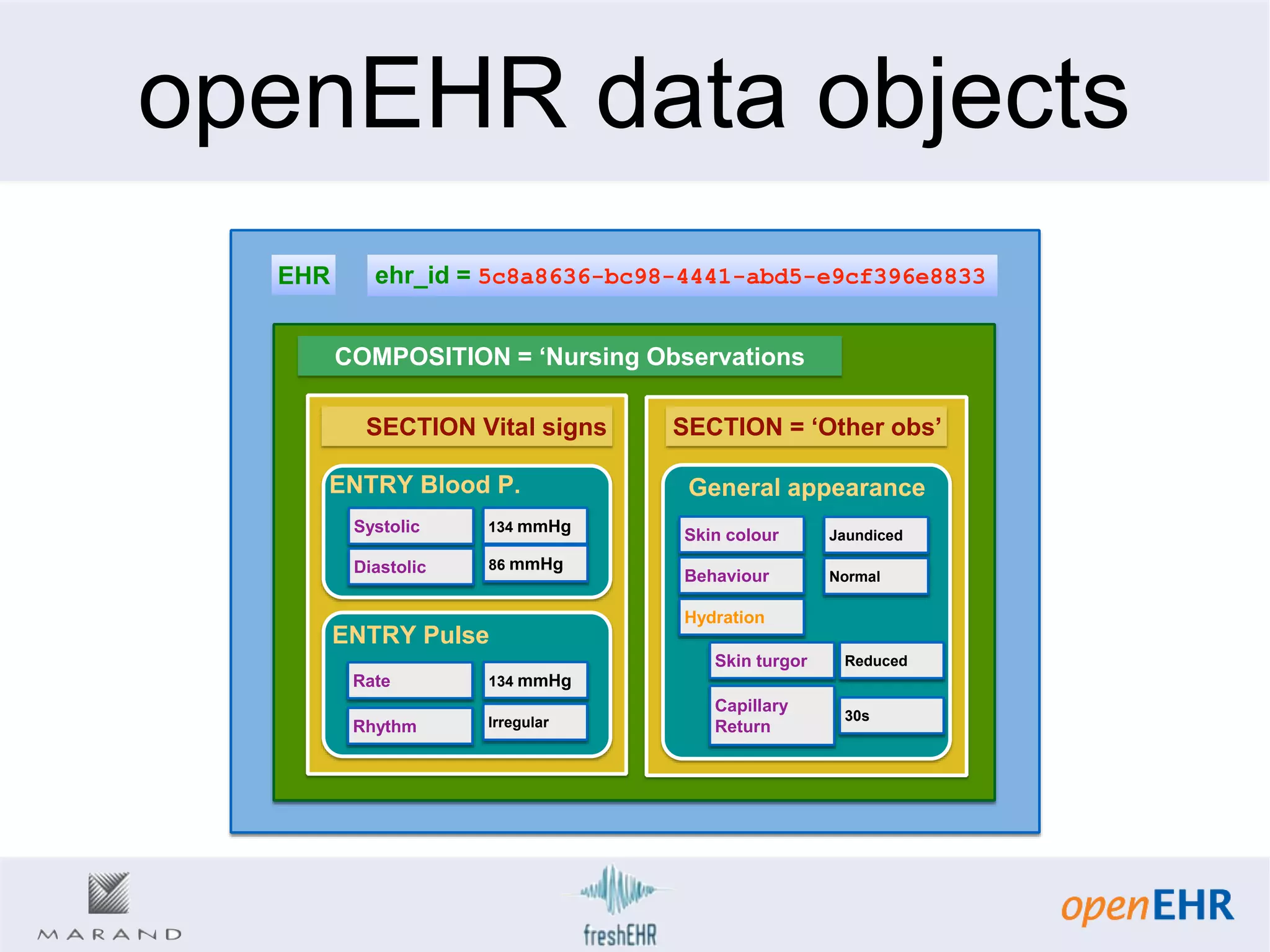
openEHR data objects
EHR
COMPOSITION = ‘Nursing Observations
SECTION Vital signs
ENTRY Blood P.
Systolic
Diastolic
ENTRY Pulse
Rate
Rhythm
General appearance
Skin colour
Behaviour
Skin turgor
Capillary
Return
Hydration
SECTION = ‘Other obs’
ehr_id = 5c8a8636-bc98-4441-abd5-e9cf396e8833
134 mmHg
86 mmHg
134 mmHg
Irregular
Jaundiced
Normal
Reduced
30s
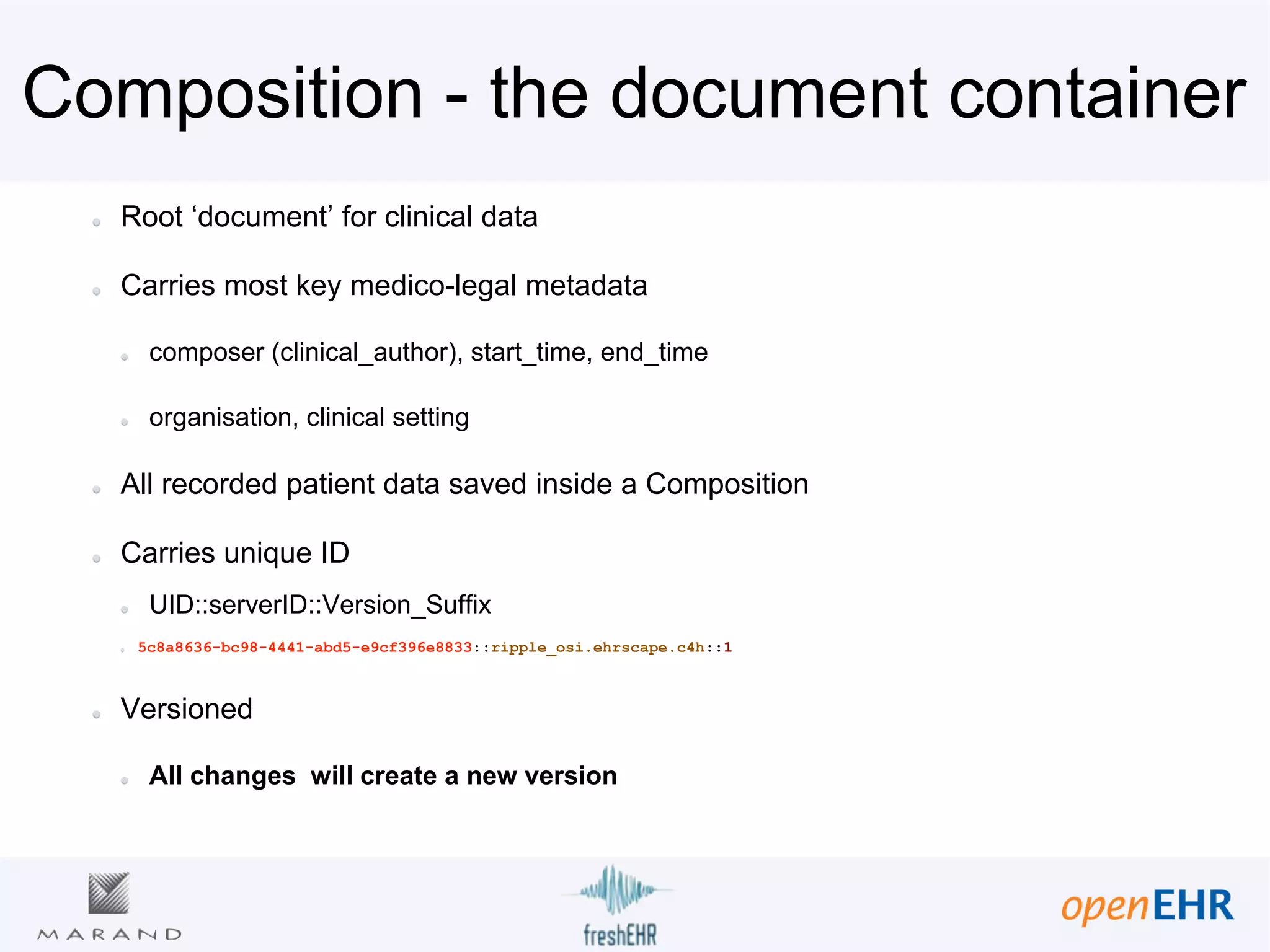
Composition - the document container
Root ‘document’ for clinical data
Carries most key medico-legal metadata
composer (clinical_author), start_time, end_time
organisation, clinical setting
All recorded patient data saved inside a Composition
Carries unique ID
UID::serverID::Version_Suffix
5c8a8636-bc98-4441-abd5-e9cf396e8833::ripple_osi.ehrscape.c4h::1
Versioned
All changes will create a new version
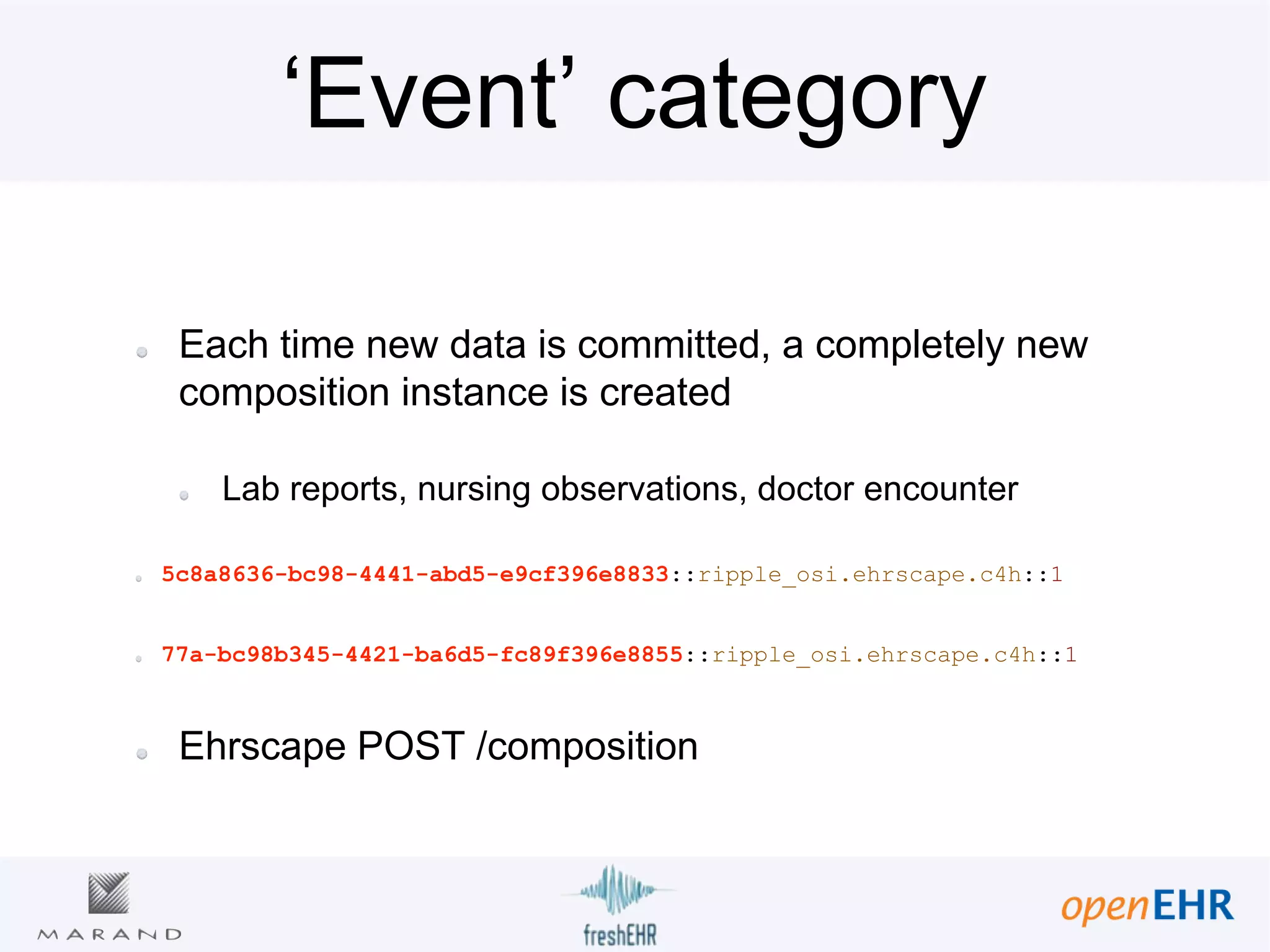
‘Event’ category
Each time new data is committed, a completely new
composition instance is created
Lab reports, nursing observations, doctor encounter
5c8a8636-bc98-4441-abd5-e9cf396e8833::ripple_osi.ehrscape.c4h::1
77a-bc98b345-4421-ba6d5-fc89f396e8855::ripple_osi.ehrscape.c4h::1
Ehrscape POST /composition
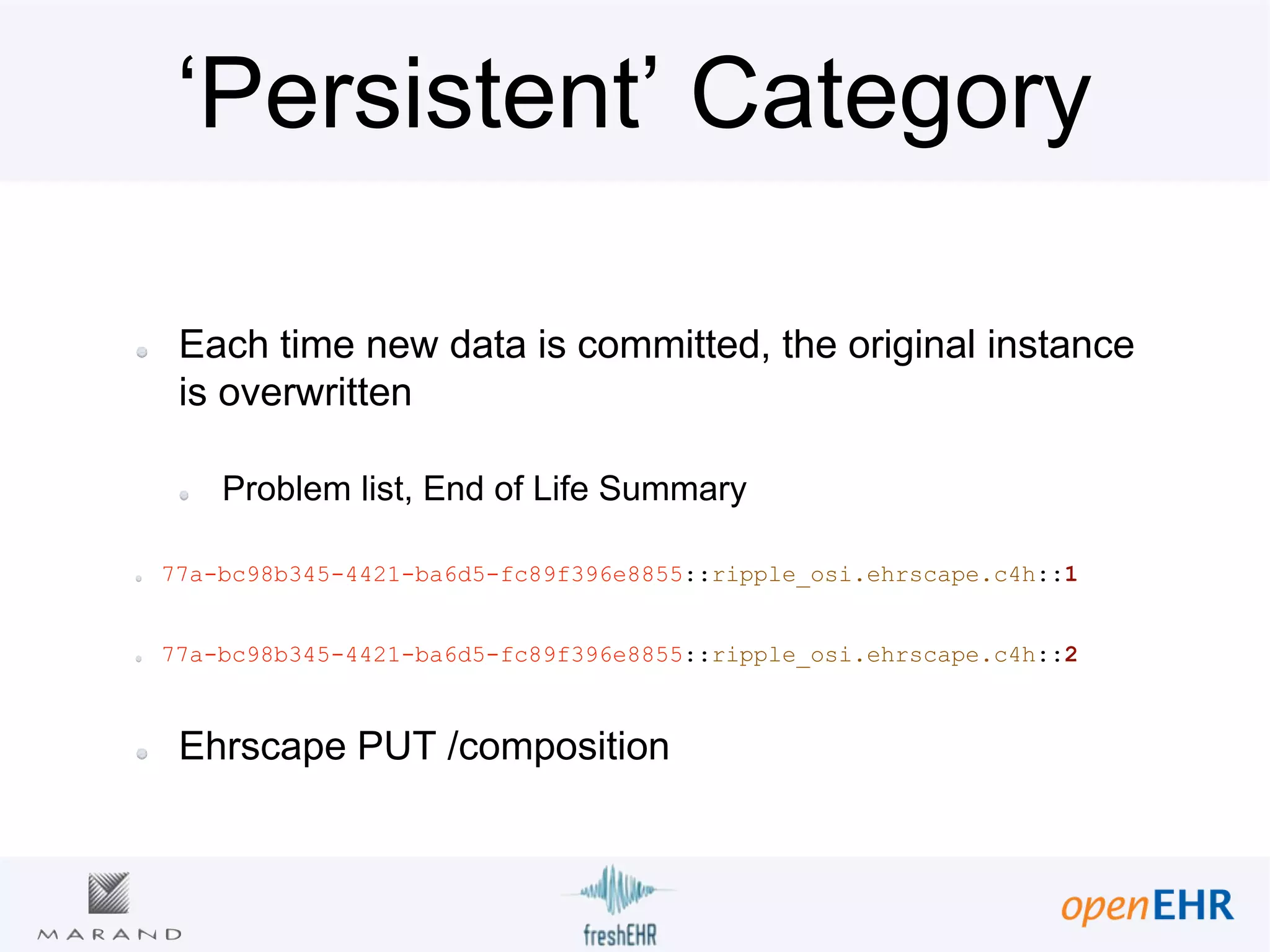
‘Persistent’ Category
Each time new data is committed, the original instance
is overwritten
Problem list, End of Life Summary
77a-bc98b345-4421-ba6d5-fc89f396e8855::ripple_osi.ehrscape.c4h::1
77a-bc98b345-4421-ba6d5-fc89f396e8855::ripple_osi.ehrscape.c4h::2
Ehrscape PUT /composition
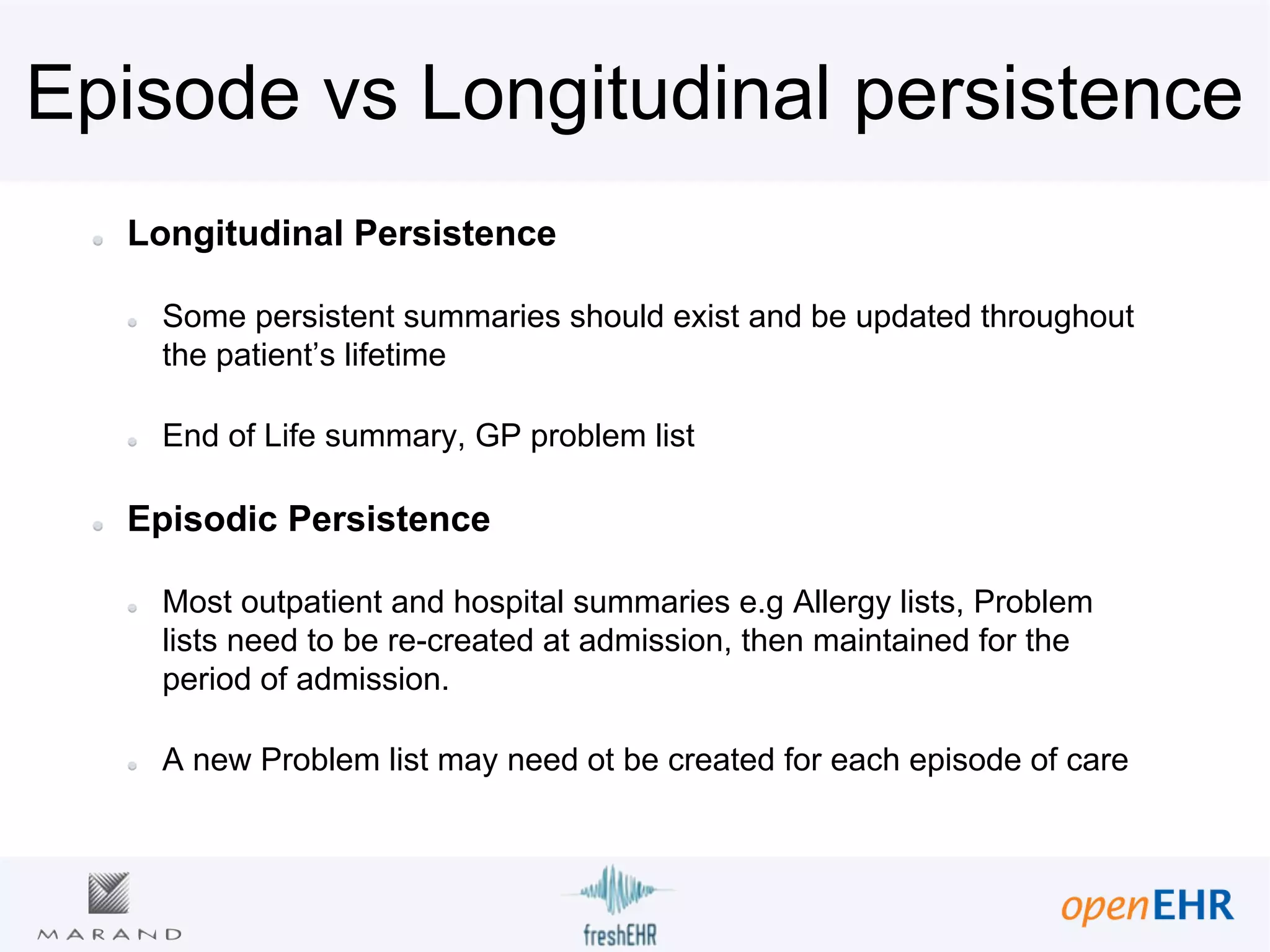
Episode vs Longitudinal persistence
Longitudinal Persistence
Some persistent summaries should exist and be updated throughout
the patient’s lifetime
End of Life summary, GP problem list
Episodic Persistence
Most outpatient and hospital summaries e.g Allergy lists, Problem
lists need to be re-created at admission, then maintained for the
period of admission.
A new Problem list may need ot be created for each episode of care
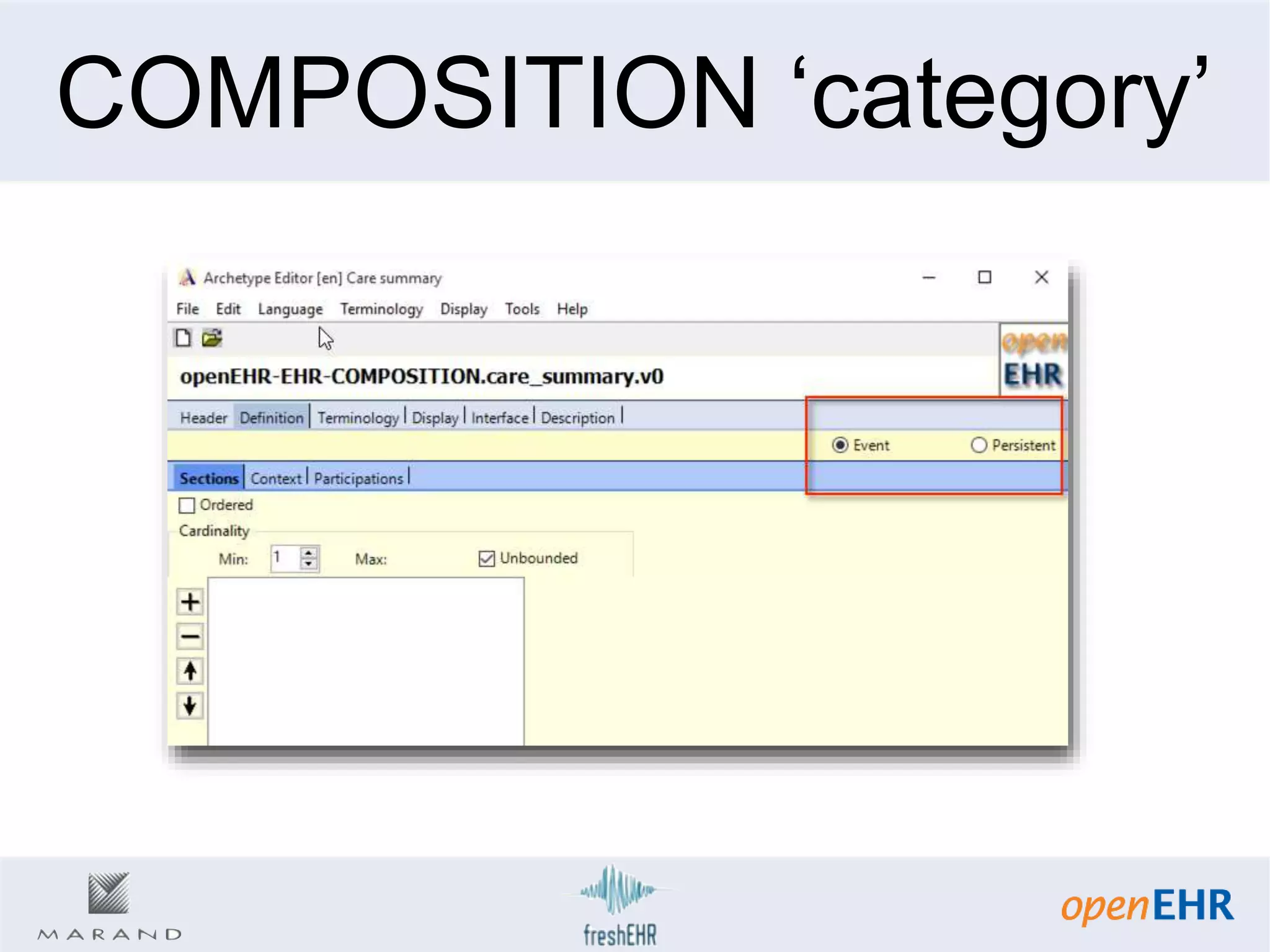
COMPOSITION ‘category’
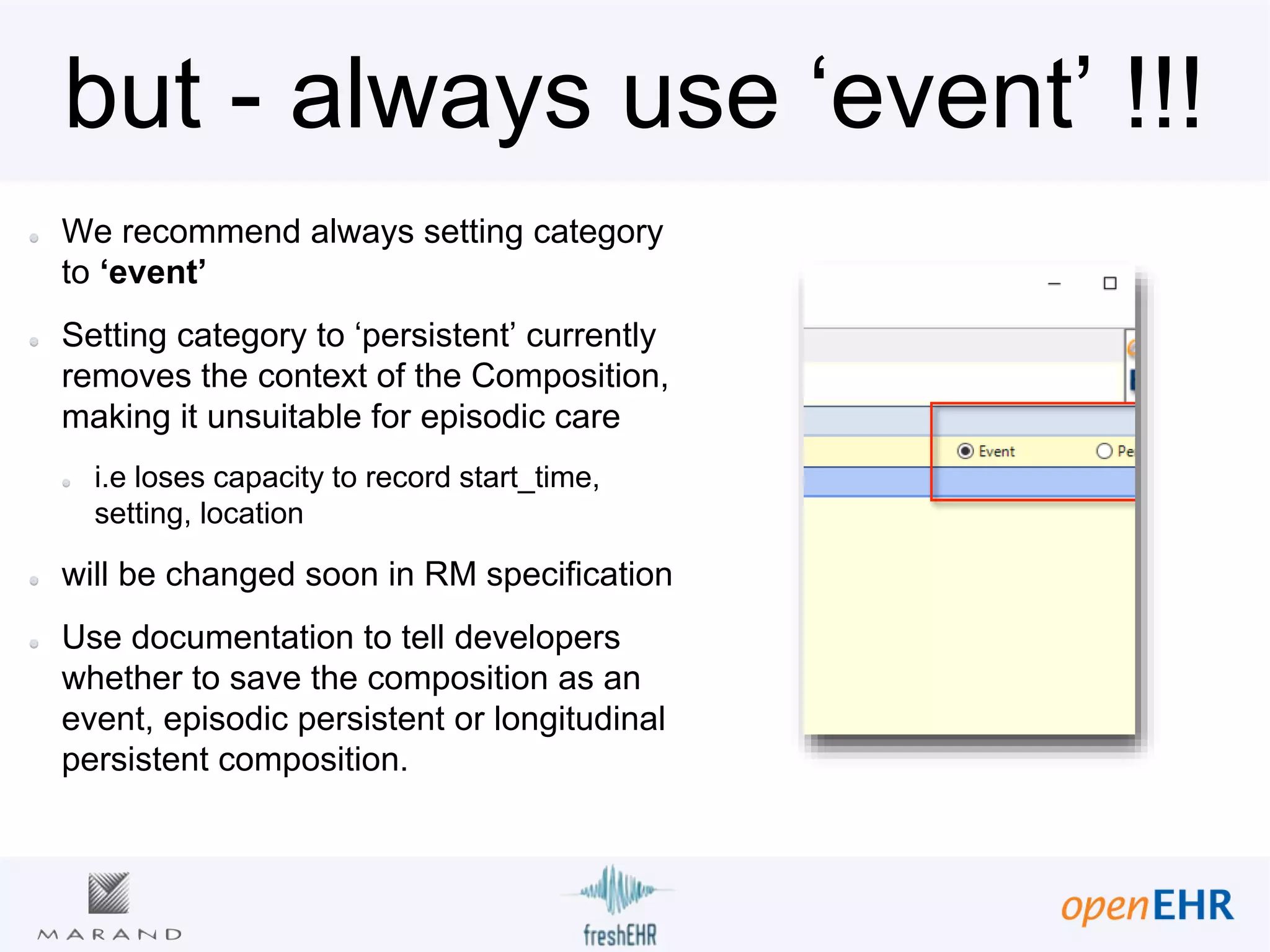
but - always use ‘event’ !!!
We recommend always setting category
to ‘event’
Setting category to ‘persistent’ currently
removes the context of the Composition,
making it unsuitable for episodic care
i.e loses capacity to record start_time,
setting, location
will be changed soon in RM specification
Use documentation to tell developers
whether to save the composition as an
event, episodic persistent or longitudinal
persistent composition.
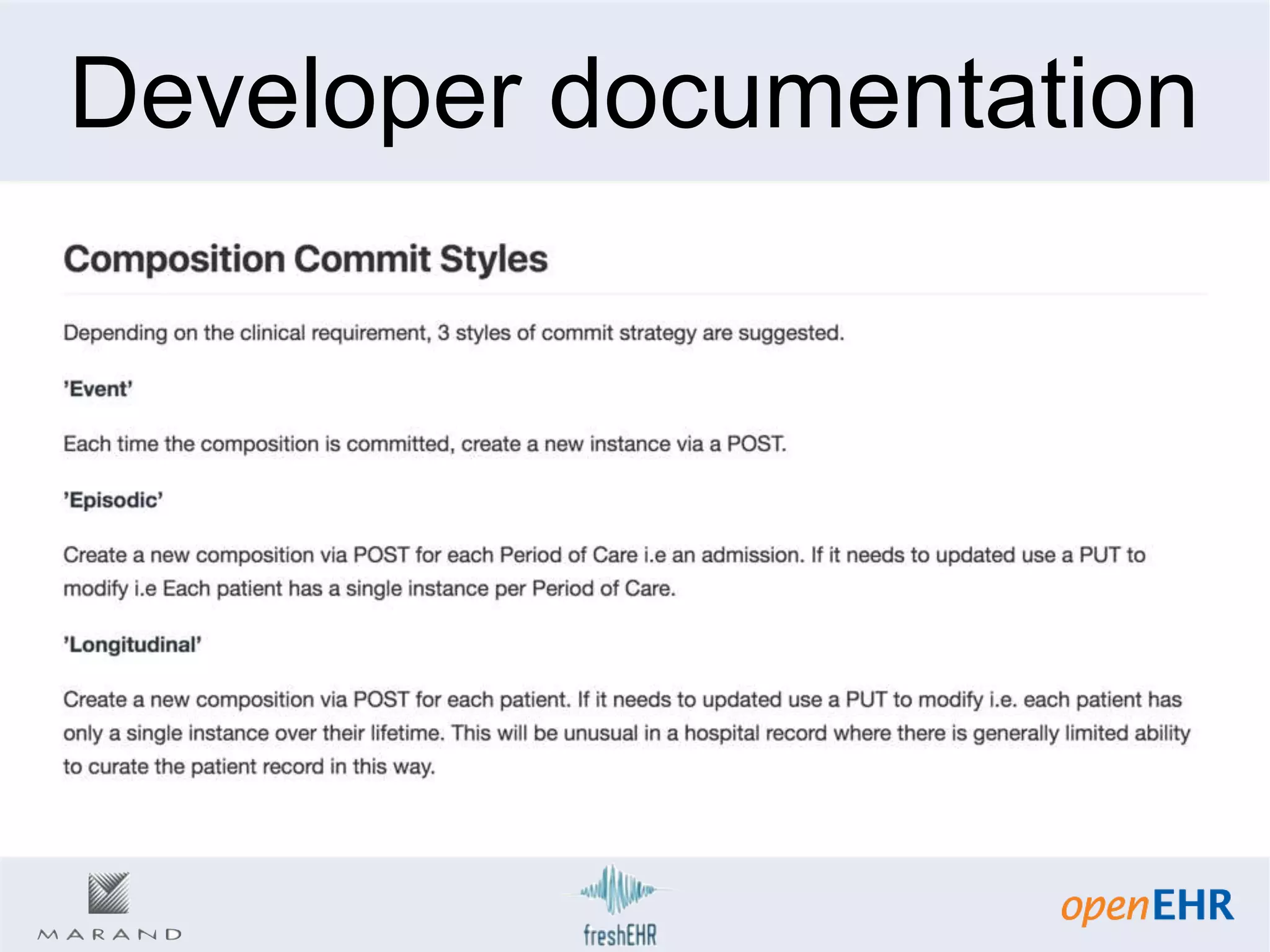
Developer documentation
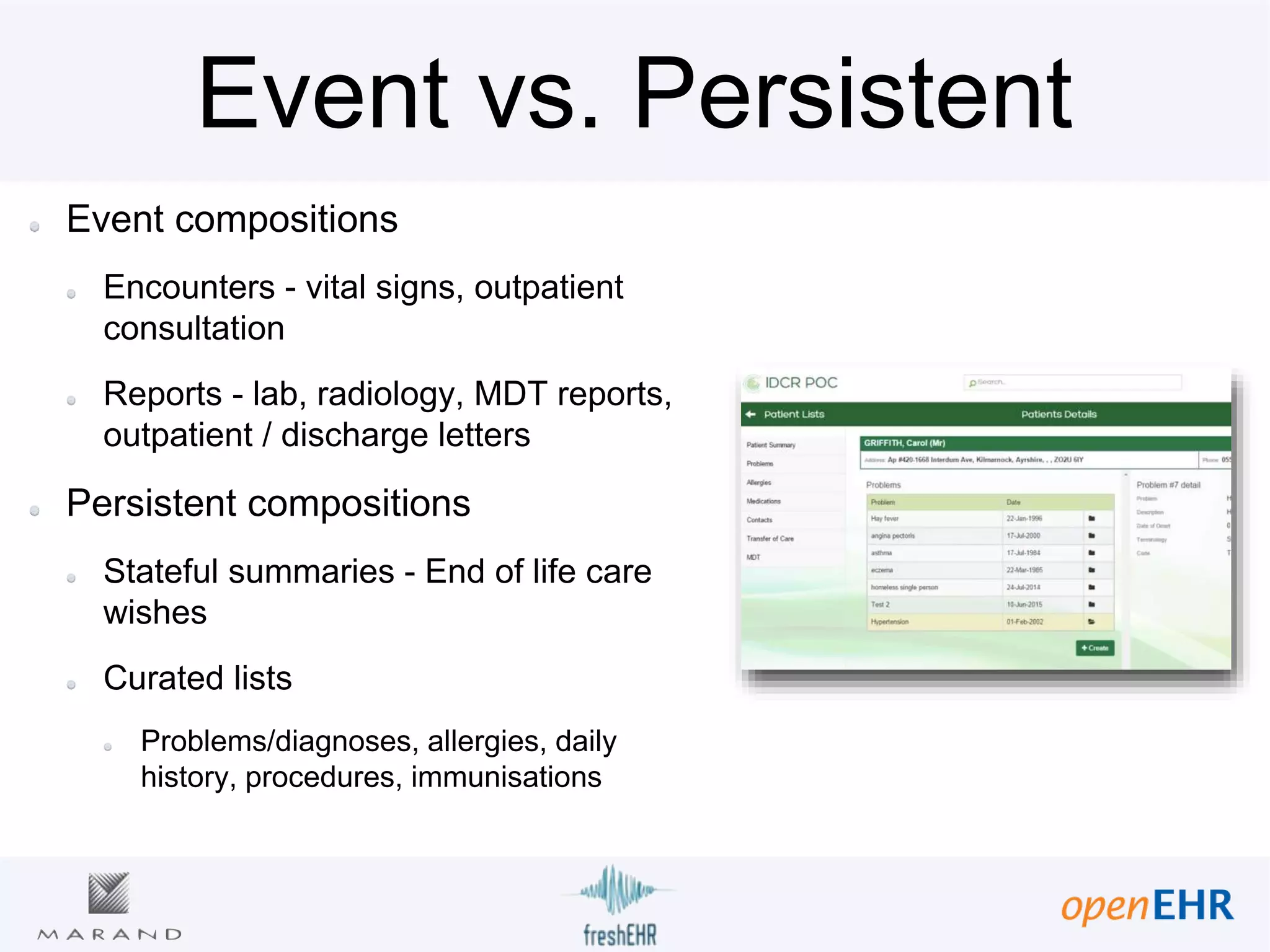
Event vs. Persistent
Event compositions
Encounters - vital signs, outpatient
consultation
Reports - lab, radiology, MDT reports,
outpatient / discharge letters
Persistent compositions
Stateful summaries - End of life care
wishes
Curated lists
Problems/diagnoses, allergies, daily
history, procedures, immunisations
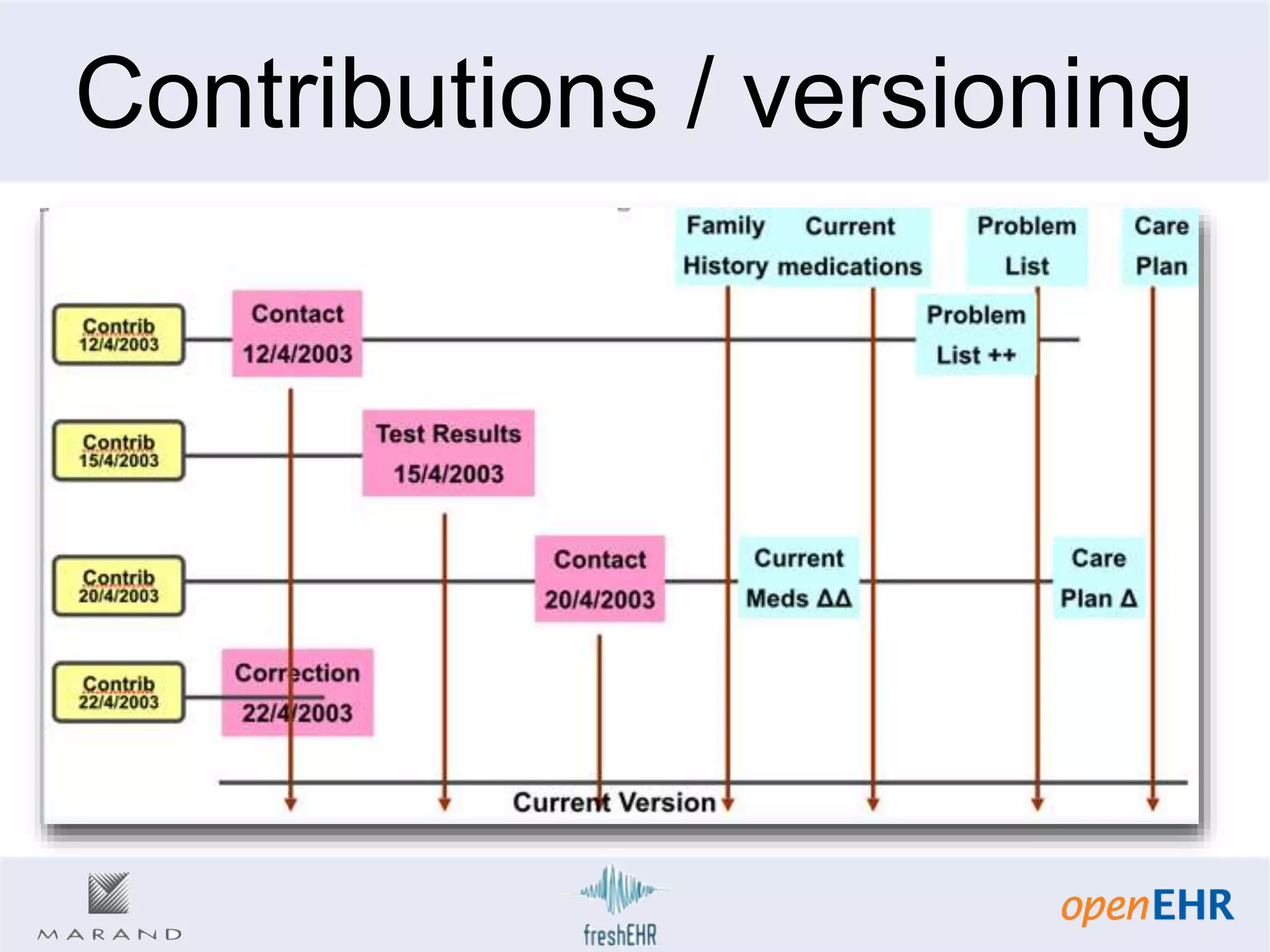
Contributions / versioning
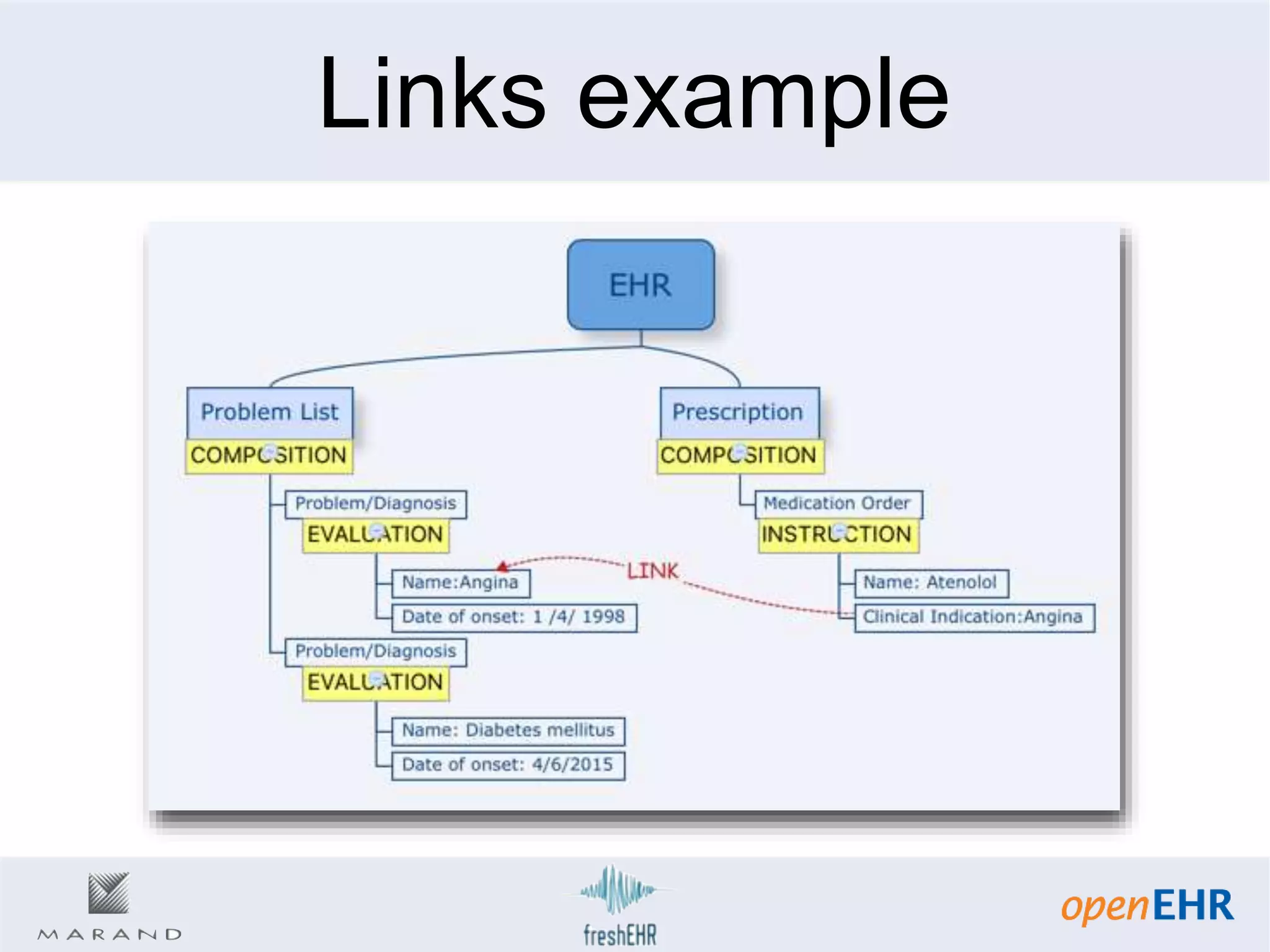
Links
Most of the relationships between different Entries
and Elements is defined in archetypes and
templates, generally in the same Composition
Links allow the system developer to connect
different Entries which do not have a ‘pre-cooked’
association, and where the Entries live in different
Compositions
Links example
openEHR Composition category - persistent vs. event

openEHR Composition category - persistent vs. event

  • 1.
    Dr Ian McNicoll CompositionPersistence Strategies
  • 2.
    openEHR data objects EHR COMPOSITION= ‘Nursing Observations SECTION Vital signs ENTRY Blood P. Systolic Diastolic ENTRY Pulse Rate Rhythm General appearance Skin colour Behaviour Skin turgor Capillary Return Hydration SECTION = ‘Other obs’ ehr_id = 5c8a8636-bc98-4441-abd5-e9cf396e8833 134 mmHg 86 mmHg 134 mmHg Irregular Jaundiced Normal Reduced 30s
  • 3.
    Composition - thedocument container Root ‘document’ for clinical data Carries most key medico-legal metadata composer (clinical_author), start_time, end_time organisation, clinical setting All recorded patient data saved inside a Composition Carries unique ID UID::serverID::Version_Suffix 5c8a8636-bc98-4441-abd5-e9cf396e8833::ripple_osi.ehrscape.c4h::1 Versioned All changes will create a new version
  • 4.
    ‘Event’ category Each timenew data is committed, a completely new composition instance is created Lab reports, nursing observations, doctor encounter 5c8a8636-bc98-4441-abd5-e9cf396e8833::ripple_osi.ehrscape.c4h::1 77a-bc98b345-4421-ba6d5-fc89f396e8855::ripple_osi.ehrscape.c4h::1 Ehrscape POST /composition
  • 5.
    ‘Persistent’ Category Each timenew data is committed, the original instance is overwritten Problem list, End of Life Summary 77a-bc98b345-4421-ba6d5-fc89f396e8855::ripple_osi.ehrscape.c4h::1 77a-bc98b345-4421-ba6d5-fc89f396e8855::ripple_osi.ehrscape.c4h::2 Ehrscape PUT /composition
  • 6.
    Episode vs Longitudinalpersistence Longitudinal Persistence Some persistent summaries should exist and be updated throughout the patient’s lifetime End of Life summary, GP problem list Episodic Persistence Most outpatient and hospital summaries e.g Allergy lists, Problem lists need to be re-created at admission, then maintained for the period of admission. A new Problem list may need ot be created for each episode of care
  • 7.
  • 8.
    but - alwaysuse ‘event’ !!! We recommend always setting category to ‘event’ Setting category to ‘persistent’ currently removes the context of the Composition, making it unsuitable for episodic care i.e loses capacity to record start_time, setting, location will be changed soon in RM specification Use documentation to tell developers whether to save the composition as an event, episodic persistent or longitudinal persistent composition.
  • 9.
  • 10.
    Event vs. Persistent Eventcompositions Encounters - vital signs, outpatient consultation Reports - lab, radiology, MDT reports, outpatient / discharge letters Persistent compositions Stateful summaries - End of life care wishes Curated lists Problems/diagnoses, allergies, daily history, procedures, immunisations
  • 11.
  • 12.
    Links Most of therelationships between different Entries and Elements is defined in archetypes and templates, generally in the same Composition Links allow the system developer to connect different Entries which do not have a ‘pre-cooked’ association, and where the Entries live in different Compositions
  • 13.