
SEO
• SEO, or Search Engine Optimization,
enhances a website's visibility on search
engines by optimizing content and
structure to rank higher organically,
increasing traffic and engagement.
On-Page SEO
• On-page SEO refers to the optimization
techniques applied directly on a website's
individual pages to improve their search
engine visibility and ranking.
• These techniques involve optimizing
various elements such as content, HTML
source code, and site structure to make
them more relevant and appealing to both
users and search engines.
On-Page SEO
Techniques
1. Title Tags: Think of title tags as the headlines of your web pages. They should be catchy and
include words that people might use when searching. For example, if your page is about pizza
recipes, your title tag could be "Best Pizza Recipes - Easy and Delicious Homemade Ideas."
2. Meta Descriptions: Meta descriptions are like little summaries that appear under the title in search
results. They should give people a good idea of what your page is about and encourage them to
click. For instance, "Discover mouthwatering pizza recipes you can make at home. From classic
margherita to gourmet toppings, we've got you covered!"
3. URL Structure: Your website's URLs should be simple and include keywords related to the page's
content. For example, if your page is about homemade pizza, the URL could be something like
"yourwebsite.com/homemade-pizza-recipes".
On-Page SEO
Techniques
4. Keyword Optimization: Use words and phrases that people might search for naturally throughout
your content. For example, if you're talking about making pizza at home, use terms like "homemade
pizza," "pizza recipes," and "how to make pizza."
5. Image Optimization: When you include images on your website, give them descriptive names and
add alt text that describes what the image is about. This helps search engines understand your
content better. For example, if you have a picture of a margherita pizza, name the image
"homemade-margherita-pizza.jpg" and add alt text like "Delicious homemade margherita pizza with
fresh tomatoes and basil.“
6. Header Tags: Headers are like section titles on a webpage. They help organize your content and
make it easier for people to read. For example, you might have a header that says "Easy Homemade
Pizza Recipes" to introduce a section of your page.
On-Page SEO
Techniques
7. Mobile Optimization: Make sure your website looks good and works well on mobile devices like
smartphones and tablets. Most people use their phones to search the web, so it's important that your
site is easy to use on smaller screens.
8. Page Speed Optimization: Your website should load quickly so that visitors don't get frustrated
and leave. This involves things like making sure your images are the right size and your code is
efficient.
9. Internal Linking: Link to other pages on your website where it makes sense. This helps visitors
navigate your site and shows search engines that your content is related and valuable. For instance,
you could link from a pizza recipe to a page about different types of cheese you can use.
On-Page SEO
Techniques
10. Schema Markup: This is a way of adding extra information to your website to help search
engines understand it better. For example, if you have a recipe for homemade pizza, you could use
schema markup to tell search engines things like the ingredients and cooking instructions.
11. Quality Content: Produce high-quality, relevant content that provides value to your audience.
Focus on creating comprehensive, well-researched content that addresses the needs and interests of
your target audience.
12. External Linking: Include links to authoritative and relevant external websites to provide
additional context and credibility to your content. Linking to reputable sources can also improve
your website's credibility and authority in the eyes of search engines.
On-Page SEO
Techniques
13. Social Sharing Integration: Make it easy for users to share your content on social media
platforms by including social sharing buttons on your web pages. Social signals, such as likes,
shares, and comments, can indirectly impact your search engine rankings.
14. Regular Content Updates: Continuously update and refresh your content to keep it relevant and
up-to-date. Regularly publishing new content, updating existing content, and removing outdated
information signals to search engines that your website is active and trustworthy.
15. Semantic Keyword Optimization: Instead of solely focusing on exact match keywords,
incorporate semantic keywords and related terms naturally within your content. This helps search
engines understand the context of your content and improves relevance for a wider range of search
queries.
On-Page SEO
Techniques
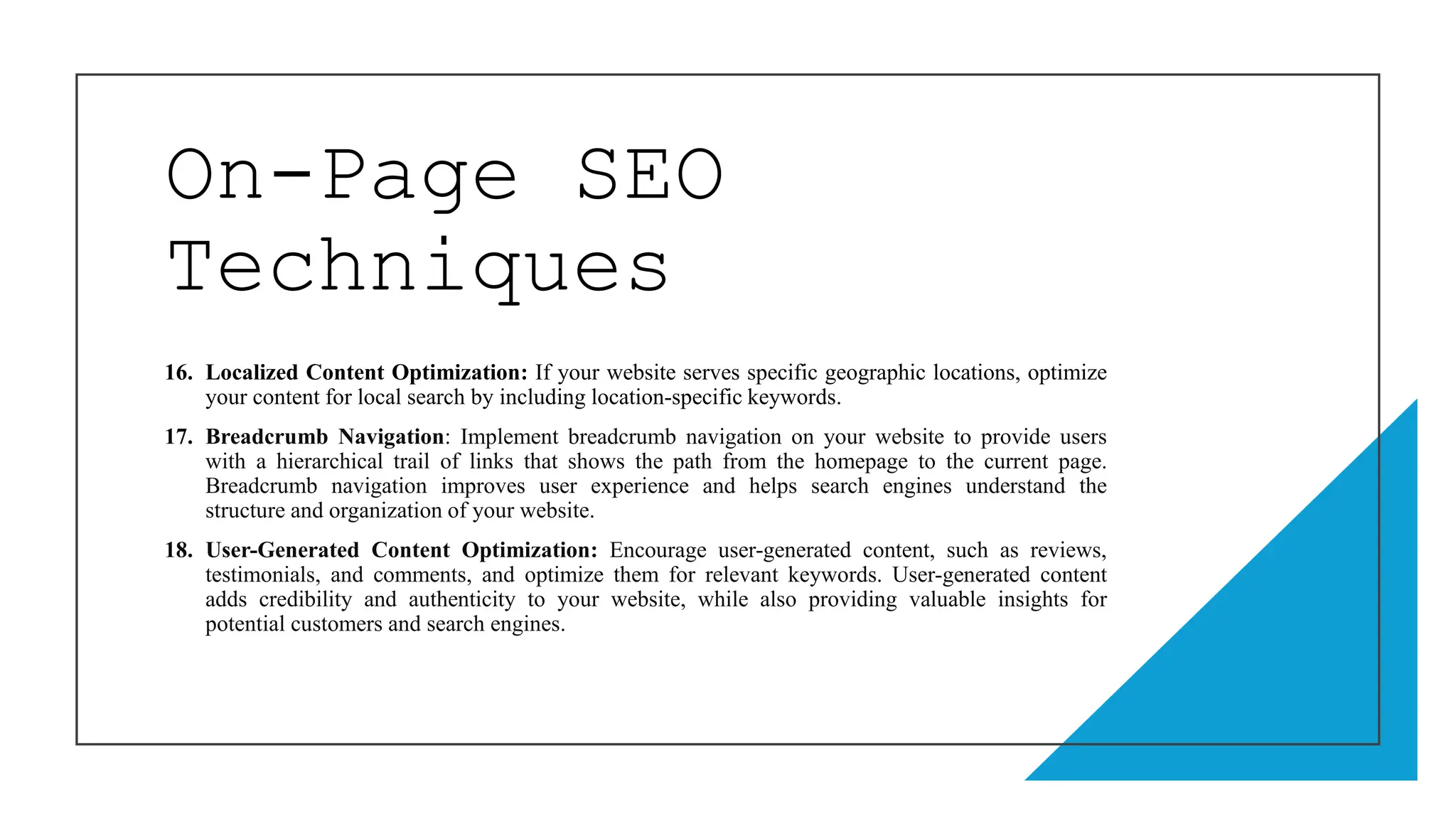
16. Localized Content Optimization: If your website serves specific geographic locations, optimize
your content for local search by including location-specific keywords.
17. Breadcrumb Navigation: Implement breadcrumb navigation on your website to provide users
with a hierarchical trail of links that shows the path from the homepage to the current page.
Breadcrumb navigation improves user experience and helps search engines understand the
structure and organization of your website.
18. User-Generated Content Optimization: Encourage user-generated content, such as reviews,
testimonials, and comments, and optimize them for relevant keywords. User-generated content
adds credibility and authenticity to your website, while also providing valuable insights for
potential customers and search engines.
On-Page SEO
Techniques
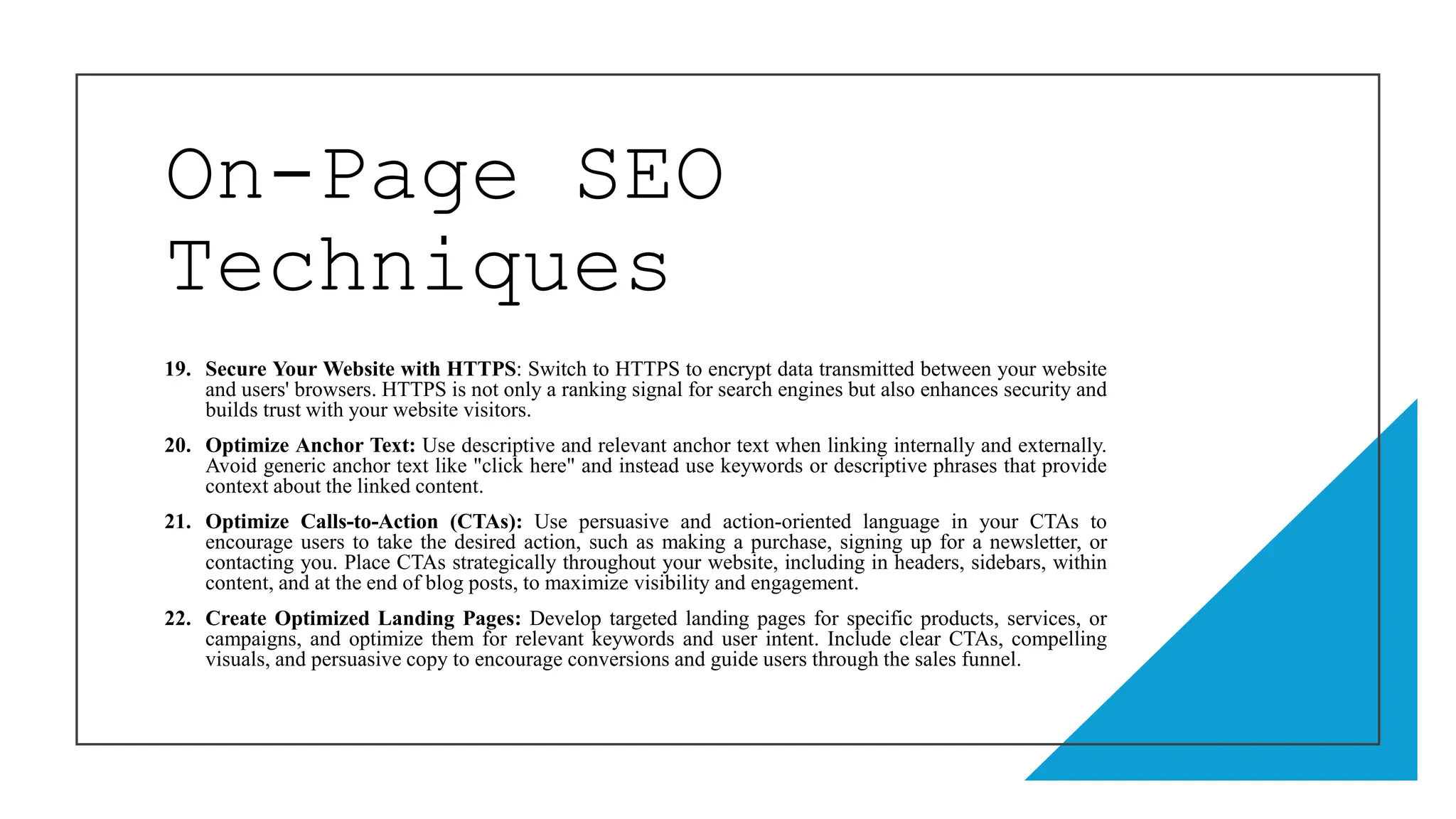
19. Secure Your Website with HTTPS: Switch to HTTPS to encrypt data transmitted between your website
and users' browsers. HTTPS is not only a ranking signal for search engines but also enhances security and
builds trust with your website visitors.
20. Optimize Anchor Text: Use descriptive and relevant anchor text when linking internally and externally.
Avoid generic anchor text like "click here" and instead use keywords or descriptive phrases that provide
context about the linked content.
21. Optimize Calls-to-Action (CTAs): Use persuasive and action-oriented language in your CTAs to
encourage users to take the desired action, such as making a purchase, signing up for a newsletter, or
contacting you. Place CTAs strategically throughout your website, including in headers, sidebars, within
content, and at the end of blog posts, to maximize visibility and engagement.
22. Create Optimized Landing Pages: Develop targeted landing pages for specific products, services, or
campaigns, and optimize them for relevant keywords and user intent. Include clear CTAs, compelling
visuals, and persuasive copy to encourage conversions and guide users through the sales funnel.
Semantic
Keyword
Optimizat
ion
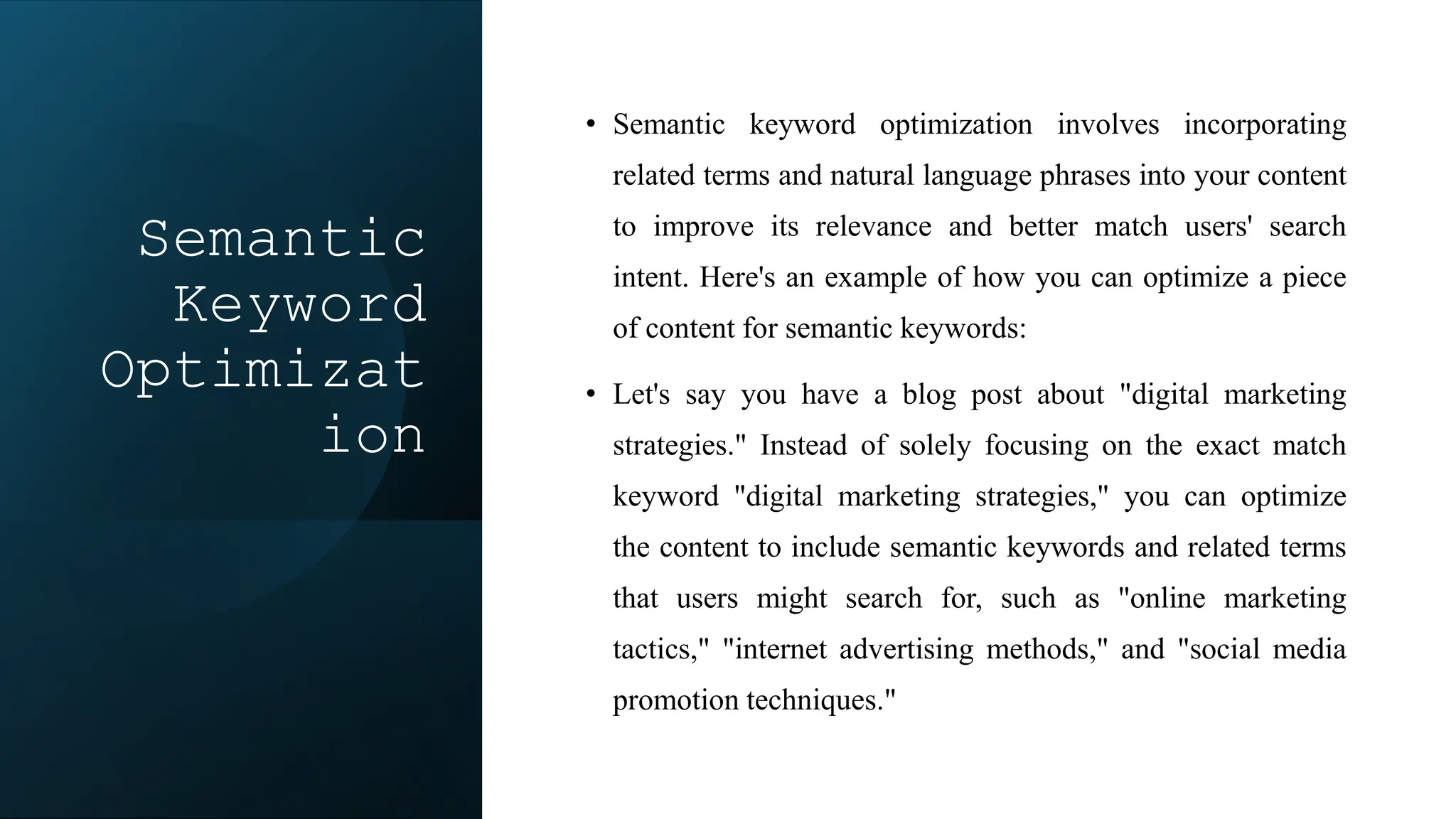
• Semantic keyword optimization involves incorporating
related terms and natural language phrases into your content
to improve its relevance and better match users' search
intent. Here's an example of how you can optimize a piece
of content for semantic keywords:
• Let's say you have a blog post about "digital marketing
strategies." Instead of solely focusing on the exact match
keyword "digital marketing strategies," you can optimize
the content to include semantic keywords and related terms
that users might search for, such as "online marketing
tactics," "internet advertising methods," and "social media
promotion techniques."
Call To
Action
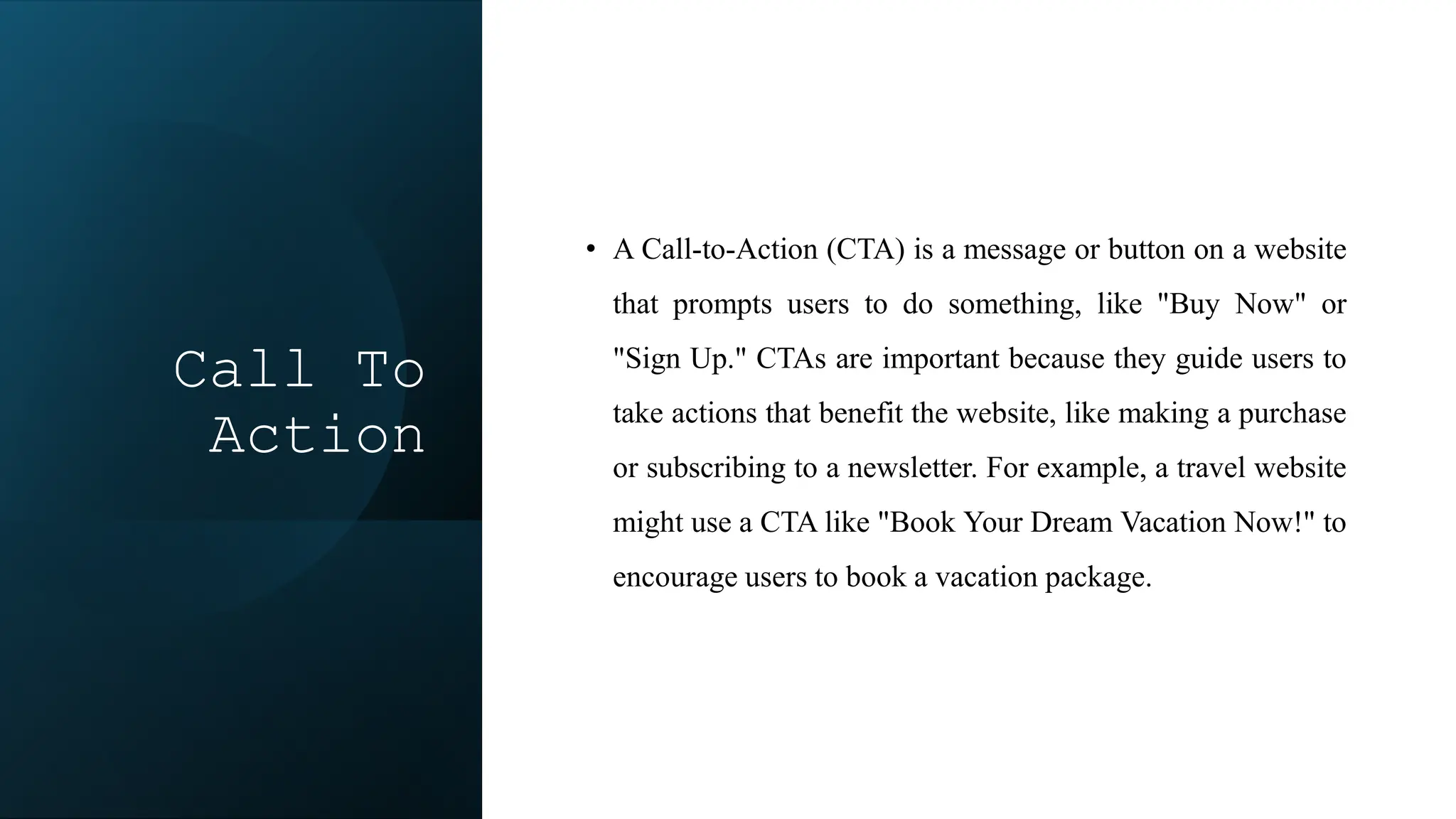
• A Call-to-Action (CTA) is a message or button on a website
that prompts users to do something, like "Buy Now" or
"Sign Up." CTAs are important because they guide users to
take actions that benefit the website, like making a purchase
or subscribing to a newsletter. For example, a travel website
might use a CTA like "Book Your Dream Vacation Now!" to
encourage users to book a vacation package.
Happy Learning!

On Page SEO (Search Engine Optimization)

  • 2.
    SEO • SEO, orSearch Engine Optimization, enhances a website's visibility on search engines by optimizing content and structure to rank higher organically, increasing traffic and engagement.
  • 3.
    On-Page SEO • On-pageSEO refers to the optimization techniques applied directly on a website's individual pages to improve their search engine visibility and ranking. • These techniques involve optimizing various elements such as content, HTML source code, and site structure to make them more relevant and appealing to both users and search engines.
  • 4.
    On-Page SEO Techniques 1. TitleTags: Think of title tags as the headlines of your web pages. They should be catchy and include words that people might use when searching. For example, if your page is about pizza recipes, your title tag could be "Best Pizza Recipes - Easy and Delicious Homemade Ideas." 2. Meta Descriptions: Meta descriptions are like little summaries that appear under the title in search results. They should give people a good idea of what your page is about and encourage them to click. For instance, "Discover mouthwatering pizza recipes you can make at home. From classic margherita to gourmet toppings, we've got you covered!" 3. URL Structure: Your website's URLs should be simple and include keywords related to the page's content. For example, if your page is about homemade pizza, the URL could be something like "yourwebsite.com/homemade-pizza-recipes".
  • 5.
    On-Page SEO Techniques 4. KeywordOptimization: Use words and phrases that people might search for naturally throughout your content. For example, if you're talking about making pizza at home, use terms like "homemade pizza," "pizza recipes," and "how to make pizza." 5. Image Optimization: When you include images on your website, give them descriptive names and add alt text that describes what the image is about. This helps search engines understand your content better. For example, if you have a picture of a margherita pizza, name the image "homemade-margherita-pizza.jpg" and add alt text like "Delicious homemade margherita pizza with fresh tomatoes and basil.“ 6. Header Tags: Headers are like section titles on a webpage. They help organize your content and make it easier for people to read. For example, you might have a header that says "Easy Homemade Pizza Recipes" to introduce a section of your page.
  • 6.
    On-Page SEO Techniques 7. MobileOptimization: Make sure your website looks good and works well on mobile devices like smartphones and tablets. Most people use their phones to search the web, so it's important that your site is easy to use on smaller screens. 8. Page Speed Optimization: Your website should load quickly so that visitors don't get frustrated and leave. This involves things like making sure your images are the right size and your code is efficient. 9. Internal Linking: Link to other pages on your website where it makes sense. This helps visitors navigate your site and shows search engines that your content is related and valuable. For instance, you could link from a pizza recipe to a page about different types of cheese you can use.
  • 7.
    On-Page SEO Techniques 10. SchemaMarkup: This is a way of adding extra information to your website to help search engines understand it better. For example, if you have a recipe for homemade pizza, you could use schema markup to tell search engines things like the ingredients and cooking instructions. 11. Quality Content: Produce high-quality, relevant content that provides value to your audience. Focus on creating comprehensive, well-researched content that addresses the needs and interests of your target audience. 12. External Linking: Include links to authoritative and relevant external websites to provide additional context and credibility to your content. Linking to reputable sources can also improve your website's credibility and authority in the eyes of search engines.
  • 8.
    On-Page SEO Techniques 13. SocialSharing Integration: Make it easy for users to share your content on social media platforms by including social sharing buttons on your web pages. Social signals, such as likes, shares, and comments, can indirectly impact your search engine rankings. 14. Regular Content Updates: Continuously update and refresh your content to keep it relevant and up-to-date. Regularly publishing new content, updating existing content, and removing outdated information signals to search engines that your website is active and trustworthy. 15. Semantic Keyword Optimization: Instead of solely focusing on exact match keywords, incorporate semantic keywords and related terms naturally within your content. This helps search engines understand the context of your content and improves relevance for a wider range of search queries.
  • 9.
    On-Page SEO Techniques 16. LocalizedContent Optimization: If your website serves specific geographic locations, optimize your content for local search by including location-specific keywords. 17. Breadcrumb Navigation: Implement breadcrumb navigation on your website to provide users with a hierarchical trail of links that shows the path from the homepage to the current page. Breadcrumb navigation improves user experience and helps search engines understand the structure and organization of your website. 18. User-Generated Content Optimization: Encourage user-generated content, such as reviews, testimonials, and comments, and optimize them for relevant keywords. User-generated content adds credibility and authenticity to your website, while also providing valuable insights for potential customers and search engines.
  • 10.
    On-Page SEO Techniques 19. SecureYour Website with HTTPS: Switch to HTTPS to encrypt data transmitted between your website and users' browsers. HTTPS is not only a ranking signal for search engines but also enhances security and builds trust with your website visitors. 20. Optimize Anchor Text: Use descriptive and relevant anchor text when linking internally and externally. Avoid generic anchor text like "click here" and instead use keywords or descriptive phrases that provide context about the linked content. 21. Optimize Calls-to-Action (CTAs): Use persuasive and action-oriented language in your CTAs to encourage users to take the desired action, such as making a purchase, signing up for a newsletter, or contacting you. Place CTAs strategically throughout your website, including in headers, sidebars, within content, and at the end of blog posts, to maximize visibility and engagement. 22. Create Optimized Landing Pages: Develop targeted landing pages for specific products, services, or campaigns, and optimize them for relevant keywords and user intent. Include clear CTAs, compelling visuals, and persuasive copy to encourage conversions and guide users through the sales funnel.
  • 11.
    Semantic Keyword Optimizat ion • Semantic keywordoptimization involves incorporating related terms and natural language phrases into your content to improve its relevance and better match users' search intent. Here's an example of how you can optimize a piece of content for semantic keywords: • Let's say you have a blog post about "digital marketing strategies." Instead of solely focusing on the exact match keyword "digital marketing strategies," you can optimize the content to include semantic keywords and related terms that users might search for, such as "online marketing tactics," "internet advertising methods," and "social media promotion techniques."
  • 12.
    Call To Action • ACall-to-Action (CTA) is a message or button on a website that prompts users to do something, like "Buy Now" or "Sign Up." CTAs are important because they guide users to take actions that benefit the website, like making a purchase or subscribing to a newsletter. For example, a travel website might use a CTA like "Book Your Dream Vacation Now!" to encourage users to book a vacation package.
  • 13.