Democracy 2.0
   Andrija Pušić
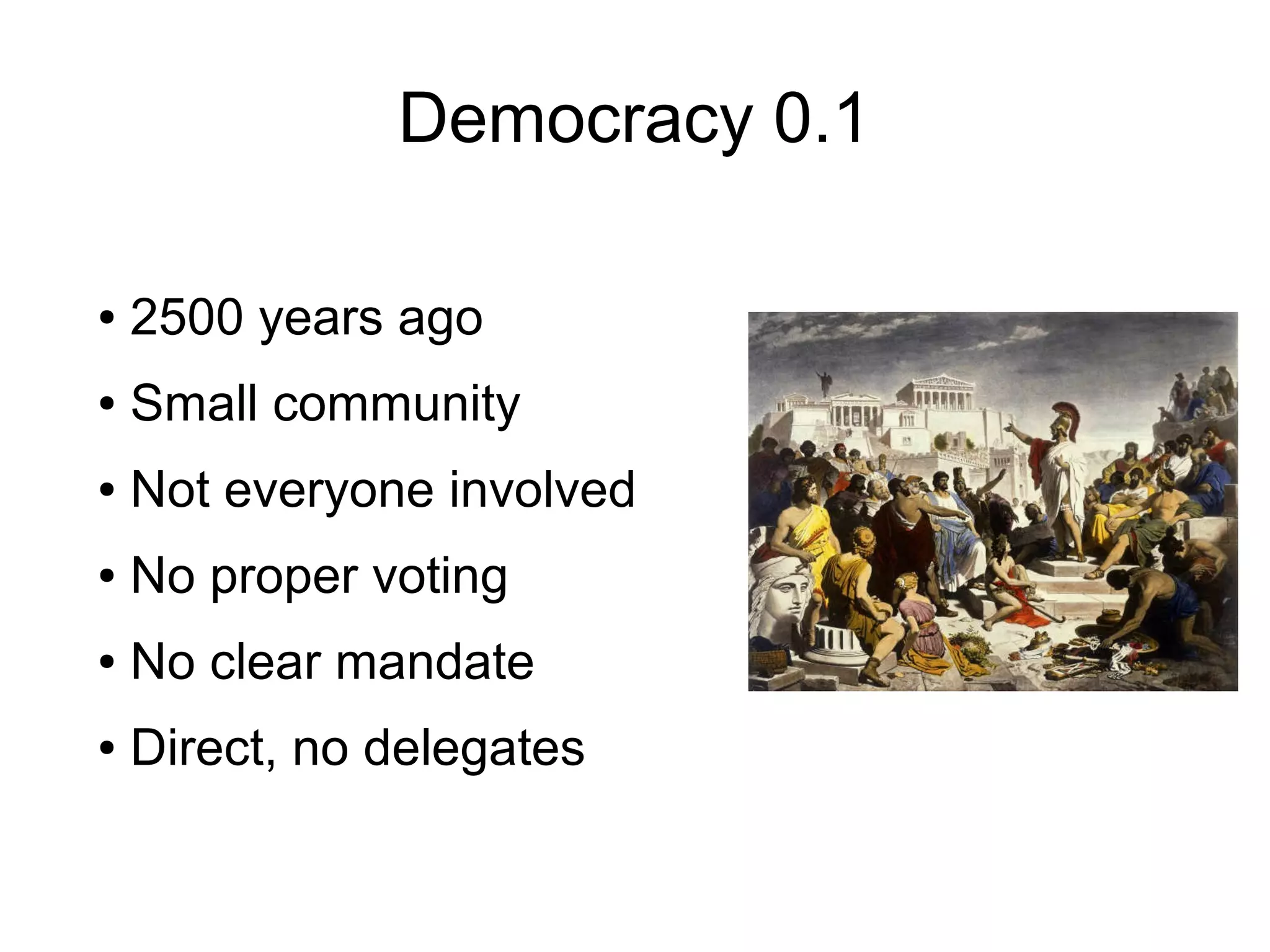
Democracy 0.1

●   2500 years ago
●   Small community
●   Not everyone involved
●   No proper voting
●   No clear mandate
●   Direct, no delegates
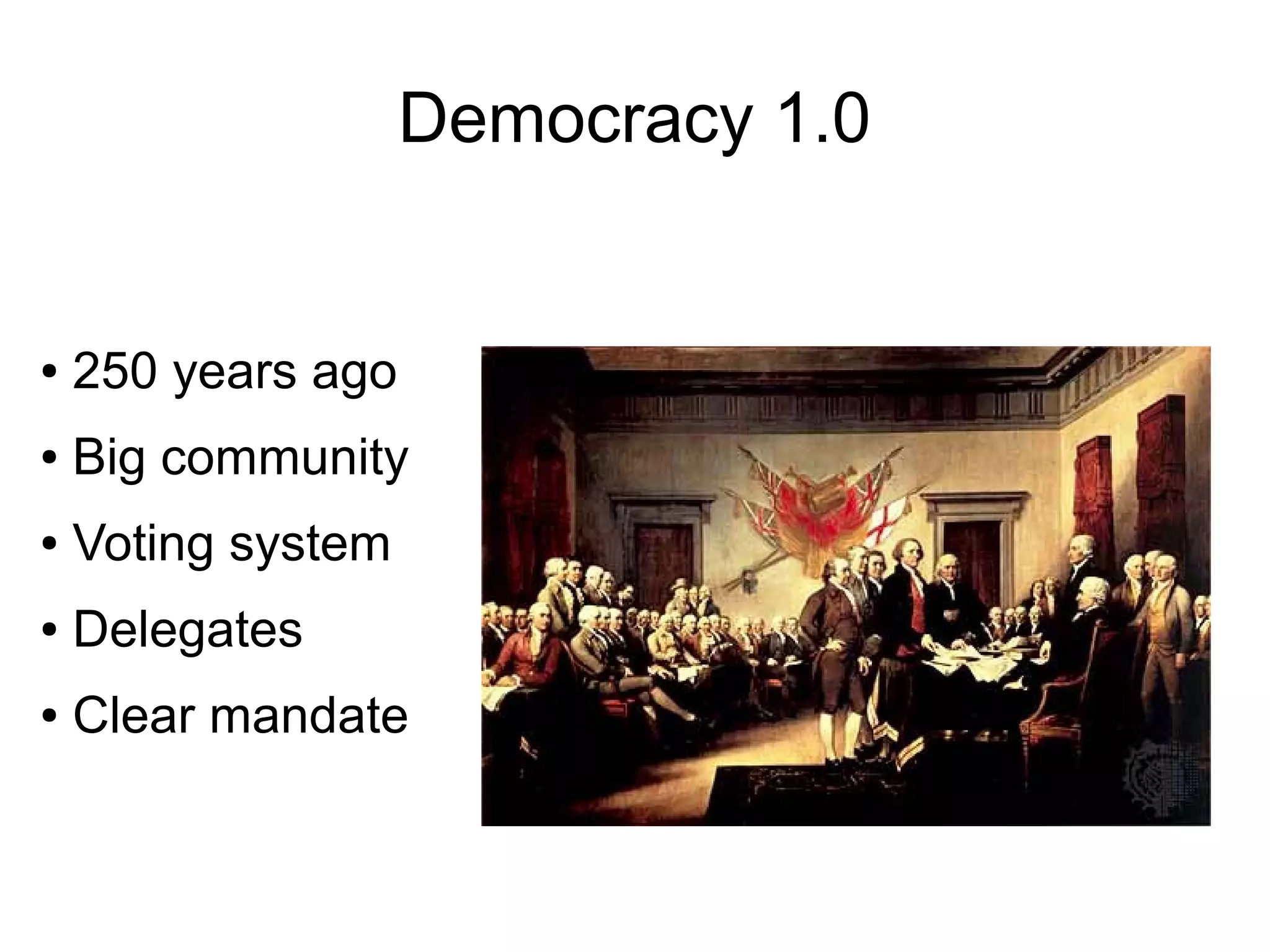
Democracy 1.0


●   250 years ago
●   Big community
●   Voting system
●   Delegates
●   Clear mandate
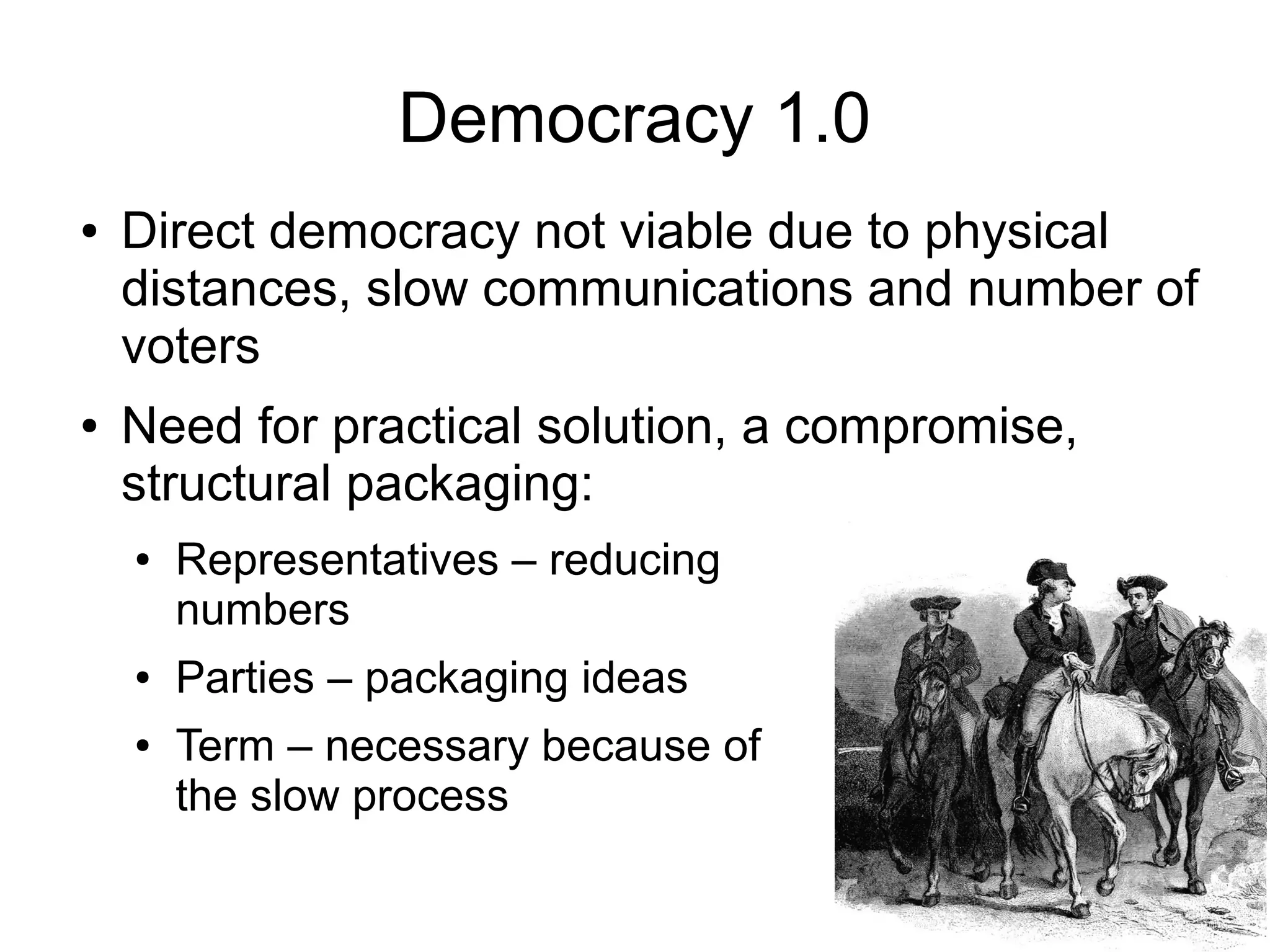
Democracy 1.0
●   Direct democracy not viable due to physical
    distances, slow communications and number of
    voters
●   Need for practical solution, a compromise,
    structural packaging:
    ●   Representatives – reducing
        numbers
    ●   Parties – packaging ideas
    ●   Term – necessary because of
        the slow process
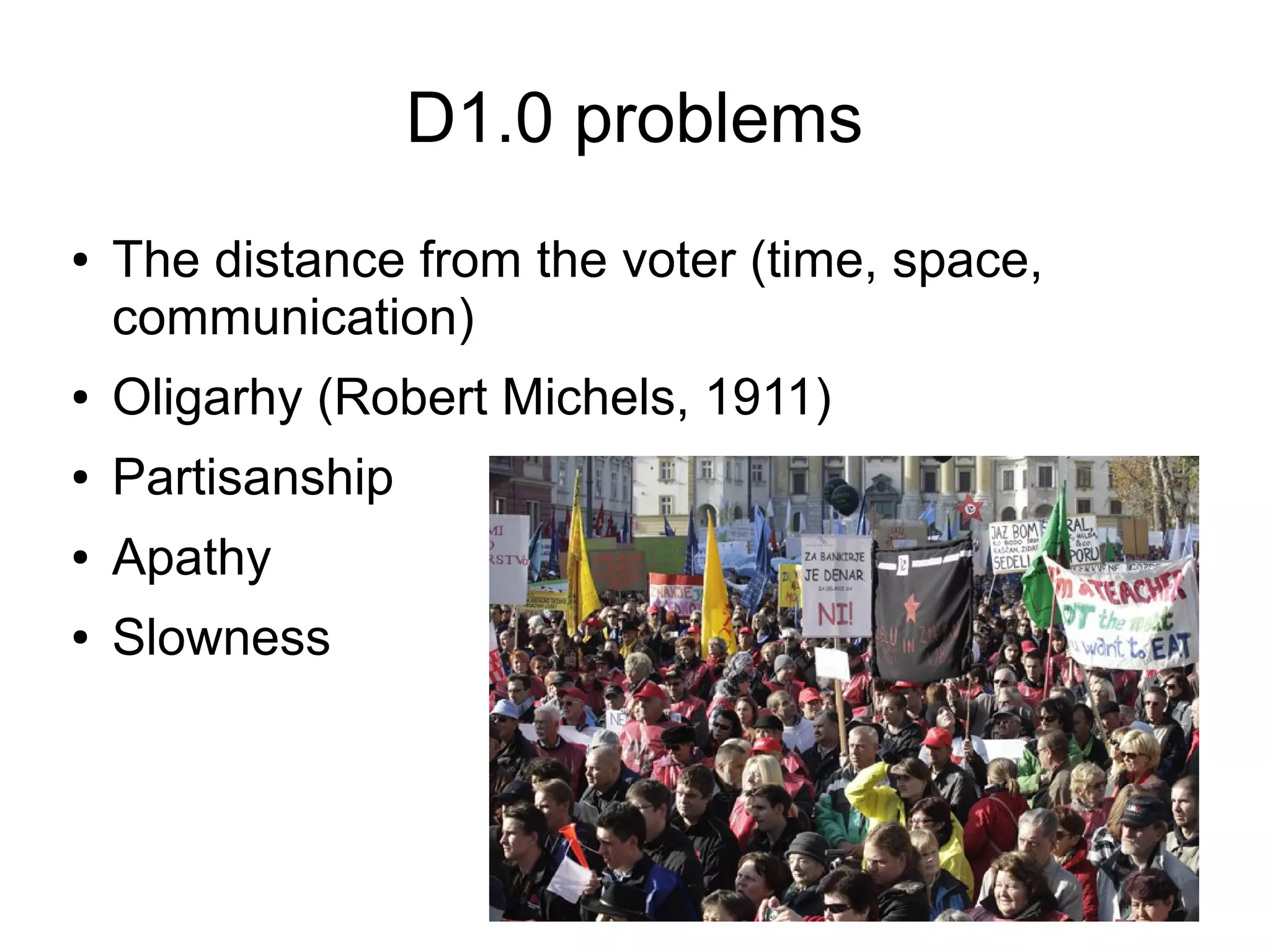
D1.0 problems
●   The distance from the voter (time, space,
    communication)
●   Oligarhy (Robert Michels, 1911)
●   Partisanship
●   Apathy
●   Slowness
And Then Came The Internet
●   Distance problems? NO
●   Time problems? NO
●   Communication problems? NO
●   Information access problems? NO

●   So why not?
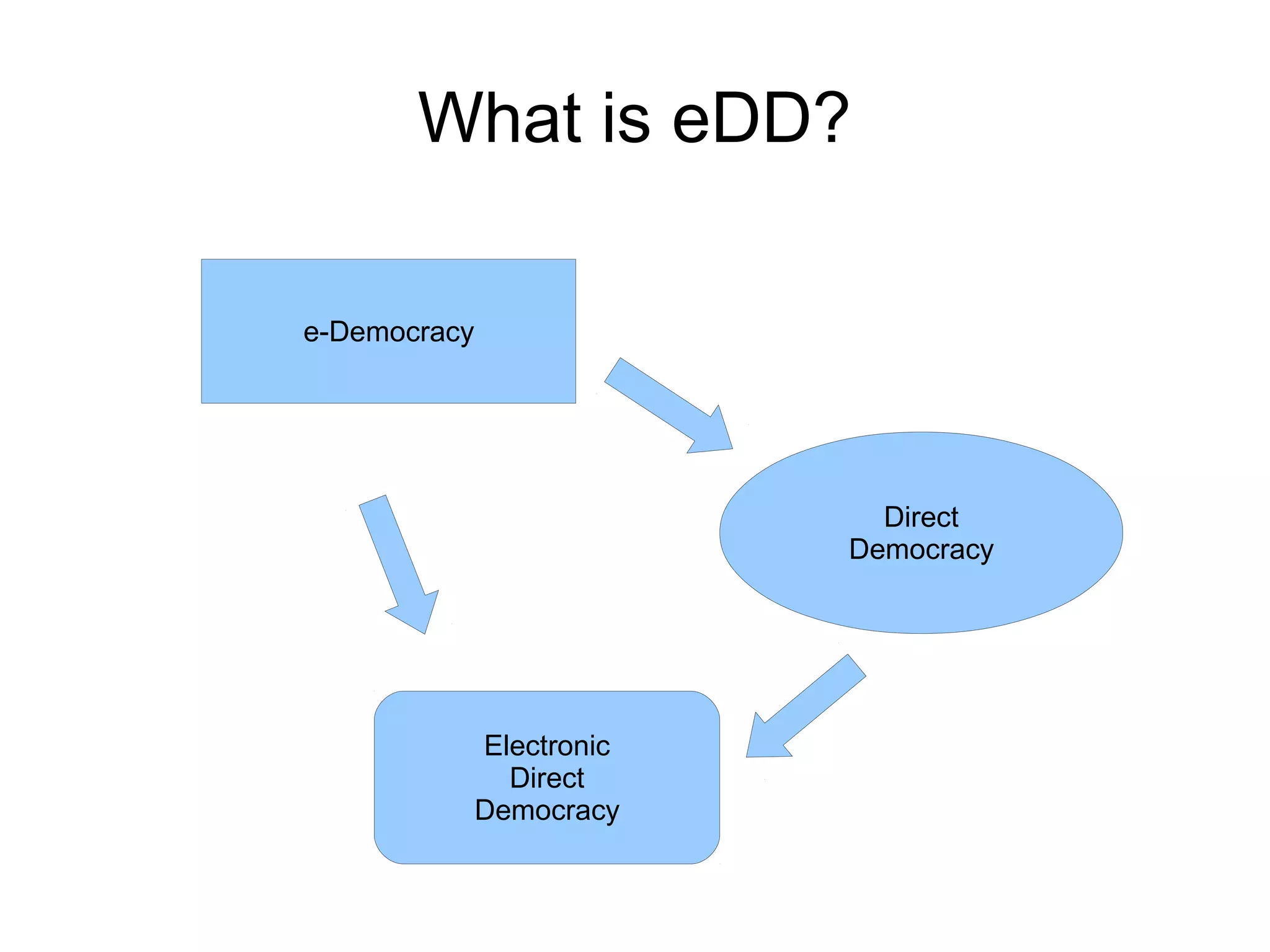
What is eDD?

e-Democracy


                             Direct
                           Democracy


              Electronic
                Direct
              Democracy
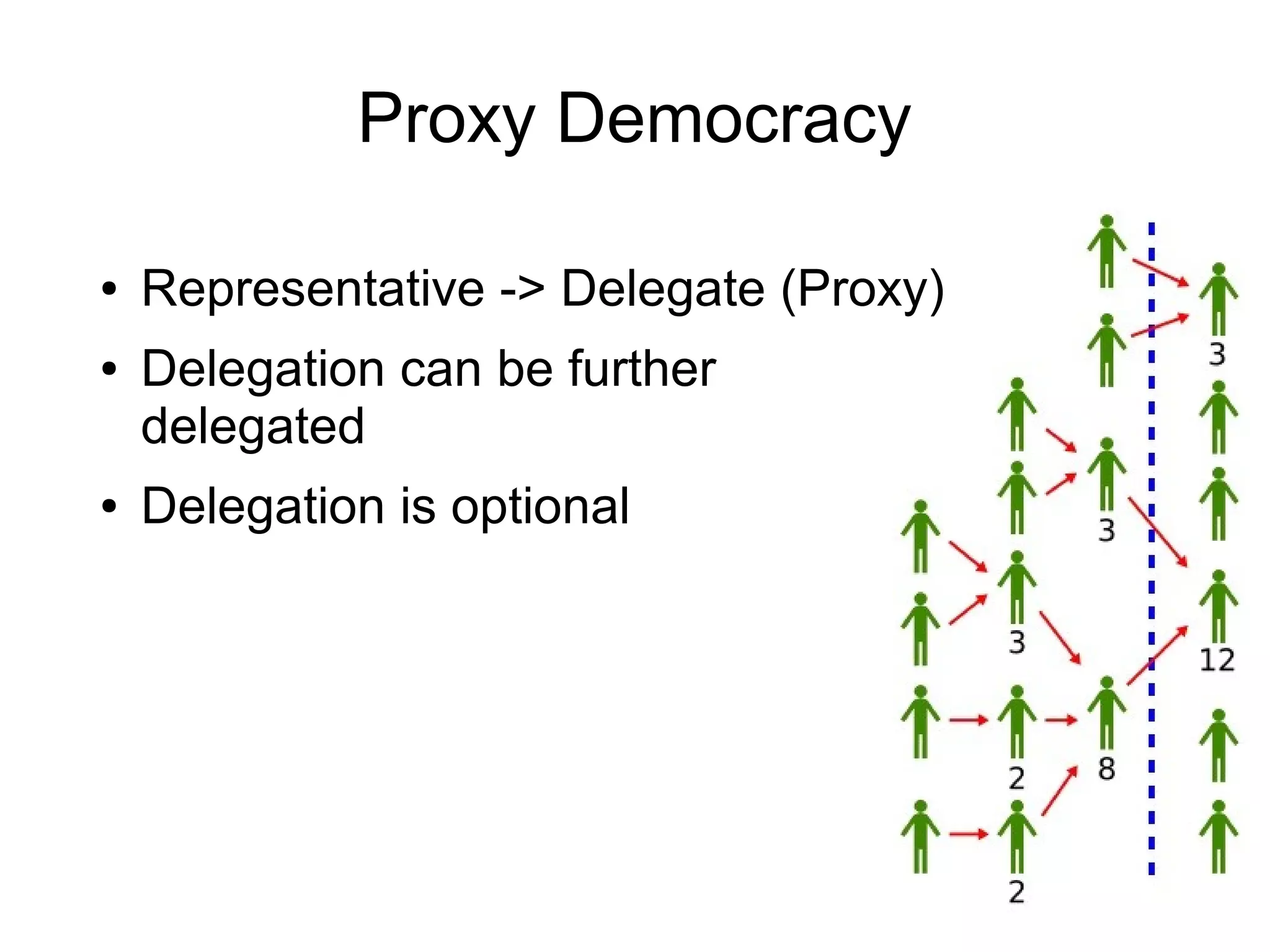
Proxy Democracy

●   Representative -> Delegate (Proxy)
●   Delegation can be further
    delegated
●   Delegation is optional
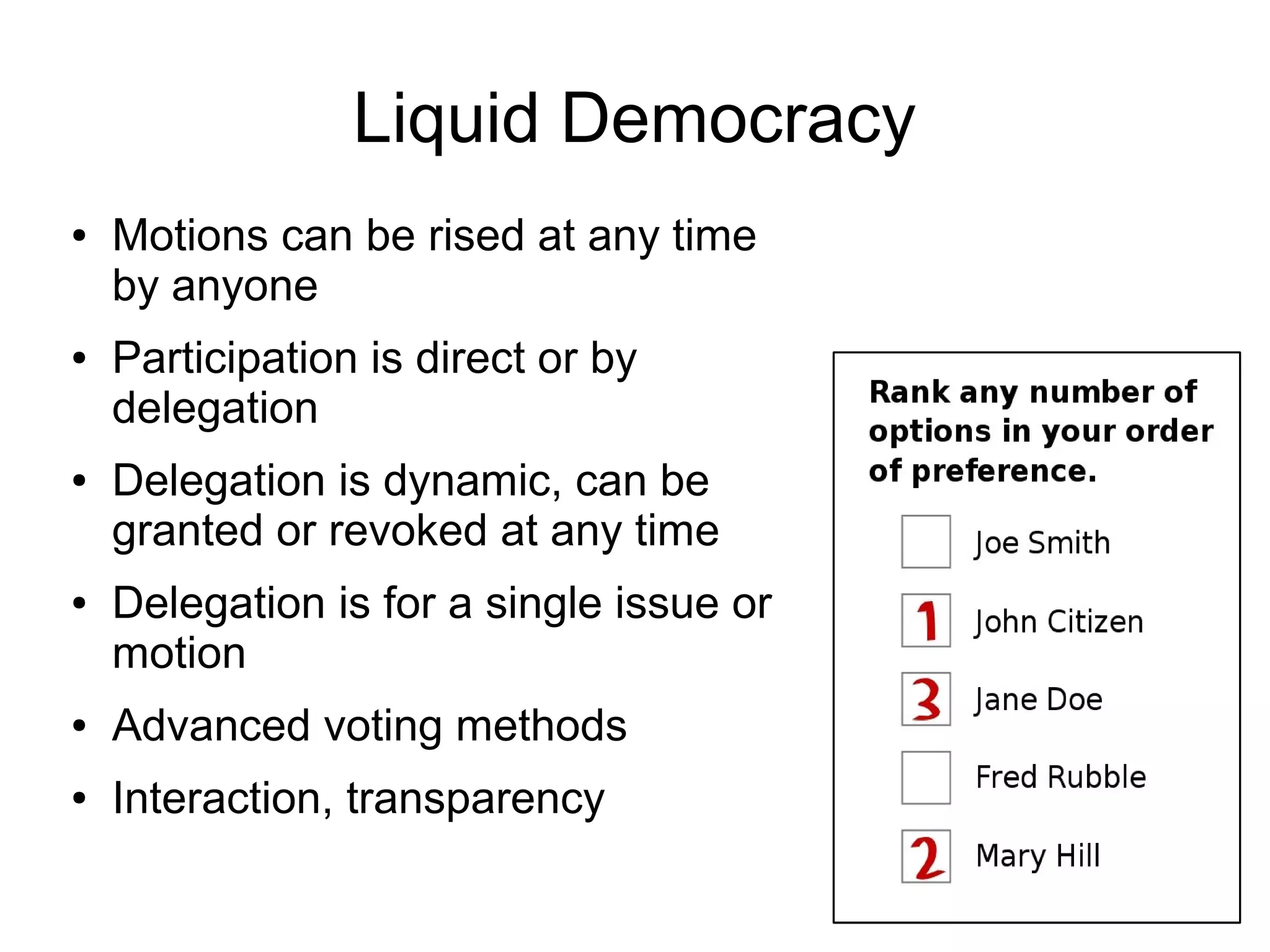
Liquid Democracy
●   Motions can be rised at any time
    by anyone
●   Participation is direct or by
    delegation
●   Delegation is dynamic, can be
    granted or revoked at any time
●   Delegation is for a single issue or
    motion
●   Advanced voting methods
●   Interaction, transparency
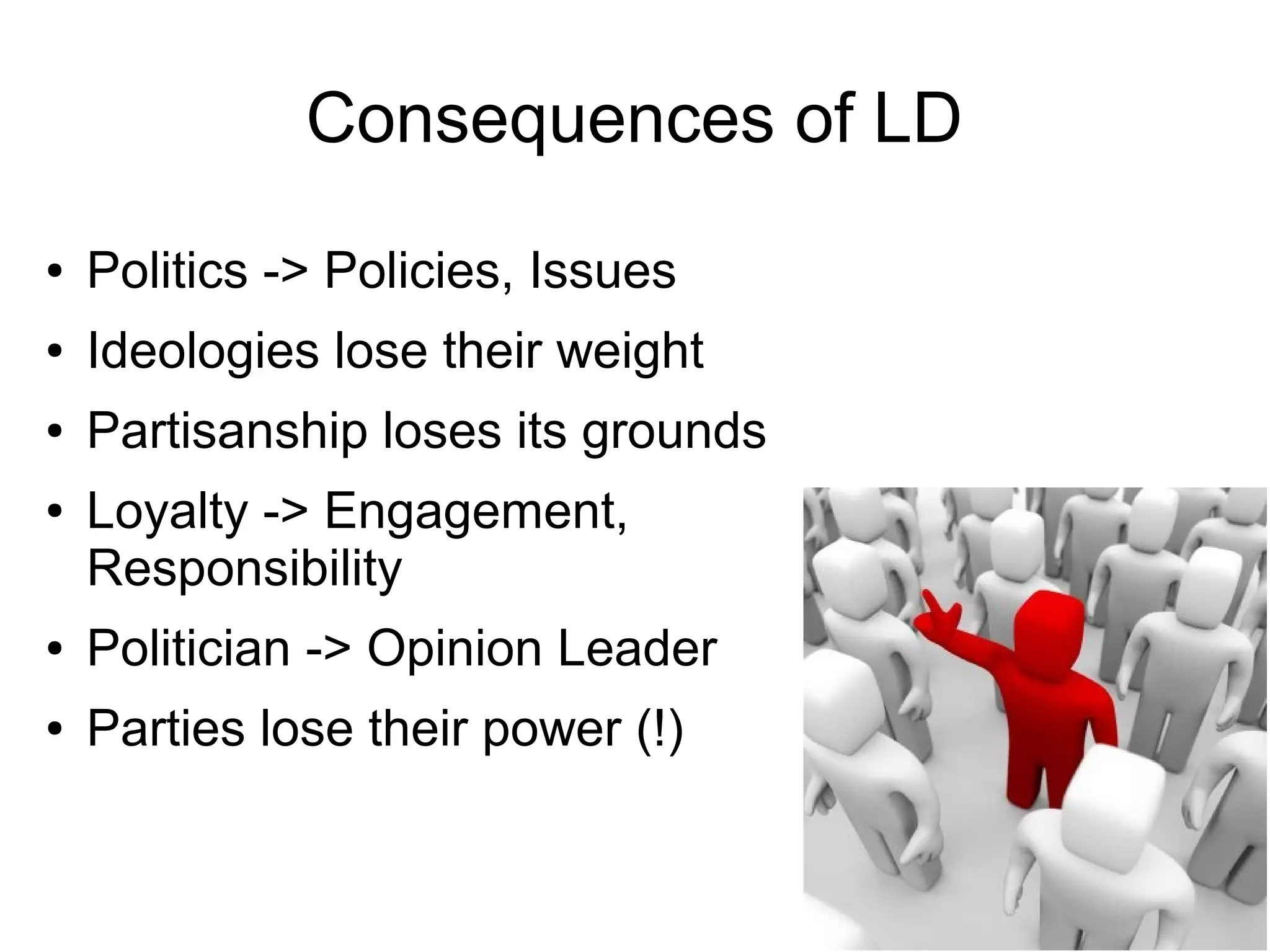
Consequences of LD
●   Politics -> Policies, Issues
●   Ideologies lose their weight
●   Partisanship loses its grounds
●   Loyalty -> Engagement,
    Responsibility
●   Politician -> Opinion Leader
●   Parties lose their power (!)
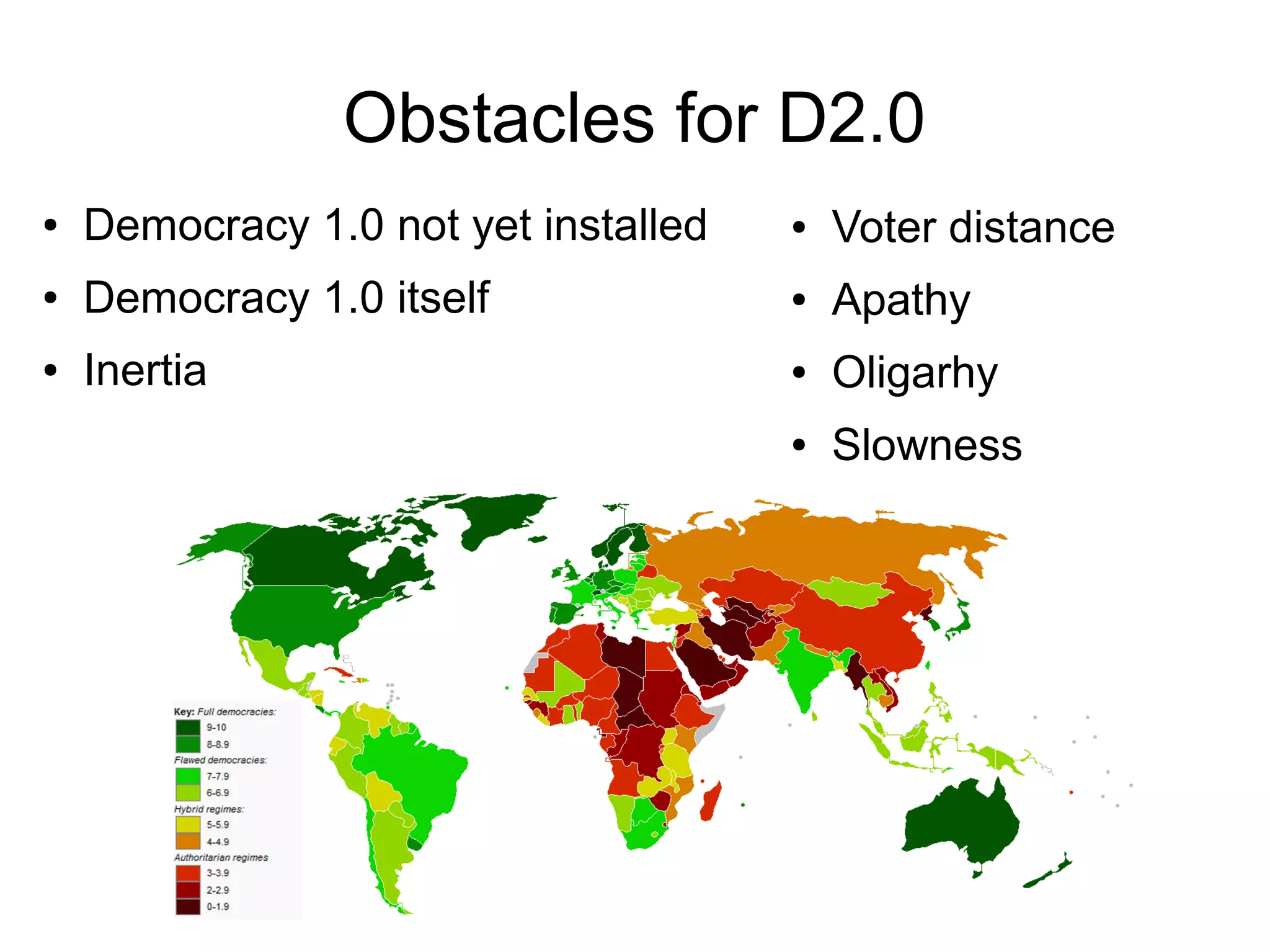
Obstacles for D2.0
●   Democracy 1.0 not yet installed   ●   Voter distance
●   Democracy 1.0 itself              ●   Apathy
●   Inertia                           ●   Oligarhy
                                      ●   Slowness
Path to D2.0
●   Development and advance of eDemocracy
●   Development of LD applications (Liquidizer,
    Liquid Feedback...)
●   Advance of LD through associations, NGOs,
    civic institutions, local government,
    corporations...
●   Adoption of LD within political parties
●   Voter migration to LD parties
●   Democratic transition from 1.0 to 2.0
Closing Comments

●   Democracy needs to be improved
●   Democracy can be improved
●   Major upgrade, takes time
●   Internet is the enabler
●   Current crisis is the driver
●   No democratic alternative
Thanx!


                                   Questions?


Andrija.Pusic@piratskastranka.si

OBS | Demokracija 2.0

  • 1.
    Democracy 2.0 Andrija Pušić
  • 2.
    Democracy 0.1 ● 2500 years ago ● Small community ● Not everyone involved ● No proper voting ● No clear mandate ● Direct, no delegates
  • 3.
    Democracy 1.0 ● 250 years ago ● Big community ● Voting system ● Delegates ● Clear mandate
  • 4.
    Democracy 1.0 ● Direct democracy not viable due to physical distances, slow communications and number of voters ● Need for practical solution, a compromise, structural packaging: ● Representatives – reducing numbers ● Parties – packaging ideas ● Term – necessary because of the slow process
  • 5.
    D1.0 problems ● The distance from the voter (time, space, communication) ● Oligarhy (Robert Michels, 1911) ● Partisanship ● Apathy ● Slowness
  • 6.
    And Then CameThe Internet ● Distance problems? NO ● Time problems? NO ● Communication problems? NO ● Information access problems? NO ● So why not?
  • 7.
    What is eDD? e-Democracy Direct Democracy Electronic Direct Democracy
  • 8.
    Proxy Democracy ● Representative -> Delegate (Proxy) ● Delegation can be further delegated ● Delegation is optional
  • 9.
    Liquid Democracy ● Motions can be rised at any time by anyone ● Participation is direct or by delegation ● Delegation is dynamic, can be granted or revoked at any time ● Delegation is for a single issue or motion ● Advanced voting methods ● Interaction, transparency
  • 10.
    Consequences of LD ● Politics -> Policies, Issues ● Ideologies lose their weight ● Partisanship loses its grounds ● Loyalty -> Engagement, Responsibility ● Politician -> Opinion Leader ● Parties lose their power (!)
  • 11.
    Obstacles for D2.0 ● Democracy 1.0 not yet installed ● Voter distance ● Democracy 1.0 itself ● Apathy ● Inertia ● Oligarhy ● Slowness
  • 12.
    Path to D2.0 ● Development and advance of eDemocracy ● Development of LD applications (Liquidizer, Liquid Feedback...) ● Advance of LD through associations, NGOs, civic institutions, local government, corporations... ● Adoption of LD within political parties ● Voter migration to LD parties ● Democratic transition from 1.0 to 2.0
  • 13.
    Closing Comments ● Democracy needs to be improved ● Democracy can be improved ● Major upgrade, takes time ● Internet is the enabler ● Current crisis is the driver ● No democratic alternative
  • 14.
    Thanx! Questions? Andrija.Pusic@piratskastranka.si