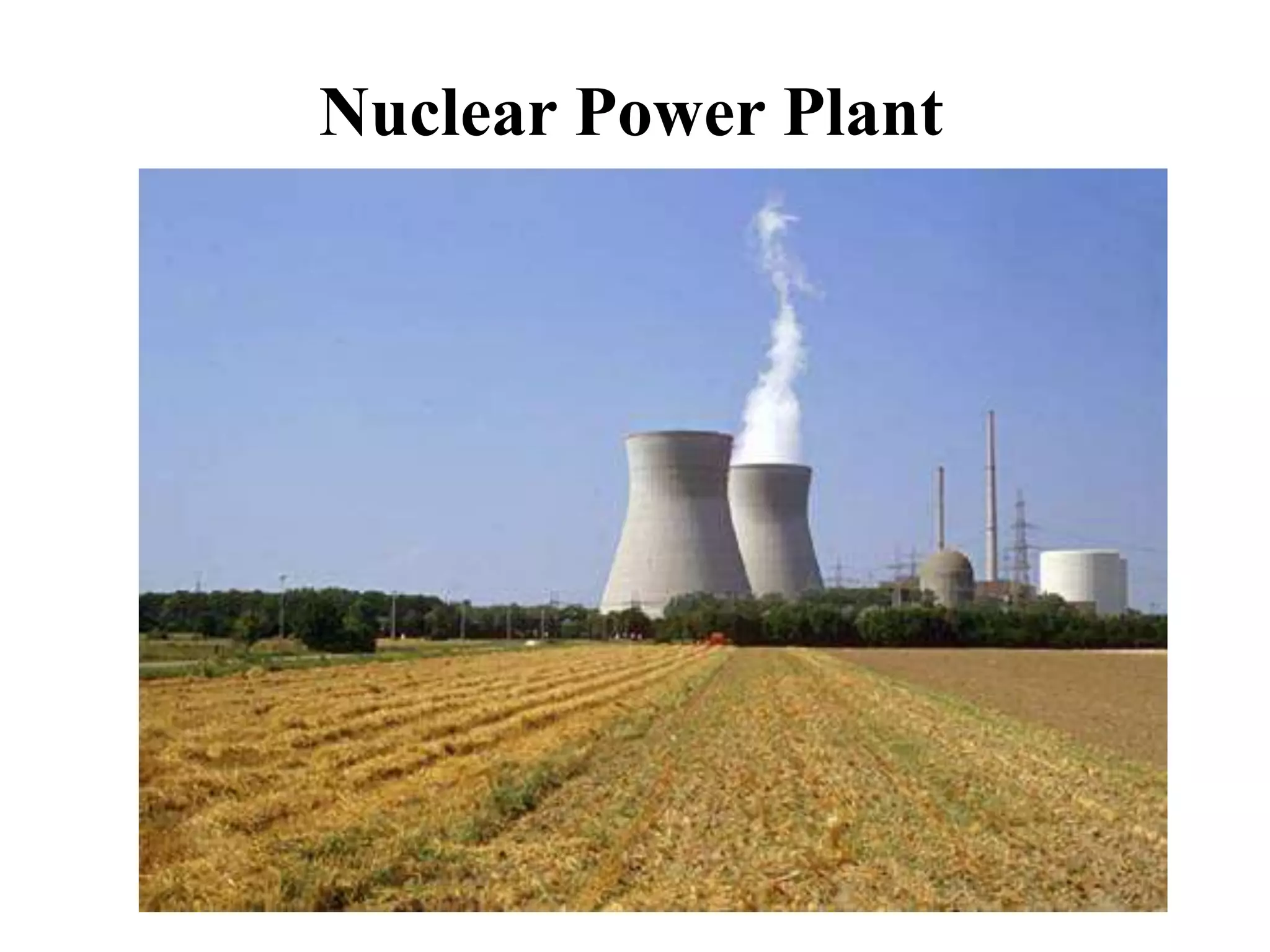
Nuclear Power Plant
NUCLEAR POWER PLANT
A nuclear power plant is a thermal power station in which
the heat source is a nuclear reactor. As in a conventional
thermal power station the heat is used to generate steam
which drives a steam turbine connected to a generator which
produces electricity. As of February 2, 2012, there were 439
nuclear power plants in operation.
In Nuclear power plant nuclear fuel (U234 (0.0050),
U235,(0.7198) U238 ((99.27) Pu239 ) are used.
HISTORY
Electricity was generated by a nuclear reactor
for the first time ever on December 20, 1951 at
the experimental station near Arco, Idaho in the
United States. On June 27, 1954, the world's first
nuclear power plant to generate electricity for a
power grid started operations at Obninsk, USSR.
The world's first commercial scale power station,
Calder Hall in England opened on October 17,
1956.
A process in which bombardment of a nucleus by fast
moving neutrons results in its break up in two
smallest nuclei of almost equal mass with the
liberation of large amount of energy is called Nuclear
Fission reaction.
This fission reaction may be of two types
(i) Controlled fission reaction and
(ii) Uncontrolled fission reaction
NUCLEAR FISSION
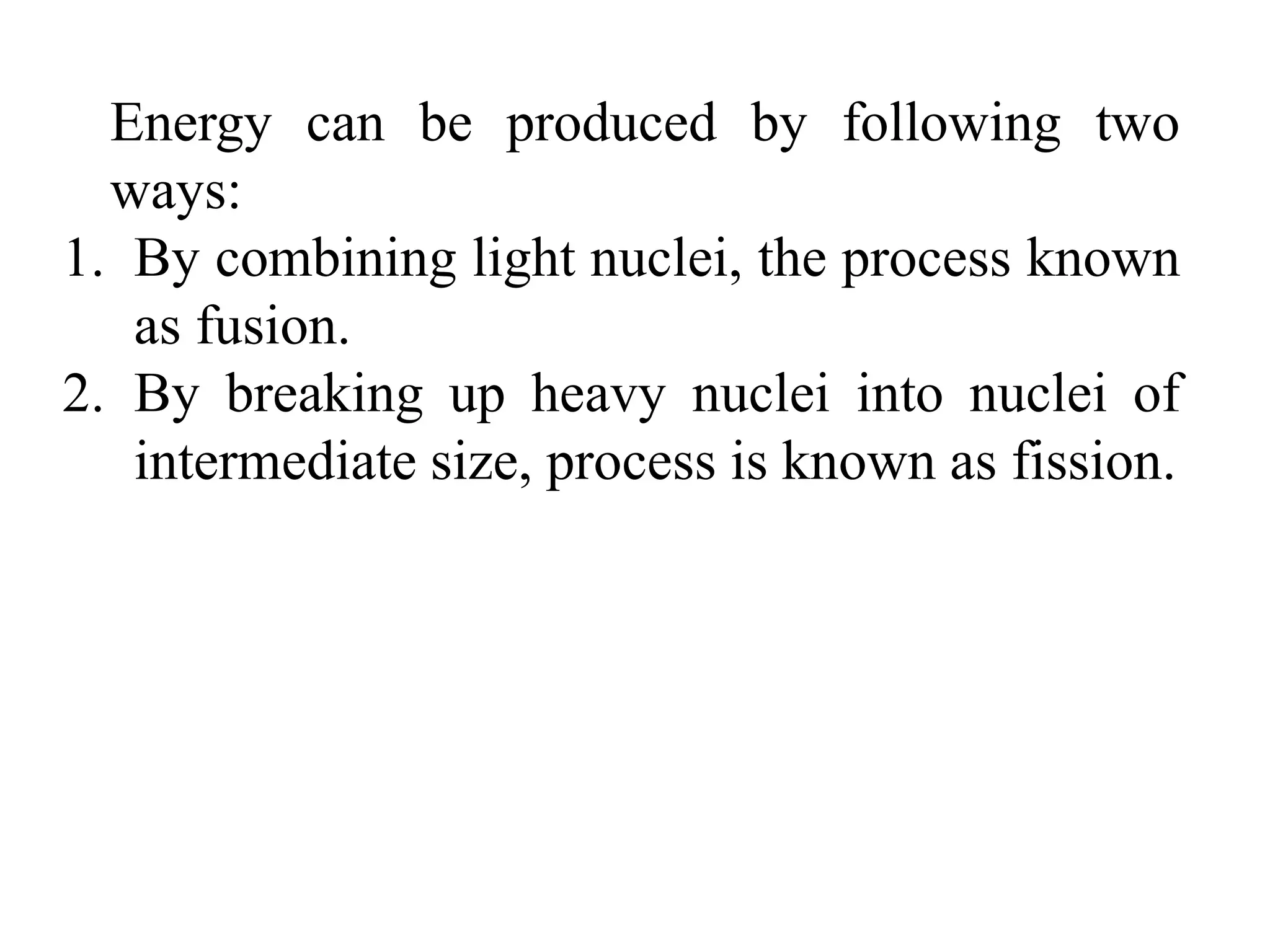
Energy can be produced by following two
ways:
1. By combining light nuclei, the process known
as fusion.
2. By breaking up heavy nuclei into nuclei of
intermediate size, process is known as fission.
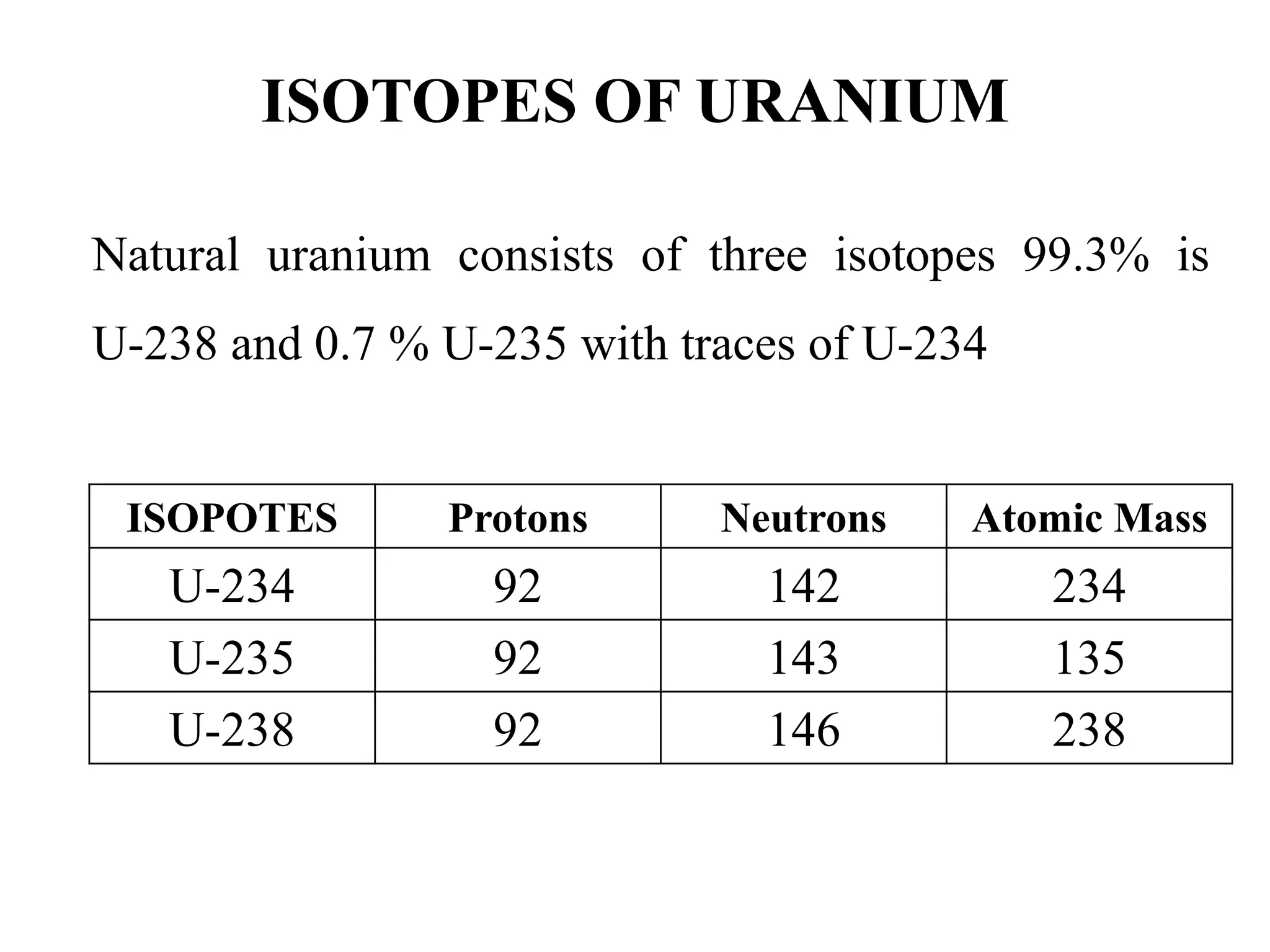
ISOTOPES OF URANIUM
ISOPOTES Protons Neutrons Atomic Mass
U-234 92 142 234
U-235 92 143 135
U-238 92 146 238
Natural uranium consists of three isotopes 99.3% is
U-238 and 0.7 % U-235 with traces of U-234
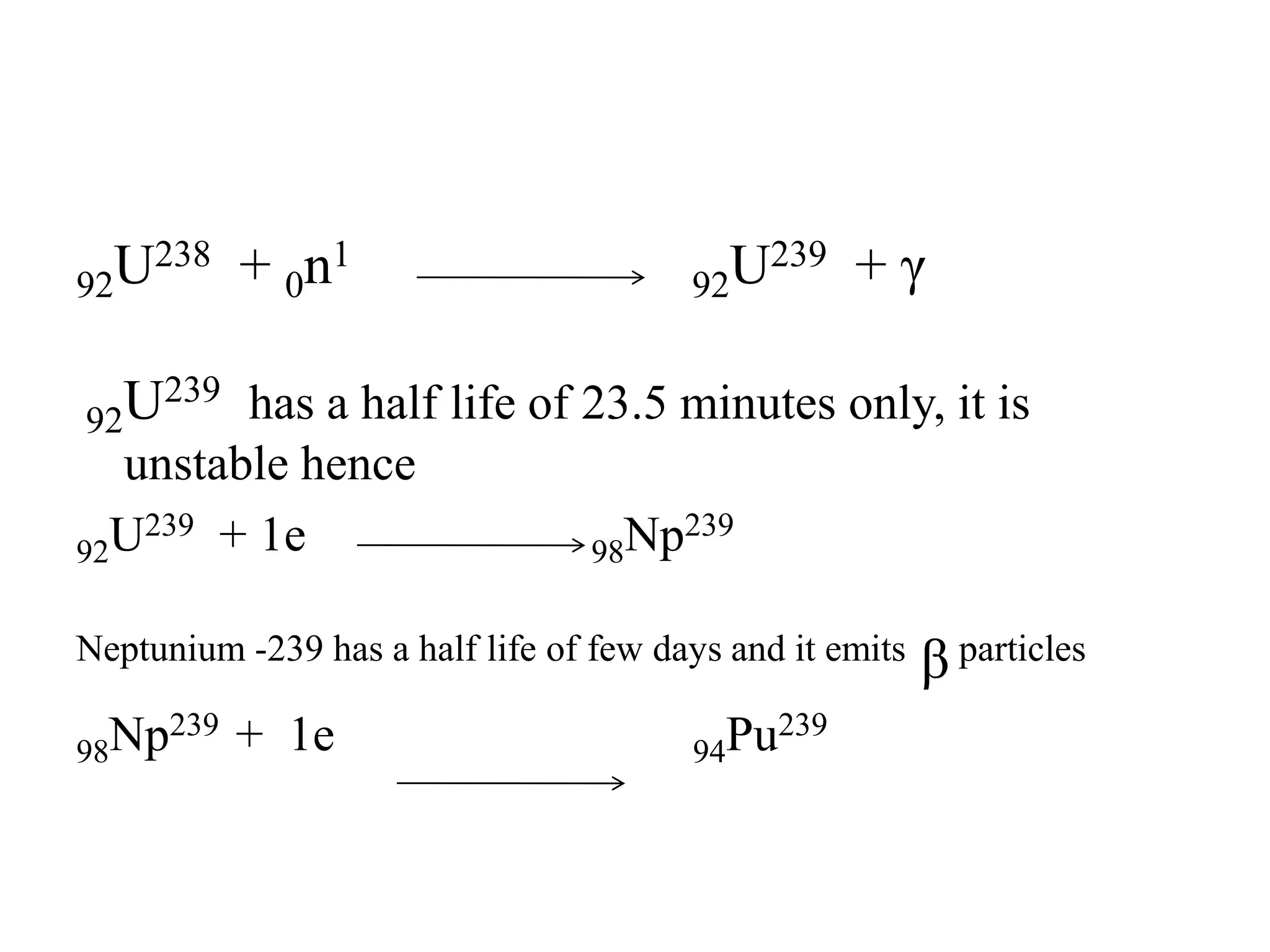
92U238 + 0n1
92U239 + γ
92U239 has a half life of 23.5 minutes only, it is
unstable hence
92U239 + 1e 98Np239
Neptunium -239 has a half life of few days and it emits β particles
98Np239 + 1e 94Pu239
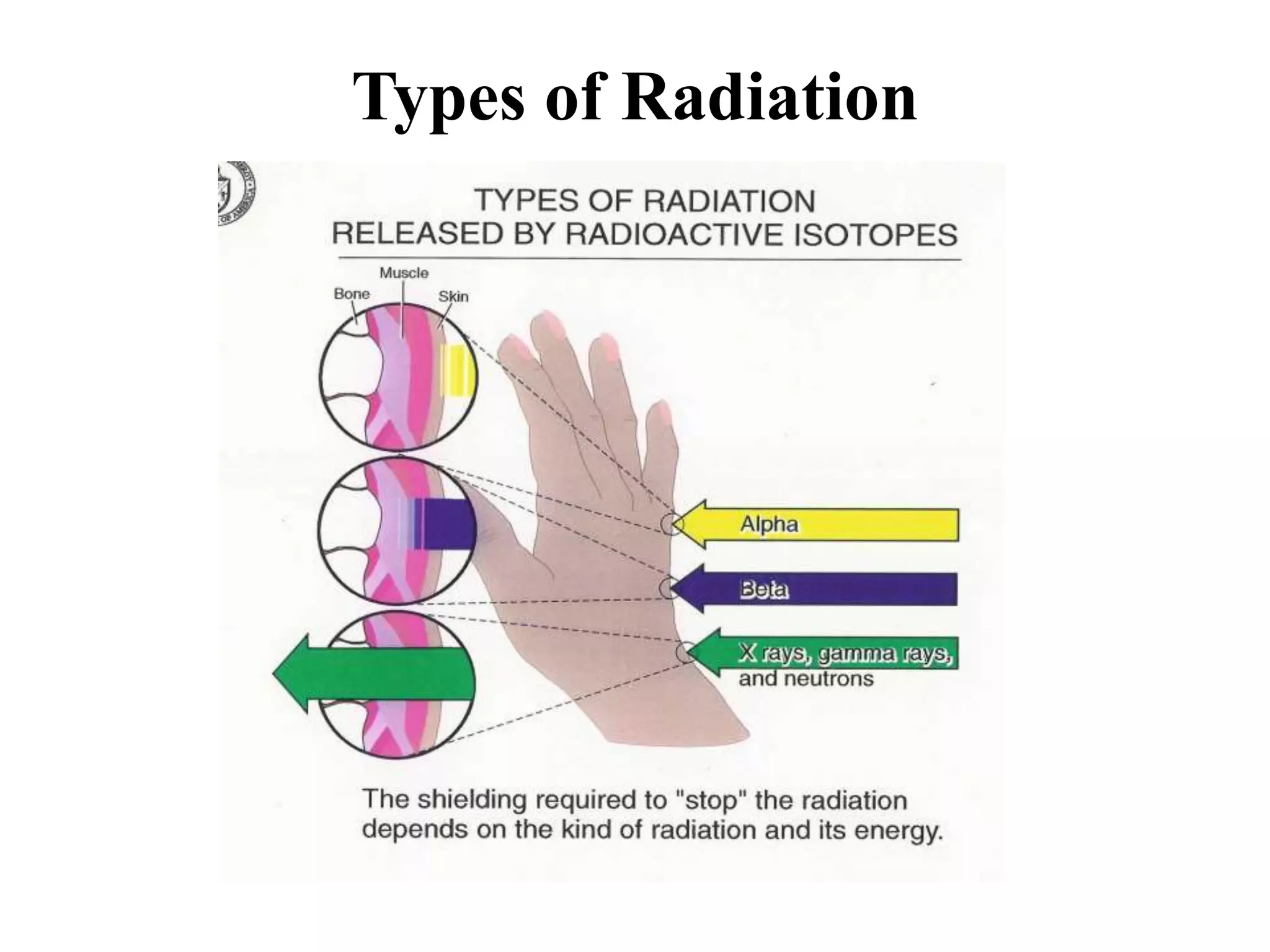
Types of Radiation
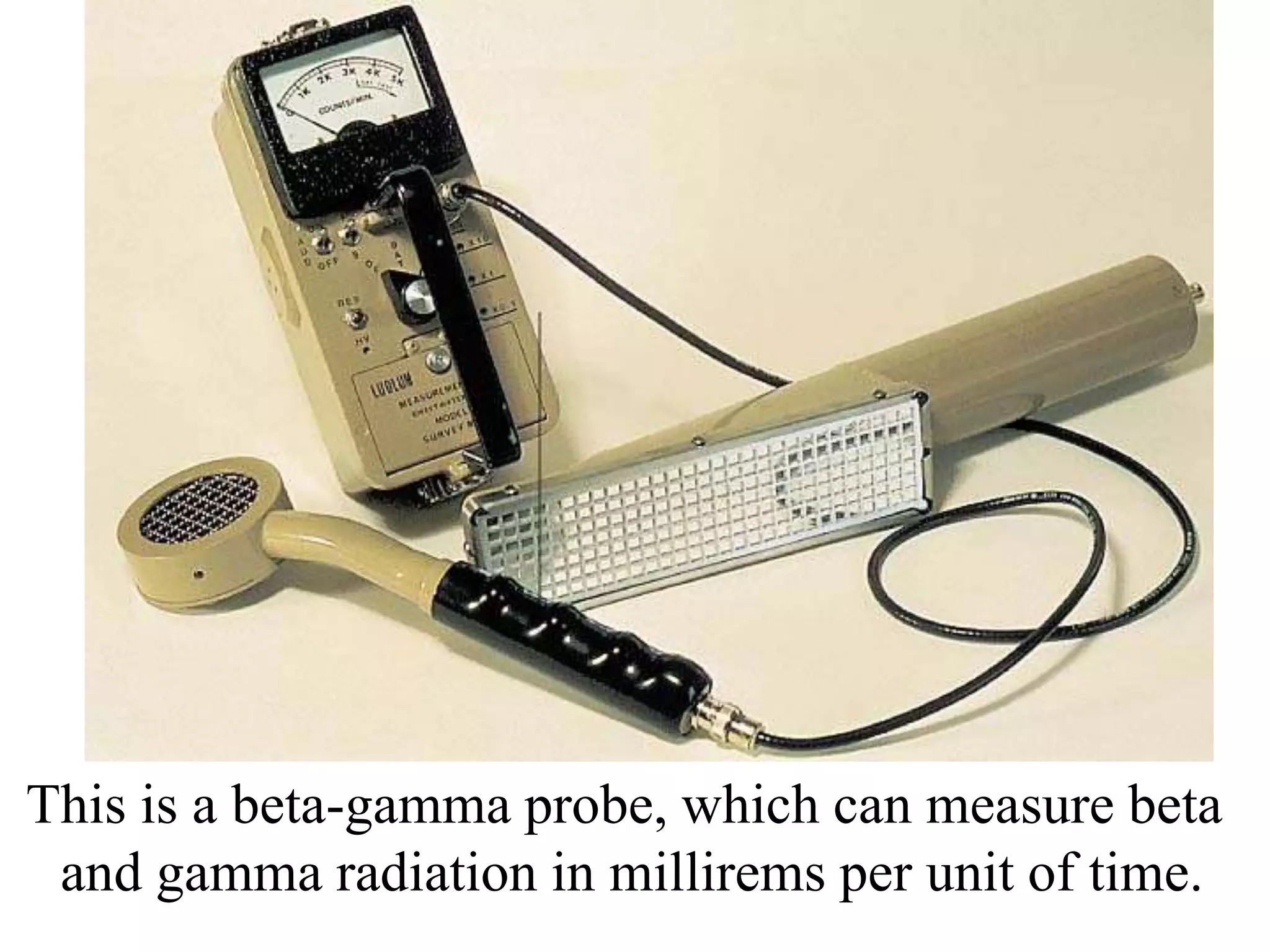
This is a beta-gamma probe, which can measure beta
and gamma radiation in millirems per unit of time.
• Radiation Units
– Curie (Ci)
• Measurement of the activity of a radioactive source.
• Measured as the number of nuclear disintegrations per
unit of time
• A curie is 3.70 X 10¹⁰ nuclear disintegrations per
second.
– Rad unit of dose equivalent to 100 ergs absorbs per gram of
irradiated material.
• Measures the amount of energy released by radiation
striking living tissue
• Short for radiation absorbed dose
• One rad releases 1 X 10⁻² J/kg
– Rem
• Short for Rontgen equivalent man
• This takes into account the possible biological damage to
humans of certain types of radiation.
• Rem = RBE * RAD where RBE = relative biological
effectiveness
Minimum dosage 0.5 rem/year for public and 5 rem for
working personals inside plant.
D = 5 (N-18) where N= age of worker
• Radiation Exposure
– Background radiation is constantly present in our
environment.
• Most people are exposed to between 100 to 500
millirems per year.
• This background radiation comes from many natural
source.
– The harm that radiation does to living organisms is due to
the fact that it produces ionization which can:
• Disrupt chemical bonds in biological macromolecules
such as DNA
• Produce molecular fragments which can interfere with
enzyme action and essential cell functions.
– The linear model of exposure proposes that any
exposure above zero is damaging and can produce cancer
and genetic damage, mostly through its effect on DNA
– The threshold model proposes that there is a threshold
limit of exposure up to which the human body can repair
damage caused by the exposure
• It is not until we reach and exceed this threshold that
we begin to see irreversible damage.
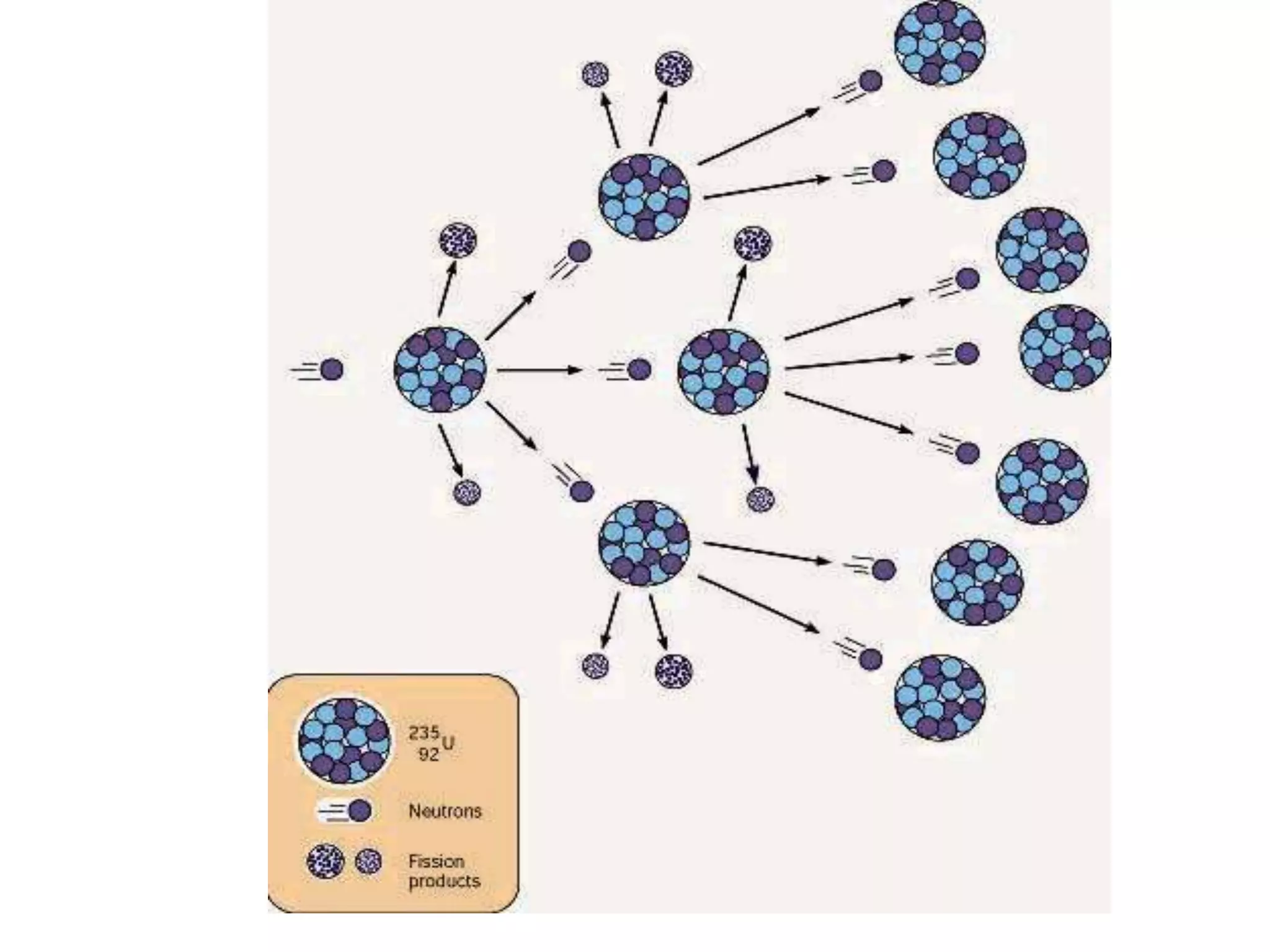
CHAIN REACTION
A nuclear chain reaction occurs when one
nuclear reaction causes an average of one or more
nuclear reactions, thus leading to a self-
propagating series of these reactions. The specific
nuclear reaction may be the fission of heavy
isotopes (e.g., 235U) or the fusion of light isotopes
(e.g., 2H and 3H). The nuclear chain reaction
releases several million times more energy per
reaction than any chemical reaction.
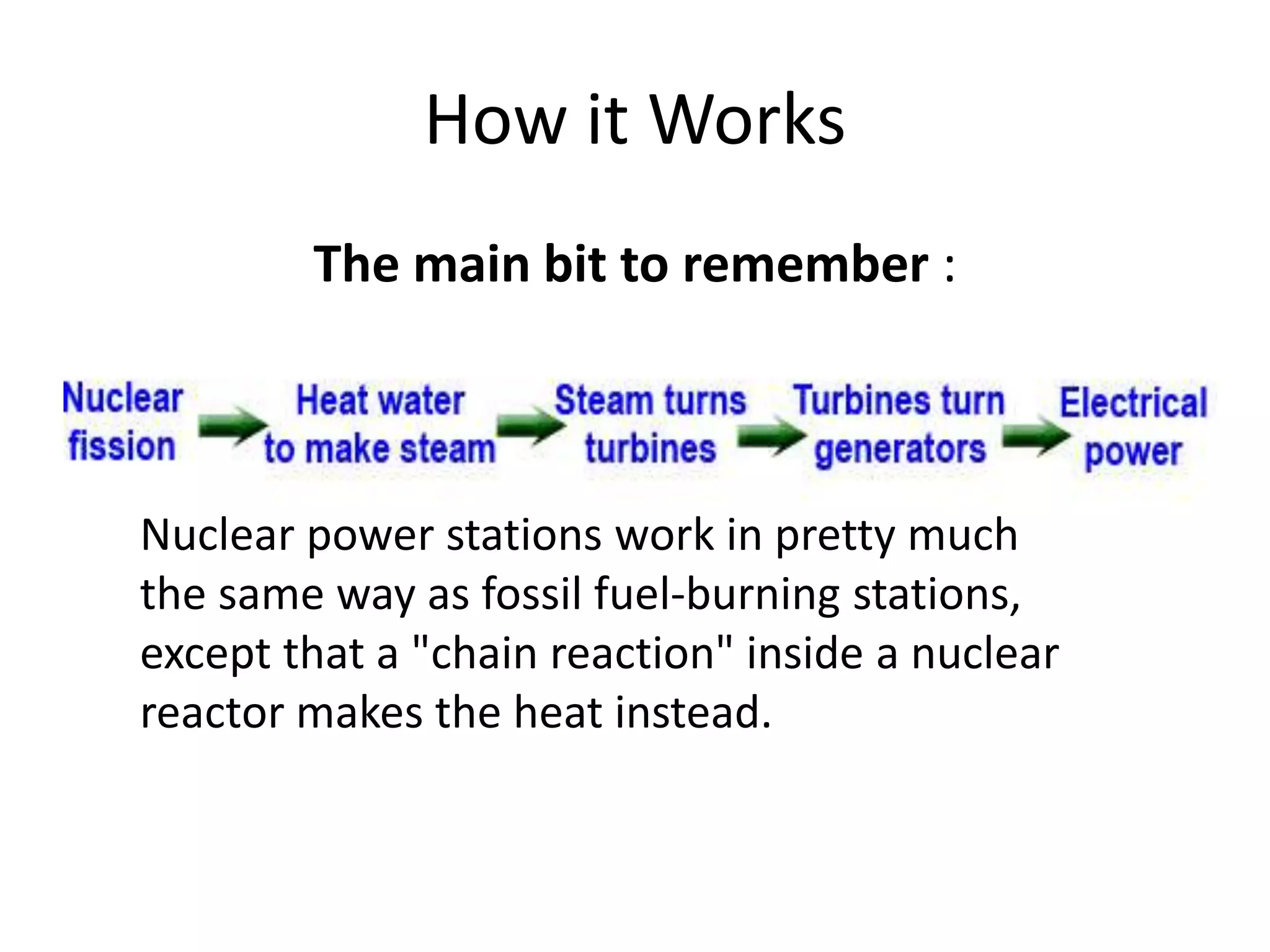
How it Works
The main bit to remember :
Nuclear power stations work in pretty much
the same way as fossil fuel-burning stations,
except that a "chain reaction" inside a nuclear
reactor makes the heat instead.
• Nuclear Power Plants
– The nuclear reactor contains the material and is the
vessel for the controlled chain reaction of fissionable
materials that will release the energy.
– Usually there is a fissionable enriched material made of
3% U235 and 97% U238 the is fabricated into small
beads.
– The beads are enclosed in a fuel rod.
– The fuel rods are locked in a fuel rod assembly by
locking collars and arranged so that pressurized water
can flow around the rods.
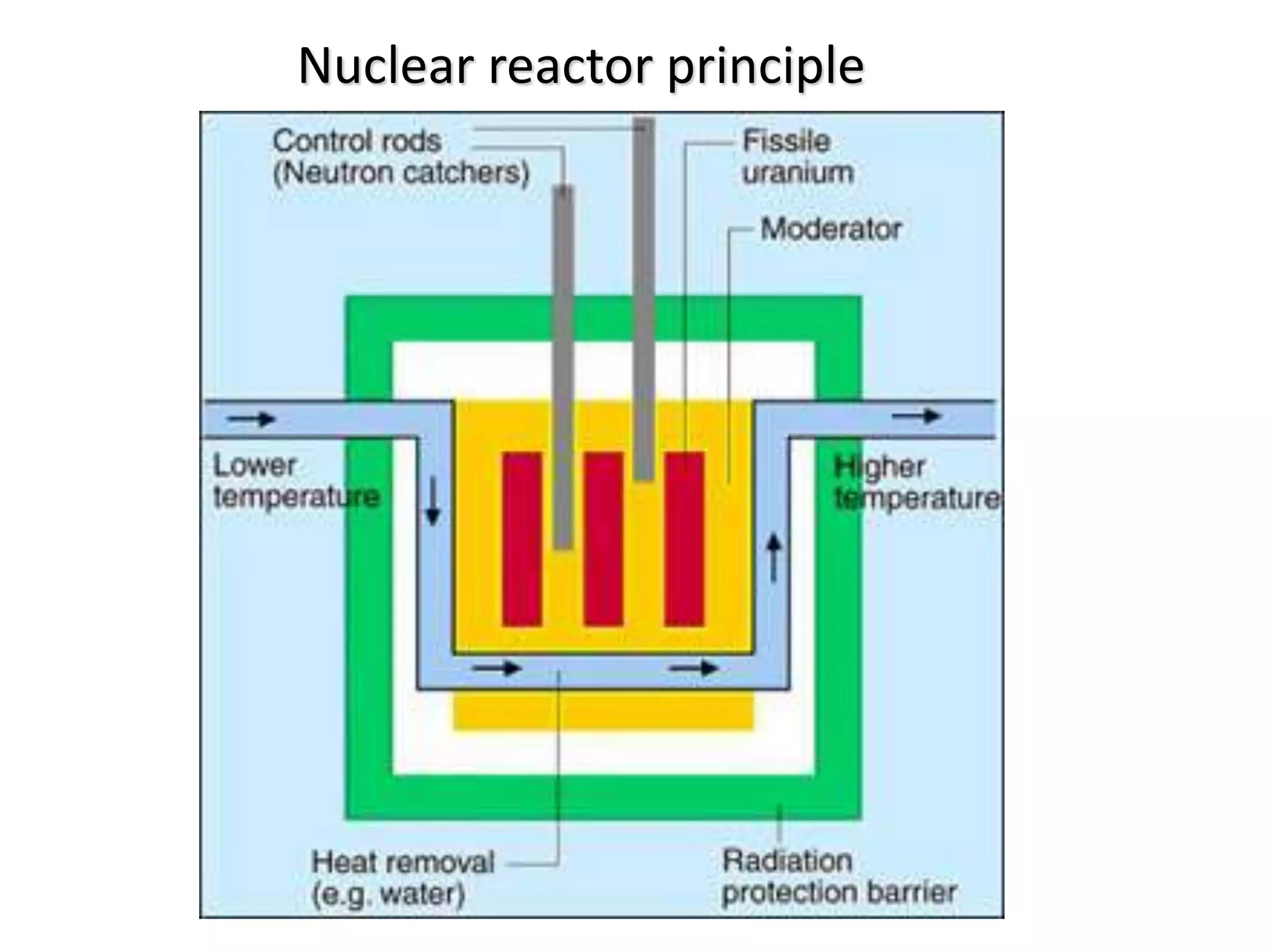
– Control rods are made of material that can absorb
neutrons and are inserted between the fuel rods.
– The rate of the chain reaction is controlled by raising or
lowering the control rod.
– In a pressurized water reactor the energy is carried way from
the reactor by water in a closed pipe called a primary loop.
• This water acts as a coolant and also as a moderator to
slow neutrons so they can more readily be absorbed by
the U235 nuclei.
– The water from the primary loop is circulated to a heat
exchanger called a steam generator.
• The water in the heat exchanger moves through hundreds
of small loops and heats the feedwater in the steam
generator.
• The water then returns to the core to be heated again.
• A schematic representation of the basic parts of a nuclear reactor. The
largest commercial nuclear power plant reactors are nine- to eleven-
inch-thick steel vessels with a stainless steel liner, standing about 40
feet high with a diameter of 16 feet. Such a reactor has four pumps,
which move 440,000 gallons of water per minute through the primary
loop.
Main Parts of a reactor and reactor control
• Reactor Core
• Moderator
• Reflector
• Shielding
• Control of reactor
• Cooling system
Moderators
The moderator is the one reduces the speed of the neutron. The most moderators
are Beryllium, Heavy water, or a Graphite.
To allow the chain reaction to proceed, enough of these fast neutrons must be
slowed down so that there are just enough slow neutrons to produce more fissions
and allow a steady power level to be achieved. It is the function of the moderator
to slow the fast neutrons, in fact we talk of thermalizing them, and such reactors
are sometimes called thermal reactors.
Control Rods
To prevent overheating, control rods made of a material that absorbs neutrons are
inserted into the uranium bundle using a mechanism that can raise or lower the
control rods. Raising and lowering the control rods allow operators to control the
rate of the nuclear reaction.
The rods can also be lowered completely into the uranium bundle to shut the
reactor down in the case of an accident or to change the fuel.
Shielding
The large mass of concrete absorbs gamma radiation well, and as it contains a lot
of water molecules it also stops neutrons from penetrating.
Nuclear reactor principle
Nuclear Plant
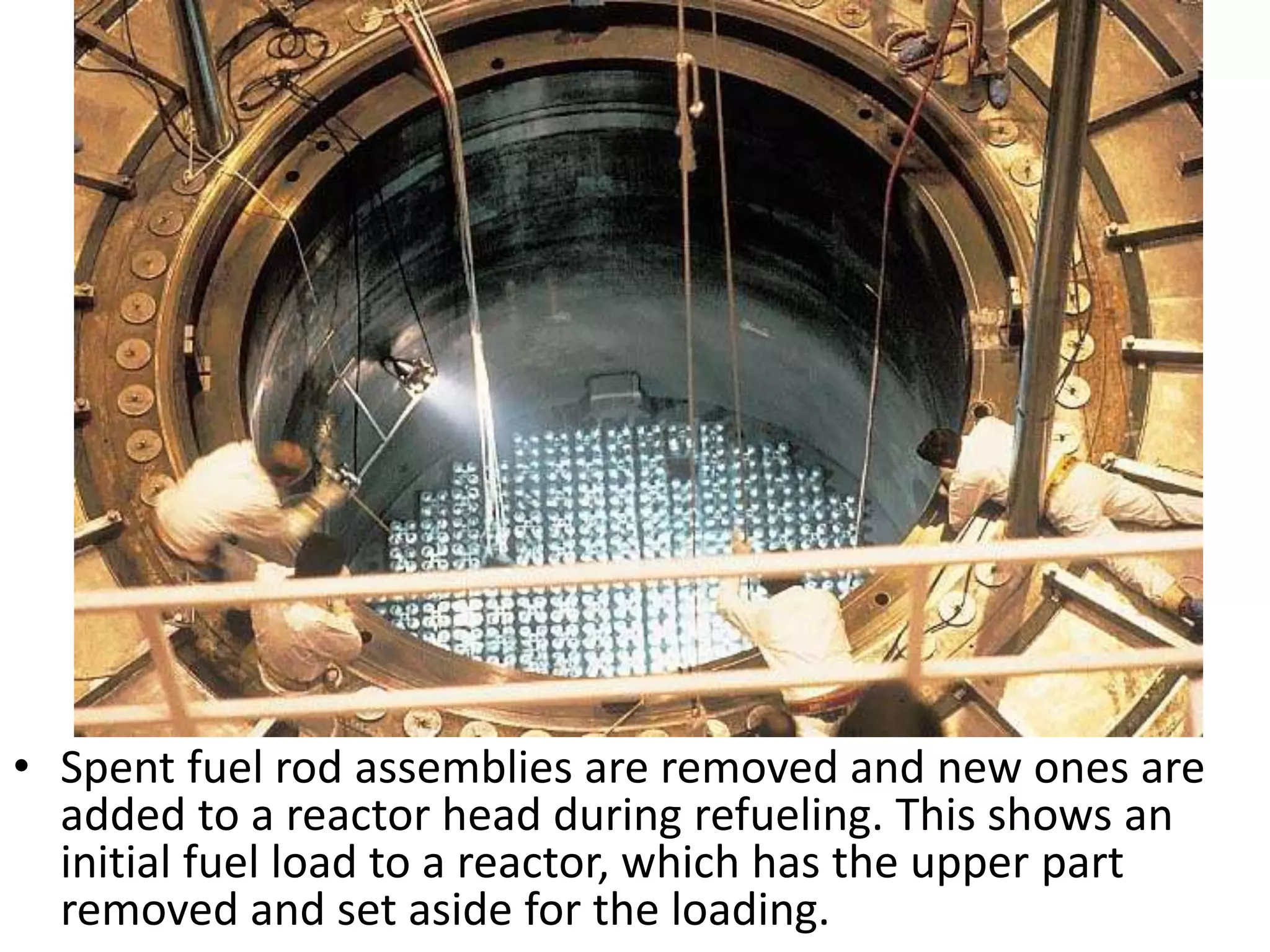
• Spent fuel rod assemblies are removed and new ones are
added to a reactor head during refueling. This shows an
initial fuel load to a reactor, which has the upper part
removed and set aside for the loading.
Categories of Nuclear Reactors
• Light Water Reactors
– Use H2O
– Most Prevalent
• Heavy Water Reactors
– Use D2O
– Prevalent in Canada and Russia
• Other Reactor Categories
– Liquid Metal Cooled
– Gas Cooled
Light Water Reactors
• Boiling Water Reactors (BWRs)
– Located throughout U.S., Europe, and Asia
– Power: 570 -- 1300 MW; Efficiency: ~30%
– Tmax: 570oF; PRxr Coolant: 1000 psi
• Pressurized Water Reactors (PWRs)
– Manufactured by U.S., European, and Asian
companies
– Tmax: 590oF; PRxr Coolant: 2250 psi
• VVER Reactors (VVERs) -- Russian PWR
Pressurized water reactor
A pressurized heavy water reactor (PHWR) is a nuclear power
reactor, commonly using unenriched natural uranium as its fuel,
that uses heavy water (deuterium oxide D2O) as its coolant and
moderator. The heavy water coolant is kept under pressure,
allowing it to be heated to higher temperatures without boiling,
much as in a PWR. While heavy water is significantly more
expensive than ordinary light water, it yields greatly
enhanced neutron economy, allowing the reactor to operate
without fuel enrichment facilities (mitigating the additional capital
cost of the heavy water) and generally enhancing the ability of the
reactor to efficiently make use of alternate fuel cycles.
BWR
PWR
VVER
Heavy Water Reactors
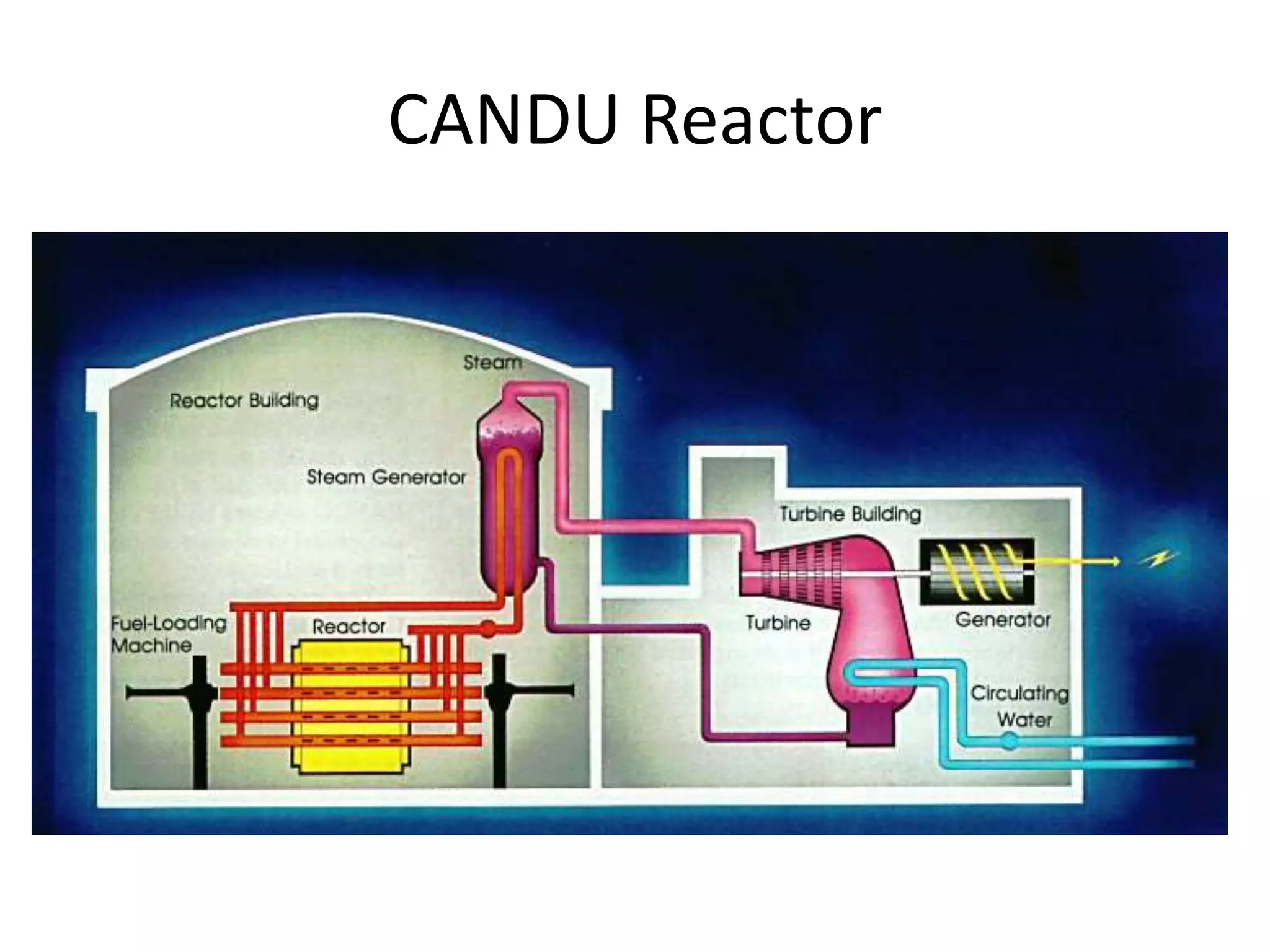
• Canadian Deuterium-Uranium (CANDU) Reactors
– Use natural (non-isotopically concentrated) uranium
– Tmax: 590oF; PRxr Coolant: 1500 psi
– Can run 2 ½ years without refueling/downtime
• RBMK Reactors
– Chernobyl-style reactor
– Graphite and D2O in reactor core
– Much improved designs today
CANDU Reactor
RBMK Reactor (High Power channel)
Other Reactor Categories
• Liquid Metal Fast Breeder Reactors (LMFBRs)
– Use liquid sodium as coolant
– 3-loop cycle
– None operating commercially
• Advanced Gas-cooled Reactors (AGRs)
– Use natural uranium
– He or CO2 gas coolant at 1430oF and 600 psi
– Primarily operated in United Kingdom
TYPES OF POWER REACTOR
Main types of nuclear reactors are
1. Advanced Gas Cooled-Reactor
2. Boiling Water reactor
3. Pressurized Water reactor
4. CANDU Type reactor
5. Sodium Graphite reactor
6. Fast Breeder Reactor
Boiling Water Reactor (BWR)
Pressurized Water Reactor (PWR)
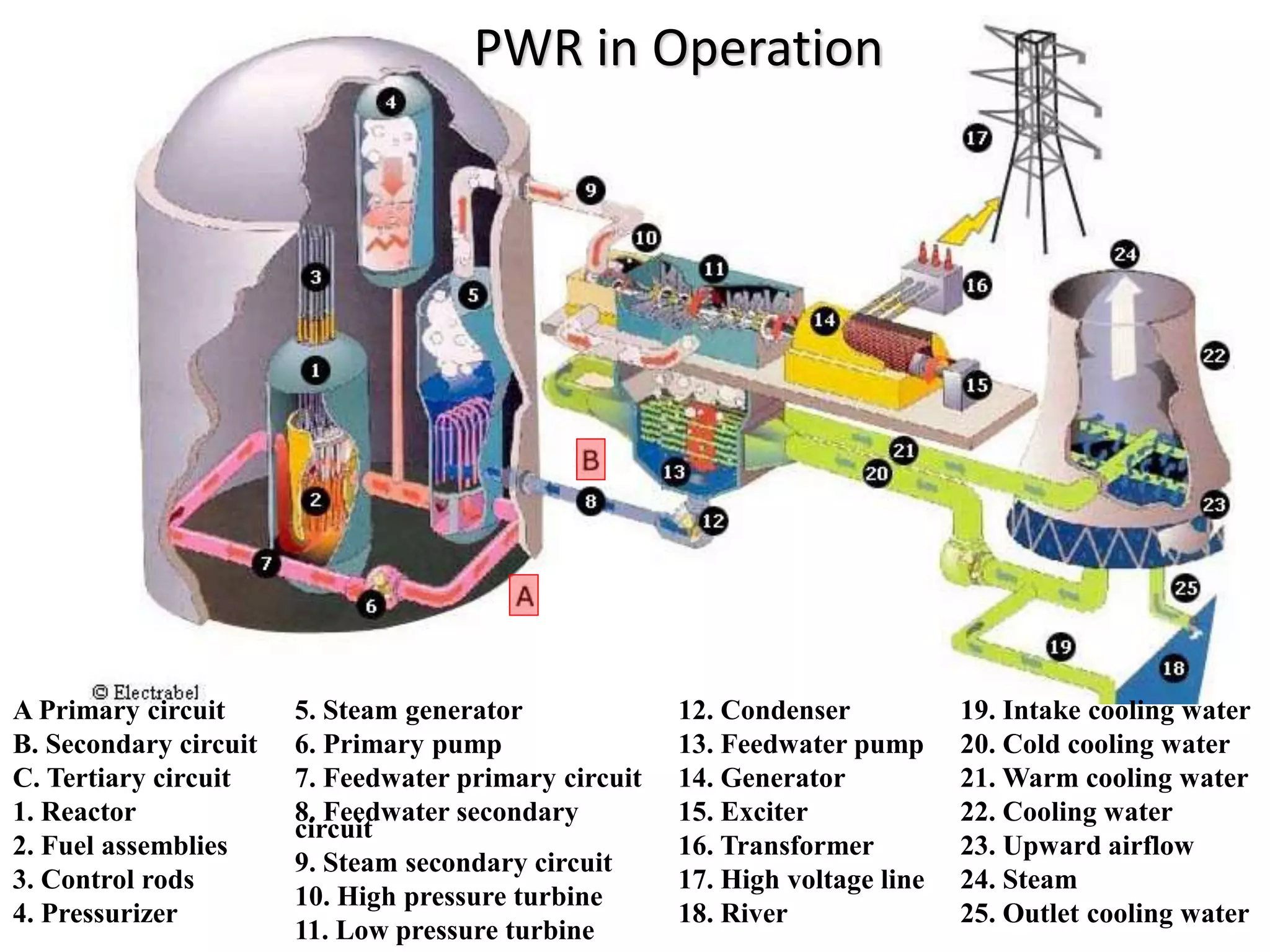
PWR in Operation
A Primary circuit
B. Secondary circuit
C. Tertiary circuit
1. Reactor
2. Fuel assemblies
3. Control rods
4. Pressurizer
5. Steam generator
6. Primary pump
7. Feedwater primary circuit
8. Feedwater secondary
circuit
9. Steam secondary circuit
10. High pressure turbine
11. Low pressure turbine
12. Condenser
13. Feedwater pump
14. Generator
15. Exciter
16. Transformer
17. High voltage line
18. River
19. Intake cooling water
20. Cold cooling water
21. Warm cooling water
22. Cooling water
23. Upward airflow
24. Steam
25. Outlet cooling water
CLASSIFICATIONS BY TYPE
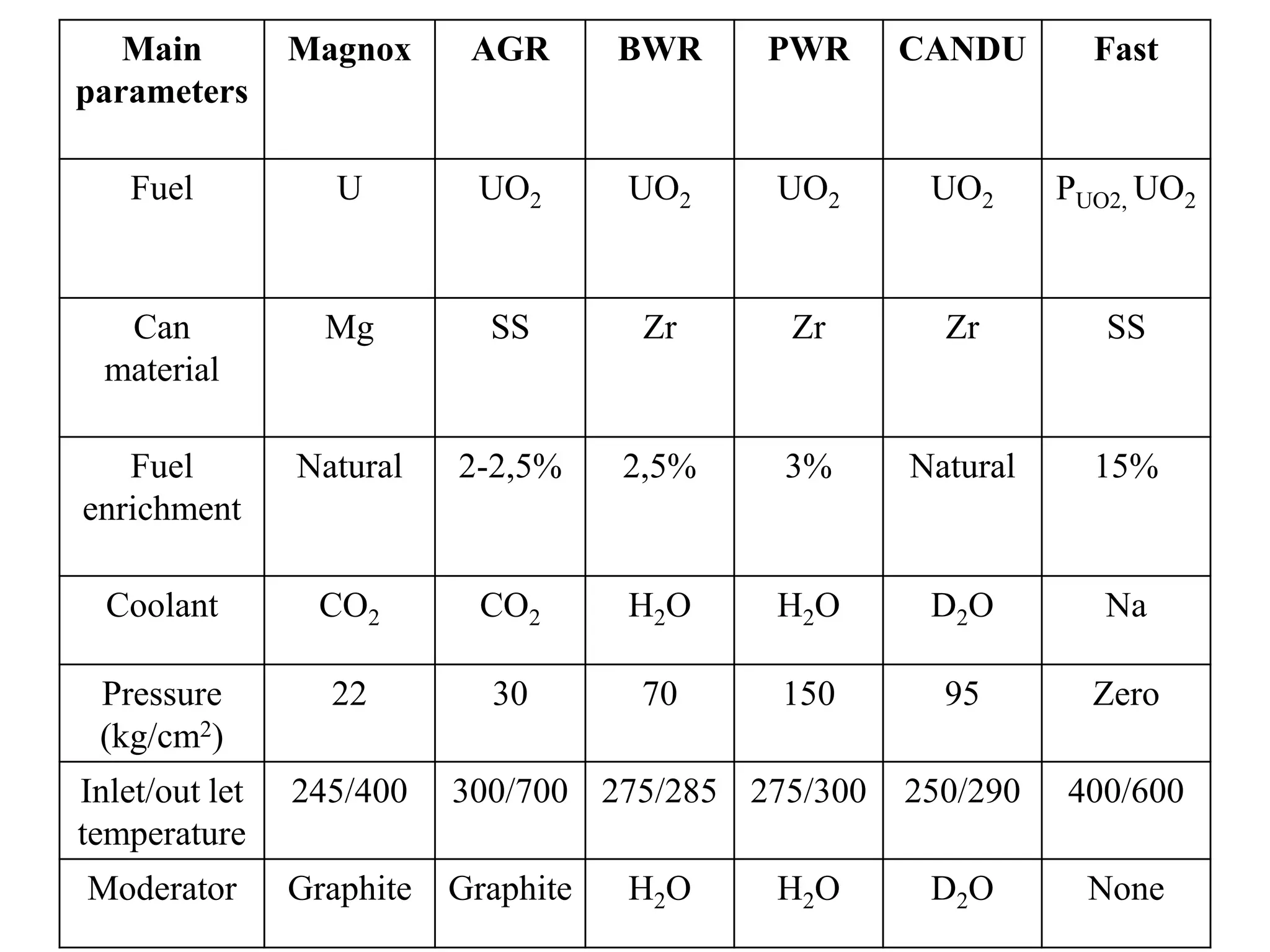
Main
parameters
Magnox AGR BWR PWR CANDU Fast
Fuel U UO2 UO2 UO2 UO2 PUO2, UO2
Can
material
Mg SS Zr Zr Zr SS
Fuel
enrichment
Natural 2-2,5% 2,5% 3% Natural 15%
Coolant CO2 CO2 H2O H2O D2O Na
Pressure
(kg/cm2)
22 30 70 150 95 Zero
Inlet/out let
temperature
245/400 300/700 275/285 275/300 250/290 400/600
Moderator Graphite Graphite H2O H2O D2O None
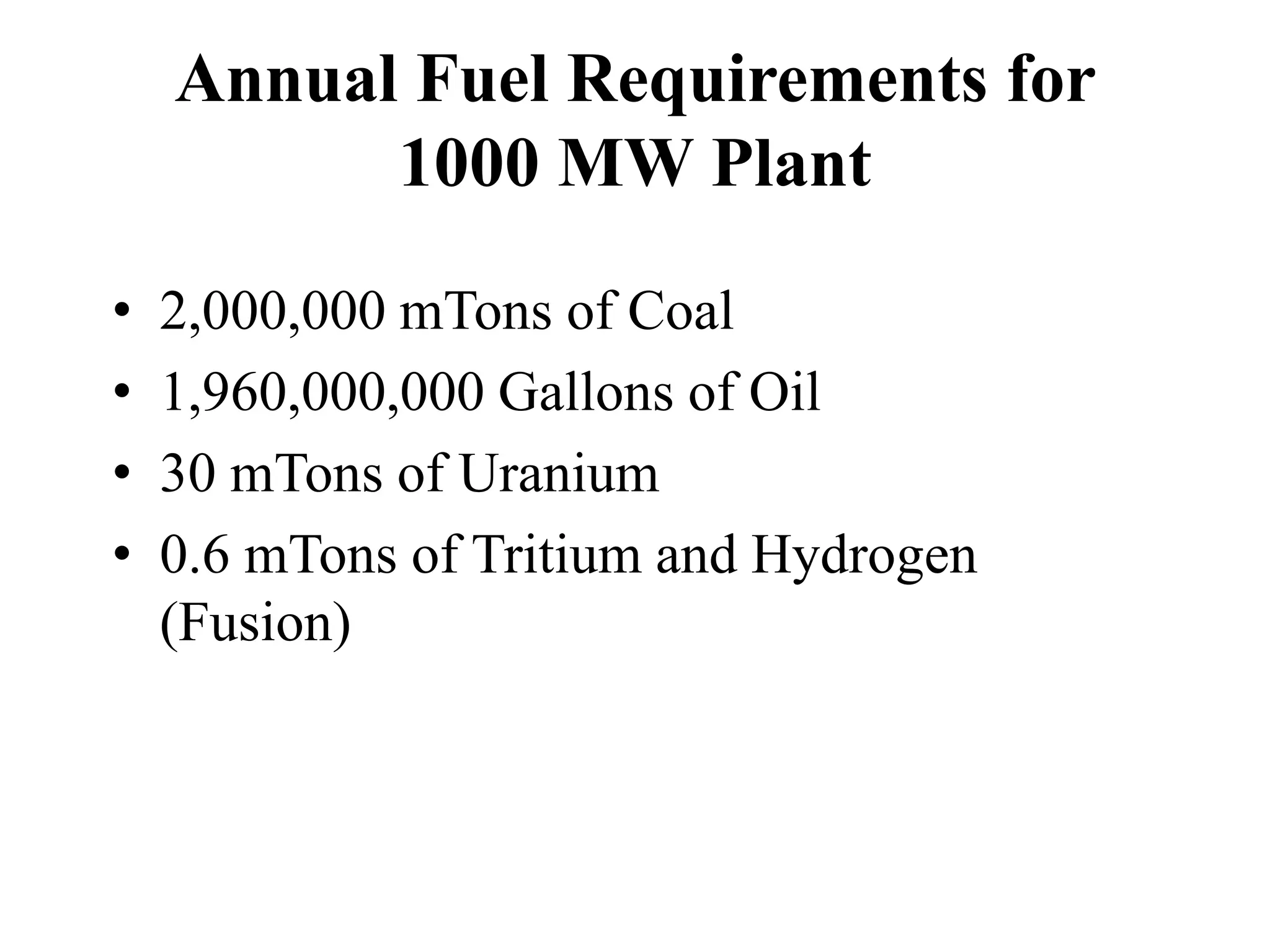
Annual Fuel Requirements for
1000 MW Plant
• 2,000,000 mTons of Coal
• 1,960,000,000 Gallons of Oil
• 30 mTons of Uranium
• 0.6 mTons of Tritium and Hydrogen
(Fusion)
Advantages
• Nuclear power costs about the same as coal, so it's
not expensive to make.
• Does not produce smoke or carbon dioxide, so it does
not contribute to the greenhouse effect.
• Produces huge amounts of energy from small
amounts of fuel…so cheaper logistics
• Produces small amounts of waste.
• Nuclear power is reliable.
Disadvantages
•Although not much waste is produced, it is very dangerous.
It must be sealed up and buried for many thousands of years to allow
the radioactivity to die away.
For all that time it must be kept safe from earthquakes, flooding,
terrorists and everything else. This is difficult.
•Nuclear power is reliable, but a lot of money has to be spent on
safety - if it does go wrong, a nuclear accident can be a major
disaster.
People are increasingly concerned about this - in the 1990's nuclear
power was the fastest-growing source of power in much of the world.
In 2005 it was the second slowest-growing.
Nuclear Power Plant in Pakistan
• In Pakistan, nuclear power makes a small contribution to total energy
production and requirements, supplying only 2.34% of the country's
electricity. Total generating capacity is 20 GWe and in 2006, 98 billion
kWh gross was produced, 37% of it from gas, 29% from oil.
• The Pakistan Atomic Energy Commission (PAEC) is responsible for all
nuclear energy and research applications in the country.
• Its first nuclear power reactor is a small (125 MWe) Canadian
pressurized heavy water reactor (PHWR) which started up in 1971 and
which is under international safeguards - KANUPP near Karachi, which
is operated at reduced power.
Nuclear Power Plant in Pakistan
• The second unit is Chashma-1 in Punjab, a 325 MW
pressurized water reactor (PWR) supplied by China. The
main part of the plant was designed by Shanghai Nuclear
Engineering Research and Design Institute (SNERDI). It
started up in May 2000 and is also known as CHASNUPP-1.
• Construction of its twin, Chashma-2, started in December
2005. It is reported to cost PKR 51.46 billion (US$ 860
million, with $350 million of this financed by China).
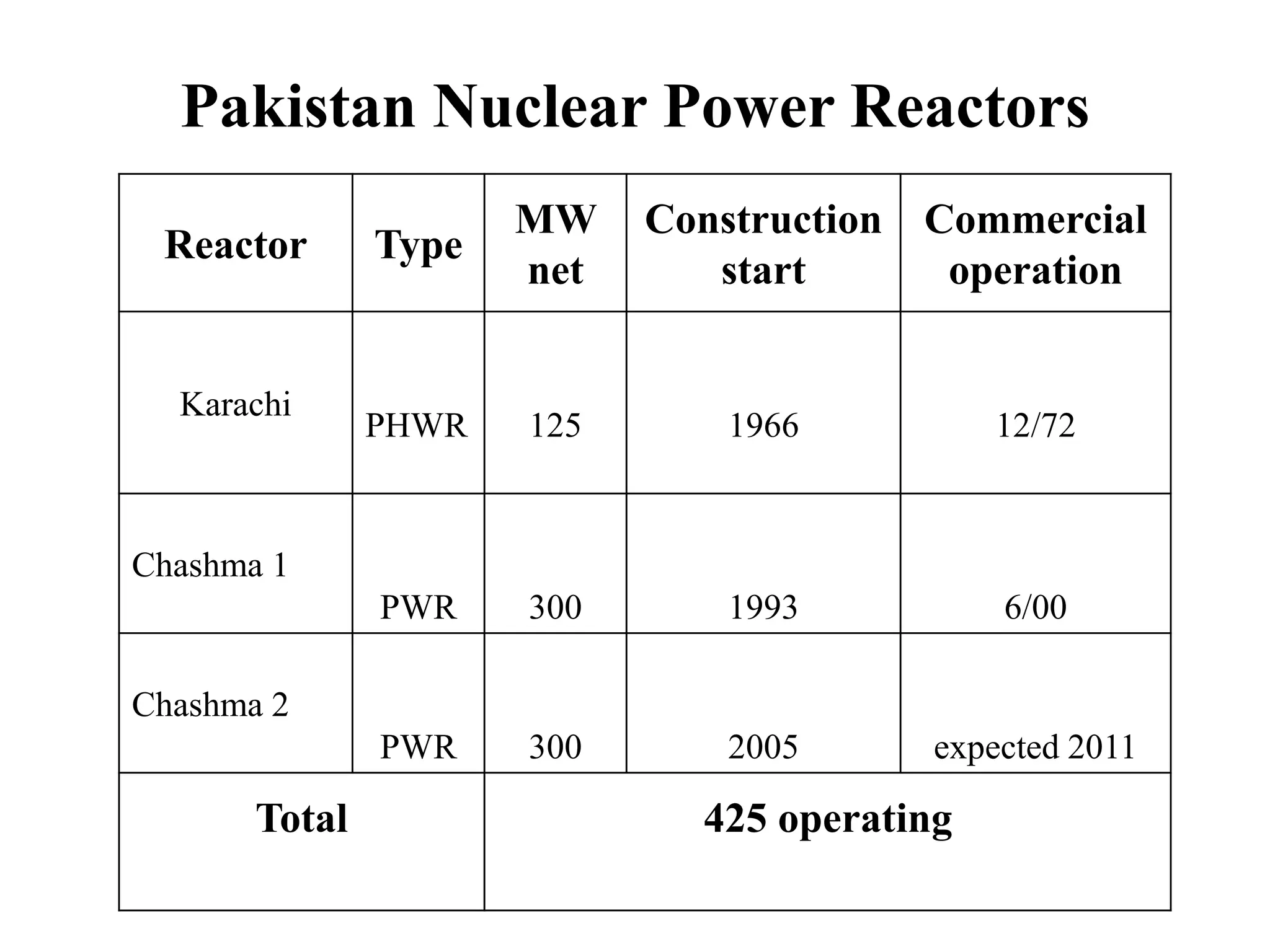
Pakistan Nuclear Power Reactors
Reactor Type
MW
net
Construction
start
Commercial
operation
Karachi
PHWR 125 1966 12/72
Chashma 1
PWR 300 1993 6/00
Chashma 2
PWR 300 2005 expected 2011
Total 425 operating

Nuclear power plant fundamentals

  • 1.
  • 2.
    NUCLEAR POWER PLANT Anuclear power plant is a thermal power station in which the heat source is a nuclear reactor. As in a conventional thermal power station the heat is used to generate steam which drives a steam turbine connected to a generator which produces electricity. As of February 2, 2012, there were 439 nuclear power plants in operation. In Nuclear power plant nuclear fuel (U234 (0.0050), U235,(0.7198) U238 ((99.27) Pu239 ) are used.
  • 3.
    HISTORY Electricity was generatedby a nuclear reactor for the first time ever on December 20, 1951 at the experimental station near Arco, Idaho in the United States. On June 27, 1954, the world's first nuclear power plant to generate electricity for a power grid started operations at Obninsk, USSR. The world's first commercial scale power station, Calder Hall in England opened on October 17, 1956.
  • 4.
    A process inwhich bombardment of a nucleus by fast moving neutrons results in its break up in two smallest nuclei of almost equal mass with the liberation of large amount of energy is called Nuclear Fission reaction. This fission reaction may be of two types (i) Controlled fission reaction and (ii) Uncontrolled fission reaction NUCLEAR FISSION
  • 5.
    Energy can beproduced by following two ways: 1. By combining light nuclei, the process known as fusion. 2. By breaking up heavy nuclei into nuclei of intermediate size, process is known as fission.
  • 6.
    ISOTOPES OF URANIUM ISOPOTESProtons Neutrons Atomic Mass U-234 92 142 234 U-235 92 143 135 U-238 92 146 238 Natural uranium consists of three isotopes 99.3% is U-238 and 0.7 % U-235 with traces of U-234
  • 7.
    92U238 + 0n1 92U239+ γ 92U239 has a half life of 23.5 minutes only, it is unstable hence 92U239 + 1e 98Np239 Neptunium -239 has a half life of few days and it emits β particles 98Np239 + 1e 94Pu239
  • 8.
  • 9.
    This is abeta-gamma probe, which can measure beta and gamma radiation in millirems per unit of time.
  • 10.
    • Radiation Units –Curie (Ci) • Measurement of the activity of a radioactive source. • Measured as the number of nuclear disintegrations per unit of time • A curie is 3.70 X 10¹⁰ nuclear disintegrations per second.
  • 11.
    – Rad unitof dose equivalent to 100 ergs absorbs per gram of irradiated material. • Measures the amount of energy released by radiation striking living tissue • Short for radiation absorbed dose • One rad releases 1 X 10⁻² J/kg – Rem • Short for Rontgen equivalent man • This takes into account the possible biological damage to humans of certain types of radiation. • Rem = RBE * RAD where RBE = relative biological effectiveness Minimum dosage 0.5 rem/year for public and 5 rem for working personals inside plant. D = 5 (N-18) where N= age of worker
  • 12.
    • Radiation Exposure –Background radiation is constantly present in our environment. • Most people are exposed to between 100 to 500 millirems per year. • This background radiation comes from many natural source. – The harm that radiation does to living organisms is due to the fact that it produces ionization which can: • Disrupt chemical bonds in biological macromolecules such as DNA • Produce molecular fragments which can interfere with enzyme action and essential cell functions.
  • 13.
    – The linearmodel of exposure proposes that any exposure above zero is damaging and can produce cancer and genetic damage, mostly through its effect on DNA – The threshold model proposes that there is a threshold limit of exposure up to which the human body can repair damage caused by the exposure • It is not until we reach and exceed this threshold that we begin to see irreversible damage.
  • 14.
    CHAIN REACTION A nuclearchain reaction occurs when one nuclear reaction causes an average of one or more nuclear reactions, thus leading to a self- propagating series of these reactions. The specific nuclear reaction may be the fission of heavy isotopes (e.g., 235U) or the fusion of light isotopes (e.g., 2H and 3H). The nuclear chain reaction releases several million times more energy per reaction than any chemical reaction.
  • 16.
    How it Works Themain bit to remember : Nuclear power stations work in pretty much the same way as fossil fuel-burning stations, except that a "chain reaction" inside a nuclear reactor makes the heat instead.
  • 17.
    • Nuclear PowerPlants – The nuclear reactor contains the material and is the vessel for the controlled chain reaction of fissionable materials that will release the energy. – Usually there is a fissionable enriched material made of 3% U235 and 97% U238 the is fabricated into small beads. – The beads are enclosed in a fuel rod. – The fuel rods are locked in a fuel rod assembly by locking collars and arranged so that pressurized water can flow around the rods. – Control rods are made of material that can absorb neutrons and are inserted between the fuel rods.
  • 18.
    – The rateof the chain reaction is controlled by raising or lowering the control rod. – In a pressurized water reactor the energy is carried way from the reactor by water in a closed pipe called a primary loop. • This water acts as a coolant and also as a moderator to slow neutrons so they can more readily be absorbed by the U235 nuclei. – The water from the primary loop is circulated to a heat exchanger called a steam generator. • The water in the heat exchanger moves through hundreds of small loops and heats the feedwater in the steam generator. • The water then returns to the core to be heated again.
  • 19.
    • A schematicrepresentation of the basic parts of a nuclear reactor. The largest commercial nuclear power plant reactors are nine- to eleven- inch-thick steel vessels with a stainless steel liner, standing about 40 feet high with a diameter of 16 feet. Such a reactor has four pumps, which move 440,000 gallons of water per minute through the primary loop.
  • 20.
    Main Parts ofa reactor and reactor control • Reactor Core • Moderator • Reflector • Shielding • Control of reactor • Cooling system
  • 21.
    Moderators The moderator isthe one reduces the speed of the neutron. The most moderators are Beryllium, Heavy water, or a Graphite. To allow the chain reaction to proceed, enough of these fast neutrons must be slowed down so that there are just enough slow neutrons to produce more fissions and allow a steady power level to be achieved. It is the function of the moderator to slow the fast neutrons, in fact we talk of thermalizing them, and such reactors are sometimes called thermal reactors. Control Rods To prevent overheating, control rods made of a material that absorbs neutrons are inserted into the uranium bundle using a mechanism that can raise or lower the control rods. Raising and lowering the control rods allow operators to control the rate of the nuclear reaction. The rods can also be lowered completely into the uranium bundle to shut the reactor down in the case of an accident or to change the fuel. Shielding The large mass of concrete absorbs gamma radiation well, and as it contains a lot of water molecules it also stops neutrons from penetrating.
  • 22.
  • 23.
  • 24.
    • Spent fuelrod assemblies are removed and new ones are added to a reactor head during refueling. This shows an initial fuel load to a reactor, which has the upper part removed and set aside for the loading.
  • 25.
    Categories of NuclearReactors • Light Water Reactors – Use H2O – Most Prevalent • Heavy Water Reactors – Use D2O – Prevalent in Canada and Russia • Other Reactor Categories – Liquid Metal Cooled – Gas Cooled
  • 26.
    Light Water Reactors •Boiling Water Reactors (BWRs) – Located throughout U.S., Europe, and Asia – Power: 570 -- 1300 MW; Efficiency: ~30% – Tmax: 570oF; PRxr Coolant: 1000 psi • Pressurized Water Reactors (PWRs) – Manufactured by U.S., European, and Asian companies – Tmax: 590oF; PRxr Coolant: 2250 psi • VVER Reactors (VVERs) -- Russian PWR
  • 27.
    Pressurized water reactor Apressurized heavy water reactor (PHWR) is a nuclear power reactor, commonly using unenriched natural uranium as its fuel, that uses heavy water (deuterium oxide D2O) as its coolant and moderator. The heavy water coolant is kept under pressure, allowing it to be heated to higher temperatures without boiling, much as in a PWR. While heavy water is significantly more expensive than ordinary light water, it yields greatly enhanced neutron economy, allowing the reactor to operate without fuel enrichment facilities (mitigating the additional capital cost of the heavy water) and generally enhancing the ability of the reactor to efficiently make use of alternate fuel cycles.
  • 28.
  • 29.
  • 30.
  • 31.
    Heavy Water Reactors •Canadian Deuterium-Uranium (CANDU) Reactors – Use natural (non-isotopically concentrated) uranium – Tmax: 590oF; PRxr Coolant: 1500 psi – Can run 2 ½ years without refueling/downtime • RBMK Reactors – Chernobyl-style reactor – Graphite and D2O in reactor core – Much improved designs today
  • 32.
  • 33.
    RBMK Reactor (HighPower channel)
  • 34.
    Other Reactor Categories •Liquid Metal Fast Breeder Reactors (LMFBRs) – Use liquid sodium as coolant – 3-loop cycle – None operating commercially • Advanced Gas-cooled Reactors (AGRs) – Use natural uranium – He or CO2 gas coolant at 1430oF and 600 psi – Primarily operated in United Kingdom
  • 35.
    TYPES OF POWERREACTOR Main types of nuclear reactors are 1. Advanced Gas Cooled-Reactor 2. Boiling Water reactor 3. Pressurized Water reactor 4. CANDU Type reactor 5. Sodium Graphite reactor 6. Fast Breeder Reactor
  • 36.
  • 37.
  • 38.
    PWR in Operation APrimary circuit B. Secondary circuit C. Tertiary circuit 1. Reactor 2. Fuel assemblies 3. Control rods 4. Pressurizer 5. Steam generator 6. Primary pump 7. Feedwater primary circuit 8. Feedwater secondary circuit 9. Steam secondary circuit 10. High pressure turbine 11. Low pressure turbine 12. Condenser 13. Feedwater pump 14. Generator 15. Exciter 16. Transformer 17. High voltage line 18. River 19. Intake cooling water 20. Cold cooling water 21. Warm cooling water 22. Cooling water 23. Upward airflow 24. Steam 25. Outlet cooling water
  • 39.
  • 40.
    Main parameters Magnox AGR BWRPWR CANDU Fast Fuel U UO2 UO2 UO2 UO2 PUO2, UO2 Can material Mg SS Zr Zr Zr SS Fuel enrichment Natural 2-2,5% 2,5% 3% Natural 15% Coolant CO2 CO2 H2O H2O D2O Na Pressure (kg/cm2) 22 30 70 150 95 Zero Inlet/out let temperature 245/400 300/700 275/285 275/300 250/290 400/600 Moderator Graphite Graphite H2O H2O D2O None
  • 41.
    Annual Fuel Requirementsfor 1000 MW Plant • 2,000,000 mTons of Coal • 1,960,000,000 Gallons of Oil • 30 mTons of Uranium • 0.6 mTons of Tritium and Hydrogen (Fusion)
  • 42.
    Advantages • Nuclear powercosts about the same as coal, so it's not expensive to make. • Does not produce smoke or carbon dioxide, so it does not contribute to the greenhouse effect. • Produces huge amounts of energy from small amounts of fuel…so cheaper logistics • Produces small amounts of waste. • Nuclear power is reliable.
  • 43.
    Disadvantages •Although not muchwaste is produced, it is very dangerous. It must be sealed up and buried for many thousands of years to allow the radioactivity to die away. For all that time it must be kept safe from earthquakes, flooding, terrorists and everything else. This is difficult. •Nuclear power is reliable, but a lot of money has to be spent on safety - if it does go wrong, a nuclear accident can be a major disaster. People are increasingly concerned about this - in the 1990's nuclear power was the fastest-growing source of power in much of the world. In 2005 it was the second slowest-growing.
  • 44.
    Nuclear Power Plantin Pakistan • In Pakistan, nuclear power makes a small contribution to total energy production and requirements, supplying only 2.34% of the country's electricity. Total generating capacity is 20 GWe and in 2006, 98 billion kWh gross was produced, 37% of it from gas, 29% from oil. • The Pakistan Atomic Energy Commission (PAEC) is responsible for all nuclear energy and research applications in the country. • Its first nuclear power reactor is a small (125 MWe) Canadian pressurized heavy water reactor (PHWR) which started up in 1971 and which is under international safeguards - KANUPP near Karachi, which is operated at reduced power.
  • 45.
    Nuclear Power Plantin Pakistan • The second unit is Chashma-1 in Punjab, a 325 MW pressurized water reactor (PWR) supplied by China. The main part of the plant was designed by Shanghai Nuclear Engineering Research and Design Institute (SNERDI). It started up in May 2000 and is also known as CHASNUPP-1. • Construction of its twin, Chashma-2, started in December 2005. It is reported to cost PKR 51.46 billion (US$ 860 million, with $350 million of this financed by China).
  • 46.
    Pakistan Nuclear PowerReactors Reactor Type MW net Construction start Commercial operation Karachi PHWR 125 1966 12/72 Chashma 1 PWR 300 1993 6/00 Chashma 2 PWR 300 2005 expected 2011 Total 425 operating