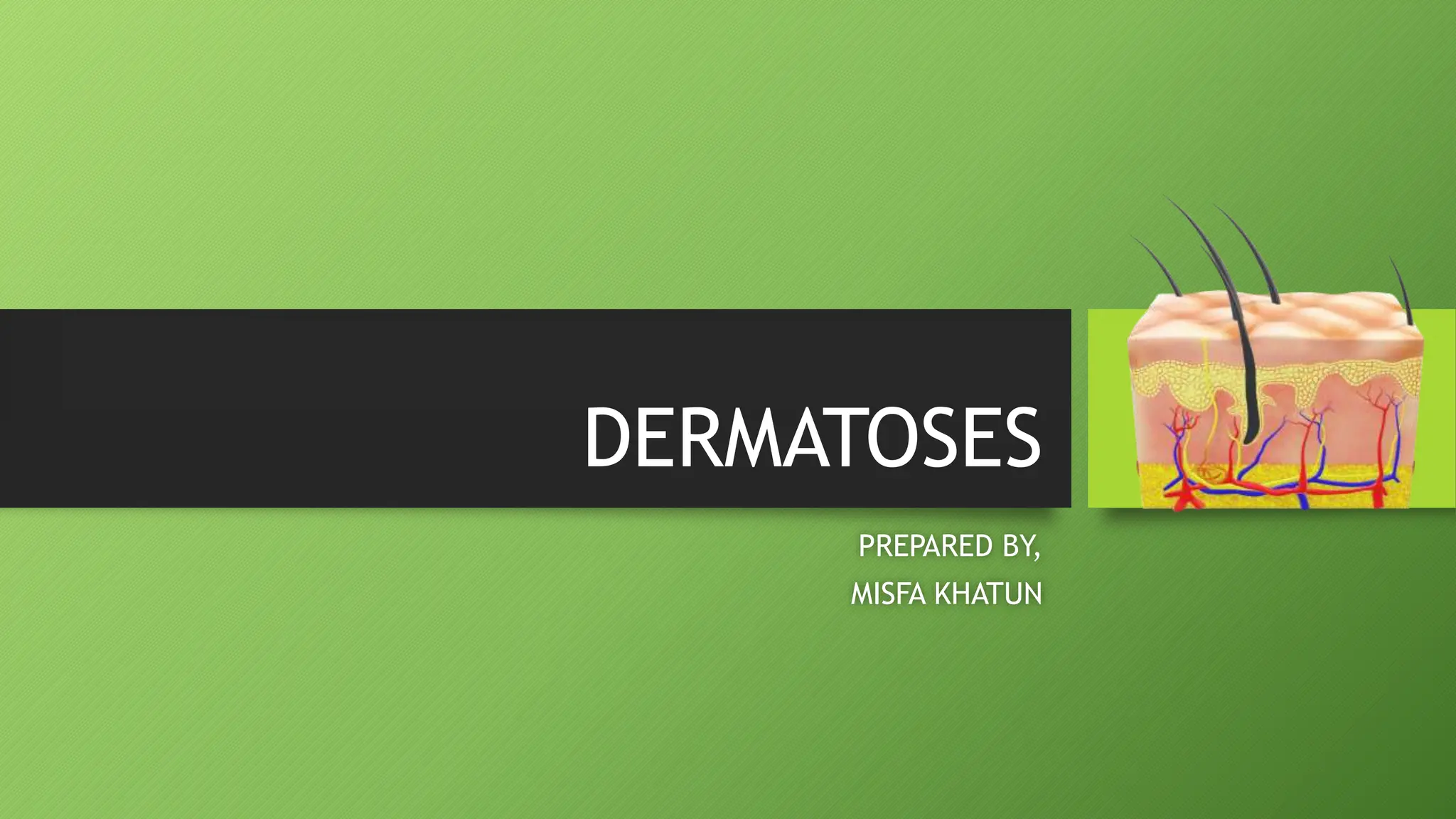
DERMATOSES
PREPARED BY,
MISFA KHATUN
INTRODUCTION
 Dermatosis is referred as diseases of the skin, nails, and hair in the
integumentary system.
 Infectious dermatoses that can manifest as vesicles include bacteria, viruses,
fungi, syphilis and other infections.
 Non-infectious dermatoses occur due to allergic and autoimmune disease.
DEFINITION
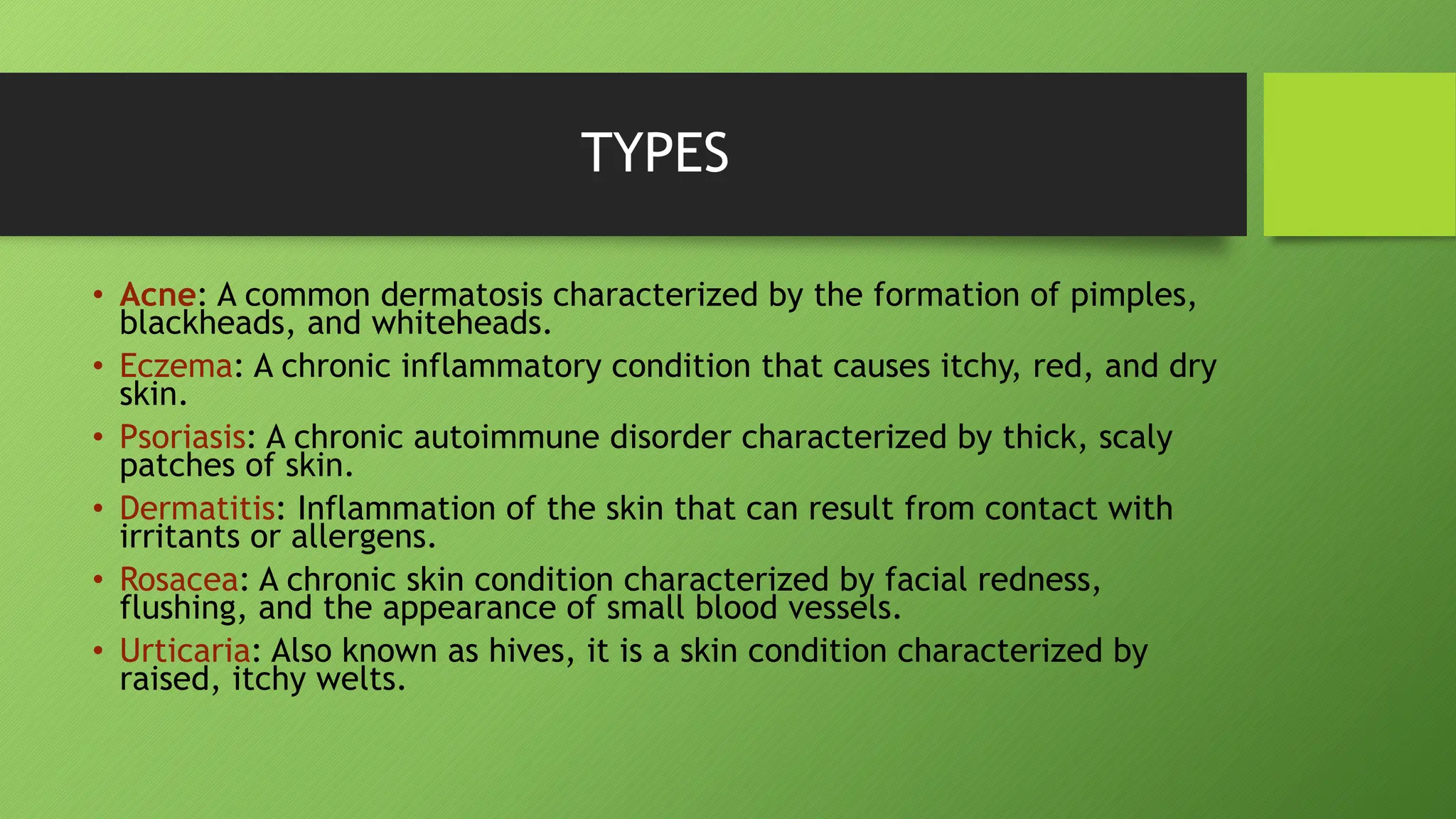
• Dermatoses- any abnormal condition of the skin, ranging from the mildest
redness, itching, or scaling to an eczematous, ulcerative, acneiform,
pigmentary, granulomas, or neoplastic disorder.
TYPES
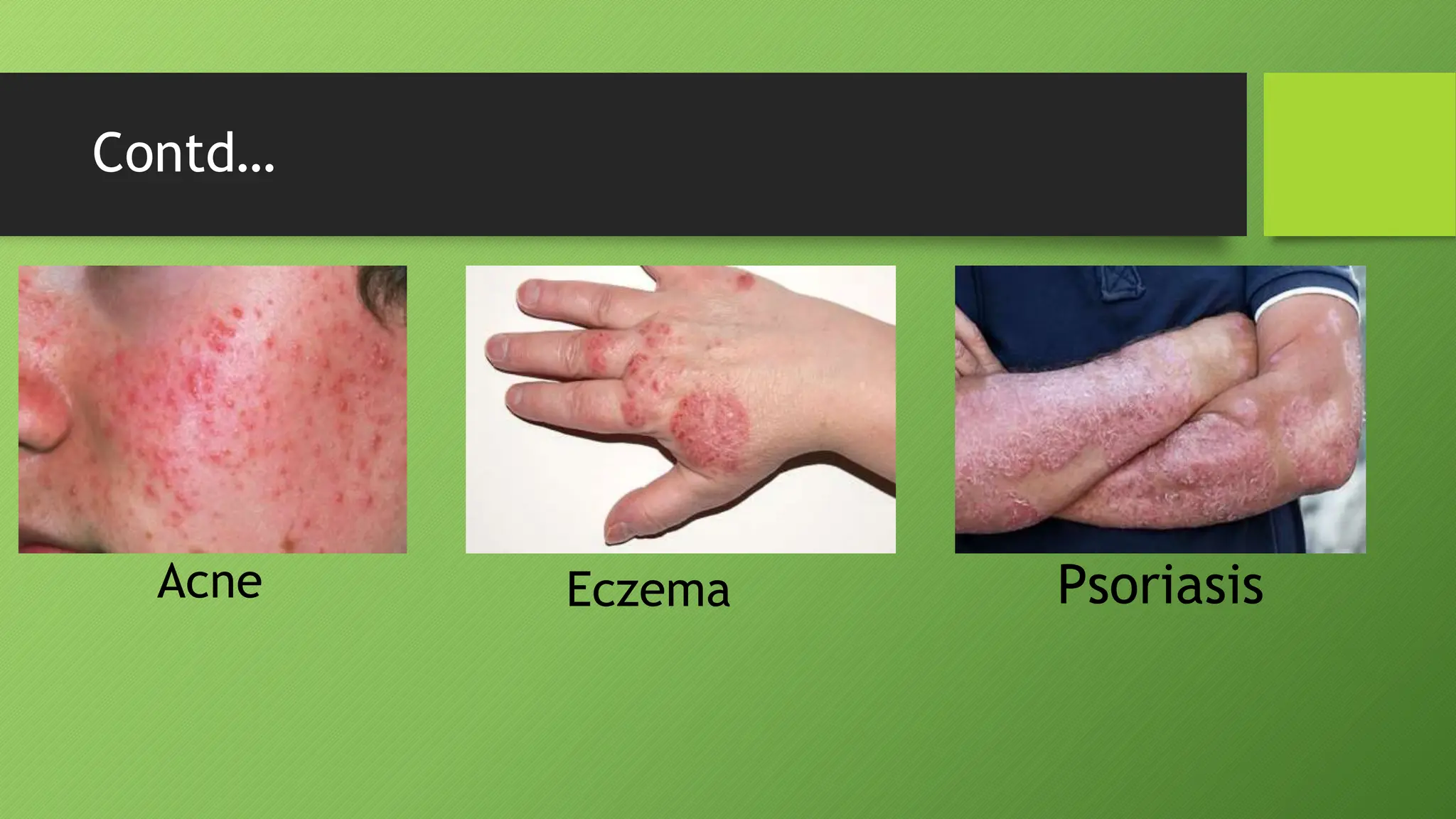
• Acne: A common dermatosis characterized by the formation of pimples,
blackheads, and whiteheads.
• Eczema: A chronic inflammatory condition that causes itchy, red, and dry
skin.
• Psoriasis: A chronic autoimmune disorder characterized by thick, scaly
patches of skin.
• Dermatitis: Inflammation of the skin that can result from contact with
irritants or allergens.
• Rosacea: A chronic skin condition characterized by facial redness,
flushing, and the appearance of small blood vessels.
• Urticaria: Also known as hives, it is a skin condition characterized by
raised, itchy welts.
Contd…
Acne Eczema Psoriasis
Contd…
Dermatitis Rosacea Urticaria
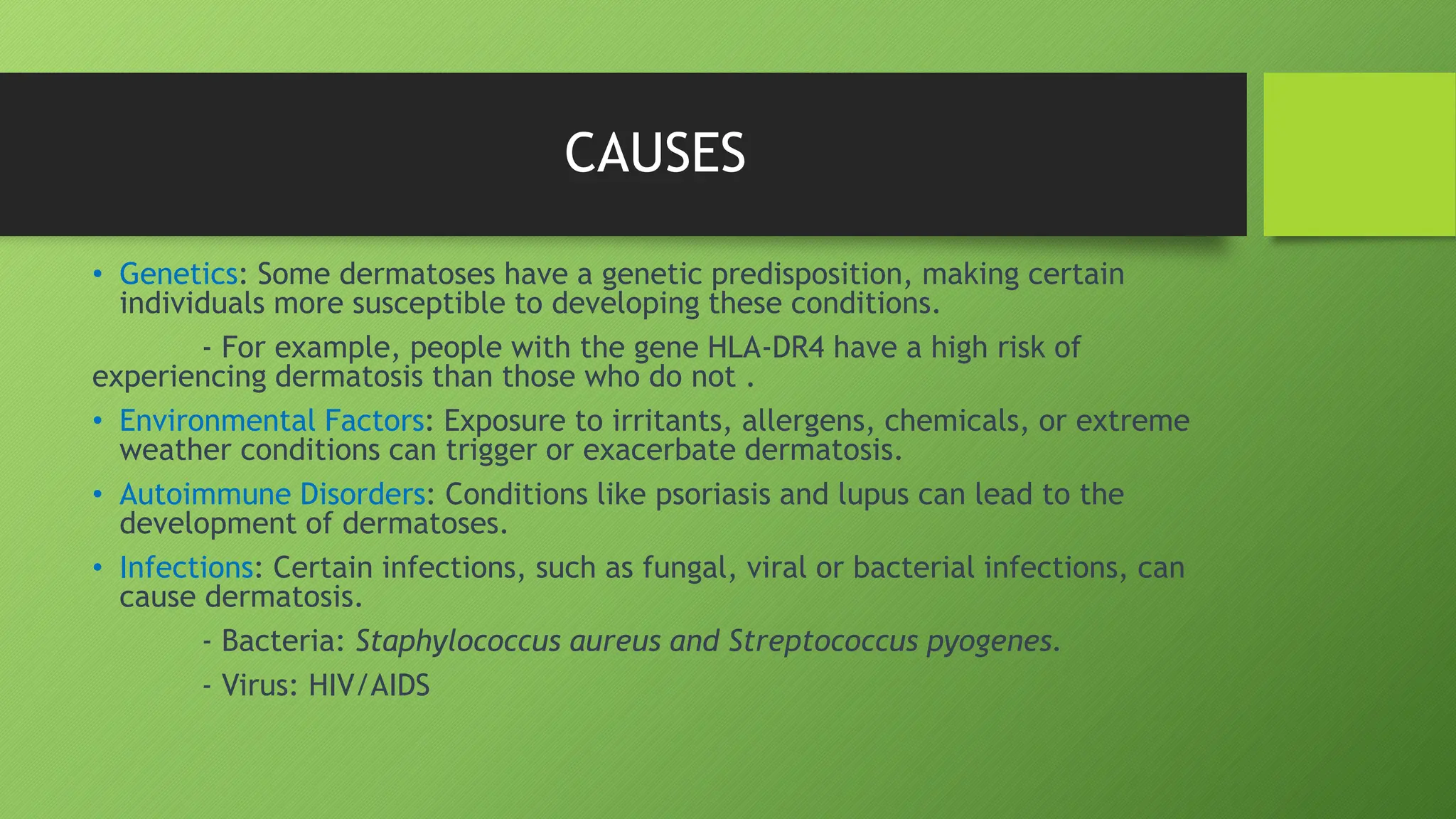
CAUSES
• Genetics: Some dermatoses have a genetic predisposition, making certain
individuals more susceptible to developing these conditions.
- For example, people with the gene HLA-DR4 have a high risk of
experiencing dermatosis than those who do not .
• Environmental Factors: Exposure to irritants, allergens, chemicals, or extreme
weather conditions can trigger or exacerbate dermatosis.
• Autoimmune Disorders: Conditions like psoriasis and lupus can lead to the
development of dermatoses.
• Infections: Certain infections, such as fungal, viral or bacterial infections, can
cause dermatosis.
- Bacteria: Staphylococcus aureus and Streptococcus pyogenes.
- Virus: HIV/AIDS
SYMPTOMS
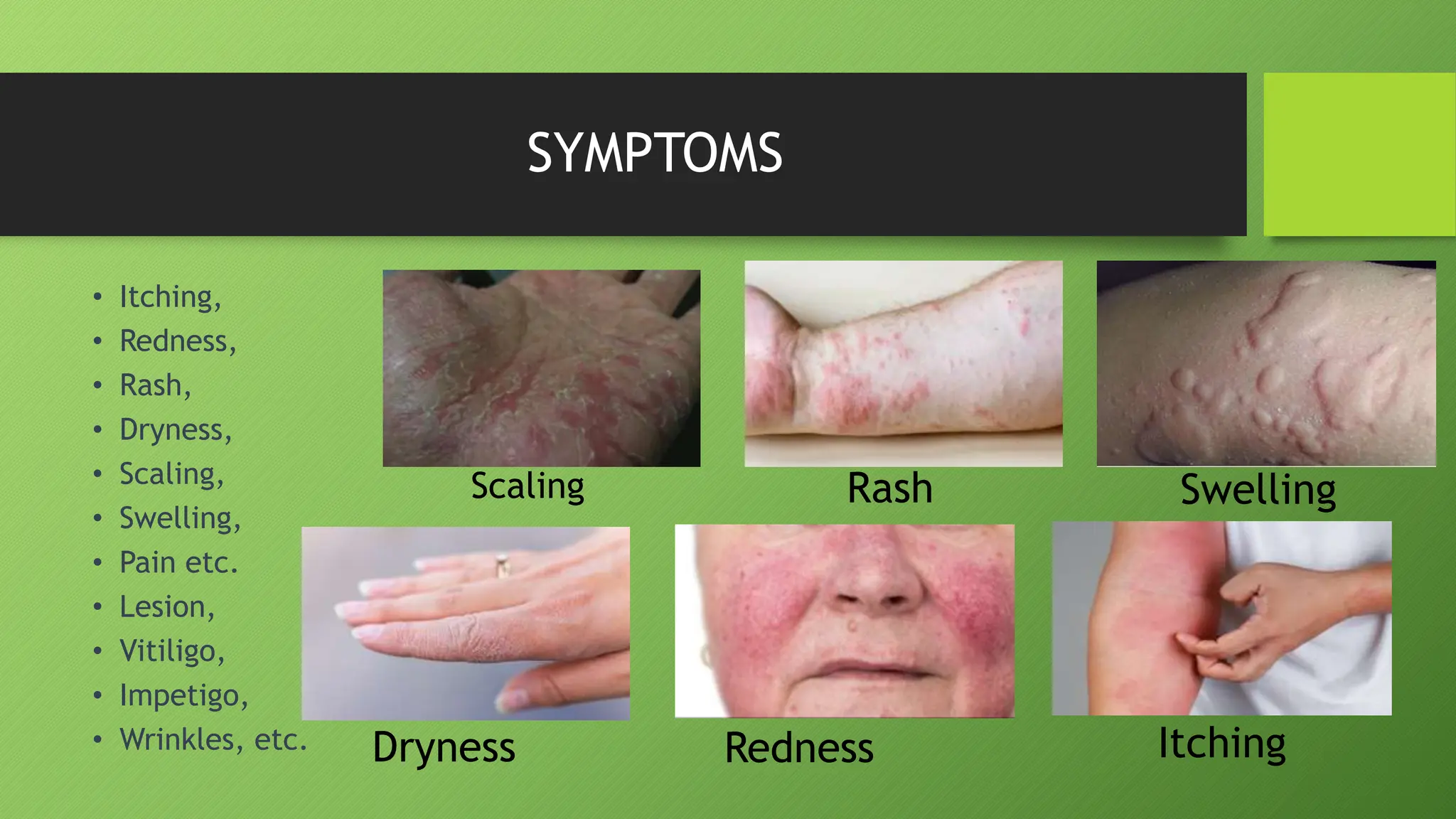
• Itching,
• Redness,
• Rash,
• Dryness,
• Scaling,
• Swelling,
• Pain etc.
• Lesion,
• Vitiligo,
• Impetigo,
• Wrinkles, etc.
Scaling Rash Swelling
Dryness Redness Itching
DIAGNOSIS
Dermatologists typically diagnose dermatosis through a combination of -
• Physical examination,
• Medical history, and
• Sometimes by conducting skin tests or biopsies.
TREATMENT
• Topical Medications: Creams, ointments, and lotions containing
corticosteroids, antifungal agents, or immunomodulators may be
prescribed.
• Systemic Medications: In severe cases, oral medications or injections
may be necessary to control the symptoms of dermatosis.
• Phototherapy: Exposure to specific wavelengths of light can help
alleviate symptoms in conditions like psoriasis.
• Lifestyle Changes: Avoiding triggers, practicing good skincare habits, and
managing stress can contribute to managing dermatosis.
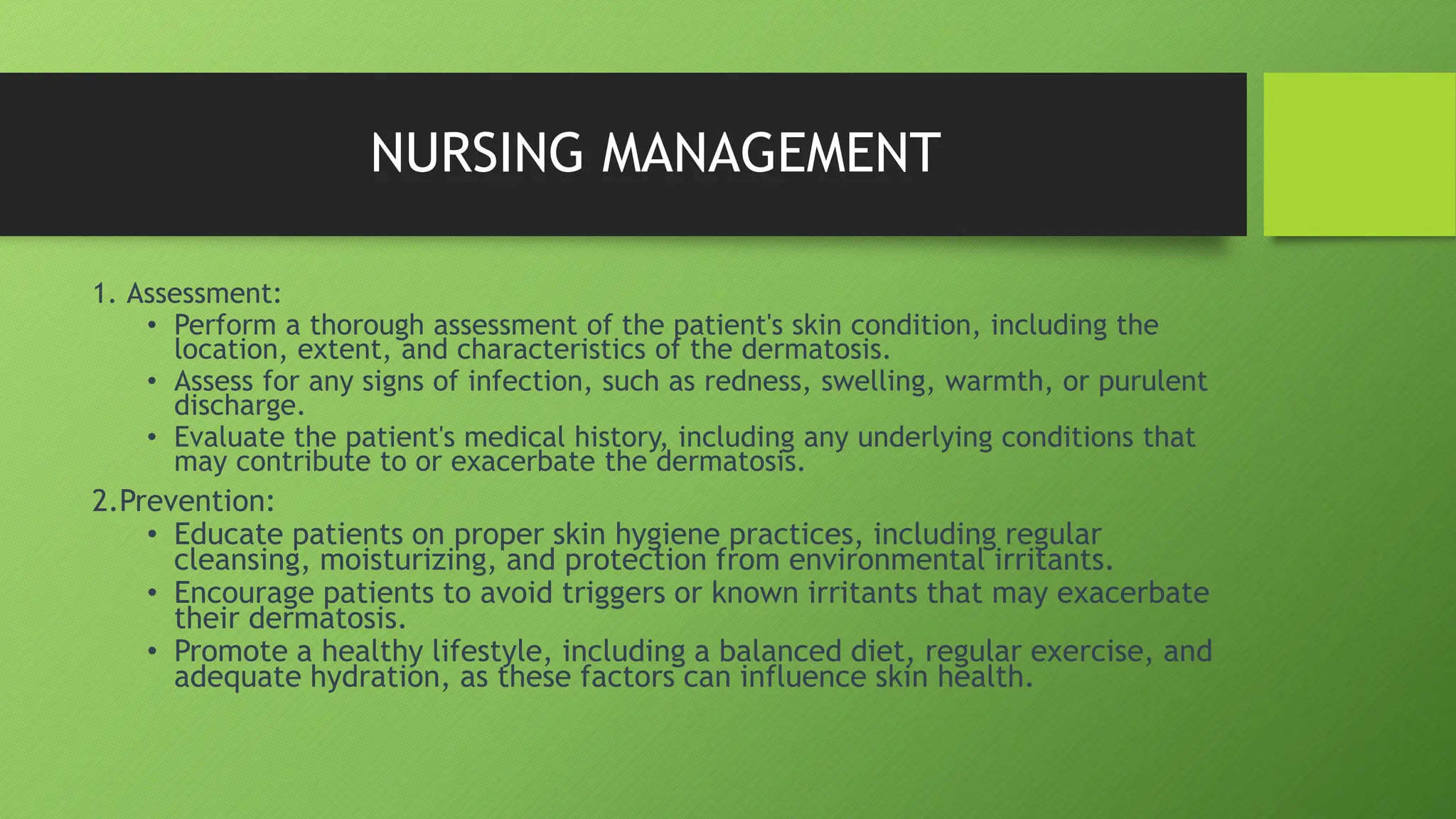
NURSING MANAGEMENT
1. Assessment:
• Perform a thorough assessment of the patient's skin condition, including the
location, extent, and characteristics of the dermatosis.
• Assess for any signs of infection, such as redness, swelling, warmth, or purulent
discharge.
• Evaluate the patient's medical history, including any underlying conditions that
may contribute to or exacerbate the dermatosis.
2.Prevention:
• Educate patients on proper skin hygiene practices, including regular
cleansing, moisturizing, and protection from environmental irritants.
• Encourage patients to avoid triggers or known irritants that may exacerbate
their dermatosis.
• Promote a healthy lifestyle, including a balanced diet, regular exercise, and
adequate hydration, as these factors can influence skin health.
Contd…
3. Treatment:
• Collaborate with the healthcare team to develop an individualized
treatment plan for the specific dermatosis. This may include topical
medications, oral medications, phototherapy, or other interventions.
• Administer prescribed medications as ordered, ensuring proper
dosage, timing, and application techniques.
• Monitor the patient's response to treatment, including the
improvement or worsening of symptoms, and communicate any
changes to the healthcare team.
• Provide comfort measures, such as cool compresses or soothing
lotions, to relieve itching, pain, or discomfort associated with the
dermatosis.
Contd…
4. Patient Education:
• Educate patients about their specific dermatosis, including its
causes, symptoms, and potential triggers.
• Teach patients how to properly apply topical medications,
emphasizing the importance of consistency and adherence to the
prescribed treatment regimen.
• Instruct patients on self-care strategies, such as proper skin hygiene,
moisturizing techniques, and avoidance of irritants.
• Discuss the importance of follow-up appointments and regular
monitoring to assess treatment effectiveness and make any
necessary adjustments.
Contd…
5. Emotional Support:
• Recognize the potential impact of dermatosis on a patient's
emotional well-being and body image.
• Provide empathetic and supportive care, addressing any concerns or
anxieties related to the dermatosis.
• Refer patients to appropriate resources, such as support groups or
counseling services, to help them cope with the psychosocial aspects
of their condition.
PREVENTION AND SELF-CARE
• Protecting the skin from excessive sun exposure.
• Avoiding exposure to irritants and allergens.
• Maintaining good hygiene practices.
• Keeping the skin moisturized and well-nourished.
• Seeking medical advice promptly for any skin abnormalities or persistent
symptoms.
• Avoid rubbing, itching at the affected area.
• Avoid sharing personal care items.
NOTE ON DERMATOSES (INTEGUMENTARY SYSTEM DISORDER)

NOTE ON DERMATOSES (INTEGUMENTARY SYSTEM DISORDER)

  • 1.
  • 2.
    INTRODUCTION  Dermatosis isreferred as diseases of the skin, nails, and hair in the integumentary system.  Infectious dermatoses that can manifest as vesicles include bacteria, viruses, fungi, syphilis and other infections.  Non-infectious dermatoses occur due to allergic and autoimmune disease.
  • 3.
    DEFINITION • Dermatoses- anyabnormal condition of the skin, ranging from the mildest redness, itching, or scaling to an eczematous, ulcerative, acneiform, pigmentary, granulomas, or neoplastic disorder.
  • 4.
    TYPES • Acne: Acommon dermatosis characterized by the formation of pimples, blackheads, and whiteheads. • Eczema: A chronic inflammatory condition that causes itchy, red, and dry skin. • Psoriasis: A chronic autoimmune disorder characterized by thick, scaly patches of skin. • Dermatitis: Inflammation of the skin that can result from contact with irritants or allergens. • Rosacea: A chronic skin condition characterized by facial redness, flushing, and the appearance of small blood vessels. • Urticaria: Also known as hives, it is a skin condition characterized by raised, itchy welts.
  • 5.
  • 6.
  • 7.
    CAUSES • Genetics: Somedermatoses have a genetic predisposition, making certain individuals more susceptible to developing these conditions. - For example, people with the gene HLA-DR4 have a high risk of experiencing dermatosis than those who do not . • Environmental Factors: Exposure to irritants, allergens, chemicals, or extreme weather conditions can trigger or exacerbate dermatosis. • Autoimmune Disorders: Conditions like psoriasis and lupus can lead to the development of dermatoses. • Infections: Certain infections, such as fungal, viral or bacterial infections, can cause dermatosis. - Bacteria: Staphylococcus aureus and Streptococcus pyogenes. - Virus: HIV/AIDS
  • 8.
    SYMPTOMS • Itching, • Redness, •Rash, • Dryness, • Scaling, • Swelling, • Pain etc. • Lesion, • Vitiligo, • Impetigo, • Wrinkles, etc. Scaling Rash Swelling Dryness Redness Itching
  • 9.
    DIAGNOSIS Dermatologists typically diagnosedermatosis through a combination of - • Physical examination, • Medical history, and • Sometimes by conducting skin tests or biopsies.
  • 10.
    TREATMENT • Topical Medications:Creams, ointments, and lotions containing corticosteroids, antifungal agents, or immunomodulators may be prescribed. • Systemic Medications: In severe cases, oral medications or injections may be necessary to control the symptoms of dermatosis. • Phototherapy: Exposure to specific wavelengths of light can help alleviate symptoms in conditions like psoriasis. • Lifestyle Changes: Avoiding triggers, practicing good skincare habits, and managing stress can contribute to managing dermatosis.
  • 11.
    NURSING MANAGEMENT 1. Assessment: •Perform a thorough assessment of the patient's skin condition, including the location, extent, and characteristics of the dermatosis. • Assess for any signs of infection, such as redness, swelling, warmth, or purulent discharge. • Evaluate the patient's medical history, including any underlying conditions that may contribute to or exacerbate the dermatosis. 2.Prevention: • Educate patients on proper skin hygiene practices, including regular cleansing, moisturizing, and protection from environmental irritants. • Encourage patients to avoid triggers or known irritants that may exacerbate their dermatosis. • Promote a healthy lifestyle, including a balanced diet, regular exercise, and adequate hydration, as these factors can influence skin health.
  • 12.
    Contd… 3. Treatment: • Collaboratewith the healthcare team to develop an individualized treatment plan for the specific dermatosis. This may include topical medications, oral medications, phototherapy, or other interventions. • Administer prescribed medications as ordered, ensuring proper dosage, timing, and application techniques. • Monitor the patient's response to treatment, including the improvement or worsening of symptoms, and communicate any changes to the healthcare team. • Provide comfort measures, such as cool compresses or soothing lotions, to relieve itching, pain, or discomfort associated with the dermatosis.
  • 13.
    Contd… 4. Patient Education: •Educate patients about their specific dermatosis, including its causes, symptoms, and potential triggers. • Teach patients how to properly apply topical medications, emphasizing the importance of consistency and adherence to the prescribed treatment regimen. • Instruct patients on self-care strategies, such as proper skin hygiene, moisturizing techniques, and avoidance of irritants. • Discuss the importance of follow-up appointments and regular monitoring to assess treatment effectiveness and make any necessary adjustments.
  • 14.
    Contd… 5. Emotional Support: •Recognize the potential impact of dermatosis on a patient's emotional well-being and body image. • Provide empathetic and supportive care, addressing any concerns or anxieties related to the dermatosis. • Refer patients to appropriate resources, such as support groups or counseling services, to help them cope with the psychosocial aspects of their condition.
  • 15.
    PREVENTION AND SELF-CARE •Protecting the skin from excessive sun exposure. • Avoiding exposure to irritants and allergens. • Maintaining good hygiene practices. • Keeping the skin moisturized and well-nourished. • Seeking medical advice promptly for any skin abnormalities or persistent symptoms. • Avoid rubbing, itching at the affected area. • Avoid sharing personal care items.