


THE NEW NOTCOMPATIBLE: 
A sophisticated mobile threat that 
puts protected networks at risk
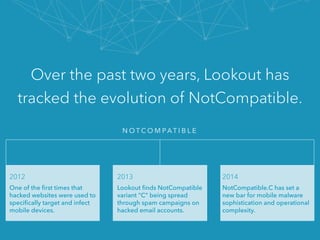
Over the past two years, Lookout has 
tracked the evolution of NotCompatible. 
2014 
NotCompatible.C has set a 
new bar for mobile malware 
sophistication and operational 
complexity. 
2013 
Lookout finds NotCompatible 
variant "C" being spread 
through spam campaigns on 
hacked email accounts. 
2012 
One of the first times that 
hacked websites were used to 
specifically target and infect 
mobile devices. 
NOTCOMPAT I B L E
The command infrastructure 
and communication perseveres 
and self-protects through 
redundancy and encryption, 
making it elusive and enduring. 
Read the blog
The technological evolution of NotCompatible 
has turned a once compelling piece of malware 
into one of the known longest-running mobile 
botnets we’ve seen to-date. 
Read the blog
  
 
 
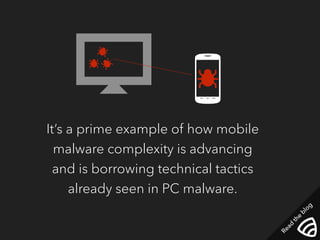
It’s a prime example of how mobile 
malware complexity is advancing 
and is borrowing technical tactics 
already seen in PC malware. 
Read the blog
 
NotCompatible is used as a proxy 
to run spam campaigns, scalp 
concert tickets, search the Internet 
for vulnerabilities, and more. 
Read the blog
While NotCompatible.A was 
relatively simplistic architecturally, 
NotCompatible.C is a changed 
beast in terms of the technological 
concepts it uses to stay alive. 
Read the blog
NOTA B L E AT T R I B U T E S 
Resiliency Resistance to Detection Self-Protection 
This threat features impressive new technical 
attributes compared to earlier variants – 
attributes that, in combination, Lookout has 
never before observed in a mobile threat. 
Read the blog
NOTA B L E AT T R I B U T E S 
Resiliency Resistance to Detection Self-Protection 
NotCompatible.C is resilient to network-based blocking because 
it uses a peer-to-peer protocol and has multiple, geographically-distributed 
Command and Control (C2) servers. The geo-distribution 
of its C2 servers allows the malware to function even 
if law enforcement is able to take down individual servers. Peer-to- 
peer protocols make the malware resilient to IP and DNS 
based blocking by enabling infected devices to receive 
commands by proxy via other infected devices. 
Read the blog
NOTA B L E AT T R I B U T E S 
Resiliency Resistance to Detection Self-Protection 
NotCompatible.C encrypts all C2 and proxied data traffic end-to-end 
while also performing mutual authentication between clients 
and C2 servers via public key cryptography. This protocol-level 
encryption can prevent network security systems from being able 
to differentiate malicious traffic from legitimate traffic. 
Read the blog
NOTA B L E AT T R I B U T E S 
Resiliency Resistance to Detection Self-Protection 
NotCompatible.C uses a Gateway C2 to analyze incoming connections 
and likely prevents active probing of the various Operational C2s by 
blocking connections from non-approved IP addresses. 
Read the blog
Our investigation shows the possibility that a threat 
like this could expand to assist in attacks on corporate 
networks, a risk that should not be ignored. 
Read the blog
PROTECT I O N STRAT E G I E S 
Implement mobile threat protection Segment the network 
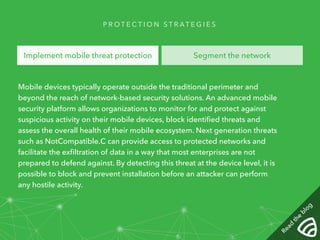
Mobile devices typically operate outside the traditional perimeter and 
beyond the reach of network-based security solutions. An advanced mobile 
security platform allows organizations to monitor for and protect against 
suspicious activity on their mobile devices, block identified threats and 
assess the overall health of their mobile ecosystem. Next generation threats 
such as NotCompatible.C can provide access to protected networks and 
facilitate the exfiltration of data in a way that most enterprises are not 
prepared to defend against. By detecting this threat at the device level, it is 
possible to block and prevent installation before an attacker can perform 
any hostile activity. 
Read the blog
PROTECT I O N STRAT E G I E S 
Implement mobile threat protection Segment the network 
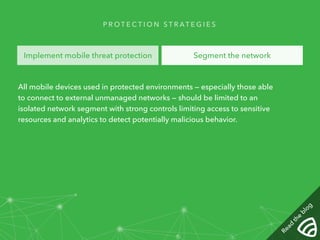
All mobile devices used in protected environments — especially those able 
to connect to external unmanaged networks — should be limited to an 
isolated network segment with strong controls limiting access to sensitive 
resources and analytics to detect potentially malicious behavior. 
Read the blog
Lookout has thus far actively 
protected against NotCompatible on 
hundreds of thousands of devices in 
the U.S. and around the world. 
Read the blog
To learn more about 
NotCompatible, read our 
report or check out our blog.
For more mobile security information, follow

The New NotCompatible

  • 1.
    THE NEW NOTCOMPATIBLE: A sophisticated mobile threat that puts protected networks at risk
  • 2.
    Over the pasttwo years, Lookout has tracked the evolution of NotCompatible. 2014 NotCompatible.C has set a new bar for mobile malware sophistication and operational complexity. 2013 Lookout finds NotCompatible variant "C" being spread through spam campaigns on hacked email accounts. 2012 One of the first times that hacked websites were used to specifically target and infect mobile devices. NOTCOMPAT I B L E
  • 3.
    The command infrastructure and communication perseveres and self-protects through redundancy and encryption, making it elusive and enduring. Read the blog
  • 4.
    The technological evolutionof NotCompatible has turned a once compelling piece of malware into one of the known longest-running mobile botnets we’ve seen to-date. Read the blog
  • 5.
        It’s a prime example of how mobile malware complexity is advancing and is borrowing technical tactics already seen in PC malware. Read the blog
  • 6.
     NotCompatible isused as a proxy to run spam campaigns, scalp concert tickets, search the Internet for vulnerabilities, and more. Read the blog
  • 7.
    While NotCompatible.A was relatively simplistic architecturally, NotCompatible.C is a changed beast in terms of the technological concepts it uses to stay alive. Read the blog
  • 8.
    NOTA B LE AT T R I B U T E S Resiliency Resistance to Detection Self-Protection This threat features impressive new technical attributes compared to earlier variants – attributes that, in combination, Lookout has never before observed in a mobile threat. Read the blog
  • 9.
    NOTA B LE AT T R I B U T E S Resiliency Resistance to Detection Self-Protection NotCompatible.C is resilient to network-based blocking because it uses a peer-to-peer protocol and has multiple, geographically-distributed Command and Control (C2) servers. The geo-distribution of its C2 servers allows the malware to function even if law enforcement is able to take down individual servers. Peer-to- peer protocols make the malware resilient to IP and DNS based blocking by enabling infected devices to receive commands by proxy via other infected devices. Read the blog
  • 10.
    NOTA B LE AT T R I B U T E S Resiliency Resistance to Detection Self-Protection NotCompatible.C encrypts all C2 and proxied data traffic end-to-end while also performing mutual authentication between clients and C2 servers via public key cryptography. This protocol-level encryption can prevent network security systems from being able to differentiate malicious traffic from legitimate traffic. Read the blog
  • 11.
    NOTA B LE AT T R I B U T E S Resiliency Resistance to Detection Self-Protection NotCompatible.C uses a Gateway C2 to analyze incoming connections and likely prevents active probing of the various Operational C2s by blocking connections from non-approved IP addresses. Read the blog
  • 12.
    Our investigation showsthe possibility that a threat like this could expand to assist in attacks on corporate networks, a risk that should not be ignored. Read the blog
  • 13.
    PROTECT I ON STRAT E G I E S Implement mobile threat protection Segment the network Mobile devices typically operate outside the traditional perimeter and beyond the reach of network-based security solutions. An advanced mobile security platform allows organizations to monitor for and protect against suspicious activity on their mobile devices, block identified threats and assess the overall health of their mobile ecosystem. Next generation threats such as NotCompatible.C can provide access to protected networks and facilitate the exfiltration of data in a way that most enterprises are not prepared to defend against. By detecting this threat at the device level, it is possible to block and prevent installation before an attacker can perform any hostile activity. Read the blog
  • 14.
    PROTECT I ON STRAT E G I E S Implement mobile threat protection Segment the network All mobile devices used in protected environments — especially those able to connect to external unmanaged networks — should be limited to an isolated network segment with strong controls limiting access to sensitive resources and analytics to detect potentially malicious behavior. Read the blog
  • 15.
    Lookout has thusfar actively protected against NotCompatible on hundreds of thousands of devices in the U.S. and around the world. Read the blog
  • 16.
    To learn moreabout NotCompatible, read our report or check out our blog.
  • 17.
    For more mobilesecurity information, follow