Download to read offline
![Aging Buckets
{
[“Beth” : “Tom”],
[“Beth” : “Jim”],
[“Beth” : “George”]
}
2015:05:27
{
[“George” : “Tom”],
[“Beth” : “Jim”],
[“George” : “Jim”]
}
2015:05:26
{
[“Tom” : “Beth”],
[“Beth” : “Tom”],
[“George” : “Jim”]
}
2015:05:25
5](https://image.slidesharecdn.com/m3-nosql-implementationsfinalp1-150527234559-lva1-app6891/75/NoSQL-Implementation-Part-1-Velocity-2015-4-2048.jpg)
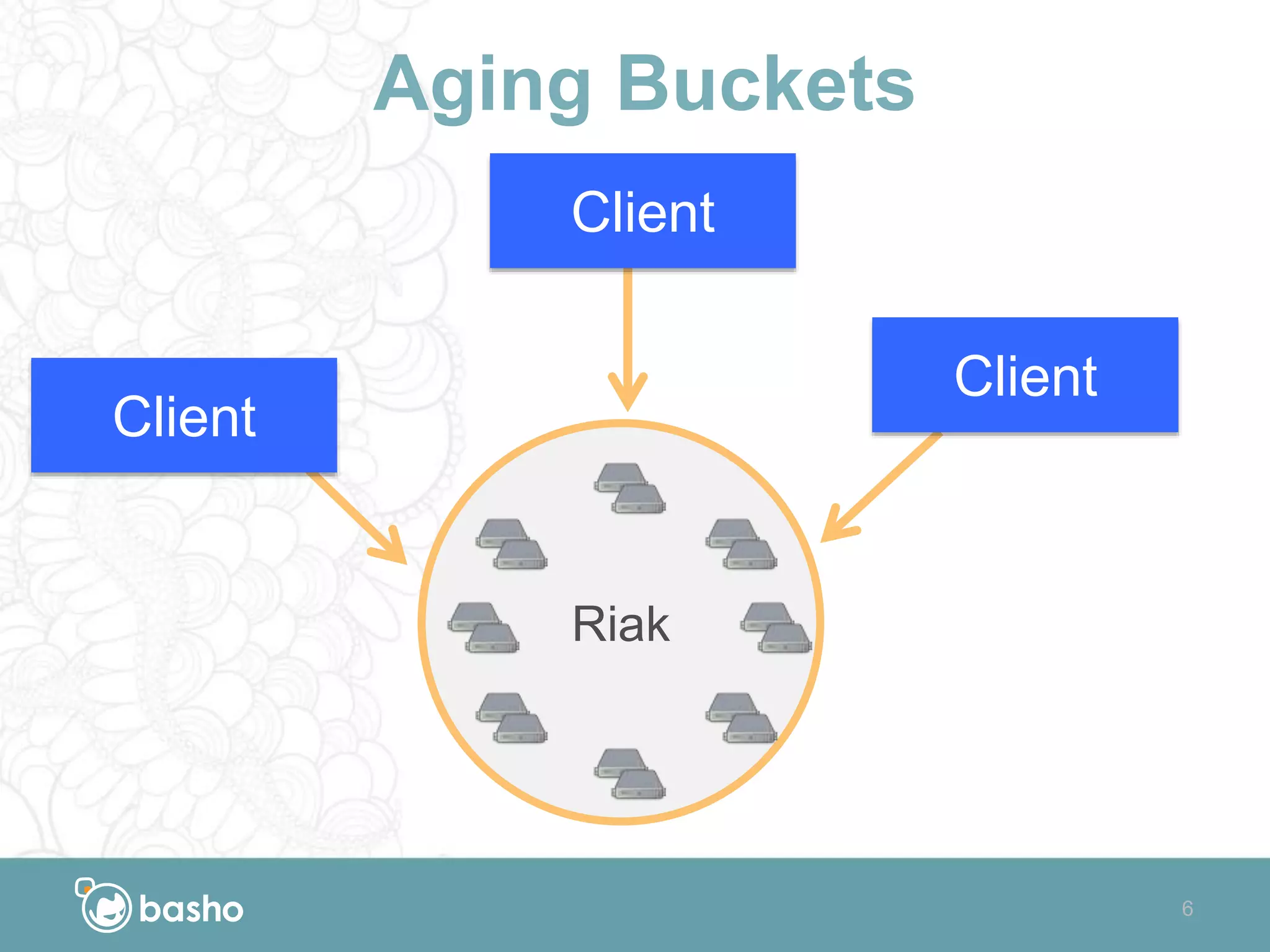
![Aging Buckets
Riak
7
Client
Client
Client
{
[“Tom” : “Beth”],
[“Beth” : “Tom”],
[“George” : “Jim”]
}
{
[“Tom” : “Beth”],
[“Beth” : “Tom”],
[“George” : “Jim”]
}](https://image.slidesharecdn.com/m3-nosql-implementationsfinalp1-150527234559-lva1-app6891/75/NoSQL-Implementation-Part-1-Velocity-2015-6-2048.jpg)
![Aging Buckets
Riak
8
Client
Client
Client
{
[“Tom” : “Beth”],
[“Beth” : “Tom”],
[“George” : “Jim”]
}
{
[“Jane”: “Tom”],
[“Tom” : “Beth”],
[“Beth” : “Tom”],
[“George” : “Jim”]
}](https://image.slidesharecdn.com/m3-nosql-implementationsfinalp1-150527234559-lva1-app6891/75/NoSQL-Implementation-Part-1-Velocity-2015-7-2048.jpg)
![Aging Buckets
Riak
9
Client
Client
Client
{
[“Jane”: “Tom”],
[“Tom” : “Beth”],
[“Beth” : “Tom”],
[“George” : “Jim”]
}
{
[“Jane”: “Tom”],
[“Tom” : “Beth”],
[“Beth” : “Tom”],
[“George” : “Jim”]
}](https://image.slidesharecdn.com/m3-nosql-implementationsfinalp1-150527234559-lva1-app6891/75/NoSQL-Implementation-Part-1-Velocity-2015-8-2048.jpg)
![Aging Buckets
Riak
10
Client
Client
Client
{
[“Jane”: “Tom”],
[“Tom” : “Beth”],
[“Beth” : “Tom”],
[“George” : “Jim”]
}
{
[“Jane”: “Tom”],
[“Tom” : “Beth”],
[“Beth” : “Tom”],
[“George” : “Jim”]
} {
[“Jane”: “Tom”],
[“Tom” : “Beth”],
[“Beth” : “Tom”],
[“George” : “Jim”]
}](https://image.slidesharecdn.com/m3-nosql-implementationsfinalp1-150527234559-lva1-app6891/75/NoSQL-Implementation-Part-1-Velocity-2015-9-2048.jpg)
![Aging Buckets
Riak
11
Client
Client
Client
{
[“Jane”: “Tom”],
[“Tom” : “Beth”],
[“Beth” : “Tom”],
[“George” : “Jim”]
}
{
[“Jane”: “Tom”],
[“Tom” : “Beth”],
[“Beth” : “Tom”],
[“George” : “Jim”]
} {
[“Jane”: “Tom”],
[“Tom” : “Beth”],
[“Beth” : “Tom”],
[“George” : “Jim”]
}](https://image.slidesharecdn.com/m3-nosql-implementationsfinalp1-150527234559-lva1-app6891/75/NoSQL-Implementation-Part-1-Velocity-2015-10-2048.jpg)
![Aging Buckets
Riak
12
Client
Client
Client
{
[“Jane”: “Tom”],
[“Tom” : “Beth”],
[“Beth” : “Tom”],
[“George” : “Jim”],
[“Tom”: “Jane”]
}
{
[“Jane”: “Tom”],
[“Tom” : “Beth”],
[“Beth” : “Tom”],
[“George” : “Jim”]
} {
[“Jane”: “Tom”],
[“Tom” : “Beth”],
[“Beth” : “Tom”],
[“George” : “Jim”]
}](https://image.slidesharecdn.com/m3-nosql-implementationsfinalp1-150527234559-lva1-app6891/75/NoSQL-Implementation-Part-1-Velocity-2015-11-2048.jpg)
![Aging Buckets
Riak
13
ClientClient
Client
{
[“Jane”: “Tom”],
[“Tom” : “Beth”],
[“Beth” : “Tom”],
[“George” : “Jim”],
[“Tom”: “Jane”]
}
{
[“Jane”: “Tom”],
[“Tom” : “Beth”],
[“Beth” : “Tom”],
[“George” : “Jim”],
[“Beth”, “Jane”]
} {
[“Jane”: “Tom”],
[“Tom” : “Beth”],
[“Beth” : “Tom”],
[“George” : “Jim”]
}](https://image.slidesharecdn.com/m3-nosql-implementationsfinalp1-150527234559-lva1-app6891/75/NoSQL-Implementation-Part-1-Velocity-2015-12-2048.jpg)
![Aging Buckets
Riak
14
ClientClient
Client
{
[“Jane”: “Tom”],
[“Tom” : “Beth”],
[“Beth” : “Tom”],
[“George” : “Jim”],
[“Tom”: “Jane”]
}
{
[“Jane”: “Tom”],
[“Tom” : “Beth”],
[“Beth” : “Tom”],
[“George” : “Jim”],
[“Beth”, “Jane”]
}
{
[“Jane”: “Tom”],
[“Tom” : “Beth”],
[“Beth” : “Tom”],
[“George” : “Jim”],
[“Beth”, “Jane”]
}](https://image.slidesharecdn.com/m3-nosql-implementationsfinalp1-150527234559-lva1-app6891/75/NoSQL-Implementation-Part-1-Velocity-2015-13-2048.jpg)
![15
Bucket properties
an important step in this case
➜ bin/riak-admin bucket-type create sets
'{"props":{"datatype":"set"}}'
sets created
➜ bin/riak-admin bucket-type activate sets
sets has been activated
require ‘riak’
Riak::Crdt::DEFAULT_BUCKET_TYPES[:set] = 'sets'](https://image.slidesharecdn.com/m3-nosql-implementationsfinalp1-150527234559-lva1-app6891/75/NoSQL-Implementation-Part-1-Velocity-2015-14-2048.jpg)
![Aging Buckets
{ [“Jane”: “Tom”],
[“Tom” : “Beth”],
[“Beth” : “Tom”],
[“George” : “Jim”],
[“Tom”: “Jane”],
[“Beth”: “Jane”] }
16
{
[“Jane”: “Tom”],
[“Tom” : “Beth”],
[“Beth” : “Tom”],
[“George” : “Jim”],
[“Tom”: “Jane”]
}
{
[“Jane”: “Tom”],
[“Tom” : “Beth”],
[“Beth” : “Tom”],
[“George” : “Jim”],
[“Beth”, “Jane”]
}
}set CRDT behavior](https://image.slidesharecdn.com/m3-nosql-implementationsfinalp1-150527234559-lva1-app6891/75/NoSQL-Implementation-Part-1-Velocity-2015-15-2048.jpg)

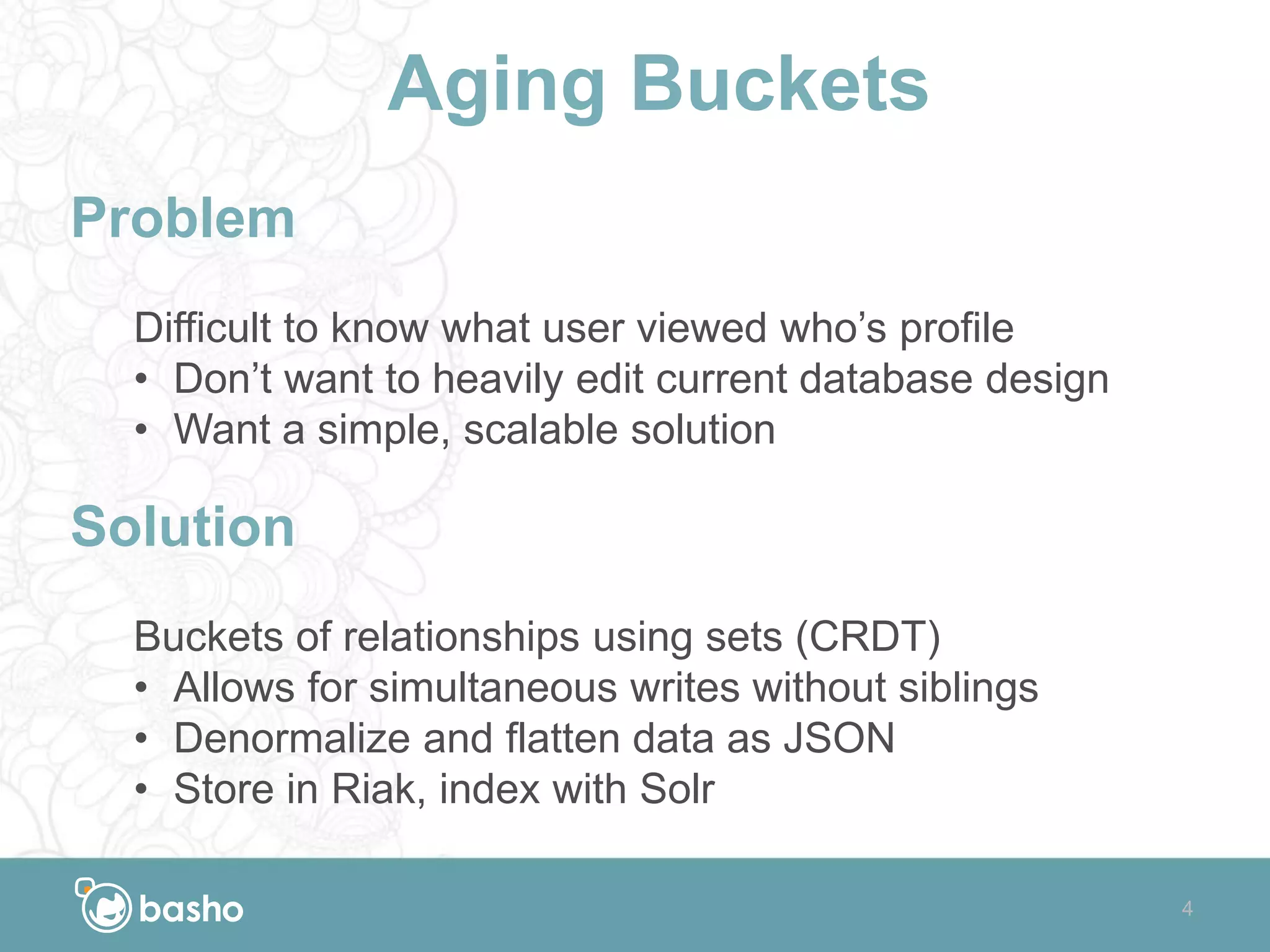
The document discusses the implementation of a NoSQL design using aging buckets to manage relationships while ensuring data persistence without extensive alterations to the existing database. It emphasizes the use of Riak and Solr for data storage and indexing, utilizing CRDTs for handling simultaneous writes. The approach aims to simplify and scale the database architecture while addressing potential conflicts in user profile views.


