NON-JUDGEMENTAL 
COMMUNICATION FOR 
RESEARCHER 
DEVELOPMENT 
Mariam Attia, Durham University
Outline 
 What is Cooperative Development? 
(Origins, principles, and skills) 
 Why Cooperative Development? 
(Value to researcher development)
What is Cooperative Development? 
 An approach to personal and 
professional development (started in the 
area of teacher development) 
 Traditions of reflective practice and action 
research
What is Cooperative 
Development? 
 Carl Rogers’ Person-centered Approach 
(e.g., 1961) 
 Self actualization and forward-moving 
directional tendency 
 An internal growth approach to 
researcher development
What is Cooperative 
Development? 
 No single way of becoming a researcher is 
right for everyone 
 Researchers are always in a state of 
becoming 
 Researcher self-development is a social 
phenomenon
What is Cooperative 
Development? 
 Learning through the expression of one’s 
ideas 
 A specific kind of discourse - neither a 
discussion nor a conversation (which 
prevail in academia) 
 Working for regular, agreed upon periods 
with another researcher (or researcher 
development staff)
What is Cooperative 
Development? 
 Deliberately abandon elements of 
argument 
 Creating a space in which one 
researcher’s ideas can expand in the 
search for a discovery 
 Roles: Speaker & Understander
Speaker 
 A non-defensive style of talk 
 Purpose -> explore a certain issue or 
area of interest 
 Leads to discovery 
 Basis for plan of action
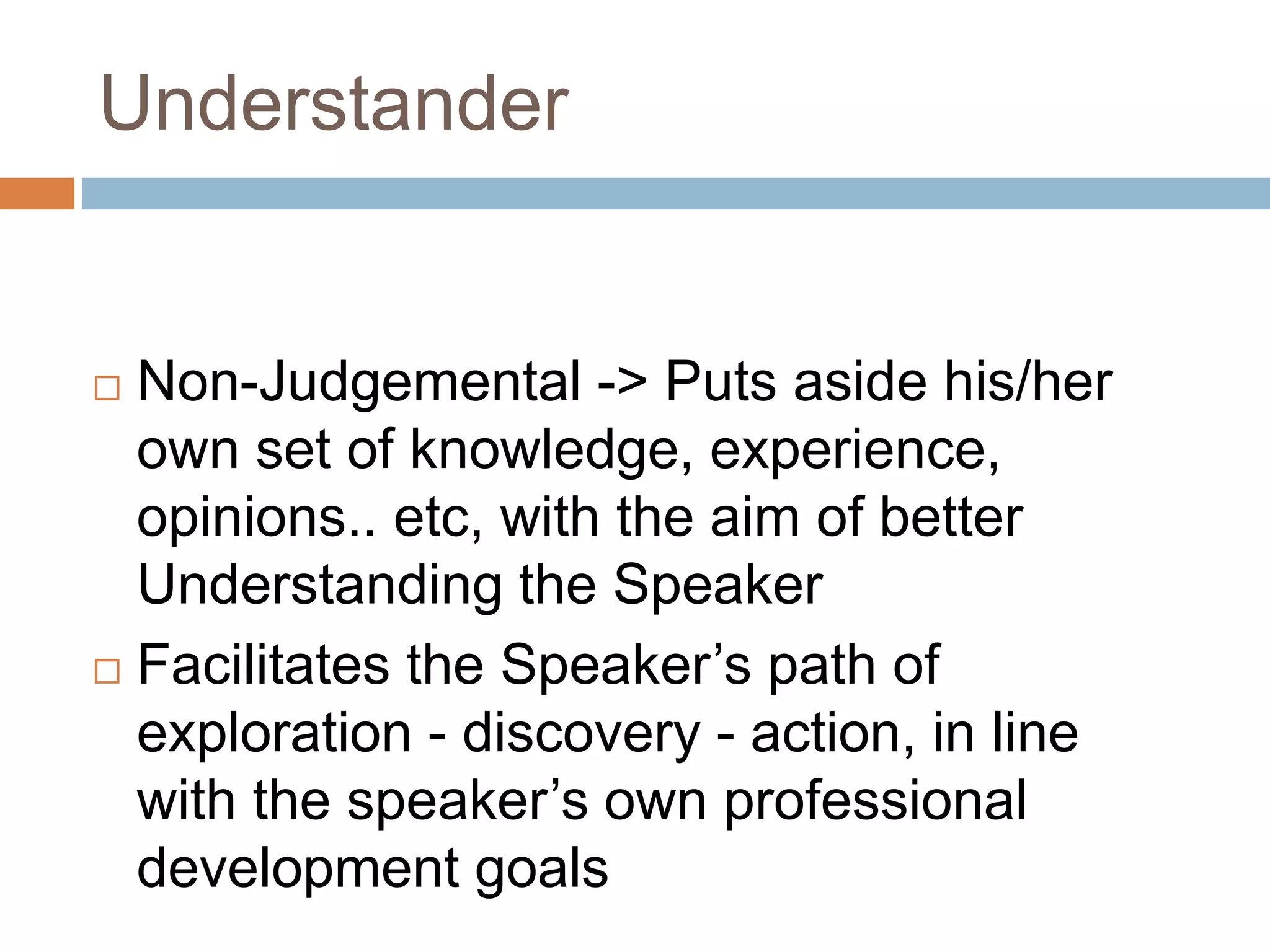
Understander 
 Non-Judgemental -> Puts aside his/her 
own set of knowledge, experience, 
opinions.. etc, with the aim of better 
Understanding the Speaker 
 Facilitates the Speaker’s path of 
exploration - discovery - action, in line 
with the speaker’s own professional 
development goals
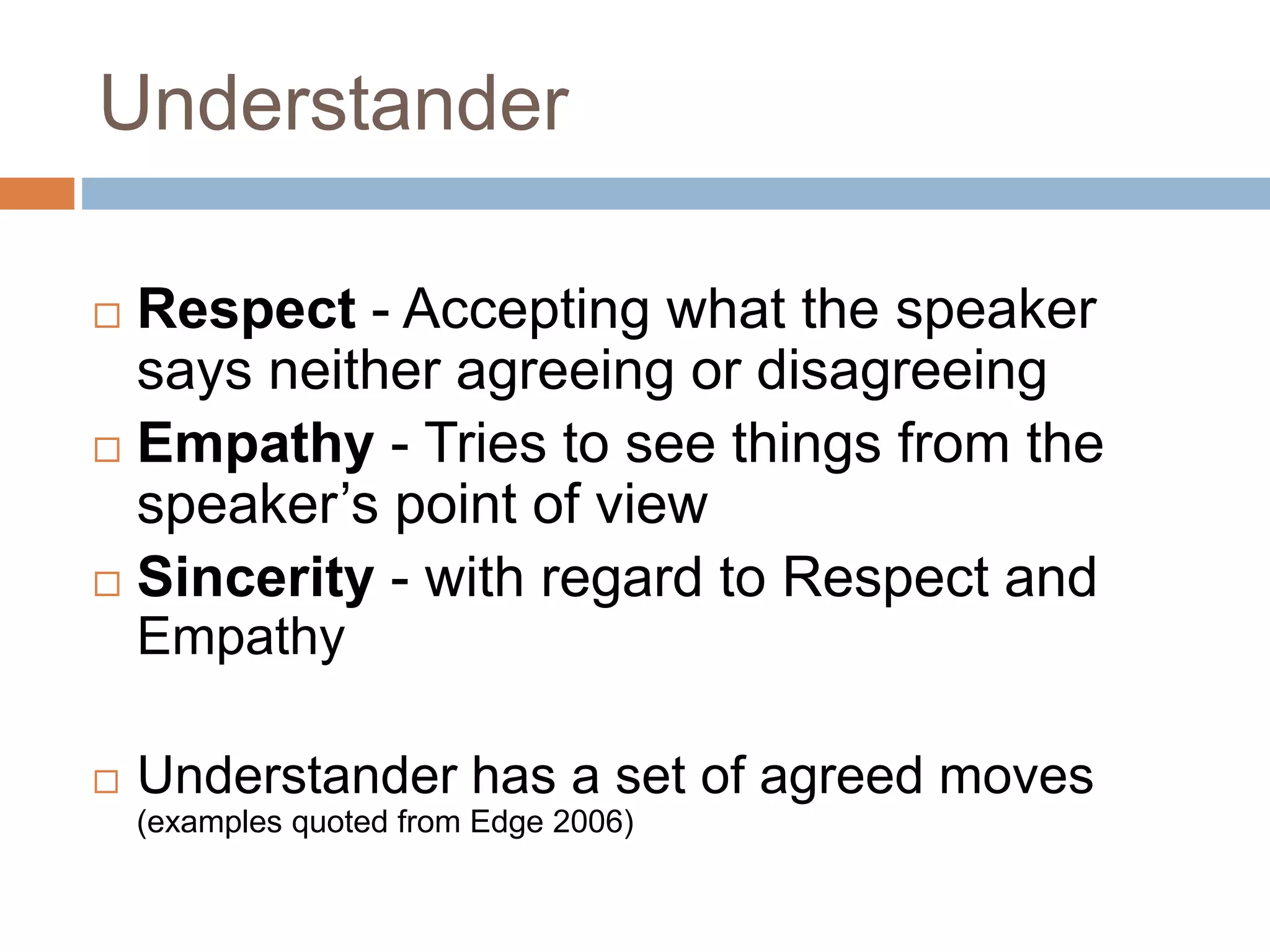
Understander 
 Respect - Accepting what the speaker 
says neither agreeing or disagreeing 
 Empathy - Tries to see things from the 
speaker’s point of view 
 Sincerity - with regard to Respect and 
Empathy 
 Understander has a set of agreed moves 
(examples quoted from Edge 2006)
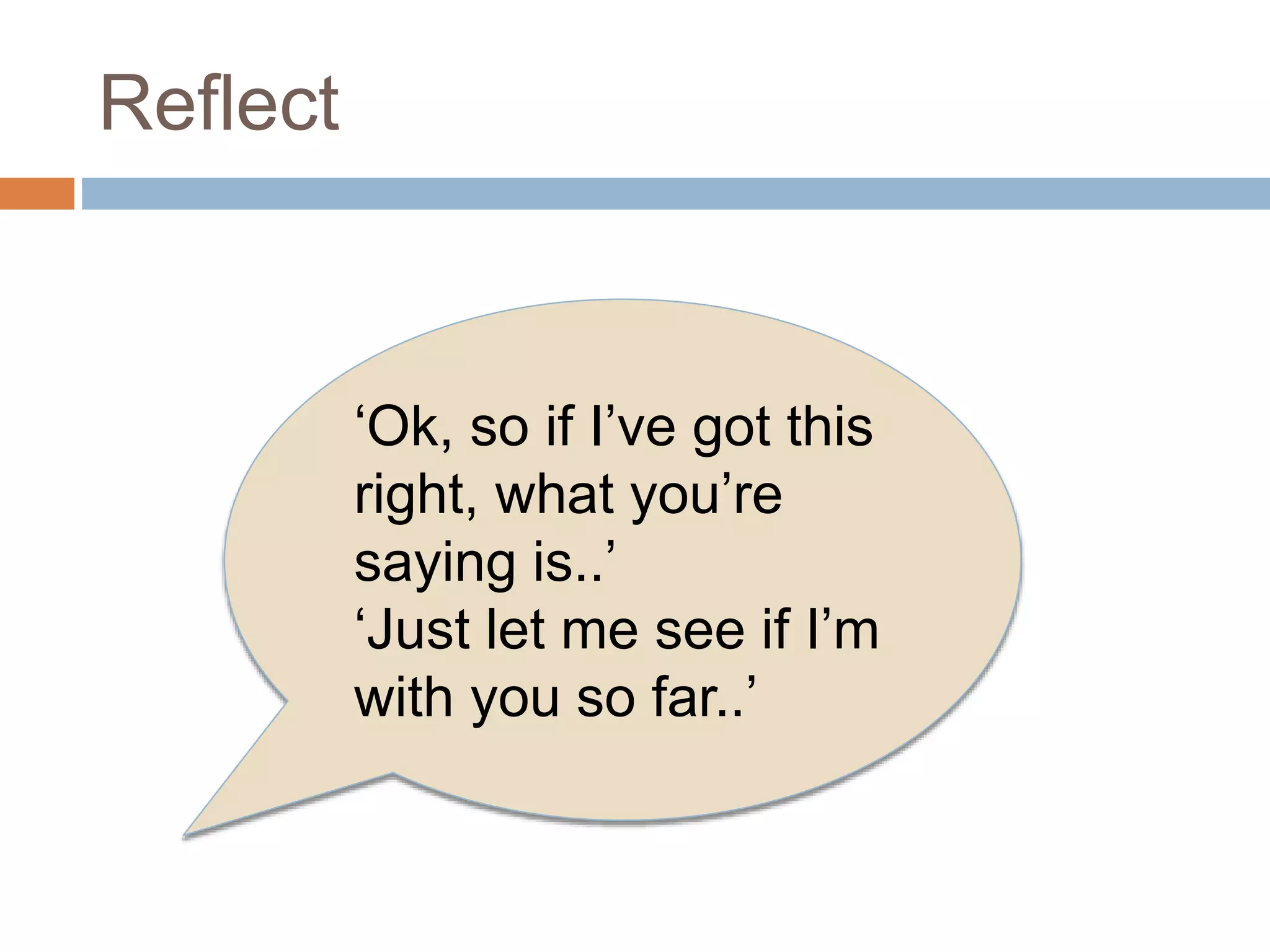
Reflect 
‘Ok, so if I’ve got this 
right, what you’re 
saying is..’ 
‘Just let me see if I’m 
with you so far..’
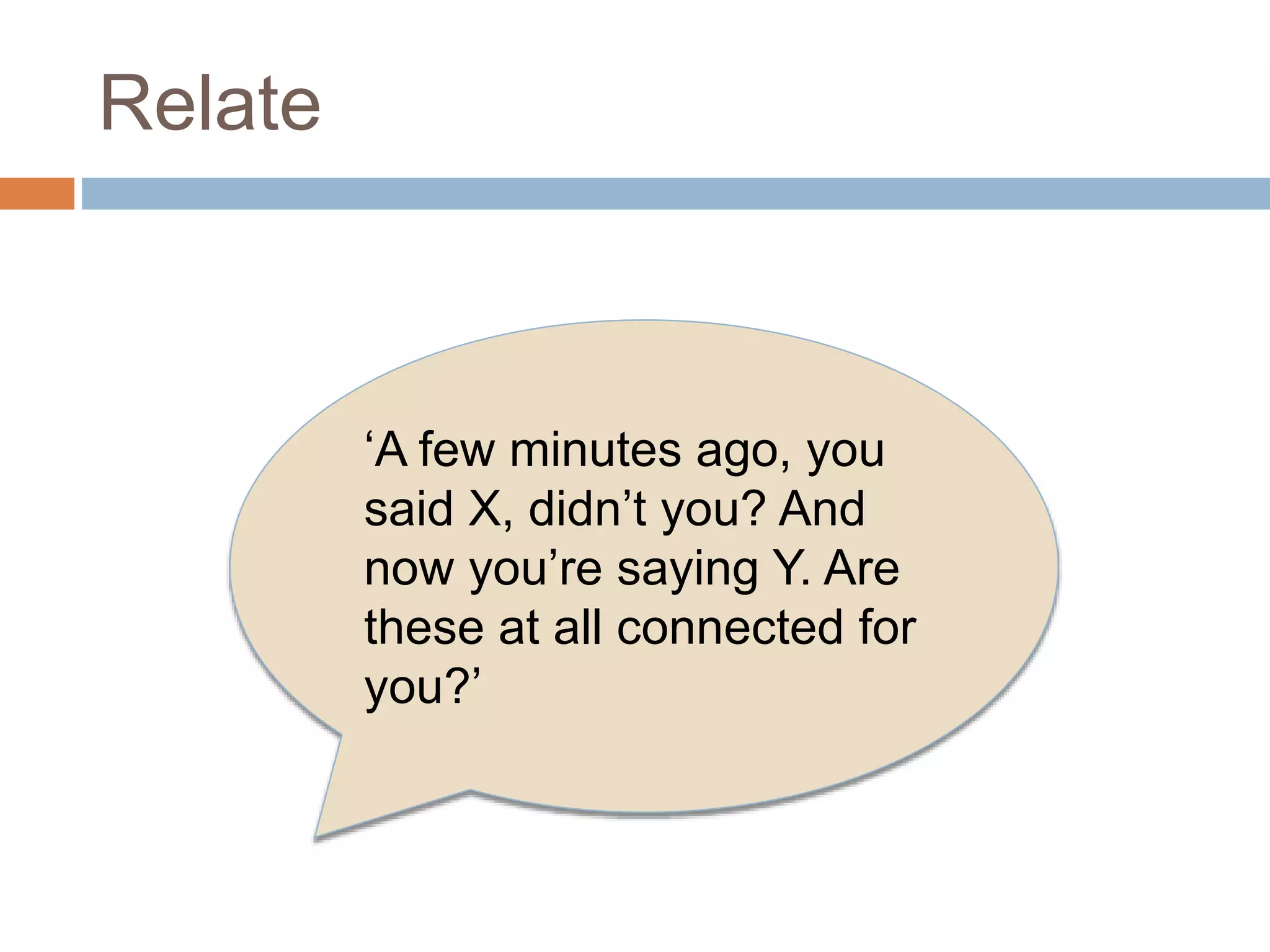
Relate 
‘A few minutes ago, you 
said X, didn’t you? And 
now you’re saying Y. Are 
these at all connected for 
you?’
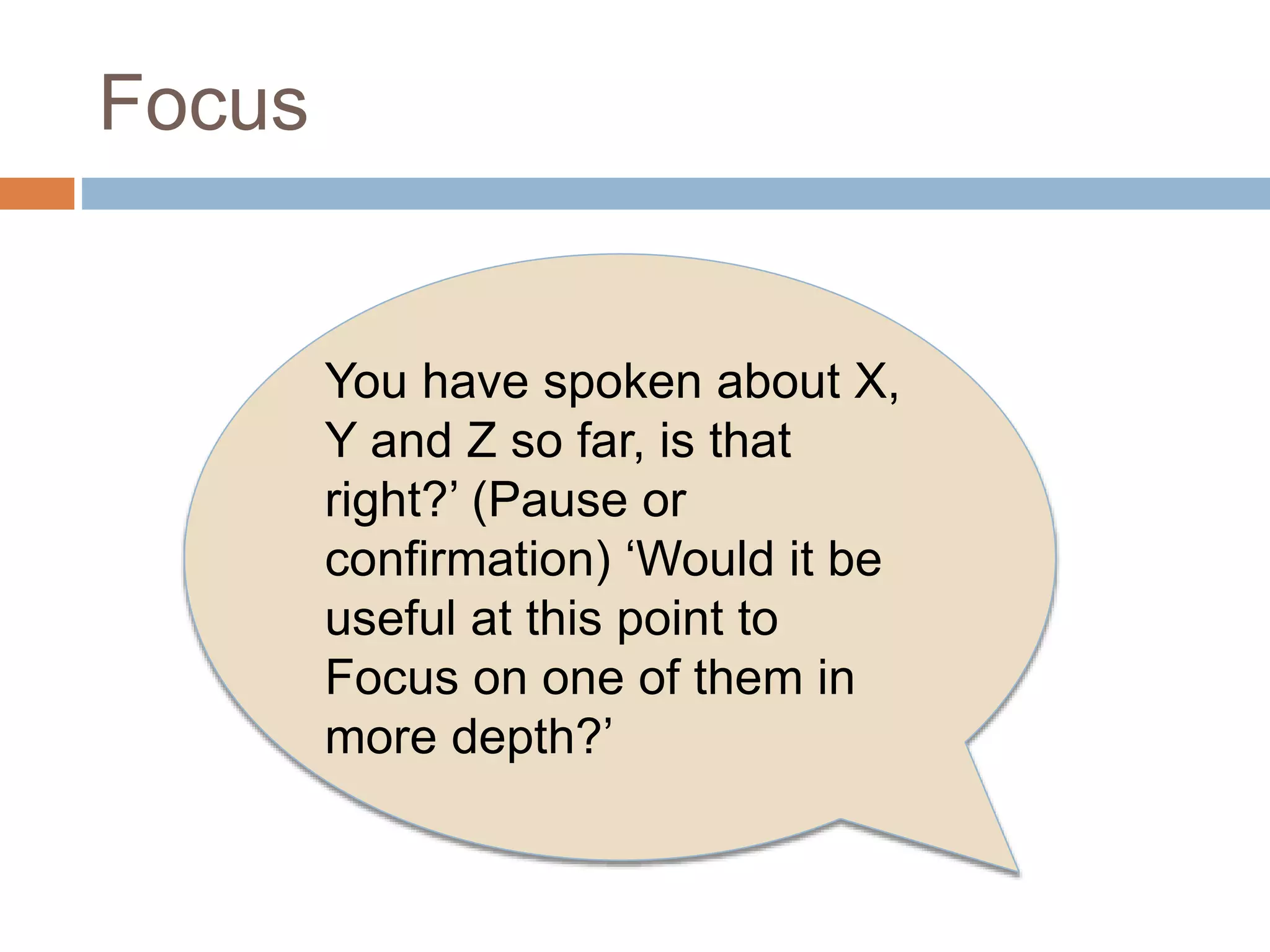
Focus 
You have spoken about X, 
Y and Z so far, is that 
right?’ (Pause or 
confirmation) ‘Would it be 
useful at this point to 
Focus on one of them in 
more depth?’
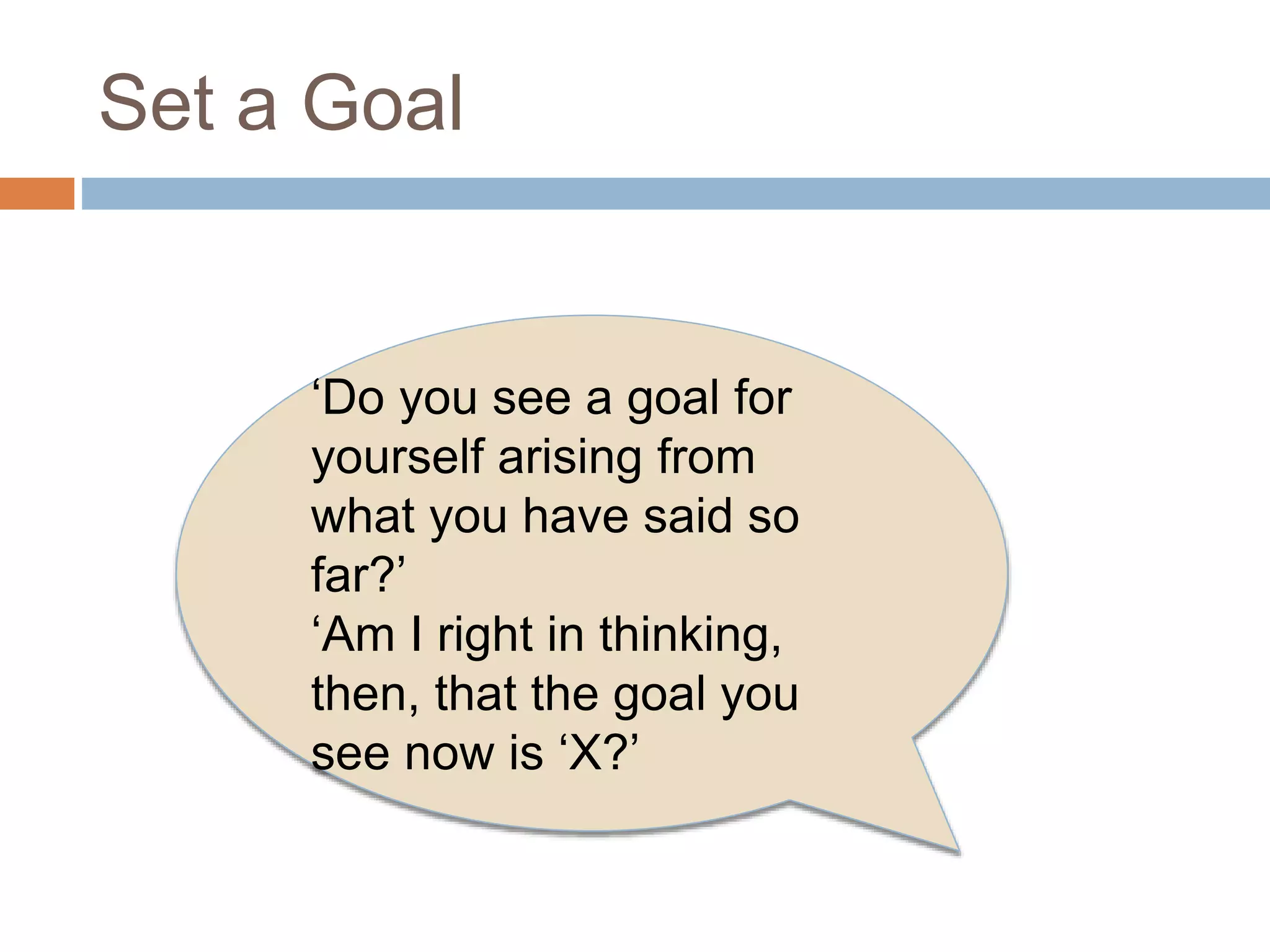
Set a Goal 
‘Do you see a goal for 
yourself arising from 
what you have said so 
far?’ 
‘Am I right in thinking, 
then, that the goal you 
see now is ‘X?’
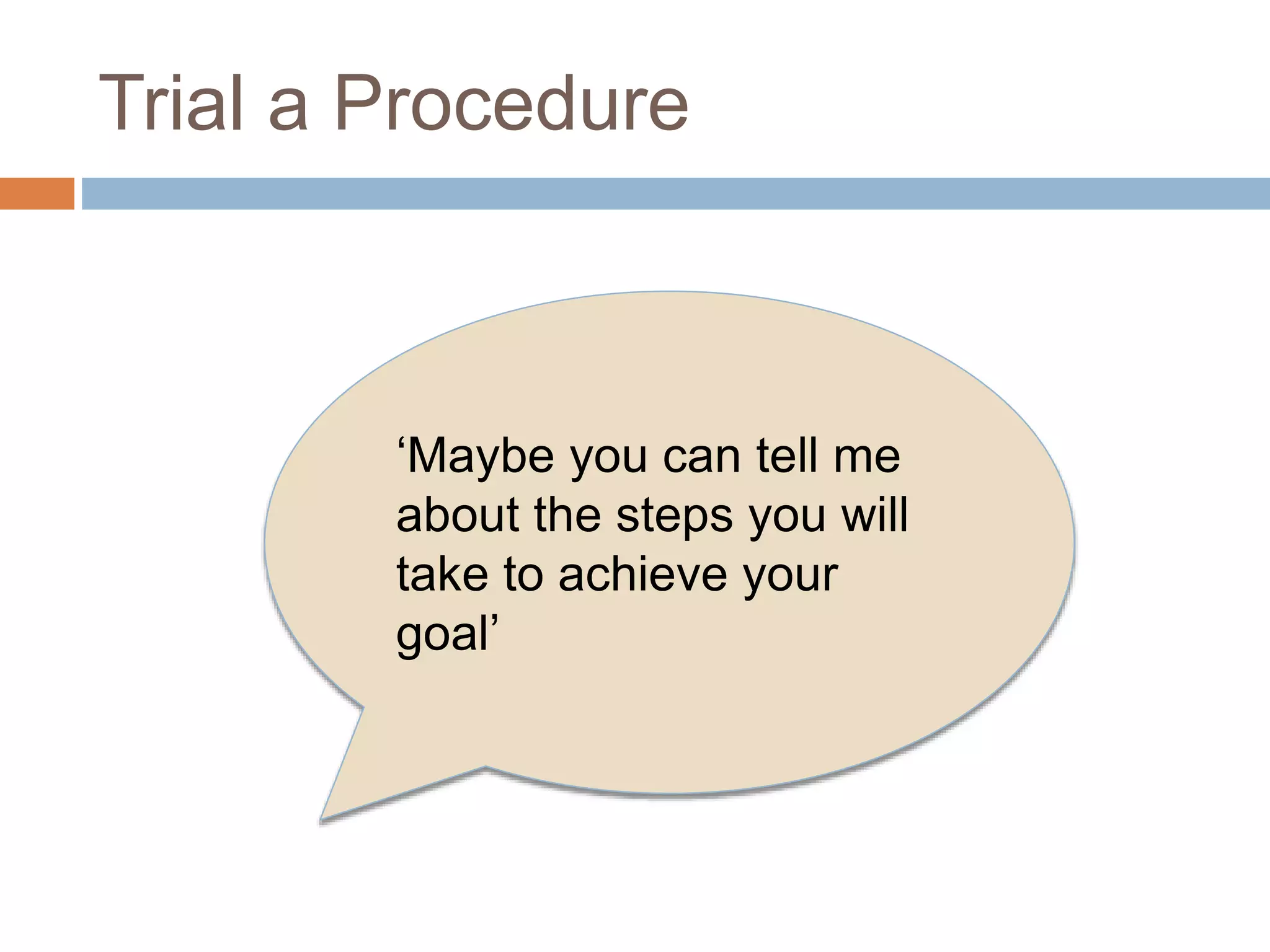
Trial a Procedure 
‘Maybe you can tell me 
about the steps you will 
take to achieve your 
goal’
Computer-mediated 
Not all researchers have the opportunity to 
work with colleagues face-to-face
Why Cooperative 
Development? 
Researchers: 
 Diverse disciplinary backgrounds and 
research cultures 
 Involved in various professional activities 
(e.g., data collection, analysis, publication, 
applying for funding, teaching, 
supervision) 
 Many points of transition with multiple 
foreseeable and unforeseeable challenges 
 Context generally characterised by 
ambiguity
Why Cooperative 
Development? 
 Our role -> support researchers as they 
develop personally and professionally into 
the kind of researcher they aspire to be – 
capacity building 
 One form of support -> provide 
opportunities for researcher collaboration 
for self and mutual growth
Why Cooperative 
Development? 
Can be applied to: 
 Strictly intellectual issues 
 Strategic planning of projects or career 
progression 
 Formulation of publication proposals 
and/or grant applications 
 Other issues of personal or interpersonal 
significance 
Enhances trust and collegiality
Why Cooperative 
Development? 
 Perceives development as a life-long 
process 
 One of the greatest assets to any 
university is a developing researcher
A taster.. 
Activity A – Listening 
Please sit next to someone you have not 
worked with before. 
What is the main item on your researcher 
development agenda at the moment?
A taster.. 
Activity B – Reflecting 
If you were the Speaker last time, please 
consider the following: 
What is it that you aspire to achieve in your 
current researcher development role, and 
why is that important to you?
The Website 
.. Offering resources and a community 
http://www.cooperative-development.com

Non-judgmental Communication for Researcher Development

  • 1.
    NON-JUDGEMENTAL COMMUNICATION FOR RESEARCHER DEVELOPMENT Mariam Attia, Durham University
  • 2.
    Outline  Whatis Cooperative Development? (Origins, principles, and skills)  Why Cooperative Development? (Value to researcher development)
  • 3.
    What is CooperativeDevelopment?  An approach to personal and professional development (started in the area of teacher development)  Traditions of reflective practice and action research
  • 4.
    What is Cooperative Development?  Carl Rogers’ Person-centered Approach (e.g., 1961)  Self actualization and forward-moving directional tendency  An internal growth approach to researcher development
  • 5.
    What is Cooperative Development?  No single way of becoming a researcher is right for everyone  Researchers are always in a state of becoming  Researcher self-development is a social phenomenon
  • 6.
    What is Cooperative Development?  Learning through the expression of one’s ideas  A specific kind of discourse - neither a discussion nor a conversation (which prevail in academia)  Working for regular, agreed upon periods with another researcher (or researcher development staff)
  • 7.
    What is Cooperative Development?  Deliberately abandon elements of argument  Creating a space in which one researcher’s ideas can expand in the search for a discovery  Roles: Speaker & Understander
  • 8.
    Speaker  Anon-defensive style of talk  Purpose -> explore a certain issue or area of interest  Leads to discovery  Basis for plan of action
  • 9.
    Understander  Non-Judgemental-> Puts aside his/her own set of knowledge, experience, opinions.. etc, with the aim of better Understanding the Speaker  Facilitates the Speaker’s path of exploration - discovery - action, in line with the speaker’s own professional development goals
  • 10.
    Understander  Respect- Accepting what the speaker says neither agreeing or disagreeing  Empathy - Tries to see things from the speaker’s point of view  Sincerity - with regard to Respect and Empathy  Understander has a set of agreed moves (examples quoted from Edge 2006)
  • 11.
    Reflect ‘Ok, soif I’ve got this right, what you’re saying is..’ ‘Just let me see if I’m with you so far..’
  • 12.
    Relate ‘A fewminutes ago, you said X, didn’t you? And now you’re saying Y. Are these at all connected for you?’
  • 13.
    Focus You havespoken about X, Y and Z so far, is that right?’ (Pause or confirmation) ‘Would it be useful at this point to Focus on one of them in more depth?’
  • 14.
    Set a Goal ‘Do you see a goal for yourself arising from what you have said so far?’ ‘Am I right in thinking, then, that the goal you see now is ‘X?’
  • 15.
    Trial a Procedure ‘Maybe you can tell me about the steps you will take to achieve your goal’
  • 16.
    Computer-mediated Not allresearchers have the opportunity to work with colleagues face-to-face
  • 17.
    Why Cooperative Development? Researchers:  Diverse disciplinary backgrounds and research cultures  Involved in various professional activities (e.g., data collection, analysis, publication, applying for funding, teaching, supervision)  Many points of transition with multiple foreseeable and unforeseeable challenges  Context generally characterised by ambiguity
  • 18.
    Why Cooperative Development?  Our role -> support researchers as they develop personally and professionally into the kind of researcher they aspire to be – capacity building  One form of support -> provide opportunities for researcher collaboration for self and mutual growth
  • 19.
    Why Cooperative Development? Can be applied to:  Strictly intellectual issues  Strategic planning of projects or career progression  Formulation of publication proposals and/or grant applications  Other issues of personal or interpersonal significance Enhances trust and collegiality
  • 20.
    Why Cooperative Development?  Perceives development as a life-long process  One of the greatest assets to any university is a developing researcher
  • 21.
    A taster.. ActivityA – Listening Please sit next to someone you have not worked with before. What is the main item on your researcher development agenda at the moment?
  • 22.
    A taster.. ActivityB – Reflecting If you were the Speaker last time, please consider the following: What is it that you aspire to achieve in your current researcher development role, and why is that important to you?
  • 23.
    The Website ..Offering resources and a community http://www.cooperative-development.com