Reporter: Nozimaxon Abdulxamidova
Tangible non-current
assets
Investitsiya loyihalar tahlili
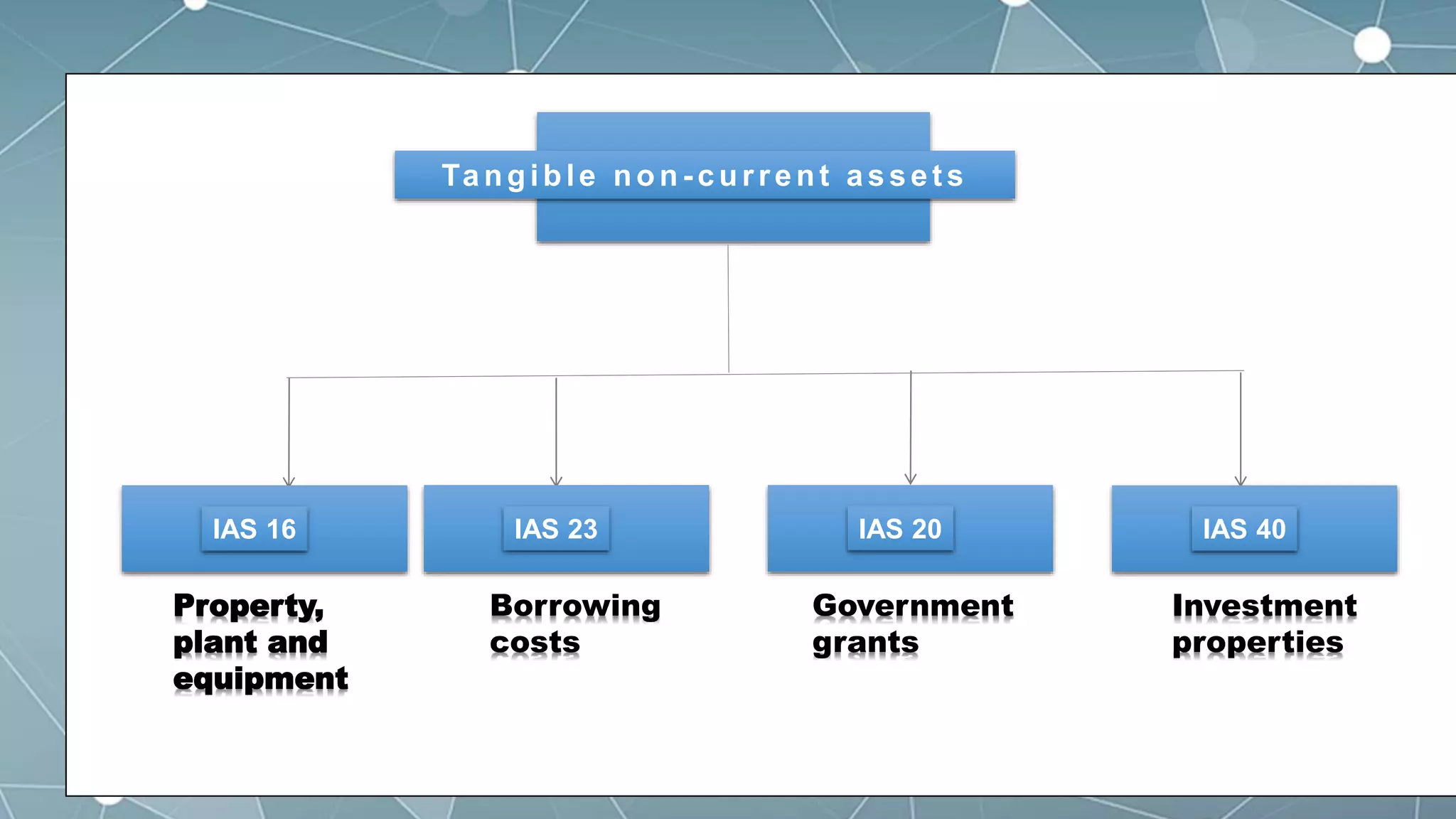
Tangible non - current assets
IAS 16 IAS 23 IAS 20 IAS 40
Property,
plant and
equipment
Borrowing
costs
Government
grants
Investment
properties
Property, plant and equipment
Part Ⅰ
Measurement at recognition
 At cost :
 Purchase price;
 Directly attributable costs in bringing asset to its
location and condition;
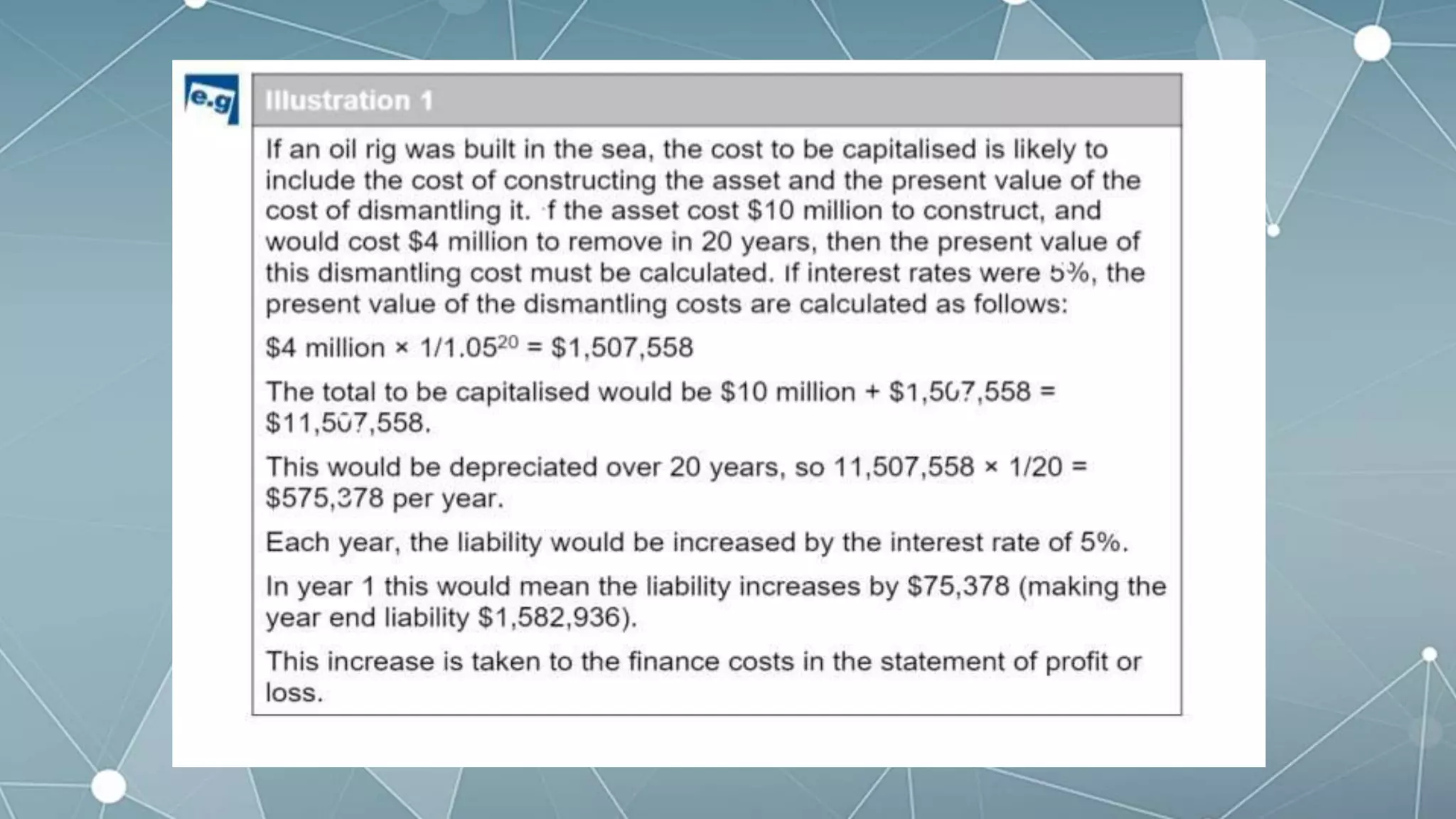
 Costs to dismantling /restore ( present value)
(1+r)^n
1
Revaluations
Carried at lost less
accumulated
depreciation and
impairment losses
Cost model
Carried at revalued
amount ( fair value less
accumulated
depreciation and
impairment losses
Revaluation model
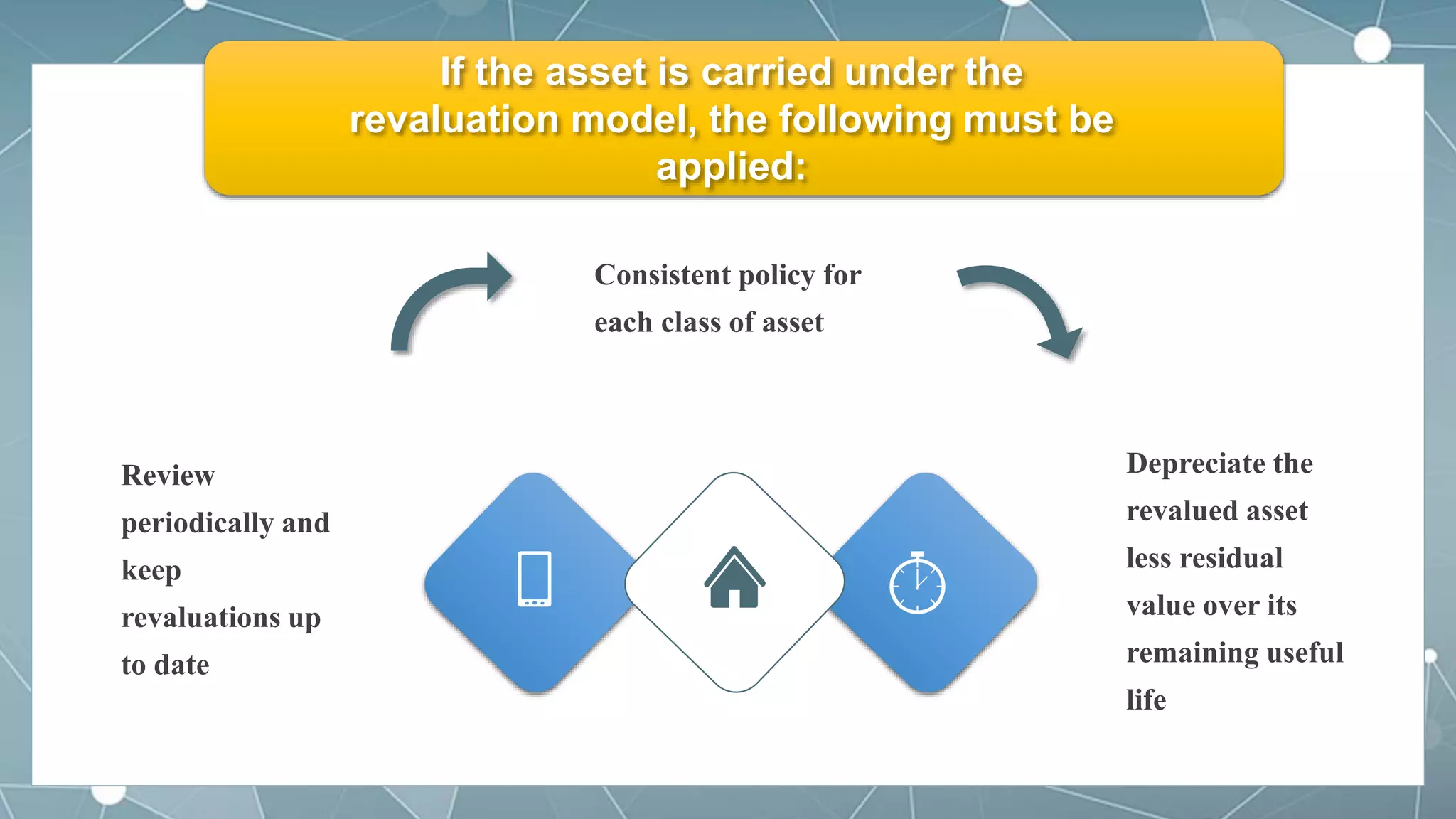
If the asset is carried under the
revaluation model, the following must be
applied:
Consistent policy for
each class of asset
Depreciate the
revalued asset
less residual
value over its
remaining useful
life
Review
periodically and
keep
revaluations up
to date
Depreciation
Depreciable
amount
Straight line
The systematic
allocation of the
depreciable
amount of an asset
over its iuseful life
Reducing
balance
Machine
hours
Borrowing costs
Part Ⅱ
Borrowing costs
Capitalisation starts
when :
Borrowing costs , net of income
received from the investment of
the money borrowed , on a
qualifying asset must be
capitalised over the period of
construction.
 Expenditure on the asset
commences
 Borrowing costs are being
incurred
 Activities necessary to
prepare the asset are in
progress
Capitalisation of borrowing costs should cease
when either:
 substantially all the activities necessary to
prepare the qualifying asset for its intended
use or sale are complete
 construction is suspended.
Government grants
Part Ⅲ
Government grants
Revenue
grants
Capital grants
 Treat the grant as a deferred credit and transfer a portion to
revenue each year, so offsetting the higher depreciation charge on
the original cost.
• deducted from the related expense
• presented as a credit in the statement of profit or loss
 Write off the grant against the cost of the non-current
asset and depreciate the reduced cost.
Investment property
Part Ⅳ
Investment property is land or a building ‘ helding to earentals or
for capital appreciation or both’, rather than for use by the entity or
for sale in the ordinary course of business.
1 2
The investment properties
are held using the
benchmark method in IAS
16;
The properties are
depreciated like any other
asset
 The investment properties
are revalued to fair value at
each reporting date;
 Gains or losses on
revaluations are recognised
directly through profit or loss;
 The propertiesare not
depreciated.
Cost model Fair value model
Transfers into and out of investment property
should only be made when supported by a
change of use of the property
1 .IP to owner occupied
(IAS 16) - Fair value at date
of change
2. IP to inventory ( IAS 2) -
Fair value at date of
transfer
3.Owner ocupied ( IAS 16)
to IP - Revalue under IAS
16 and then treat as IP
4.Inventory ( IAS 2) to IP-
Fair value on change and
gain /loss to profit or loss
C

Non-current assets.pptx

  • 1.
    Reporter: Nozimaxon Abdulxamidova Tangiblenon-current assets Investitsiya loyihalar tahlili
  • 2.
    Tangible non -current assets IAS 16 IAS 23 IAS 20 IAS 40 Property, plant and equipment Borrowing costs Government grants Investment properties
  • 3.
    Property, plant andequipment Part Ⅰ
  • 4.
    Measurement at recognition At cost :  Purchase price;  Directly attributable costs in bringing asset to its location and condition;  Costs to dismantling /restore ( present value) (1+r)^n 1
  • 6.
    Revaluations Carried at lostless accumulated depreciation and impairment losses Cost model Carried at revalued amount ( fair value less accumulated depreciation and impairment losses Revaluation model
  • 7.
    If the assetis carried under the revaluation model, the following must be applied: Consistent policy for each class of asset Depreciate the revalued asset less residual value over its remaining useful life Review periodically and keep revaluations up to date
  • 8.
    Depreciation Depreciable amount Straight line The systematic allocationof the depreciable amount of an asset over its iuseful life Reducing balance Machine hours
  • 10.
  • 11.
    Borrowing costs Capitalisation starts when: Borrowing costs , net of income received from the investment of the money borrowed , on a qualifying asset must be capitalised over the period of construction.  Expenditure on the asset commences  Borrowing costs are being incurred  Activities necessary to prepare the asset are in progress Capitalisation of borrowing costs should cease when either:  substantially all the activities necessary to prepare the qualifying asset for its intended use or sale are complete  construction is suspended.
  • 13.
  • 14.
    Government grants Revenue grants Capital grants Treat the grant as a deferred credit and transfer a portion to revenue each year, so offsetting the higher depreciation charge on the original cost. • deducted from the related expense • presented as a credit in the statement of profit or loss  Write off the grant against the cost of the non-current asset and depreciate the reduced cost.
  • 15.
  • 16.
    Investment property island or a building ‘ helding to earentals or for capital appreciation or both’, rather than for use by the entity or for sale in the ordinary course of business. 1 2 The investment properties are held using the benchmark method in IAS 16; The properties are depreciated like any other asset  The investment properties are revalued to fair value at each reporting date;  Gains or losses on revaluations are recognised directly through profit or loss;  The propertiesare not depreciated. Cost model Fair value model
  • 17.
    Transfers into andout of investment property should only be made when supported by a change of use of the property 1 .IP to owner occupied (IAS 16) - Fair value at date of change 2. IP to inventory ( IAS 2) - Fair value at date of transfer 3.Owner ocupied ( IAS 16) to IP - Revalue under IAS 16 and then treat as IP 4.Inventory ( IAS 2) to IP- Fair value on change and gain /loss to profit or loss
  • 18.