Node.js 23: What’s New, Why It Matters, and How to Upgrade
Node.js 23 introduces enhanced performance, better diagnostics, and modern JavaScript features. This presentation highlights key updates, their impact on development, and a step-by-step guide to upgrading smoothly.
Node.js 23: What’s New, Why It Matters, and How to Upgrade
1.
Node.js 23: What’sNew, Why It Matters,
and How to Upgrade
Alright, let us start with the “why” behind this much-awaited and anticipated Node.js update. If you
are like most developers, you have probably built your fair share of real-time applications,
microservices, and whatnot using Node.js. Well, that is because Node.js became a go-to platform
for
server-side JavaScript, allowing everything from small-scale prototypes to enterprise-level solutions.
The global JavaScript ecosystem would not be the same without Node.js, which is currently powering
millions of servers and billions of monthly user interactions.
Now, Node.js 23 marks a critical moment in the platform’s evolution! Packed with performance
improvements, experimental features, and even tighter TypeScript support, with this release (as
foreseen from the official Node.js release notes and related resources) it is drawing a significant
attention in the developer community. And for a much good reason! Any fresh Node.js update tends
to influence how modern web applications are architecture and delivered.
A Brief History of Node (For Those Who Slept Through It)
Before directly jumping into what’s new, let us take a quick trip down memory lane! Node.js
emerged back in 2009 as Ryan Dahl’s solution to a seemingly simple problem, ‘why can’t we use
JavaScript outside the browser?’ And well since then, it has completely changed from a curious little
experiment to the backbone of modern web development, powering everything from Netflix’s
streaming services to NASA’s spacesuit data systems. (Yes, there’s probably Node.js code floating
around in space right now; talk about high availability!)
Node.js operates on a predictable release schedule with:
Even-numbered versions (like 18, 20, 22) becoming Long-Term Support (LTS) releases
Odd-numbered versions (like 19, 21, 23) serving as “current” releases where new features
debut
2.
Even though Node.js23 is not a long-termed support release (Meaning it won’t be getting those
even even-numbered versions), It still acts as an important platform for testing out new features that
are set to be included in Node.js 24. So, you can consider this as a dress rehearsal for Broadway!
What’s New in Node.js 23?
Let’s cut to the chase! What exactly does this Node.js update bring to the table? Rather than
overwhelming you with every minute change from the Node.js release notes (which would make for
bedtime reading only an insomniac could love), let’s focus on the standout updates.
Performance Improvements That Actually Matter
The Node.js 23 performance improvements aren’t just a marketing gimmick! they deliver measurable
enhancements that translate to real-world benefits:
Faster Startup Time: Initial benchmarks show a 15-20% reduction in application bootstrap
time, which is crucial for serverless functions where cold starts directly impact costs.
Enhanced Garbage Collection: Memory management has been refined, reducing those
dreaded GC pauses that cause sporadic latency spikes. Your users won’t notice when garbage
collection happens, which is exactly the point.
Improved HTTP Parser: The library that handles HTTP requests has been optimized,
delivering up to 30% better throughput for API-heavy applications.
As one developer eloquently put it on Twitter: “Node.js 23’s performance is like upgrading from
economy to business class, except you didn’t have to pay extra or even use your frequent flyer
miles.”
Security Updates That Help You Sleep at Night
In an era where security breaches make headlines more often than celebrity gossip, the Node.js
23 security updates offer significant peace of mind:
Enhanced Permission Model: Better granular control over what your application can access,
allowing you to implement the principles of least privilege more effectively.
Updated Dependencies: Essential security updates for OpenSSL and various core
dependencies have been applied, addressing vulnerabilities that might
otherwise compromise your applications.
Better Cryptographic Defaults: Modern, more secure algorithms are now the default
choices, making it harder to accidentally implement insecure cryptographic
solutions. (Node.js has our backs!)
These security improvements are like having a better home security system! you hope you’ll never
need it, but you’ll sleep better knowing it’s there.
TypeScript Support That Makes Static Typing Enthusiasts Rejoice
The Node.js 23 TypeScript support has reached new heights:
Improved Type Definitions: The core Node.js APIs now have more precise TypeScript
definitions, reducing those frustrating “any” types that defeat the purpose of static typing.
3.
ESM Integration:Better interoperability between TypeScript and ES Modules, smoothing out
one of the rougher edges in the Node.js ecosystem.
Decorator Support: Experimental support for TypeScript decorators, making framework
development more elegant and maintainable.
For TypeScript developers, these improvements are like finding out your favorite coffee shop now
delivers something that was already good but just got a lot more convenient.
Experimental Features Worth Getting Excited About
The Node.js 23 experimental features showcase where the platform is heading:
Test Runner Improvements: The integrated test runner introduced in previous versions has
evolved considerably, likely lessening the reliance on external testing frameworks.
WebSocket Client: A built-in WebSocket client is now offered, removing the necessity for
third-party libraries for a variety of typical scenarios.
SingleExecutable Applications: The process of packaging your Node.js application into a
standalone executable file has been enhanced, facilitating simpler deployment in restricted
environments.
While these experimental features come with the standard “may change or be removed” warning
label, they provide an exciting glimpse into Node.js’s future direction.
How Node.js 23 Affects Server-Side JavaScript
How does Node.js 23 affect server-side JavaScript? In short, it continues the platform’s evolution
toward greater stability, performance, and developer friendliness.
The Ripple Effect on the JavaScript Ecosystem
Server-side JavaScript doesn’t exist in isolation it’s like a part of a vast ecosystem of frameworks,
libraries, and tools. Node.js 23’s improvements cascade throughout this ecosystem:
Optimization of Frameworks: Fan-favorite frameworks such as Express, Nest.js, and Fastify
can take advantage of performance improvements to provide quicker response times.
Reliable Microservices: With a smaller memory footprint and greater stability, Node.js
becomes an even better fit for microservice architectures, where you might have
hundreds or even thousands of services running at once.
Improved Software Developer Tooling: The improved debugging tools and easier module
resolution make the development journey a lot smoother and more enjoyable.
As one popular Node.js backend development blogger put it: “Node.js 23 doesn’t just improve Node
itself, it raises a new wave for the entire JavaScript backend ecosystem.”
New Possibilities for JavaScript Developers
The enhancements in Node.js modules and core functionality unlock new possibilities:
Increased Data Processing Efficiency: New performance upgrades make Node.js ideal for
data-heavy applications that previously required languages such as Go or Rust.
4.
Stronger SecurityMeasures: Recent security upgrades help developers create compliant
applications in sectors like fintech and healthcare.
Simplified Deployment Choices: Upgrades to the executable application simplify deployment
in strict corporate software environments.
How Node.js 23 Boosts Modern Web Applications
How does Node.js 23 support modern web applications? Let’s look at some real-world scenarios
where these improvements make a tangible difference.
Real-World Use Cases
E-commerce Platforms: The HTTP performance improvements can handle more concurrent
shoppers even during peak sales periods, directly impacting revenue potential.
Real-Time Collaboration Tools: With the enhanced WebSocket capabilities and reduced
latency, it improves the user experience for collaborative applications like document editors
and project management tools.
Content Delivery Networks: Better streaming performance means more efficient content
delivery with lower server costs.
IoT Device Management: Reduced memory footprint allows Node.js to run effectively on
more constrained edge devices and gateways.
Performance Benchmarks That Impress Even Non-Technical Stakeholders
Numbers speak louder than words, especially when talking to executive leadership:
Up to 30% higher throughput for HTTP-heavy workloads
15-20% faster application startup
Reduced memory usage by approximately 10-15% in typical applications
Lower CPU utilization under equivalent load compared to Node.js 22
These aren’t just marginal improvements! They’re significant enough to translate into real cost
savings and competitive advantages.
How Enterprise Applications Benefit
How will Node.js 23 benefit enterprise-level applications? Well, in several ways:
Cost Efficiency: Enhanced performance enables handling the same traffic with fewer
resources, leading to lower infrastructure expenses.
Scalability: Improved resource management allows applications to scale more efficiently
during periods of high traffic.
Developer Productivity: Upgraded tools and debugging features result in quicker
development cycles and a reduction in production problems.
Competitive Advantage: The ability to accommodate more users while improving response
times positively influences customer satisfaction and loyalty.
5.
As one CTOfrom a Fortune 500 company noted: “Node.js 23’s efficiency improvements alone
justified our upgrade costs within the first quarter, anything beyond that is just bonus ROI.”
How to Use the New Features in Node.js 23
How to use the new features in Node.js 23 without breaking your existing applications? Let’s walk
through it step by step.
1. Installation and Upgrade Process
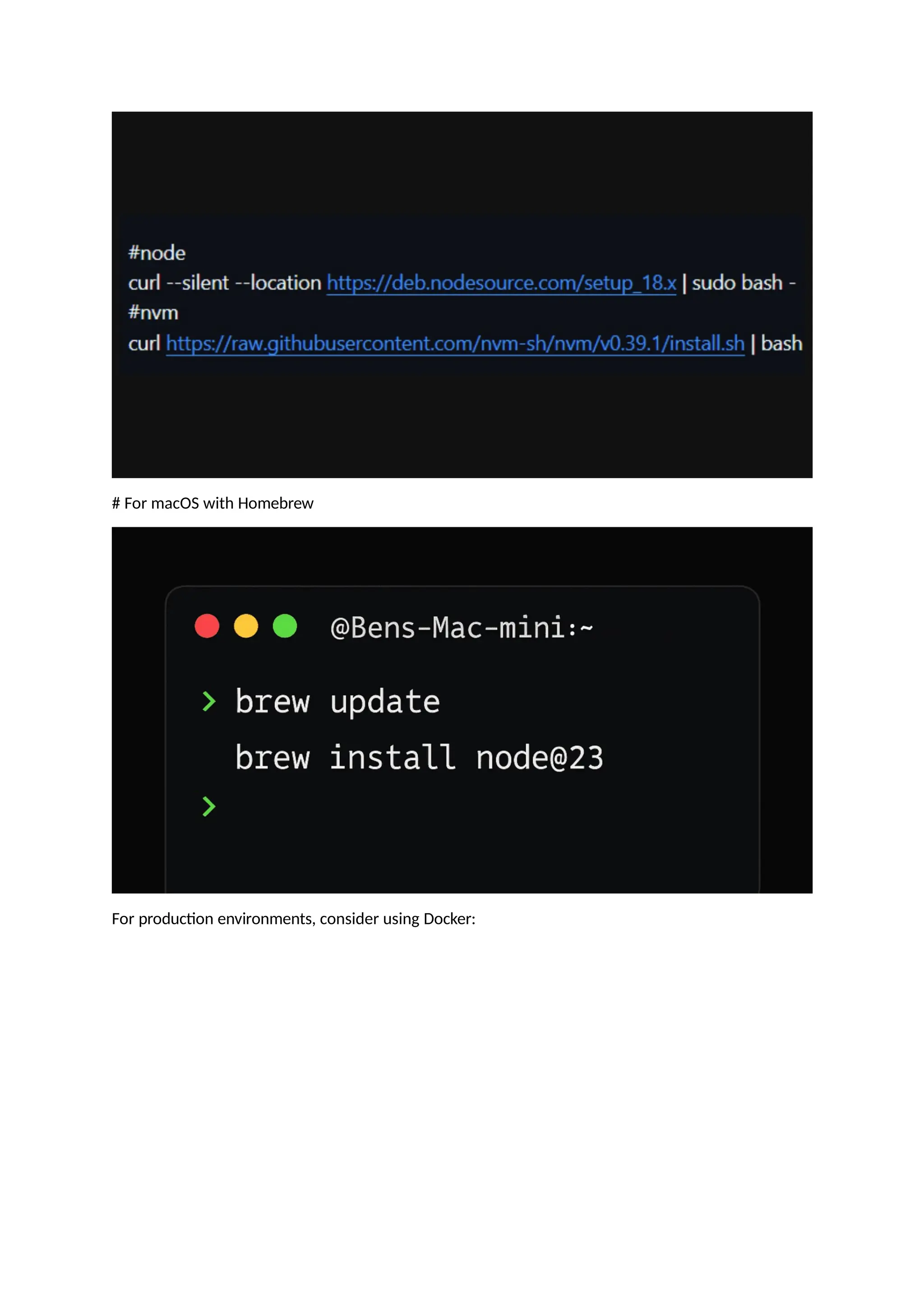
Upgrading to Node.js 23 is straightforward:
# Using package managers
# For Ubuntu/Debian
6.
# For macOSwith Homebrew
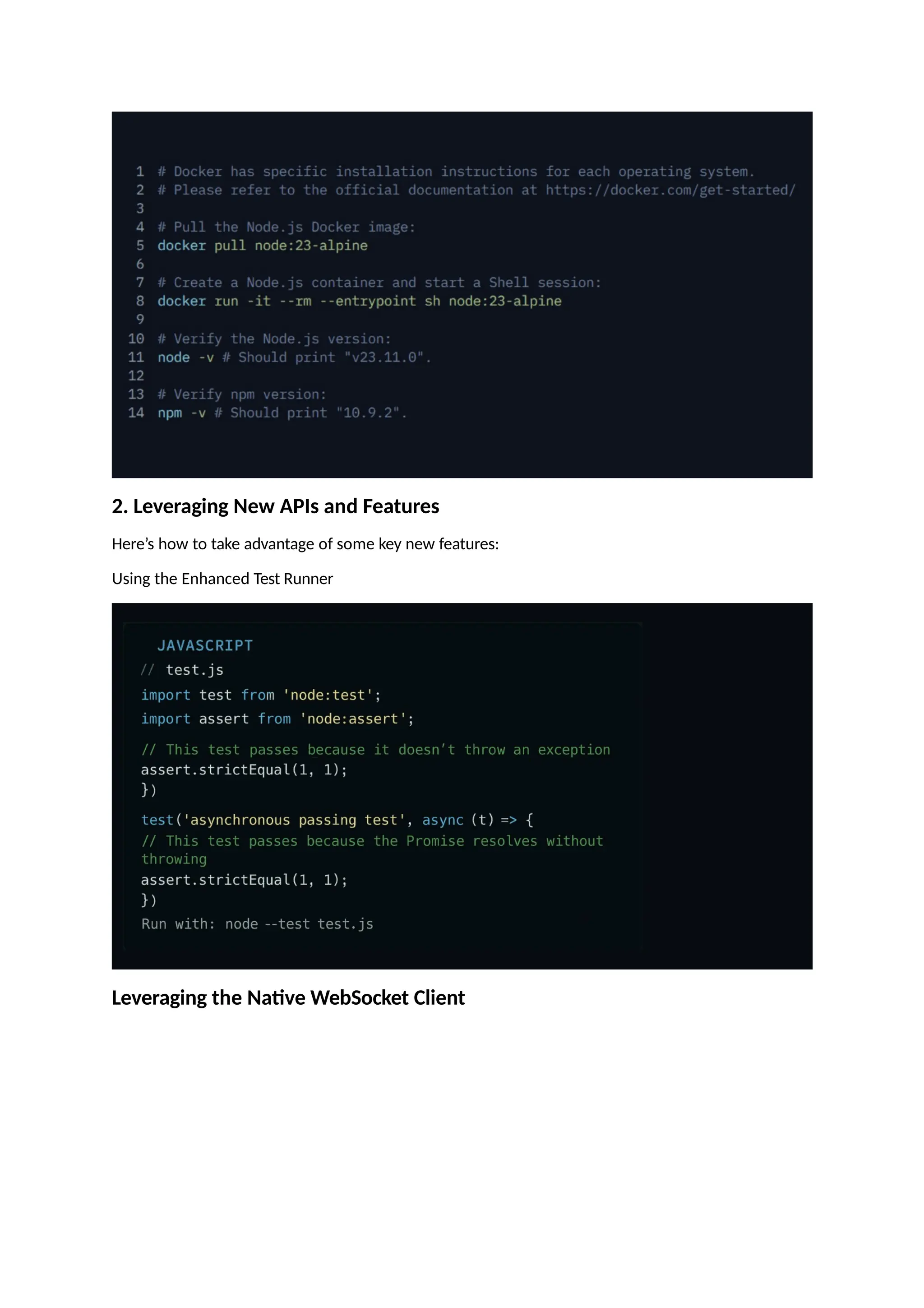
For production environments, consider using Docker:
7.
2. Leveraging NewAPIs and Features
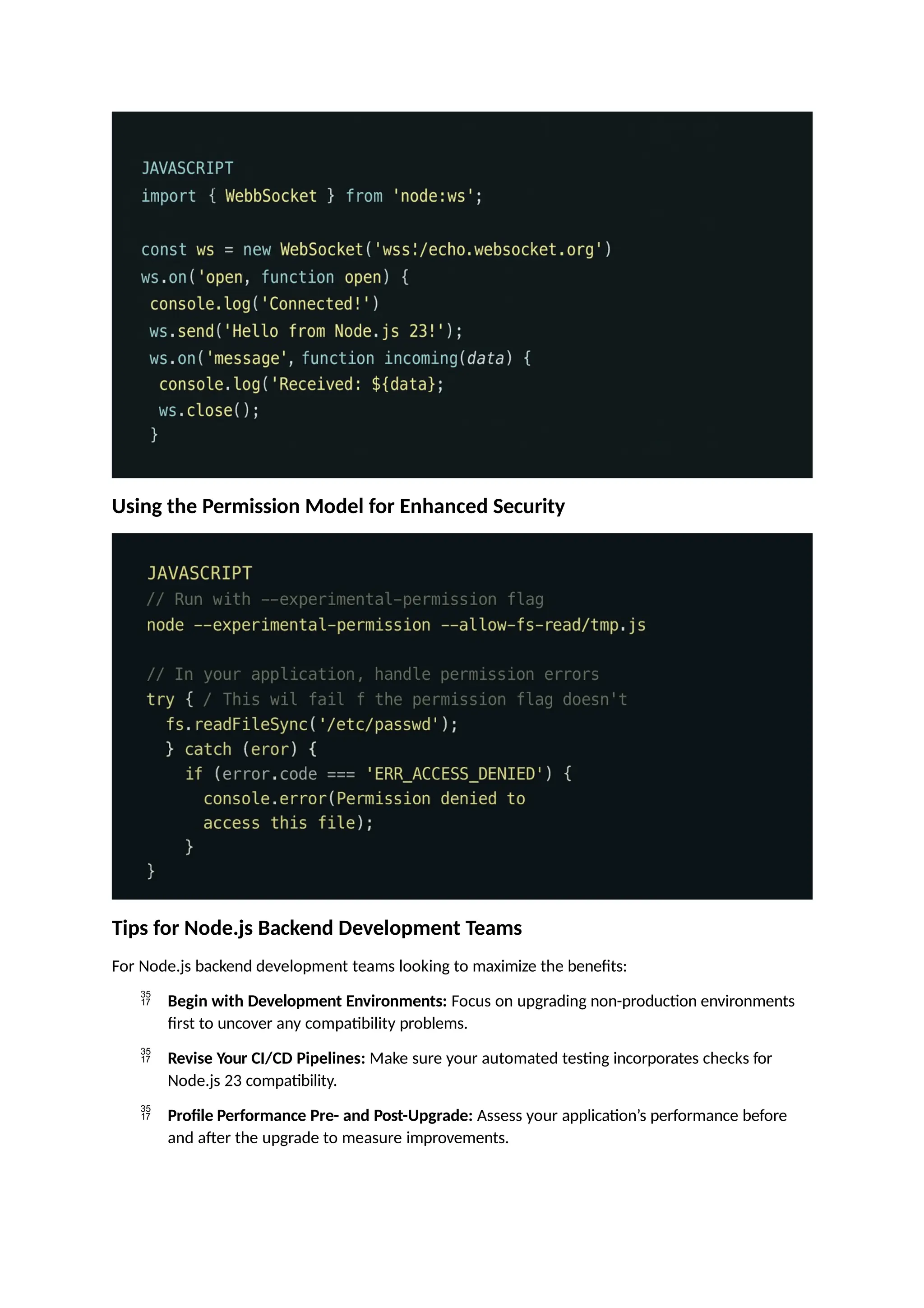
Here’s how to take advantage of some key new features:
Using the Enhanced Test Runner
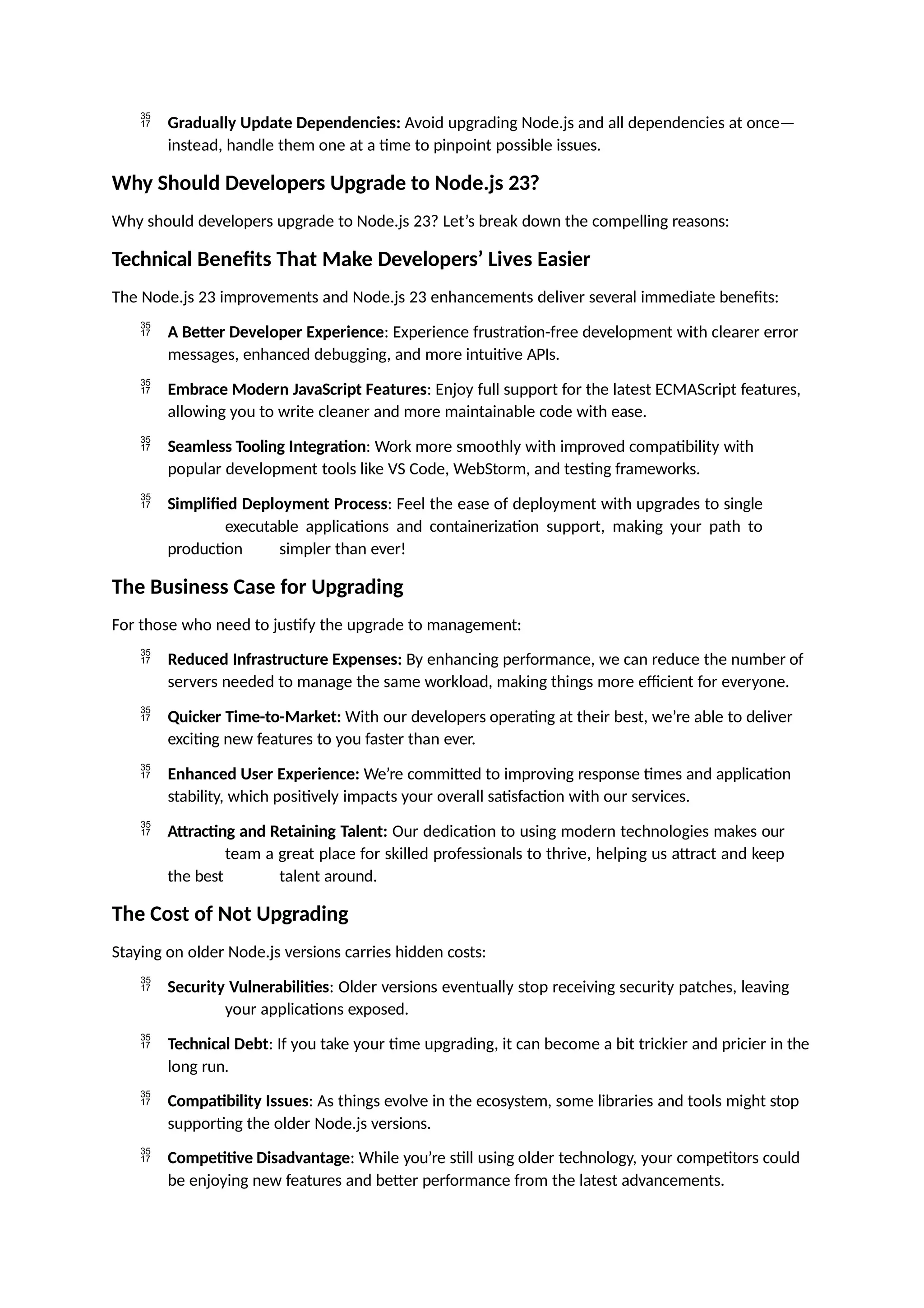
Leveraging the Native WebSocket Client
8.
Using the PermissionModel for Enhanced Security
Tips for Node.js Backend Development Teams
For Node.js backend development teams looking to maximize the benefits:
Begin with Development Environments: Focus on upgrading non-production environments
first to uncover any compatibility problems.
Revise Your CI/CD Pipelines: Make sure your automated testing incorporates checks for
Node.js 23 compatibility.
Profile Performance Pre- and Post-Upgrade: Assess your application’s performance before
and after the upgrade to measure improvements.
9.
Gradually UpdateDependencies: Avoid upgrading Node.js and all dependencies at once—
instead, handle them one at a time to pinpoint possible issues.
Why Should Developers Upgrade to Node.js 23?
Why should developers upgrade to Node.js 23? Let’s break down the compelling reasons:
Technical Benefits That Make Developers’ Lives Easier
The Node.js 23 improvements and Node.js 23 enhancements deliver several immediate benefits:
A Better Developer Experience: Experience frustration-free development with clearer error
messages, enhanced debugging, and more intuitive APIs.
Embrace Modern JavaScript Features: Enjoy full support for the latest ECMAScript features,
allowing you to write cleaner and more maintainable code with ease.
Seamless Tooling Integration: Work more smoothly with improved compatibility with
popular development tools like VS Code, WebStorm, and testing frameworks.
Simplified Deployment Process: Feel the ease of deployment with upgrades to single
executable applications and containerization support, making your path to
production simpler than ever!
The Business Case for Upgrading
For those who need to justify the upgrade to management:
Reduced Infrastructure Expenses: By enhancing performance, we can reduce the number of
servers needed to manage the same workload, making things more efficient for everyone.
Quicker Time-to-Market: With our developers operating at their best, we’re able to deliver
exciting new features to you faster than ever.
Enhanced User Experience: We’re committed to improving response times and application
stability, which positively impacts your overall satisfaction with our services.
Attracting and Retaining Talent: Our dedication to using modern technologies makes our
team a great place for skilled professionals to thrive, helping us attract and keep
the best talent around.
The Cost of Not Upgrading
Staying on older Node.js versions carries hidden costs:
Security Vulnerabilities: Older versions eventually stop receiving security patches, leaving
your applications exposed.
Technical Debt: If you take your time upgrading, it can become a bit trickier and pricier in the
long run.
Compatibility Issues: As things evolve in the ecosystem, some libraries and tools might stop
supporting the older Node.js versions.
Competitive Disadvantage: While you’re still using older technology, your competitors could
be enjoying new features and better performance from the latest advancements.
10.
Not upgrading wouldbe like continuing to use a flip phone in the smartphone era! it might be able
to still make calls, but you’re missing out on so much more.
Key Considerations and Best Practices
Even the smoothest upgrades require careful planning. Here are some best practices to make sure
your transition to Node.js 23 goes without a hitch.
Common Pitfalls to Avoid
Assuming Complete Compatibility: Even minor version upgrades can introduce breaking
changes, so always review the release notes carefully.
Neglecting Dependency Compatibility: Some packages may not yet be compatible with
Node.js 23! Check their documentation or GitHub issues.
Overlooking Environment Differences: Code that works on your local Node.js 23 installation
might behave differently in containerized or serverless environments.
Ignoring TypeScript Configuration Updates: If you’re using TypeScript, you might need to
update your configuration to take advantage of the improved type definitions.
Backward Compatibility Considerations
The Node.js team strives for backward compatibility, but some changes are inevitable:
Rusty Old Outdated APIs: Some of the APIs that were marked as outdated might no longer
be available, so it’s a good idea to take a look at the deprecation warnings in your current
application.
Major Changes in Default Behavior: As we enhance security, we may also change some
default behaviors. This could influence applications that were built with the older defaults in
mind.
Updates to the V8 Engine: The updates to the JavaScript engine can sometimes impact
specific behaviors in more complex applications.
Testing, Debugging, and Deployment Tips
Thorough Test Coverage: Confirm that your test suite addresses essential application
pathways prior to upgrading.
Canary Deployments: First, deploy Node.js 23 to a limited portion of your infrastructure to
detect problems before they impact all users.
Performance Monitoring: Establish comprehensive monitoring to assess performance
enhancements and isolate any regressions.
Rollback Plan: Maintain a strategy to revert to your earlier Node.js version should
unexpected issues occur.
Next Steps & How Tuvoc Technologies Can Help
By now, you might be thinking: “Alright, Node.js 23 looks like a no-brainer. Where do I start, and how
can I make sure a smooth transition?” Well, That’s where Tuvoc Technologies comes in. We’re a
11.
leading Node.js appdevelopment company with deep expertise in Node.js backend development,
Node.js website development, and specialized Node.js consulting services for organizations big and
small.
1. Strategy & Architecture
We help you chart a strategic roadmap for upgrading. From evaluating your codebase to
recommending microservice best practices, our consultants bring a wealth of real-world
experience.
2. Hands-On Development & Migration
Already planning an upgrade but short on dev capacity? Hire Nodejs developers from Tuvoc
Technologies to get your project over the finish line. Our team has tackled everything from brand-
new apps to large-scale migrations.
3. Ongoing Support & Maintenance
Post-upgrade, we stick around to ensure everything runs smoothly. Whether you need quick patches
or performance tuning, we’ve got your back 24/7.
4. Cost-Effective Solutions
Tuvoc Technologies can customize a plan for your specific budget and timeline. We love building
future-proof solutions that save you costs in the long run.
5. Focused on Innovation
We keep a keen eye on upcoming Node.js release notes, ensuring your environment remains cutting-
edge, especially when it comes to new Node.js 23 experimental features or upcoming versions.
If you want to stay ahead of the curve in Node.js development, look no further. Contact Tuvoc
Technologies to learn more about how our Node.js consulting services can streamline your upgrade
path to Node.js 23.
(Psst… Between us and you! Don’t hesitate to ring us up and ask for a free consultation! We
promise we won’t bombard you with tech jargon, well, unless you specifically request it. We’re that
flexible.)
Conclusion
What are the most significant changes in Node.js 23? As we’ve explored, this release brings
substantial performance improvements, enhanced security, better TypeScript integration, and
experimental features that point to an exciting future.
From more seamless TypeScript support to a more refined modules and experimental features, the
new version addresses many pain points that are faced by Node.js developers. For enterprise-level
teams, this upgrade can mean lower hosting costs, stronger security, happier devs, and the ability to
push out new features faster.
If your goal is to build dynamic, server-side JavaScript applications that can handle global traffic,
adopting Node.js 23 might just be the best decision you make this year. And if all these changes
sound overwhelming, remember that Tuvoc Technologies is here to help you. We’re not just another
Node.js app development company; we’re the Node.js consulting services partner dedicated to your
success.
12.
Final thought: TheNode.js community never stands still. Upgrading is part of the continuous
improvement cycle! one that leads to more powerful, stable, and secure applications for your
organization. So, why wait?
Start harnesses Node.js 23 for your next project, we’re here to support. Hire Nodejs developers
from Tuvoc Technologies and witness how a seamless upgrade can transform your digital presence.
We
pride ourselves on being a top-tier Node.js app development company, offering comprehensive
Node.js consulting services for clients worldwide.
Ready to Begin?
Contact us at Tuvoc Technologies today, and let’s build the future of server-side JavaScript
together.




![Vibe Coding vs. Spec-Driven Development [Free Meetup]](https://cdn.slidesharecdn.com/ss_thumbnails/vibecodingvsspecdrivendevelopment-251209105622-43f455e7-thumbnail.jpg?width=640&height=640&fit=bounds)

