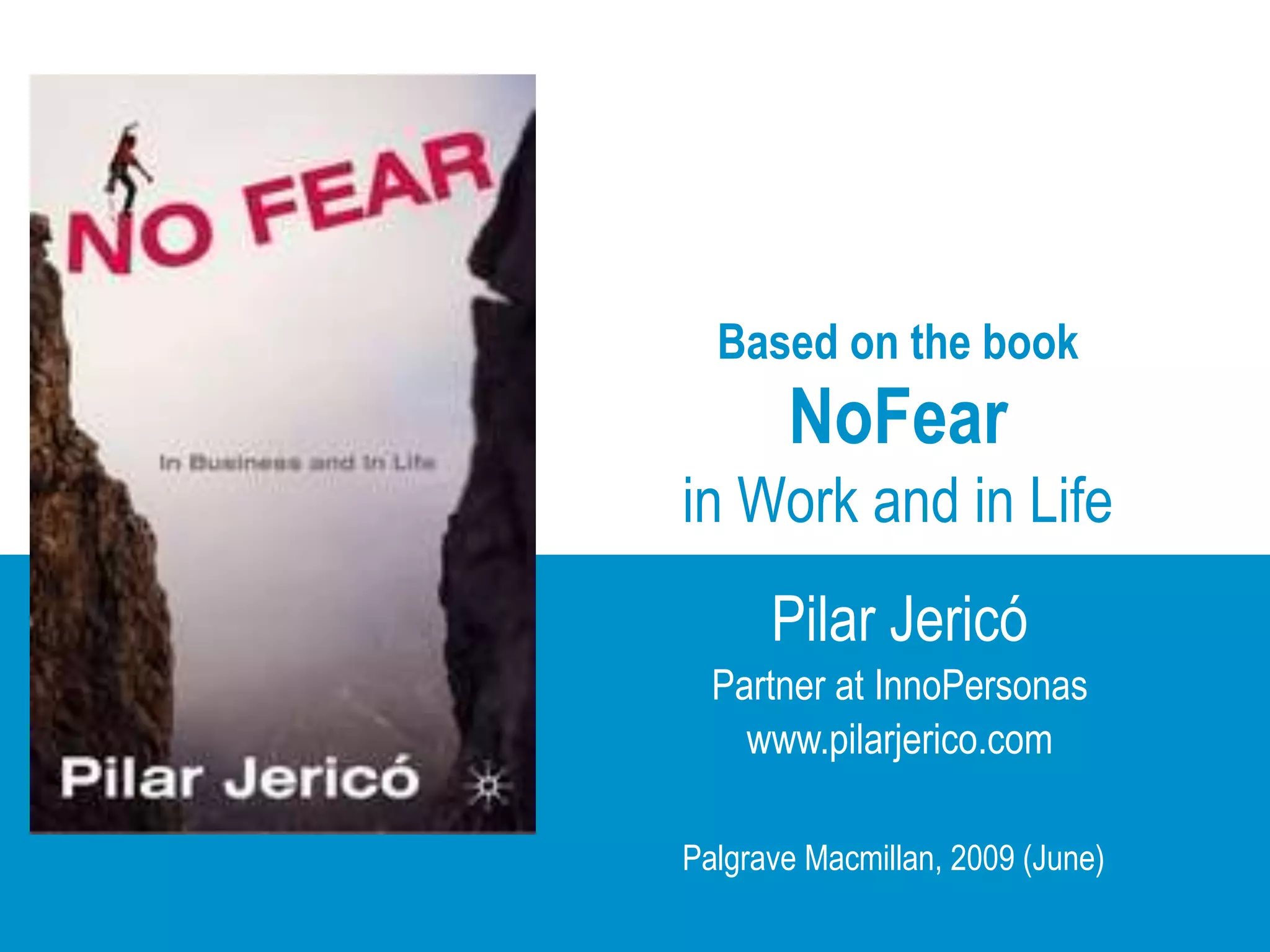
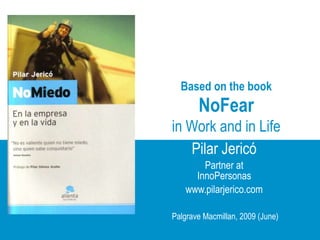
Based on the bookNoFearin Work and in Life Pilar JericóPartner at InnoPersonaswww.pilarjerico.comPalgrave Macmillan, 2009 (June)
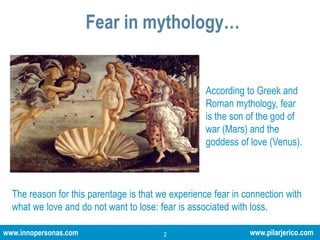
Fear in mythology…According to Greek and Roman mythology, fear is the son of the god of war (Mars) and the goddess of love (Venus).  The reason for this parentage is that we experience fear in connection with what we love and do not want to lose: fear is associated with loss.
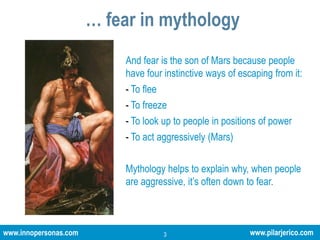
… fear in mythologyAnd fear is the son of Mars because people have four instinctive ways of escaping from it:  To flee
 To freeze
 To look up to people in positions of power
 To act aggressively (Mars)Mythology helps to explain why, when people are aggressive, it’s often down to fear.
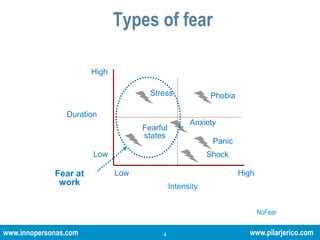
Types of fearHighStressPhobia DurationAnxietyFearful statesPanicLowShockLowHighFear at workIntensityNoFear
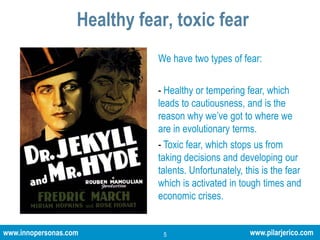
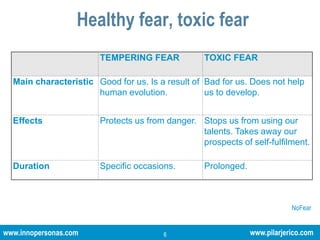
Healthy fear, toxic fearWe have two types of fear: Healthy or tempering fear, which leads to cautiousness, and is the reason why we’ve got to where we are in evolutionary terms.
 Toxic fear, which stops us from taking decisions and developing our talents. Unfortunately, this is the fear which is activated in tough times and economic crises.Healthy fear, toxic fearNoFear
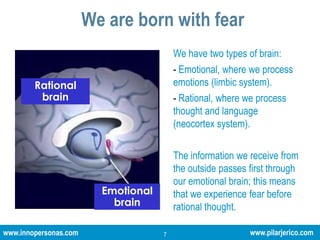
We are born with fearWe have two types of brain:  Emotional, where we process emotions (limbic system).
 Rational, where we process thought and language (neocortex system).The information we receive from the outside passes first through our emotional brain; this means that we experience fear before rational thought.Rational brainEmotional brain
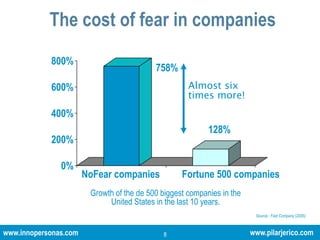
The cost of fear in companies800%758%Almost six times more!600%400%128%200%0%NoFear companiesFortune 500 companiesGrowth of the de 500 biggest companies in the United States in the last 10 years.Source:  Fast Company (2005)
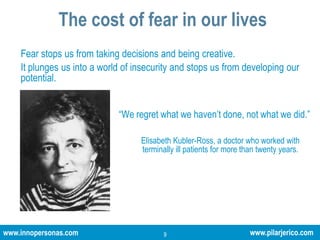
The cost of fear in our livesFear stops us from taking decisions and being creative.It plunges us into a world of insecurity and stops us from developing our potential.“We regret what we haven’t done, not what we did.”	Elisabeth Kubler-Ross, a doctor who worked with terminally ill patients for more than twenty years.
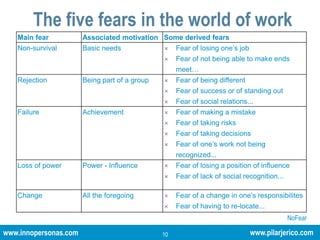
The five fears in the world of work  NoFear
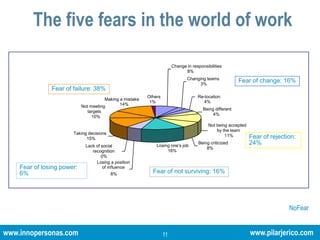
The five fears in the world of workChange in responsibilities8%Fear of change: 16%Changing teams3%Fear of failure: 38%Re-location OthersMaking a mistake4%1%14%Not meeting Being differenttargets4%10%Not being accepted by the team Taking decisionsFear of rejection: 24%11%15%Being criticizedLosing one’s jobLack of social 8%16%recognition0%Losing a positionFear of losing power: 6%of influenceFear of not surviving: 16%6%NoFear
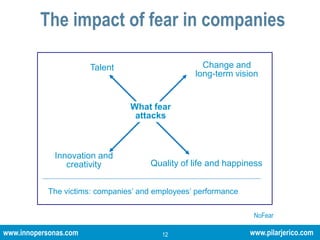
The impact of fear in companiesChange and    long-term visionTalentWhat fear attacksInnovation and creativityQuality of life and happinessThe victims: companies’ and employees’ performanceNoFear
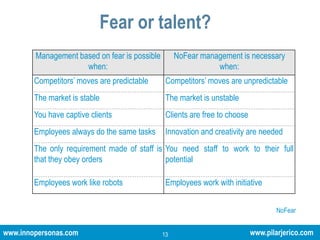
Fear or talent?   NoFear
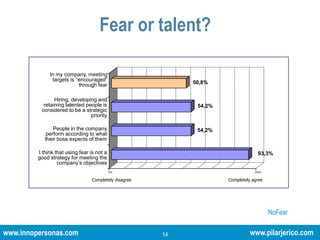
Fear or talent?In my company, meeting targets is “encouraged” through fear50,8%Hiring, developing and retaining talented people is considered to be a strategic priority54,2%People in the company perform according to what their boss expects of them54,2%  I think that using fear is not a good strategy for meeting the company’s objectives93,3%0%100%Completely disagree Completely agree        NoFear
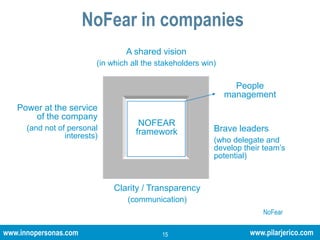
NoFear in companiesA shared vision(in which all the stakeholders win)People managementPower at the service of the company(and not of personal interests)NOFEAR frameworkBrave leaders(who delegate and develop their team’s potential)Clarity / Transparency(communication)    NoFear
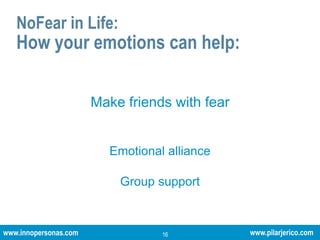
NoFear in Life: How your emotions can help:Make friends with fearEmotional allianceGroup support

No Fear

  • 1.
    Based on thebookNoFearin Work and in Life Pilar JericóPartner at InnoPersonaswww.pilarjerico.comPalgrave Macmillan, 2009 (June)
  • 2.
    Fear in mythology…Accordingto Greek and Roman mythology, fear is the son of the god of war (Mars) and the goddess of love (Venus). The reason for this parentage is that we experience fear in connection with what we love and do not want to lose: fear is associated with loss.
  • 3.
    … fear inmythologyAnd fear is the son of Mars because people have four instinctive ways of escaping from it: To flee
  • 4.
  • 5.
    To lookup to people in positions of power
  • 6.
    To actaggressively (Mars)Mythology helps to explain why, when people are aggressive, it’s often down to fear.
  • 7.
    Types of fearHighStressPhobiaDurationAnxietyFearful statesPanicLowShockLowHighFear at workIntensityNoFear
  • 8.
    Healthy fear, toxicfearWe have two types of fear: Healthy or tempering fear, which leads to cautiousness, and is the reason why we’ve got to where we are in evolutionary terms.
  • 9.
    Toxic fear,which stops us from taking decisions and developing our talents. Unfortunately, this is the fear which is activated in tough times and economic crises.Healthy fear, toxic fearNoFear
  • 10.
    We are bornwith fearWe have two types of brain: Emotional, where we process emotions (limbic system).
  • 11.
    Rational, wherewe process thought and language (neocortex system).The information we receive from the outside passes first through our emotional brain; this means that we experience fear before rational thought.Rational brainEmotional brain
  • 12.
    The cost offear in companies800%758%Almost six times more!600%400%128%200%0%NoFear companiesFortune 500 companiesGrowth of the de 500 biggest companies in the United States in the last 10 years.Source: Fast Company (2005)
  • 13.
    The cost offear in our livesFear stops us from taking decisions and being creative.It plunges us into a world of insecurity and stops us from developing our potential.“We regret what we haven’t done, not what we did.” Elisabeth Kubler-Ross, a doctor who worked with terminally ill patients for more than twenty years.
  • 14.
    The five fearsin the world of work NoFear
  • 15.
    The five fearsin the world of workChange in responsibilities8%Fear of change: 16%Changing teams3%Fear of failure: 38%Re-location OthersMaking a mistake4%1%14%Not meeting Being differenttargets4%10%Not being accepted by the team Taking decisionsFear of rejection: 24%11%15%Being criticizedLosing one’s jobLack of social 8%16%recognition0%Losing a positionFear of losing power: 6%of influenceFear of not surviving: 16%6%NoFear
  • 16.
    The impact offear in companiesChange and long-term visionTalentWhat fear attacksInnovation and creativityQuality of life and happinessThe victims: companies’ and employees’ performanceNoFear
  • 17.
  • 18.
    Fear or talent?Inmy company, meeting targets is “encouraged” through fear50,8%Hiring, developing and retaining talented people is considered to be a strategic priority54,2%People in the company perform according to what their boss expects of them54,2% I think that using fear is not a good strategy for meeting the company’s objectives93,3%0%100%Completely disagree Completely agree NoFear
  • 19.
    NoFear in companiesAshared vision(in which all the stakeholders win)People managementPower at the service of the company(and not of personal interests)NOFEAR frameworkBrave leaders(who delegate and develop their team’s potential)Clarity / Transparency(communication) NoFear
  • 20.
    NoFear in Life:How your emotions can help:Make friends with fearEmotional allianceGroup support