By: The FantasticFour:
Md Ismail Sharfi
Prasoon Kant Ojha
Krishnandu Pramanik
Mohammad Jamilish Shiyamul Hoda
Mentor: Mr. Sk. Safikul Alam

 Cost of Hardware & Software.
 Cost of Staff Training.
 Appointing Technical Staff.
 Database Damage
 Inefficient use of hardware.
Limitations of
Traditional DBMS

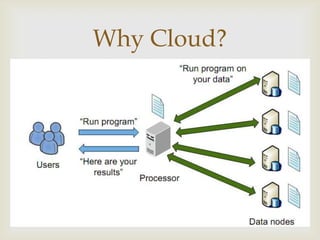
 Predictable any time, anywhere access to
resources
 Lower hardware and energy costs
 Lower total cost of operations both for software
licensing and administration tools-only pay what
you use
 Provides a better( up to 100%) utilization of
hardware resources.
Why Cloud?

DBMS as a Cloud Service
 Much more efficient in its duties.
 Cheaper in long run.
 Cloud-based DBMS are extremely scalable.
 Move much of the operational burden of
provisioning, configuration, scaling, performance
tuning, backup, privacy, and access control from the
database user to the service operator.

 A Cloud Database Management System (CDBMS)
is a distributed database that delivers computing as a
service instead of a product. It is the sharing of
resources, software and information between
multiple devices over a network which is mostly the
internet.
 An example of this is Software as a Service, or
SaaS, which is an application that is delivered
through the browser to customers.
CDBMS

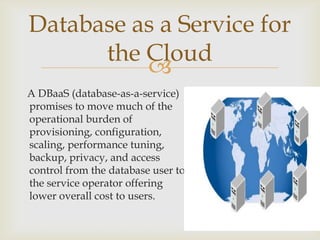
A DBaaS (database-as-a-service)
promises to move much of the
operational burden of
provisioning, configuration,
scaling, performance tuning,
backup, privacy, and access
control from the database user to
the service operator offering
lower overall cost to users.
Database as a Service for
the Cloud

 Efficient multi-tenancy
 Elastic scalability
 Database privacy
 We argue that these three challenges must be
overcome before outsourcing database software and
management becomes attractive to many users, and
cost effective for service provider.
Challenges to Implement

 Cloud based DBMS services are provided in a
multitenancy environment with elastic resources
allocation, for use in simple and complex transaction
 Most of the currently available DBMS engines will
run on cloud infrastructure, but are not specifically
engineered to take advantage of cloud.
Why NextBase?
(DBMS in Cloud)

Why Cloud?

Privacy
 A Significant barrier to deploy database in the cloud
is privacy.
 If client able to encrypt all the data stored in the
DBaaS then privacy concern would largely be
eliminated.
 CryptDB is a technique designed to provide privacy.
this privacy even prevent admin from seeing users
data.
 Reduction in throughput by 22.5%.

Architecture
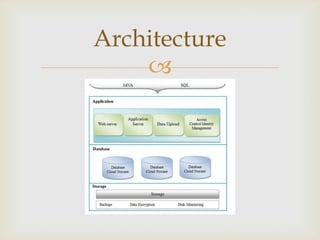
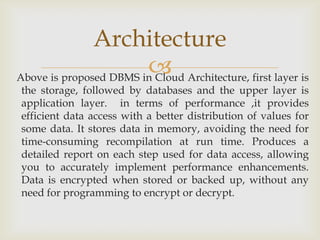
Above is proposed DBMS in Cloud Architecture, first layer is
the storage, followed by databases and the upper layer is
application layer. in terms of performance ,it provides
efficient data access with a better distribution of values for
some data. It stores data in memory, avoiding the need for
time-consuming recompilation at run time. Produces a
detailed report on each step used for data access, allowing
you to accurately implement performance enhancements.
Data is encrypted when stored or backed up, without any
need for programming to encrypt or decrypt.
Architecture

 USER REQUIREMENTS
 Simple API
 High performance
 High availability and reliability
 Easy access to advanced features
 PUBLIC CLOUD REQUIREMENTS
 cheap ,predictable and proportional to actual usage
 security and privacy guarantees
Requirements

 Provider Requirements
 Meet user services level agreement
 Limit hardware and power costs
 Limit administration costs
Requirements
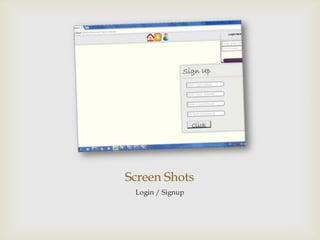
Screen Shots
Login / Signup
Screen Shots
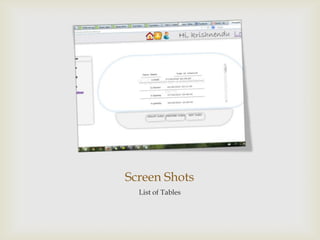
List of Tables
Screen Shots
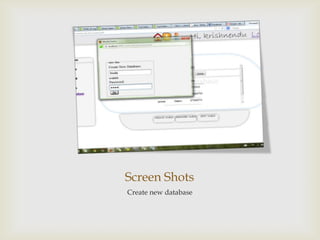
Create new database
Screen Shots
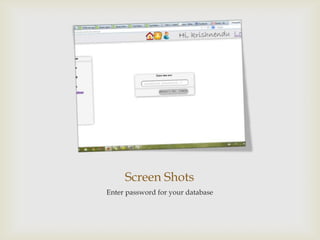
Enter password for your database
Screen Shots
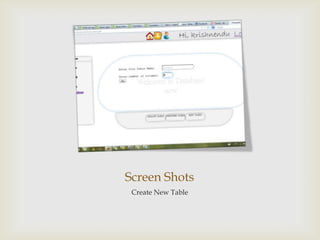
Create New Table
Screen Shots
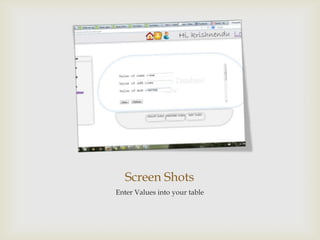
Enter Values into your table
Screen Shots
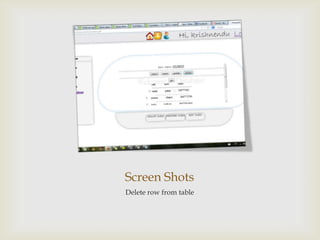
Delete row from table
Screen Shots
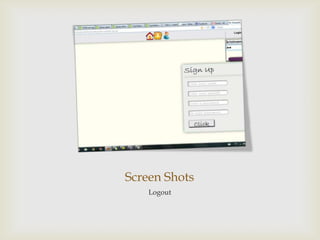
Logout

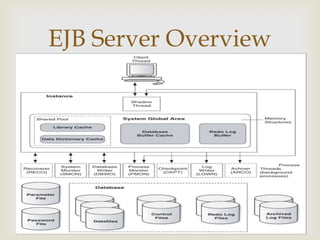
EJB Server Overview

 Complete SQL functionalities.
 Security Features.
 Cloud Based.
 Multi User.
 RDBaaS.
Future Works

 ACM /IEEE COMPUTER SOCIETY MEETING
Thursday, December 17
 Bigtable: A Distributed Storage System for Structured Data, Fay
Chang, Jeffrey Dean, Sanjay Ghemawat, Google Inc.
 Dynamo: Amazon’s Highly Available Key-value Store,
Giuseppe DeCandia, Deniz Hastorun, Madan Jampani, Avinash
Lakshman, Amazon.com.
 AbadiD, “Data Management in the Cloud: Limitations and
Opportunities”, Bulletin of the IEEE Computer Society
Technical Committee on Data Engineering (2009).
 H.Hacigumus, B.Iyer, S.Mehrotra, executing SQL over
Encrypted database-service provider model, ACM SIGMOD,
2002
References
Hebrew
Thank You
English
Merci
French
Russian
Danke
German
Grazie
Italian
Spanish
Obrigado
Portuguese
Arabic
Traditional Chinese Thai
Bangla
¡Gracias!
Tamil
Kannada
Urdu
Hindi

Next basepresentation

  • 1.
    By: The FantasticFour: MdIsmail Sharfi Prasoon Kant Ojha Krishnandu Pramanik Mohammad Jamilish Shiyamul Hoda Mentor: Mr. Sk. Safikul Alam
  • 2.
      Cost ofHardware & Software.  Cost of Staff Training.  Appointing Technical Staff.  Database Damage  Inefficient use of hardware. Limitations of Traditional DBMS
  • 3.
      Predictable anytime, anywhere access to resources  Lower hardware and energy costs  Lower total cost of operations both for software licensing and administration tools-only pay what you use  Provides a better( up to 100%) utilization of hardware resources. Why Cloud?
  • 4.
     DBMS as aCloud Service  Much more efficient in its duties.  Cheaper in long run.  Cloud-based DBMS are extremely scalable.  Move much of the operational burden of provisioning, configuration, scaling, performance tuning, backup, privacy, and access control from the database user to the service operator.
  • 5.
      A CloudDatabase Management System (CDBMS) is a distributed database that delivers computing as a service instead of a product. It is the sharing of resources, software and information between multiple devices over a network which is mostly the internet.  An example of this is Software as a Service, or SaaS, which is an application that is delivered through the browser to customers. CDBMS
  • 6.
     A DBaaS (database-as-a-service) promisesto move much of the operational burden of provisioning, configuration, scaling, performance tuning, backup, privacy, and access control from the database user to the service operator offering lower overall cost to users. Database as a Service for the Cloud
  • 7.
      Efficient multi-tenancy Elastic scalability  Database privacy  We argue that these three challenges must be overcome before outsourcing database software and management becomes attractive to many users, and cost effective for service provider. Challenges to Implement
  • 8.
      Cloud basedDBMS services are provided in a multitenancy environment with elastic resources allocation, for use in simple and complex transaction  Most of the currently available DBMS engines will run on cloud infrastructure, but are not specifically engineered to take advantage of cloud. Why NextBase? (DBMS in Cloud)
  • 9.
  • 10.
     Privacy  A Significantbarrier to deploy database in the cloud is privacy.  If client able to encrypt all the data stored in the DBaaS then privacy concern would largely be eliminated.  CryptDB is a technique designed to provide privacy. this privacy even prevent admin from seeing users data.  Reduction in throughput by 22.5%.
  • 11.
  • 12.
    Above is proposedDBMS in Cloud Architecture, first layer is the storage, followed by databases and the upper layer is application layer. in terms of performance ,it provides efficient data access with a better distribution of values for some data. It stores data in memory, avoiding the need for time-consuming recompilation at run time. Produces a detailed report on each step used for data access, allowing you to accurately implement performance enhancements. Data is encrypted when stored or backed up, without any need for programming to encrypt or decrypt. Architecture
  • 13.
      USER REQUIREMENTS Simple API  High performance  High availability and reliability  Easy access to advanced features  PUBLIC CLOUD REQUIREMENTS  cheap ,predictable and proportional to actual usage  security and privacy guarantees Requirements
  • 14.
      Provider Requirements Meet user services level agreement  Limit hardware and power costs  Limit administration costs Requirements
  • 15.
  • 16.
  • 17.
  • 18.
    Screen Shots Enter passwordfor your database
  • 19.
  • 20.
  • 21.
  • 22.
  • 23.
  • 24.
      Complete SQLfunctionalities.  Security Features.  Cloud Based.  Multi User.  RDBaaS. Future Works
  • 25.
      ACM /IEEECOMPUTER SOCIETY MEETING Thursday, December 17  Bigtable: A Distributed Storage System for Structured Data, Fay Chang, Jeffrey Dean, Sanjay Ghemawat, Google Inc.  Dynamo: Amazon’s Highly Available Key-value Store, Giuseppe DeCandia, Deniz Hastorun, Madan Jampani, Avinash Lakshman, Amazon.com.  AbadiD, “Data Management in the Cloud: Limitations and Opportunities”, Bulletin of the IEEE Computer Society Technical Committee on Data Engineering (2009).  H.Hacigumus, B.Iyer, S.Mehrotra, executing SQL over Encrypted database-service provider model, ACM SIGMOD, 2002 References
  • 26.

Editor's Notes

  • #3 1. Cost of Hardware & SoftwareA processor with high speed of data processing and memory of large size is required to run the DBMS software. It means that you have to up grade the hardware used for file-based system. Similarly, DBMS software is also very costly. >>> Most DBMSs are often complex systems so the training for users to use the DBMS is required. Training is required at all levels, including programming, application development, and database administration. The organization has to be paid a lot of amount for the training of staff to run the DBMS.
  • #11 Sharfi