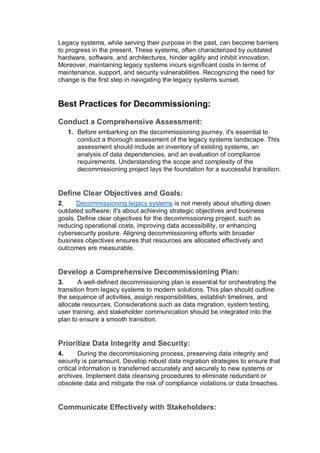
Navigating the Legacy Systems Sunset:
Best Practices for Decommissioning
In the ever-evolving landscape of technology, businesses often find
themselves at a crossroads when it comes to legacy systems. These once-
vital systems, now outdated and cumbersome, pose challenges to efficiency,
security, and scalability. However, navigating the sunset of legacy systems
requires careful planning and execution. In this blog, we'll explore the best
practices for decommissioning legacy systems, helping businesses chart a
course towards modernization and innovation.
Understanding the Legacy Systems Landscape:
Legacy systems, while serving their purpose in the past, can become barriers
to progress in the present. These systems, often characterized by outdated
hardware, software, and architectures, hinder agility and inhibit innovation.
Moreover, maintaining legacy systems incurs significant costs in terms of
maintenance, support, and security vulnerabilities. Recognizing the need for
change is the first step in navigating the legacy systems sunset.
Best Practices for Decommissioning:
Conduct a Comprehensive Assessment:
1. Before embarking on the decommissioning journey, it's essential to
conduct a thorough assessment of the legacy systems landscape. This
assessment should include an inventory of existing systems, an
analysis of data dependencies, and an evaluation of compliance
requirements. Understanding the scope and complexity of the
decommissioning project lays the foundation for a successful transition.
Define Clear Objectives and Goals:
2. Decommissioning legacy systems is not merely about shutting down
outdated software; it's about achieving strategic objectives and business
goals. Define clear objectives for the decommissioning project, such as
reducing operational costs, improving data accessibility, or enhancing
cybersecurity posture. Aligning decommissioning efforts with broader
business objectives ensures that resources are allocated effectively and
outcomes are measurable.
Develop a Comprehensive Decommissioning Plan:
3. A well-defined decommissioning plan is essential for orchestrating the
transition from legacy systems to modern solutions. This plan should outline
the sequence of activities, assign responsibilities, establish timelines, and
allocate resources. Considerations such as data migration, system testing,
user training, and stakeholder communication should be integrated into the
plan to ensure a smooth transition.
Prioritize Data Integrity and Security:
4. During the decommissioning process, preserving data integrity and
security is paramount. Develop robust data migration strategies to ensure that
critical information is transferred accurately and securely to new systems or
archives. Implement data cleansing procedures to eliminate redundant or
obsolete data and mitigate the risk of compliance violations or data breaches.
Communicate Effectively with Stakeholders:
5. Effective communication is key to garnering support and alignment
from stakeholders throughout the decommissioning process. Keep
stakeholders informed about the rationale behind the decommissioning
initiative, the expected impact on operations, and the benefits of transitioning
to modern solutions. Address concerns and solicit feedback to foster a
collaborative approach to decommissioning.
Monitor and Evaluate Progress:
6. Continuously monitor the progress of the decommissioning project
against established metrics and milestones. Identify any deviations from the
plan and address them promptly to mitigate risks and ensure project success.
Regularly evaluate the impact of decommissioning efforts on key performance
indicators such as cost savings, productivity, and user satisfaction.
Conclusion:
Navigating the legacy systems sunset requires a strategic approach grounded
in best practices and a commitment to innovation. By following the guidelines
outlined above, businesses can effectively decommission legacy systems,
unlock new opportunities for growth, and pave the way for a more agile and
resilient future. Embrace change, embrace progress, and embrace the
journey towards modernization.

Navigating the Legacy Systems Sunset.pdf

  • 1.
    Navigating the LegacySystems Sunset: Best Practices for Decommissioning In the ever-evolving landscape of technology, businesses often find themselves at a crossroads when it comes to legacy systems. These once- vital systems, now outdated and cumbersome, pose challenges to efficiency, security, and scalability. However, navigating the sunset of legacy systems requires careful planning and execution. In this blog, we'll explore the best practices for decommissioning legacy systems, helping businesses chart a course towards modernization and innovation. Understanding the Legacy Systems Landscape:
  • 2.
    Legacy systems, whileserving their purpose in the past, can become barriers to progress in the present. These systems, often characterized by outdated hardware, software, and architectures, hinder agility and inhibit innovation. Moreover, maintaining legacy systems incurs significant costs in terms of maintenance, support, and security vulnerabilities. Recognizing the need for change is the first step in navigating the legacy systems sunset. Best Practices for Decommissioning: Conduct a Comprehensive Assessment: 1. Before embarking on the decommissioning journey, it's essential to conduct a thorough assessment of the legacy systems landscape. This assessment should include an inventory of existing systems, an analysis of data dependencies, and an evaluation of compliance requirements. Understanding the scope and complexity of the decommissioning project lays the foundation for a successful transition. Define Clear Objectives and Goals: 2. Decommissioning legacy systems is not merely about shutting down outdated software; it's about achieving strategic objectives and business goals. Define clear objectives for the decommissioning project, such as reducing operational costs, improving data accessibility, or enhancing cybersecurity posture. Aligning decommissioning efforts with broader business objectives ensures that resources are allocated effectively and outcomes are measurable. Develop a Comprehensive Decommissioning Plan: 3. A well-defined decommissioning plan is essential for orchestrating the transition from legacy systems to modern solutions. This plan should outline the sequence of activities, assign responsibilities, establish timelines, and allocate resources. Considerations such as data migration, system testing, user training, and stakeholder communication should be integrated into the plan to ensure a smooth transition. Prioritize Data Integrity and Security: 4. During the decommissioning process, preserving data integrity and security is paramount. Develop robust data migration strategies to ensure that critical information is transferred accurately and securely to new systems or archives. Implement data cleansing procedures to eliminate redundant or obsolete data and mitigate the risk of compliance violations or data breaches. Communicate Effectively with Stakeholders:
  • 3.
    5. Effective communicationis key to garnering support and alignment from stakeholders throughout the decommissioning process. Keep stakeholders informed about the rationale behind the decommissioning initiative, the expected impact on operations, and the benefits of transitioning to modern solutions. Address concerns and solicit feedback to foster a collaborative approach to decommissioning. Monitor and Evaluate Progress: 6. Continuously monitor the progress of the decommissioning project against established metrics and milestones. Identify any deviations from the plan and address them promptly to mitigate risks and ensure project success. Regularly evaluate the impact of decommissioning efforts on key performance indicators such as cost savings, productivity, and user satisfaction. Conclusion: Navigating the legacy systems sunset requires a strategic approach grounded in best practices and a commitment to innovation. By following the guidelines outlined above, businesses can effectively decommission legacy systems, unlock new opportunities for growth, and pave the way for a more agile and resilient future. Embrace change, embrace progress, and embrace the journey towards modernization.