1
Multiscale simulation of fracture in
quasi-brittle mixtures
Keyvan Zare Rami, 2018
2
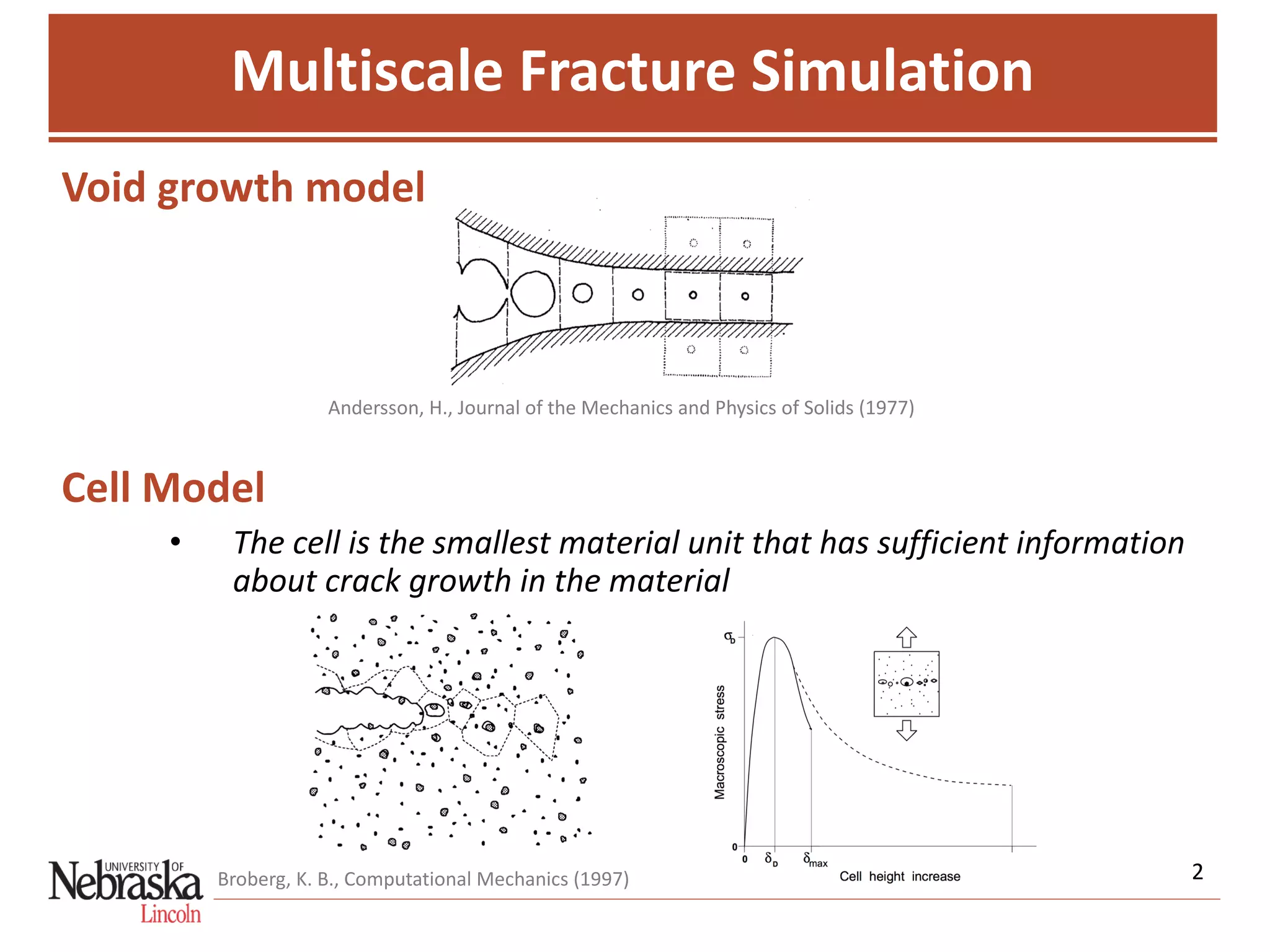
Multiscale Fracture Simulation
Void growth model
Cell Model
• The cell is the smallest material unit that has sufficient information
about crack growth in the material
Andersson, H., Journal of the Mechanics and Physics of Solids (1977)
Broberg, K. B., Computational Mechanics (1997)
3
Two-way Linked Multiscale Simulation
• System is divided into two length-scale: Global scale and Local scale
• Each length-scales will be solved separately
• The length-scales are linked through homogenization principles
Apply stress or strain to RVE
Solve RVE under boundary condition
Homogenize properties
Global scale
Local scale
4
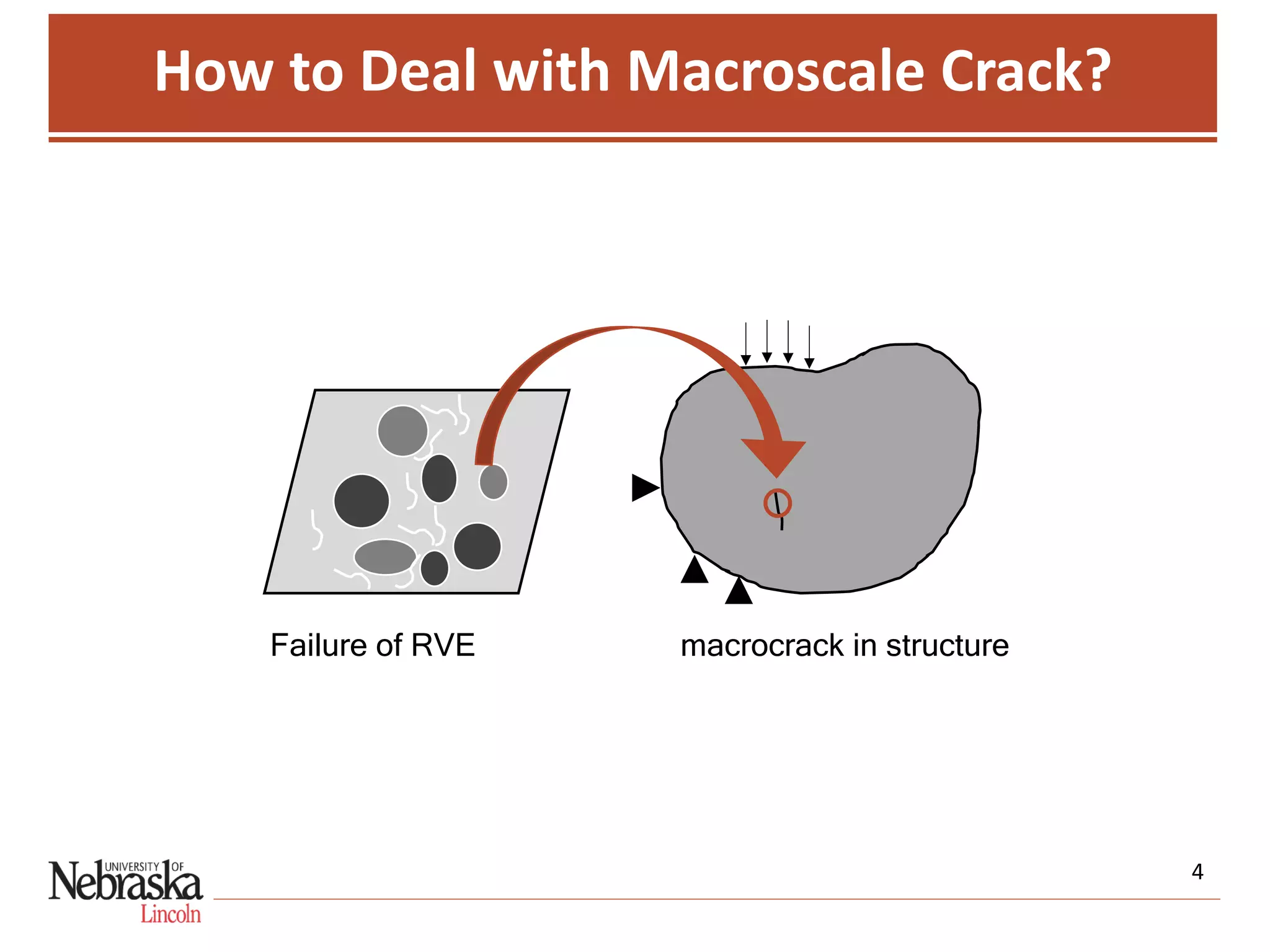
How to Deal with Macroscale Crack?
Failure of RVE macrocrack in structure
5
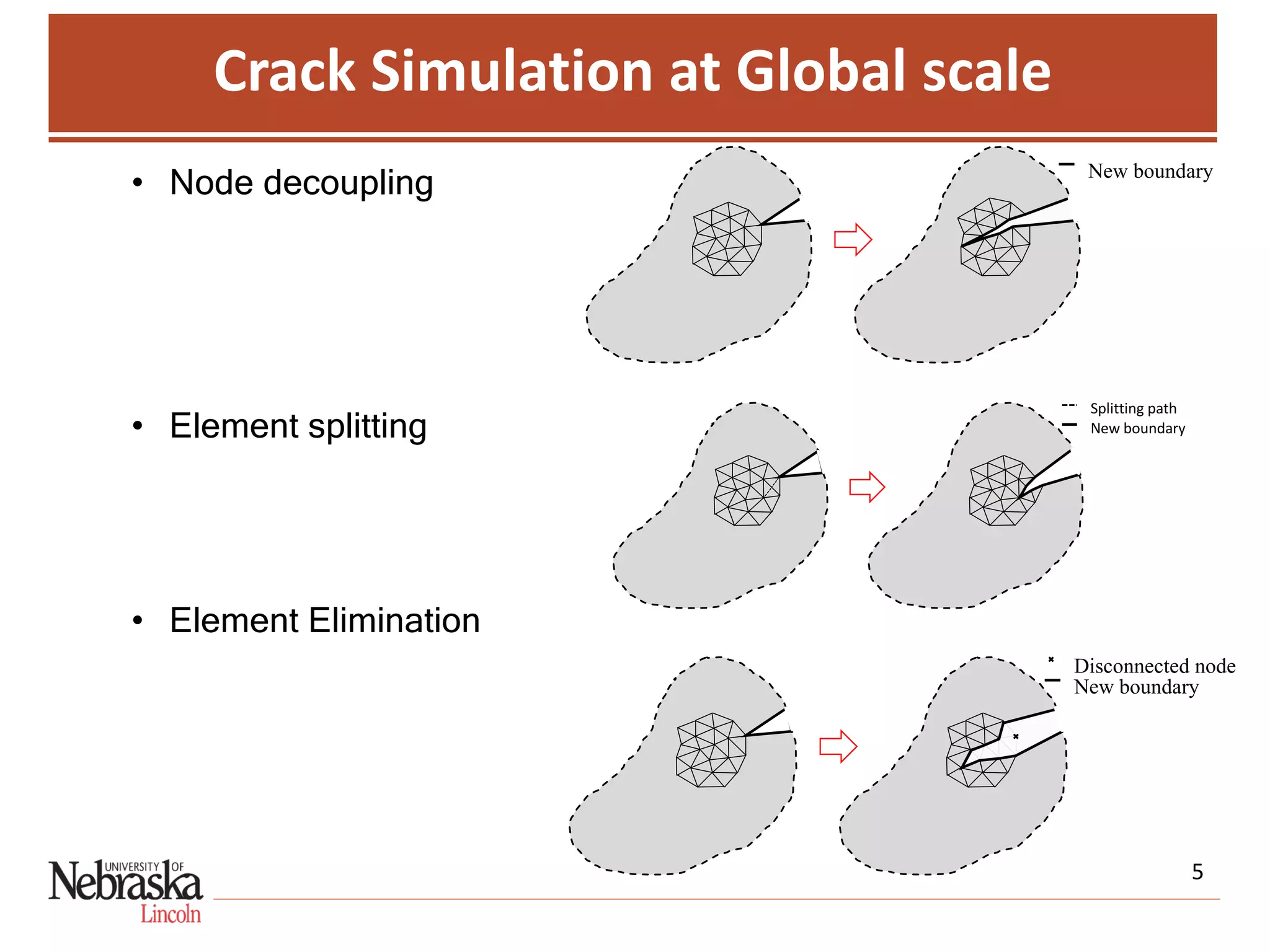
• Node decoupling
• Element splitting
• Element Elimination
Crack Simulation at Global scale
New boundary
New boundary
Splitting path
New boundary
Disconnected node
6
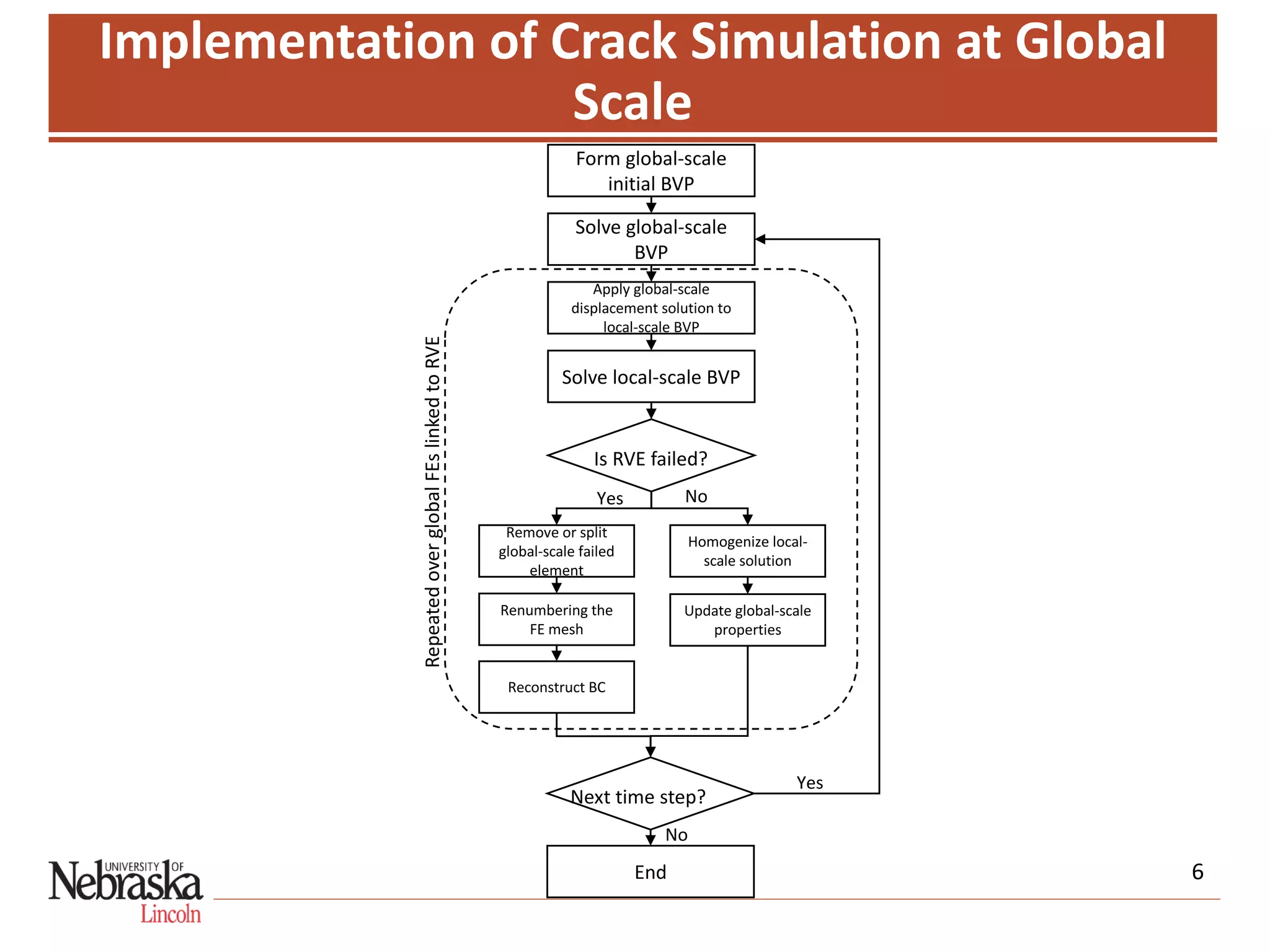
Implementation of Crack Simulation at Global
Scale
Solve global-scale
BVP
Apply global-scale
displacement solution to
local-scale BVP
Solve local-scale BVP
End
Next time step?
Homogenize local-
scale solution
Update global-scale
properties
Yes
No
Form global-scale
initial BVP
Remove or split
global-scale failed
element
Renumbering the
FE mesh
Reconstruct BC
Is RVE failed?
NoYes
RepeatedoverglobalFEslinkedtoRVE
7
Application on Cementitious Paste
8
Conclusion
• This approach provides a capability of using larger length-scale
testing result, which are usually more feasible to obtain, to
characterize smaller length-scale properties indirectly by linking
between different length-scales.
• It provides opportunities to investigate the effect of smaller length-
scale heterogeneity on larger length-scale performance of
materials.
9
Contact
www.linkedin.com/in/keyvan-zare
keyvan.zare@gmail.com

Multiscale fracture

  • 1.
    1 Multiscale simulation offracture in quasi-brittle mixtures Keyvan Zare Rami, 2018
  • 2.
    2 Multiscale Fracture Simulation Voidgrowth model Cell Model • The cell is the smallest material unit that has sufficient information about crack growth in the material Andersson, H., Journal of the Mechanics and Physics of Solids (1977) Broberg, K. B., Computational Mechanics (1997)
  • 3.
    3 Two-way Linked MultiscaleSimulation • System is divided into two length-scale: Global scale and Local scale • Each length-scales will be solved separately • The length-scales are linked through homogenization principles Apply stress or strain to RVE Solve RVE under boundary condition Homogenize properties Global scale Local scale
  • 4.
    4 How to Dealwith Macroscale Crack? Failure of RVE macrocrack in structure
  • 5.
    5 • Node decoupling •Element splitting • Element Elimination Crack Simulation at Global scale New boundary New boundary Splitting path New boundary Disconnected node
  • 6.
    6 Implementation of CrackSimulation at Global Scale Solve global-scale BVP Apply global-scale displacement solution to local-scale BVP Solve local-scale BVP End Next time step? Homogenize local- scale solution Update global-scale properties Yes No Form global-scale initial BVP Remove or split global-scale failed element Renumbering the FE mesh Reconstruct BC Is RVE failed? NoYes RepeatedoverglobalFEslinkedtoRVE
  • 7.
  • 8.
    8 Conclusion • This approachprovides a capability of using larger length-scale testing result, which are usually more feasible to obtain, to characterize smaller length-scale properties indirectly by linking between different length-scales. • It provides opportunities to investigate the effect of smaller length- scale heterogeneity on larger length-scale performance of materials.
  • 9.