Get Listed
ModernStrategiesforAutomatedTestingSuccess
ByWillRobinson|Technology|UpdatedMar28,2025
Software development automation has become an integral part of modern quality assurance practices. Testing
has evolved to meet the needs of agile and continuous delivery environments by streamlining repetitive tasks
and ensuring consistency. Experts stress the importance of structured processes for validating software
performance and reliability. A methodical approach not only reduces errors but also shortens development
cycles, freeing up teams to innovate and deliver value. Automation has become a cornerstone of efficient
softwareengineering.
Evolutionoftestingmethodologies
In recent years, continuous improvement in software practices has yielded a notable evolution in testing
methodologies. The testing landscape has evolved as developers and quality engineers now prioritize
automated approaches which enhance both speed and accuracy. Test automation frameworks have emerged
asessentialcomponentsforstandardizingandoptimizingtestingproceduresduringthepastfewyears.Teams
that integrate these frameworks can rapidly adjust to changing requirements and produce high-quality
deliverables with reduced downtime. The transformation process has led to improved team collaboration and
innovativepractices.
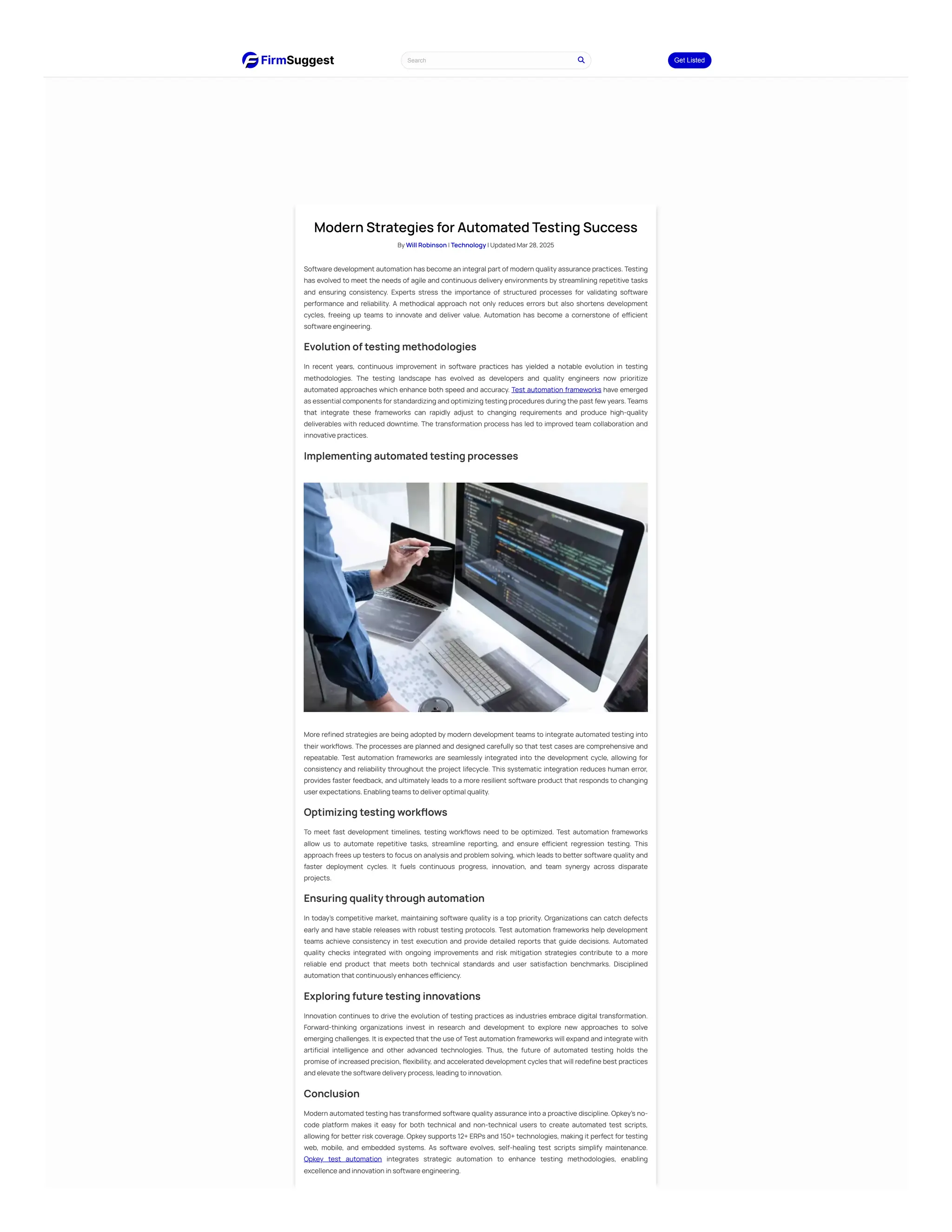
Implementingautomatedtestingprocesses
More refined strategies are being adopted by modern development teams to integrate automated testing into
their workflows. The processes are planned and designed carefully so that test cases are comprehensive and
repeatable. Test automation frameworks are seamlessly integrated into the development cycle, allowing for
consistency and reliability throughout the project lifecycle. This systematic integration reduces human error,
provides faster feedback, and ultimately leads to a more resilient software product that responds to changing
userexpectations.Enablingteamstodeliveroptimalquality.
Optimizingtestingworkflows
To meet fast development timelines, testing workflows need to be optimized. Test automation frameworks
allow us to automate repetitive tasks, streamline reporting, and ensure efficient regression testing. This
approach frees up testers to focus on analysis and problem solving, which leads to better software quality and
faster deployment cycles. It fuels continuous progress, innovation, and team synergy across disparate
projects.
Ensuringqualitythroughautomation
In today’s competitive market, maintaining software quality is a top priority. Organizations can catch defects
early and have stable releases with robust testing protocols. Test automation frameworks help development
teams achieve consistency in test execution and provide detailed reports that guide decisions. Automated
quality checks integrated with ongoing improvements and risk mitigation strategies contribute to a more
reliable end product that meets both technical standards and user satisfaction benchmarks. Disciplined
automationthatcontinuouslyenhancesefficiency.
Exploringfuturetestinginnovations
Innovation continues to drive the evolution of testing practices as industries embrace digital transformation.
Forward-thinking organizations invest in research and development to explore new approaches to solve
emerging challenges. It is expected that the use of Test automation frameworks will expand and integrate with
artificial intelligence and other advanced technologies. Thus, the future of automated testing holds the
promise of increased precision, flexibility, and accelerated development cycles that will redefine best practices
andelevatethesoftwaredeliveryprocess,leadingtoinnovation.
Conclusion
Modern automated testing has transformed software quality assurance into a proactive discipline. Opkey’s no-
code platform makes it easy for both technical and non-technical users to create automated test scripts,
allowing for better risk coverage. Opkey supports 12+ ERPs and 150+ technologies, making it perfect for testing
web, mobile, and embedded systems. As software evolves, self-healing test scripts simplify maintenance.
Opkey test automation integrates strategic automation to enhance testing methodologies, enabling
excellenceandinnovationinsoftwareengineering.
Search 
PostComment
Your Name*
Your Email*
Write Comment*
Enter Captcha
Post Comment
Bethefirsttopostcomment!
OurCompany
AboutUs
ContactUs
TermsofUse
PrivacyPolicy
Blogs
WriteForUs
ImportantLinks
ExploreCompanies
ExploreSoftware
DigitalMarketing
E-commerceDevelopment
WebDevelopment
ExploreCompanies
BlockchainTechnology
SoftwareTesting
Maintenance&Support
SoftwareDevelopment
FollowUs
  
AllRightsReserved|Copyright©FirmSuggest2025
RelatedArticles
CharacterAI:NewFeatures
foraBetterUserExperience
CharacterAIisaninnovative
platformthatallowsusersto
interactwithh...
GoogleLaunchesGemini
2.5Pro:ANewMilestonei…
Googlehasfinallyrevealed
Gemini2.5ProExperimental,the
mostrecentde...
WhatmakesFinalCutslow
onaMac?Tipsandtrickst…
FinalCutisoneofthebestvideo
editorsonthemarket.It’sused
inapl...

Modern Strategies for Automated Testing Success.pdf

  • 1.
    Get Listed ModernStrategiesforAutomatedTestingSuccess ByWillRobinson|Technology|UpdatedMar28,2025 Software developmentautomation has become an integral part of modern quality assurance practices. Testing has evolved to meet the needs of agile and continuous delivery environments by streamlining repetitive tasks and ensuring consistency. Experts stress the importance of structured processes for validating software performance and reliability. A methodical approach not only reduces errors but also shortens development cycles, freeing up teams to innovate and deliver value. Automation has become a cornerstone of efficient softwareengineering. Evolutionoftestingmethodologies In recent years, continuous improvement in software practices has yielded a notable evolution in testing methodologies. The testing landscape has evolved as developers and quality engineers now prioritize automated approaches which enhance both speed and accuracy. Test automation frameworks have emerged asessentialcomponentsforstandardizingandoptimizingtestingproceduresduringthepastfewyears.Teams that integrate these frameworks can rapidly adjust to changing requirements and produce high-quality deliverables with reduced downtime. The transformation process has led to improved team collaboration and innovativepractices. Implementingautomatedtestingprocesses More refined strategies are being adopted by modern development teams to integrate automated testing into their workflows. The processes are planned and designed carefully so that test cases are comprehensive and repeatable. Test automation frameworks are seamlessly integrated into the development cycle, allowing for consistency and reliability throughout the project lifecycle. This systematic integration reduces human error, provides faster feedback, and ultimately leads to a more resilient software product that responds to changing userexpectations.Enablingteamstodeliveroptimalquality. Optimizingtestingworkflows To meet fast development timelines, testing workflows need to be optimized. Test automation frameworks allow us to automate repetitive tasks, streamline reporting, and ensure efficient regression testing. This approach frees up testers to focus on analysis and problem solving, which leads to better software quality and faster deployment cycles. It fuels continuous progress, innovation, and team synergy across disparate projects. Ensuringqualitythroughautomation In today’s competitive market, maintaining software quality is a top priority. Organizations can catch defects early and have stable releases with robust testing protocols. Test automation frameworks help development teams achieve consistency in test execution and provide detailed reports that guide decisions. Automated quality checks integrated with ongoing improvements and risk mitigation strategies contribute to a more reliable end product that meets both technical standards and user satisfaction benchmarks. Disciplined automationthatcontinuouslyenhancesefficiency. Exploringfuturetestinginnovations Innovation continues to drive the evolution of testing practices as industries embrace digital transformation. Forward-thinking organizations invest in research and development to explore new approaches to solve emerging challenges. It is expected that the use of Test automation frameworks will expand and integrate with artificial intelligence and other advanced technologies. Thus, the future of automated testing holds the promise of increased precision, flexibility, and accelerated development cycles that will redefine best practices andelevatethesoftwaredeliveryprocess,leadingtoinnovation. Conclusion Modern automated testing has transformed software quality assurance into a proactive discipline. Opkey’s no- code platform makes it easy for both technical and non-technical users to create automated test scripts, allowing for better risk coverage. Opkey supports 12+ ERPs and 150+ technologies, making it perfect for testing web, mobile, and embedded systems. As software evolves, self-healing test scripts simplify maintenance. Opkey test automation integrates strategic automation to enhance testing methodologies, enabling excellenceandinnovationinsoftwareengineering. Search 

  • 2.
    PostComment Your Name* Your Email* WriteComment* Enter Captcha Post Comment Bethefirsttopostcomment! OurCompany AboutUs ContactUs TermsofUse PrivacyPolicy Blogs WriteForUs ImportantLinks ExploreCompanies ExploreSoftware DigitalMarketing E-commerceDevelopment WebDevelopment ExploreCompanies BlockchainTechnology SoftwareTesting Maintenance&Support SoftwareDevelopment FollowUs    AllRightsReserved|Copyright©FirmSuggest2025 RelatedArticles CharacterAI:NewFeatures foraBetterUserExperience CharacterAIisaninnovative platformthatallowsusersto interactwithh... GoogleLaunchesGemini 2.5Pro:ANewMilestonei… Googlehasfinallyrevealed Gemini2.5ProExperimental,the mostrecentde... WhatmakesFinalCutslow onaMac?Tipsandtrickst… FinalCutisoneofthebestvideo editorsonthemarket.It’sused inapl...