I. INTRODUCTION
II. CONSTRUCTIONAL DETAILS
III. PRINCIPLE OF OPERATION
IV. TORQUE SLIP CHARACTERISTICS
V. TESTS ON THE INDUCTION MOTOR
VI. SPEED CONTROL OF INDUCTION MOTOR
VII. CONCLUSION
VIII.REFFERENCE
INTRODUCTION:
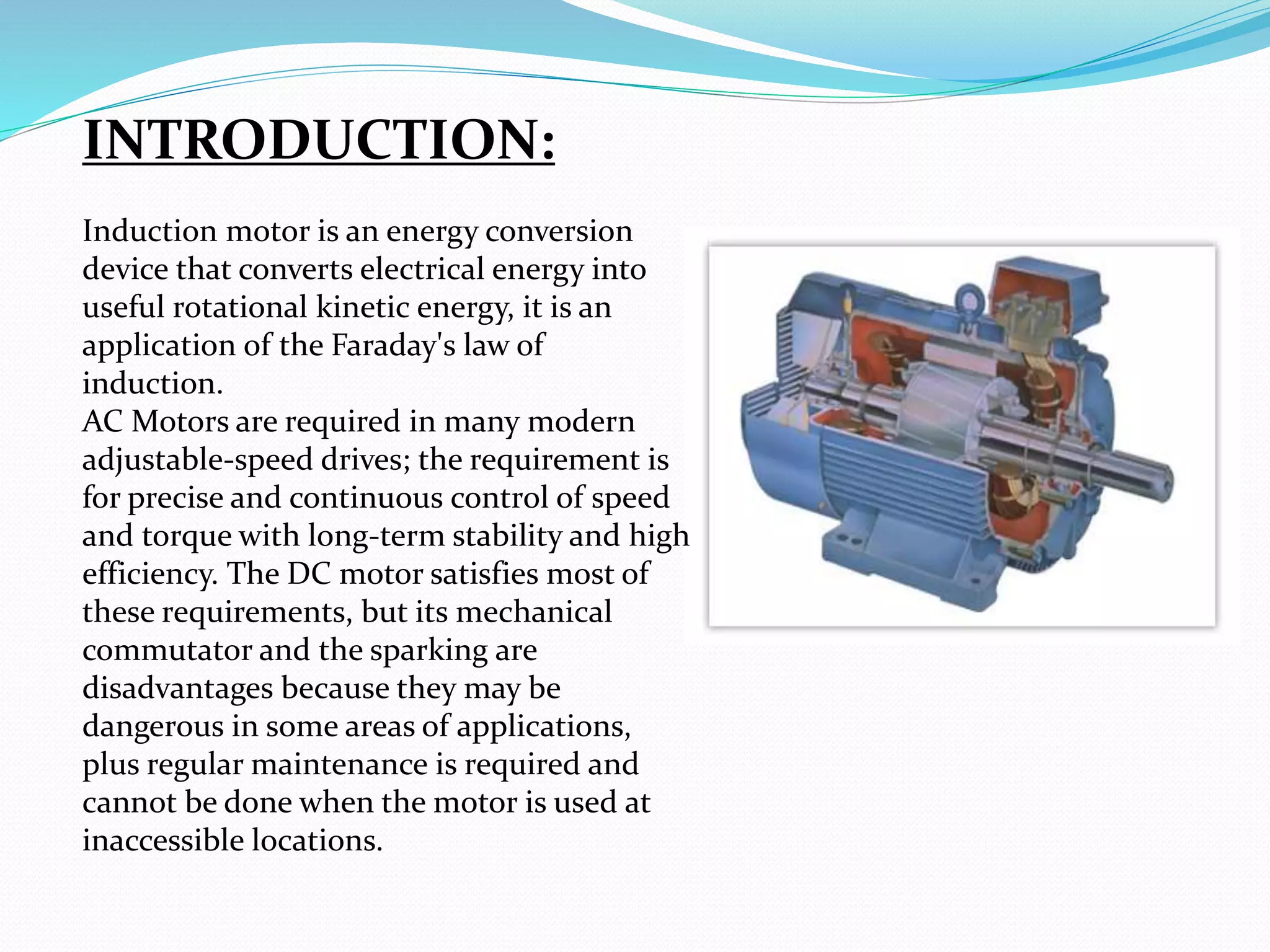
Induction motor is an energy conversion
device that converts electrical energy into
useful rotational kinetic energy, it is an
application of the Faraday's law of
induction.
AC Motors are required in many modern
adjustable-speed drives; the requirement is
for precise and continuous control of speed
and torque with long-term stability and high
efficiency. The DC motor satisfies most of
these requirements, but its mechanical
commutator and the sparking are
disadvantages because they may be
dangerous in some areas of applications,
plus regular maintenance is required and
cannot be done when the motor is used at
inaccessible locations.
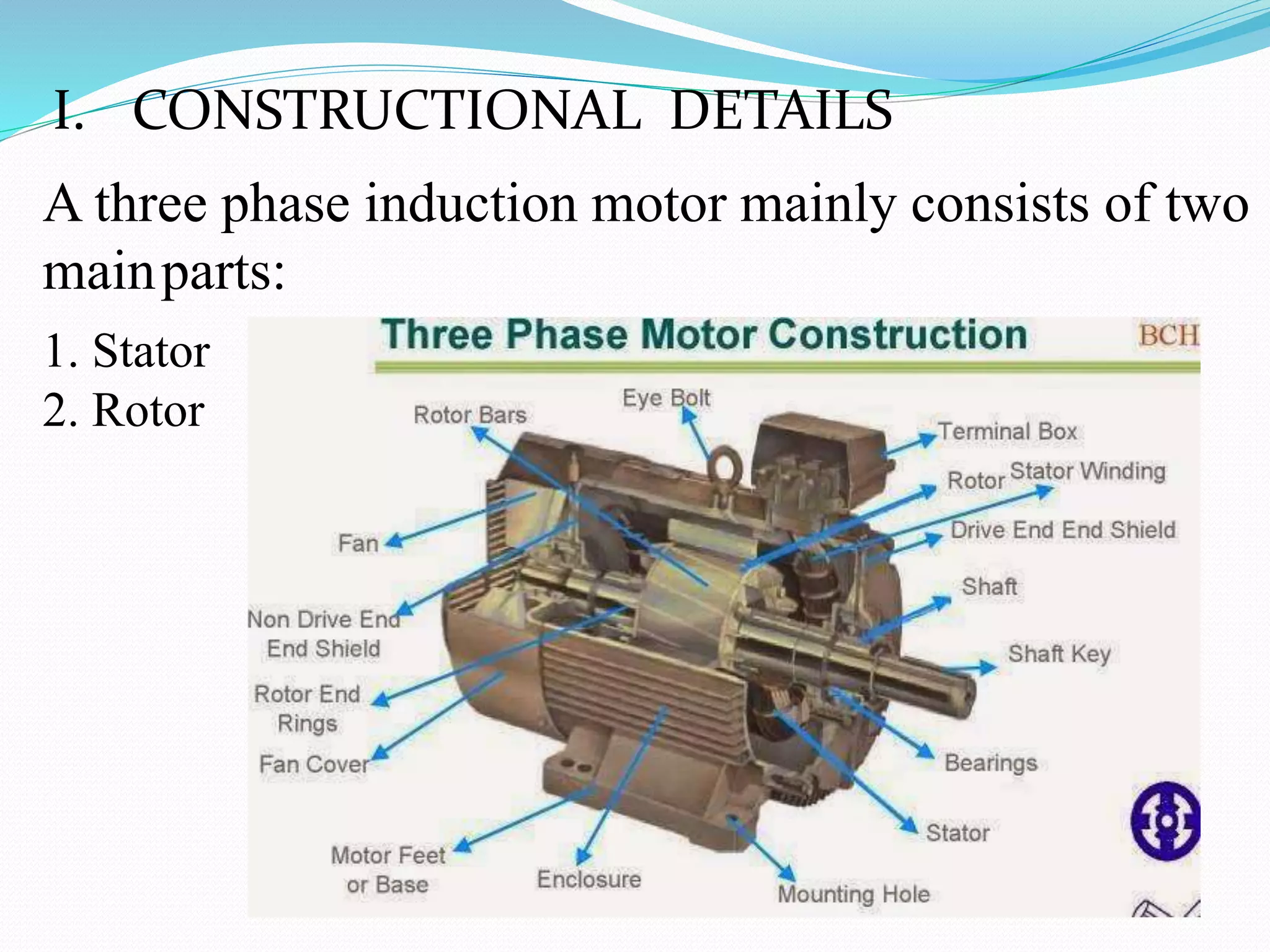
A three phase induction motor mainly consists of two
mainparts:
1. Stator
2. Rotor
I. CONSTRUCTIONAL DETAILS
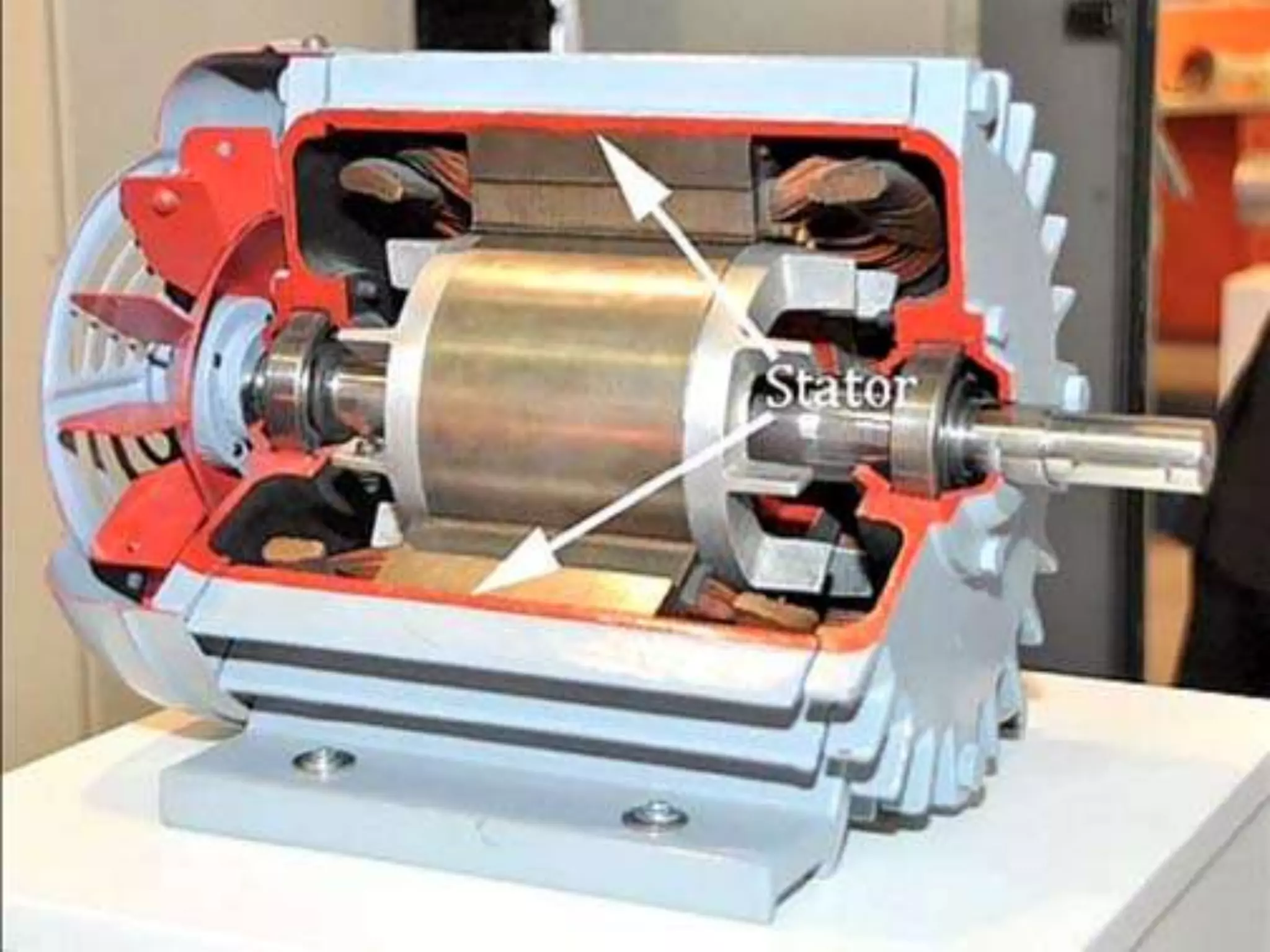
1.Stator
The stator consists of a steel
frame which encloses
a hollow cylindrical core made
up of thin laminations of
silicon steel to reduce hysteresis
and eddy current losses. A
number of evenly spaced slots
are provided on the inner
periphery. The insulated
conductors are placed in the
stator slots and are connected to
form a balanced three phase
star or delta connection circuit.
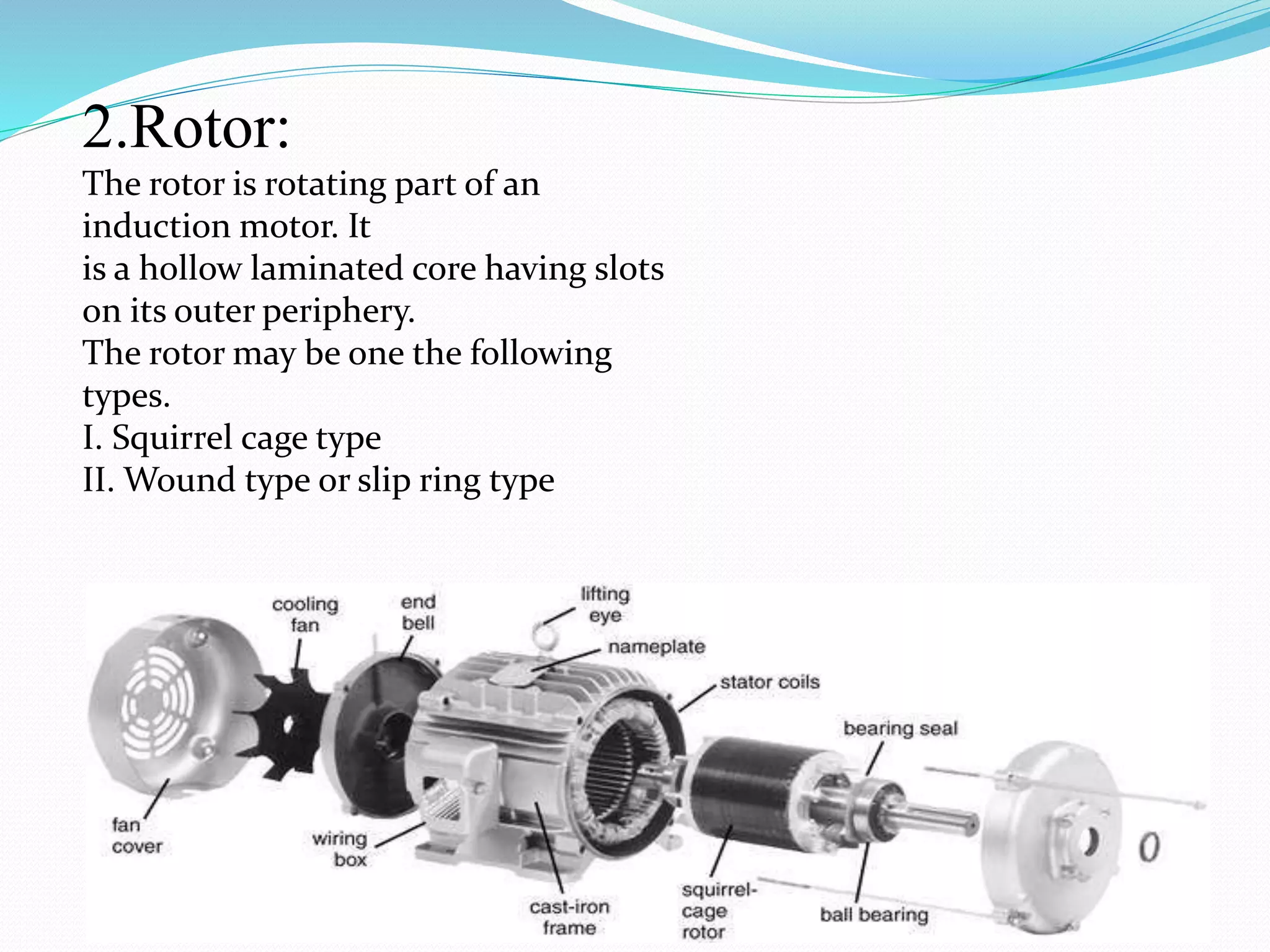
2.Rotor:
The rotor is rotating part of an
induction motor. It
is a hollow laminated core having slots
on its outer periphery.
The rotor may be one the following
types.
I. Squirrel cage type
II. Wound type or slip ring type
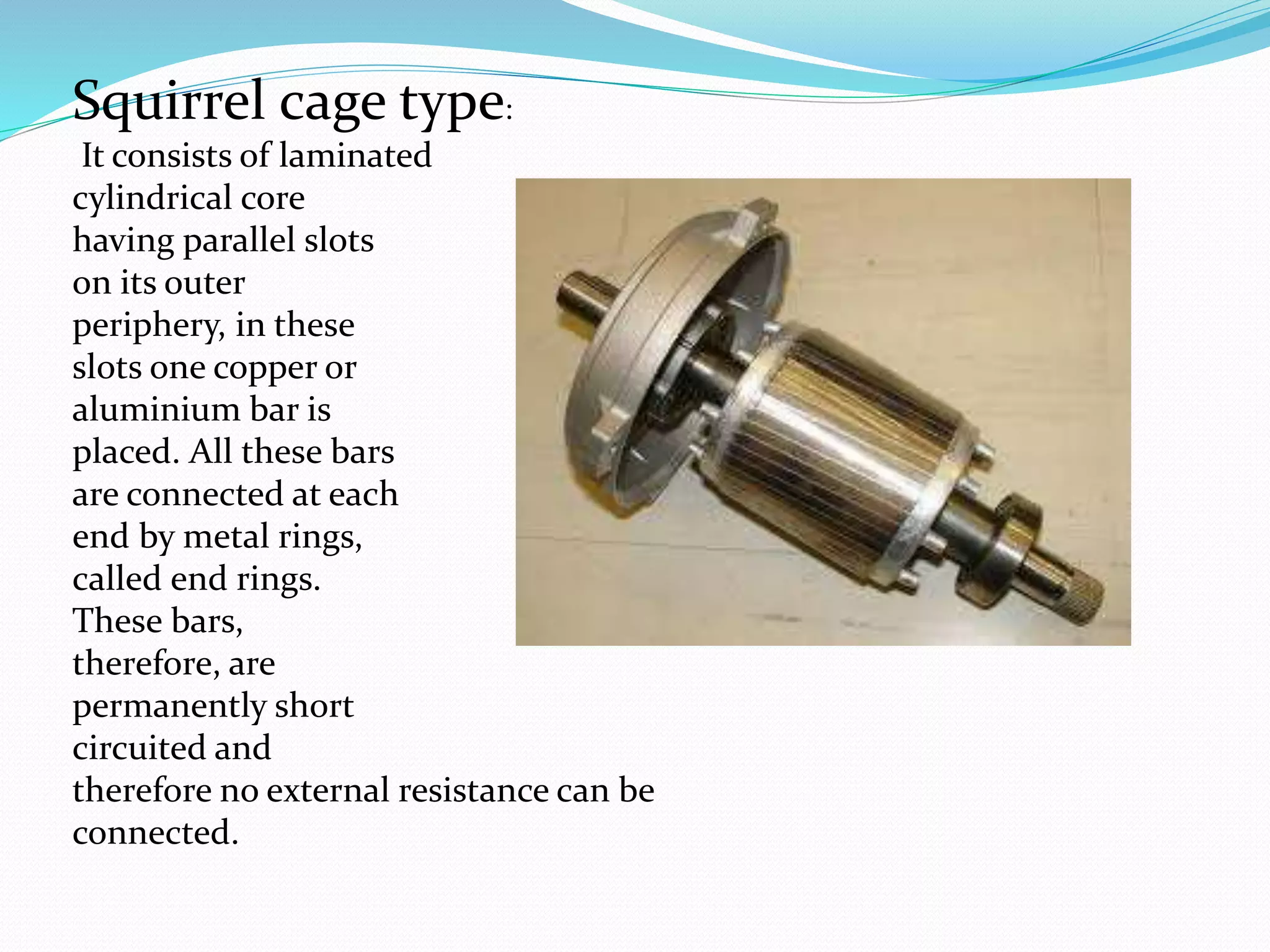
Squirrel cage type:
It consists of laminated
cylindrical core
having parallel slots
on its outer
periphery, in these
slots one copper or
aluminium bar is
placed. All these bars
are connected at each
end by metal rings,
called end rings.
These bars,
therefore, are
permanently short
circuited and
therefore no external resistance can be
connected.
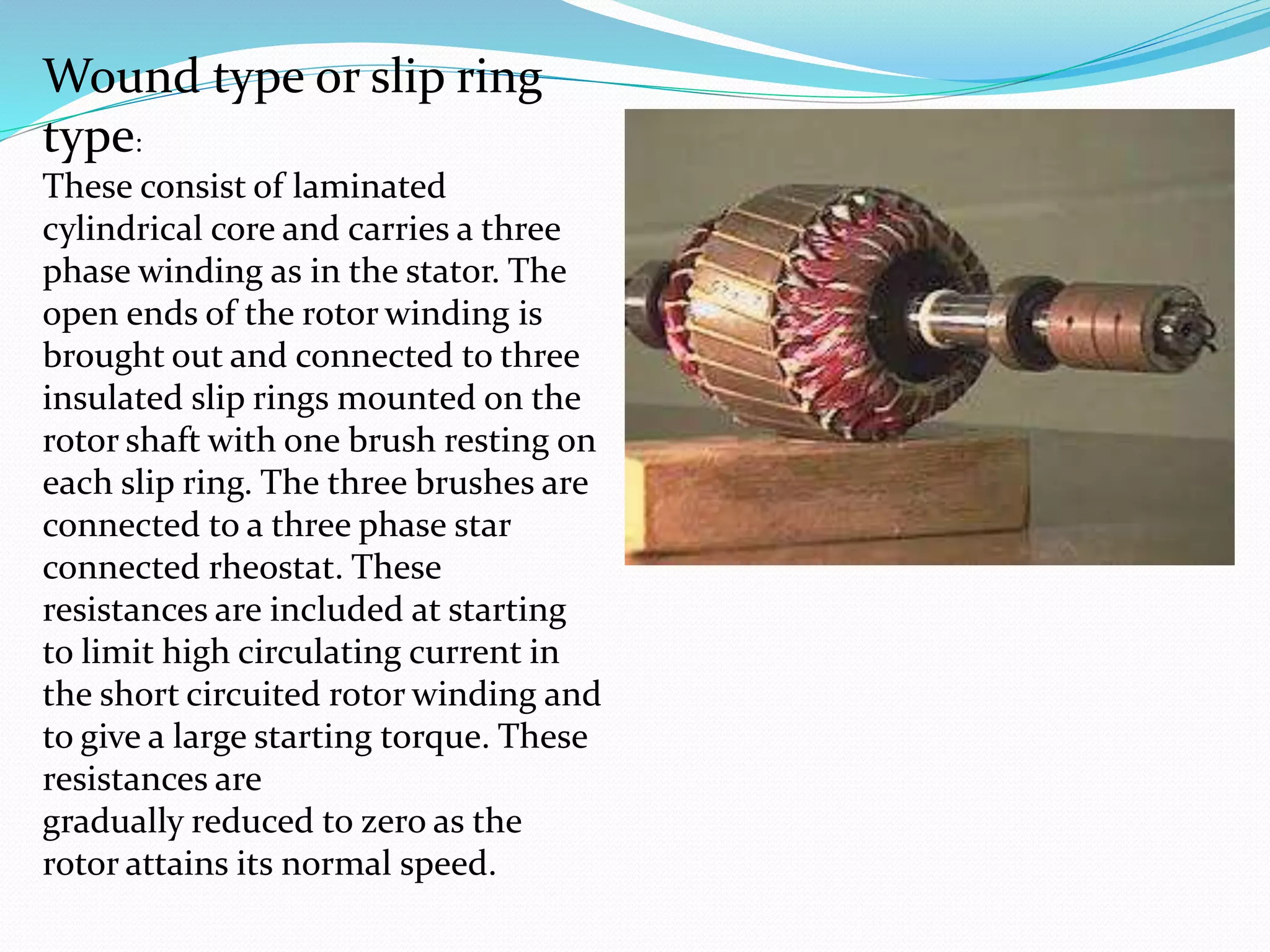
Wound type or slip ring
type:
These consist of laminated
cylindrical core and carries a three
phase winding as in the stator. The
open ends of the rotor winding is
brought out and connected to three
insulated slip rings mounted on the
rotor shaft with one brush resting on
each slip ring. The three brushes are
connected to a three phase star
connected rheostat. These
resistances are included at starting
to limit high circulating current in
the short circuited rotor winding and
to give a large starting torque. These
resistances are
gradually reduced to zero as the
rotor attains its normal speed.
II. PRINCIPLE OF
OPERATION
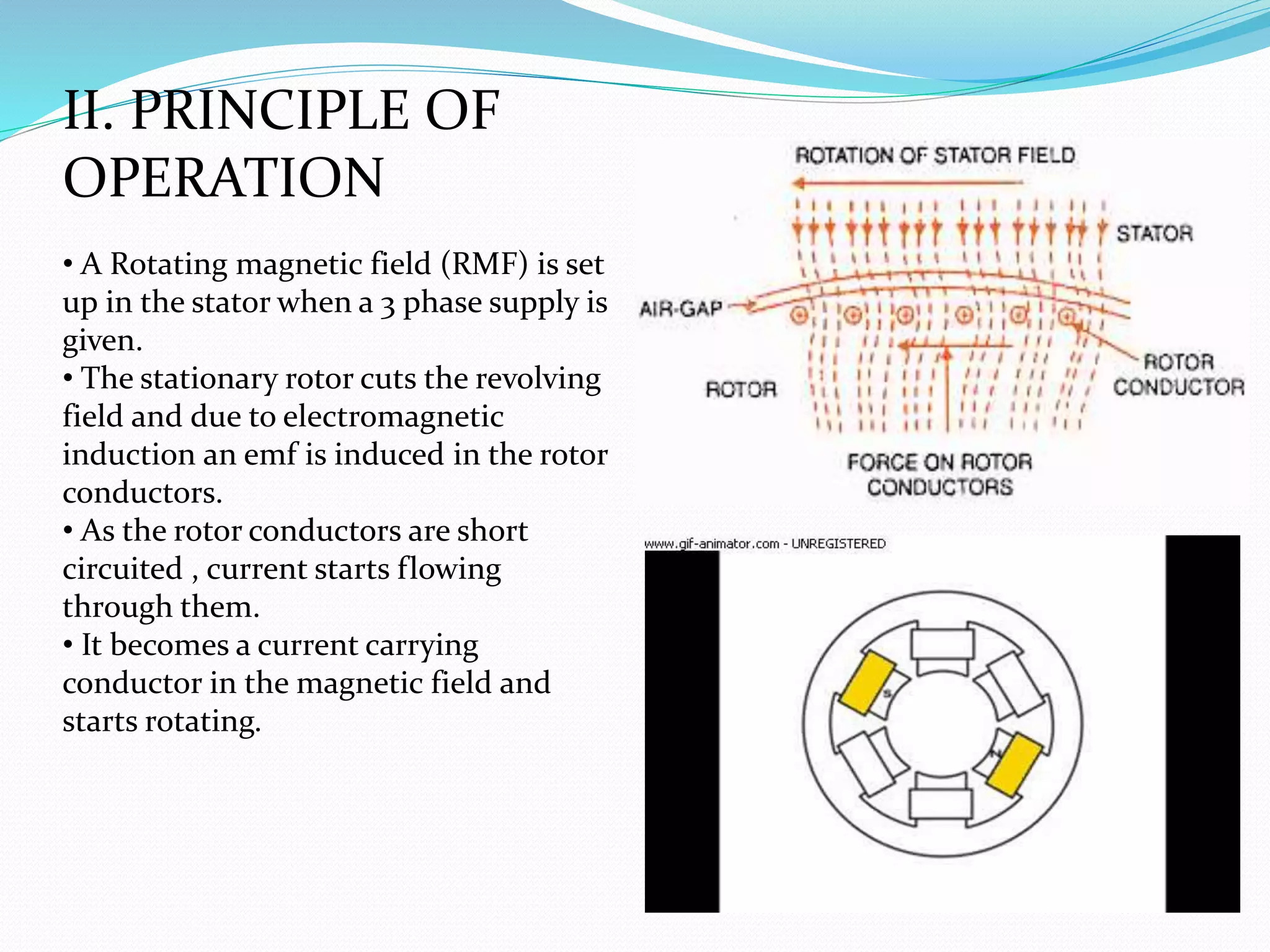
• A Rotating magnetic field (RMF) is set
up in the stator when a 3 phase supply is
given.
• The stationary rotor cuts the revolving
field and due to electromagnetic
induction an emf is induced in the rotor
conductors.
• As the rotor conductors are short
circuited , current starts flowing
through them.
• It becomes a current carrying
conductor in the magnetic field and
starts rotating.
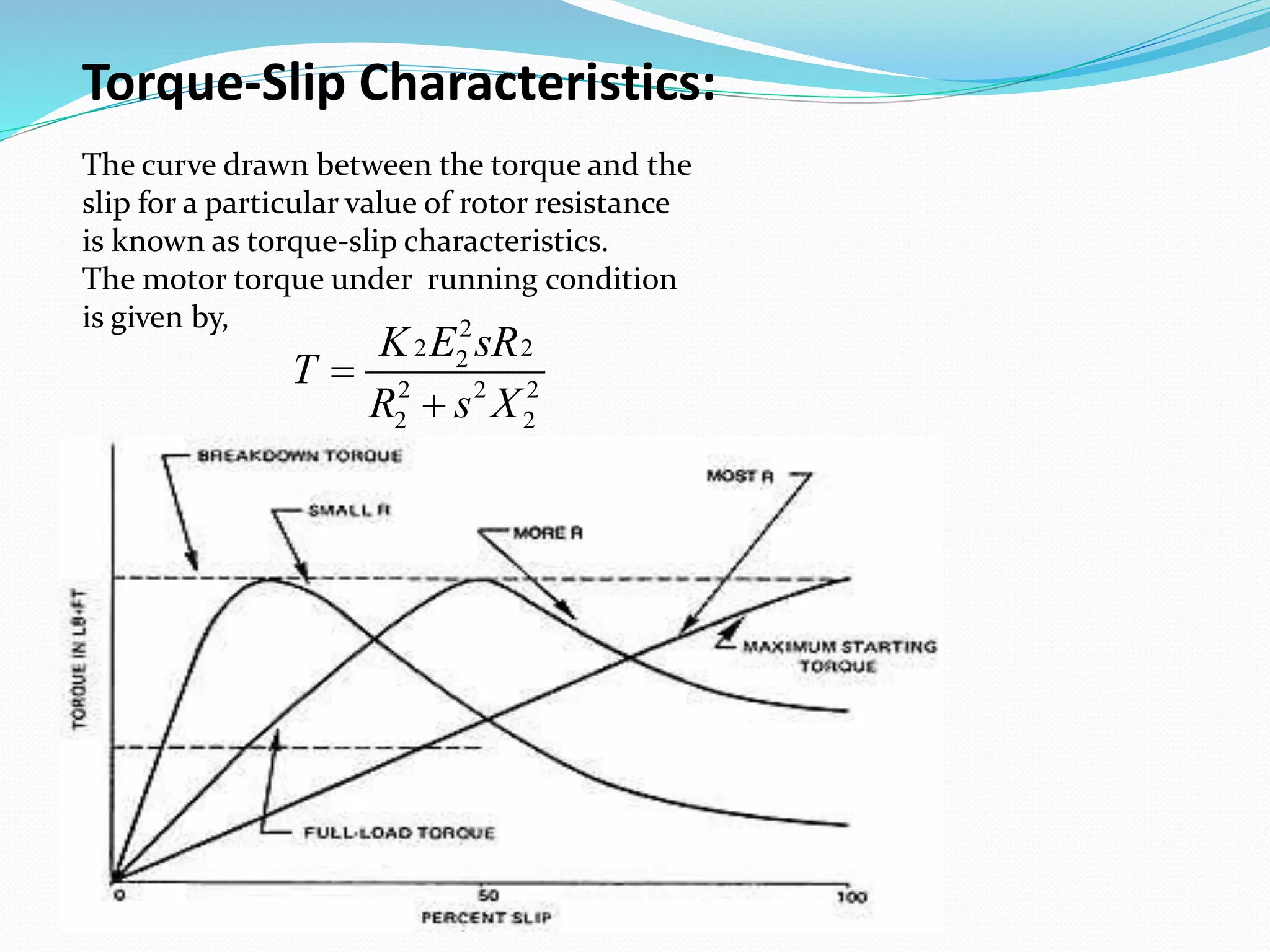
Torque-Slip Characteristics:
The curve drawn between the torque and the
slip for a particular value of rotor resistance
is known as torque-slip characteristics.
The motor torque under running condition
is given by, 2
2 22
2 2 2
2 2
K E sR
T
R s X


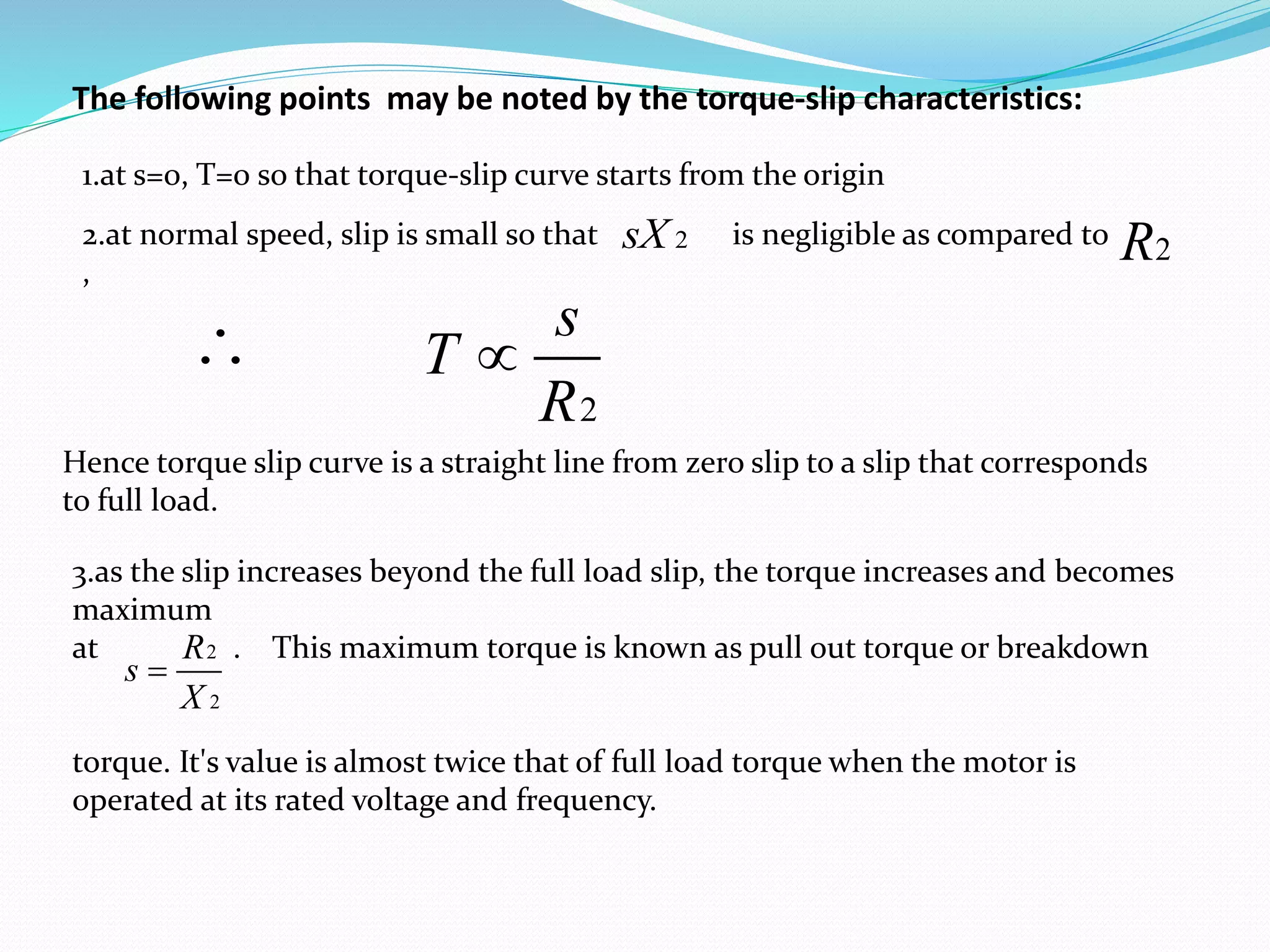
The following points may be noted by the torque-slip characteristics:
1.at s=0, T=0 so that torque-slip curve starts from the origin
2.at normal speed, slip is small so that is negligible as compared to
,
2sX 2R

2
s
T
R

Hence torque slip curve is a straight line from zero slip to a slip that corresponds
to full load.
3.as the slip increases beyond the full load slip, the torque increases and becomes
maximum
at . This maximum torque is known as pull out torque or breakdown
torque. It's value is almost twice that of full load torque when the motor is
operated at its rated voltage and frequency.
2
2
R
s
X

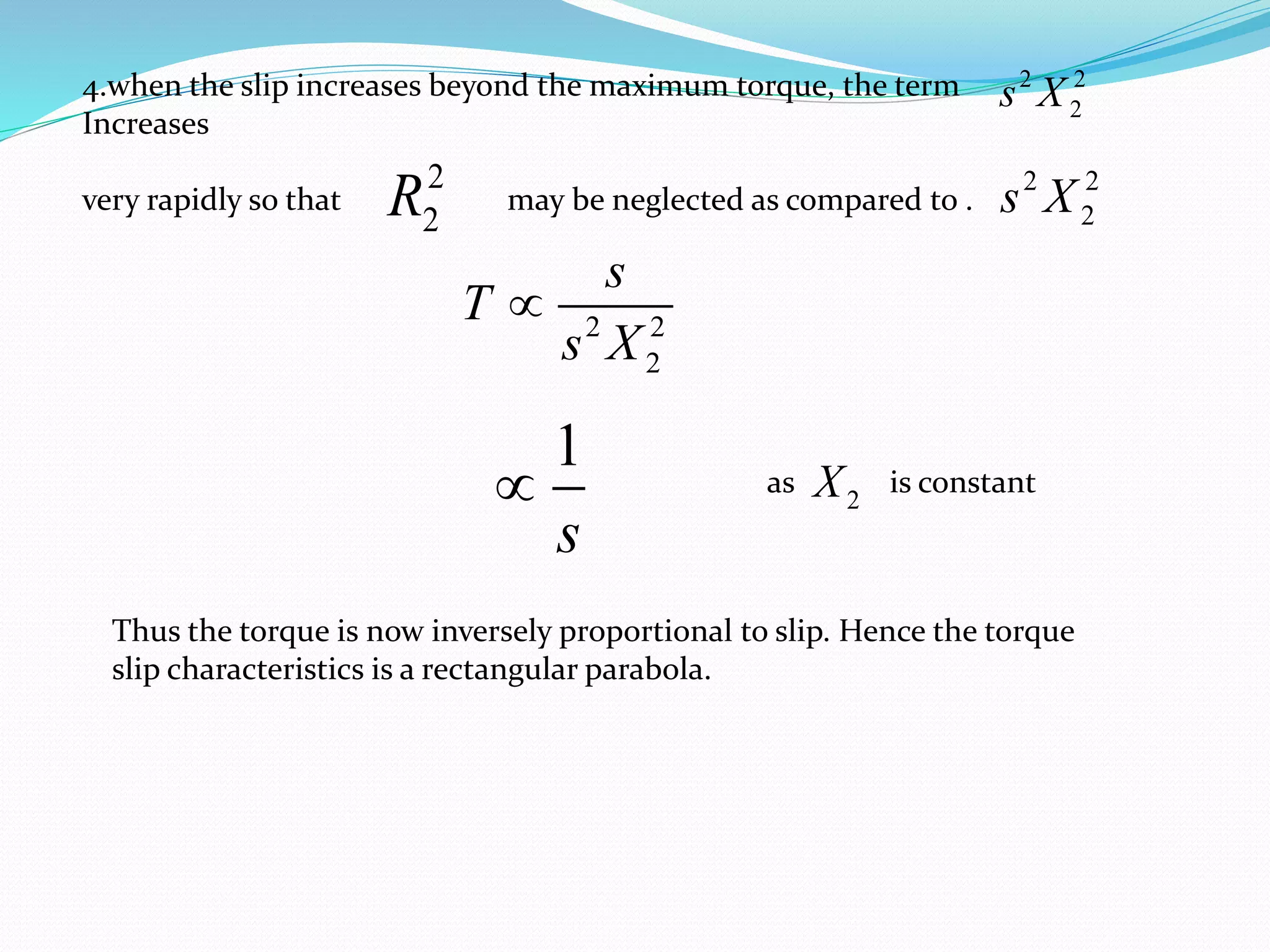
4.when the slip increases beyond the maximum torque, the term
Increases
very rapidly so that may be neglected as compared to .
2
2R
2 2
2
s
T
s X

1
s
 as is constant
2X
Thus the torque is now inversely proportional to slip. Hence the torque
slip characteristics is a rectangular parabola.
2 2
2s X
2 2
2s X
TESTS ON THE INDUCTION MOTOR
No Load Test:
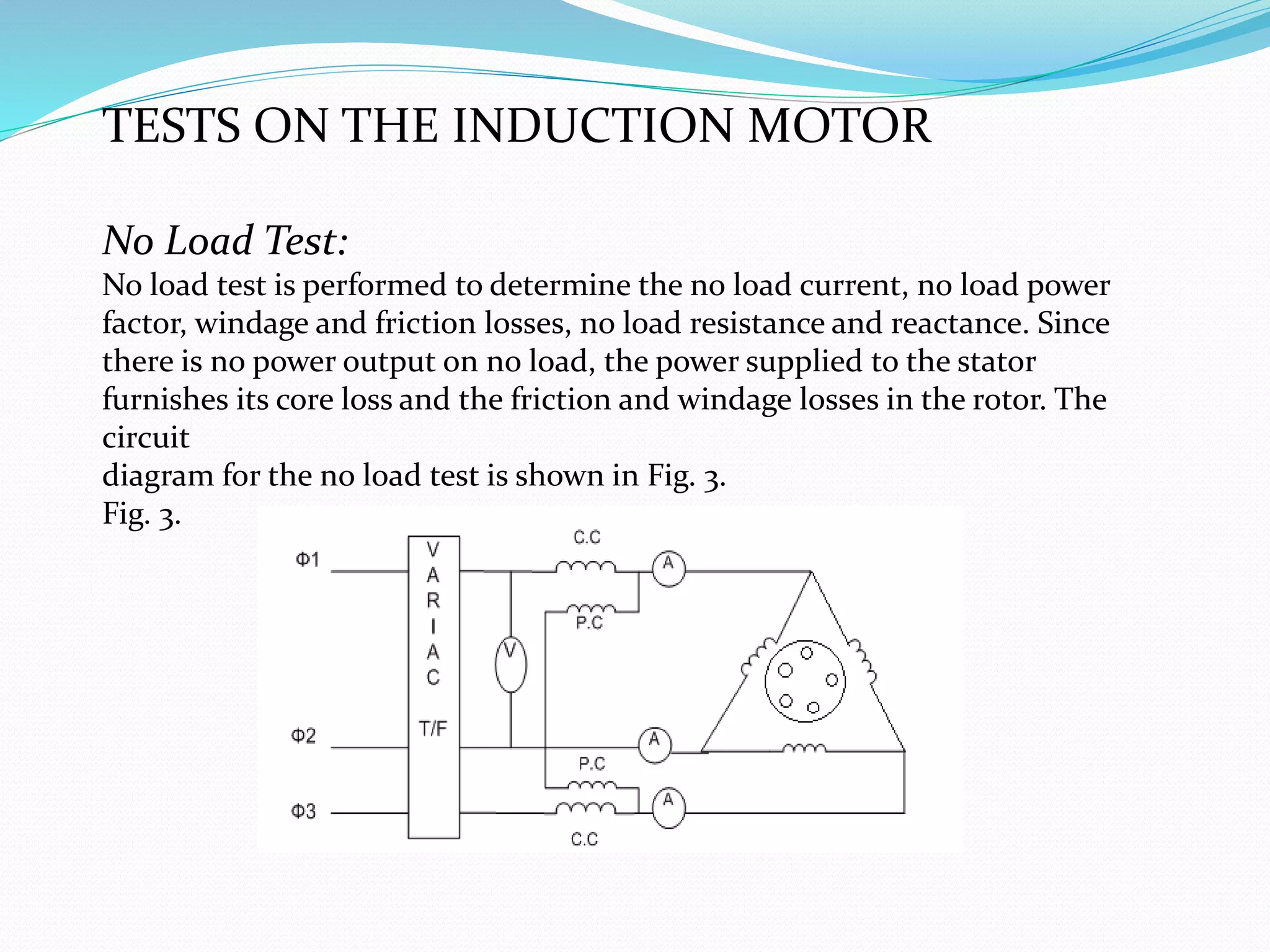
No load test is performed to determine the no load current, no load power
factor, windage and friction losses, no load resistance and reactance. Since
there is no power output on no load, the power supplied to the stator
furnishes its core loss and the friction and windage losses in the rotor. The
circuit
diagram for the no load test is shown in Fig. 3.
Fig. 3.
Blocked Rotor test:
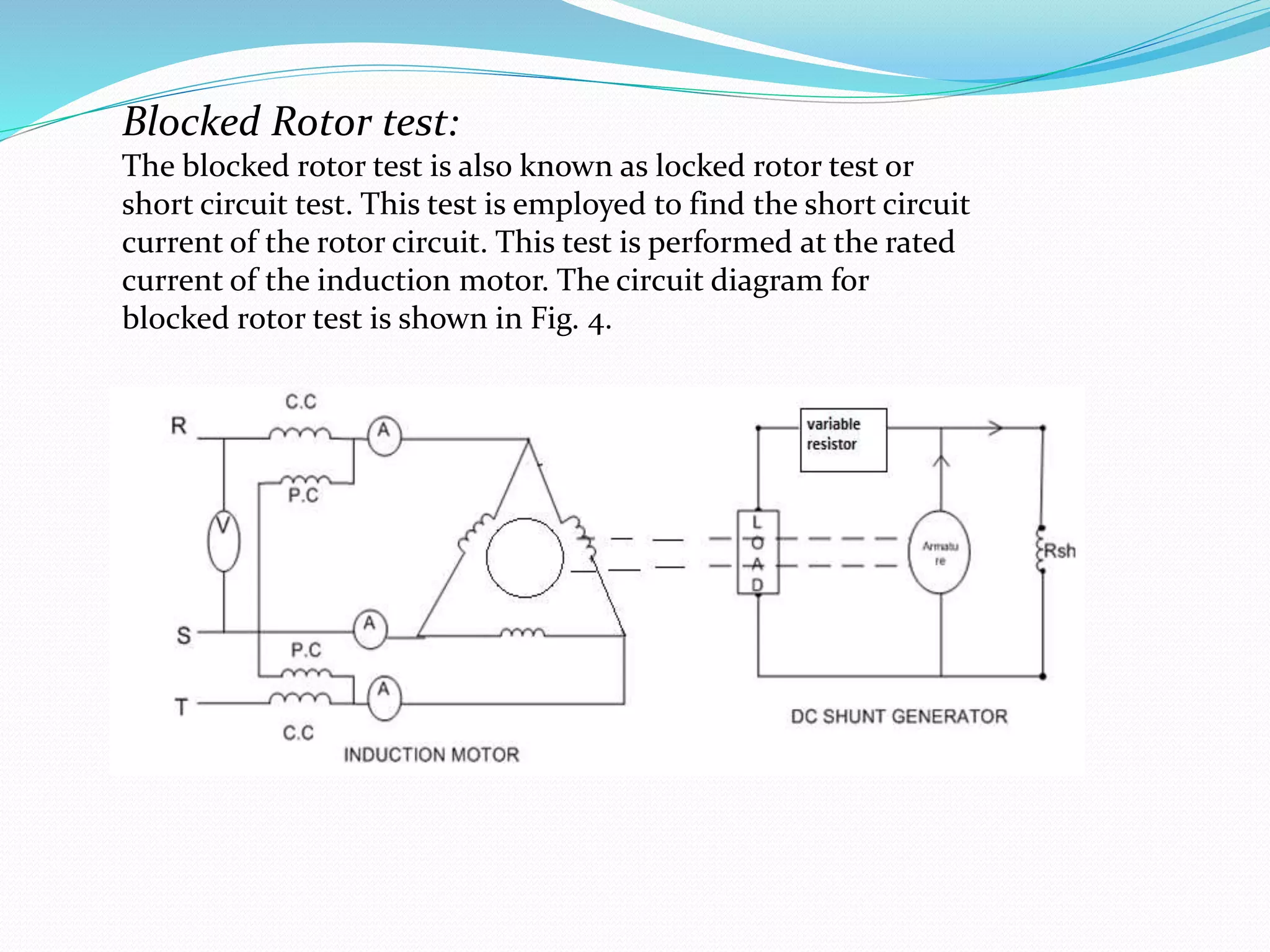
The blocked rotor test is also known as locked rotor test or
short circuit test. This test is employed to find the short circuit
current of the rotor circuit. This test is performed at the rated
current of the induction motor. The circuit diagram for
blocked rotor test is shown in Fig. 4.
VII. SPEED CONTROL OF INDUCTION MOTOR
Methods of speed control of induction motor:
A. Pole changing method: B. Stator frequency control: C. Line voltage control:
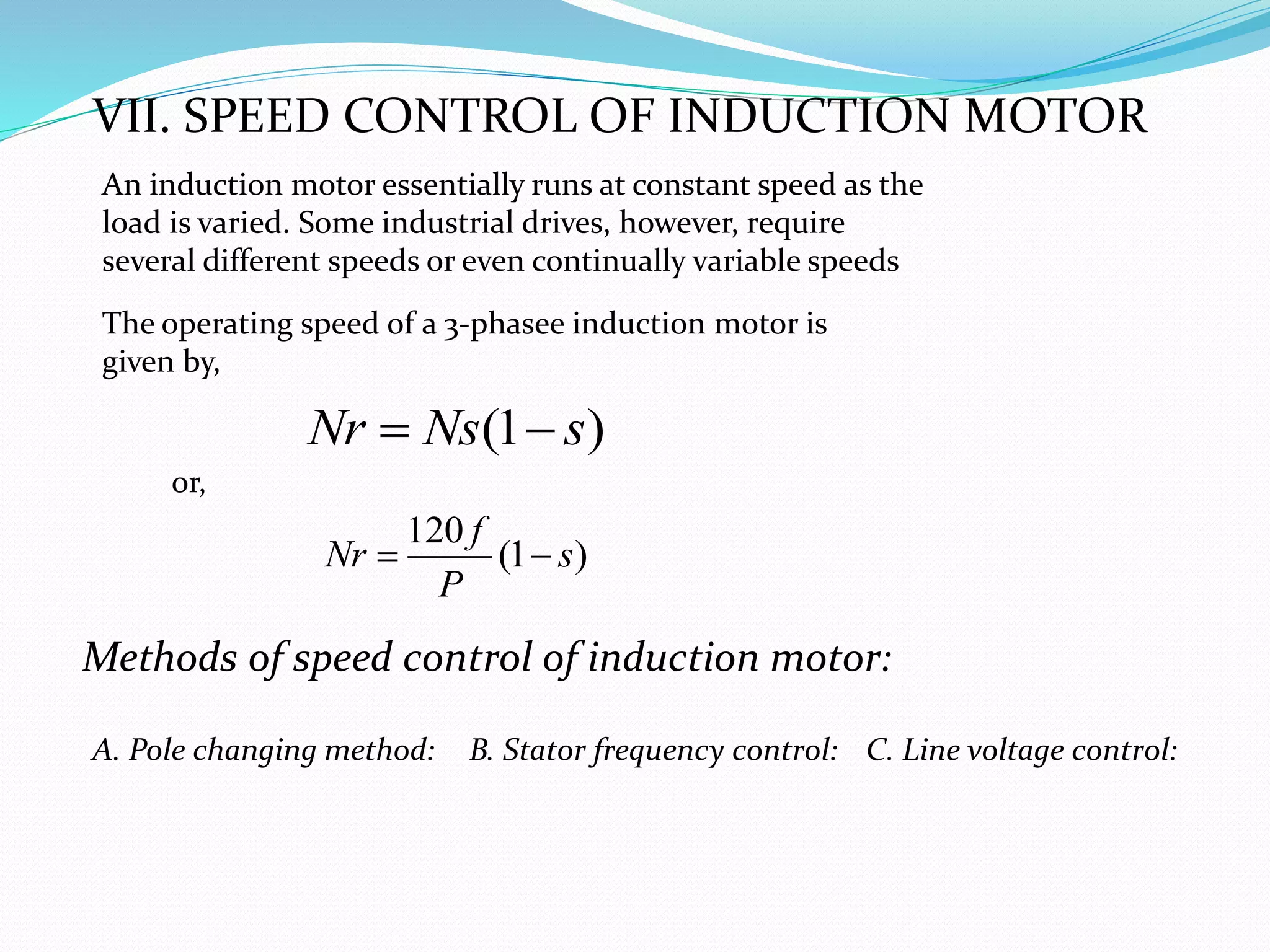
An induction motor essentially runs at constant speed as the
load is varied. Some industrial drives, however, require
several different speeds or even continually variable speeds
(1 )Nr Ns s 
120
(1 )
f
Nr s
P
 
The operating speed of a 3-phasee induction motor is
given by,
or,
Conclusion:
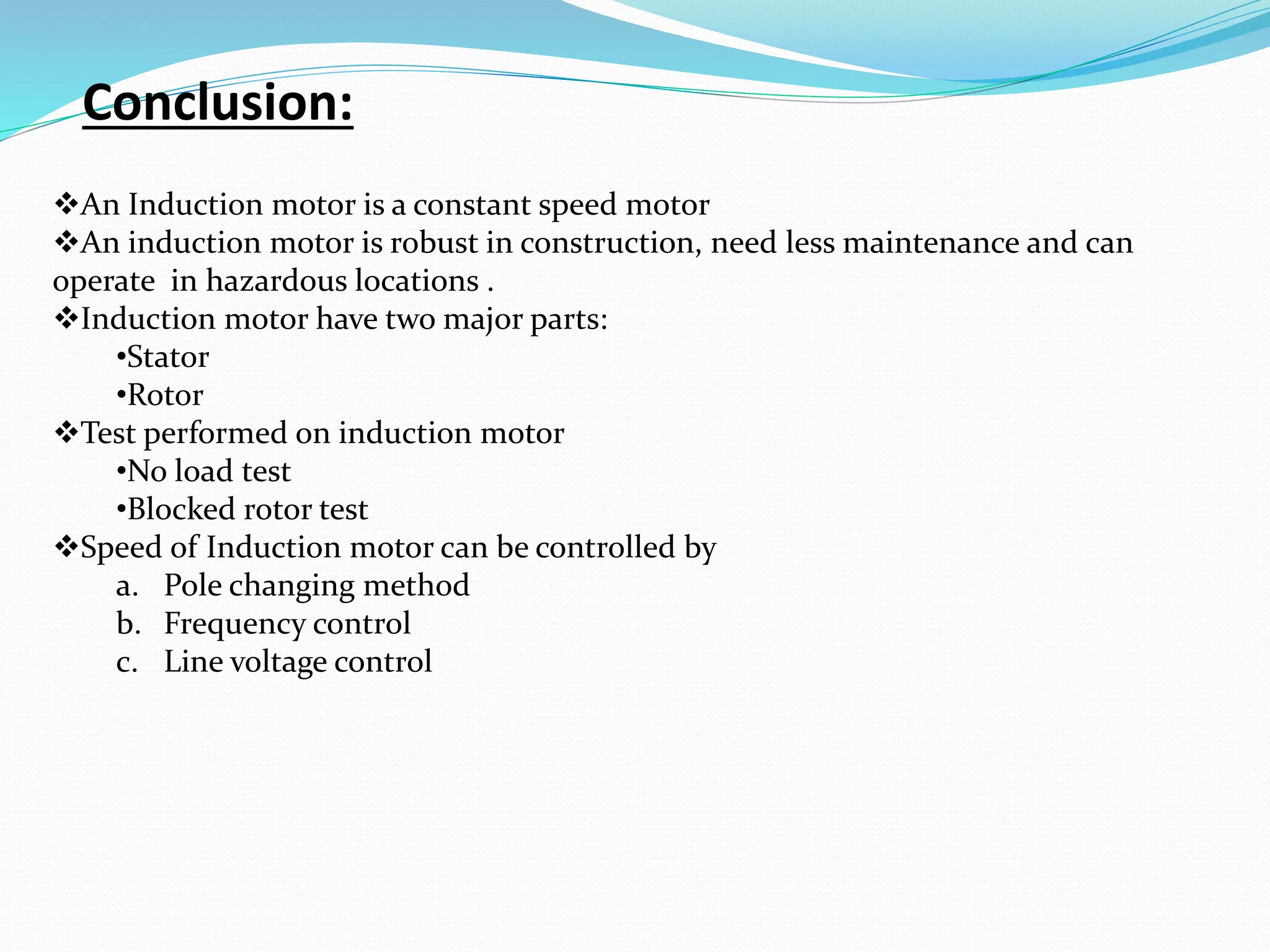
An Induction motor is a constant speed motor
An induction motor is robust in construction, need less maintenance and can
operate in hazardous locations .
Induction motor have two major parts:
•Stator
•Rotor
Test performed on induction motor
•No load test
•Blocked rotor test
Speed of Induction motor can be controlled by
a. Pole changing method
b. Frequency control
c. Line voltage control
References:
•Generalized Theory of Electrical Machines By Dr. P.s. Bhimbhra fifth edition 2013
•Principal of Electrical Machines By V.K. Mehta & Rohit Mehta
•Electrical Technology By B.J. Theraja & A.k. Theraja Volume 2
Modeling and Testing of Induction Motors

Modeling and Testing of Induction Motors

  • 2.
    I. INTRODUCTION II. CONSTRUCTIONALDETAILS III. PRINCIPLE OF OPERATION IV. TORQUE SLIP CHARACTERISTICS V. TESTS ON THE INDUCTION MOTOR VI. SPEED CONTROL OF INDUCTION MOTOR VII. CONCLUSION VIII.REFFERENCE
  • 3.
    INTRODUCTION: Induction motor isan energy conversion device that converts electrical energy into useful rotational kinetic energy, it is an application of the Faraday's law of induction. AC Motors are required in many modern adjustable-speed drives; the requirement is for precise and continuous control of speed and torque with long-term stability and high efficiency. The DC motor satisfies most of these requirements, but its mechanical commutator and the sparking are disadvantages because they may be dangerous in some areas of applications, plus regular maintenance is required and cannot be done when the motor is used at inaccessible locations.
  • 4.
    A three phaseinduction motor mainly consists of two mainparts: 1. Stator 2. Rotor I. CONSTRUCTIONAL DETAILS
  • 5.
    1.Stator The stator consistsof a steel frame which encloses a hollow cylindrical core made up of thin laminations of silicon steel to reduce hysteresis and eddy current losses. A number of evenly spaced slots are provided on the inner periphery. The insulated conductors are placed in the stator slots and are connected to form a balanced three phase star or delta connection circuit.
  • 6.
    2.Rotor: The rotor isrotating part of an induction motor. It is a hollow laminated core having slots on its outer periphery. The rotor may be one the following types. I. Squirrel cage type II. Wound type or slip ring type
  • 7.
    Squirrel cage type: Itconsists of laminated cylindrical core having parallel slots on its outer periphery, in these slots one copper or aluminium bar is placed. All these bars are connected at each end by metal rings, called end rings. These bars, therefore, are permanently short circuited and therefore no external resistance can be connected.
  • 8.
    Wound type orslip ring type: These consist of laminated cylindrical core and carries a three phase winding as in the stator. The open ends of the rotor winding is brought out and connected to three insulated slip rings mounted on the rotor shaft with one brush resting on each slip ring. The three brushes are connected to a three phase star connected rheostat. These resistances are included at starting to limit high circulating current in the short circuited rotor winding and to give a large starting torque. These resistances are gradually reduced to zero as the rotor attains its normal speed.
  • 9.
    II. PRINCIPLE OF OPERATION •A Rotating magnetic field (RMF) is set up in the stator when a 3 phase supply is given. • The stationary rotor cuts the revolving field and due to electromagnetic induction an emf is induced in the rotor conductors. • As the rotor conductors are short circuited , current starts flowing through them. • It becomes a current carrying conductor in the magnetic field and starts rotating.
  • 10.
    Torque-Slip Characteristics: The curvedrawn between the torque and the slip for a particular value of rotor resistance is known as torque-slip characteristics. The motor torque under running condition is given by, 2 2 22 2 2 2 2 2 K E sR T R s X  
  • 11.
    The following pointsmay be noted by the torque-slip characteristics: 1.at s=0, T=0 so that torque-slip curve starts from the origin 2.at normal speed, slip is small so that is negligible as compared to , 2sX 2R  2 s T R  Hence torque slip curve is a straight line from zero slip to a slip that corresponds to full load. 3.as the slip increases beyond the full load slip, the torque increases and becomes maximum at . This maximum torque is known as pull out torque or breakdown torque. It's value is almost twice that of full load torque when the motor is operated at its rated voltage and frequency. 2 2 R s X 
  • 12.
    4.when the slipincreases beyond the maximum torque, the term Increases very rapidly so that may be neglected as compared to . 2 2R 2 2 2 s T s X  1 s  as is constant 2X Thus the torque is now inversely proportional to slip. Hence the torque slip characteristics is a rectangular parabola. 2 2 2s X 2 2 2s X
  • 13.
    TESTS ON THEINDUCTION MOTOR No Load Test: No load test is performed to determine the no load current, no load power factor, windage and friction losses, no load resistance and reactance. Since there is no power output on no load, the power supplied to the stator furnishes its core loss and the friction and windage losses in the rotor. The circuit diagram for the no load test is shown in Fig. 3. Fig. 3.
  • 14.
    Blocked Rotor test: Theblocked rotor test is also known as locked rotor test or short circuit test. This test is employed to find the short circuit current of the rotor circuit. This test is performed at the rated current of the induction motor. The circuit diagram for blocked rotor test is shown in Fig. 4.
  • 15.
    VII. SPEED CONTROLOF INDUCTION MOTOR Methods of speed control of induction motor: A. Pole changing method: B. Stator frequency control: C. Line voltage control: An induction motor essentially runs at constant speed as the load is varied. Some industrial drives, however, require several different speeds or even continually variable speeds (1 )Nr Ns s  120 (1 ) f Nr s P   The operating speed of a 3-phasee induction motor is given by, or,
  • 16.
    Conclusion: An Induction motoris a constant speed motor An induction motor is robust in construction, need less maintenance and can operate in hazardous locations . Induction motor have two major parts: •Stator •Rotor Test performed on induction motor •No load test •Blocked rotor test Speed of Induction motor can be controlled by a. Pole changing method b. Frequency control c. Line voltage control
  • 17.
    References: •Generalized Theory ofElectrical Machines By Dr. P.s. Bhimbhra fifth edition 2013 •Principal of Electrical Machines By V.K. Mehta & Rohit Mehta •Electrical Technology By B.J. Theraja & A.k. Theraja Volume 2