Mobile Security
-:Presented By:-
Himalay Ladha
1st sem.
(Bachelor of Computer Application)
Shree H.N.Shukla Group Of Collage
Welcome
Mobile security
Tips and tricks for securing your
iPhone & Android
 What data needs to be protected, what should.??
 we avoid storing on mobile devices.
 What habits, settings and applications can help
make your mobile devices more secure.
 Settings for iPhones & Android will be discussed.
Why worry ?
• Sophos survey:
–22% had lost a phone or mobile device
–70% do not password protect phone
• Google intelligence survey:
–40% of organizations are planning to deploy
mobile phone data encryption
–33% are already protecting their mobile phones
with encryption products and services
 Increase mobility → Increased exposure
 Easily lost or stolen
device, content, identity
 Susceptible to threats and attacks
App-based, Web-based, SMS/Text message-
based
Smartphone Risk
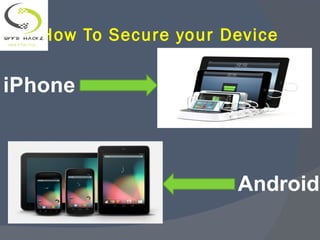
How To Secure your Device
iPhone
Android
iPhone
• Enable auto lock
• Enable passcode lock
• Wireless
– Use WPA and WPA2
– Only use WEP as last resort
– WEP better than nothing
– Disable when not needed
– Choose wisely what wireless you attach to
– Don’t act as access point for others
• Use VPN whenever possible
• Take care loaning to others (kids, others)
• Use native device usage restrictions
• Find My iPhone / Remote data wipe
Android
• Set a screen lock password or pattern.
• Turn on SIM card lock if available.
• Take care docking or tethering devices.
• Do not act as an access point (hotspot).
• Disable Bluetooth when not in use.
• Take care downloading from Market
• Review application access for new apps.
• Take care were you store backups of your phone.
• Often androids tied to Gmail & Google accounts.
with stored password
Best Security Practices
1. Password protect
Passcode protect
Pass swipe protect?
Best Security Practices Cont.
2. Install Security Software.
Anti-virus and anti-malware available for mobile
devices.
4. Keep your apps up-to-date.
6. Install a phone finder app.
8. Enroll in a backup program.
10. Set device to wipe contents after specified
number of failed login attempts.
Best Security Practices Cont.
7. When installing apps
Take time to read the small print
What information does the app require to access?
Where are you downloading the app from?
Is it the app store location set by default on the
phone?
Best Security Practices Cont.
8. Know where your device is at all times
10. Be mindful of how you use your device
Follow same guidelines as you do for your
computer
Double check URLs for accuracy
Don’t open suspicious links
Make sure the Website is secure before giving
any personal data
10. Limit your activities when using public WiFi
12. Your cellular network connection is more
secure than WiFi
14. Check URL’s before making a purchase
https:// is secure; http:// is not
Best Security Practices Cont.
 Treat as if your purse or wallet
File a report with law enforcement
Contact your service vendor to cancel your
service and report your device missing
If you have a backup/wipe program, contact your
vendor to have them wipe the device
NDSU email? Notify the IT Help Desk
Lost Or Stolen..?
Common Helper apps
• Antivirus
• Antitheft
• Firewall
• Lost device locator
• Data scrub when lost
1. Password/Passcode protect your device
2. Lock your device
3. Use anti-virus software
4. Sync/back up your data
5. Install a phone finder app
Key Point
Any Question…??
All Of You…

Mobile security first round (1st rank)

  • 1.
    Mobile Security -:Presented By:- HimalayLadha 1st sem. (Bachelor of Computer Application) Shree H.N.Shukla Group Of Collage Welcome
  • 2.
    Mobile security Tips andtricks for securing your iPhone & Android
  • 3.
     What dataneeds to be protected, what should.??  we avoid storing on mobile devices.  What habits, settings and applications can help make your mobile devices more secure.  Settings for iPhones & Android will be discussed.
  • 4.
    Why worry ? •Sophos survey: –22% had lost a phone or mobile device –70% do not password protect phone • Google intelligence survey: –40% of organizations are planning to deploy mobile phone data encryption –33% are already protecting their mobile phones with encryption products and services
  • 5.
     Increase mobility→ Increased exposure  Easily lost or stolen device, content, identity  Susceptible to threats and attacks App-based, Web-based, SMS/Text message- based Smartphone Risk
  • 6.
    How To Secureyour Device iPhone Android
  • 7.
    iPhone • Enable autolock • Enable passcode lock • Wireless – Use WPA and WPA2 – Only use WEP as last resort – WEP better than nothing – Disable when not needed – Choose wisely what wireless you attach to – Don’t act as access point for others • Use VPN whenever possible • Take care loaning to others (kids, others) • Use native device usage restrictions • Find My iPhone / Remote data wipe
  • 8.
    Android • Set ascreen lock password or pattern. • Turn on SIM card lock if available. • Take care docking or tethering devices. • Do not act as an access point (hotspot). • Disable Bluetooth when not in use. • Take care downloading from Market • Review application access for new apps. • Take care were you store backups of your phone. • Often androids tied to Gmail & Google accounts. with stored password
  • 9.
    Best Security Practices 1.Password protect Passcode protect Pass swipe protect?
  • 10.
    Best Security PracticesCont. 2. Install Security Software. Anti-virus and anti-malware available for mobile devices. 4. Keep your apps up-to-date. 6. Install a phone finder app. 8. Enroll in a backup program. 10. Set device to wipe contents after specified number of failed login attempts.
  • 11.
    Best Security PracticesCont. 7. When installing apps Take time to read the small print What information does the app require to access? Where are you downloading the app from? Is it the app store location set by default on the phone?
  • 12.
    Best Security PracticesCont. 8. Know where your device is at all times 10. Be mindful of how you use your device Follow same guidelines as you do for your computer Double check URLs for accuracy Don’t open suspicious links Make sure the Website is secure before giving any personal data
  • 13.
    10. Limit youractivities when using public WiFi 12. Your cellular network connection is more secure than WiFi 14. Check URL’s before making a purchase https:// is secure; http:// is not Best Security Practices Cont.
  • 14.
     Treat asif your purse or wallet File a report with law enforcement Contact your service vendor to cancel your service and report your device missing If you have a backup/wipe program, contact your vendor to have them wipe the device NDSU email? Notify the IT Help Desk Lost Or Stolen..?
  • 15.
    Common Helper apps •Antivirus • Antitheft • Firewall • Lost device locator • Data scrub when lost
  • 16.
    1. Password/Passcode protectyour device 2. Lock your device 3. Use anti-virus software 4. Sync/back up your data 5. Install a phone finder app Key Point
  • 17.

Editor's Notes

  • #2 <number>
  • #3 <number>
  • #4 <number>
  • #5 <number>
  • #6 <number>
  • #7 <number>
  • #8 <number>
  • #9 <number>
  • #10 <number>
  • #11 <number>
  • #12 <number>
  • #13 <number>
  • #14 <number>