MONEY LAUNDERING & ROLE OF BANKS
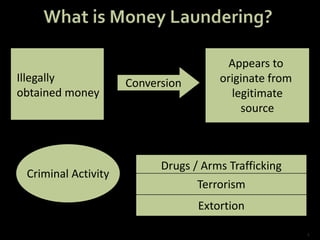
Illegally
obtained money
Conversion
Appears to
originate from
legitimate
source
Criminal Activity
Drugs / Arms Trafficking
Terrorism
Extortion
2
 Money laundering means
acquiring, owning, possessing or transferring any
proceeds (of money) of crime or knowingly entering
into any transaction related to proceeds of the crime
either directly or indirectly or concealing or aiding in
the concealment of the proceeds or gains of
crime, within or outside India.
 It is a process for conversion of money obtained
illegally to appear to have originated from legitimate
sources.
 In other words, it is the process used by criminals
through which they make “dirty” money appear
“clean”
3
Money laundering generally refers to ‘washing’ of the
proceeds or profits generated from:
 Drug trafficking
 Arms, antique, gold smuggling
 Prostitution rings
 Financial frauds
 Corruption, or
 Illegal sale of wild life products and other specified
predicate offences
4
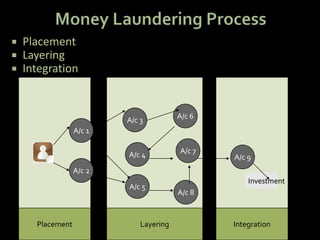
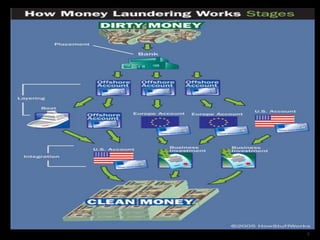
 Placement
 Layering
 Integration
Placement Layering Integration
A/c 1
A/c 2
A/c 5
A/c 4
A/c 3
A/c 8
A/c 7
A/c 6
A/c 9
Investment
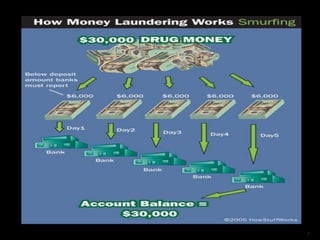
 The first stage involves the Placement of proceeds
derived from illegal activities – the movement of
proceeds, frequently currency, from the scene of the
crime to a place, or into a form, less suspicious and
more convenient for the criminal.
 Placement Stage - easy to detect start of ML
 Layering Stage - Relatively Difficult to detect
 Integration Stage - Almost impossible to detect
6
7
 The second stage is called Layering. It involves the
separation of proceeds from illegal source through the
use of complex transactions designed to obscure the audit
trail and hide the proceeds. The criminals frequently use
shell corporations, offshore banks or countries with loose
regulation and secrecy laws for this purpose.
 The third stage is called Integration. It represents the
conversion of illegal proceeds into apparently legitimate
business earnings through normal financial or commercial
operations. Integration creates the illusion of a legitimate
source for criminally derived funds and involves
techniques as numerous and creative as those used by
legitimate businesses. For e.g false invoices for goods
exported, domestic loan against a foreign
deposit, purchasing of property and co-mingling of money
in bank accounts.
8
9
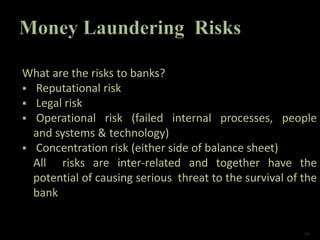
What are the risks to banks?
 Reputational risk
 Legal risk
 Operational risk (failed internal processes, people
and systems & technology)
 Concentration risk (either side of balance sheet)
All risks are inter-related and together have the
potential of causing serious threat to the survival of the
bank
10
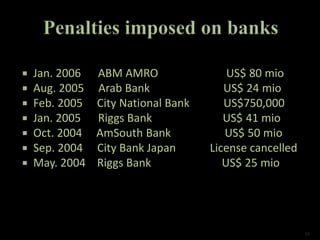
 Jan. 2006 ABM AMRO US$ 80 mio
 Aug. 2005 Arab Bank US$ 24 mio
 Feb. 2005 City National Bank US$750,000
 Jan. 2005 Riggs Bank US$ 41 mio
 Oct. 2004 AmSouth Bank US$ 50 mio
 Sep. 2004 City Bank Japan License cancelled
 May. 2004 Riggs Bank US$ 25 mio
11
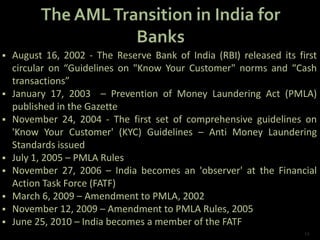
 August 16, 2002 - The Reserve Bank of India (RBI) released its first
circular on “Guidelines on "Know Your Customer" norms and “Cash
transactions”
 January 17, 2003 – Prevention of Money Laundering Act (PMLA)
published in the Gazette
 November 24, 2004 - The first set of comprehensive guidelines on
'Know Your Customer' (KYC) Guidelines – Anti Money Laundering
Standards issued
 July 1, 2005 – PMLA Rules
 November 27, 2006 – India becomes an 'observer' at the Financial
Action Task Force (FATF)
 March 6, 2009 – Amendment to PMLA, 2002
 November 12, 2009 – Amendment to PMLA Rules, 2005
 June 25, 2010 – India becomes a member of the FATF
12
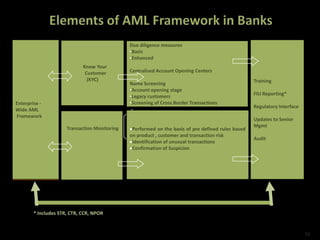
Enterprise -
Wide AML
Framework
Enterprise -
Wide AML
Framework
Know Your
Customer
(KYC)
Due diligence measures
•Basic
•Enhanced
Centralised Account Opening Centers
Name Screening
•Account opening stage
•Legacy customers
•Screening of Cross Border Transactions
Performed on the basis of pre defined rules based
on product , customer and transaction risk
Identification of unusual transactions
Confirmation of Suspicion
Transaction Monitoring
Training
FIU Reporting*
Regulatory Interface
Updates to Senior
Mgmt
Audit
* Includes STR, CTR, CCR, NPOR
13
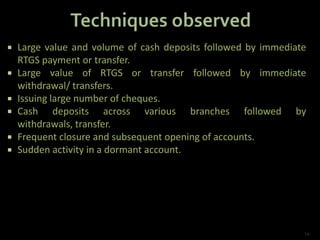
 Large value and volume of cash deposits followed by immediate
RTGS payment or transfer.
 Large value of RTGS or transfer followed by immediate
withdrawal/ transfers.
 Issuing large number of cheques.
 Cash deposits across various branches followed by
withdrawals, transfer.
 Frequent closure and subsequent opening of accounts.
 Sudden activity in a dormant account.
14
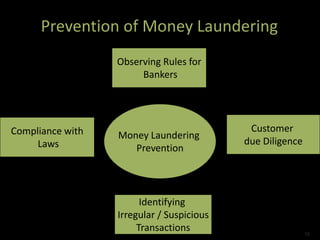
Prevention of Money Laundering
Money Laundering
Prevention
Observing Rules for
Bankers
Identifying
Irregular / Suspicious
Transactions
Compliance with
Laws
Customer
due Diligence
15
 Bank accountants must record all transactions over
Rs. 10 Lakhs. Bank accountants must maintain this
records for 10 years. Banks also must make cash
transaction reports (CTRs) and suspicious
transaction reports over RS. 10 Lakhs within 7 days
of doubt. They must submit the report to the
enforcement directorate and income tax department
16
17

Money laundering

  • 1.
    MONEY LAUNDERING &ROLE OF BANKS
  • 2.
    Illegally obtained money Conversion Appears to originatefrom legitimate source Criminal Activity Drugs / Arms Trafficking Terrorism Extortion 2
  • 3.
     Money launderingmeans acquiring, owning, possessing or transferring any proceeds (of money) of crime or knowingly entering into any transaction related to proceeds of the crime either directly or indirectly or concealing or aiding in the concealment of the proceeds or gains of crime, within or outside India.  It is a process for conversion of money obtained illegally to appear to have originated from legitimate sources.  In other words, it is the process used by criminals through which they make “dirty” money appear “clean” 3
  • 4.
    Money laundering generallyrefers to ‘washing’ of the proceeds or profits generated from:  Drug trafficking  Arms, antique, gold smuggling  Prostitution rings  Financial frauds  Corruption, or  Illegal sale of wild life products and other specified predicate offences 4
  • 5.
     Placement  Layering Integration Placement Layering Integration A/c 1 A/c 2 A/c 5 A/c 4 A/c 3 A/c 8 A/c 7 A/c 6 A/c 9 Investment
  • 6.
     The firststage involves the Placement of proceeds derived from illegal activities – the movement of proceeds, frequently currency, from the scene of the crime to a place, or into a form, less suspicious and more convenient for the criminal.  Placement Stage - easy to detect start of ML  Layering Stage - Relatively Difficult to detect  Integration Stage - Almost impossible to detect 6
  • 7.
  • 8.
     The secondstage is called Layering. It involves the separation of proceeds from illegal source through the use of complex transactions designed to obscure the audit trail and hide the proceeds. The criminals frequently use shell corporations, offshore banks or countries with loose regulation and secrecy laws for this purpose.  The third stage is called Integration. It represents the conversion of illegal proceeds into apparently legitimate business earnings through normal financial or commercial operations. Integration creates the illusion of a legitimate source for criminally derived funds and involves techniques as numerous and creative as those used by legitimate businesses. For e.g false invoices for goods exported, domestic loan against a foreign deposit, purchasing of property and co-mingling of money in bank accounts. 8
  • 9.
  • 10.
    What are therisks to banks?  Reputational risk  Legal risk  Operational risk (failed internal processes, people and systems & technology)  Concentration risk (either side of balance sheet) All risks are inter-related and together have the potential of causing serious threat to the survival of the bank 10
  • 11.
     Jan. 2006ABM AMRO US$ 80 mio  Aug. 2005 Arab Bank US$ 24 mio  Feb. 2005 City National Bank US$750,000  Jan. 2005 Riggs Bank US$ 41 mio  Oct. 2004 AmSouth Bank US$ 50 mio  Sep. 2004 City Bank Japan License cancelled  May. 2004 Riggs Bank US$ 25 mio 11
  • 12.
     August 16,2002 - The Reserve Bank of India (RBI) released its first circular on “Guidelines on "Know Your Customer" norms and “Cash transactions”  January 17, 2003 – Prevention of Money Laundering Act (PMLA) published in the Gazette  November 24, 2004 - The first set of comprehensive guidelines on 'Know Your Customer' (KYC) Guidelines – Anti Money Laundering Standards issued  July 1, 2005 – PMLA Rules  November 27, 2006 – India becomes an 'observer' at the Financial Action Task Force (FATF)  March 6, 2009 – Amendment to PMLA, 2002  November 12, 2009 – Amendment to PMLA Rules, 2005  June 25, 2010 – India becomes a member of the FATF 12
  • 13.
    Enterprise - Wide AML Framework Enterprise- Wide AML Framework Know Your Customer (KYC) Due diligence measures •Basic •Enhanced Centralised Account Opening Centers Name Screening •Account opening stage •Legacy customers •Screening of Cross Border Transactions Performed on the basis of pre defined rules based on product , customer and transaction risk Identification of unusual transactions Confirmation of Suspicion Transaction Monitoring Training FIU Reporting* Regulatory Interface Updates to Senior Mgmt Audit * Includes STR, CTR, CCR, NPOR 13
  • 14.
     Large valueand volume of cash deposits followed by immediate RTGS payment or transfer.  Large value of RTGS or transfer followed by immediate withdrawal/ transfers.  Issuing large number of cheques.  Cash deposits across various branches followed by withdrawals, transfer.  Frequent closure and subsequent opening of accounts.  Sudden activity in a dormant account. 14
  • 15.
    Prevention of MoneyLaundering Money Laundering Prevention Observing Rules for Bankers Identifying Irregular / Suspicious Transactions Compliance with Laws Customer due Diligence 15
  • 16.
     Bank accountantsmust record all transactions over Rs. 10 Lakhs. Bank accountants must maintain this records for 10 years. Banks also must make cash transaction reports (CTRs) and suspicious transaction reports over RS. 10 Lakhs within 7 days of doubt. They must submit the report to the enforcement directorate and income tax department 16
  • 17.