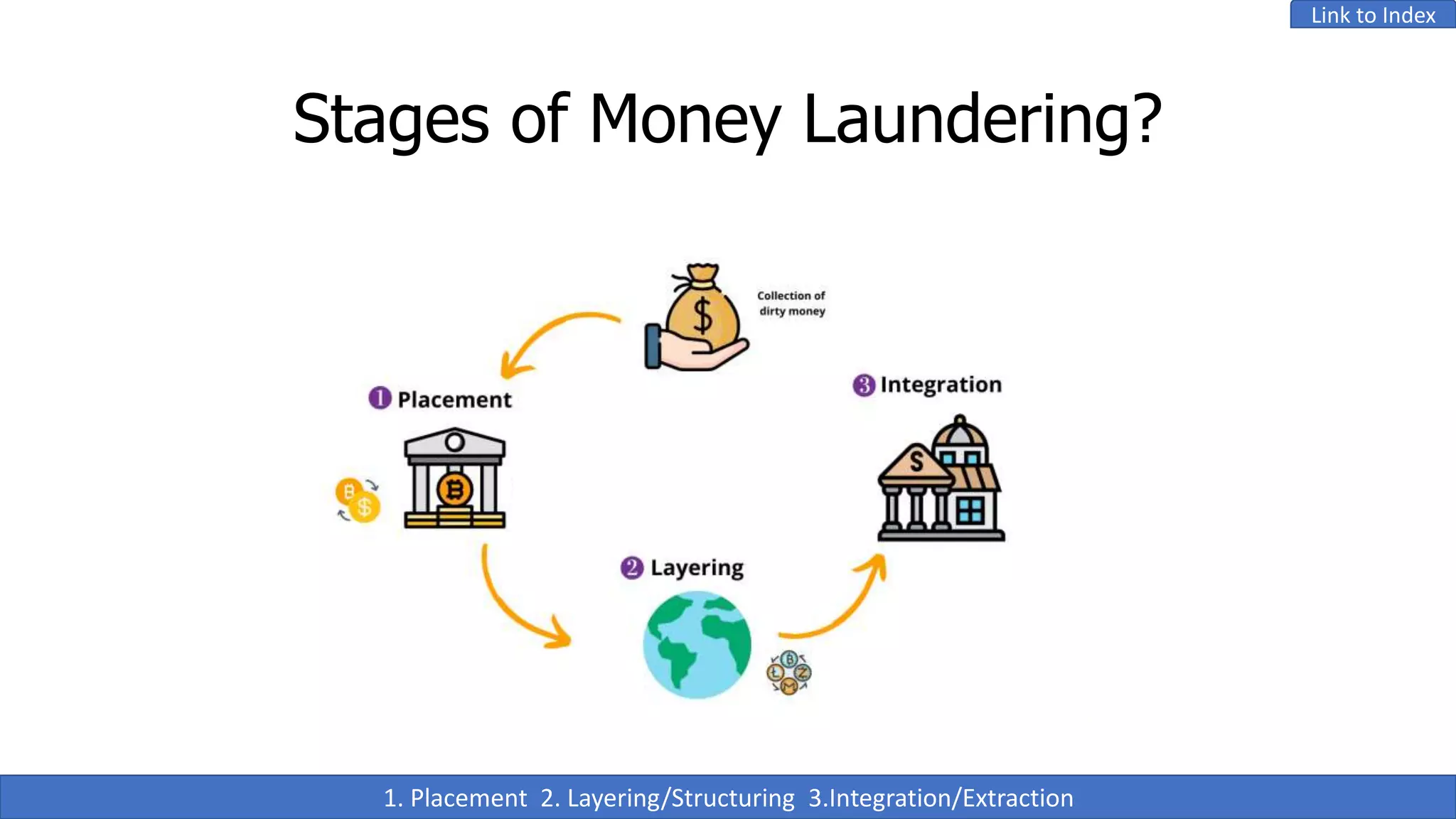
Anti-Money Laundering regulations require banks to monitor customer transactions and report suspicious activity to authorities. Money laundering typically involves three stages: placement, layering, and integration; where illegal funds are initially placed into the financial system through small transactions, then layered through multiple accounts and transfers, before being integrated back into the criminal's legitimate funds. Banks must implement controls like Know Your Customer checks, customer due diligence, transaction monitoring, and reporting suspicious transactions to prevent money laundering through their institutions.