Micro Elements
By Victoria Paetz
Micro Elements
Micro Elements are used in film
openings to create meaning and
provoke responses in the audience.
Extreme close up
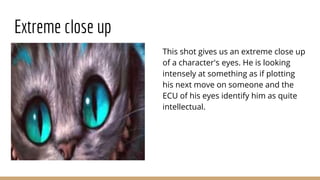
This shot gives us an extreme close up
of a character's eyes. He is looking
intensely at something as if plotting
his next move on someone and the
ECU of his eyes identify him as quite
intellectual.
Close up
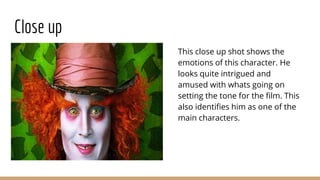
This close up shot shows the
emotions of this character. He
looks quite intrigued and
amused with whats going on
setting the tone for the film. This
also identifies him as one of the
main characters.
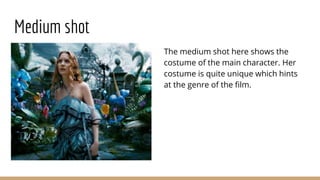
Medium shot
The medium shot here shows the
costume of the main character. Her
costume is quite unique which hints
at the genre of the film.
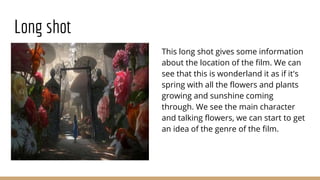
Long shot
This long shot gives some information
about the location of the film. We can
see that this is wonderland it as if it's
spring with all the flowers and plants
growing and sunshine coming
through. We see the main character
and talking flowers, we can start to get
an idea of the genre of the film.
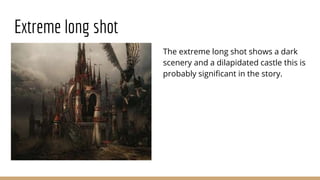
Extreme long shot
The extreme long shot shows a dark
scenery and a dilapidated castle this is
probably significant in the story.
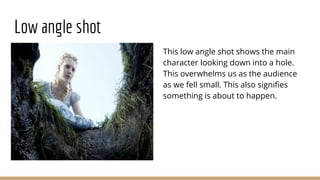
Low angle shot
This low angle shot shows the main
character looking down into a hole.
This overwhelms us as the audience
as we fell small. This also signifies
something is about to happen.
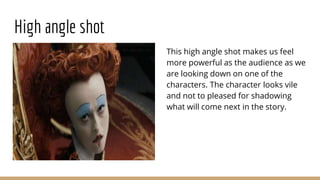
High angle shot
This high angle shot makes us feel
more powerful as the audience as we
are looking down on one of the
characters. The character looks vile
and not to pleased for shadowing
what will come next in the story.
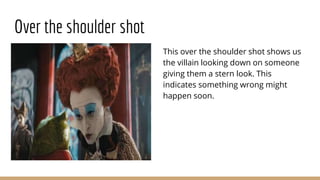
Over the shoulder shot
This over the shoulder shot shows us
the villain looking down on someone
giving them a stern look. This
indicates something wrong might
happen soon.
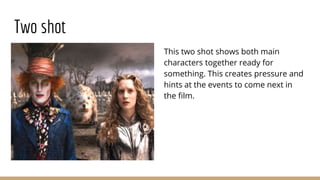
Two shot
This two shot shows both main
characters together ready for
something. This creates pressure and
hints at the events to come next in
the film.
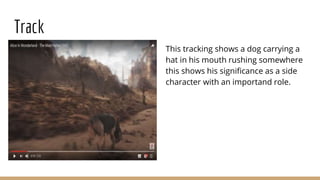
Track
This tracking shows a dog carrying a
hat in his mouth rushing somewhere
this shows his significance as a side
character with an importand role.
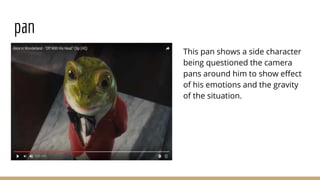
pan
This pan shows a side character
being questioned the camera
pans around him to show effect
of his emotions and the gravity
of the situation.
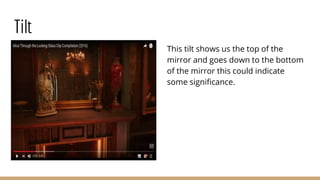
Tilt
This tilt shows us the top of the
mirror and goes down to the bottom
of the mirror this could indicate
some significance.
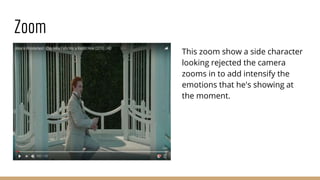
Zoom
This zoom show a side character
looking rejected the camera
zooms in to add intensify the
emotions that he's showing at
the moment.
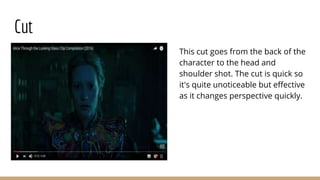
Cut
This cut goes from the back of the
character to the head and
shoulder shot. The cut is quick so
it's quite unoticeable but effective
as it changes perspective quickly.
Pace
Pace is the speed of the shots. In fantasy and action films the shots are fast
and slow paced depending on the scene. During intense scenes the pace is
fast. During more emotional scenes the pace is slower to portray emotions
more effectively.
The pace is changed to match the tone and emotion of the scene, as well as to
keep the audience interested and part of the film.
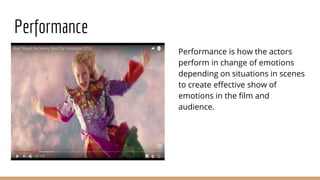
Performance
Performance is how the actors
perform in change of emotions
depending on situations in scenes
to create effective show of
emotions in the film and
audience.
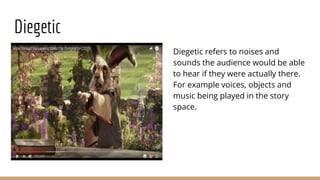
Diegetic
Diegetic refers to noises and
sounds the audience would be able
to hear if they were actually there.
For example voices, objects and
music being played in the story
space.
Non Diegetic
Non diegetic is effectively invisible sound such
as a narrator's voice, sound effects, dramatic
effects and mood music.
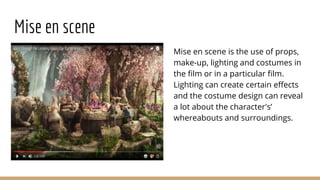
Mise en scene
Mise en scene is the use of props,
make-up, lighting and costumes in
the film or in a particular film.
Lighting can create certain effects
and the costume design can reveal
a lot about the character's’
whereabouts and surroundings.

Micro elements

  • 1.
  • 2.
    Micro Elements Micro Elementsare used in film openings to create meaning and provoke responses in the audience.
  • 3.
    Extreme close up Thisshot gives us an extreme close up of a character's eyes. He is looking intensely at something as if plotting his next move on someone and the ECU of his eyes identify him as quite intellectual.
  • 4.
    Close up This closeup shot shows the emotions of this character. He looks quite intrigued and amused with whats going on setting the tone for the film. This also identifies him as one of the main characters.
  • 5.
    Medium shot The mediumshot here shows the costume of the main character. Her costume is quite unique which hints at the genre of the film.
  • 6.
    Long shot This longshot gives some information about the location of the film. We can see that this is wonderland it as if it's spring with all the flowers and plants growing and sunshine coming through. We see the main character and talking flowers, we can start to get an idea of the genre of the film.
  • 7.
    Extreme long shot Theextreme long shot shows a dark scenery and a dilapidated castle this is probably significant in the story.
  • 8.
    Low angle shot Thislow angle shot shows the main character looking down into a hole. This overwhelms us as the audience as we fell small. This also signifies something is about to happen.
  • 9.
    High angle shot Thishigh angle shot makes us feel more powerful as the audience as we are looking down on one of the characters. The character looks vile and not to pleased for shadowing what will come next in the story.
  • 10.
    Over the shouldershot This over the shoulder shot shows us the villain looking down on someone giving them a stern look. This indicates something wrong might happen soon.
  • 11.
    Two shot This twoshot shows both main characters together ready for something. This creates pressure and hints at the events to come next in the film.
  • 12.
    Track This tracking showsa dog carrying a hat in his mouth rushing somewhere this shows his significance as a side character with an importand role.
  • 13.
    pan This pan showsa side character being questioned the camera pans around him to show effect of his emotions and the gravity of the situation.
  • 14.
    Tilt This tilt showsus the top of the mirror and goes down to the bottom of the mirror this could indicate some significance.
  • 15.
    Zoom This zoom showa side character looking rejected the camera zooms in to add intensify the emotions that he's showing at the moment.
  • 16.
    Cut This cut goesfrom the back of the character to the head and shoulder shot. The cut is quick so it's quite unoticeable but effective as it changes perspective quickly.
  • 17.
    Pace Pace is thespeed of the shots. In fantasy and action films the shots are fast and slow paced depending on the scene. During intense scenes the pace is fast. During more emotional scenes the pace is slower to portray emotions more effectively. The pace is changed to match the tone and emotion of the scene, as well as to keep the audience interested and part of the film.
  • 18.
    Performance Performance is howthe actors perform in change of emotions depending on situations in scenes to create effective show of emotions in the film and audience.
  • 19.
    Diegetic Diegetic refers tonoises and sounds the audience would be able to hear if they were actually there. For example voices, objects and music being played in the story space.
  • 20.
    Non Diegetic Non diegeticis effectively invisible sound such as a narrator's voice, sound effects, dramatic effects and mood music.
  • 21.
    Mise en scene Miseen scene is the use of props, make-up, lighting and costumes in the film or in a particular film. Lighting can create certain effects and the costume design can reveal a lot about the character's’ whereabouts and surroundings.