How are micro-elements
used in film?
Extreme Close Up
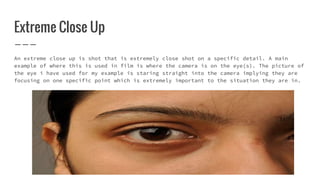
An extreme close up is shot that is extremely close shot on a specific detail. A main
example of where this is used in film is where the camera is on the eye(s). The picture of
the eye i have used for my example is staring straight into the camera implying they are
focusing on one specific point which is extremely important to the situation they are in.
Close Up
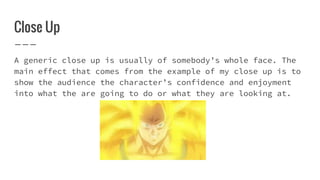
A generic close up is usually of somebody’s whole face. The
main effect that comes from the example of my close up is to
show the audience the character’s confidence and enjoyment
into what the are going to do or what they are looking at.
Medium Shot
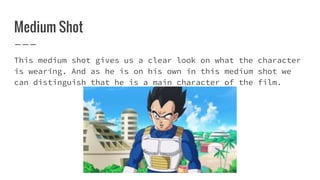
This medium shot gives us a clear look on what the character
is wearing. And as he is on his own in this medium shot we
can distinguish that he is a main character of the film.
Long Shot
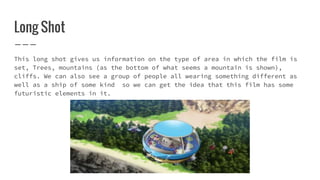
This long shot gives us information on the type of area in which the film is
set, Trees, mountains (as the bottom of what seems a mountain is shown),
cliffs. We can also see a group of people all wearing something different as
well as a ship of some kind so we can get the idea that this film has some
futuristic elements in it.
Extreme Long Shot
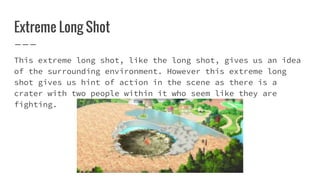
This extreme long shot, like the long shot, gives us an idea
of the surrounding environment. However this extreme long
shot gives us hint of action in the scene as there is a
crater with two people within it who seem like they are
fighting.
Track
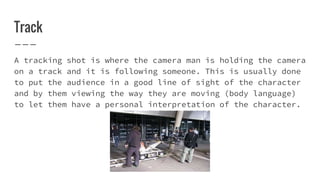
A tracking shot is where the camera man is holding the camera
on a track and it is following someone. This is usually done
to put the audience in a good line of sight of the character
and by them viewing the way they are moving (body language)
to let them have a personal interpretation of the character.
Pan
A pan shot is usually used to show the distance of a place or
between two things. This gives the audience a sense of
distance in which a character either has to travel or is
living within. A pan is performed by moving the camera
horizontally left or right.
Tilt
A tilt shot is very similar to a panning shot but instead of
moving horizontally left or right it moves vertically up and
down. These shots are typically used to show the height of an
object which a character is looking at. For example if one
character is in the point of view of another character and is
a great deal larger than the character he might tilt the
camera to exaggerate the height difference.
Zoom
A zoom is where the camera lens either moves closer to the
shot or moves away from the object of the shot. These are
mainly used to show significance on a persons face, object,
or setting. For example the shot below zooms in on the
woman’s face and it shows her realisation of the situation
she is in.
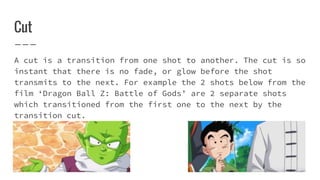
Cut
A cut is a transition from one shot to another. The cut is so
instant that there is no fade, or glow before the shot
transmits to the next. For example the 2 shots below from the
film ‘Dragon Ball Z: Battle of Gods’ are 2 separate shots
which transitioned from the first one to the next by the
transition cut.
Pace
Pace is the speed on which camera is moved, how quick or slow
the shots are, and how quick the shot changes its angle or
the shot itself (e.g. a close up then a straight cut to a two
shot). This can create a very intense atmosphere to the scene
if there's a lot of quick shots showing a lot of what is
going on. On the opposite end of the scale if the speed is
slowed down it would create a lot of tension as it will be
seemed to be building up suspense for what is going to happen
in the scene.
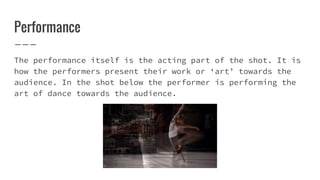
Performance
The performance itself is the acting part of the shot. It is
how the performers present their work or ‘art’ towards the
audience. In the shot below the performer is performing the
art of dance towards the audience.
Diegetic Sound
A diegetic sound is obvious to the viewers of the film or
programme. For example a bomb exploding which is shown on the
screen is a diegetic sound to the audience as the clearly
know the bomb made that sound.
Non-Diegetic Sound
A non-diegetic sound is not obvious to the audience. This
could be due to the fact some non-diegetic sounds are not
made from objects within the film or programme. For example a
narrator's commentary could be classed as a non-diegetic
sound.
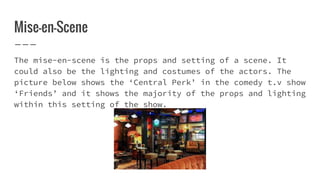
Mise-en-Scene
The mise-en-scene is the props and setting of a scene. It
could also be the lighting and costumes of the actors. The
picture below shows the ‘Central Perk’ in the comedy t.v show
‘Friends’ and it shows the majority of the props and lighting
within this setting of the show.

Micro elements

  • 1.
  • 2.
    Extreme Close Up Anextreme close up is shot that is extremely close shot on a specific detail. A main example of where this is used in film is where the camera is on the eye(s). The picture of the eye i have used for my example is staring straight into the camera implying they are focusing on one specific point which is extremely important to the situation they are in.
  • 3.
    Close Up A genericclose up is usually of somebody’s whole face. The main effect that comes from the example of my close up is to show the audience the character’s confidence and enjoyment into what the are going to do or what they are looking at.
  • 4.
    Medium Shot This mediumshot gives us a clear look on what the character is wearing. And as he is on his own in this medium shot we can distinguish that he is a main character of the film.
  • 5.
    Long Shot This longshot gives us information on the type of area in which the film is set, Trees, mountains (as the bottom of what seems a mountain is shown), cliffs. We can also see a group of people all wearing something different as well as a ship of some kind so we can get the idea that this film has some futuristic elements in it.
  • 6.
    Extreme Long Shot Thisextreme long shot, like the long shot, gives us an idea of the surrounding environment. However this extreme long shot gives us hint of action in the scene as there is a crater with two people within it who seem like they are fighting.
  • 7.
    Track A tracking shotis where the camera man is holding the camera on a track and it is following someone. This is usually done to put the audience in a good line of sight of the character and by them viewing the way they are moving (body language) to let them have a personal interpretation of the character.
  • 8.
    Pan A pan shotis usually used to show the distance of a place or between two things. This gives the audience a sense of distance in which a character either has to travel or is living within. A pan is performed by moving the camera horizontally left or right.
  • 9.
    Tilt A tilt shotis very similar to a panning shot but instead of moving horizontally left or right it moves vertically up and down. These shots are typically used to show the height of an object which a character is looking at. For example if one character is in the point of view of another character and is a great deal larger than the character he might tilt the camera to exaggerate the height difference.
  • 10.
    Zoom A zoom iswhere the camera lens either moves closer to the shot or moves away from the object of the shot. These are mainly used to show significance on a persons face, object, or setting. For example the shot below zooms in on the woman’s face and it shows her realisation of the situation she is in.
  • 11.
    Cut A cut isa transition from one shot to another. The cut is so instant that there is no fade, or glow before the shot transmits to the next. For example the 2 shots below from the film ‘Dragon Ball Z: Battle of Gods’ are 2 separate shots which transitioned from the first one to the next by the transition cut.
  • 12.
    Pace Pace is thespeed on which camera is moved, how quick or slow the shots are, and how quick the shot changes its angle or the shot itself (e.g. a close up then a straight cut to a two shot). This can create a very intense atmosphere to the scene if there's a lot of quick shots showing a lot of what is going on. On the opposite end of the scale if the speed is slowed down it would create a lot of tension as it will be seemed to be building up suspense for what is going to happen in the scene.
  • 13.
    Performance The performance itselfis the acting part of the shot. It is how the performers present their work or ‘art’ towards the audience. In the shot below the performer is performing the art of dance towards the audience.
  • 14.
    Diegetic Sound A diegeticsound is obvious to the viewers of the film or programme. For example a bomb exploding which is shown on the screen is a diegetic sound to the audience as the clearly know the bomb made that sound.
  • 15.
    Non-Diegetic Sound A non-diegeticsound is not obvious to the audience. This could be due to the fact some non-diegetic sounds are not made from objects within the film or programme. For example a narrator's commentary could be classed as a non-diegetic sound.
  • 16.
    Mise-en-Scene The mise-en-scene isthe props and setting of a scene. It could also be the lighting and costumes of the actors. The picture below shows the ‘Central Perk’ in the comedy t.v show ‘Friends’ and it shows the majority of the props and lighting within this setting of the show.