Presented by:
Swati Sharma
Mental health:
meaning
 Mental health includes our
emotional, psychological, and
social well-being.
 It affects how we think, feel,
and act.
 Important at every stage of life, from childhood and
adolescence through adulthood.
 Mental health problems can affect the thinking,
mood, and behavior of the an individual.
 Unfortunately, mental health disorders are common
among teens and young adults
Importance Of Mental Health
 It also helps determine how we handle stress,
relate to others, and make choices.
 Helps determine how we handle stress, relate
to others and make healthy choices.
 Good mental health is linked to:
Improved Learning
Creativity
Higher levels of productivity
Better social relationships
Good physical health
Increased life expectancy
Observable Behaviour Of A Child With
Mental Health Issues
 Feeling sad or hopeless all the time
 Withdrawing from friends or activities that used to
make them happy
 Change in eating or sleeping habits; drastic drop in
grades
 Increased drug or alcohol use
 Violence or aggression toward others
 Self-harm; persistent thoughts about harming
themselves
If you notice any of these changes in your child, it’s
important to talk to them about what’s going on and
seek professional help if necessary.
Why Do Students Suffer From Poor
Mental Health?
There are several reasons why students suffer from
poor mental health.
 Bullying
 Peer pressure
 Family issues
 Toxic relationships
 Lack of sleep
 Poor diet
 Lack of exercise
Well, in most cases students are usually
overburdened with academics and assignments.
 Some students tend to be very competitive and
sometimes want to outshine everyone else.
 It is normal for students to experience feelings of
worthlessness once they fail an exam or lose a
competition.
 It can help students to develop and maintain strong
relationships with others, as well as an overall sense
of contentment. Good mental health also allows
them to deal with life’s challenges and stressors in
their daily lives.
 Often undiagnosed or untreated in teens
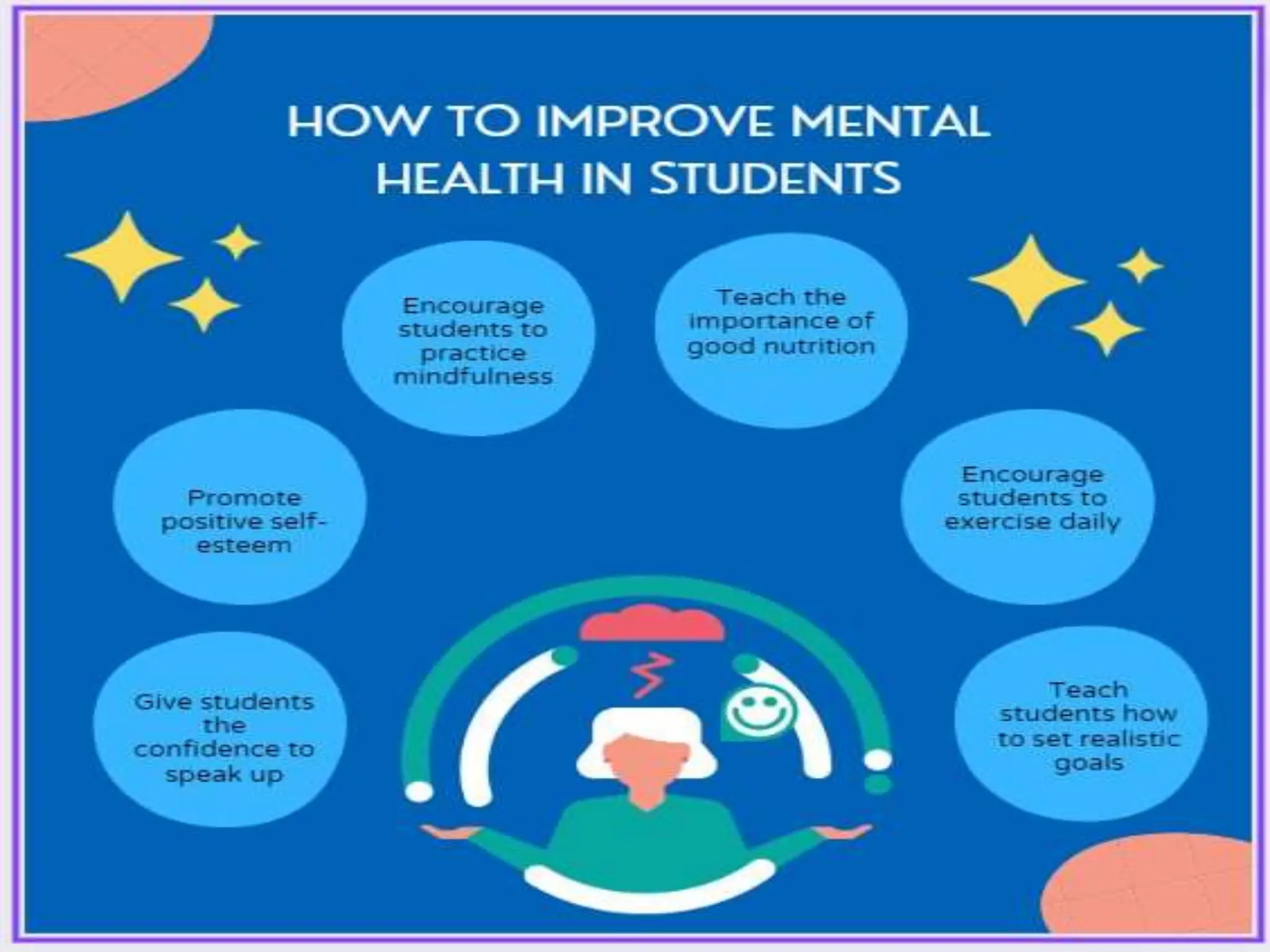
Some Ideas On How We Help Our
Students
 Give students the confidence to speak up – without
negative repercussions, they may be more willing to
share what is going on in their lives.
 Promote positive self-esteem – remind them of their
unique qualities and encourage them to like themselves.
 Encourage students to practice mindfulness – having
them focus on mindful activities will help with point
number two.
 Teach the importance of good nutrition – it’s not just
about losing weight or training for a race. Good food
helps maintain good health, mental and physical health!
 Encourage students to exercise daily – many people
have seen an improvement in their moods following
regular exercise sessions.
 Teach students how to set realistic goals – this will give
them confidence that they can do anything they want with
hard work, dedication, and perseverance.
Environment Promoting
Positive Mental Health
At School
 A nurturing environment that
encourages students to express
themselves and grants them freedom
of expression.
 Allows students to be more confident in their
ideas.
 Cope with stress and physical activity.
 Teachers can provide insight into a child’s
strengths and weaknesses.
 It can help students to develop and maintain
strong relationships with others, as well as an
overall sense of contentment.
 Good mental health also allows them to deal with
life’s challenges and stressors in their daily lives.
 Help children understand their emotions and
coping mechanisms.
 Unhealthy Coping Strategies used by
adolescents:
a. Avoidance
b. Misdirected Anger
c. Social Media Overuse
d. Substance Abuse
e. Self Harm
f. Disordered Eating
HEALTHY
UNSETTLED
STRUGGLING
(IN CRISIS)
HEALING
HEALTHY
Healthy Coping Mechanisms
 Talking to trusted one about how they’re
feeling or journaling about their thoughts and
emotions.
 Problem focused coping- break the problem in
chunks and address in finding a solution.
 Emotion Focused coping- related to what’s
happening inside a person. It includes
breathing and relaxation practices and use of
creative art to cope such as music, dance,
painting
 Social Support- turning to others who can
solve the problem like connecting with close
friends and reaching out to parents, teachers
or counsellor.
 Meaning Making- this helps to change the way
students view a situation. This help to show the
positive or meaningful aspect of the difficult
situation.
a. REFRAMING: allow them to see a situation,
person or relationship from a healthier point of
view.
b. JOURNALING: helps to put their feelings in
perspective through parts of their larger story.
 Religious Coping- This does not have to
involve an organized religion
a. Spending time in nature inspires a sense of
awe and gratitude (make them realize that
they are part of something bigger)
b. Volunteering connects with larger
community and other’s sufferings.
Several ways that Teachers’ Mental
Health can Impact Students’ Learning
 Teachers struggling with mental health may
be less patient with students
 Likelier to lose their temper
 May create a tense and hostile environment in
the classroom
 There is no right or wrong way to deal with
mental health issues as a teacher.
 Some teachers may be able to continue
teaching despite mental health issues, while
others may need to take some time off or
change their workload to recover.
 Teacher stress and burnout are common problems
that can lead to depression, anxiety and other
mental health issues.
 These problems can affect teachers’ ability to do
their job and harm students’ learning.
 The stigma around mental health issues is still
strong, and many people don’t understand the
impact of mental health problems on someone’s life.
Ways to Overcome Mental Health Issues
among Teachers
 First and foremost, it’s essential to recognise a
problem. If you’re feeling overwhelmed, anxious or
depressed, you must seek help.
 Many mental health resources are available to
teachers, including counselling and support groups.
 In addition to getting help from professionals, there
are also things that teachers can do on their own to
improve their mental health. Exercise is a great way
to reduce stress and improve your mood.
 Meditation and yoga help to maintain inner peace.
Meditation reduces stress and anxiety and focuses
on doing the job.
 Taking breaks during the day, spending time with
friends and family, and doing things you enjoy can
also help you feel better mentally and emotionally.
 By taking care of your mental health, you’ll be able to
better cope with the challenges of teaching and set a
good example for your students.
Mental health PPT.pptx

Mental health PPT.pptx

  • 1.
  • 2.
    Mental health: meaning  Mentalhealth includes our emotional, psychological, and social well-being.  It affects how we think, feel, and act.  Important at every stage of life, from childhood and adolescence through adulthood.  Mental health problems can affect the thinking, mood, and behavior of the an individual.  Unfortunately, mental health disorders are common among teens and young adults
  • 3.
    Importance Of MentalHealth  It also helps determine how we handle stress, relate to others, and make choices.  Helps determine how we handle stress, relate to others and make healthy choices.  Good mental health is linked to: Improved Learning Creativity Higher levels of productivity Better social relationships Good physical health Increased life expectancy
  • 4.
    Observable Behaviour OfA Child With Mental Health Issues  Feeling sad or hopeless all the time  Withdrawing from friends or activities that used to make them happy  Change in eating or sleeping habits; drastic drop in grades  Increased drug or alcohol use  Violence or aggression toward others  Self-harm; persistent thoughts about harming themselves If you notice any of these changes in your child, it’s important to talk to them about what’s going on and seek professional help if necessary.
  • 5.
    Why Do StudentsSuffer From Poor Mental Health? There are several reasons why students suffer from poor mental health.  Bullying  Peer pressure  Family issues  Toxic relationships  Lack of sleep  Poor diet  Lack of exercise Well, in most cases students are usually overburdened with academics and assignments.
  • 6.
     Some studentstend to be very competitive and sometimes want to outshine everyone else.  It is normal for students to experience feelings of worthlessness once they fail an exam or lose a competition.  It can help students to develop and maintain strong relationships with others, as well as an overall sense of contentment. Good mental health also allows them to deal with life’s challenges and stressors in their daily lives.  Often undiagnosed or untreated in teens
  • 8.
    Some Ideas OnHow We Help Our Students  Give students the confidence to speak up – without negative repercussions, they may be more willing to share what is going on in their lives.  Promote positive self-esteem – remind them of their unique qualities and encourage them to like themselves.  Encourage students to practice mindfulness – having them focus on mindful activities will help with point number two.  Teach the importance of good nutrition – it’s not just about losing weight or training for a race. Good food helps maintain good health, mental and physical health!  Encourage students to exercise daily – many people have seen an improvement in their moods following regular exercise sessions.  Teach students how to set realistic goals – this will give them confidence that they can do anything they want with hard work, dedication, and perseverance.
  • 9.
    Environment Promoting Positive MentalHealth At School  A nurturing environment that encourages students to express themselves and grants them freedom of expression.  Allows students to be more confident in their ideas.  Cope with stress and physical activity.  Teachers can provide insight into a child’s strengths and weaknesses.  It can help students to develop and maintain strong relationships with others, as well as an overall sense of contentment.  Good mental health also allows them to deal with life’s challenges and stressors in their daily lives.
  • 11.
     Help childrenunderstand their emotions and coping mechanisms.  Unhealthy Coping Strategies used by adolescents: a. Avoidance b. Misdirected Anger c. Social Media Overuse d. Substance Abuse e. Self Harm f. Disordered Eating
  • 12.
  • 13.
    Healthy Coping Mechanisms Talking to trusted one about how they’re feeling or journaling about their thoughts and emotions.  Problem focused coping- break the problem in chunks and address in finding a solution.  Emotion Focused coping- related to what’s happening inside a person. It includes breathing and relaxation practices and use of creative art to cope such as music, dance, painting
  • 14.
     Social Support-turning to others who can solve the problem like connecting with close friends and reaching out to parents, teachers or counsellor.
  • 15.
     Meaning Making-this helps to change the way students view a situation. This help to show the positive or meaningful aspect of the difficult situation. a. REFRAMING: allow them to see a situation, person or relationship from a healthier point of view. b. JOURNALING: helps to put their feelings in perspective through parts of their larger story.
  • 16.
     Religious Coping-This does not have to involve an organized religion a. Spending time in nature inspires a sense of awe and gratitude (make them realize that they are part of something bigger) b. Volunteering connects with larger community and other’s sufferings.
  • 18.
    Several ways thatTeachers’ Mental Health can Impact Students’ Learning  Teachers struggling with mental health may be less patient with students  Likelier to lose their temper  May create a tense and hostile environment in the classroom  There is no right or wrong way to deal with mental health issues as a teacher.  Some teachers may be able to continue teaching despite mental health issues, while others may need to take some time off or change their workload to recover.
  • 20.
     Teacher stressand burnout are common problems that can lead to depression, anxiety and other mental health issues.  These problems can affect teachers’ ability to do their job and harm students’ learning.  The stigma around mental health issues is still strong, and many people don’t understand the impact of mental health problems on someone’s life.
  • 21.
    Ways to OvercomeMental Health Issues among Teachers  First and foremost, it’s essential to recognise a problem. If you’re feeling overwhelmed, anxious or depressed, you must seek help.  Many mental health resources are available to teachers, including counselling and support groups.  In addition to getting help from professionals, there are also things that teachers can do on their own to improve their mental health. Exercise is a great way to reduce stress and improve your mood.  Meditation and yoga help to maintain inner peace. Meditation reduces stress and anxiety and focuses on doing the job.
  • 23.
     Taking breaksduring the day, spending time with friends and family, and doing things you enjoy can also help you feel better mentally and emotionally.  By taking care of your mental health, you’ll be able to better cope with the challenges of teaching and set a good example for your students.