Medication Errors
What is ME 
•"A medication error is any preventable eventthat may cause or lead to inappropriate medication use or patient harm while the medication is in the control of the health care professional, patient, or consumer. 
•Such events may be related to professional practice, health care products, procedures, and systems, including prescribing; order communication; product labelling, packaging, and nomenclature; compounding; dispensing; distribution; administration; education; monitoring; and use." 
10/27/2014 
2 
Medication Errors: By -Dr. Abhimanyu Parashar
How Do they Occur ? 
•Errors can occur at any step along the way, from prescribing to the ultimate provision of the drug to the patient. 
•Common causes of medication error include incorrect diagnosis, prescribing errors, dose miscalculations, poor drug distribution practices, drug and drug device related problems, incorrect drug administration, failed communication and lack of patient education. 
10/27/20143 
Medication Errors: By -Dr. Abhimanyu Parashar
At Prescribing Level : 
•illegible handwritten prescriptions. 
•insufficient or missing information about co-prescribed medications, past dose-response relationships, laboratory values and allergic sensitivities. 
•Incorrect drug or dose is selection, or when a regimen is too complex. 
•When prescriptions are transmitted orally, sound-alike names may cause error. 
•Similarly, drugs with similar-looking names can be incorrectly dispensed when prescriptions are handwritten. 
•Errors may occur because a prescription is never transmitted to a pharmacy, or a prescription is never filled by the patient. 
•Physician sampling of medications can contribute to medication errors due to the lack of both adequate documentation and drug utilization review. 
10/27/2014 
4 
Medication Errors: By -Dr. Abhimanyu Parashar
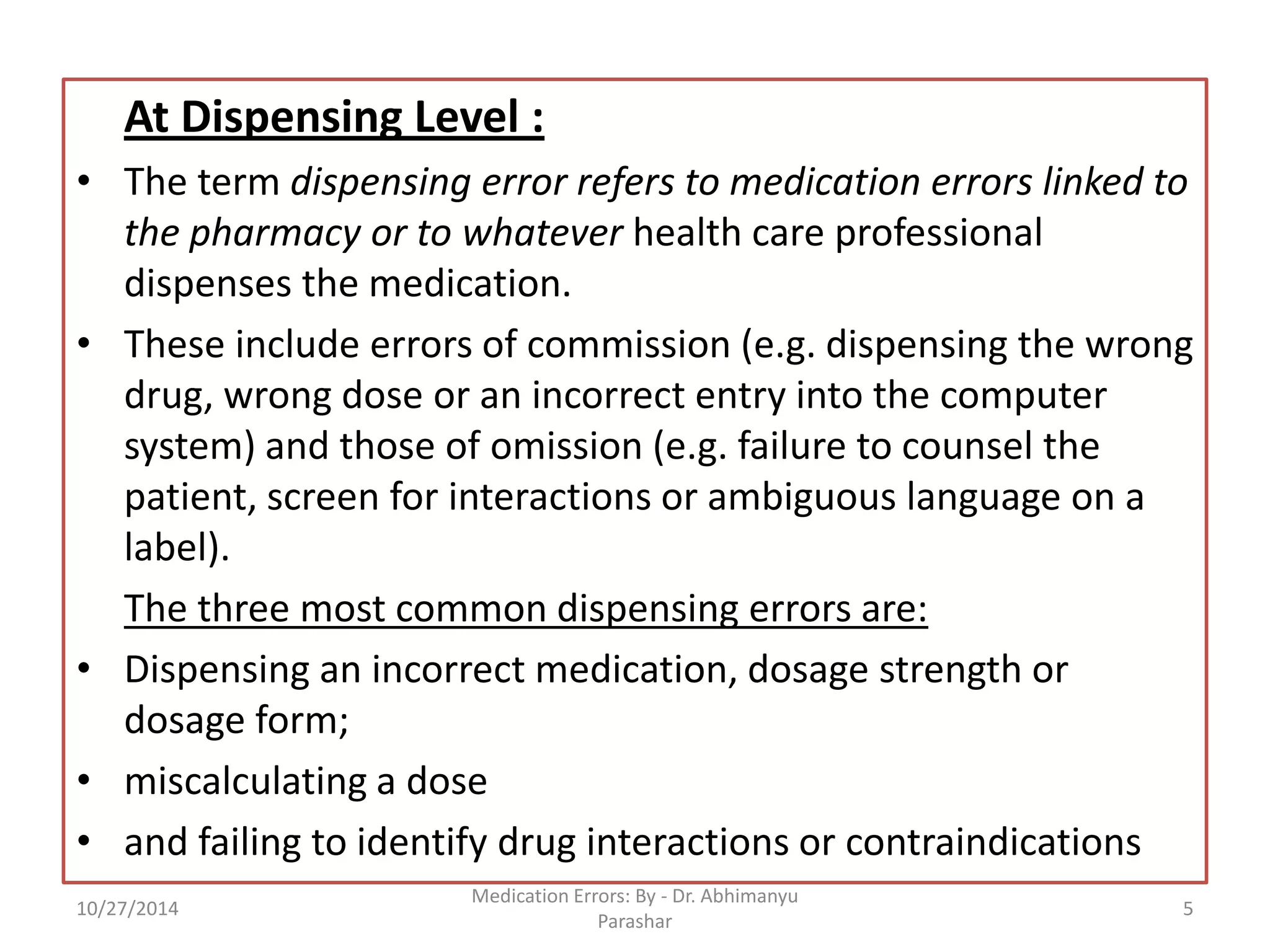
At Dispensing Level : 
•The term dispensing error refers to medication errors linked to the pharmacy or to whatever health care professional dispenses the medication. 
•These include errors of commission (e.g. dispensing the wrong drug, wrong dose or an incorrect entry into the computer system) and those of omission (e.g. failure to counsel the patient, screen for interactions or ambiguous language on a label). 
The three most common dispensing errors are: 
•Dispensing an incorrect medication, dosage strength or dosage form; 
•miscalculating a dose 
•and failing to identify drug interactions or contraindications 
10/27/2014 
5 
Medication Errors: By -Dr. Abhimanyu Parashar
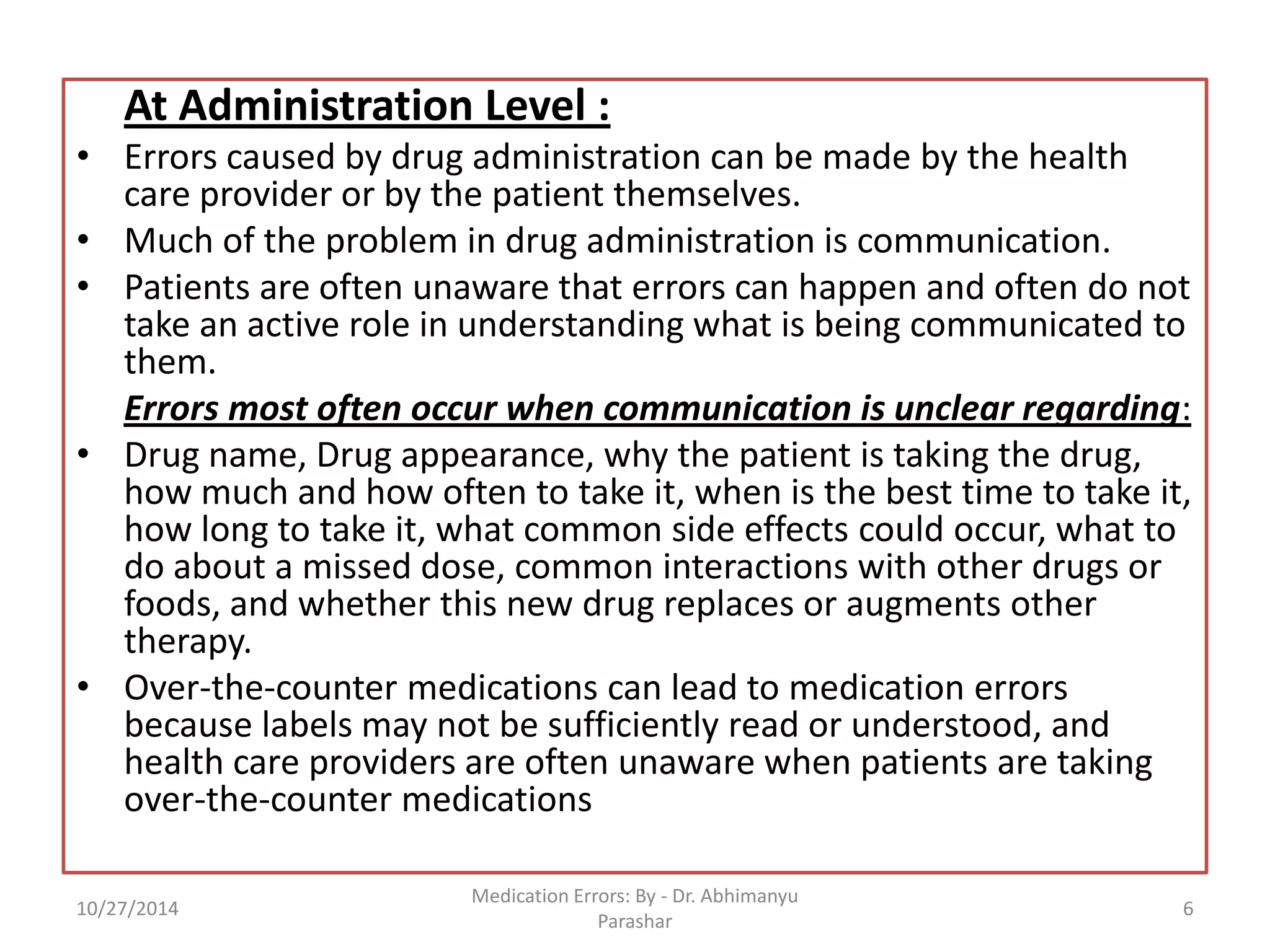
At Administration Level : 
•Errors caused by drug administration can be made by the health care provider or by the patient themselves. 
•Much of the problem in drug administration is communication. 
•Patients are often unaware that errors can happen and often do not take an active role in understanding what is being communicated to them. 
Errors most often occur when communication is unclear regarding: 
•Drug name, Drug appearance, why the patient is taking the drug, how much and how often to take it, when is the best time to take it, how long to take it, what common side effects could occur, what to do about a missed dose, common interactions with other drugs or foods, and whether this new drug replaces or augments other therapy. 
•Over-the-counter medications can lead to medication errors because labels may not be sufficiently read or understood, and health care providers are often unaware when patients are taking over-the-counter medications 
10/27/2014 
6 
Medication Errors: By -Dr. Abhimanyu Parashar
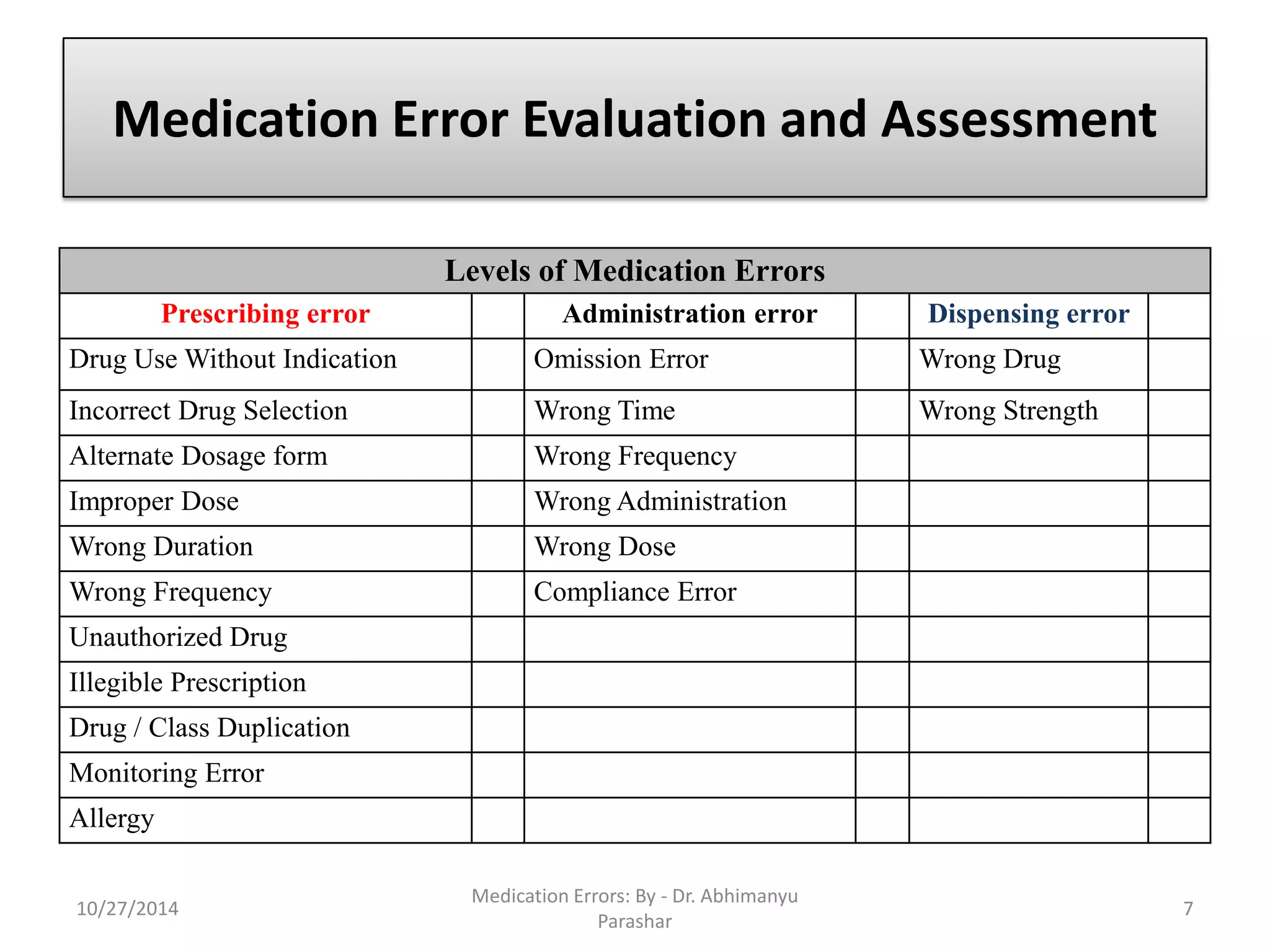
Medication Error Evaluation and Assessment 
Levels of Medication Errors 
Prescribing error 
Administration error 
Dispensing error 
Drug Use Without Indication 
Omission Error 
Wrong Drug 
Incorrect Drug Selection 
Wrong Time 
Wrong Strength 
Alternate Dosage form 
Wrong Frequency 
Improper Dose 
Wrong Administration 
Wrong Duration 
Wrong Dose 
Wrong Frequency 
Compliance Error 
Unauthorized Drug 
Illegible Prescription 
Drug / Class Duplication 
Monitoring Error 
Allergy 
10/27/20147 
Medication Errors: By -Dr. Abhimanyu Parashar
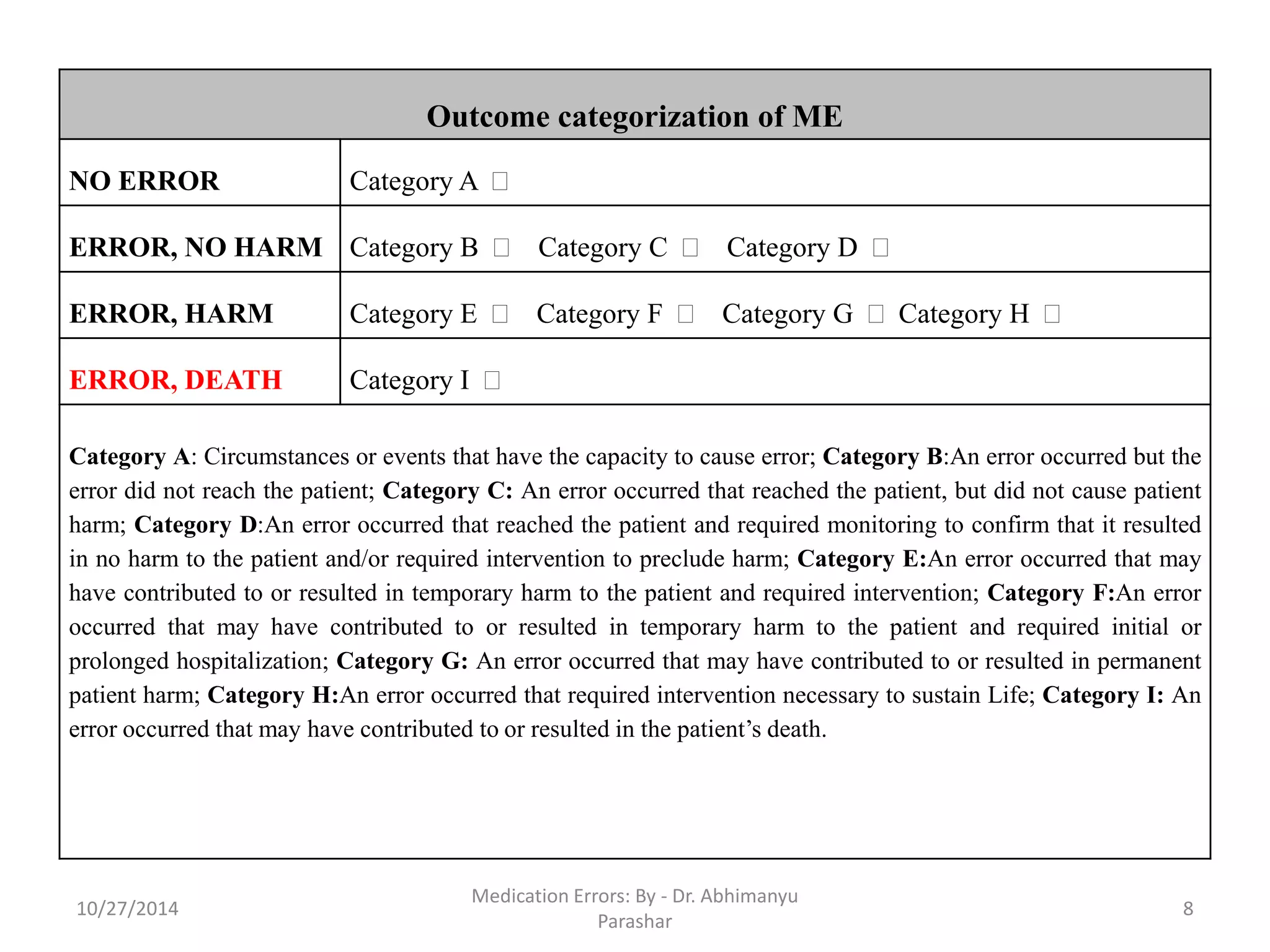
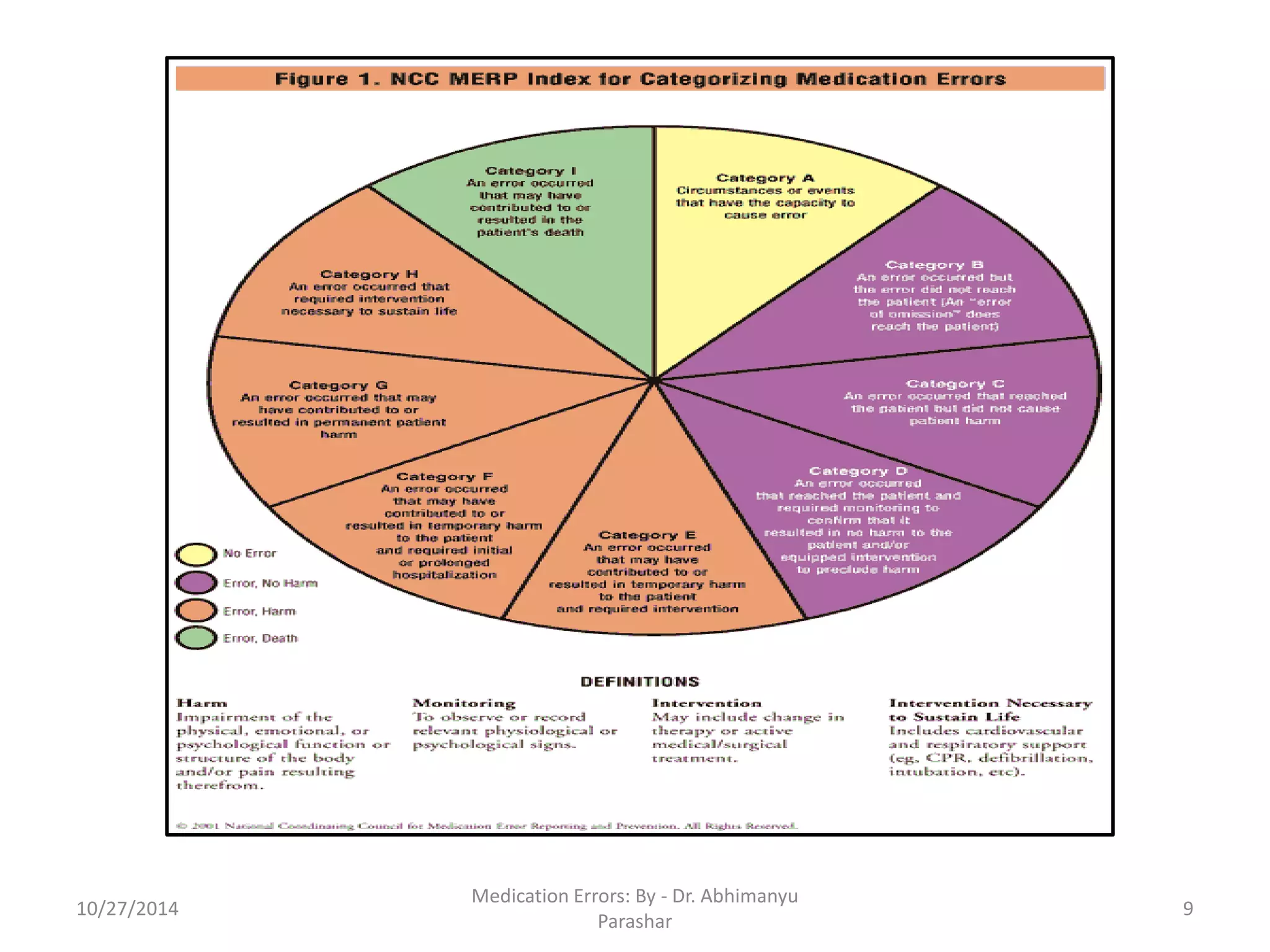
Outcome categorization of ME 
NO ERROR 
Category A  
ERROR, NO HARM 
Category B Category C Category D  
ERROR, HARM 
Category E Category F Category G Category H  
ERROR, DEATH 
Category I  
CategoryA:Circumstancesoreventsthathavethecapacitytocauseerror;CategoryB:Anerroroccurredbuttheerrordidnotreachthepatient;CategoryC:Anerroroccurredthatreachedthepatient,butdidnotcausepatientharm;CategoryD:Anerroroccurredthatreachedthepatientandrequiredmonitoringtoconfirmthatitresultedinnoharmtothepatientand/orrequiredinterventiontoprecludeharm;CategoryE:Anerroroccurredthatmayhavecontributedtoorresultedintemporaryharmtothepatientandrequiredintervention;CategoryF:Anerroroccurredthatmayhavecontributedtoorresultedintemporaryharmtothepatientandrequiredinitialorprolongedhospitalization;CategoryG:Anerroroccurredthatmayhavecontributedtoorresultedinpermanentpatientharm;CategoryH:AnerroroccurredthatrequiredinterventionnecessarytosustainLife;CategoryI:Anerroroccurredthatmayhavecontributedtoorresultedinthepatient’sdeath. 
10/27/2014 
8 
Medication Errors: By -Dr. Abhimanyu Parashar
10/27/2014 
Medication Errors: By -Dr. Abhimanyu Parashar 
9
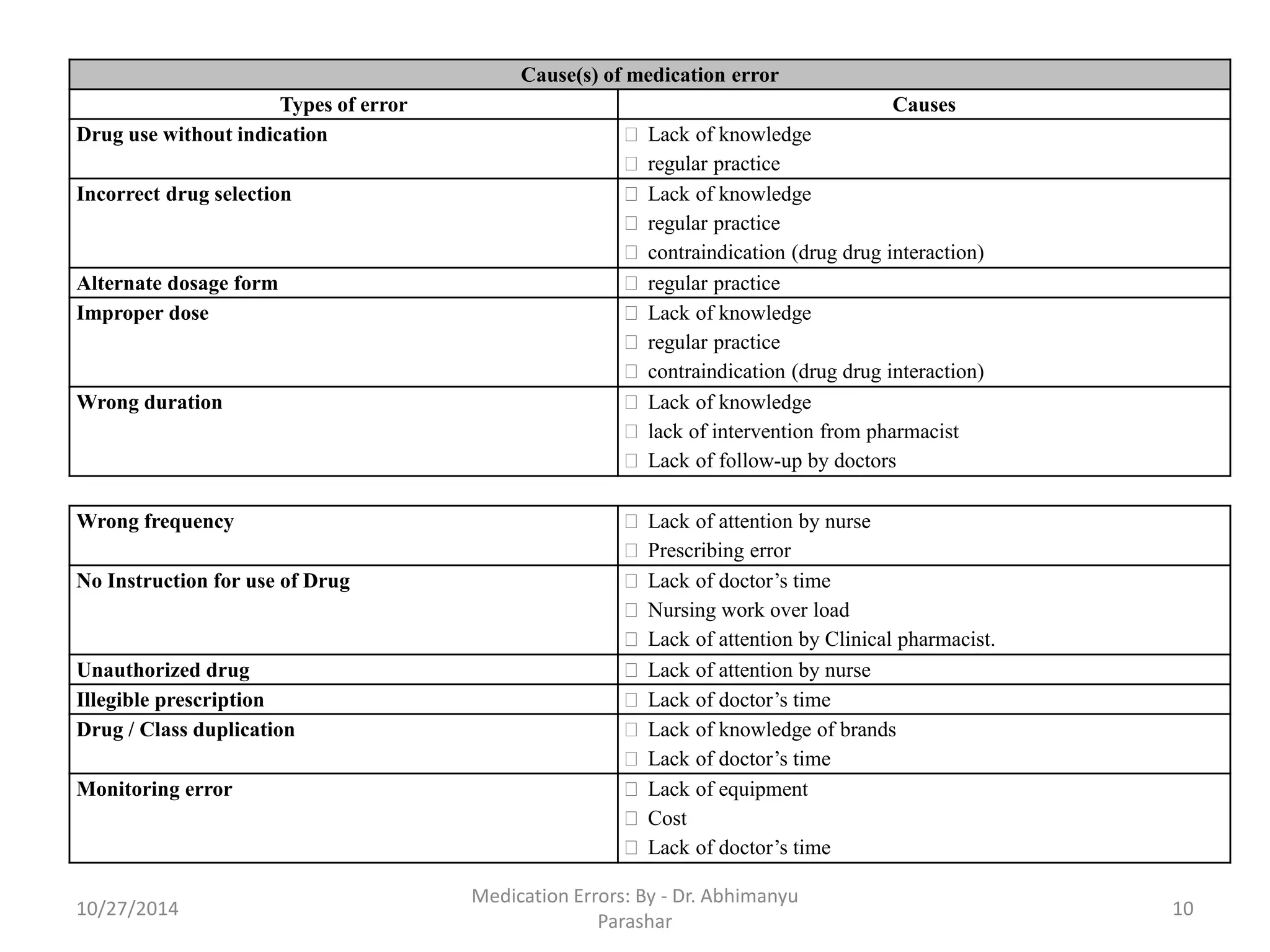
Cause(s) of medication error 
Types of error 
Causes 
Drug use without indication 
Lack of knowledge 
regular practice 
Incorrect drug selection 
Lack of knowledge 
regular practice 
contraindication (drug drug interaction) 
Alternate dosage form 
regular practice 
Improper dose 
Lack of knowledge 
regular practice 
contraindication (drug drug interaction) 
Wrong duration 
Lack of knowledge 
lack of intervention from pharmacist 
Lack of follow-up by doctors 
Wrong frequency 
Lack of attention by nurse 
Prescribing error 
No Instruction for use of Drug 
Lack of doctor’s time 
Nursing work over load 
Lack of attention by Clinical pharmacist. 
Unauthorized drug 
Lack of attention by nurse 
Illegible prescription 
Lack of doctor’s time 
Drug / Class duplication 
Lack of knowledge of brands 
Lack of doctor’s time 
Monitoring error 
Lack of equipment 
Cost 
Lack of doctor’s time 
10/27/2014 
10Medication Errors: By -Dr. Abhimanyu Parashar
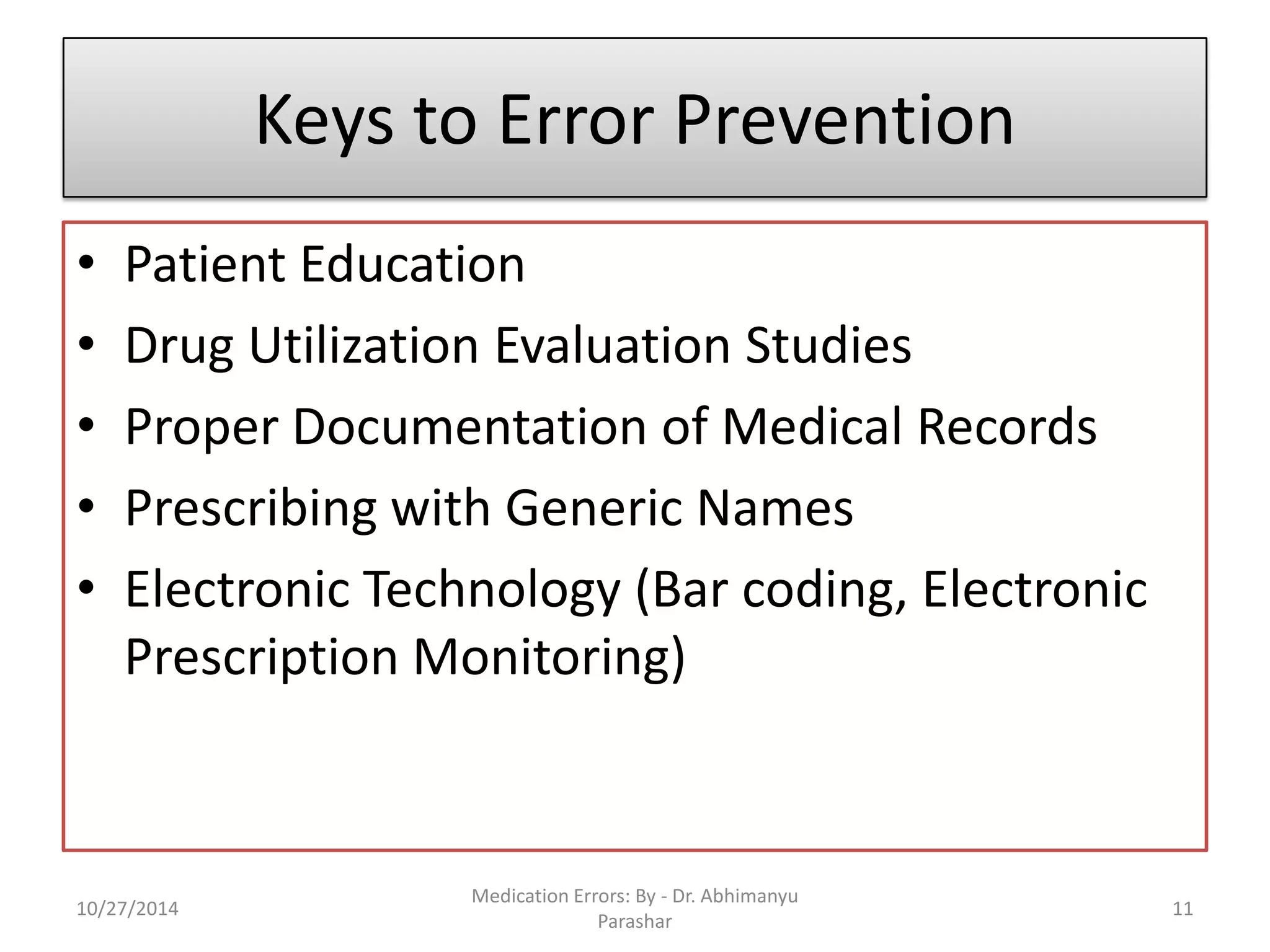
Keys to Error Prevention 
•Patient Education 
•Drug Utilization Evaluation Studies 
•Proper Documentation of Medical Records 
•Prescribing with Generic Names 
•Electronic Technology (Bar coding, Electronic Prescription Monitoring) 
10/27/2014 
Medication Errors: By -Dr. Abhimanyu Parashar 
11
10/27/2014 
12 
Medication Errors: By -Dr. Abhimanyu Parashar

Medication errors: Causes, Assessment, Evaluation and Prevention

  • 1.
  • 2.
    What is ME •"A medication error is any preventable eventthat may cause or lead to inappropriate medication use or patient harm while the medication is in the control of the health care professional, patient, or consumer. •Such events may be related to professional practice, health care products, procedures, and systems, including prescribing; order communication; product labelling, packaging, and nomenclature; compounding; dispensing; distribution; administration; education; monitoring; and use." 10/27/2014 2 Medication Errors: By -Dr. Abhimanyu Parashar
  • 3.
    How Do theyOccur ? •Errors can occur at any step along the way, from prescribing to the ultimate provision of the drug to the patient. •Common causes of medication error include incorrect diagnosis, prescribing errors, dose miscalculations, poor drug distribution practices, drug and drug device related problems, incorrect drug administration, failed communication and lack of patient education. 10/27/20143 Medication Errors: By -Dr. Abhimanyu Parashar
  • 4.
    At Prescribing Level: •illegible handwritten prescriptions. •insufficient or missing information about co-prescribed medications, past dose-response relationships, laboratory values and allergic sensitivities. •Incorrect drug or dose is selection, or when a regimen is too complex. •When prescriptions are transmitted orally, sound-alike names may cause error. •Similarly, drugs with similar-looking names can be incorrectly dispensed when prescriptions are handwritten. •Errors may occur because a prescription is never transmitted to a pharmacy, or a prescription is never filled by the patient. •Physician sampling of medications can contribute to medication errors due to the lack of both adequate documentation and drug utilization review. 10/27/2014 4 Medication Errors: By -Dr. Abhimanyu Parashar
  • 5.
    At Dispensing Level: •The term dispensing error refers to medication errors linked to the pharmacy or to whatever health care professional dispenses the medication. •These include errors of commission (e.g. dispensing the wrong drug, wrong dose or an incorrect entry into the computer system) and those of omission (e.g. failure to counsel the patient, screen for interactions or ambiguous language on a label). The three most common dispensing errors are: •Dispensing an incorrect medication, dosage strength or dosage form; •miscalculating a dose •and failing to identify drug interactions or contraindications 10/27/2014 5 Medication Errors: By -Dr. Abhimanyu Parashar
  • 6.
    At Administration Level: •Errors caused by drug administration can be made by the health care provider or by the patient themselves. •Much of the problem in drug administration is communication. •Patients are often unaware that errors can happen and often do not take an active role in understanding what is being communicated to them. Errors most often occur when communication is unclear regarding: •Drug name, Drug appearance, why the patient is taking the drug, how much and how often to take it, when is the best time to take it, how long to take it, what common side effects could occur, what to do about a missed dose, common interactions with other drugs or foods, and whether this new drug replaces or augments other therapy. •Over-the-counter medications can lead to medication errors because labels may not be sufficiently read or understood, and health care providers are often unaware when patients are taking over-the-counter medications 10/27/2014 6 Medication Errors: By -Dr. Abhimanyu Parashar
  • 7.
    Medication Error Evaluationand Assessment Levels of Medication Errors Prescribing error Administration error Dispensing error Drug Use Without Indication Omission Error Wrong Drug Incorrect Drug Selection Wrong Time Wrong Strength Alternate Dosage form Wrong Frequency Improper Dose Wrong Administration Wrong Duration Wrong Dose Wrong Frequency Compliance Error Unauthorized Drug Illegible Prescription Drug / Class Duplication Monitoring Error Allergy 10/27/20147 Medication Errors: By -Dr. Abhimanyu Parashar
  • 8.
    Outcome categorization ofME NO ERROR Category A  ERROR, NO HARM Category B Category C Category D  ERROR, HARM Category E Category F Category G Category H  ERROR, DEATH Category I  CategoryA:Circumstancesoreventsthathavethecapacitytocauseerror;CategoryB:Anerroroccurredbuttheerrordidnotreachthepatient;CategoryC:Anerroroccurredthatreachedthepatient,butdidnotcausepatientharm;CategoryD:Anerroroccurredthatreachedthepatientandrequiredmonitoringtoconfirmthatitresultedinnoharmtothepatientand/orrequiredinterventiontoprecludeharm;CategoryE:Anerroroccurredthatmayhavecontributedtoorresultedintemporaryharmtothepatientandrequiredintervention;CategoryF:Anerroroccurredthatmayhavecontributedtoorresultedintemporaryharmtothepatientandrequiredinitialorprolongedhospitalization;CategoryG:Anerroroccurredthatmayhavecontributedtoorresultedinpermanentpatientharm;CategoryH:AnerroroccurredthatrequiredinterventionnecessarytosustainLife;CategoryI:Anerroroccurredthatmayhavecontributedtoorresultedinthepatient’sdeath. 10/27/2014 8 Medication Errors: By -Dr. Abhimanyu Parashar
  • 9.
    10/27/2014 Medication Errors:By -Dr. Abhimanyu Parashar 9
  • 10.
    Cause(s) of medicationerror Types of error Causes Drug use without indication Lack of knowledge regular practice Incorrect drug selection Lack of knowledge regular practice contraindication (drug drug interaction) Alternate dosage form regular practice Improper dose Lack of knowledge regular practice contraindication (drug drug interaction) Wrong duration Lack of knowledge lack of intervention from pharmacist Lack of follow-up by doctors Wrong frequency Lack of attention by nurse Prescribing error No Instruction for use of Drug Lack of doctor’s time Nursing work over load Lack of attention by Clinical pharmacist. Unauthorized drug Lack of attention by nurse Illegible prescription Lack of doctor’s time Drug / Class duplication Lack of knowledge of brands Lack of doctor’s time Monitoring error Lack of equipment Cost Lack of doctor’s time 10/27/2014 10Medication Errors: By -Dr. Abhimanyu Parashar
  • 11.
    Keys to ErrorPrevention •Patient Education •Drug Utilization Evaluation Studies •Proper Documentation of Medical Records •Prescribing with Generic Names •Electronic Technology (Bar coding, Electronic Prescription Monitoring) 10/27/2014 Medication Errors: By -Dr. Abhimanyu Parashar 11
  • 12.
    10/27/2014 12 MedicationErrors: By -Dr. Abhimanyu Parashar