ABHISHEK SRIVASTAVA
MANAGER – QUALITY
BHM, MHA (HOSPITAL ADMINISTRATION)
 What is Medication Error
 Dangerous Abbreviations
 Taxonomy of Medication Error
 Reporting of Medication Error
 Recording of Medication Error
 A medication error is any preventable event that
may cause or lead to inappropriate medication
use or patient harm while the medication is in
the control of the health care professional,
patient, or consumer. Such events may be related
to professional practice, health care products,
procedures, and systems, including prescribing,
order communication, product labeling,
packaging, and nomenclature, compounding,
dispensing, distribution, administration,
education, monitoring, and use.“
• Ordering/Prescribing
• Documenting
• Transcribing
• Dispensing
• Administering
• Monitoring
• Wrong Dose / Improper Dose
• Allergy
 Medication errors are most common at the ordering or prescribing stage
 Typical errors include the healthcare provider writing the wrong medication,
wrong route or dose, or the wrong frequency
 These ordering errors account for almost 50% of medication errors.
 Data show that nurses and pharmacists identify anywhere from 30% to 70% of
medication-ordering errors. It is obvious that medication errors are a pervasive
problem, but in the majority of cases, the problem is preventable.
 Sloppy or illegible handwriting
 Failure to date, time and sign
 Lack of documentation
 MTE – Medication Transcription Errors
 Medication transcription and Medication Reconciliation
 The process of ordering medicine through other medium
 Copying it over HMIS to order or any other paper
 It happens due to lack of knowledge of medication
 LOOK ALIKE SOUND ALIKE
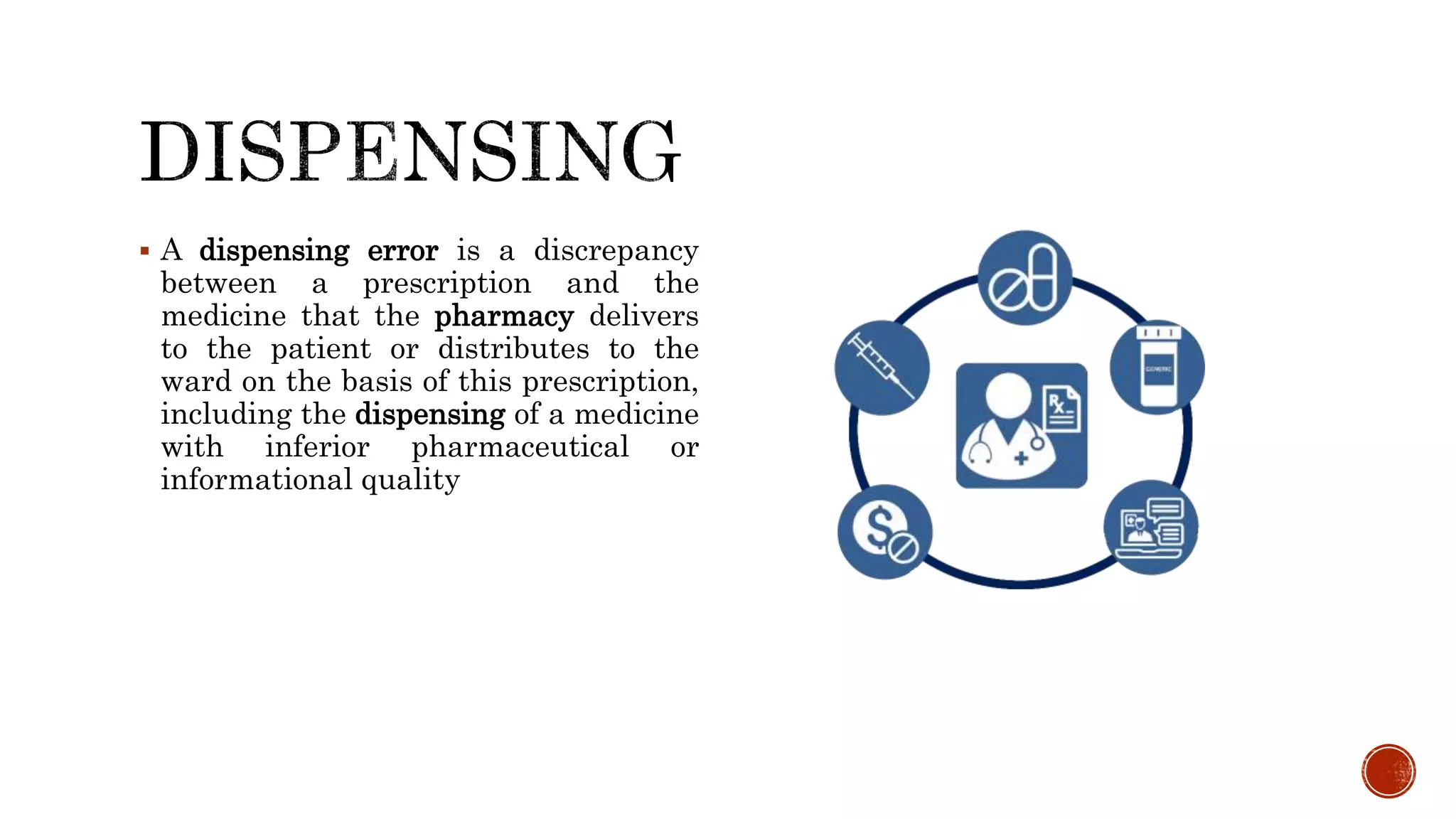
 A dispensing error is a discrepancy
between a prescription and the
medicine that the pharmacy delivers
to the patient or distributes to the
ward on the basis of this prescription,
including the dispensing of a medicine
with inferior pharmaceutical or
informational quality
 Medication administration
error (MAE) is defined as “any
difference between what the
patient received or was
supposed to receive and what
the prescriber intended in the
original order”
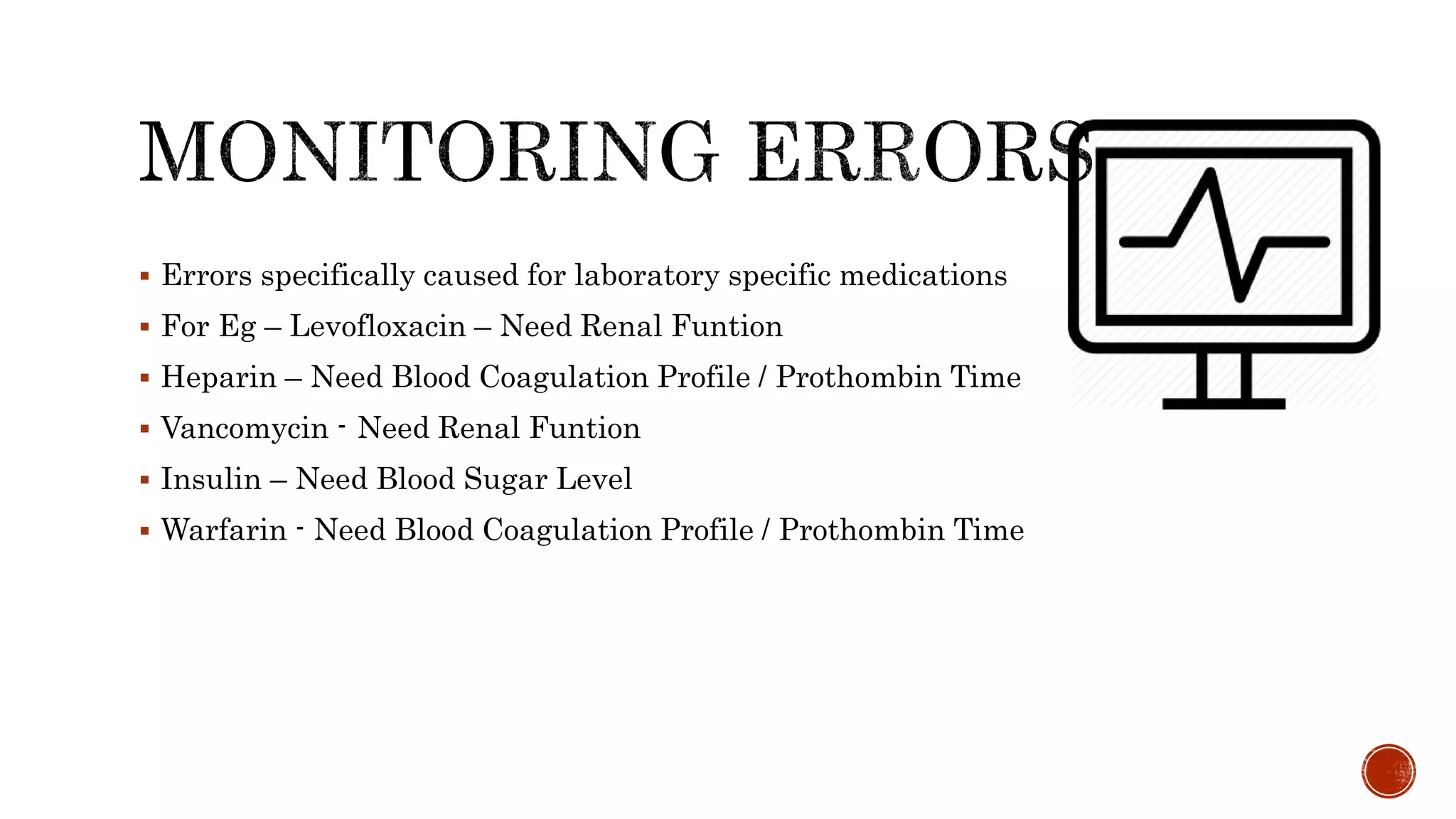
 Errors specifically caused for laboratory specific medications
 For Eg – Levofloxacin – Need Renal Funtion
 Heparin – Need Blood Coagulation Profile / Prothombin Time
 Vancomycin - Need Renal Funtion
 Insulin – Need Blood Sugar Level
 Warfarin - Need Blood Coagulation Profile / Prothombin Time
 Its Blame free
 Its thanks giving for the future
 Any one can report
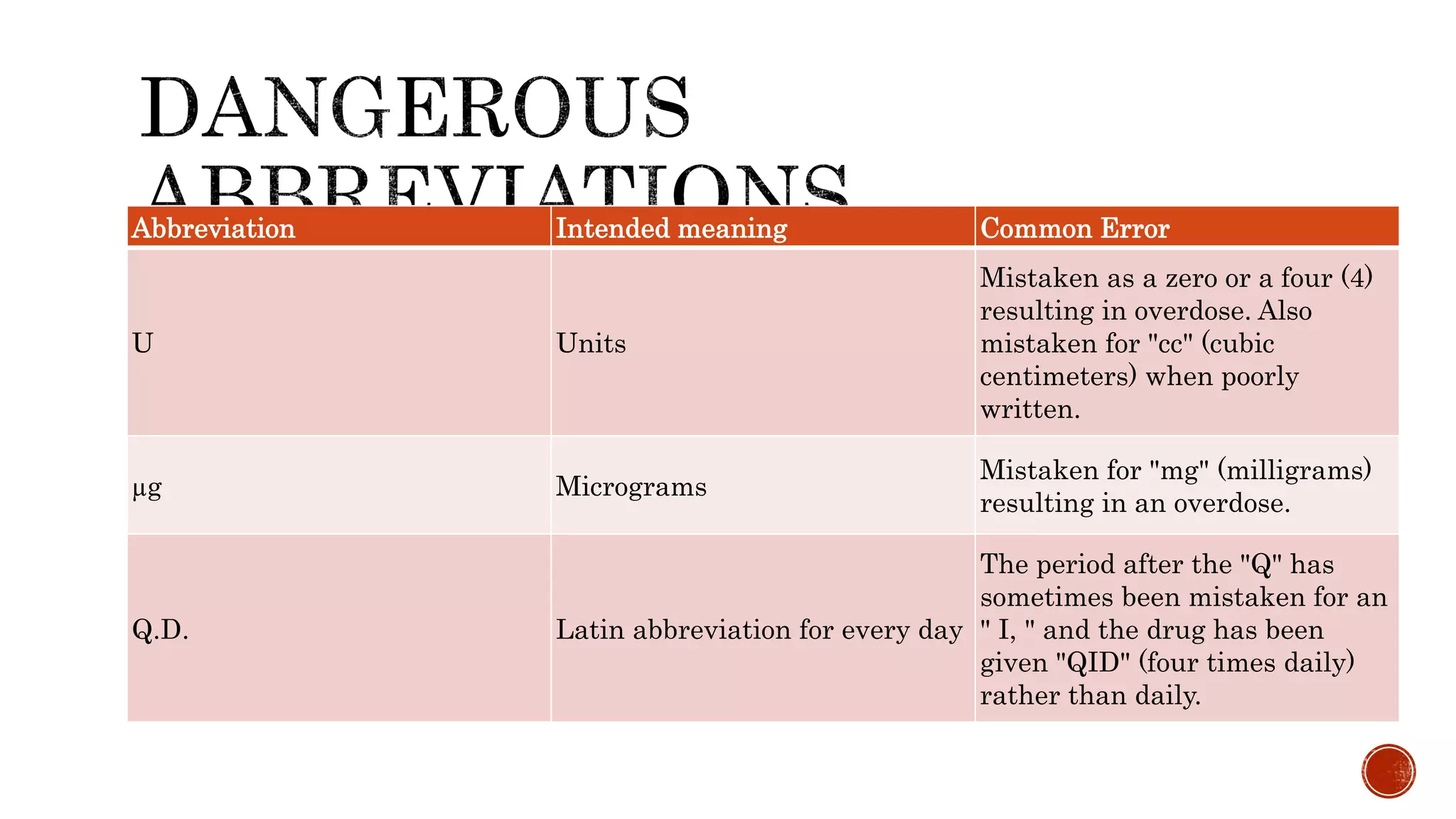
Abbreviation Intended meaning Common Error
U Units
Mistaken as a zero or a four (4)
resulting in overdose. Also
mistaken for "cc" (cubic
centimeters) when poorly
written.
µg Micrograms
Mistaken for "mg" (milligrams)
resulting in an overdose.
Q.D. Latin abbreviation for every day
The period after the "Q" has
sometimes been mistaken for an
" I, " and the drug has been
given "QID" (four times daily)
rather than daily.
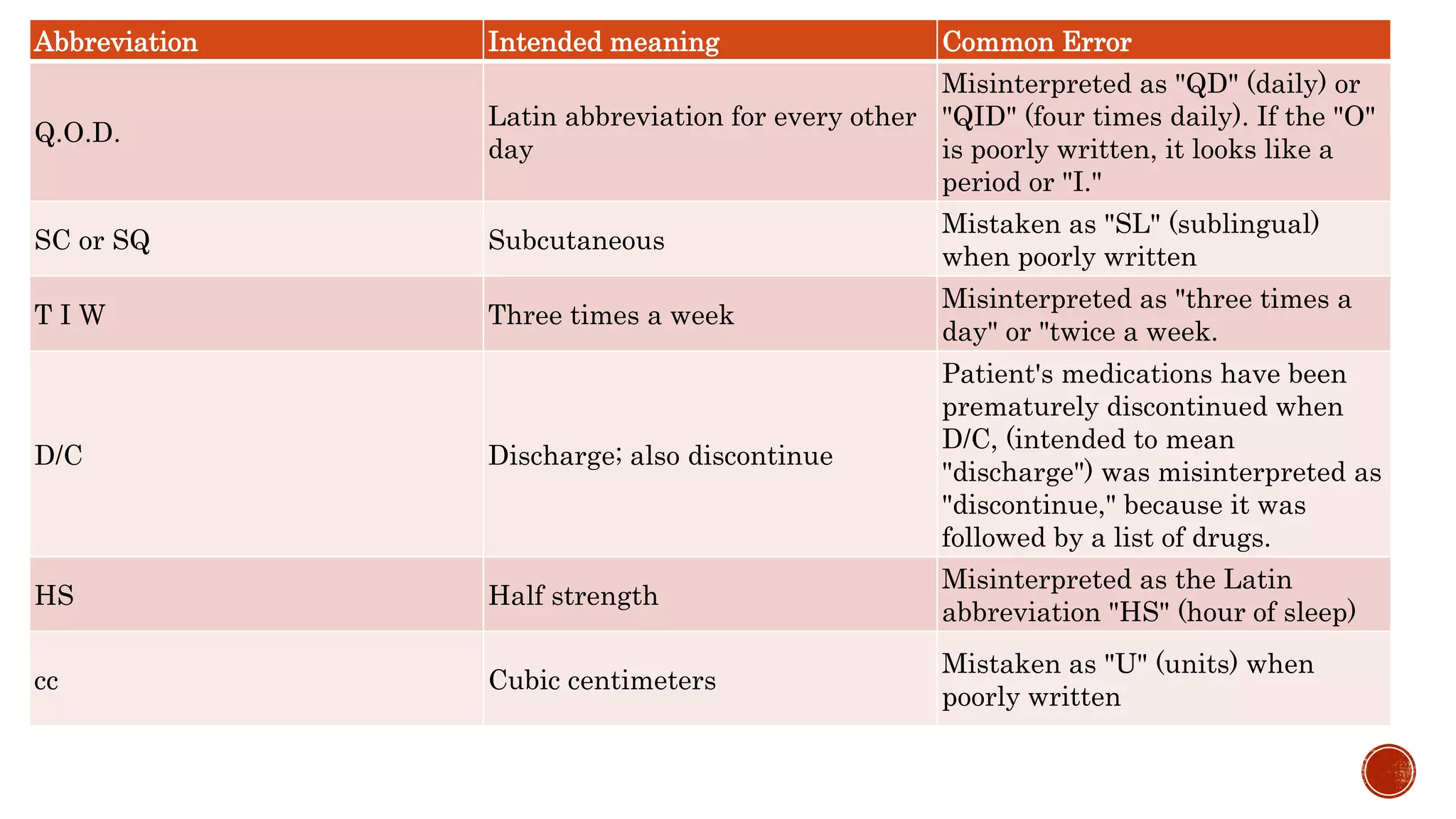
Abbreviation Intended meaning Common Error
Q.O.D.
Latin abbreviation for every other
day
Misinterpreted as "QD" (daily) or
"QID" (four times daily). If the "O"
is poorly written, it looks like a
period or "I."
SC or SQ Subcutaneous
Mistaken as "SL" (sublingual)
when poorly written
T I W Three times a week
Misinterpreted as "three times a
day" or "twice a week.
D/C Discharge; also discontinue
Patient's medications have been
prematurely discontinued when
D/C, (intended to mean
"discharge") was misinterpreted as
"discontinue," because it was
followed by a list of drugs.
HS Half strength
Misinterpreted as the Latin
abbreviation "HS" (hour of sleep)
cc Cubic centimeters
Mistaken as "U" (units) when
poorly written
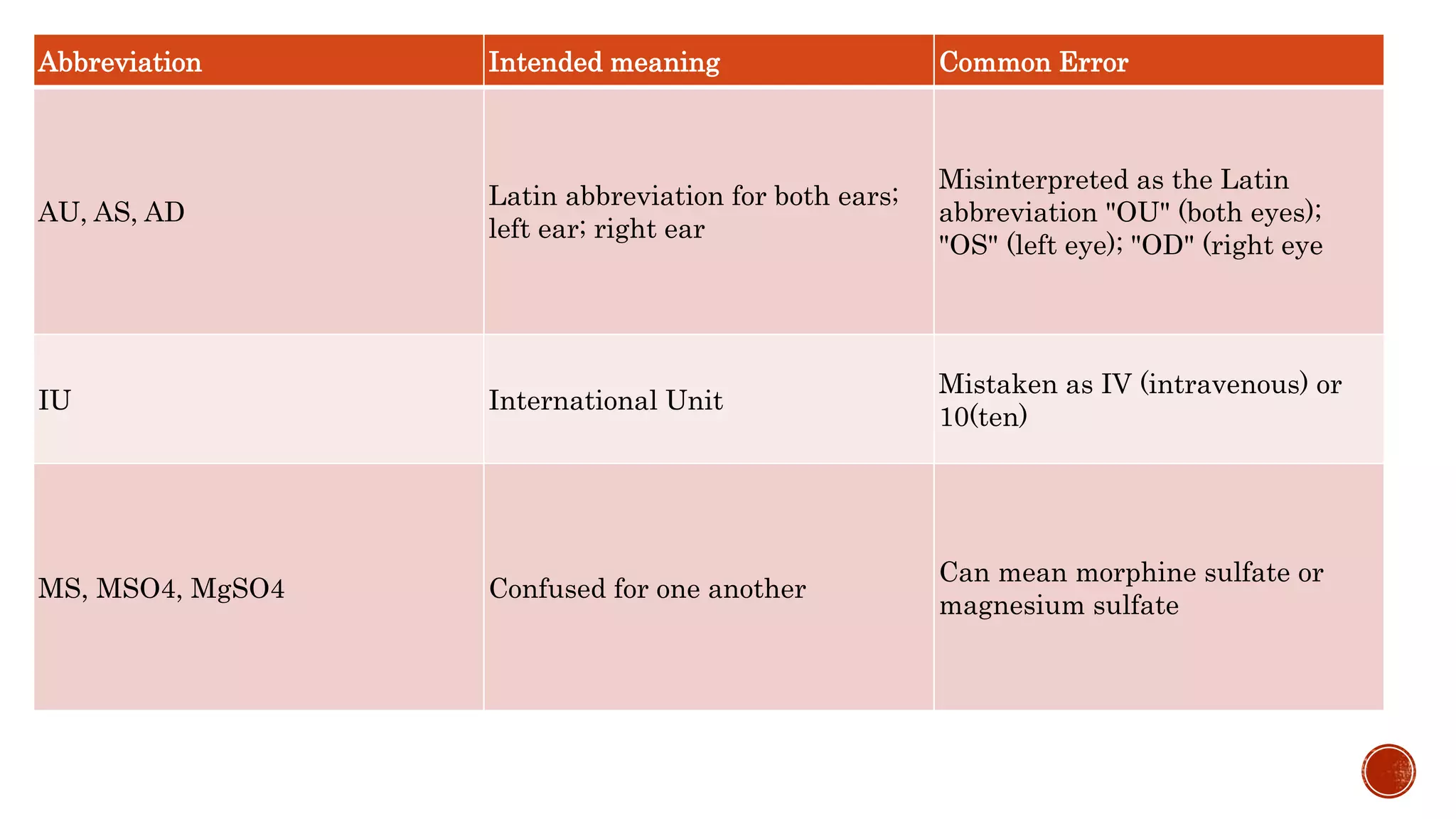
Abbreviation Intended meaning Common Error
AU, AS, AD
Latin abbreviation for both ears;
left ear; right ear
Misinterpreted as the Latin
abbreviation "OU" (both eyes);
"OS" (left eye); "OD" (right eye
IU International Unit
Mistaken as IV (intravenous) or
10(ten)
MS, MSO4, MgSO4 Confused for one another
Can mean morphine sulfate or
magnesium sulfate
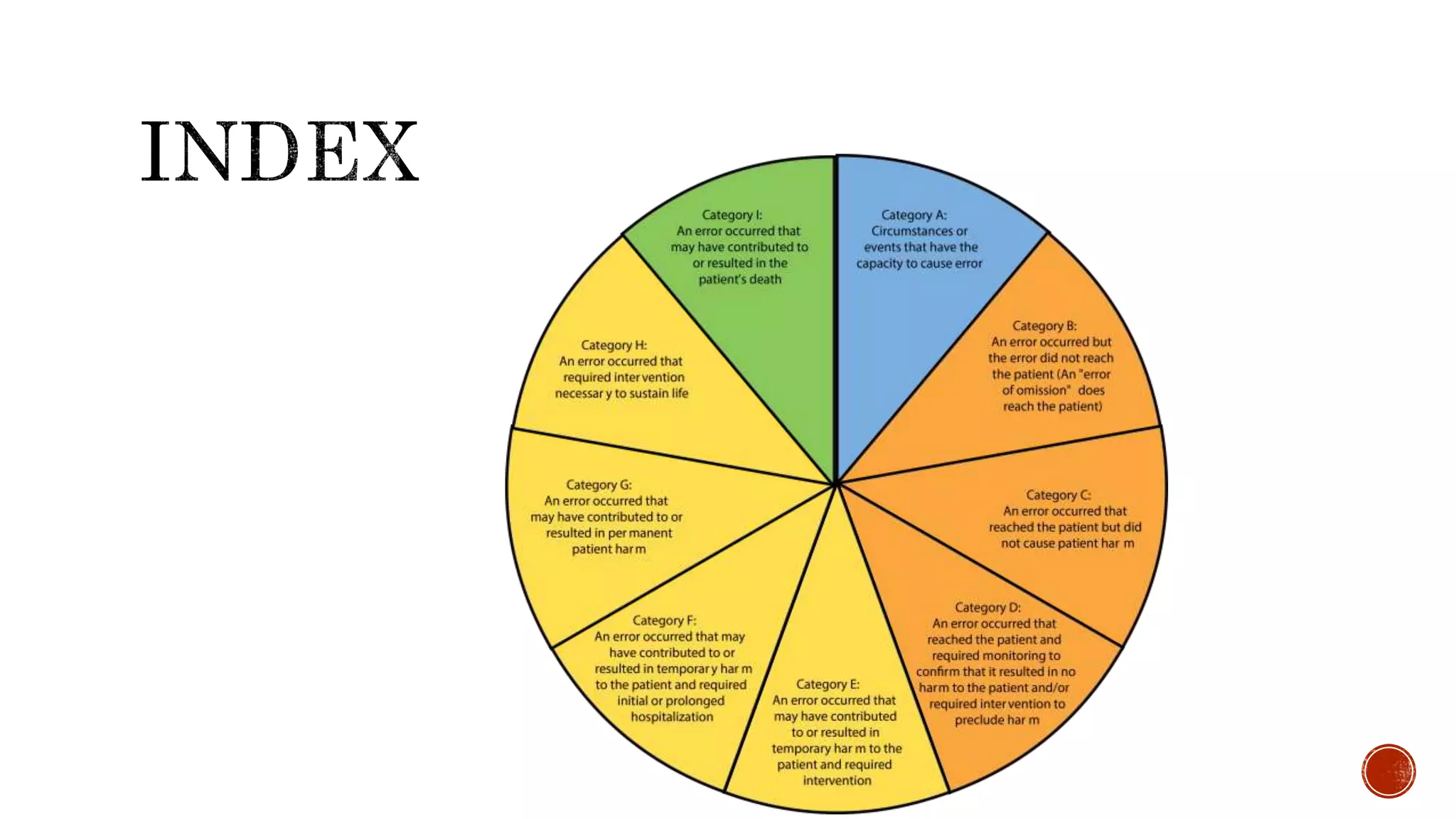
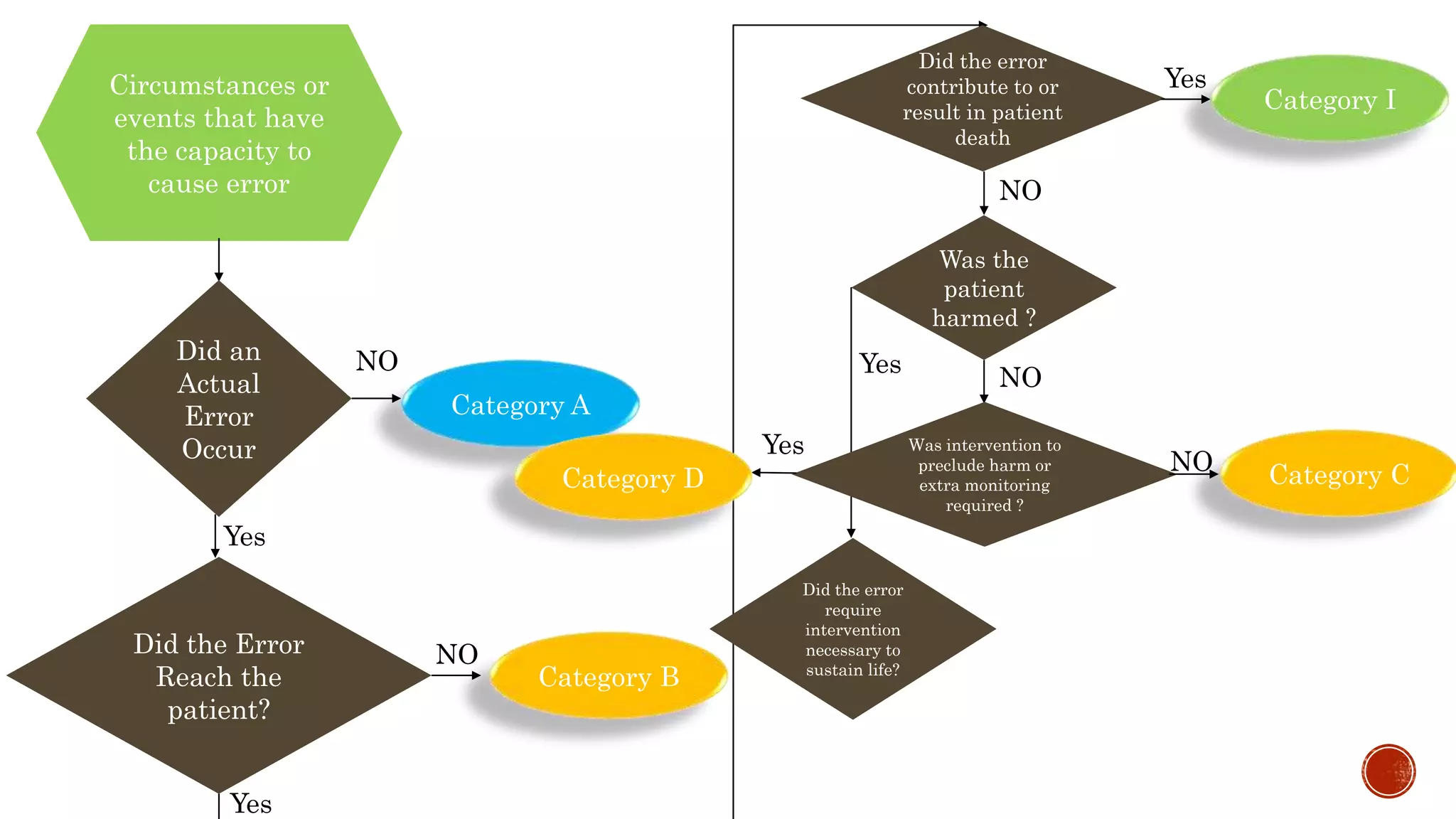
Circumstances or
events that have
the capacity to
cause error
Did an
Actual
Error
Occur
NO
Category A
Yes
Did the Error
Reach the
patient?
Category B
NO
Did the error
contribute to or
result in patient
death
Category I
Yes
Yes
NO
Was the
patient
harmed ?
Was intervention to
preclude harm or
extra monitoring
required ?
NO
Yes
Category D Category C
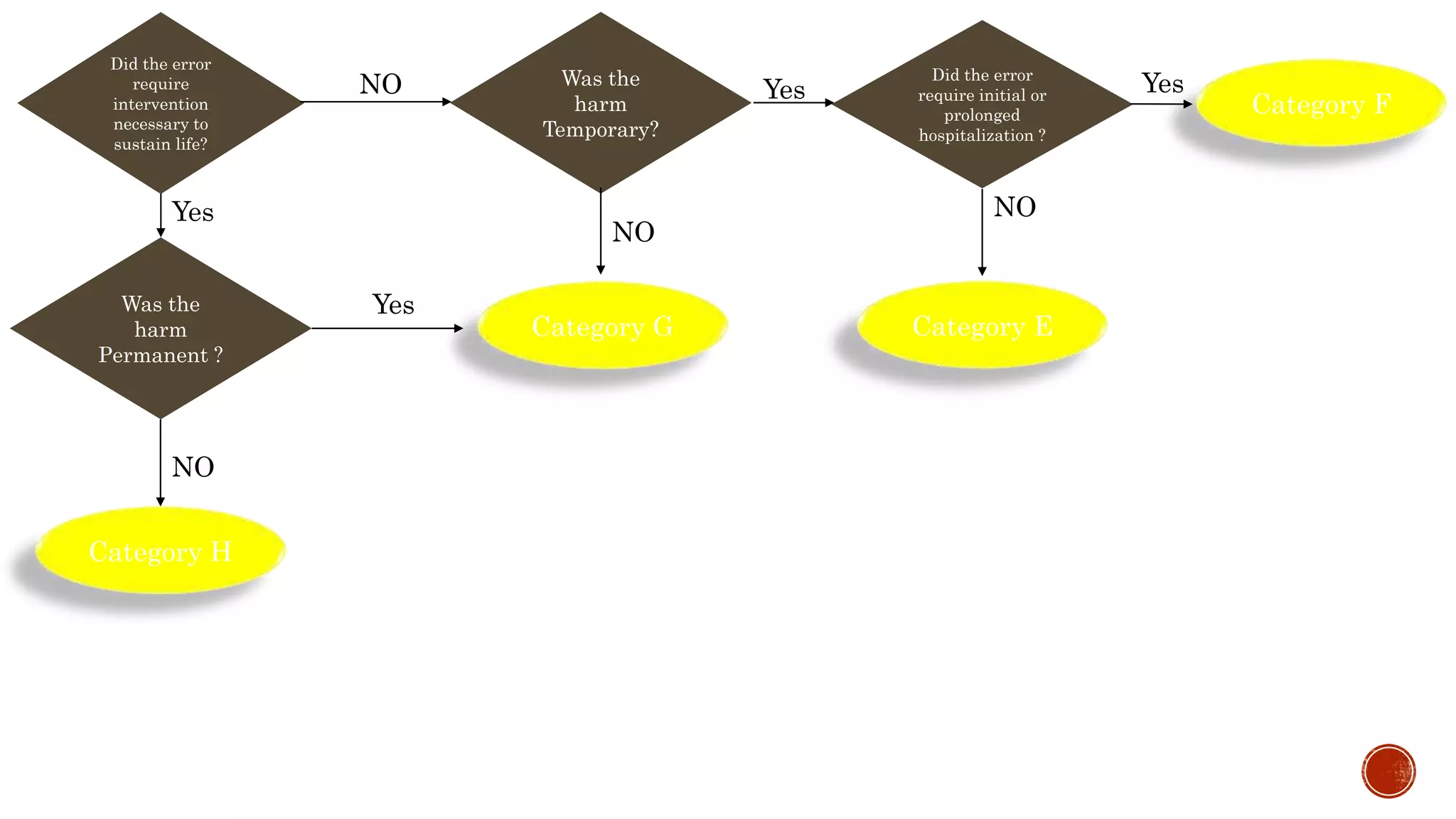
Yes
Did the error
require
intervention
necessary to
sustain life?
NO
NO
Did the error
require
intervention
necessary to
sustain life?
Was the
harm
Temporary?
Yes
Was the
harm
Permanent ?
Category G
NO
Yes
NO
Category H
Yes
Did the error
require initial or
prolonged
hospitalization ?
Yes
Category F
NO
Category E
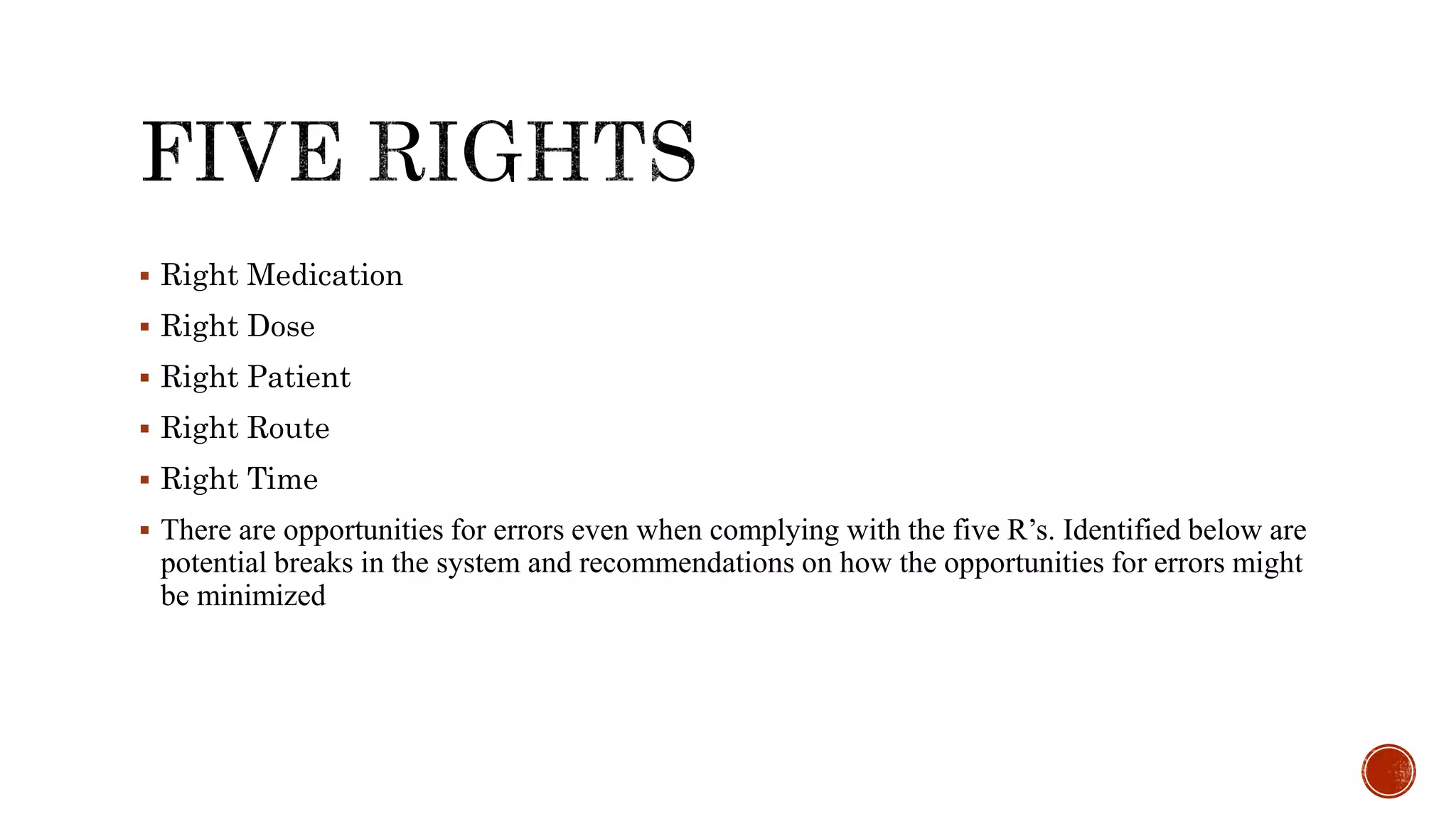
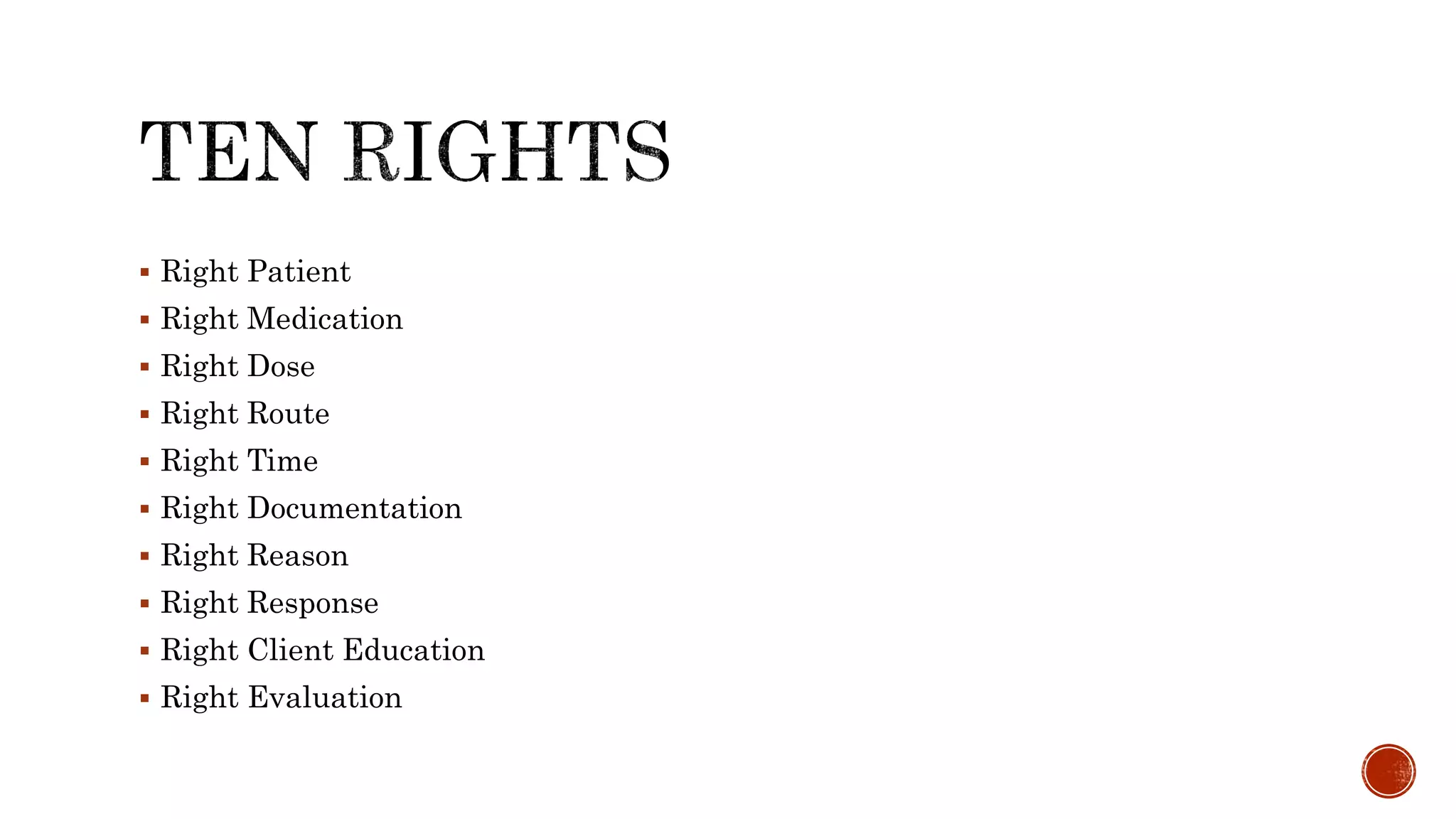
 Right Medication
 Right Dose
 Right Patient
 Right Route
 Right Time
 There are opportunities for errors even when complying with the five R’s. Identified below are
potential breaks in the system and recommendations on how the opportunities for errors might
be minimized
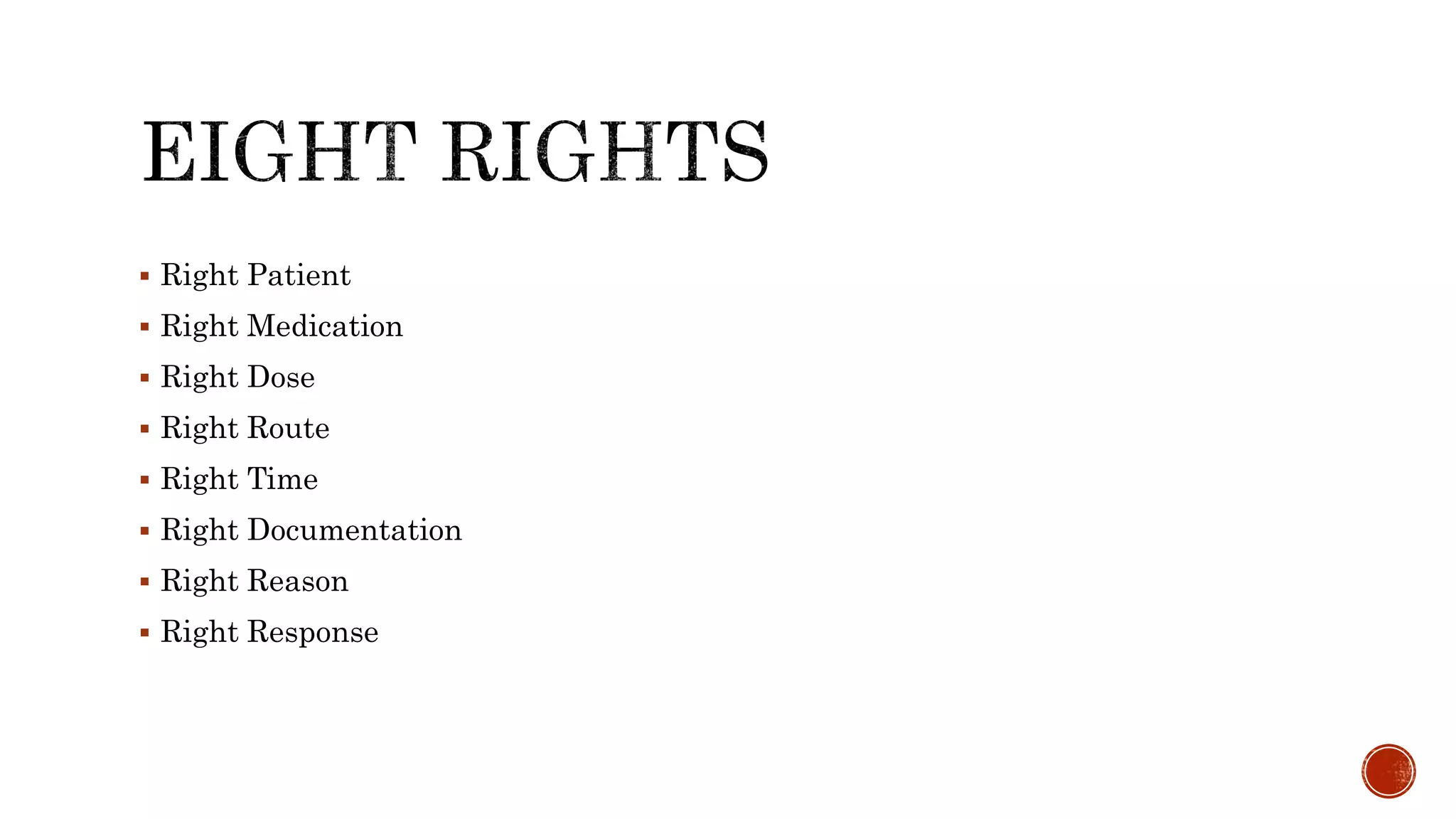
 Right Patient
 Right Medication
 Right Dose
 Right Route
 Right Time
 Right Documentation
 Right Reason
 Right Response
 Right Patient
 Right Medication
 Right Dose
 Right Route
 Right Time
 Right Documentation
 Right Reason
 Right Response
 Right Client Education
 Right Evaluation
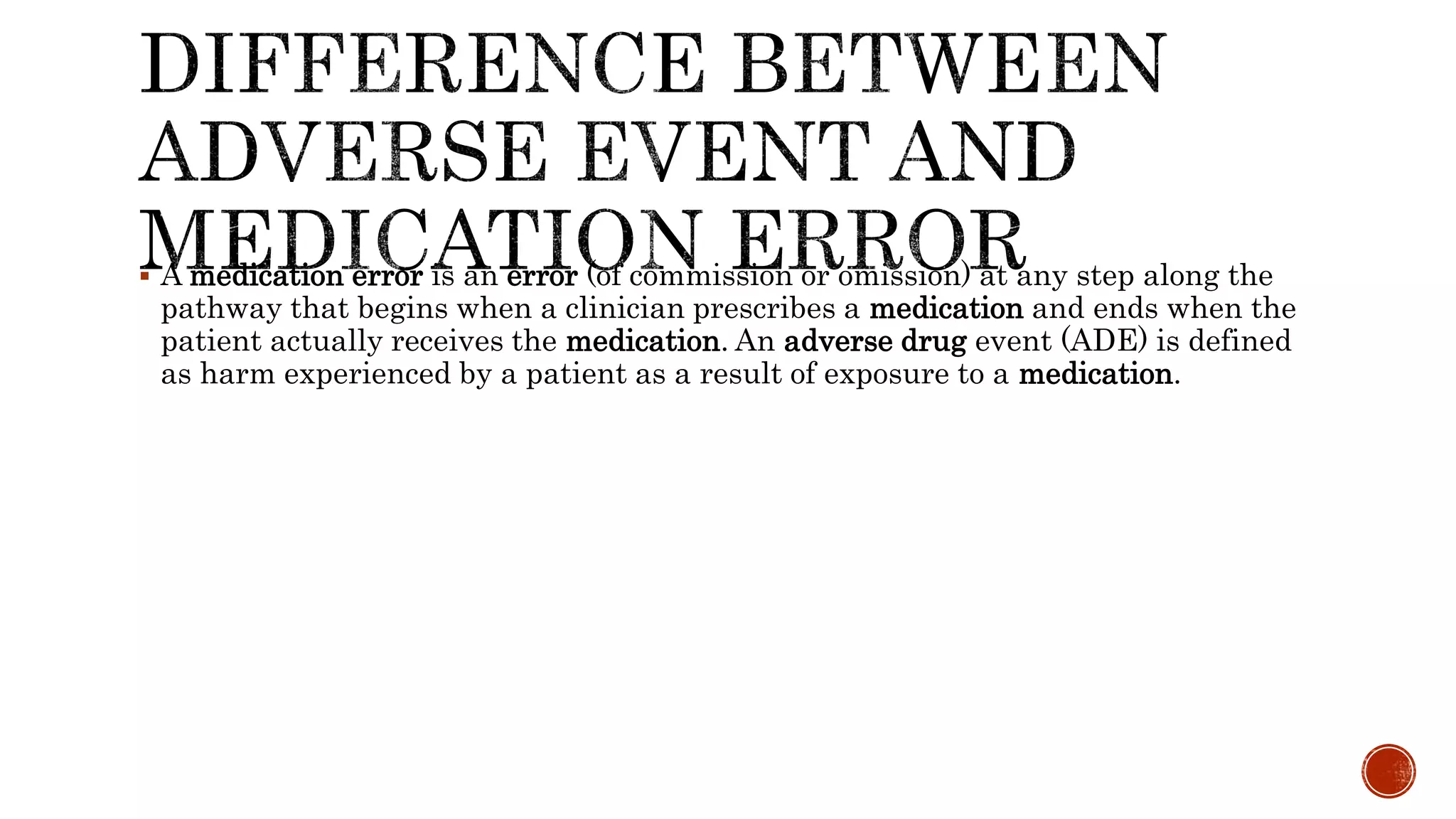
 A medication error is an error (of commission or omission) at any step along the
pathway that begins when a clinician prescribes a medication and ends when the
patient actually receives the medication. An adverse drug event (ADE) is defined
as harm experienced by a patient as a result of exposure to a medication.
Medication Error as per 5th Edition Standard of NABH

Medication Error as per 5th Edition Standard of NABH

  • 1.
    ABHISHEK SRIVASTAVA MANAGER –QUALITY BHM, MHA (HOSPITAL ADMINISTRATION)
  • 3.
     What isMedication Error  Dangerous Abbreviations  Taxonomy of Medication Error  Reporting of Medication Error  Recording of Medication Error
  • 4.
     A medicationerror is any preventable event that may cause or lead to inappropriate medication use or patient harm while the medication is in the control of the health care professional, patient, or consumer. Such events may be related to professional practice, health care products, procedures, and systems, including prescribing, order communication, product labeling, packaging, and nomenclature, compounding, dispensing, distribution, administration, education, monitoring, and use.“
  • 9.
    • Ordering/Prescribing • Documenting •Transcribing • Dispensing • Administering • Monitoring • Wrong Dose / Improper Dose • Allergy
  • 11.
     Medication errorsare most common at the ordering or prescribing stage  Typical errors include the healthcare provider writing the wrong medication, wrong route or dose, or the wrong frequency  These ordering errors account for almost 50% of medication errors.  Data show that nurses and pharmacists identify anywhere from 30% to 70% of medication-ordering errors. It is obvious that medication errors are a pervasive problem, but in the majority of cases, the problem is preventable.
  • 12.
     Sloppy orillegible handwriting  Failure to date, time and sign  Lack of documentation
  • 13.
     MTE –Medication Transcription Errors  Medication transcription and Medication Reconciliation  The process of ordering medicine through other medium  Copying it over HMIS to order or any other paper  It happens due to lack of knowledge of medication  LOOK ALIKE SOUND ALIKE
  • 14.
     A dispensingerror is a discrepancy between a prescription and the medicine that the pharmacy delivers to the patient or distributes to the ward on the basis of this prescription, including the dispensing of a medicine with inferior pharmaceutical or informational quality
  • 15.
     Medication administration error(MAE) is defined as “any difference between what the patient received or was supposed to receive and what the prescriber intended in the original order”
  • 16.
     Errors specificallycaused for laboratory specific medications  For Eg – Levofloxacin – Need Renal Funtion  Heparin – Need Blood Coagulation Profile / Prothombin Time  Vancomycin - Need Renal Funtion  Insulin – Need Blood Sugar Level  Warfarin - Need Blood Coagulation Profile / Prothombin Time
  • 17.
     Its Blamefree  Its thanks giving for the future  Any one can report
  • 18.
    Abbreviation Intended meaningCommon Error U Units Mistaken as a zero or a four (4) resulting in overdose. Also mistaken for "cc" (cubic centimeters) when poorly written. µg Micrograms Mistaken for "mg" (milligrams) resulting in an overdose. Q.D. Latin abbreviation for every day The period after the "Q" has sometimes been mistaken for an " I, " and the drug has been given "QID" (four times daily) rather than daily.
  • 19.
    Abbreviation Intended meaningCommon Error Q.O.D. Latin abbreviation for every other day Misinterpreted as "QD" (daily) or "QID" (four times daily). If the "O" is poorly written, it looks like a period or "I." SC or SQ Subcutaneous Mistaken as "SL" (sublingual) when poorly written T I W Three times a week Misinterpreted as "three times a day" or "twice a week. D/C Discharge; also discontinue Patient's medications have been prematurely discontinued when D/C, (intended to mean "discharge") was misinterpreted as "discontinue," because it was followed by a list of drugs. HS Half strength Misinterpreted as the Latin abbreviation "HS" (hour of sleep) cc Cubic centimeters Mistaken as "U" (units) when poorly written
  • 20.
    Abbreviation Intended meaningCommon Error AU, AS, AD Latin abbreviation for both ears; left ear; right ear Misinterpreted as the Latin abbreviation "OU" (both eyes); "OS" (left eye); "OD" (right eye IU International Unit Mistaken as IV (intravenous) or 10(ten) MS, MSO4, MgSO4 Confused for one another Can mean morphine sulfate or magnesium sulfate
  • 22.
    Circumstances or events thathave the capacity to cause error Did an Actual Error Occur NO Category A Yes Did the Error Reach the patient? Category B NO Did the error contribute to or result in patient death Category I Yes Yes NO Was the patient harmed ? Was intervention to preclude harm or extra monitoring required ? NO Yes Category D Category C Yes Did the error require intervention necessary to sustain life? NO
  • 23.
    NO Did the error require intervention necessaryto sustain life? Was the harm Temporary? Yes Was the harm Permanent ? Category G NO Yes NO Category H Yes Did the error require initial or prolonged hospitalization ? Yes Category F NO Category E
  • 24.
     Right Medication Right Dose  Right Patient  Right Route  Right Time  There are opportunities for errors even when complying with the five R’s. Identified below are potential breaks in the system and recommendations on how the opportunities for errors might be minimized
  • 25.
     Right Patient Right Medication  Right Dose  Right Route  Right Time  Right Documentation  Right Reason  Right Response
  • 26.
     Right Patient Right Medication  Right Dose  Right Route  Right Time  Right Documentation  Right Reason  Right Response  Right Client Education  Right Evaluation
  • 27.
     A medicationerror is an error (of commission or omission) at any step along the pathway that begins when a clinician prescribes a medication and ends when the patient actually receives the medication. An adverse drug event (ADE) is defined as harm experienced by a patient as a result of exposure to a medication.

Editor's Notes

  • #5 A medication error is any preventable event that may cause or lead to inappropriate medication use or patient harm while the medication is in the control of the health care professional, patient, or consumer. Such events may be related to professional practice, health care products, procedures, and systems, including prescribing, order communication, product labeling, packaging, and nomenclature, compounding, dispensing, distribution, administration, education, monitoring, and use."