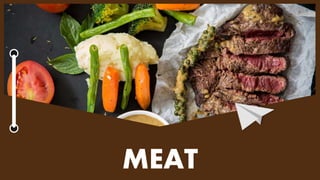
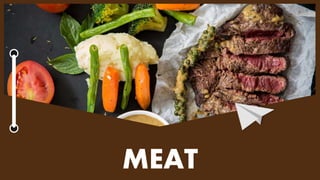
MEAT
Meat
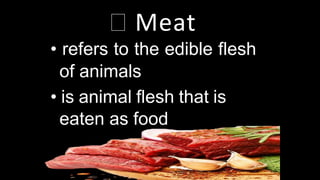
• refers to the edible flesh
of animals
• is animal flesh that is
eaten as food
• What we eat are the muscles of animals
• Meat and poultry are excellent nutrient sources of:
– Protein (builds and repairs body tissue, makes you
feel fuller longer)
– Iron (helps carry oxygen to body tissues through
blood, helps produce energy)
– B vitamins (support metabolism, maintain healthy skin and
muscle tone, enhance immune system function, promote cell
growth)
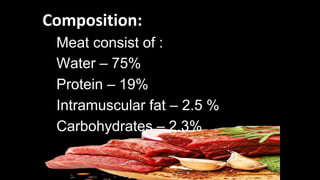
Composition:
Meat consist of :
Water – 75%
Protein – 19%
Intramuscular fat – 2.5 %
Carbohydrates – 2.3%
Tools and materials:
Tools and
EquipmEnT
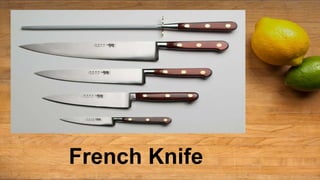
French Knife
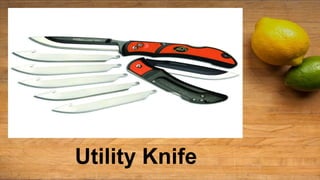
Utility Knife
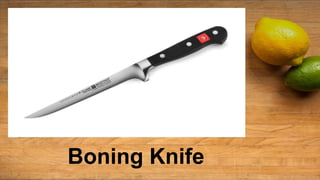
Boning Knife
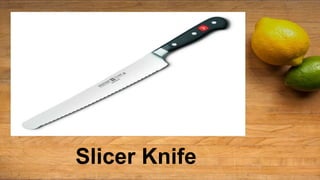
Slicer Knife
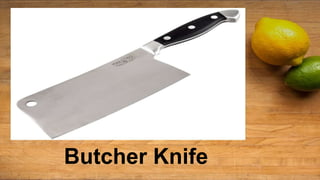
Butcher Knife
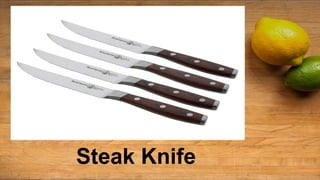
Steak Knife
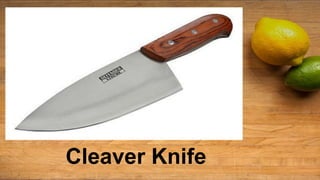
Cleaver Knife
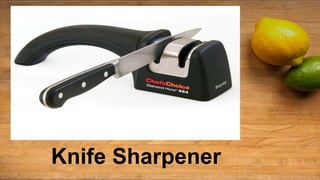
Knife Sharpener
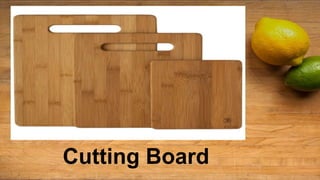
Cutting Board
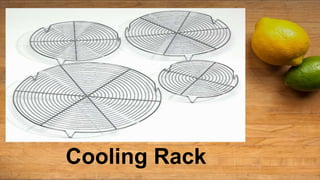
Cooling Rack
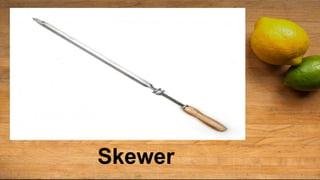
Skewer
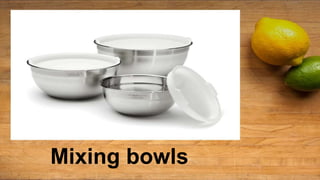
Mixing bowls
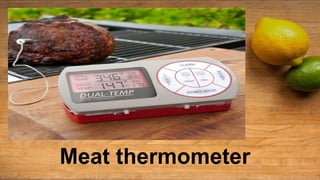
Meat thermometer
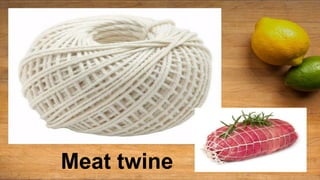
Meat twine
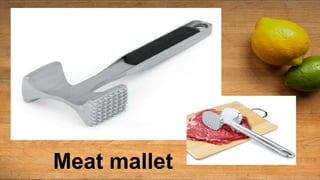
Meat mallet
Market Forms
of Meat
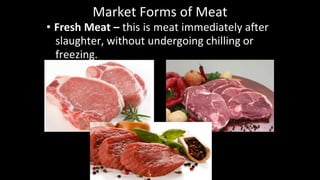
Market Forms of Meat
• Fresh Meat – this is meat immediately after
slaughter, without undergoing chilling or
freezing.
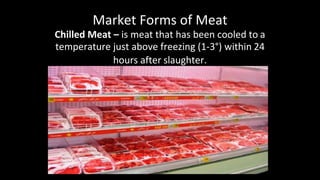
Market Forms of Meat
Chilled Meat – is meat that has been cooled to a
temperature just above freezing (1-3°) within 24
hours after slaughter.
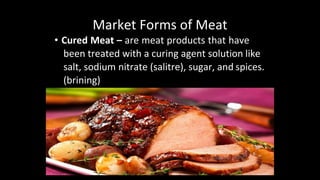
Market Forms of Meat
• Cured Meat – are meat products that have
been treated with a curing agent solution like
salt, sodium nitrate (salitre), sugar, and spices.
(brining)
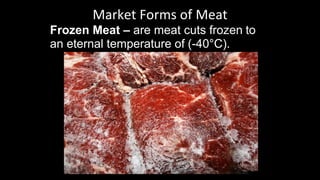
Market Forms of Meat
Frozen Meat – are meat cuts frozen to
an eternal temperature of (-40°C).
Market Forms of Meat
Canned Meat – are cooked meat
products and only requires to be
reheated.
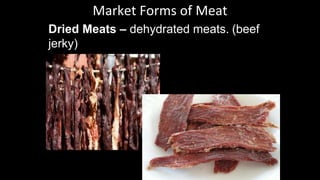
Market Forms of Meat
Dried Meats – dehydrated meats. (beef
jerky)
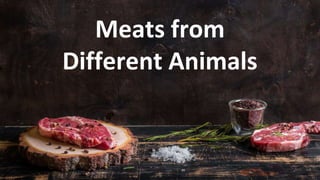
Meats from
Different Animals
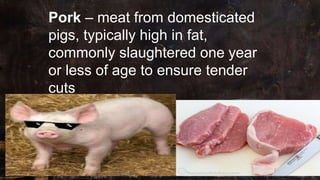
Pork – meat from domesticated
pigs, typically high in fat,
commonly slaughtered one year
or less of age to ensure tender
cuts
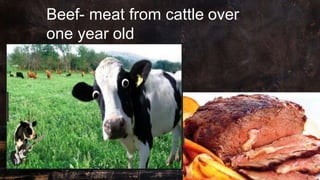
Beef- meat from cattle over
one year old
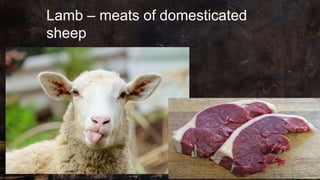
Lamb – meats of domesticated
sheep
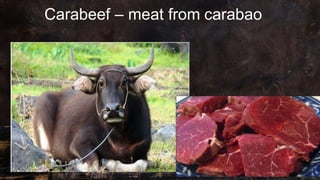
Carabeef – meat from carabao
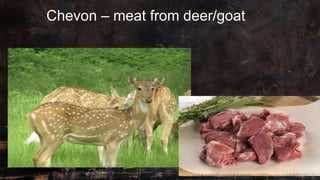
Chevon – meat from deer/goat
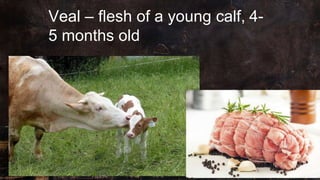
Veal – flesh of a young calf, 4-
5 months old
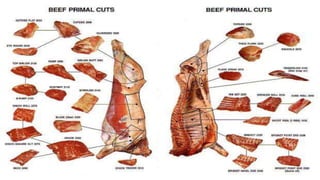
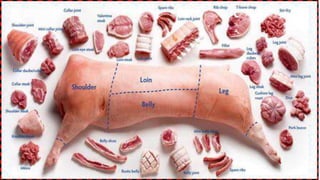
Meat
Cuts
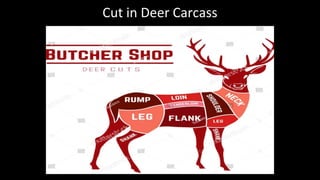
Cut in Deer Carcass
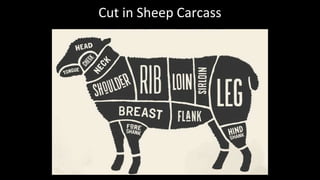
Cut in Sheep Carcass
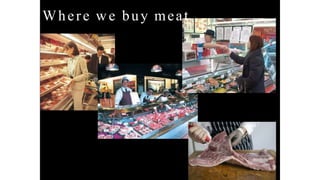
Where w e buy meat
Techniques in Meat Tenderizing
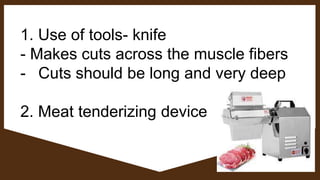
1. Use of tools- knife
- Makes cuts across the muscle fibers
- Cuts should be long and very deep
2. Meat tenderizing device
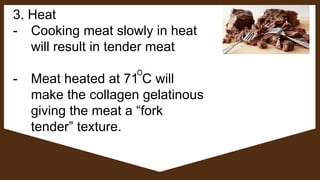
3. Heat
- Cooking meat slowly in heat
will result in tender meat
- Meat heated at 71 C will
make the collagen gelatinous
giving the meat a “fork
tender” texture.
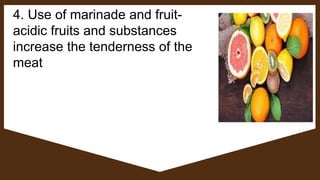
4. Use of marinade and fruit-
acidic fruits and substances
increase the tenderness of the
meat
5. Age your meat on a rack
6. Give time for the meat to
become tender
7. Trim the meat- trim the meat
down before cooking and eating
REASONS IN COOKING MEAT
 For sanitary purposes
 For palatability
 For tenderness
For sanitary purposes
- The Microorganisms or parasites
which may have contaminated the
meat are destroyed by the correct
method of cooking
For Palatability
- Flavors in the meat are developed
by cooking.
- Cooking makes meat appetizing
due to the changes in the meat
pigments
For tenderness
- Cooking leads to the
disintegration of the collagen
fibers in the connective tissues
making the meat tender.
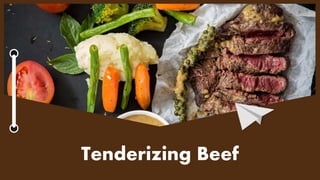
Tenderizing Beef
Pounding Steps
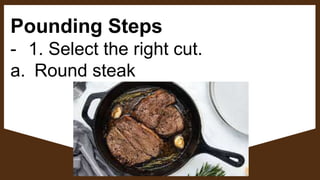
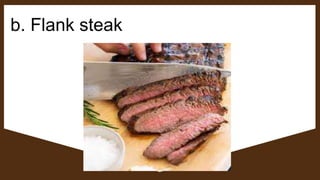
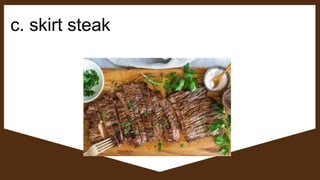
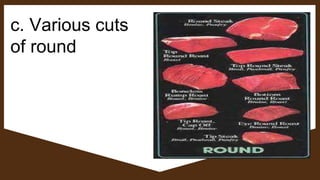
- 1. Select the right cut.
a. Round steak
b. Flank steak
c. skirt steak
c. Various cuts
of round
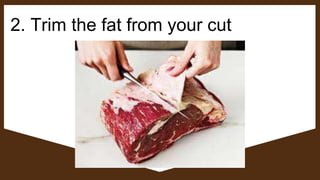
2. Trim the fat from your cut
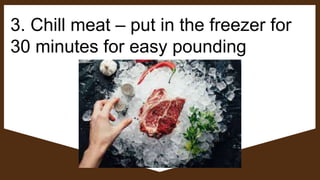
3. Chill meat – put in the freezer for
30 minutes for easy pounding
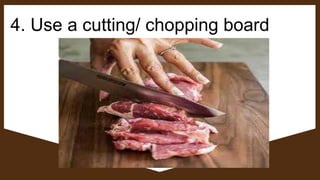
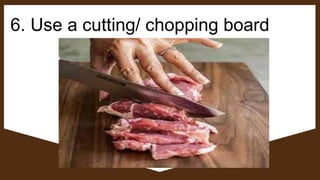
4. Use a cutting/ chopping board
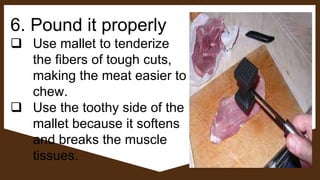
6. Pound it properly
 Use mallet to tenderize
the fibers of tough cuts,
making the meat easier to
chew.
 Use the toothy side of the
mallet because it softens
and breaks the muscle
tissues.
6. Use a cutting/ chopping board
MEAT

meat.pptx