MEAN Stack - An Overview
Naveen Pete
JS Meetup #6 (Saturday, Sep 24, 2016)
Agenda
● Evolution of Web Development
● Traditional Web Development
● Full-Stack Development
● Introducing MEAN Stack
● Node
● Express
● Angular
● MongoDB
● Q & A
Evolution of Web Development
● Low expectations of web sites
● Perl and HTML - “Web Developer”
● Use of Internet increased with time
● Online presence increased
● Browsers became more powerful
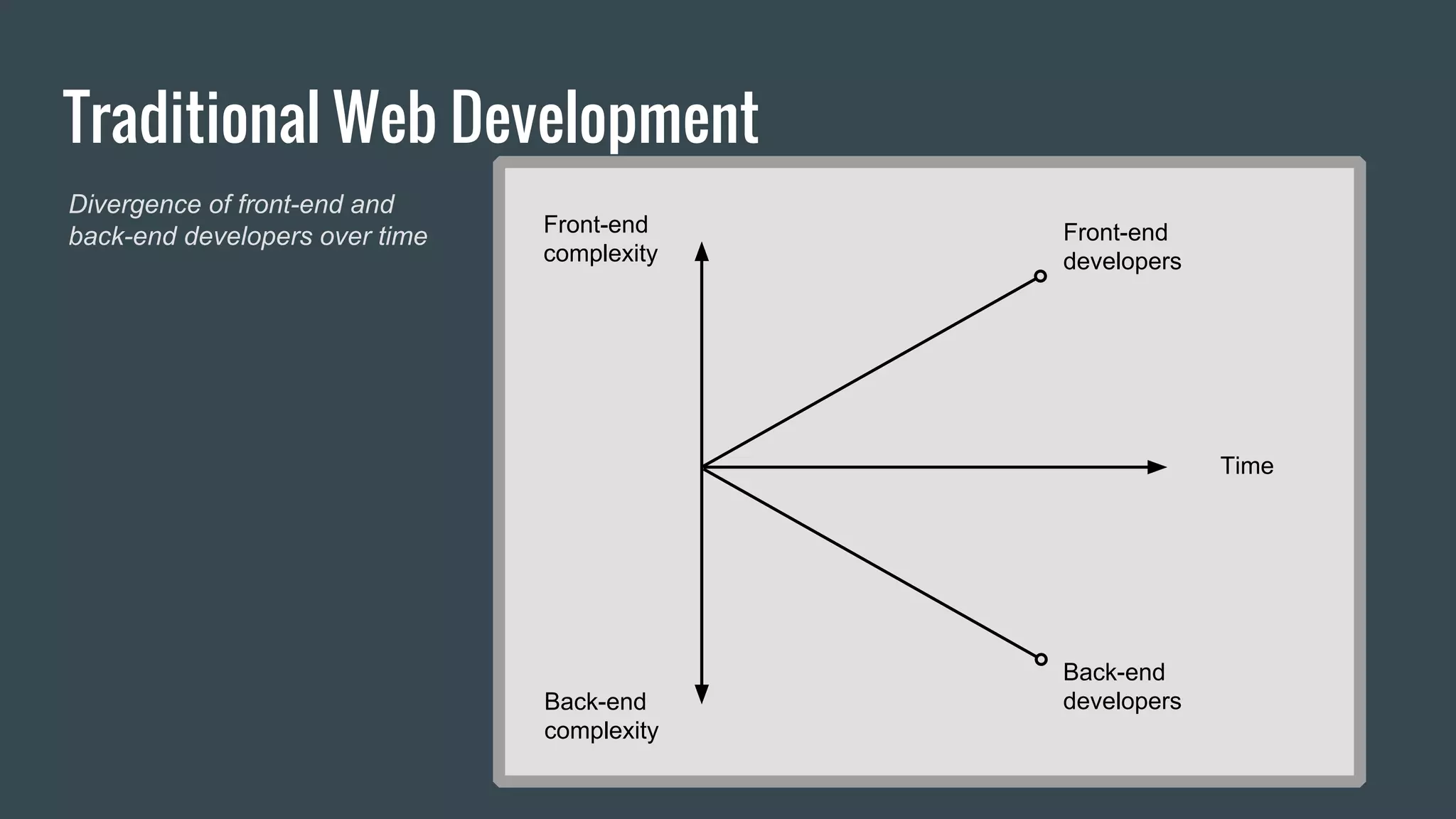
● Front-end development - focus on building a good user experience
● Back-end development - focus on mechanics behind the scenes
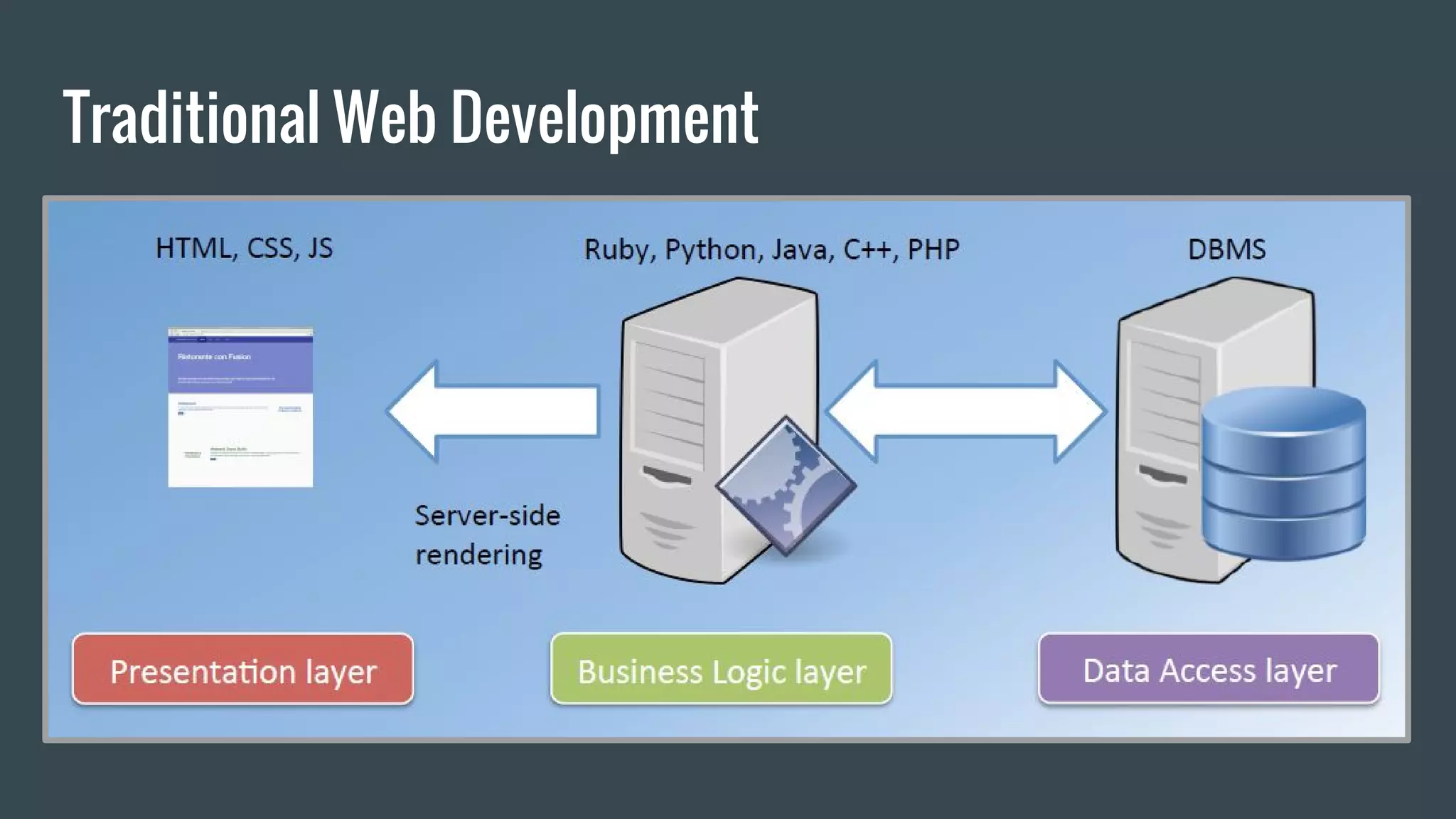
Traditional Web Development
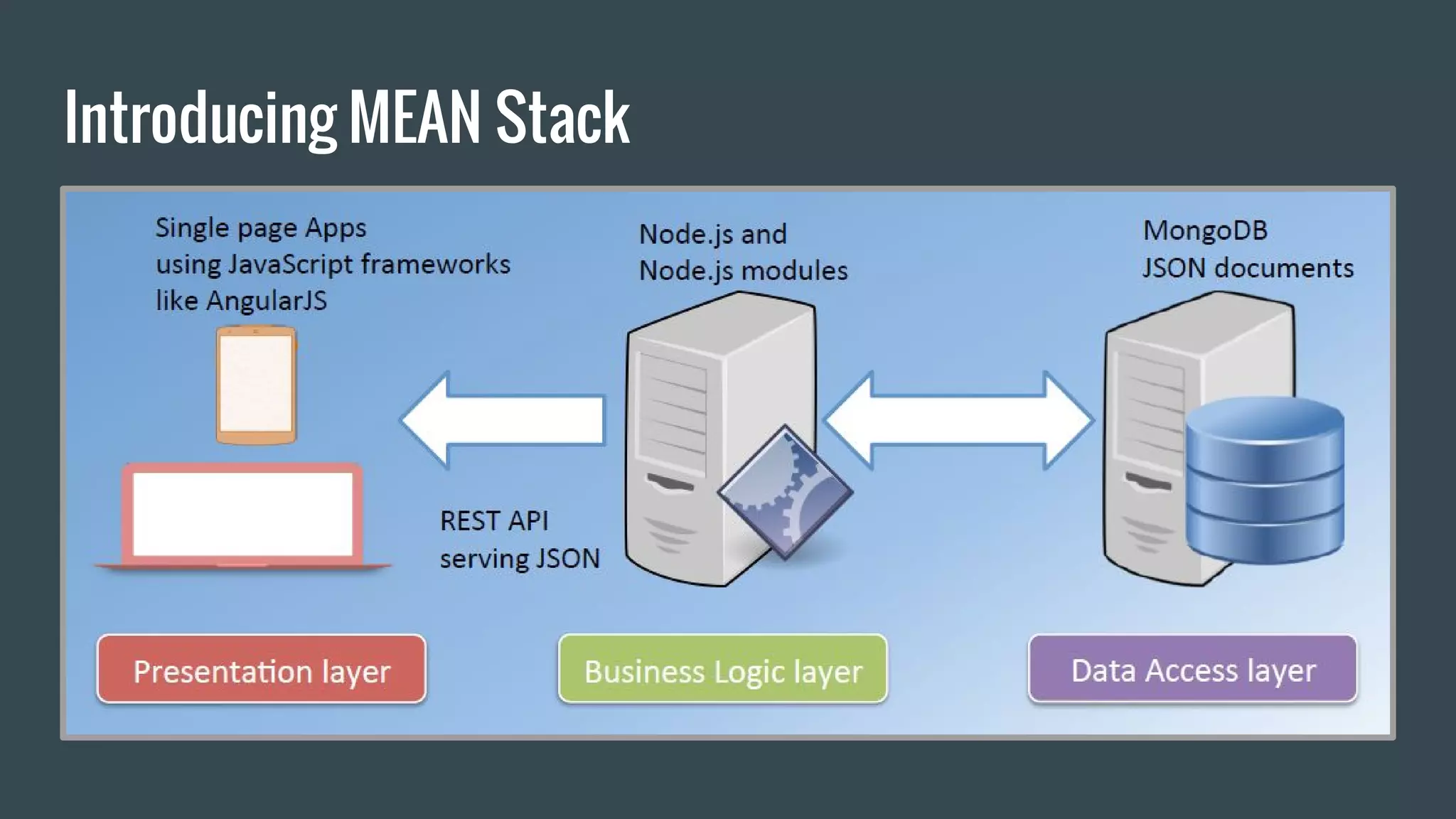
● Followed Three-Tier architecture
○ Presentation Layer - UI design and development
○ Business Logic Layer - Data validation, data processing, application logic
○ Data Access Layer - Data persistence, data access through API
● Traditional web application technologies
○ Client-side - HTML, CSS and JavaScript
○ Server-side - C#, Java, PHP, ASP.NET, Ruby, Python
○ Database - SQL Server, MySQL, Oracle
○ Web Server - IIS, Apache, Tomcat
Traditional Web Development
Front-end
developers
Back-end
developers
Front-end
complexity
Back-end
complexity
Time
Divergence of front-end and
back-end developers over time
Full-Stack Development
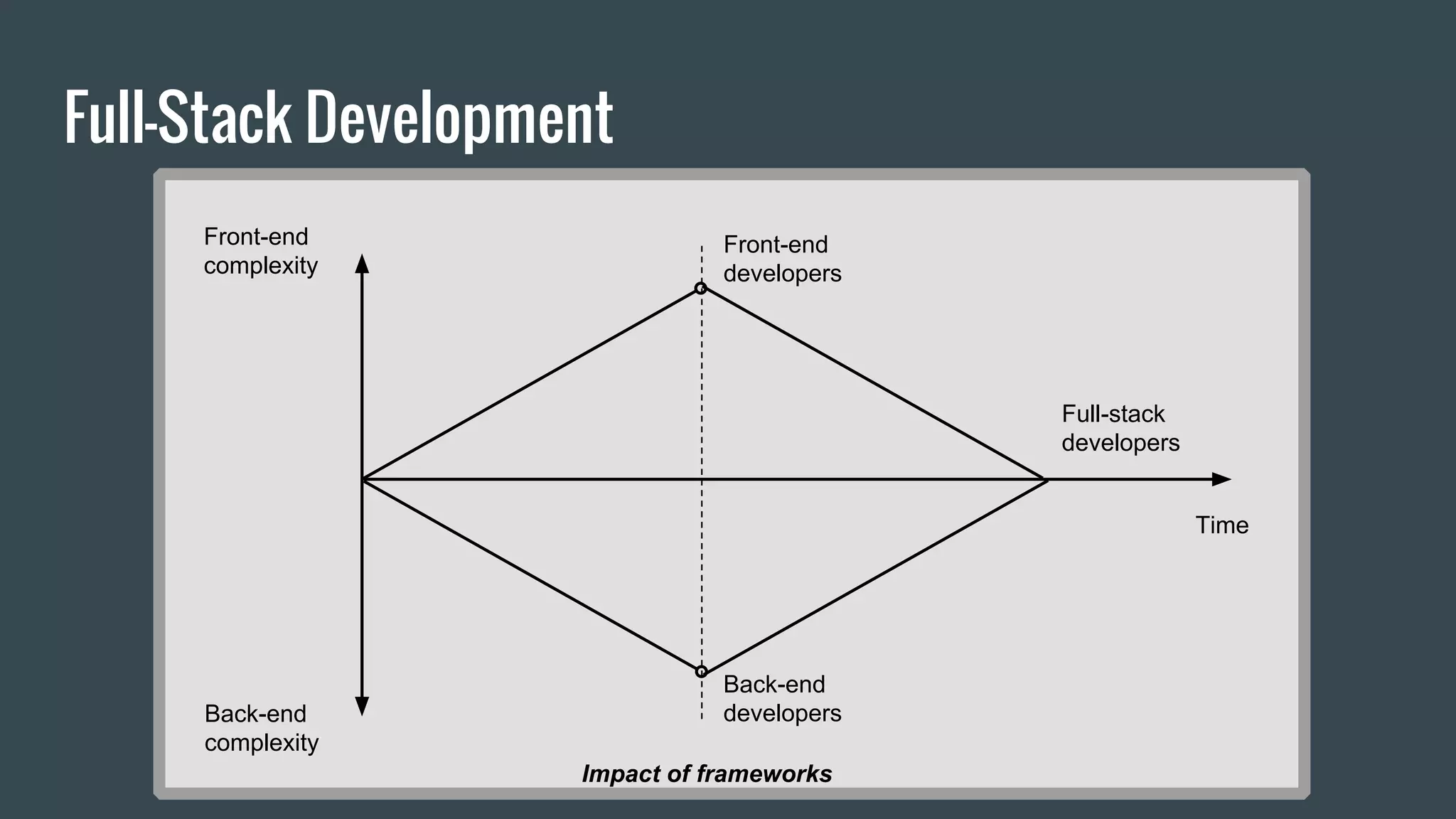
● During the 2000s, libraries and frameworks started to become popular
and prevalent
● A Library or Framework
○ Abstracts complexities of development
○ Increases developer productivity
○ Requires less in-depth expertise
● Resurgence of full-stack developers
● Moving the application code forward in the stack
○ Reduces server load, thus reducing cost
○ Crowd-sourcing of computational power
Full-Stack Development - Benefits
● Provide greater value to your clients
○ More skills, services and capabilities
● Build applications end-to-end, no dependency
● Have a better view of the bigger picture of an application
● Understand how different components fit together
● Better overall control
● Team members can move around more freely (Agile teams)
● Learning new technologies
● Rewarding and satisfying experience
Full-Stack Development
Front-end
developers
Back-end
developers
Front-end
complexity
Back-end
complexity
Full-stack
developers
Impact of frameworks
Time
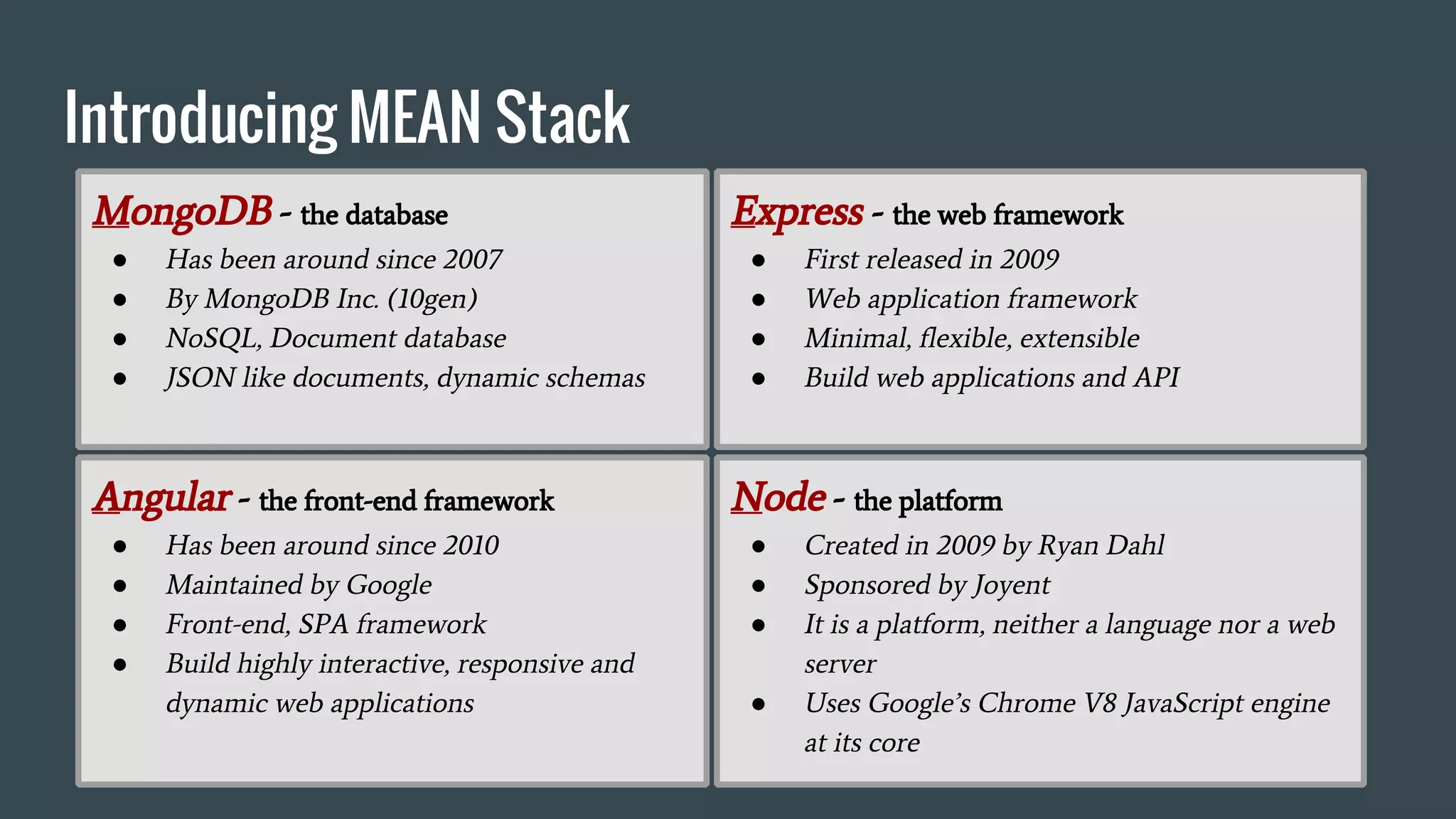
Introducing MEAN Stack
MongoDB - the database
● Has been around since 2007
● By MongoDB Inc. (10gen)
● NoSQL, Document database
● JSON like documents, dynamic schemas
Angular - the front-end framework
● Has been around since 2010
● Maintained by Google
● Front-end, SPA framework
● Build highly interactive, responsive and
dynamic web applications
Express - the web framework
● First released in 2009
● Web application framework
● Minimal, flexible, extensible
● Build web applications and API
Node - the platform
● Created in 2009 by Ryan Dahl
● Sponsored by Joyent
● It is a platform, neither a language nor a web
server
● Uses Google’s Chrome V8 JavaScript engine
at its core
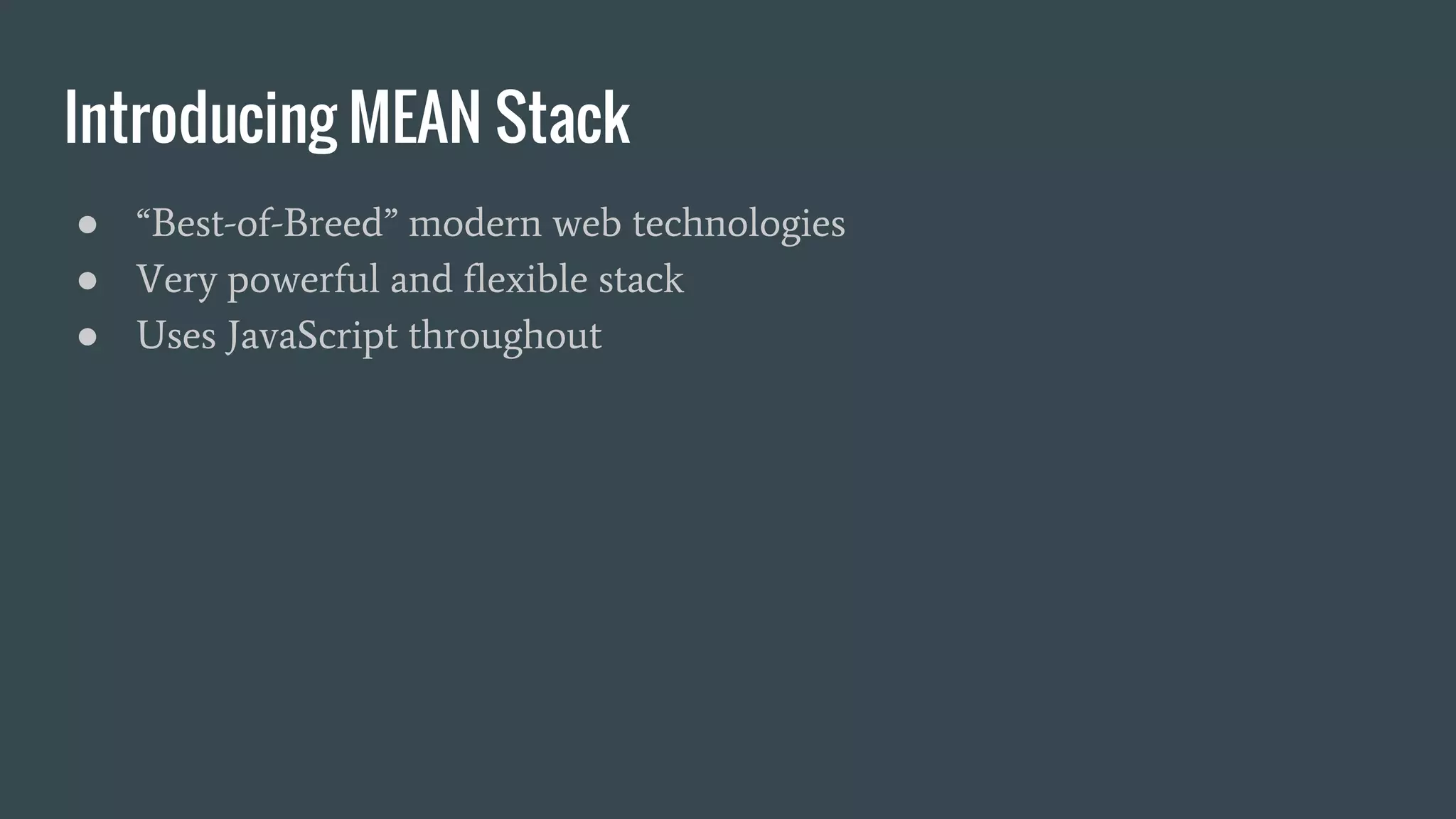
Introducing MEAN Stack
● “Best-of-Breed” modern web technologies
● Very powerful and flexible stack
● Uses JavaScript throughout
Introducing MEAN Stack
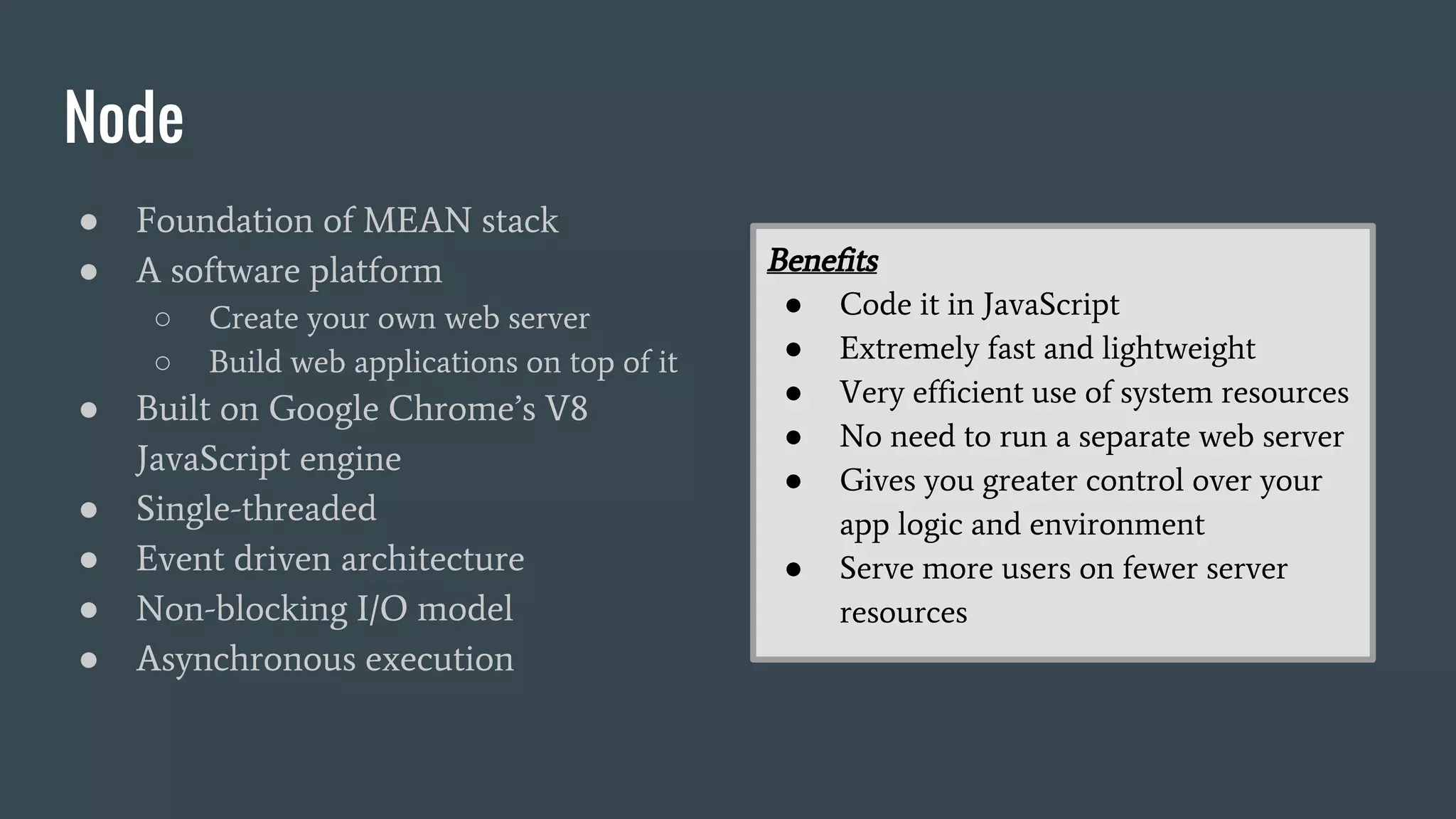
Node
● Foundation of MEAN stack
● A software platform
○ Create your own web server
○ Build web applications on top of it
● Built on Google Chrome’s V8
JavaScript engine
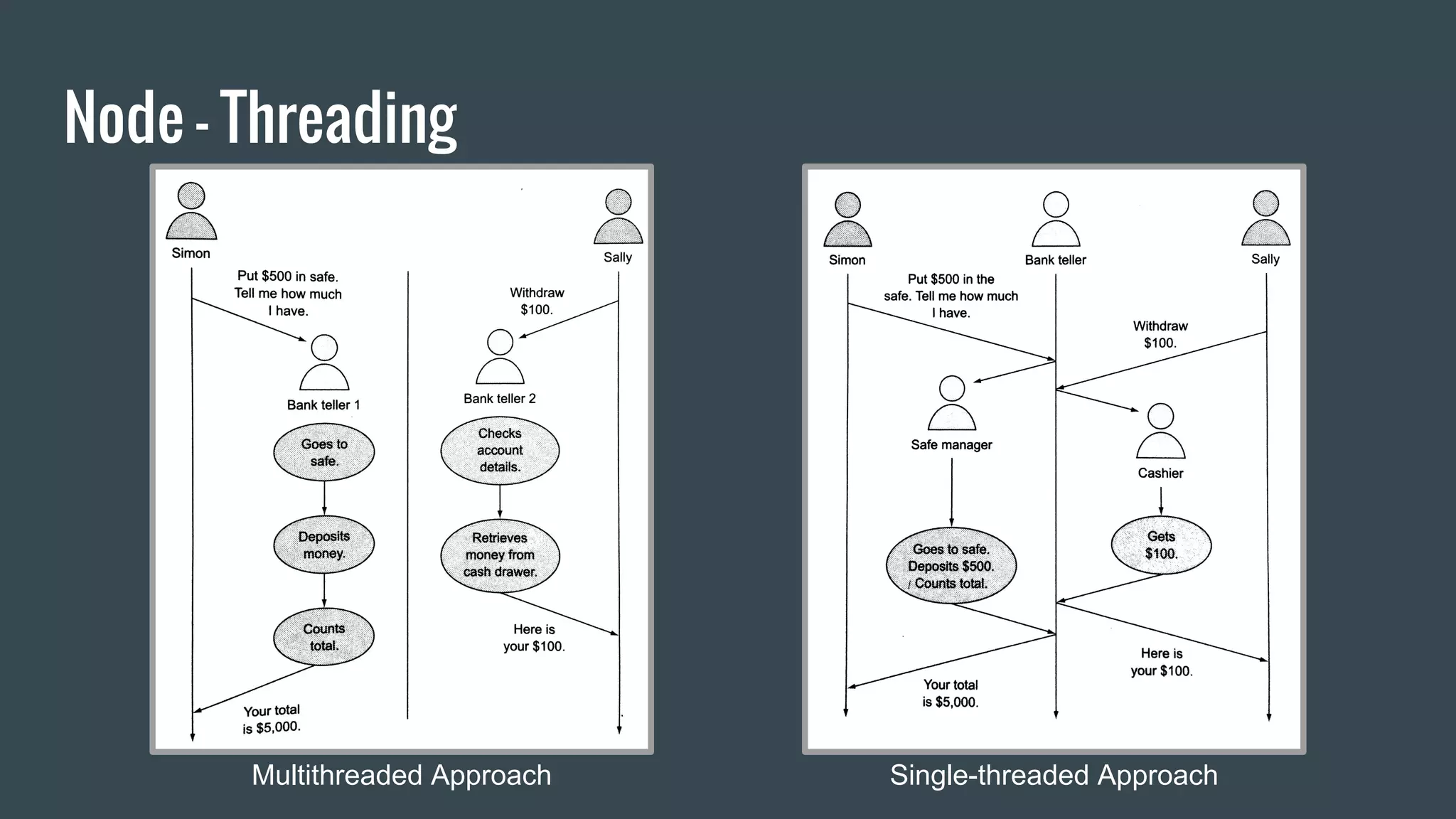
● Single-threaded
● Event driven architecture
● Non-blocking I/O model
● Asynchronous execution
Benefits
● Code it in JavaScript
● Extremely fast and lightweight
● Very efficient use of system resources
● No need to run a separate web server
● Gives you greater control over your
app logic and environment
● Serve more users on fewer server
resources
Node - Threading
Multithreaded Approach Single-threaded Approach
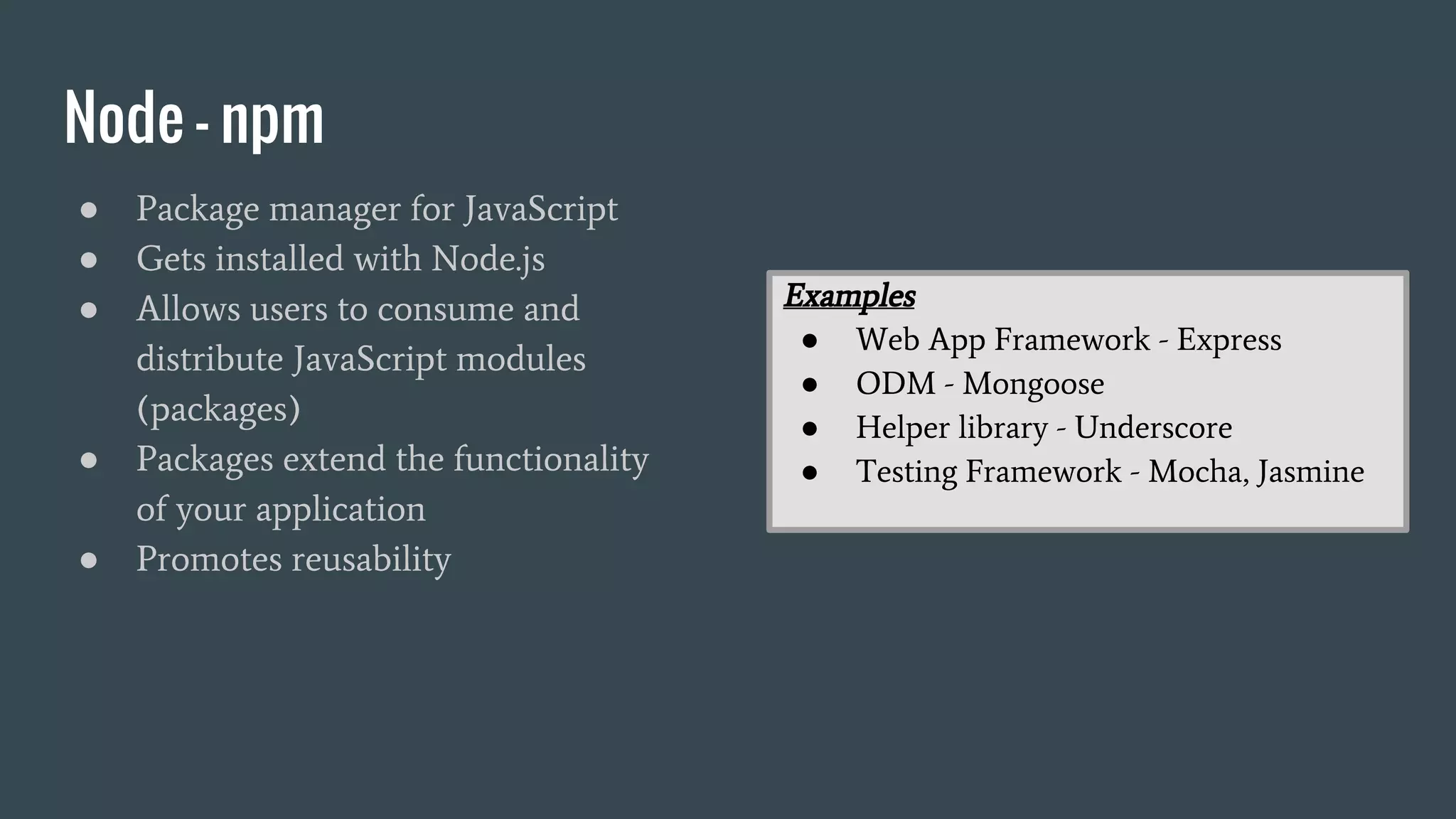
Node - npm
● Package manager for JavaScript
● Gets installed with Node.js
● Allows users to consume and
distribute JavaScript modules
(packages)
● Packages extend the functionality
of your application
● Promotes reusability
Examples
● Web App Framework - Express
● ODM - Mongoose
● Helper library - Underscore
● Testing Framework - Mocha, Jasmine
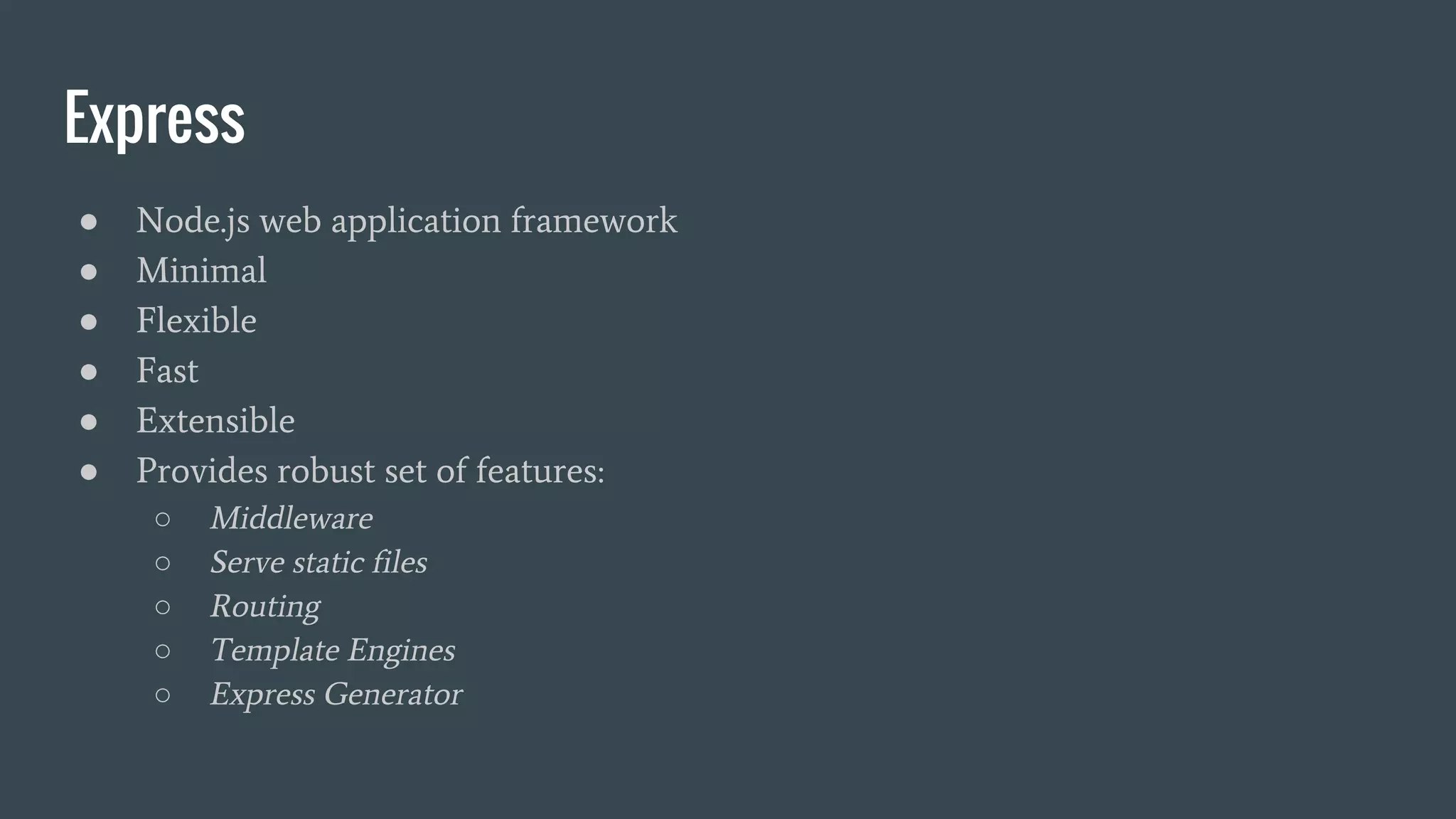
Express
● Node.js web application framework
● Minimal
● Flexible
● Fast
● Extensible
● Provides robust set of features:
○ Middleware
○ Serve static files
○ Routing
○ Template Engines
○ Express Generator
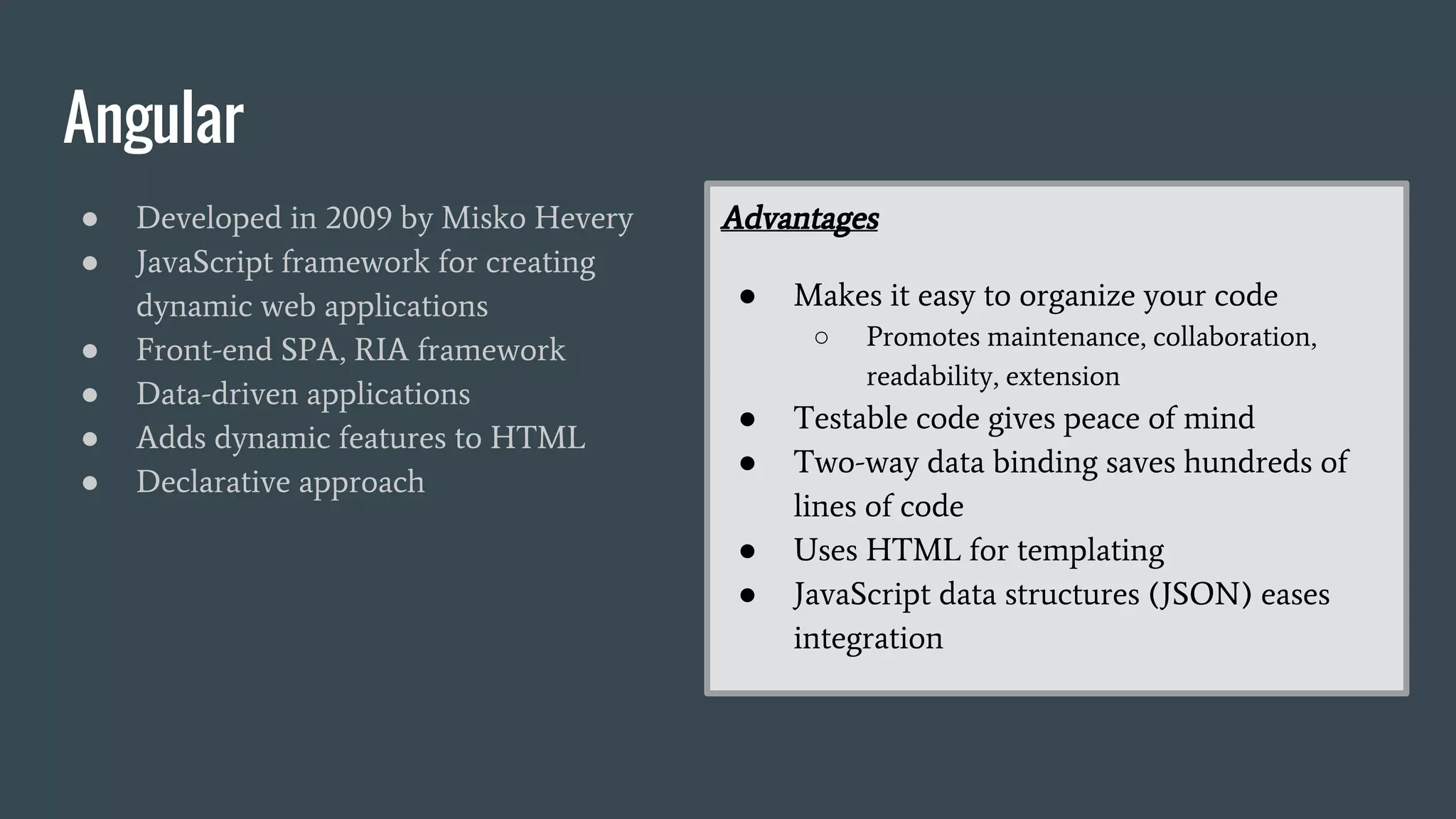
Angular
● Developed in 2009 by Misko Hevery
● JavaScript framework for creating
dynamic web applications
● Front-end SPA, RIA framework
● Data-driven applications
● Adds dynamic features to HTML
● Declarative approach
Advantages
● Makes it easy to organize your code
○ Promotes maintenance, collaboration,
readability, extension
● Testable code gives peace of mind
● Two-way data binding saves hundreds of
lines of code
● Uses HTML for templating
● JavaScript data structures (JSON) eases
integration
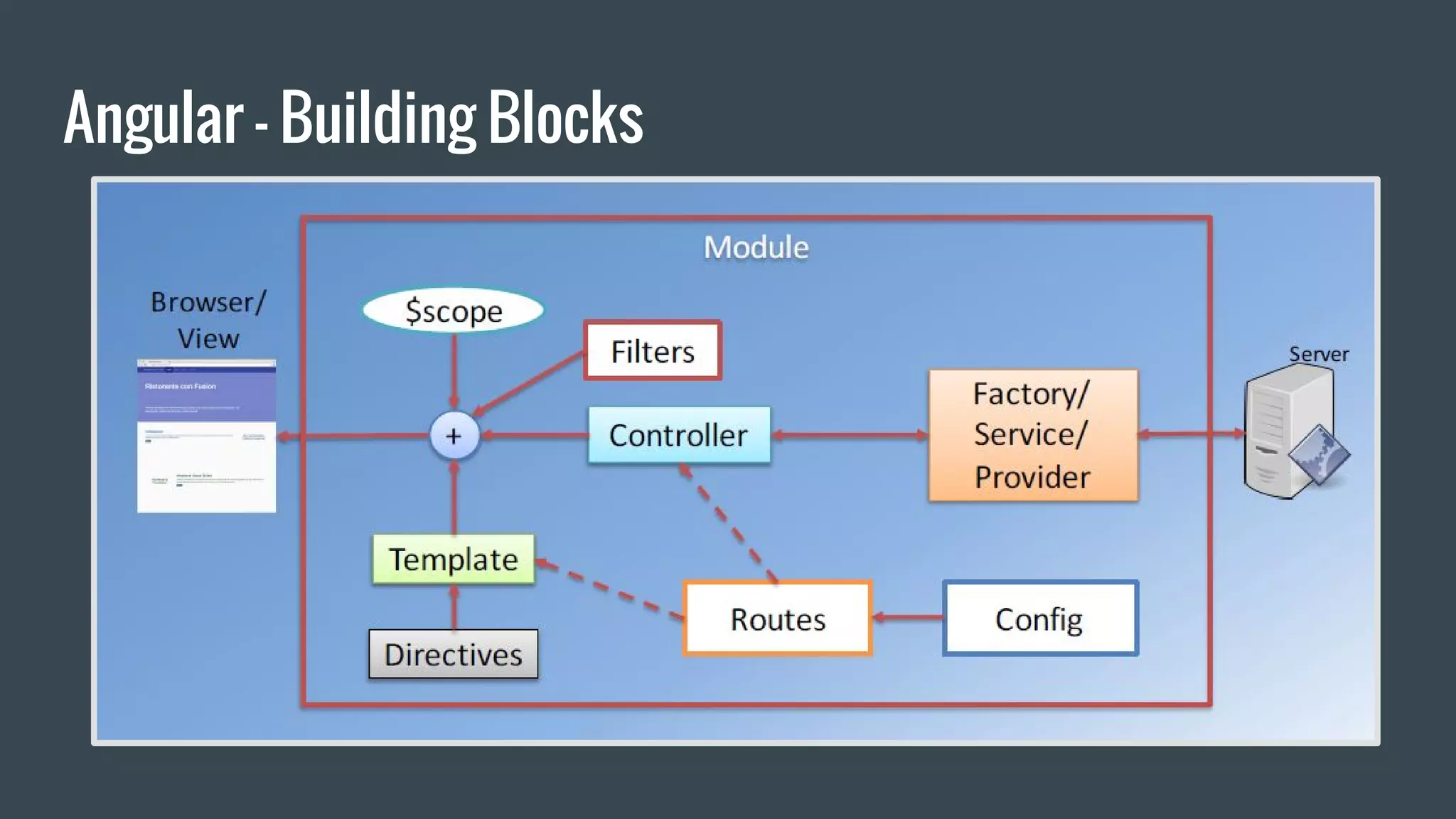
Angular - Building Blocks
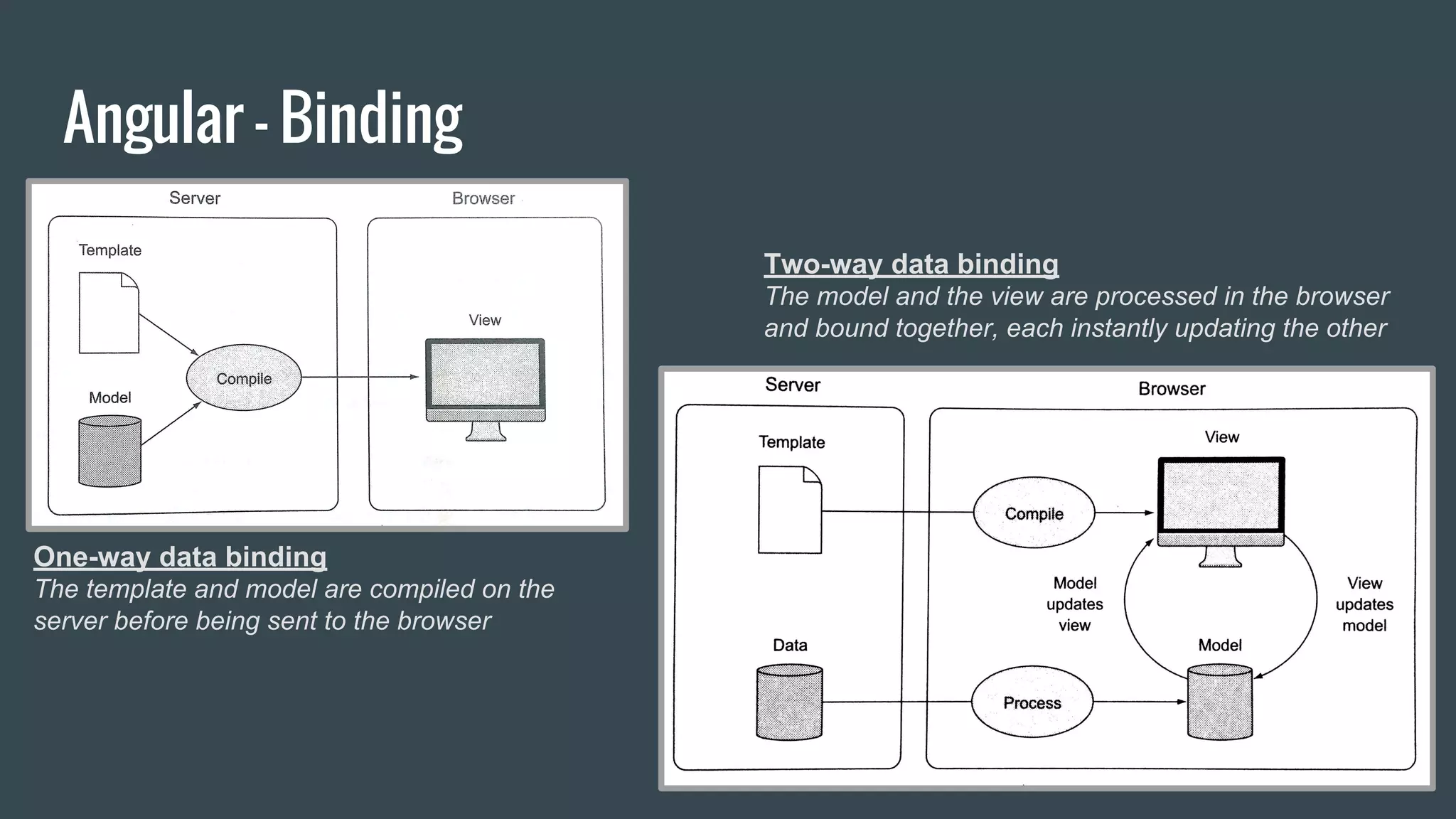
Angular - Binding
One-way data binding
The template and model are compiled on the
server before being sent to the browser
Two-way data binding
The model and the view are processed in the browser
and bound together, each instantly updating the other
MongoDB
Q & A
Thank you!

Mean Stack - An Overview

  • 1.
    MEAN Stack -An Overview Naveen Pete JS Meetup #6 (Saturday, Sep 24, 2016)
  • 2.
    Agenda ● Evolution ofWeb Development ● Traditional Web Development ● Full-Stack Development ● Introducing MEAN Stack ● Node ● Express ● Angular ● MongoDB ● Q & A
  • 3.
    Evolution of WebDevelopment ● Low expectations of web sites ● Perl and HTML - “Web Developer” ● Use of Internet increased with time ● Online presence increased ● Browsers became more powerful ● Front-end development - focus on building a good user experience ● Back-end development - focus on mechanics behind the scenes
  • 4.
    Traditional Web Development ●Followed Three-Tier architecture ○ Presentation Layer - UI design and development ○ Business Logic Layer - Data validation, data processing, application logic ○ Data Access Layer - Data persistence, data access through API ● Traditional web application technologies ○ Client-side - HTML, CSS and JavaScript ○ Server-side - C#, Java, PHP, ASP.NET, Ruby, Python ○ Database - SQL Server, MySQL, Oracle ○ Web Server - IIS, Apache, Tomcat
  • 5.
  • 6.
  • 7.
    Full-Stack Development ● Duringthe 2000s, libraries and frameworks started to become popular and prevalent ● A Library or Framework ○ Abstracts complexities of development ○ Increases developer productivity ○ Requires less in-depth expertise ● Resurgence of full-stack developers ● Moving the application code forward in the stack ○ Reduces server load, thus reducing cost ○ Crowd-sourcing of computational power
  • 8.
    Full-Stack Development -Benefits ● Provide greater value to your clients ○ More skills, services and capabilities ● Build applications end-to-end, no dependency ● Have a better view of the bigger picture of an application ● Understand how different components fit together ● Better overall control ● Team members can move around more freely (Agile teams) ● Learning new technologies ● Rewarding and satisfying experience
  • 9.
  • 10.
    Introducing MEAN Stack MongoDB- the database ● Has been around since 2007 ● By MongoDB Inc. (10gen) ● NoSQL, Document database ● JSON like documents, dynamic schemas Angular - the front-end framework ● Has been around since 2010 ● Maintained by Google ● Front-end, SPA framework ● Build highly interactive, responsive and dynamic web applications Express - the web framework ● First released in 2009 ● Web application framework ● Minimal, flexible, extensible ● Build web applications and API Node - the platform ● Created in 2009 by Ryan Dahl ● Sponsored by Joyent ● It is a platform, neither a language nor a web server ● Uses Google’s Chrome V8 JavaScript engine at its core
  • 11.
    Introducing MEAN Stack ●“Best-of-Breed” modern web technologies ● Very powerful and flexible stack ● Uses JavaScript throughout
  • 12.
  • 13.
    Node ● Foundation ofMEAN stack ● A software platform ○ Create your own web server ○ Build web applications on top of it ● Built on Google Chrome’s V8 JavaScript engine ● Single-threaded ● Event driven architecture ● Non-blocking I/O model ● Asynchronous execution Benefits ● Code it in JavaScript ● Extremely fast and lightweight ● Very efficient use of system resources ● No need to run a separate web server ● Gives you greater control over your app logic and environment ● Serve more users on fewer server resources
  • 14.
    Node - Threading MultithreadedApproach Single-threaded Approach
  • 15.
    Node - npm ●Package manager for JavaScript ● Gets installed with Node.js ● Allows users to consume and distribute JavaScript modules (packages) ● Packages extend the functionality of your application ● Promotes reusability Examples ● Web App Framework - Express ● ODM - Mongoose ● Helper library - Underscore ● Testing Framework - Mocha, Jasmine
  • 16.
    Express ● Node.js webapplication framework ● Minimal ● Flexible ● Fast ● Extensible ● Provides robust set of features: ○ Middleware ○ Serve static files ○ Routing ○ Template Engines ○ Express Generator
  • 17.
    Angular ● Developed in2009 by Misko Hevery ● JavaScript framework for creating dynamic web applications ● Front-end SPA, RIA framework ● Data-driven applications ● Adds dynamic features to HTML ● Declarative approach Advantages ● Makes it easy to organize your code ○ Promotes maintenance, collaboration, readability, extension ● Testable code gives peace of mind ● Two-way data binding saves hundreds of lines of code ● Uses HTML for templating ● JavaScript data structures (JSON) eases integration
  • 18.
  • 19.
    Angular - Binding One-waydata binding The template and model are compiled on the server before being sent to the browser Two-way data binding The model and the view are processed in the browser and bound together, each instantly updating the other
  • 20.
  • 21.