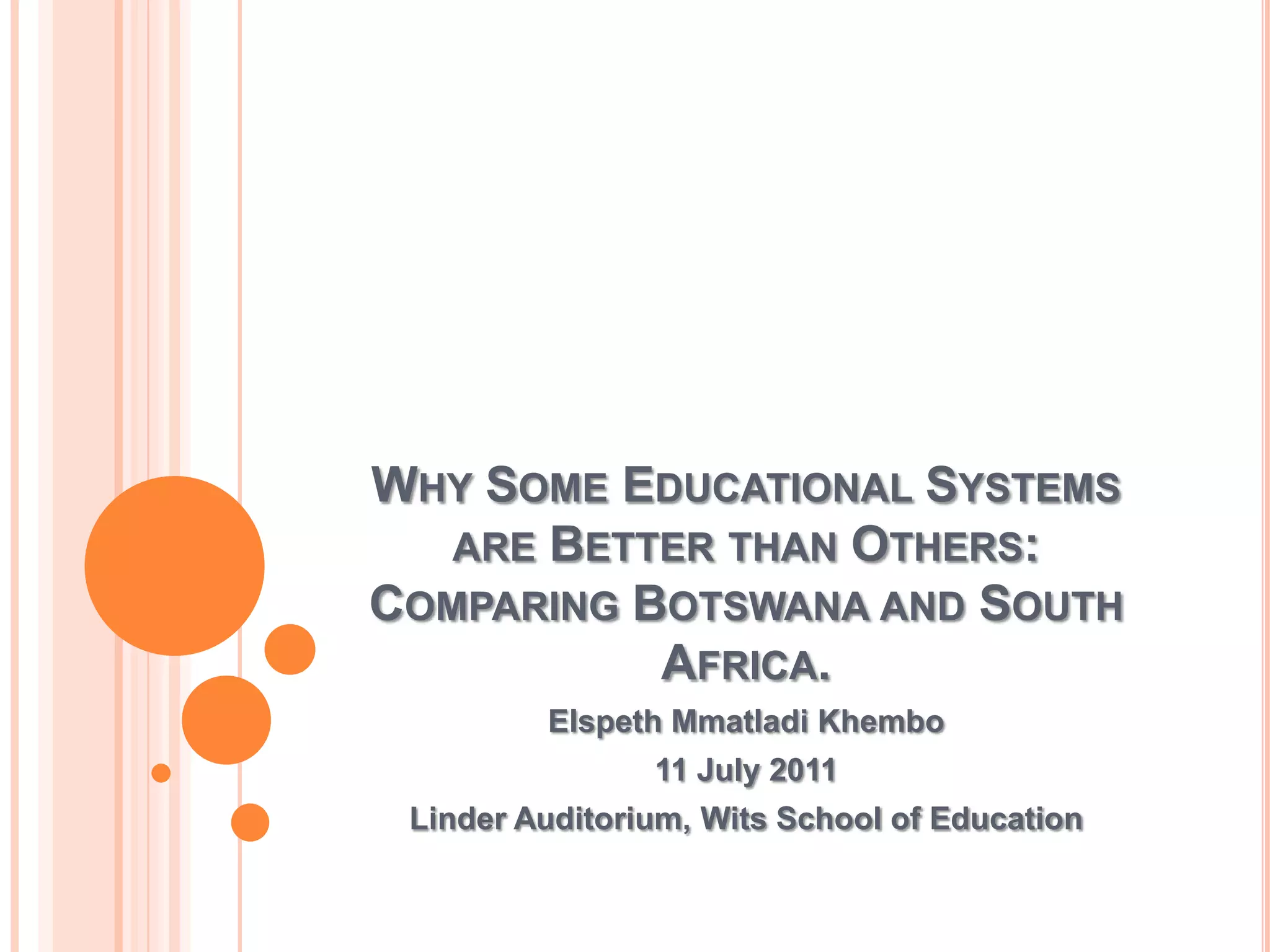
Why Some Educational Systems are Better than Others: Comparing Botswana and South Africa.Elspeth Mmatladi Khembo11 July 2011Linder Auditorium, Wits School of Education
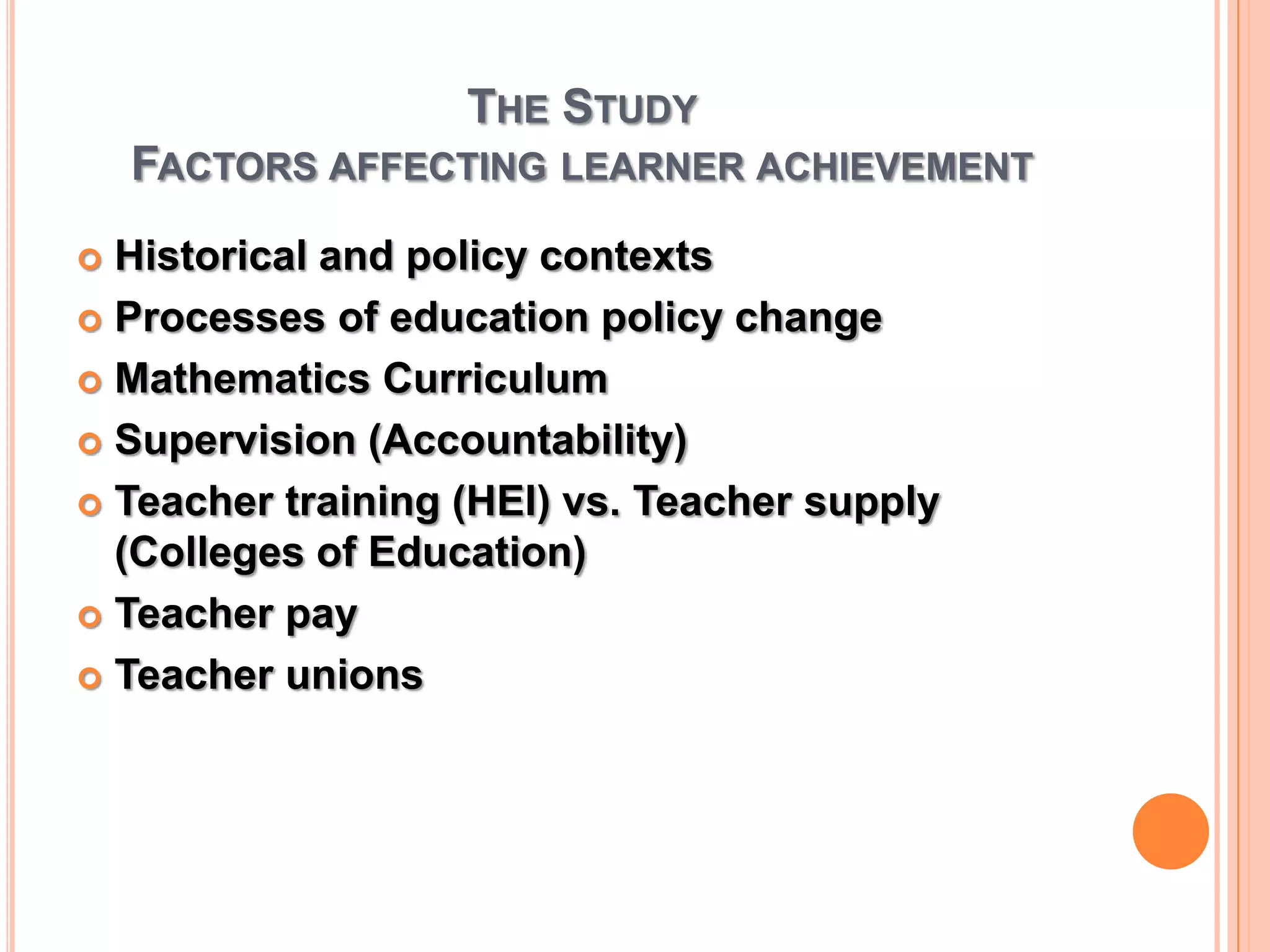
The StudyFactors affecting learner achievementHistorical and policy contextsProcesses of education policy changeMathematics Curriculum Supervision (Accountability)Teacher training (HEI) vs. Teacher supply (Colleges of Education)Teacher payTeacher unions
Role of the Grade 6 Mathematics teacherCoverage of all the topics of the curriculumHigh academic expectation of learnersImproving learner achievementPreparing learners for the Senior Phase
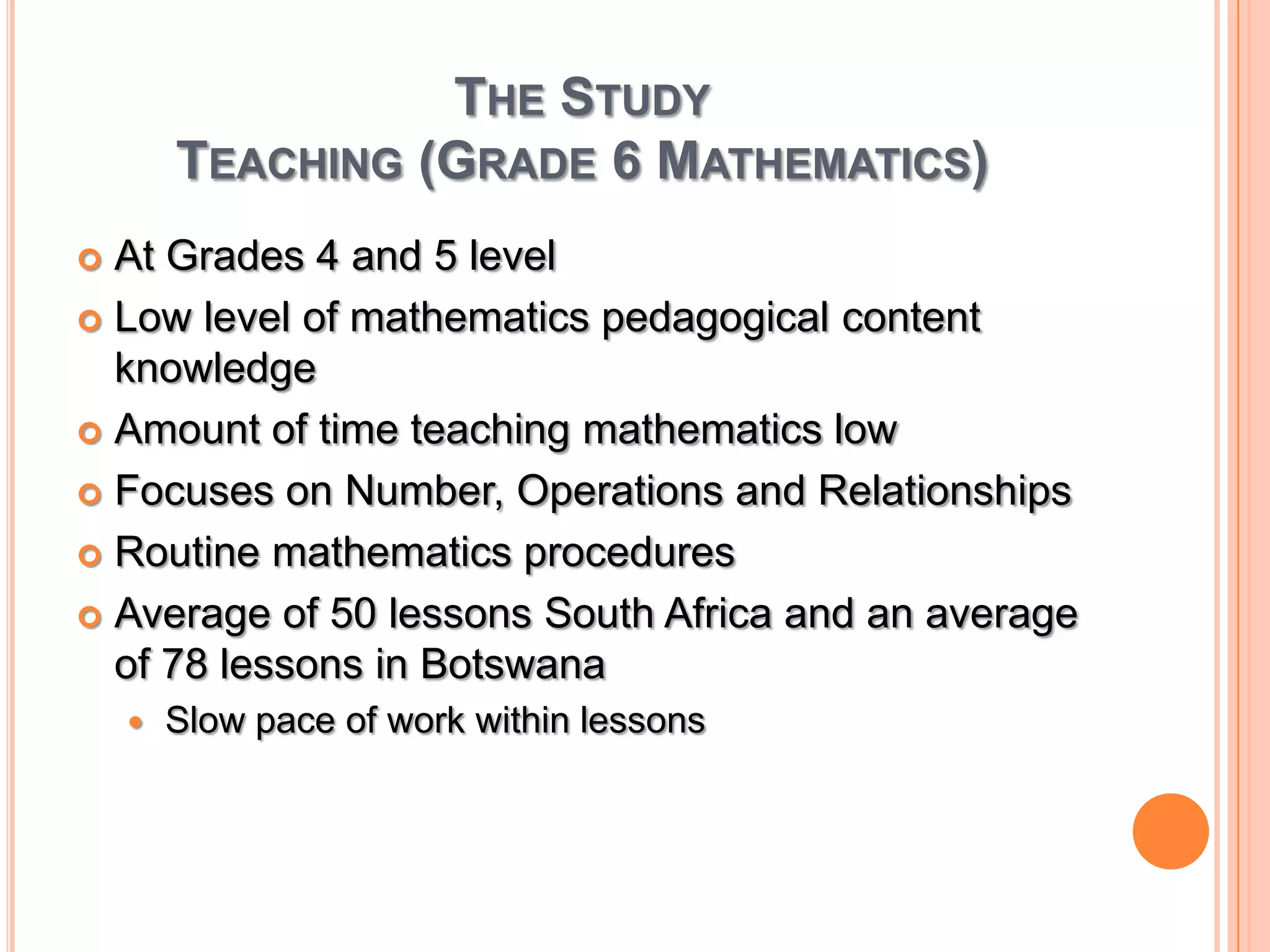
The StudyTeaching (Grade 6 Mathematics)At Grades 4 and 5 levelLow level of mathematics pedagogical content knowledgeAmount of time teaching mathematics lowFocuses on Number, Operations and RelationshipsRoutine mathematics proceduresAverage of 50 lessons South Africa and an average of 78 lessons in BotswanaSlow pace of work within lessons
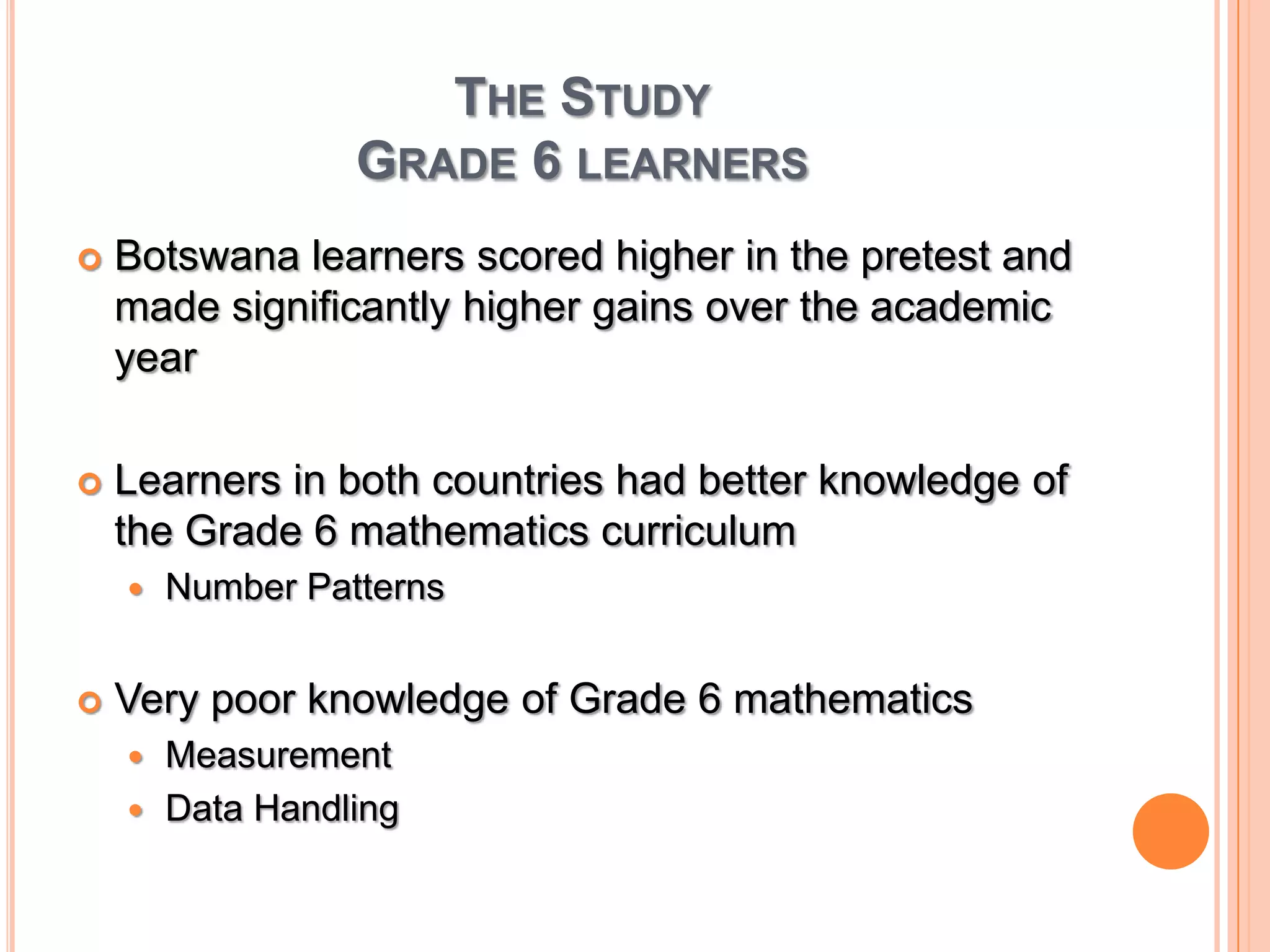
The StudyGrade 6 learnersBotswana learners scored higher in the pretest and made significantly higher gains over the academic yearLearners in both countries had better knowledge of the Grade 6 mathematics curriculumNumber PatternsVery poor knowledge of Grade 6 mathematicsMeasurementData Handling
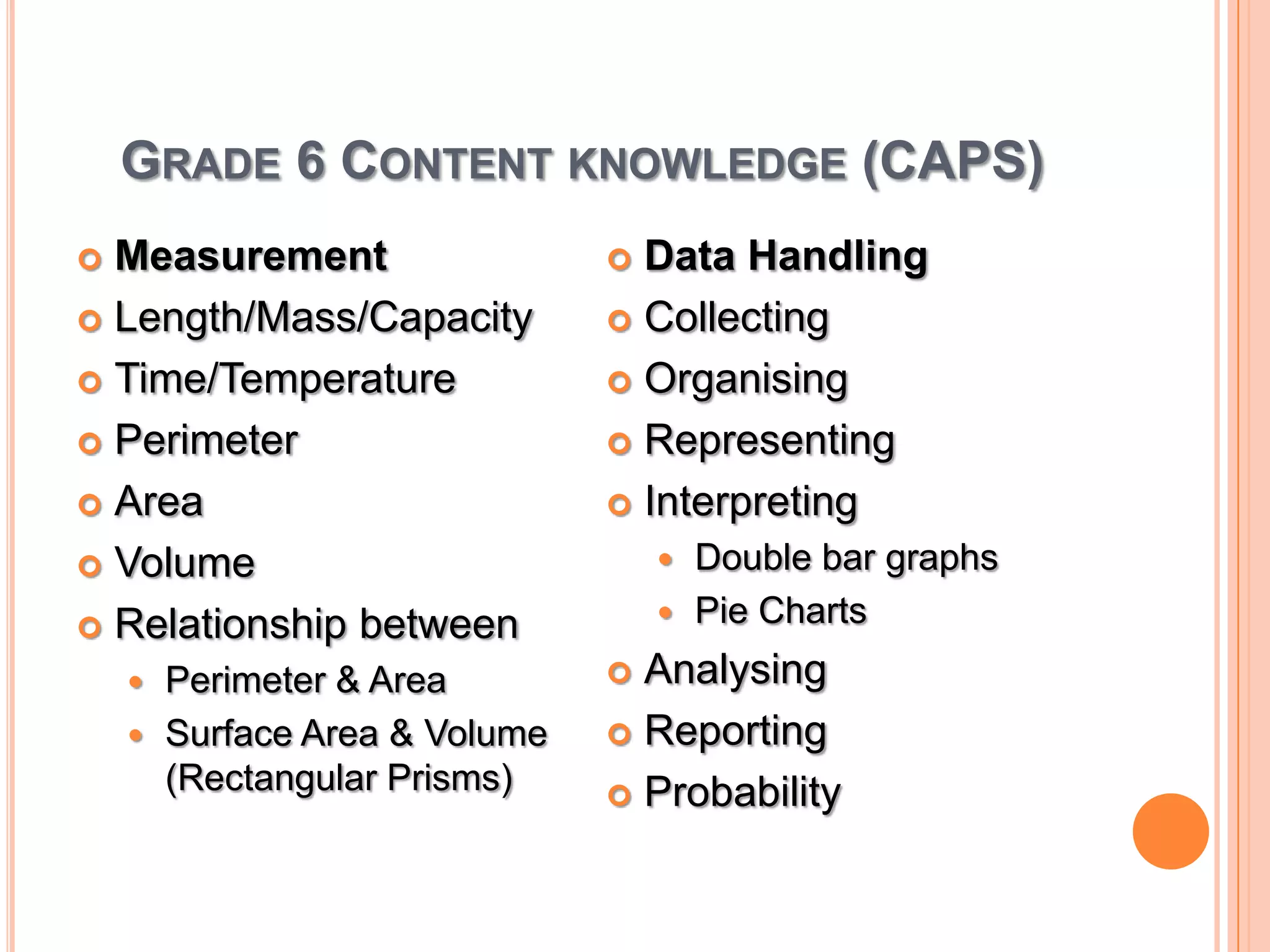
Grade 6 Content knowledge (CAPS)MeasurementLength/Mass/CapacityTime/TemperaturePerimeterAreaVolumeRelationship betweenPerimeter & AreaSurface Area & Volume (Rectangular Prisms)Data HandlingCollectingOrganisingRepresentingInterpreting Double bar graphsPie ChartsAnalysingReportingProbability
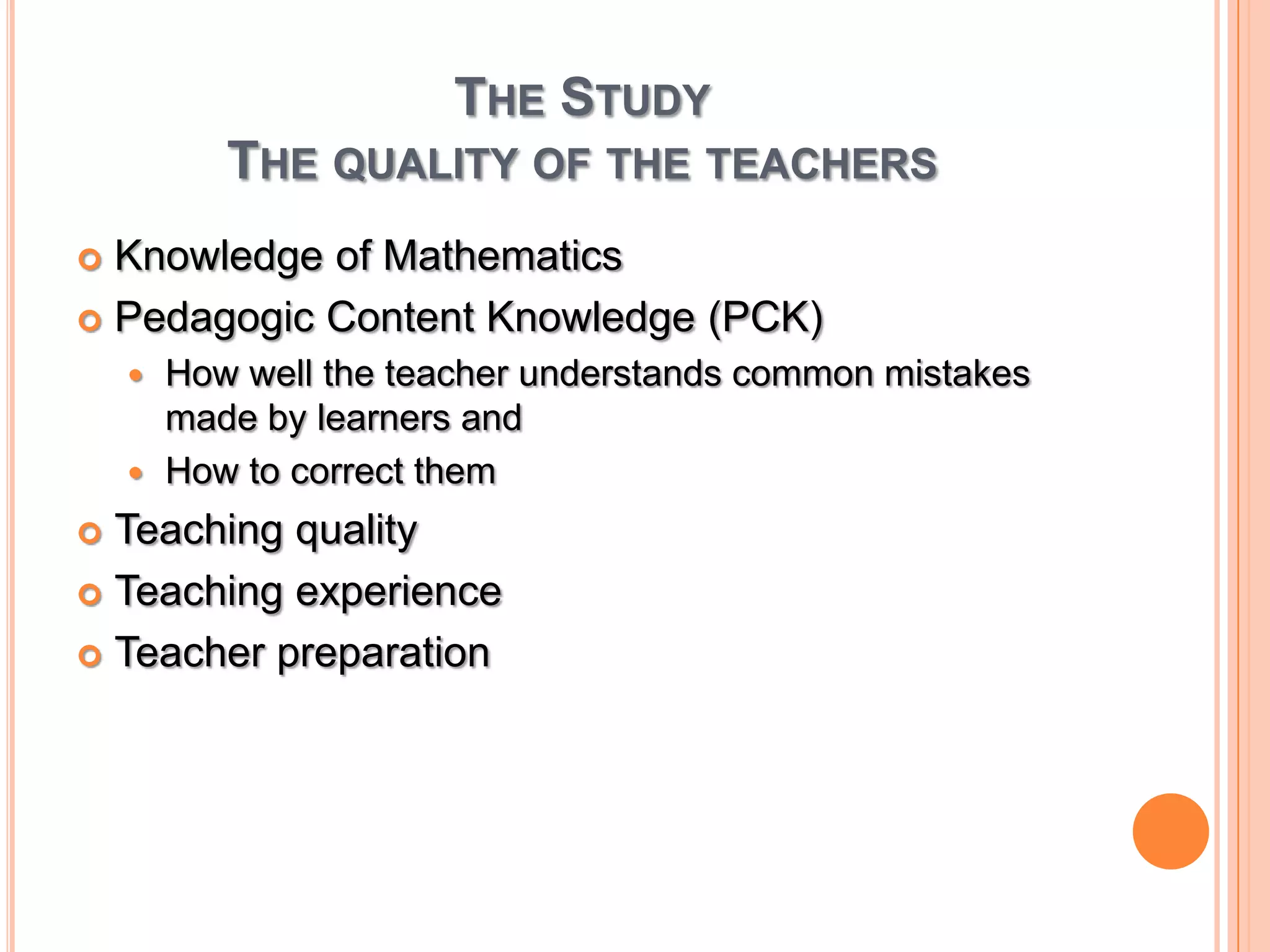
The StudyThe quality of the teachers Knowledge of MathematicsPedagogic Content Knowledge (PCK)How well the teacher understands common mistakes made by learners and How to correct themTeaching qualityTeaching experienceTeacher preparation
The StudyOpportunity to learn (OTL)What mathematics the teacher taughtLow exposure to the mathematics curriculumHow much mathematics taught school notebooks
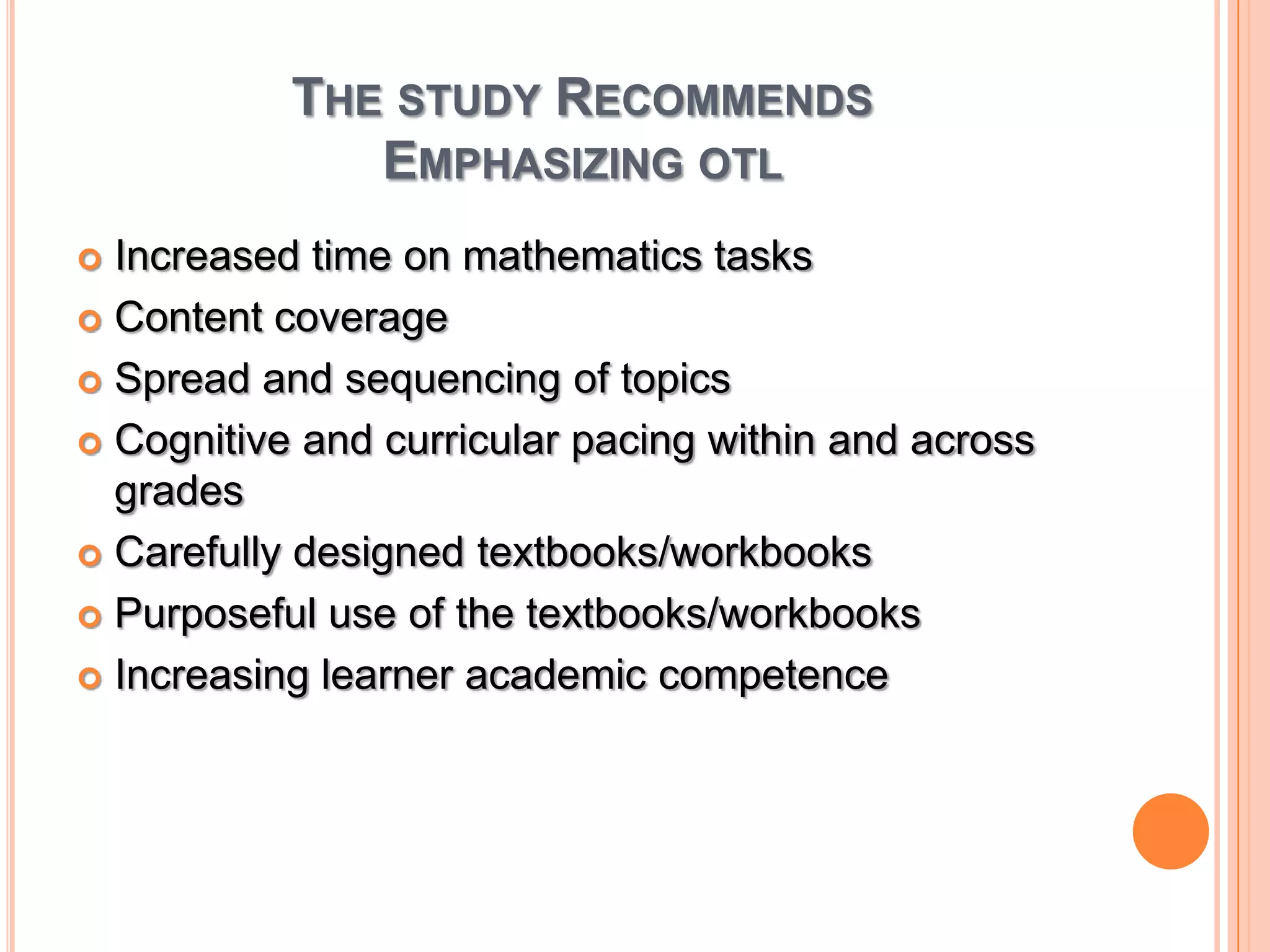
The study RecommendsEmphasizing otl Increased time on mathematics tasksContent coverageSpread and sequencing of topicsCognitive and curricular pacing within and across gradesCarefully designed textbooks/workbooksPurposeful use of the textbooks/workbooksIncreasing learner academic competence
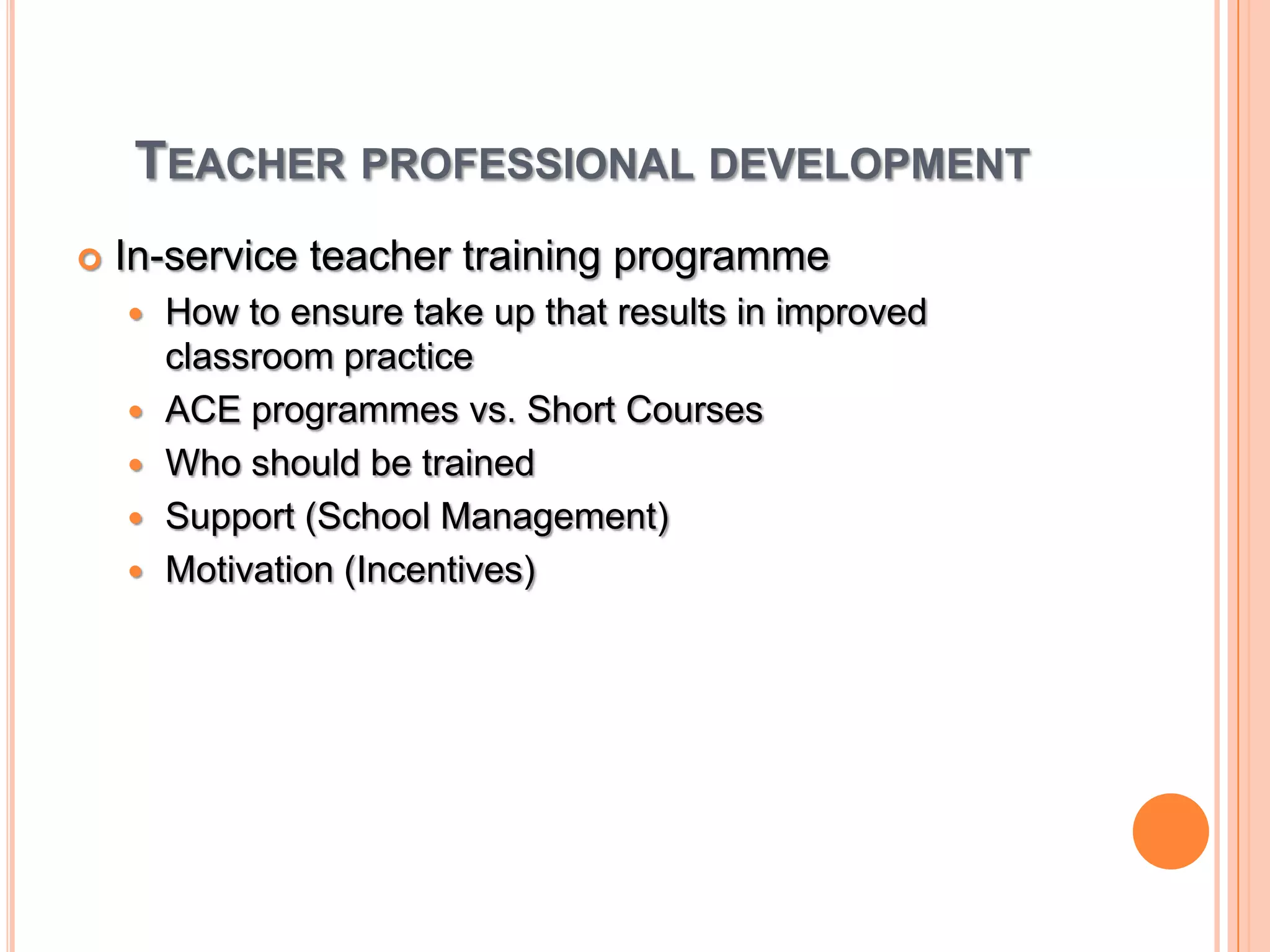
Teacher professional developmentIn-service teacher training programmeHow to ensure take up that results in improved classroom practiceACE programmes vs. Short CoursesWho should be trained Support (School Management)Motivation (Incentives)
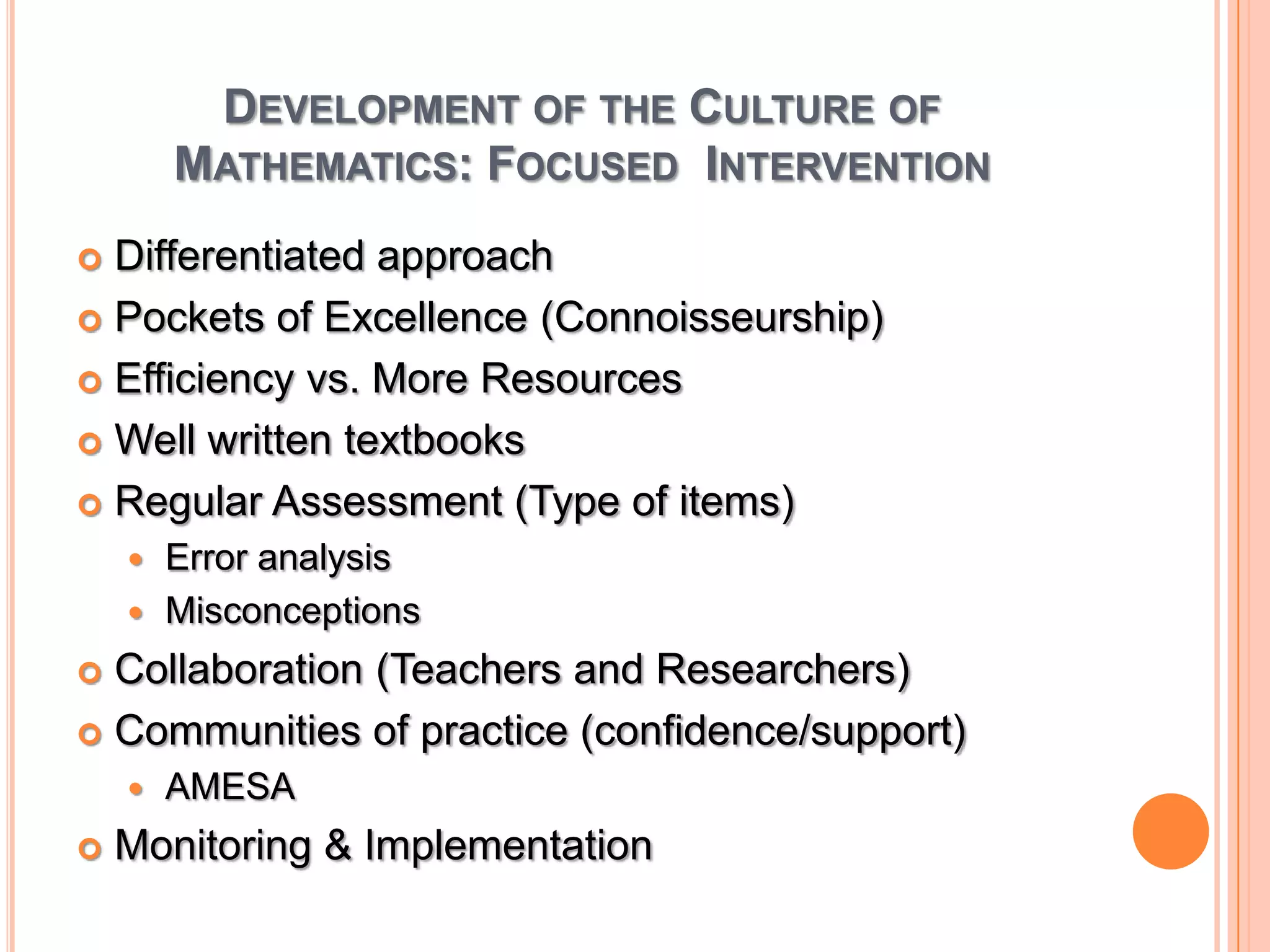
Development of the Culture of Mathematics: Focused  InterventionDifferentiated approach Pockets of Excellence (Connoisseurship)Efficiency vs. More ResourcesWell written textbooksRegular Assessment (Type of items)Error analysisMisconceptionsCollaboration (Teachers and Researchers)Communities of practice (confidence/support)AMESAMonitoring & Implementation
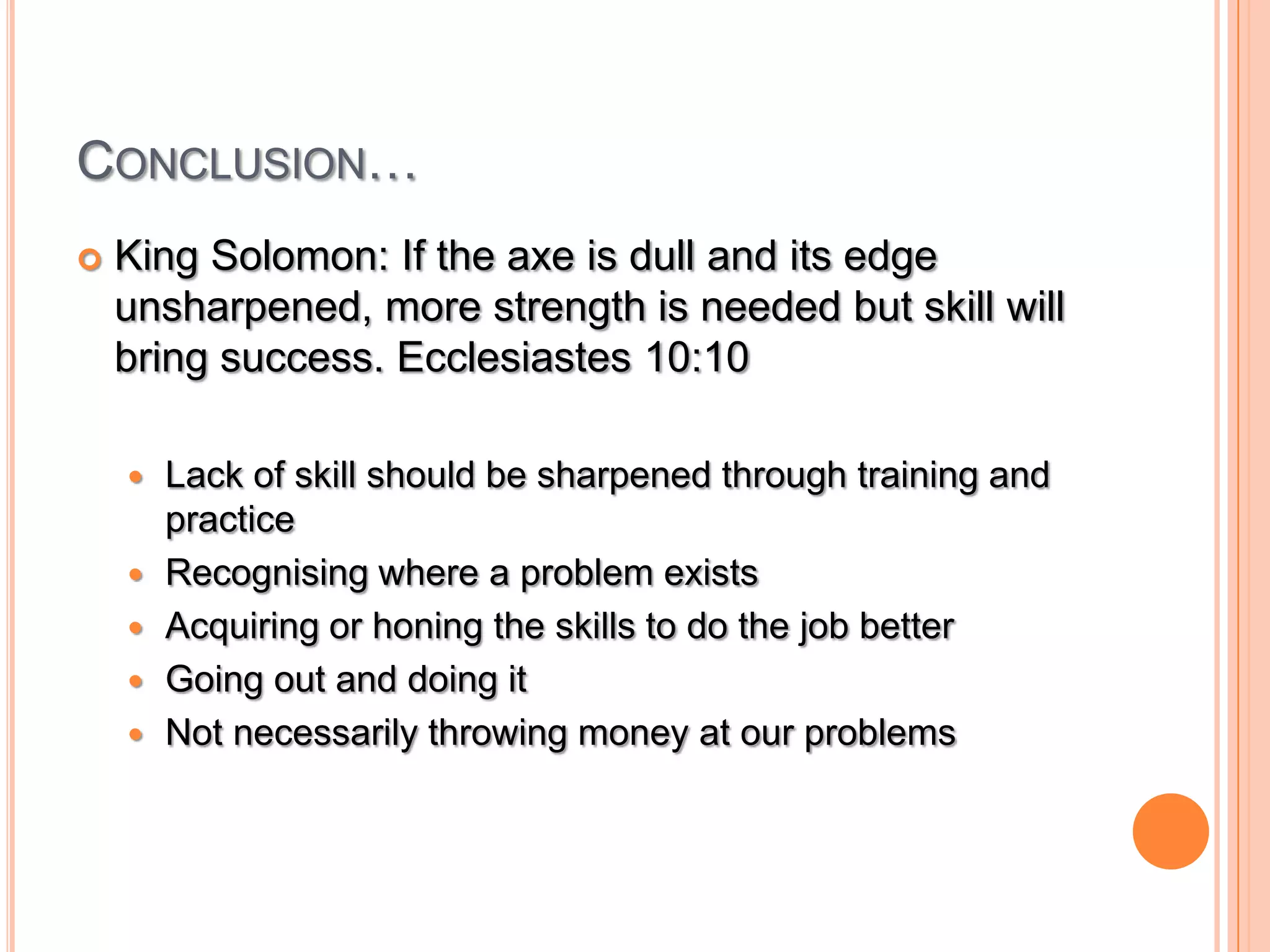
Conclusion…King Solomon: If the axe is dull and its edge unsharpened, more strength is needed but skill will bring success. Ecclesiastes 10:10Lack of skill should be sharpened through training and practiceRecognising where a problem existsAcquiring or honing the skills to do the job betterGoing out and doing itNot necessarily throwing money at our problems
Thank you…

Martin Carnoy PLenary comment by Elsbeth

  • 1.
    Why Some EducationalSystems are Better than Others: Comparing Botswana and South Africa.Elspeth Mmatladi Khembo11 July 2011Linder Auditorium, Wits School of Education
  • 2.
    The StudyFactors affectinglearner achievementHistorical and policy contextsProcesses of education policy changeMathematics Curriculum Supervision (Accountability)Teacher training (HEI) vs. Teacher supply (Colleges of Education)Teacher payTeacher unions
  • 3.
    Role of theGrade 6 Mathematics teacherCoverage of all the topics of the curriculumHigh academic expectation of learnersImproving learner achievementPreparing learners for the Senior Phase
  • 4.
    The StudyTeaching (Grade6 Mathematics)At Grades 4 and 5 levelLow level of mathematics pedagogical content knowledgeAmount of time teaching mathematics lowFocuses on Number, Operations and RelationshipsRoutine mathematics proceduresAverage of 50 lessons South Africa and an average of 78 lessons in BotswanaSlow pace of work within lessons
  • 5.
    The StudyGrade 6learnersBotswana learners scored higher in the pretest and made significantly higher gains over the academic yearLearners in both countries had better knowledge of the Grade 6 mathematics curriculumNumber PatternsVery poor knowledge of Grade 6 mathematicsMeasurementData Handling
  • 6.
    Grade 6 Contentknowledge (CAPS)MeasurementLength/Mass/CapacityTime/TemperaturePerimeterAreaVolumeRelationship betweenPerimeter & AreaSurface Area & Volume (Rectangular Prisms)Data HandlingCollectingOrganisingRepresentingInterpreting Double bar graphsPie ChartsAnalysingReportingProbability
  • 7.
    The StudyThe qualityof the teachers Knowledge of MathematicsPedagogic Content Knowledge (PCK)How well the teacher understands common mistakes made by learners and How to correct themTeaching qualityTeaching experienceTeacher preparation
  • 8.
    The StudyOpportunity tolearn (OTL)What mathematics the teacher taughtLow exposure to the mathematics curriculumHow much mathematics taught school notebooks
  • 9.
    The study RecommendsEmphasizingotl Increased time on mathematics tasksContent coverageSpread and sequencing of topicsCognitive and curricular pacing within and across gradesCarefully designed textbooks/workbooksPurposeful use of the textbooks/workbooksIncreasing learner academic competence
  • 10.
    Teacher professional developmentIn-serviceteacher training programmeHow to ensure take up that results in improved classroom practiceACE programmes vs. Short CoursesWho should be trained Support (School Management)Motivation (Incentives)
  • 11.
    Development of theCulture of Mathematics: Focused InterventionDifferentiated approach Pockets of Excellence (Connoisseurship)Efficiency vs. More ResourcesWell written textbooksRegular Assessment (Type of items)Error analysisMisconceptionsCollaboration (Teachers and Researchers)Communities of practice (confidence/support)AMESAMonitoring & Implementation
  • 12.
    Conclusion…King Solomon: Ifthe axe is dull and its edge unsharpened, more strength is needed but skill will bring success. Ecclesiastes 10:10Lack of skill should be sharpened through training and practiceRecognising where a problem existsAcquiring or honing the skills to do the job betterGoing out and doing itNot necessarily throwing money at our problems
  • 13.