MANIPULATIVE
SKILLS
Introduction
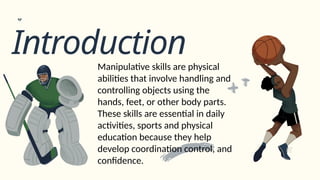
Manipulative skills are physical
abilities that involve handling and
controlling objects using the
hands, feet, or other body parts.
These skills are essential in daily
activities, sports and physical
education because they help
develop coordination control, and
confidence.
Salford & Co.
Learningoutcomes:
1.Identify examples of
manipulative skills
2.Explain the importance
of manipulative skills
3.Demonstrate basic
manipulative skills
Manipulative skills
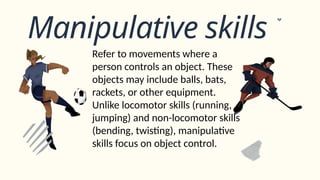
Refer to movements where a
person controls an object. These
objects may include balls, bats,
rackets, or other equipment.
Unlike locomotor skills (running,
jumping) and non-locomotor skills
(bending, twisting), manipulative
skills focus on object control.
Examples of
manipulative
skills
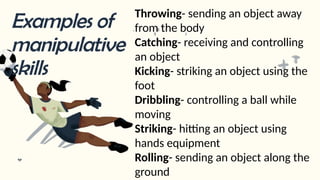
Throwing- sending an object away
from the body
Catching- receiving and controlling
an object
Kicking- striking an object using the
foot
Dribbling- controlling a ball while
moving
Striking- hitting an object using
hands equipment
Rolling- sending an object along the
ground
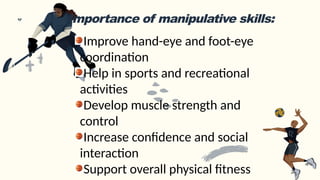
Importance of manipulative skills:
Improve hand-eye and foot-eye
coordination
Help in sports and recreational
activities
Develop muscle strength and
control
Increase confidence and social
interaction
Support overall physical fitness
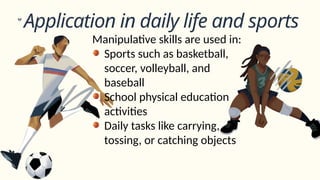
Application in daily life and sports
Manipulative skills are used in:
Sports such as basketball,
soccer, volleyball, and
baseball
School physical education
activities
Daily tasks like carrying,
tossing, or catching objects
CONCLUSIO
N
Salford & Co.
Sports play a vital role
in culture, economy,
and health.
Advancements
Encourage
participation in
sports and support
local teams and
events.
THANK
YOU
www.reallygreatsite.com hello@reallygreatsite.com +123-456-7890
Salford & Co.
CHALLENGES
FACING SPORTS
TODAY
Doping and performance-
enhancing drugs.
Salford & Co.
Gender inequality and
pay disparities.
Safety concerns (e.g.,
concussions in
contact sports).
THE ROLE
OF
TECHNOLO
GY IN
SPORTS
Salford & Co.
Use of analytics for
performance improvement.
Advancements
Wearable technology for tracking
health and fitness.
Broadcasting
Innovations
Live streaming, virtual
reality experiences,
and enhanced
viewing options.

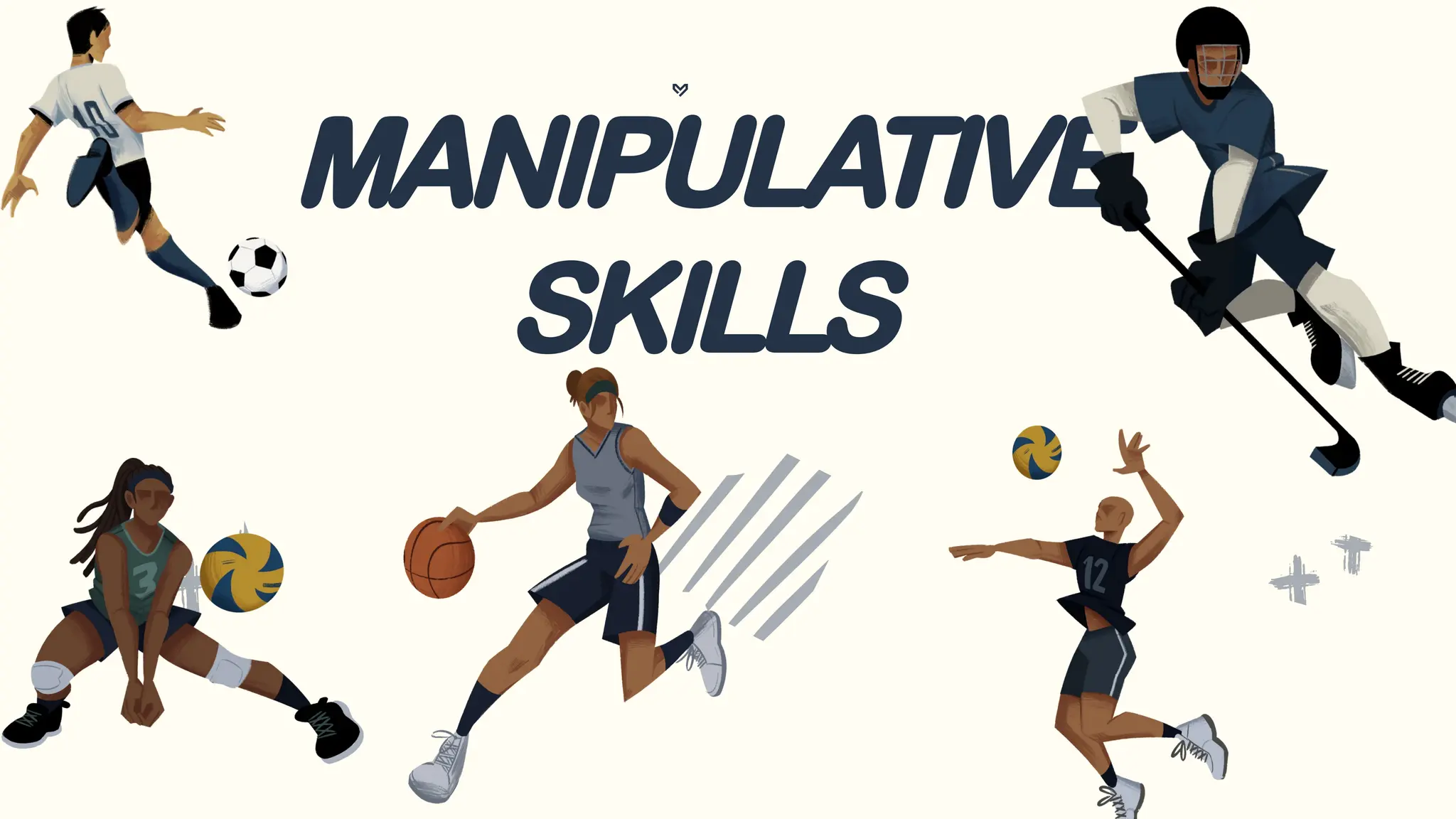
Manipulative skills and its application.

  • 1.
  • 2.
    Introduction Manipulative skills arephysical abilities that involve handling and controlling objects using the hands, feet, or other body parts. These skills are essential in daily activities, sports and physical education because they help develop coordination control, and confidence.
  • 3.
    Salford & Co. Learningoutcomes: 1.Identifyexamples of manipulative skills 2.Explain the importance of manipulative skills 3.Demonstrate basic manipulative skills
  • 4.
    Manipulative skills Refer tomovements where a person controls an object. These objects may include balls, bats, rackets, or other equipment. Unlike locomotor skills (running, jumping) and non-locomotor skills (bending, twisting), manipulative skills focus on object control.
  • 5.
    Examples of manipulative skills Throwing- sendingan object away from the body Catching- receiving and controlling an object Kicking- striking an object using the foot Dribbling- controlling a ball while moving Striking- hitting an object using hands equipment Rolling- sending an object along the ground
  • 6.
    Importance of manipulativeskills: Improve hand-eye and foot-eye coordination Help in sports and recreational activities Develop muscle strength and control Increase confidence and social interaction Support overall physical fitness
  • 7.
    Application in dailylife and sports Manipulative skills are used in: Sports such as basketball, soccer, volleyball, and baseball School physical education activities Daily tasks like carrying, tossing, or catching objects
  • 8.
    CONCLUSIO N Salford & Co. Sportsplay a vital role in culture, economy, and health. Advancements Encourage participation in sports and support local teams and events.
  • 9.
  • 10.
    CHALLENGES FACING SPORTS TODAY Doping andperformance- enhancing drugs. Salford & Co. Gender inequality and pay disparities. Safety concerns (e.g., concussions in contact sports).
  • 11.
    THE ROLE OF TECHNOLO GY IN SPORTS Salford& Co. Use of analytics for performance improvement. Advancements Wearable technology for tracking health and fitness. Broadcasting Innovations Live streaming, virtual reality experiences, and enhanced viewing options.