Tathagat Varma, Sr. Director, Yahoo! India
Yahoo! is focused on making the world's daily
habits more inspiring and entertaining. By
creating highly personalized experiences for our
users, we keep people connected to what matters
most to them, across devices and around the
world. In turn, we create value for advertisers by
connecting them with the audiences that build
their businesses.
Our Context

   •  Consumer Internet
   •  Critical success factors
     –  Innovation
     –  Speed
     –  UX
   •  Agility is more about
      results than beliefs,
      labels or rituals
Yahoo!’s Agile Journey…
•  Jeff Sutherland presented a talk @ Yahoo! and to
   the leadership team in an offsite in Nov 2004.

•  Started embracing Agile in 2004 with grassroot
   effort (bottoms up)

•  Over these 8 years multiple effort along with
   various approaches are experimented within
   Yahoo!

•  Few teams developed and excelled in agile
   methodologies and now helping out other teams
   scale agile in the organization.
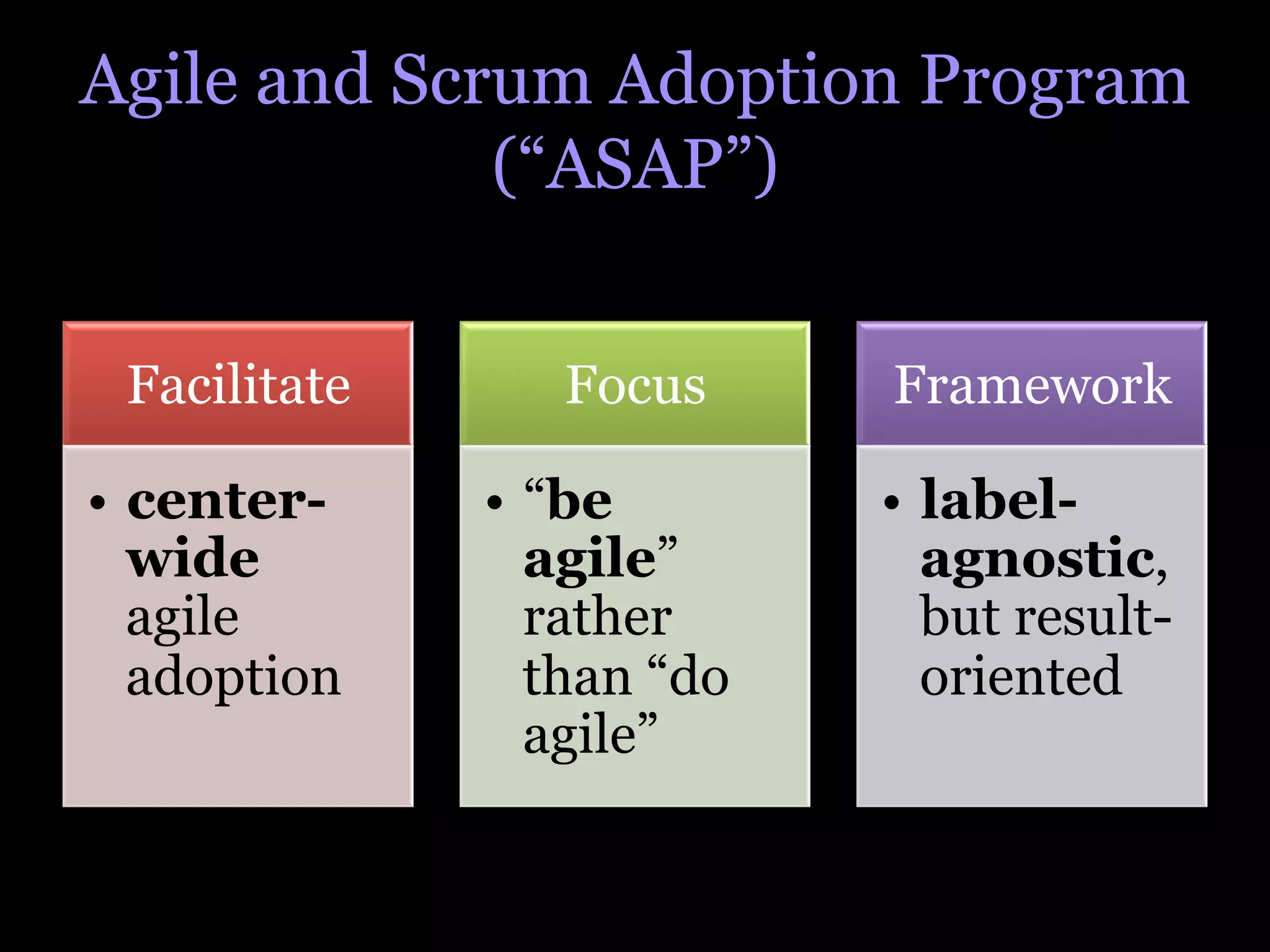
Agile and Scrum Adoption Program
             (“ASAP”)


 Facilitate      Focus      Framework

•  center-    •  “be        •  label-
   wide          agile”        agnostic,
   agile         rather        but result-
   adoption      than “do      oriented
                 agile”
What is the most important part in
      these two machines?


     “The Brakes!!!”
  They let you go faster…
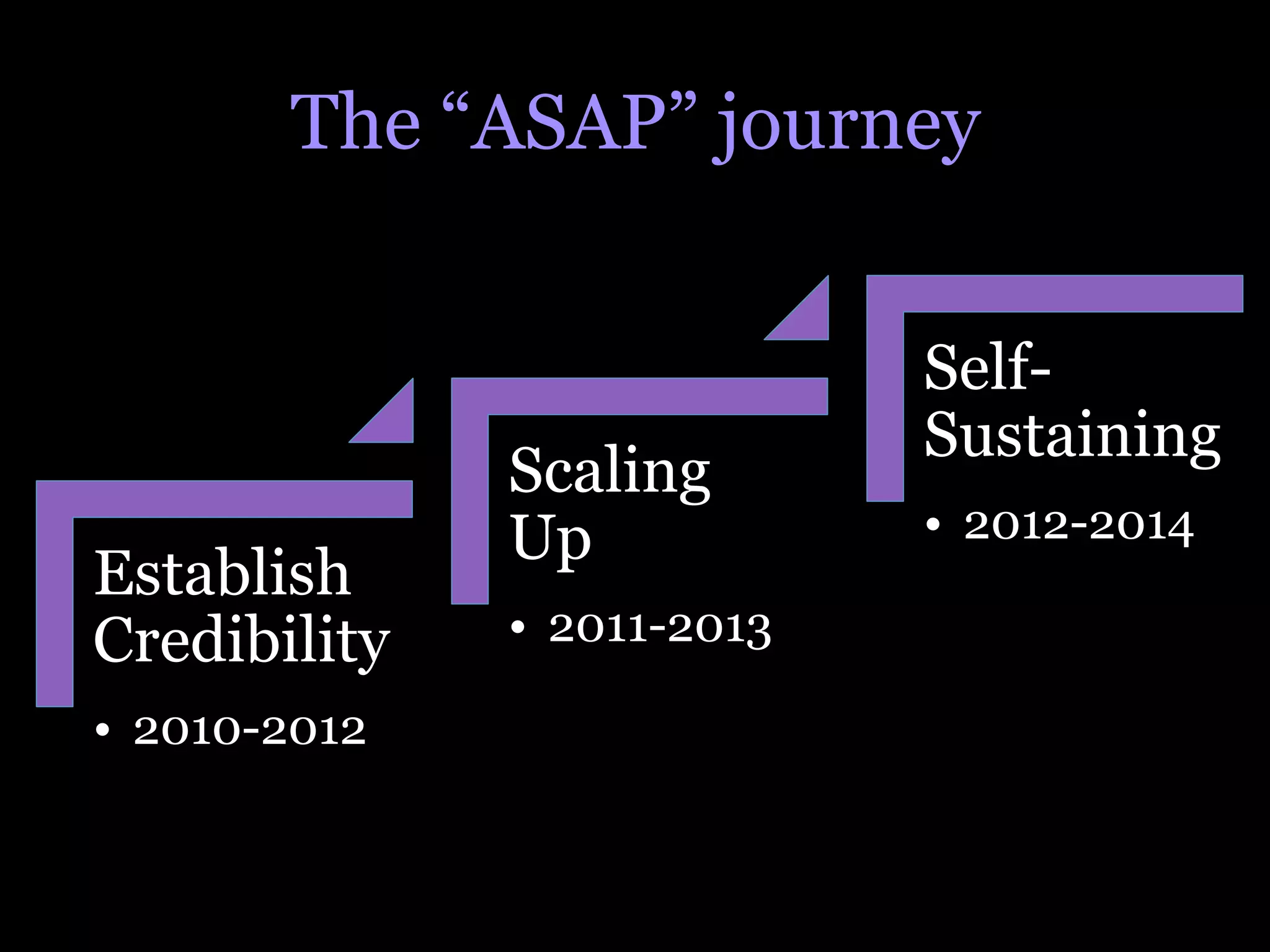
The “ASAP” journey


                              Self-
                              Sustaining
               Scaling
               Up             •  2012-2014
Establish
Credibility    •  2011-2013

•  2010-2012
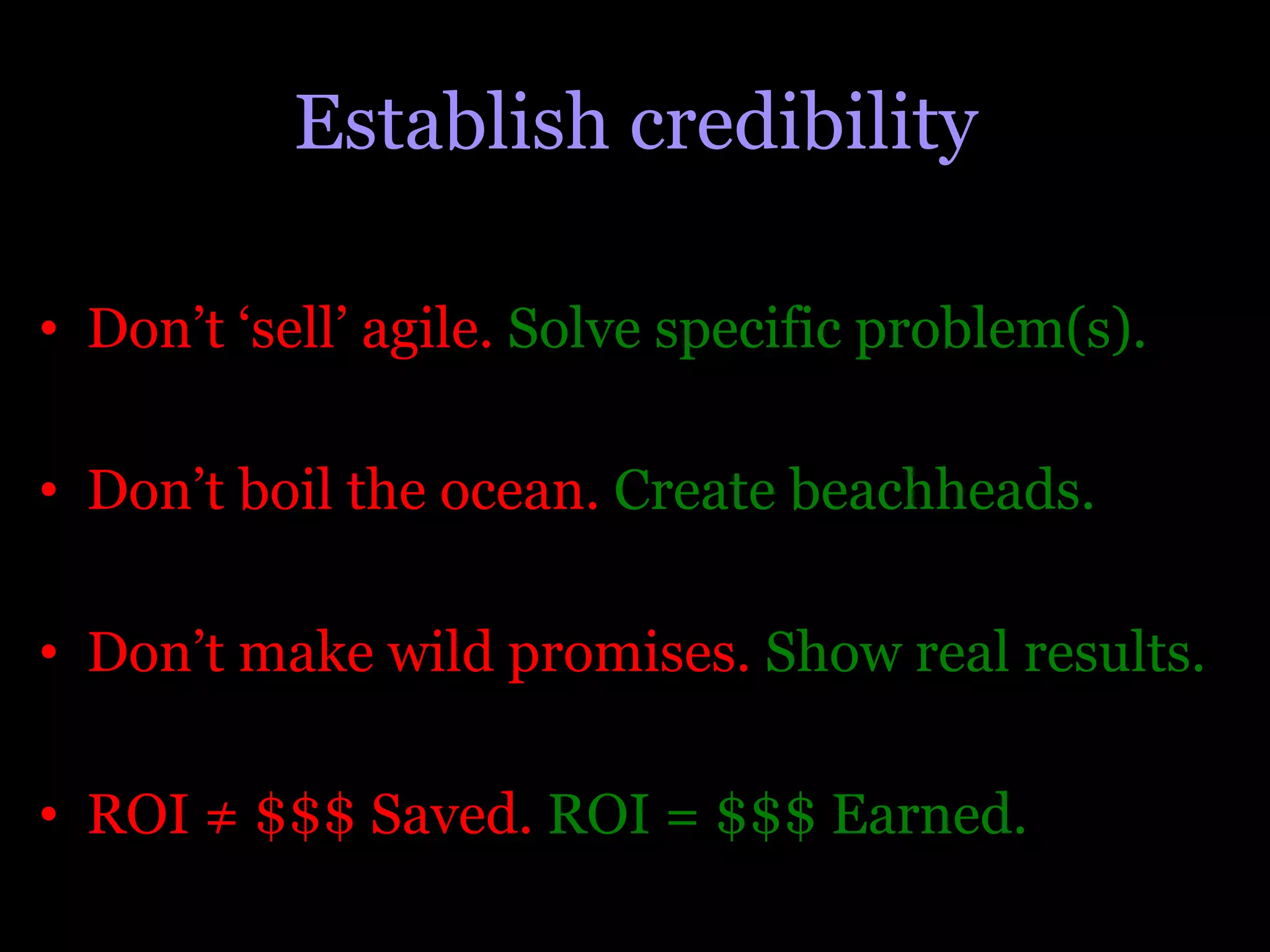
Establish credibility

•  Don’t ‘sell’ agile. Solve specific problem(s).

•  Don’t boil the ocean. Create beachheads.

•  Don’t make wild promises. Show real results.

•  ROI ≠ $$$ Saved. ROI = $$$ Earned.
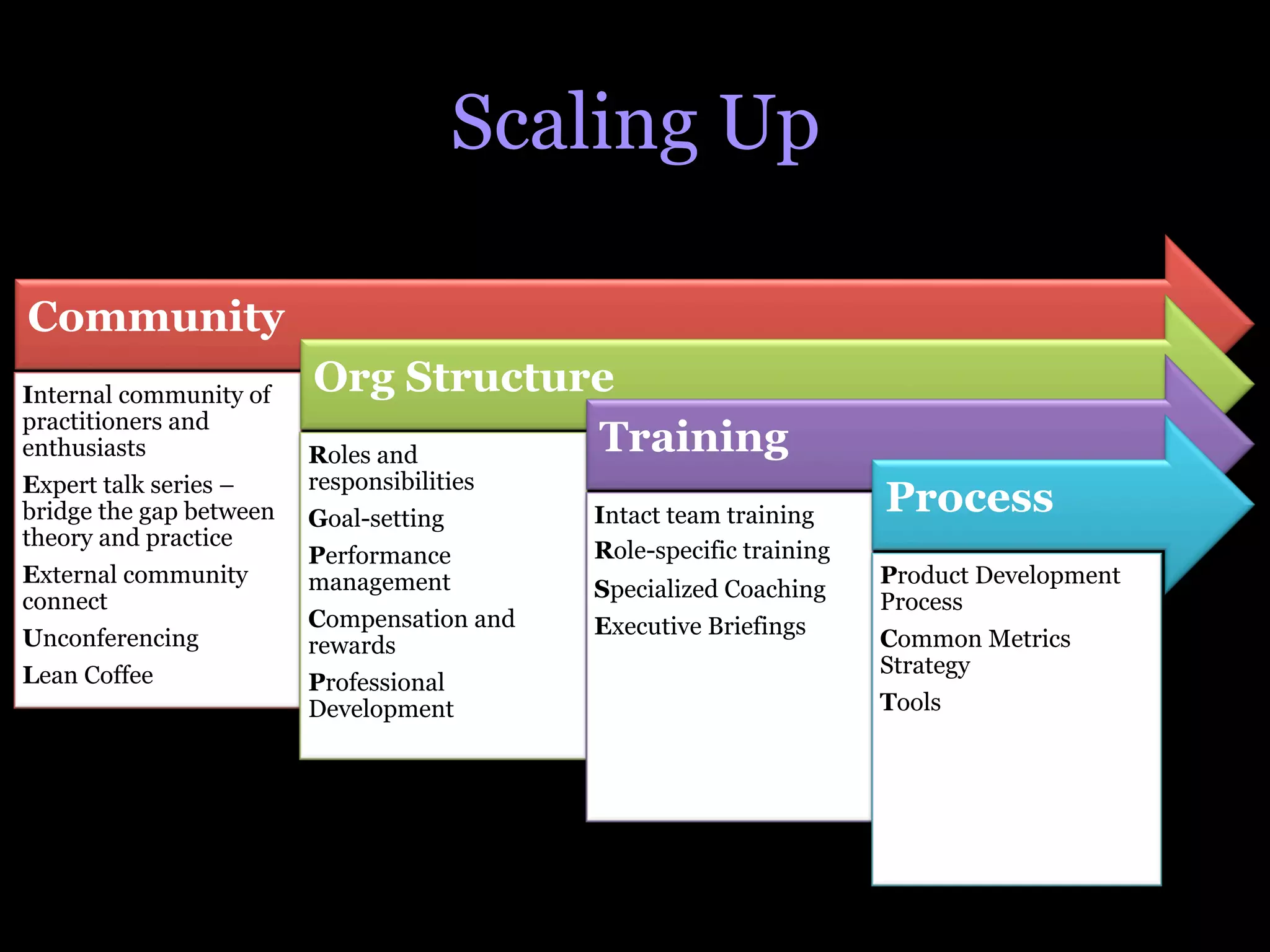
Scaling Up

Community
Internal community of    Org Structure
practitioners and
enthusiasts              Roles and   Training
Expert talk series –     responsibilities
bridge the gap between   Goal-setting       Intact team training     Process
theory and practice
                         Performance        Role-specific training
External community       management                                  Product Development
connect                                     Specialized Coaching
                                                                     Process
                         Compensation and   Executive Briefings
Unconferencing           rewards                                     Common Metrics
Lean Coffee                                                          Strategy
                         Professional
                         Development                                 Tools
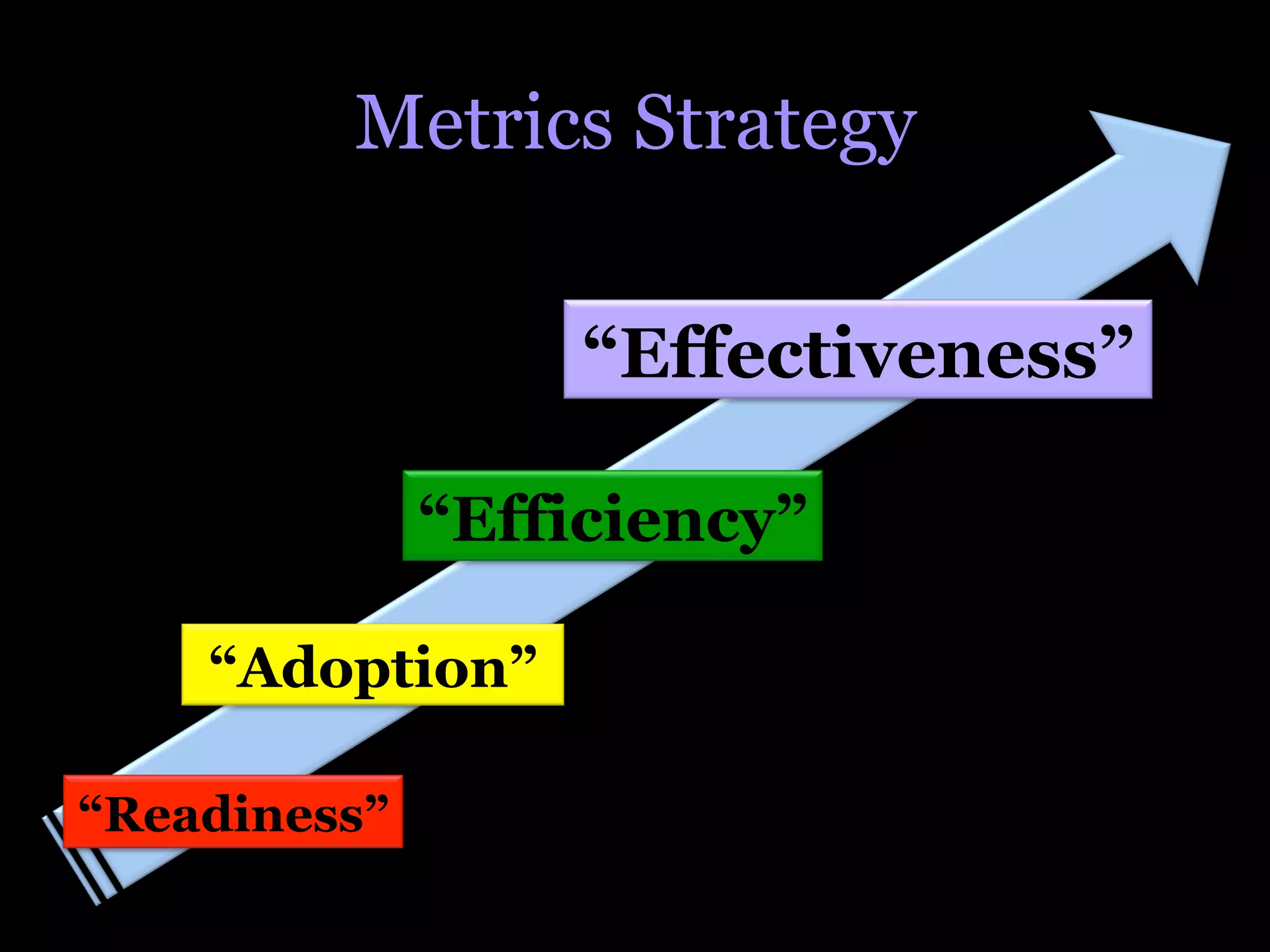
Metrics Strategy

                   “Effectiveness”

              “Efficiency”

    “Adoption”

“Readiness”
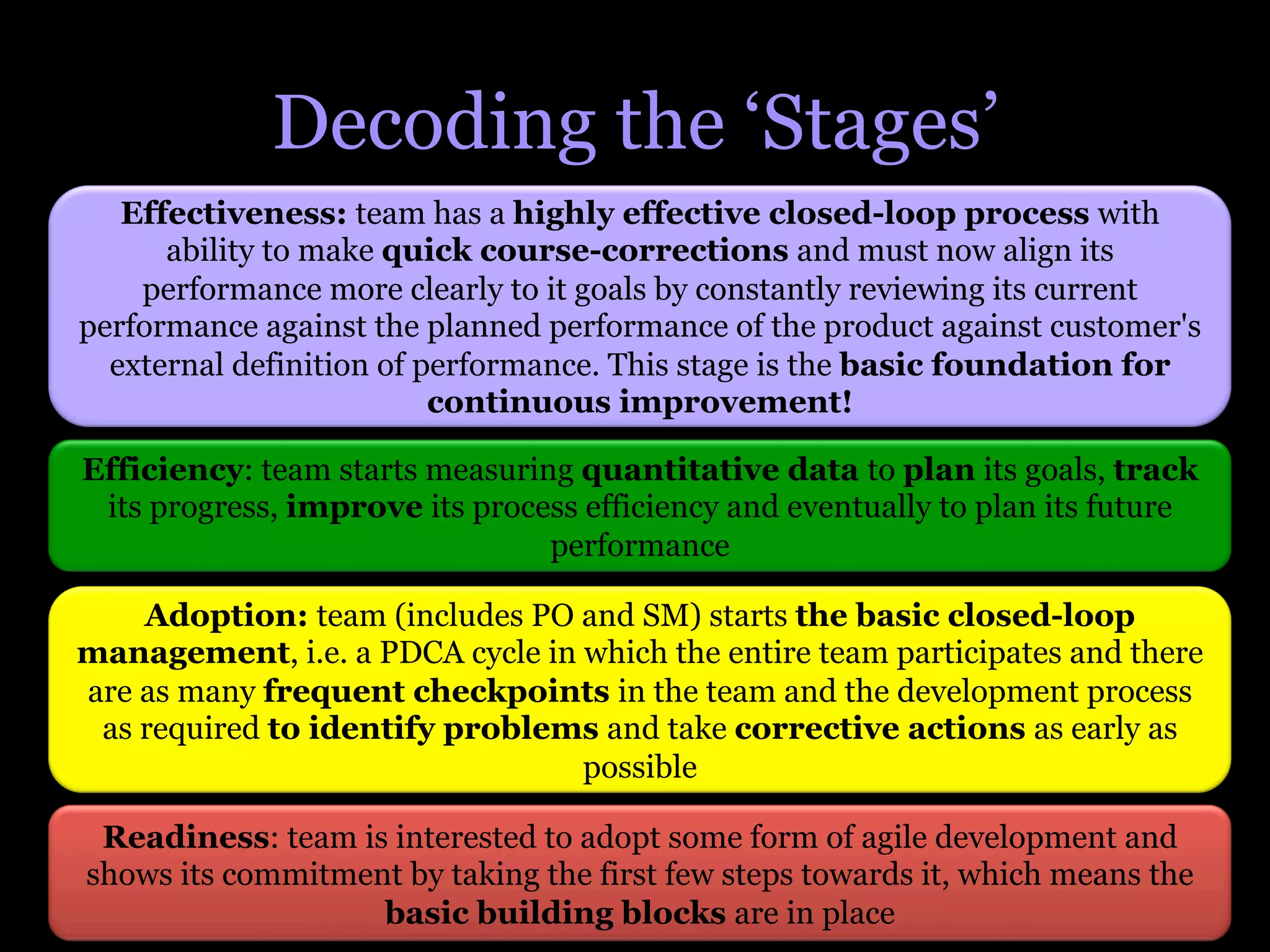
Decoding the ‘Stages’
   Effectiveness: team has a highly effective closed-loop process with
      ability to make quick course-corrections and must now align its
    performance more clearly to it goals by constantly reviewing its current
performance against the planned performance of the product against customer's
  external definition of performance. This stage is the basic foundation for
                          continuous improvement!

Efficiency: team starts measuring quantitative data to plan its goals, track
 its progress, improve its process efficiency and eventually to plan its future
                                performance

    Adoption: team (includes PO and SM) starts the basic closed-loop
management, i.e. a PDCA cycle in which the entire team participates and there
are as many frequent checkpoints in the team and the development process
 as required to identify problems and take corrective actions as early as
                                 possible

 Readiness: team is interested to adopt some form of agile development and
shows its commitment by taking the first few steps towards it, which means the
                   basic building blocks are in place
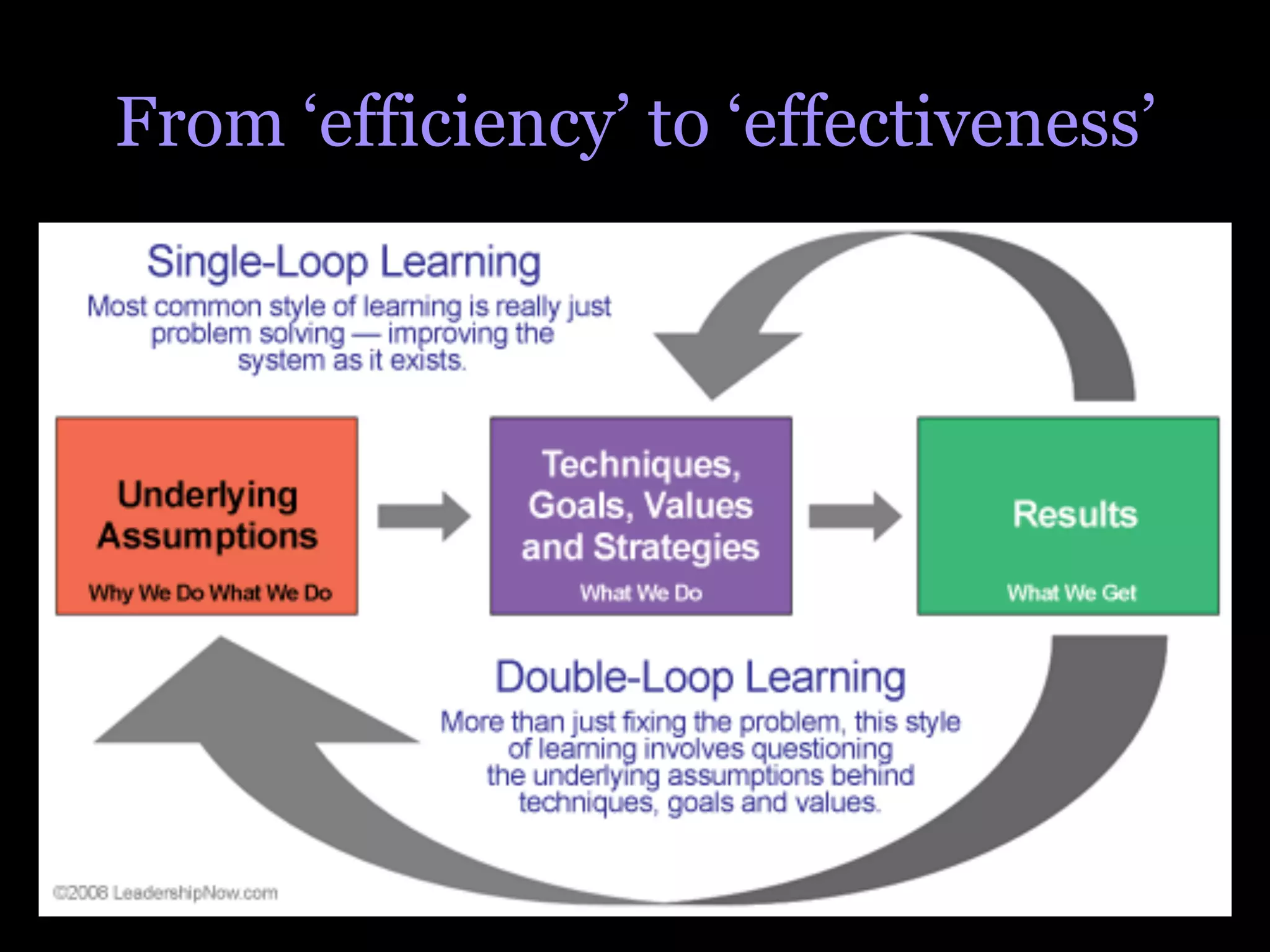
From ‘efficiency’ to ‘effectiveness’
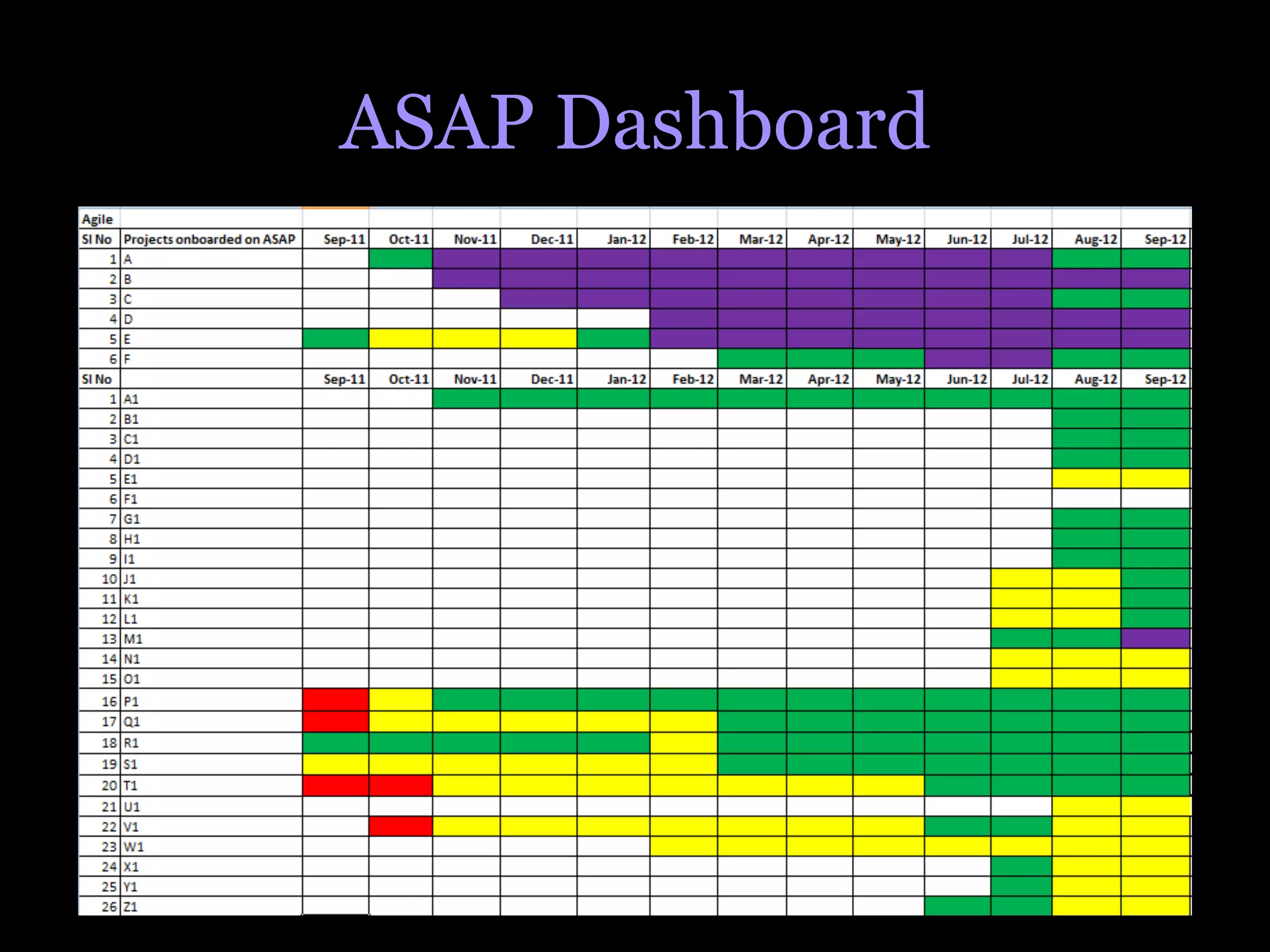
ASAP Dashboard
Self-Sustaining
•  Starting-up is easy, sustaining is tough,
   continuous improvement is toughest!
•  Strength of process and transformation
   is only tested operating in ‘real world’
•  Practices that bring results are likely to
   sustain over any ‘prescription’
•  Achieving ‘effective’ state is key to
   become self-sustaining
What are we learning?

•  Credibility is extremely important
•  Scaling up ≠ 100% Adoption
•  Results talk louder than intent!
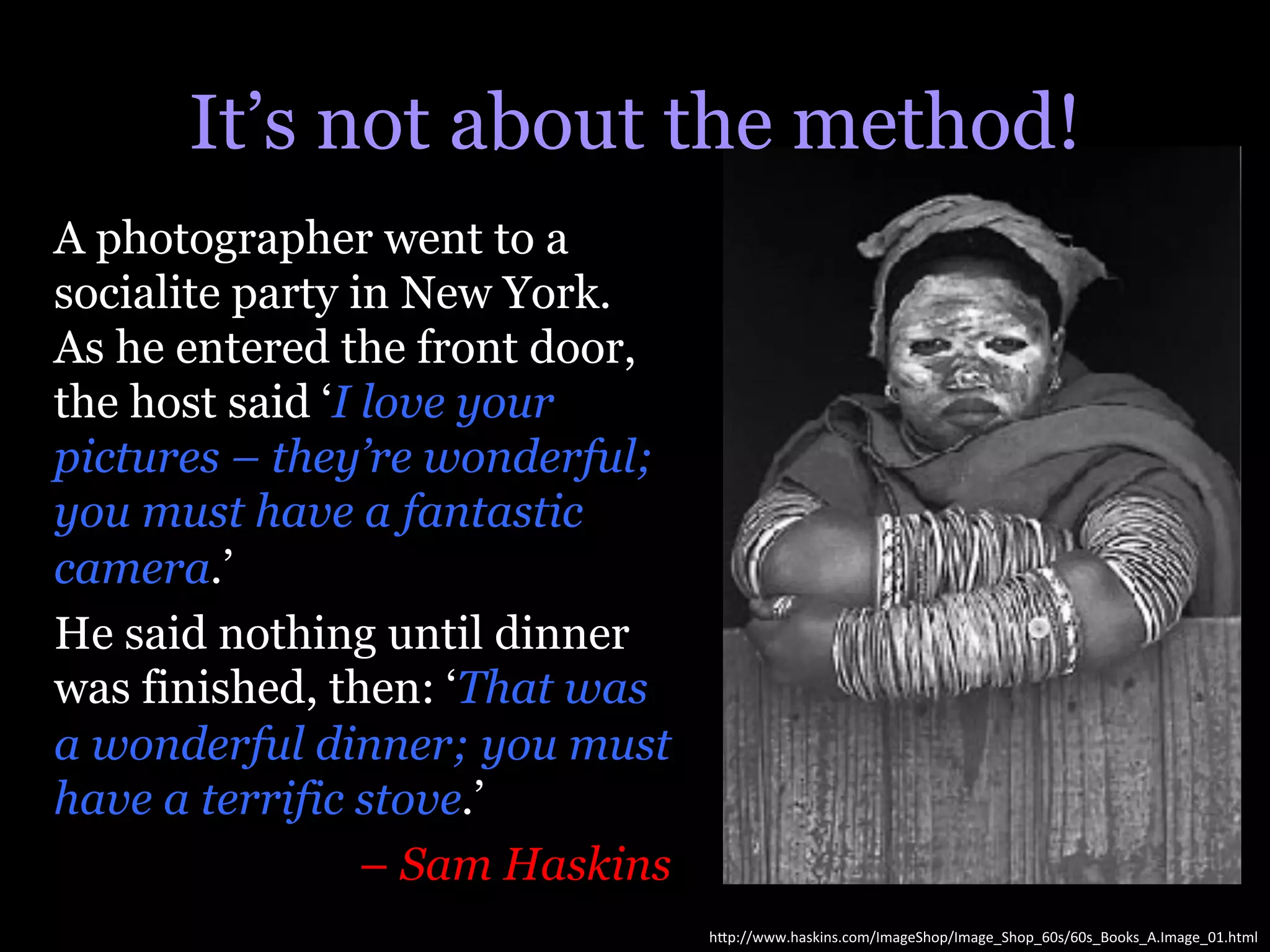
It’s not about the method!
A photographer went to a
socialite party in New York.
As he entered the front door,
the host said ‘I love your
pictures – they’re wonderful;
you must have a fantastic
camera.’
He said nothing until dinner
was finished, then: ‘That was
a wonderful dinner; you must
have a terrific stove.’
                 – Sam Haskins
                                 h"p://www.haskins.com/ImageShop/Image_Shop_60s/60s_Books_A.Image_01.html	
  
References
•  The ASAP Journey – Tathagat Varma,
   Scrum Bangalore Meetup, 2012
•  Managing Large-Scale Agile
   Transformation – Tathagat Varma, APMG
   Showcase, 2012
Thanks!


Tathagat@yahoo-inc.com

Managing Large-Scale Agile Transformations - Experiences At Yahoo!

  • 1.
    Tathagat Varma, Sr.Director, Yahoo! India
  • 2.
    Yahoo! is focusedon making the world's daily habits more inspiring and entertaining. By creating highly personalized experiences for our users, we keep people connected to what matters most to them, across devices and around the world. In turn, we create value for advertisers by connecting them with the audiences that build their businesses.
  • 3.
    Our Context •  Consumer Internet •  Critical success factors –  Innovation –  Speed –  UX •  Agility is more about results than beliefs, labels or rituals
  • 4.
    Yahoo!’s Agile Journey… • Jeff Sutherland presented a talk @ Yahoo! and to the leadership team in an offsite in Nov 2004. •  Started embracing Agile in 2004 with grassroot effort (bottoms up) •  Over these 8 years multiple effort along with various approaches are experimented within Yahoo! •  Few teams developed and excelled in agile methodologies and now helping out other teams scale agile in the organization.
  • 5.
    Agile and ScrumAdoption Program (“ASAP”) Facilitate Focus Framework •  center- •  “be •  label- wide agile” agnostic, agile rather but result- adoption than “do oriented agile”
  • 6.
    What is themost important part in these two machines? “The Brakes!!!” They let you go faster…
  • 7.
    The “ASAP” journey Self- Sustaining Scaling Up •  2012-2014 Establish Credibility •  2011-2013 •  2010-2012
  • 8.
    Establish credibility •  Don’t‘sell’ agile. Solve specific problem(s). •  Don’t boil the ocean. Create beachheads. •  Don’t make wild promises. Show real results. •  ROI ≠ $$$ Saved. ROI = $$$ Earned.
  • 9.
    Scaling Up Community Internal communityof Org Structure practitioners and enthusiasts Roles and Training Expert talk series – responsibilities bridge the gap between Goal-setting Intact team training Process theory and practice Performance Role-specific training External community management Product Development connect Specialized Coaching Process Compensation and Executive Briefings Unconferencing rewards Common Metrics Lean Coffee Strategy Professional Development Tools
  • 10.
    Metrics Strategy “Effectiveness” “Efficiency” “Adoption” “Readiness”
  • 11.
    Decoding the ‘Stages’ Effectiveness: team has a highly effective closed-loop process with ability to make quick course-corrections and must now align its performance more clearly to it goals by constantly reviewing its current performance against the planned performance of the product against customer's external definition of performance. This stage is the basic foundation for continuous improvement! Efficiency: team starts measuring quantitative data to plan its goals, track its progress, improve its process efficiency and eventually to plan its future performance Adoption: team (includes PO and SM) starts the basic closed-loop management, i.e. a PDCA cycle in which the entire team participates and there are as many frequent checkpoints in the team and the development process as required to identify problems and take corrective actions as early as possible Readiness: team is interested to adopt some form of agile development and shows its commitment by taking the first few steps towards it, which means the basic building blocks are in place
  • 12.
    From ‘efficiency’ to‘effectiveness’
  • 13.
  • 14.
    Self-Sustaining •  Starting-up iseasy, sustaining is tough, continuous improvement is toughest! •  Strength of process and transformation is only tested operating in ‘real world’ •  Practices that bring results are likely to sustain over any ‘prescription’ •  Achieving ‘effective’ state is key to become self-sustaining
  • 15.
    What are welearning? •  Credibility is extremely important •  Scaling up ≠ 100% Adoption •  Results talk louder than intent!
  • 16.
    It’s not aboutthe method! A photographer went to a socialite party in New York. As he entered the front door, the host said ‘I love your pictures – they’re wonderful; you must have a fantastic camera.’ He said nothing until dinner was finished, then: ‘That was a wonderful dinner; you must have a terrific stove.’ – Sam Haskins h"p://www.haskins.com/ImageShop/Image_Shop_60s/60s_Books_A.Image_01.html  
  • 17.
    References •  The ASAPJourney – Tathagat Varma, Scrum Bangalore Meetup, 2012 •  Managing Large-Scale Agile Transformation – Tathagat Varma, APMG Showcase, 2012
  • 18.