Patrick O’Leary
 The National Drinking Age Act of 1984
 Passed in hopes to reduce highway fatalities due to
drinking and driving.
 States were forced to abide or they would loose
highway funds.
Why was the Drinking Age Raised
in the First Place?
 Highway fatalities, due to alcohol, started to
lower BEFORE 1984.
The Statistics
 Education about drinking and driving.
 Designated driver programs.
 Increased seat belt and air bag usage.
 Safer automobiles.
 Lowering of speed limits.
Other Factors Contributed to
Reduction in Traffic Fatalities
 Being 18 and allowed
to drink does not
mean an increase in
traffic fatalities.
Proving that….
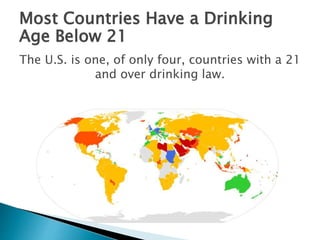
The U.S. is one, of only four, countries with a 21
and over drinking law.
Most Countries Have a Drinking
Age Below 21
Turning 18 means becoming an adult
Is a 18 Year Old Mature Enough to
Drink?
 Go away to college
 Open up credit cards
 Serve on a jury
If an 18 year old is “mature” enough for all of
these responsibilities, then an 18 year old is
mature enough to drink alcohol
Not To Mention
 Regardless of the law, teens will find a way to
drink.
Teens Are Going To Drink
 Unsupervised parties
◦ Want to get drunk as fast as they can.
 BINGE DRINKING
Behind Closed Doors
 Before going out
 “Pre-game”
 “Power Hour”
 Alcohol Poisoning
Binge Drinking
 Should lower drinking age to 18 and start
teaching how to drink responsibly and
respectfully.
 By doing this, 18 year olds can drink socially
and won’t have the need to binge drink.
Necessary Actions
 Require classes on responsible drinking
 Increase awareness on transportation
alternatives
 Helping to mold teens into responsible
consumers
Necessary Actions
 If an 18 year old is to be claimed an “adult”
then all of the rights should come at that age
and they shouldn’t have to wait three years to
be able to drink.
 If we want teens/young adults to drink
responsibly then we must give them the
responsibility and ability to drink legally.
Conclusion
 Fitzpatrick, Ben G., et al. "Forecasting The Effect Of The Amethyst Initiative On College Drinking." Alcoholism:
Clinical & Experimental Research 36.9 (2012): 1608-1613. Academic Search Premier. Web. 8 Dec. 2013.
 Higson, R. W. "Result Filters." National Center for Biotechnology Information. U.S. National Library of Medicine,
16 July 2006. Web. 08 Dec. 2013.
 McCartt, Anne T., Laurie A. Hellinga, and Bevan B. Kirley. "The Effects Of Minimum Legal Drinking Age 21 Laws
On Alcohol-Related Driving In The United States." Journal Of Safety Research 41.2 (2010): 173-181. Academic
Search Premier. Web. 8 Dec. 2013.
 Saylor, Drew K. "Heavy Drinking On College Campuses: No Reason To Change Minimum Legal Drinking Age Of
21." Journal Of American College Health 59.4 (2011): 330-333. SPORTDiscus with Full Text. Web. 4 Dec. 2013.
 Smith, D. Ian. "Effect On Juvenile Crime Of Lowering The Drinking Age In Three Australian States." British Journal
Of Addiction 82.2 (1987): 181-188. Academic Search Premier. Web. 8 Dec. 2013.
 Wechsler, Henry, and Toben F. Nelson. "Will Increasing Alcohol Availability By Lowering The Minimum Legal
Drinking Age Decrease Drinking And Related Consequences Among Youths?." American Journal Of Public Health
100.6 (2010): 986-992. Business Source Complete. Web. 11 Dec. 2013.
Works Cited

Lowering the drinking age

  • 1.
  • 2.
     The NationalDrinking Age Act of 1984  Passed in hopes to reduce highway fatalities due to drinking and driving.  States were forced to abide or they would loose highway funds. Why was the Drinking Age Raised in the First Place?
  • 3.
     Highway fatalities,due to alcohol, started to lower BEFORE 1984. The Statistics
  • 4.
     Education aboutdrinking and driving.  Designated driver programs.  Increased seat belt and air bag usage.  Safer automobiles.  Lowering of speed limits. Other Factors Contributed to Reduction in Traffic Fatalities
  • 5.
     Being 18and allowed to drink does not mean an increase in traffic fatalities. Proving that….
  • 6.
    The U.S. isone, of only four, countries with a 21 and over drinking law. Most Countries Have a Drinking Age Below 21
  • 7.
    Turning 18 meansbecoming an adult Is a 18 Year Old Mature Enough to Drink?
  • 8.
     Go awayto college  Open up credit cards  Serve on a jury If an 18 year old is “mature” enough for all of these responsibilities, then an 18 year old is mature enough to drink alcohol Not To Mention
  • 9.
     Regardless ofthe law, teens will find a way to drink. Teens Are Going To Drink
  • 10.
     Unsupervised parties ◦Want to get drunk as fast as they can.  BINGE DRINKING Behind Closed Doors
  • 11.
     Before goingout  “Pre-game”  “Power Hour”  Alcohol Poisoning Binge Drinking
  • 12.
     Should lowerdrinking age to 18 and start teaching how to drink responsibly and respectfully.  By doing this, 18 year olds can drink socially and won’t have the need to binge drink. Necessary Actions
  • 13.
     Require classeson responsible drinking  Increase awareness on transportation alternatives  Helping to mold teens into responsible consumers Necessary Actions
  • 14.
     If an18 year old is to be claimed an “adult” then all of the rights should come at that age and they shouldn’t have to wait three years to be able to drink.  If we want teens/young adults to drink responsibly then we must give them the responsibility and ability to drink legally. Conclusion
  • 15.
     Fitzpatrick, BenG., et al. "Forecasting The Effect Of The Amethyst Initiative On College Drinking." Alcoholism: Clinical & Experimental Research 36.9 (2012): 1608-1613. Academic Search Premier. Web. 8 Dec. 2013.  Higson, R. W. "Result Filters." National Center for Biotechnology Information. U.S. National Library of Medicine, 16 July 2006. Web. 08 Dec. 2013.  McCartt, Anne T., Laurie A. Hellinga, and Bevan B. Kirley. "The Effects Of Minimum Legal Drinking Age 21 Laws On Alcohol-Related Driving In The United States." Journal Of Safety Research 41.2 (2010): 173-181. Academic Search Premier. Web. 8 Dec. 2013.  Saylor, Drew K. "Heavy Drinking On College Campuses: No Reason To Change Minimum Legal Drinking Age Of 21." Journal Of American College Health 59.4 (2011): 330-333. SPORTDiscus with Full Text. Web. 4 Dec. 2013.  Smith, D. Ian. "Effect On Juvenile Crime Of Lowering The Drinking Age In Three Australian States." British Journal Of Addiction 82.2 (1987): 181-188. Academic Search Premier. Web. 8 Dec. 2013.  Wechsler, Henry, and Toben F. Nelson. "Will Increasing Alcohol Availability By Lowering The Minimum Legal Drinking Age Decrease Drinking And Related Consequences Among Youths?." American Journal Of Public Health 100.6 (2010): 986-992. Business Source Complete. Web. 11 Dec. 2013. Works Cited