Circuit Breakers
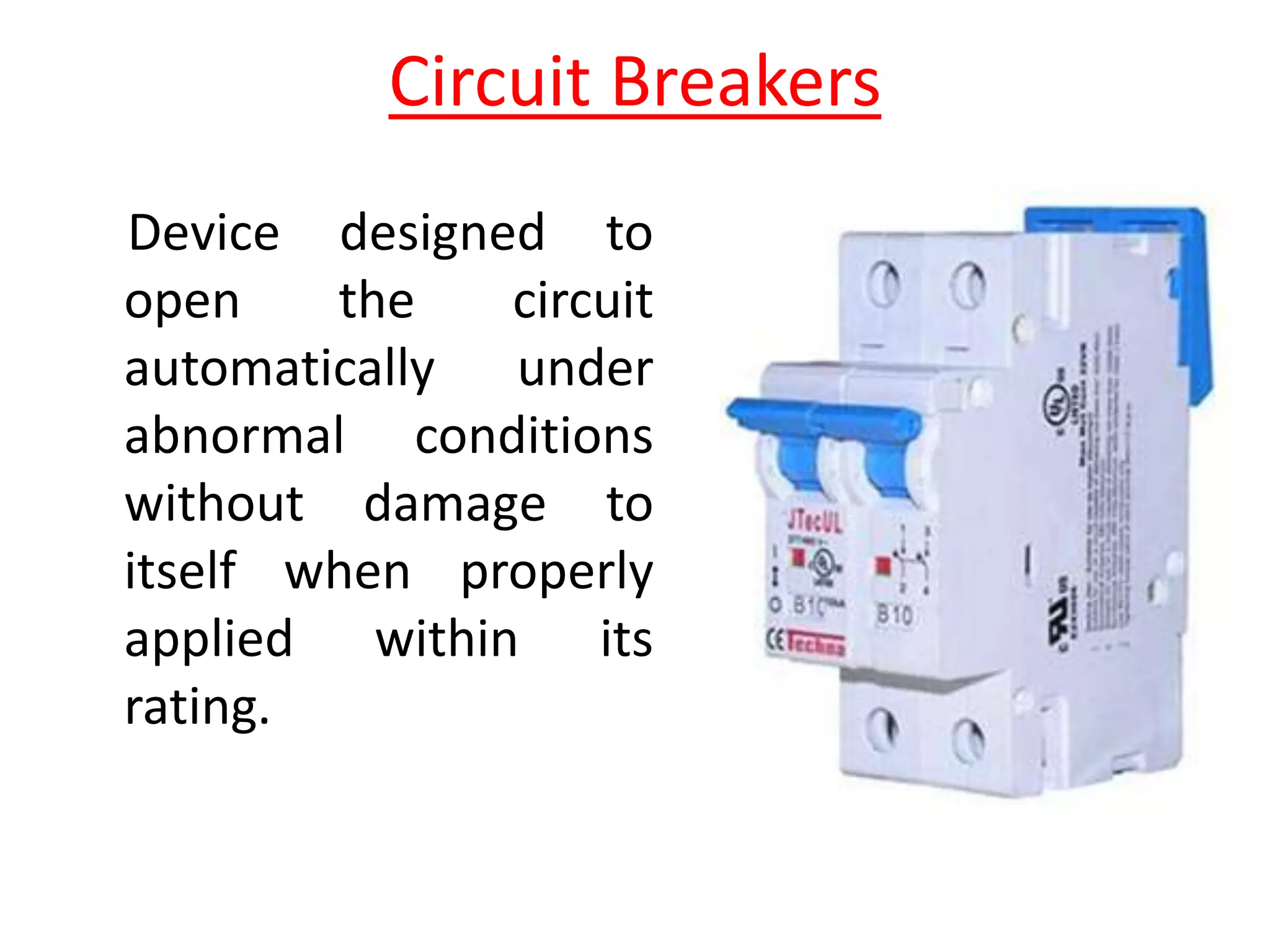
Device designed to
open the circuit
automatically under
abnormal conditions
without damage to
itself when properly
applied within its
rating.
Basic Difference Between Fuse &
Circuit Breaker
Fuse
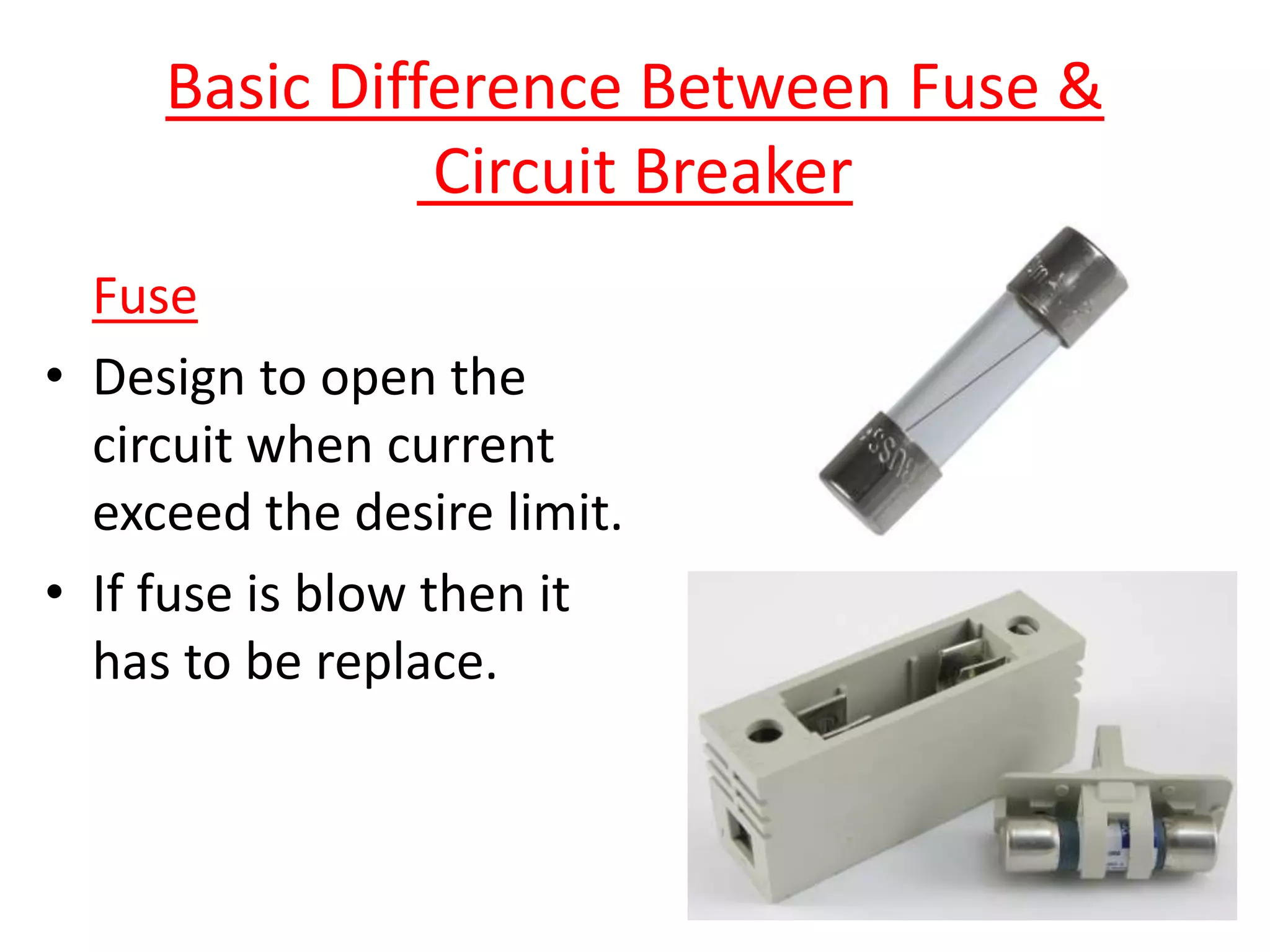
• Design to open the
circuit when current
exceed the desire limit.
• If fuse is blow then it
has to be replace.
Circuit Breaker
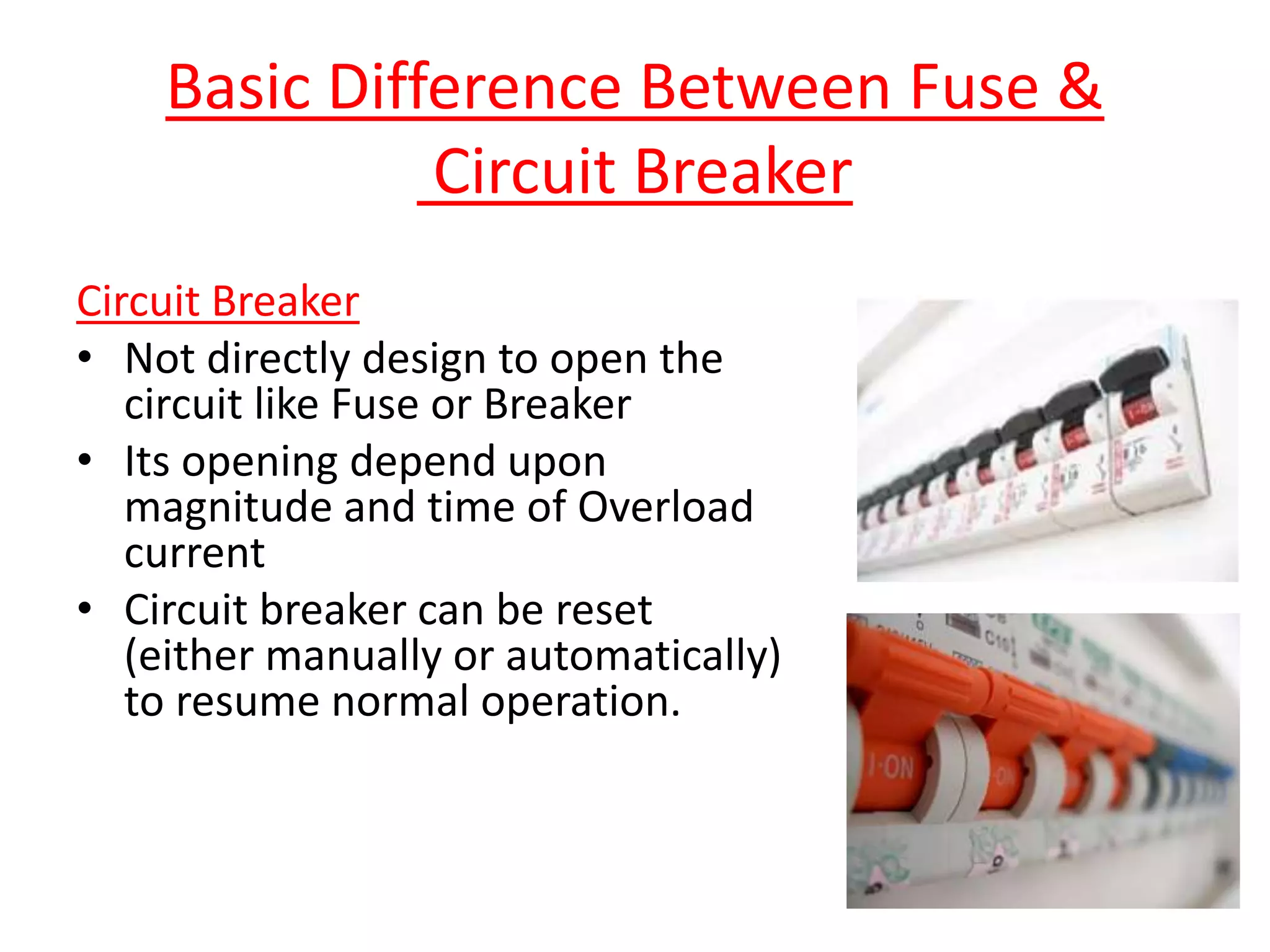
• Not directly design to open the
circuit like Fuse or Breaker
• Its opening depend upon
magnitude and time of Overload
current
• Circuit breaker can be reset
(either manually or automatically)
to resume normal operation.
Basic Difference Between Fuse &
Circuit Breaker
Types of Circuit Breakers
• Oil circuit breaker
• Air circuit breaker
• SF6 circuit breaker
• Vacuum circuit breaker
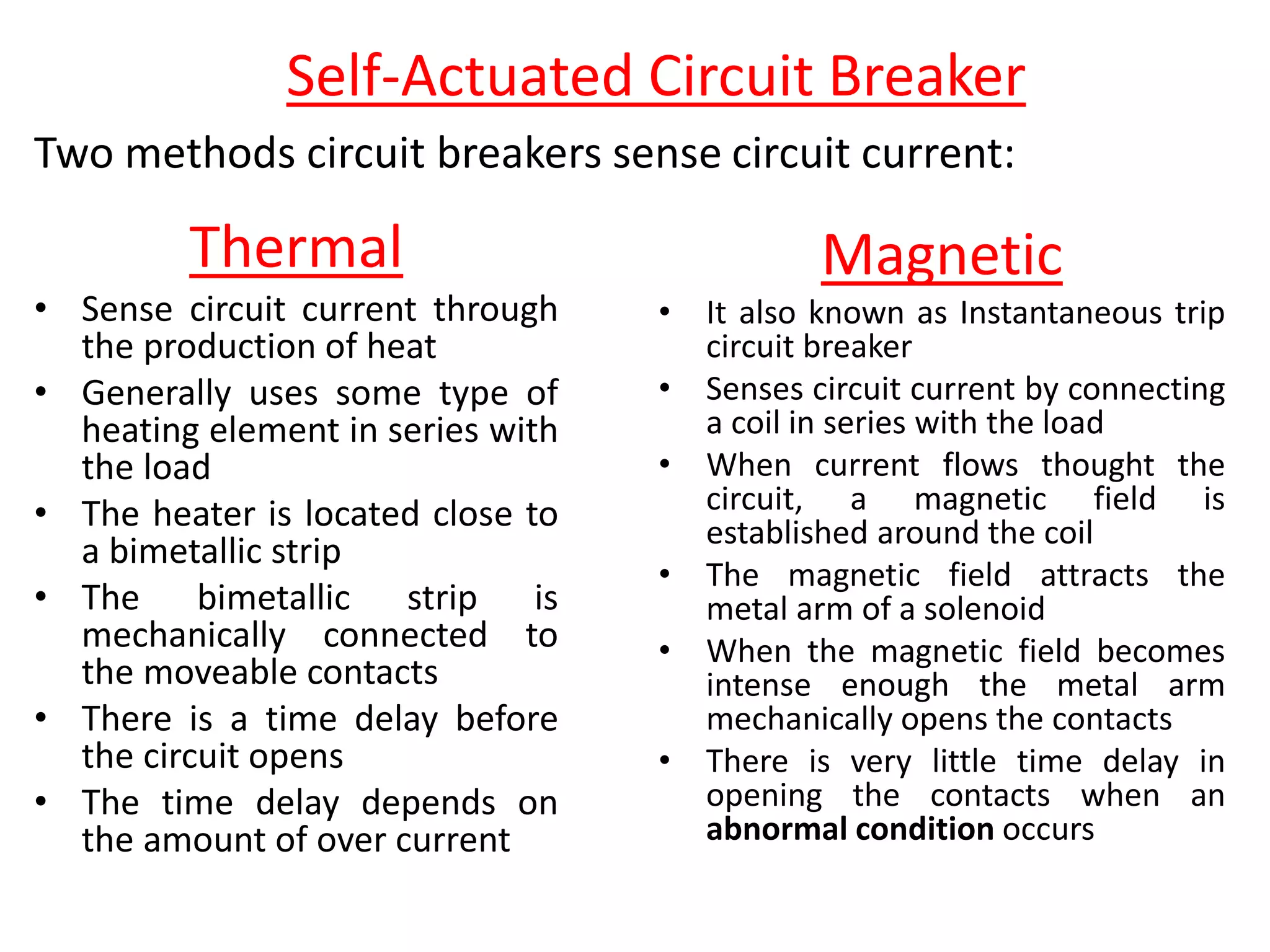
Self-Actuated Circuit Breaker
Two methods circuit breakers sense circuit current:
Thermal
• Sense circuit current through
the production of heat
• Generally uses some type of
heating element in series with
the load
• The heater is located close to
a bimetallic strip
• The bimetallic strip is
mechanically connected to
the moveable contacts
• There is a time delay before
the circuit opens
• The time delay depends on
the amount of over current
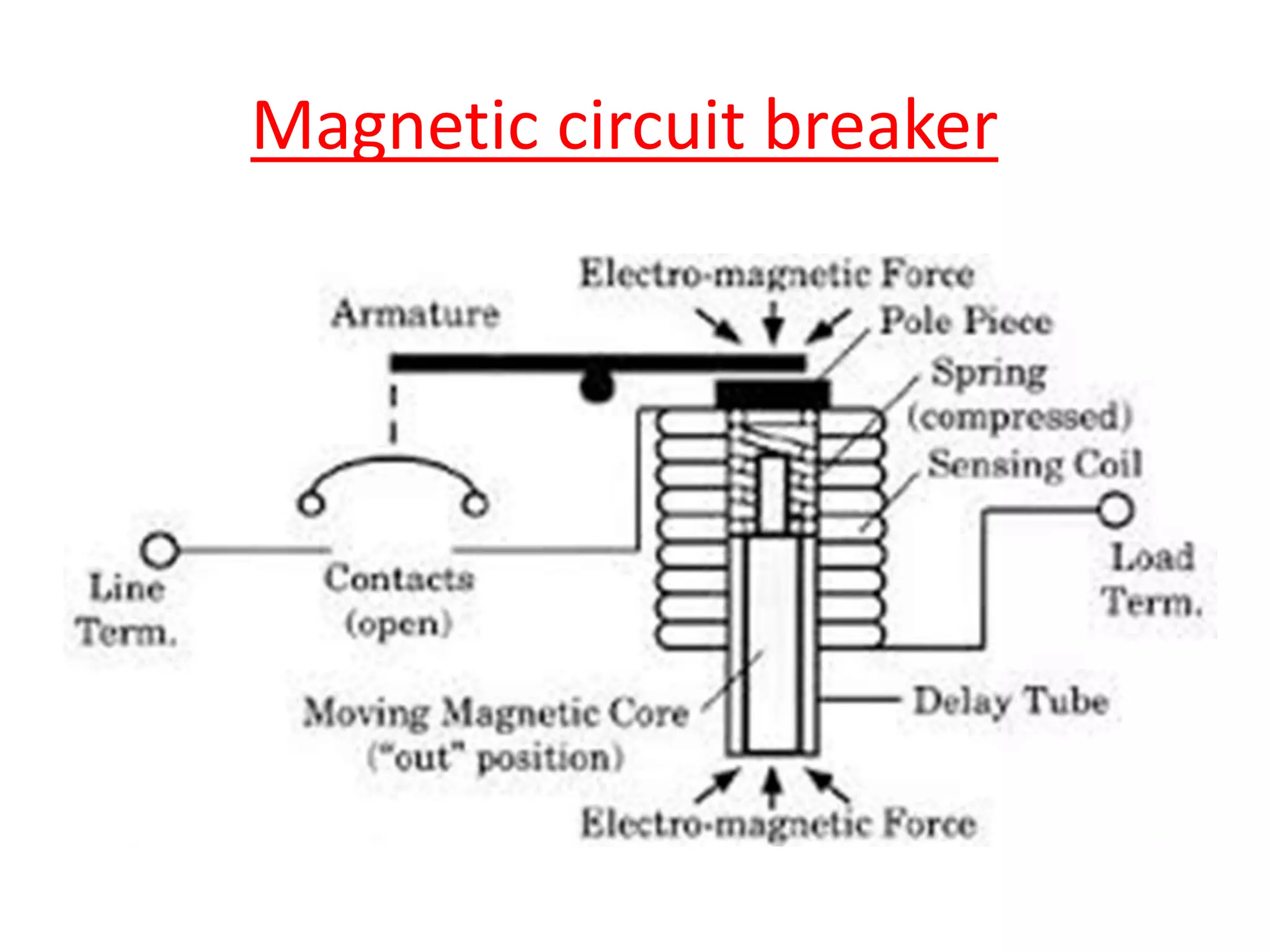
Magnetic
• It also known as Instantaneous trip
circuit breaker
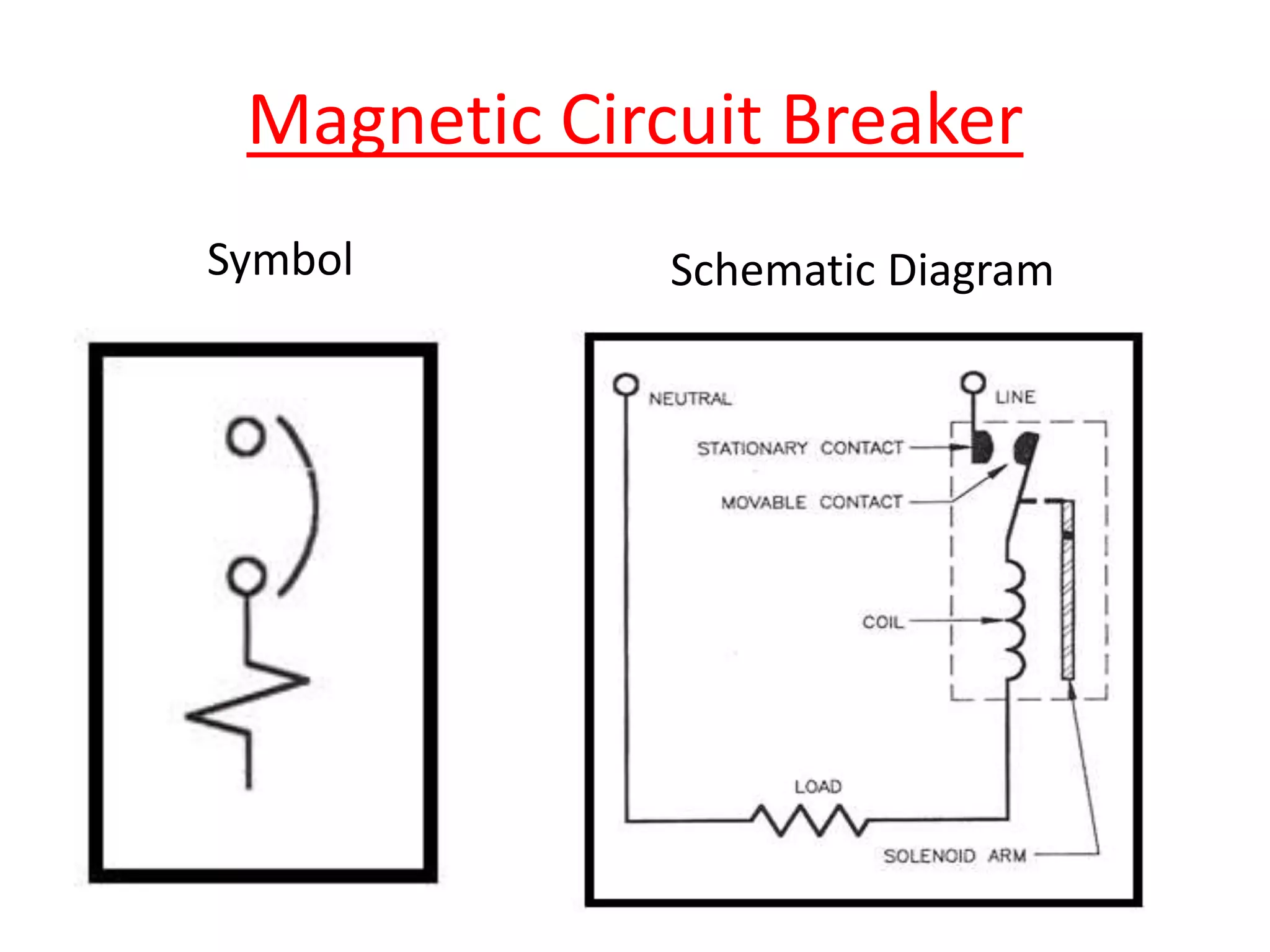
• Senses circuit current by connecting
a coil in series with the load
• When current flows thought the
circuit, a magnetic field is
established around the coil
• The magnetic field attracts the
metal arm of a solenoid
• When the magnetic field becomes
intense enough the metal arm
mechanically opens the contacts
• There is very little time delay in
opening the contacts when an
abnormal condition occurs
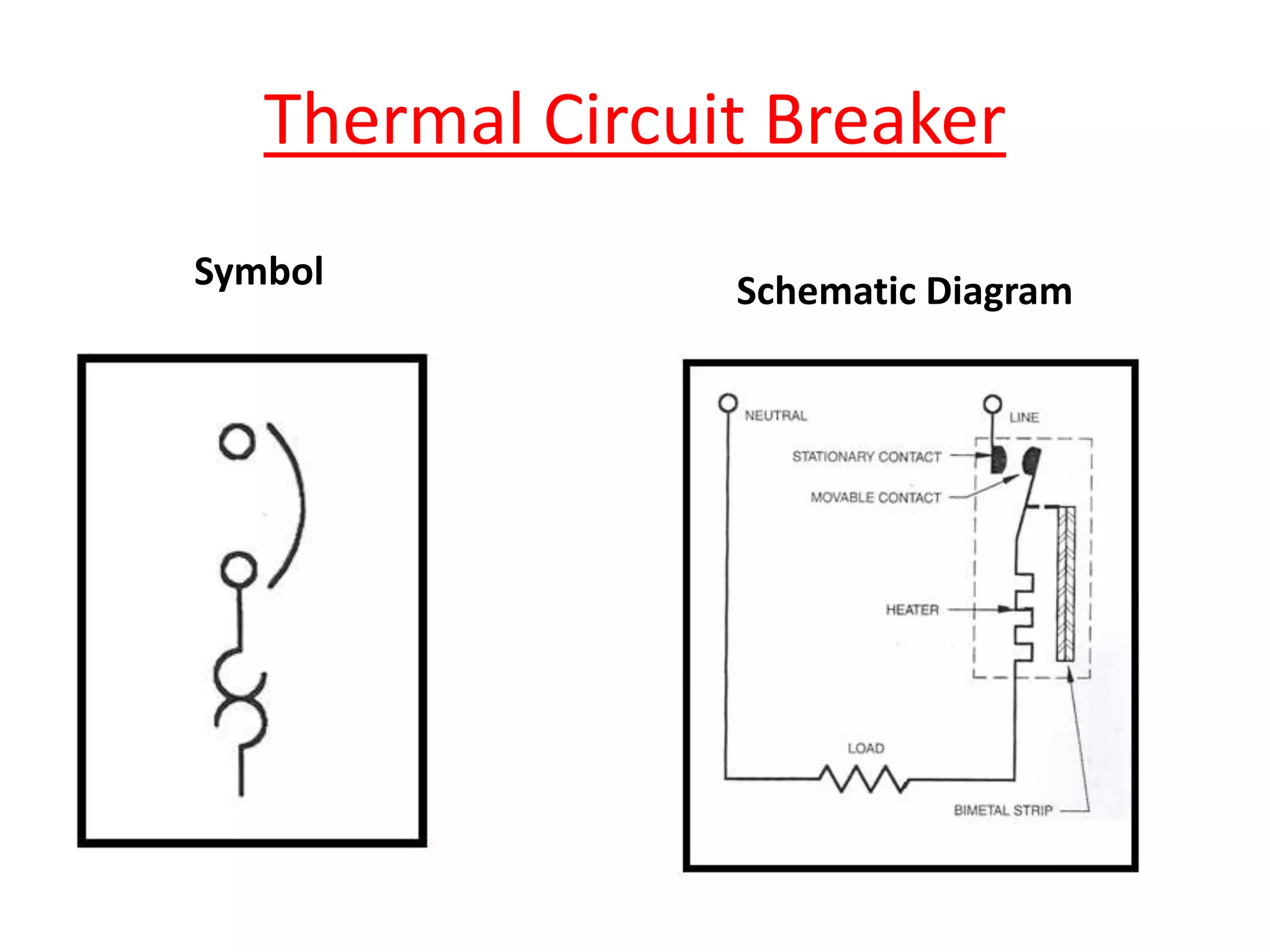
Thermal Circuit Breaker
Symbol Schematic Diagram
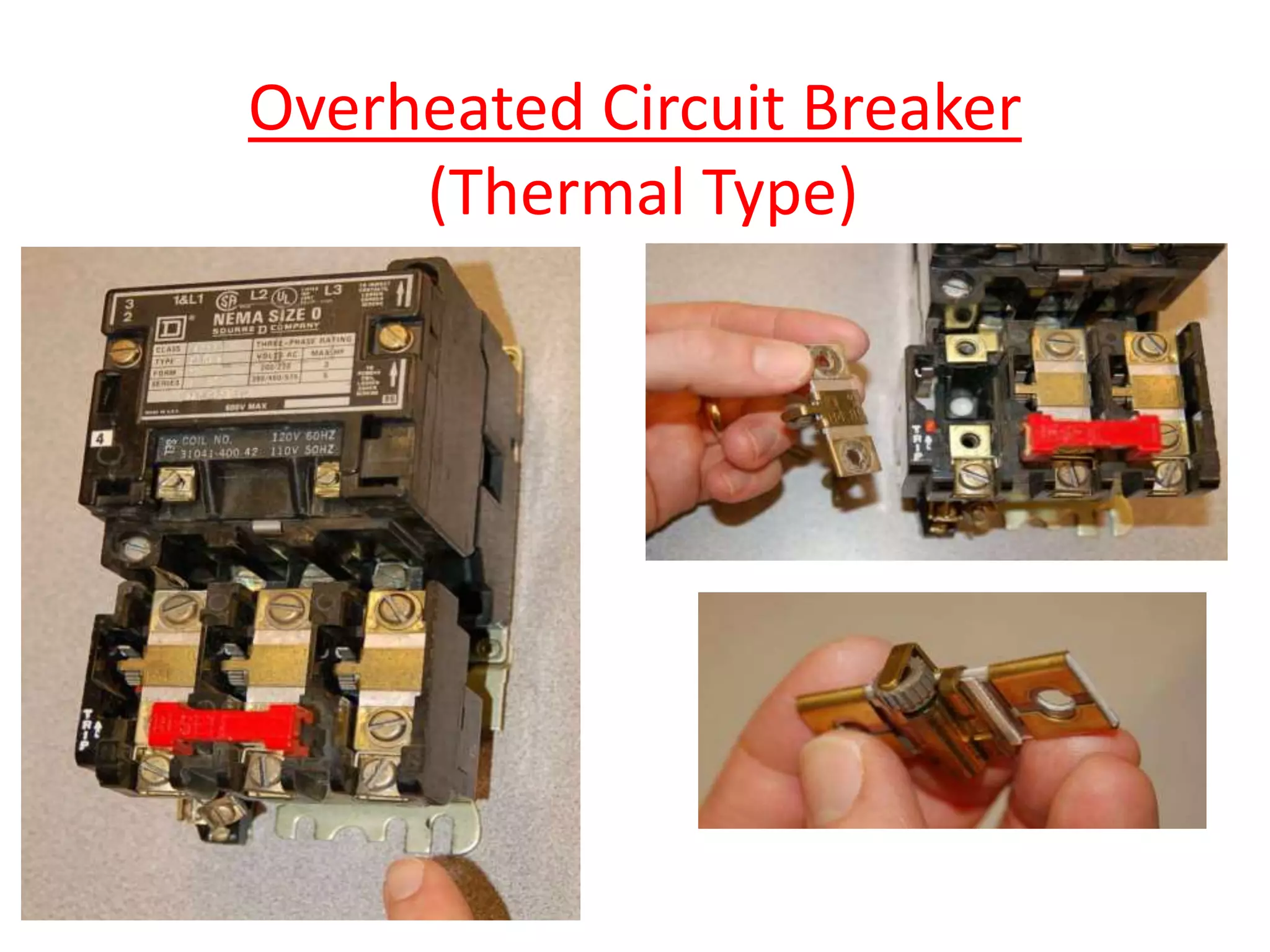
Overheated Circuit Breaker
(Thermal Type)
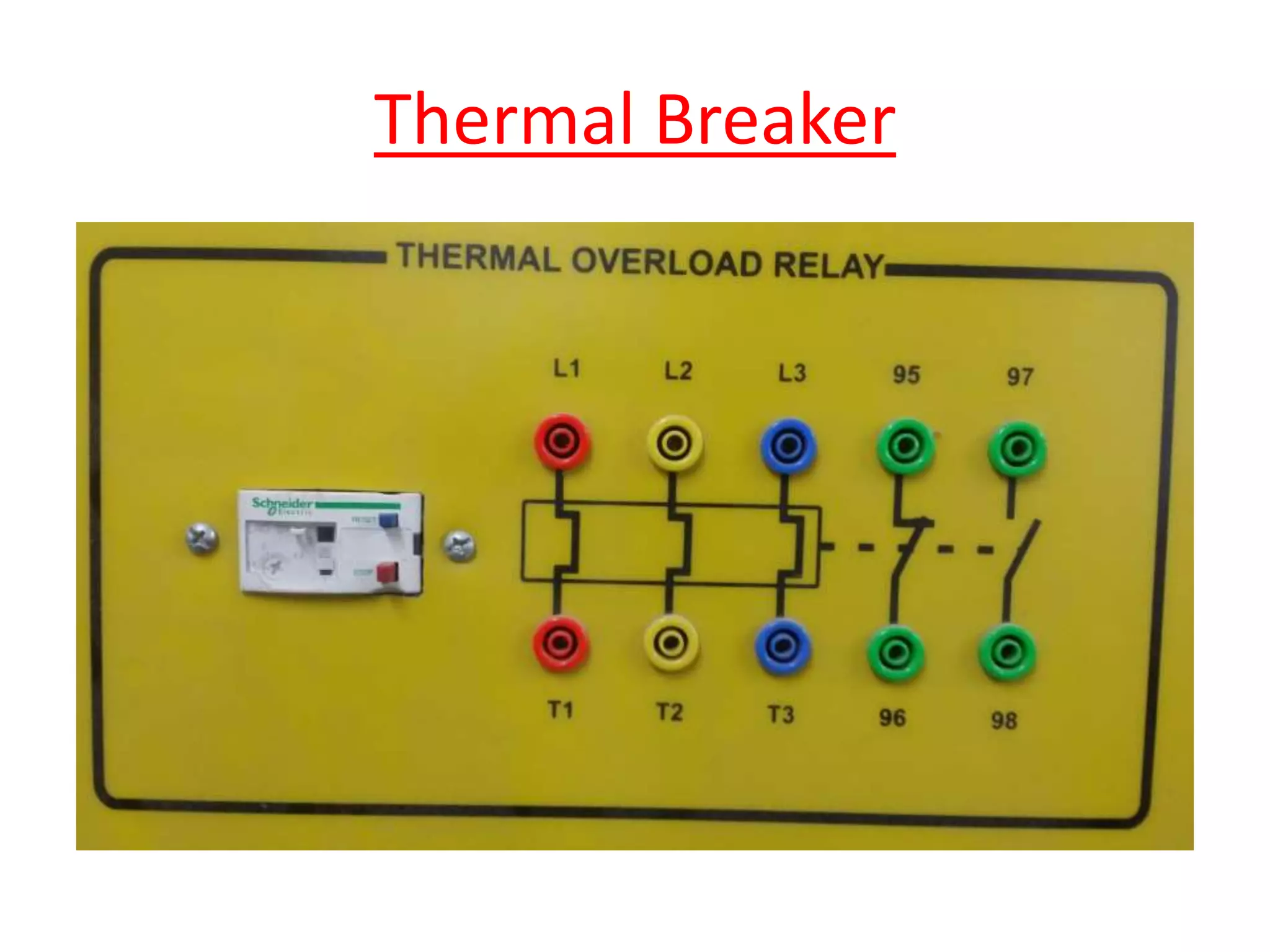
Thermal Breaker
Magnetic circuit breaker
Magnetic Circuit Breaker
Symbol Schematic Diagram
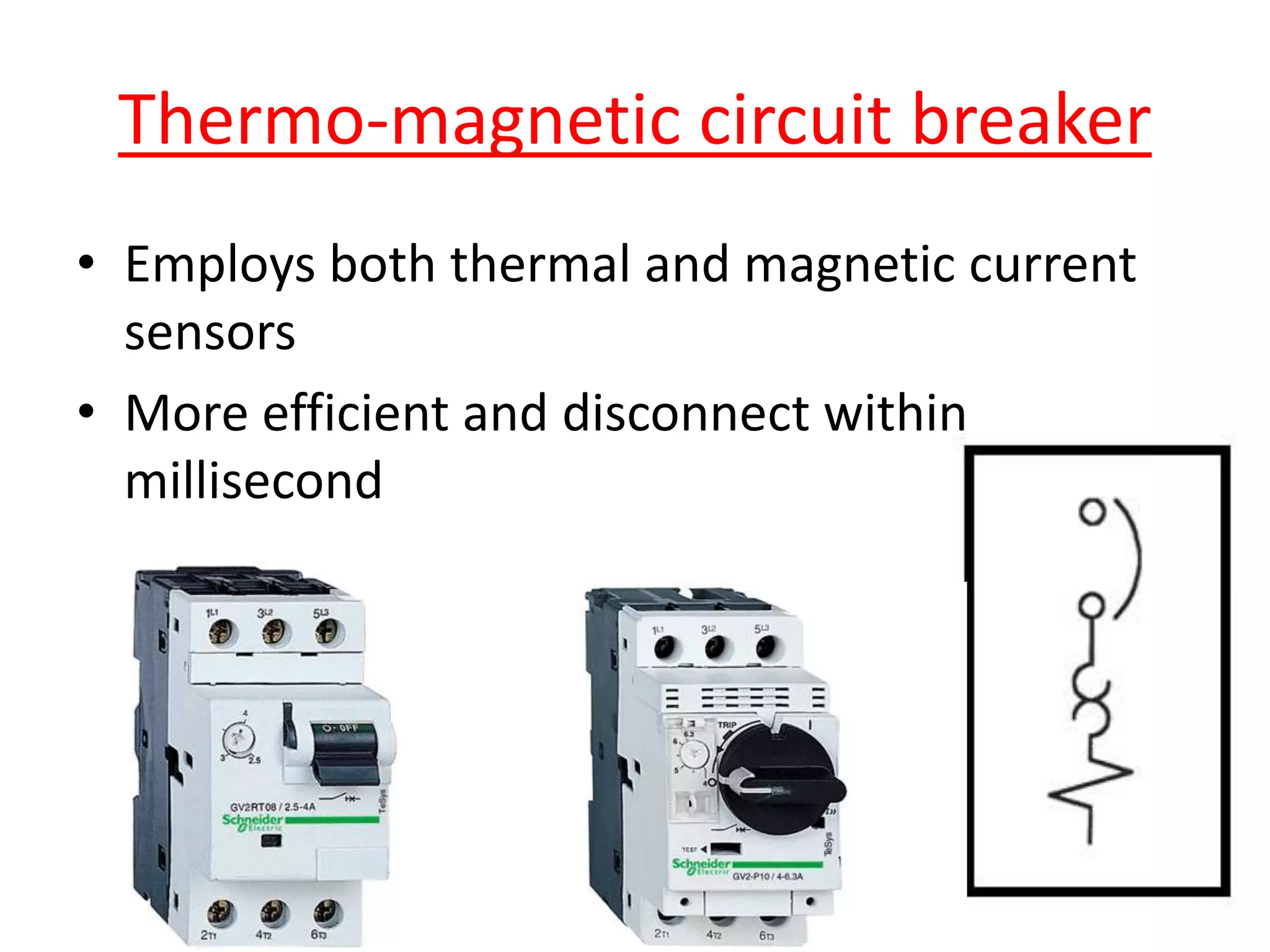
Thermo-magnetic circuit breaker
• Employs both thermal and magnetic current
sensors
• More efficient and disconnect within
millisecond
Classification and Types of Low
Voltage Circuit Breaker
• Miniature circuit breakers
• Molded case circuit breakers
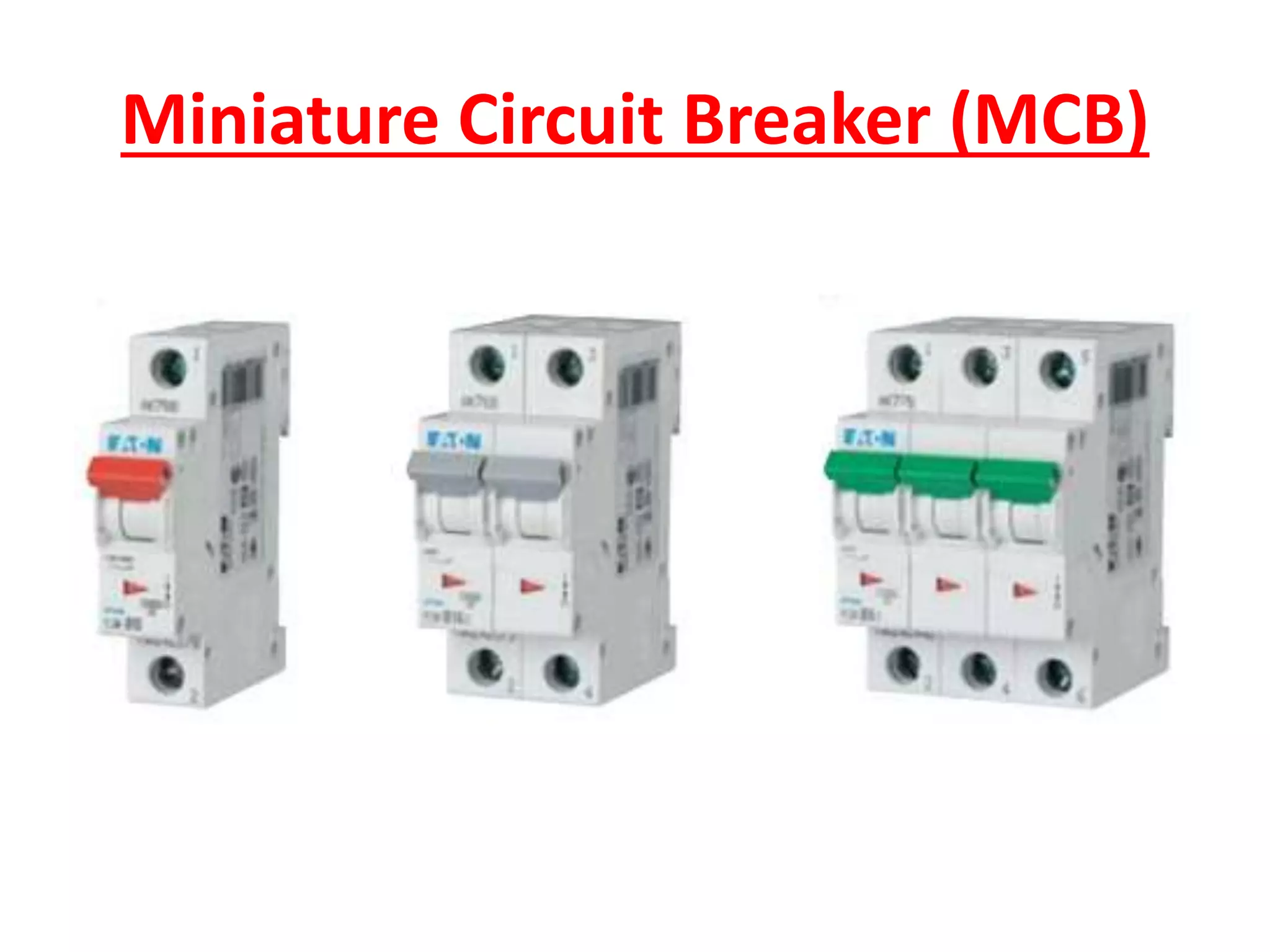
Miniature Circuit Breaker (MCB)
• Normally work with currents below 100 amperes.
• They are the type of low voltage circuit breaker that is
typically found in the fuse box of a residential or commercial
building.
• Miniature circuit breakers are designed to be installed in a
shared fuse box, from which several electric circuits are
protected.
• The current ratings of a miniature circuit breaker normally
have fixed values that are established during production and
can’t me modified by the user
Miniature Circuit Breaker (MCB)
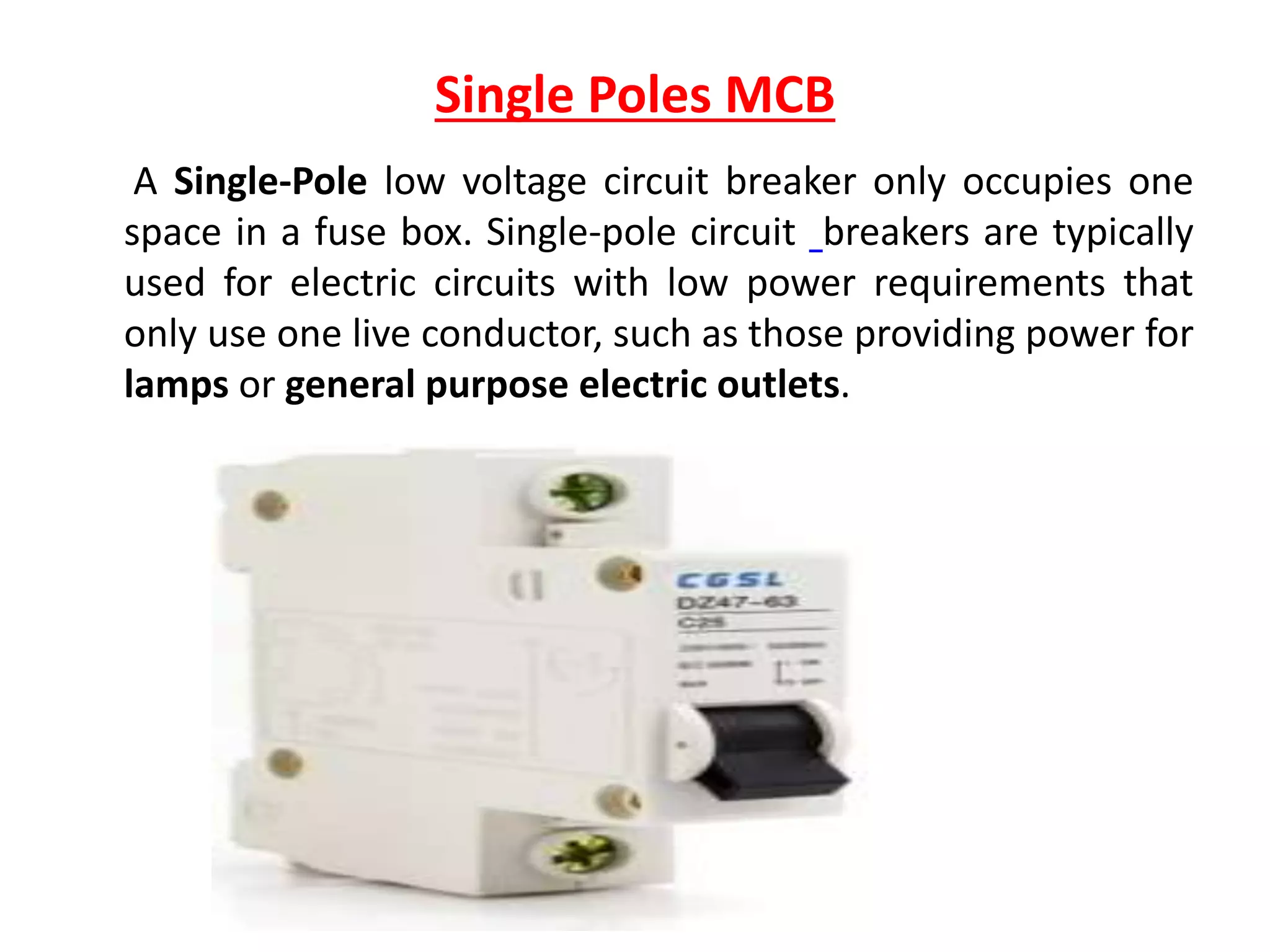
Single Poles MCB
A Single-Pole low voltage circuit breaker only occupies one
space in a fuse box. Single-pole circuit breakers are typically
used for electric circuits with low power requirements that
only use one live conductor, such as those providing power for
lamps or general purpose electric outlets.
Double-pole MCB
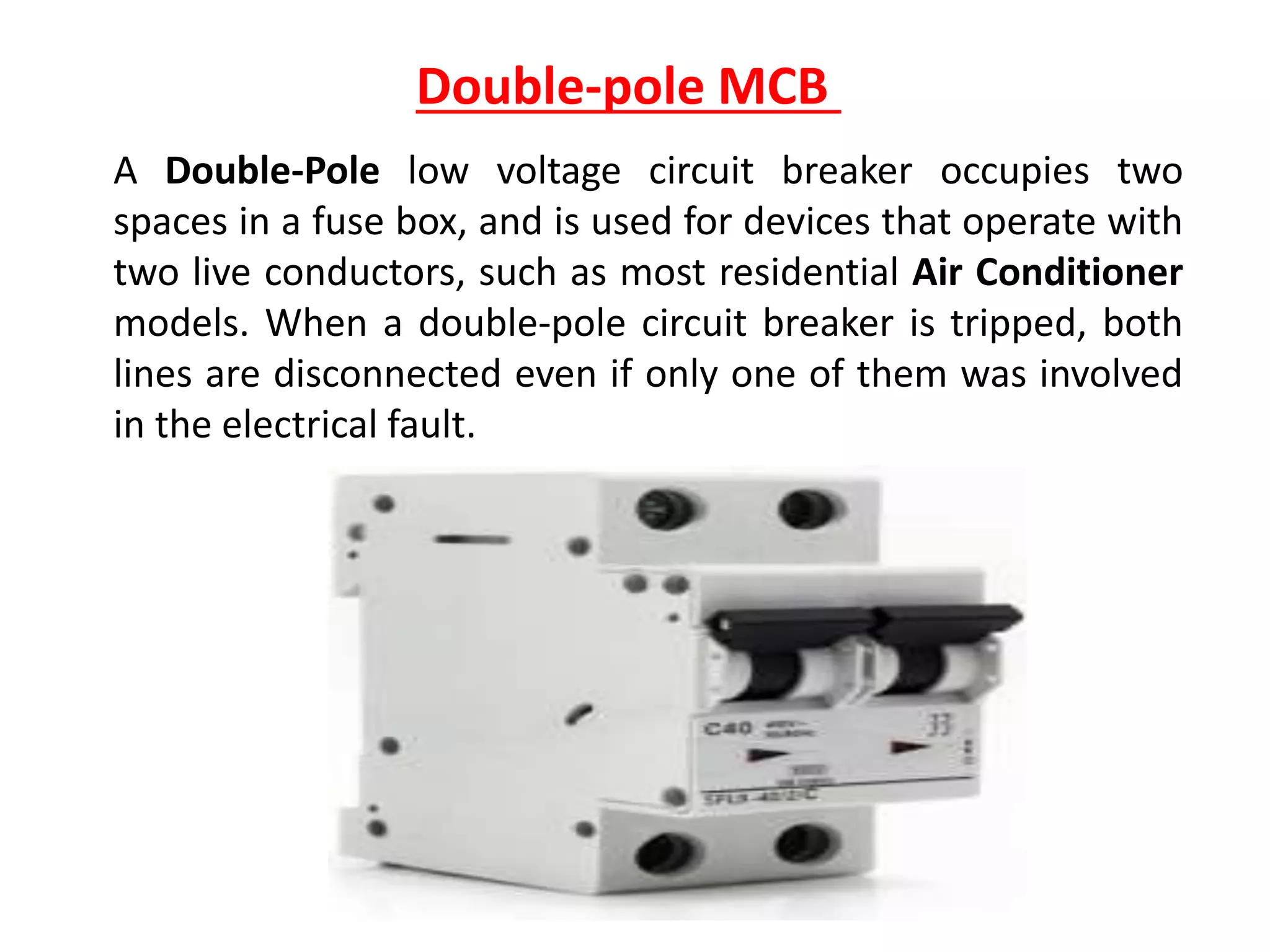
A Double-Pole low voltage circuit breaker occupies two
spaces in a fuse box, and is used for devices that operate with
two live conductors, such as most residential Air Conditioner
models. When a double-pole circuit breaker is tripped, both
lines are disconnected even if only one of them was involved
in the electrical fault.
Triple-pole MCB
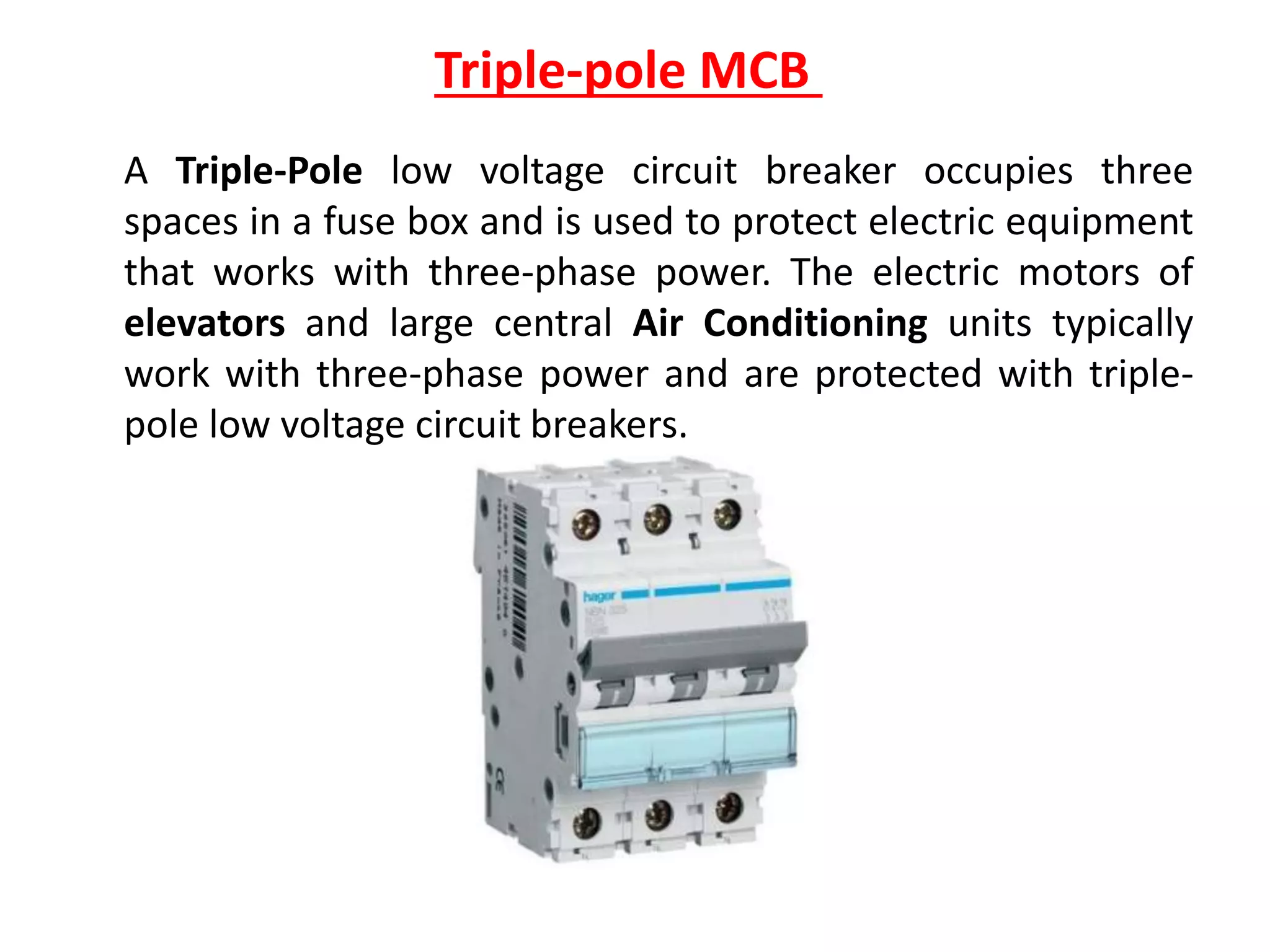
A Triple-Pole low voltage circuit breaker occupies three
spaces in a fuse box and is used to protect electric equipment
that works with three-phase power. The electric motors of
elevators and large central Air Conditioning units typically
work with three-phase power and are protected with triple-
pole low voltage circuit breakers.
• Higher current ratings when compared
to miniature circuit breakers.
• But due to their size they can’t be
installed in a traditional fuse box.
Instead.
• Molded case circuit breakers are
typically installed in individual metallic
boxes or in industrial switchboards
which have larger slots to accommodate
them.
• Some fuse boxes that are designed for
miniature circuit breakers may include
one slot for a molded case circuit
breaker that is used as the main breaker
Molded Case Circuit Breaker (MCCB)
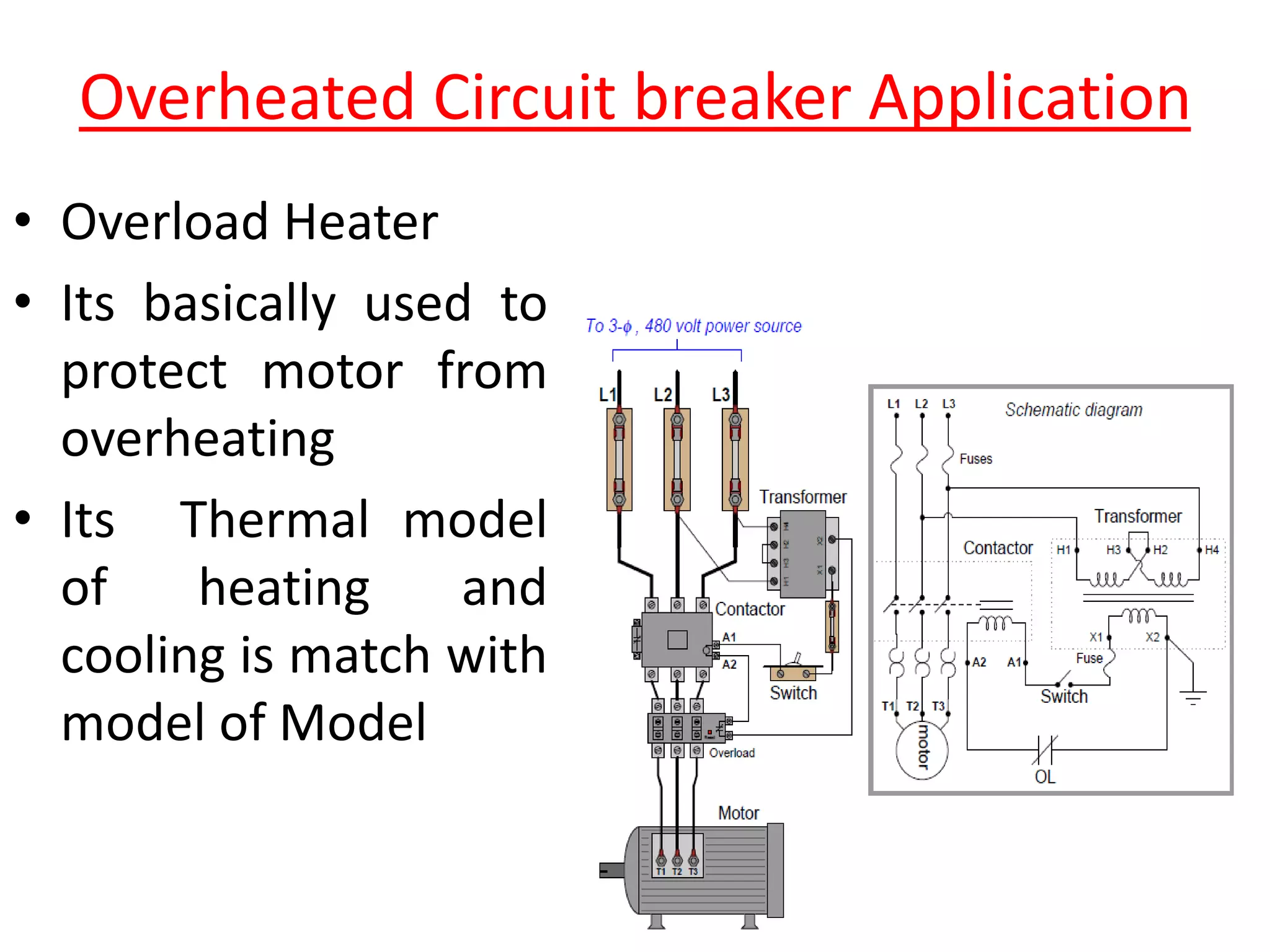
Overheated Circuit breaker Application
• Overload Heater
• Its basically used to
protect motor from
overheating
• Its Thermal model
of heating and
cooling is match with
model of Model
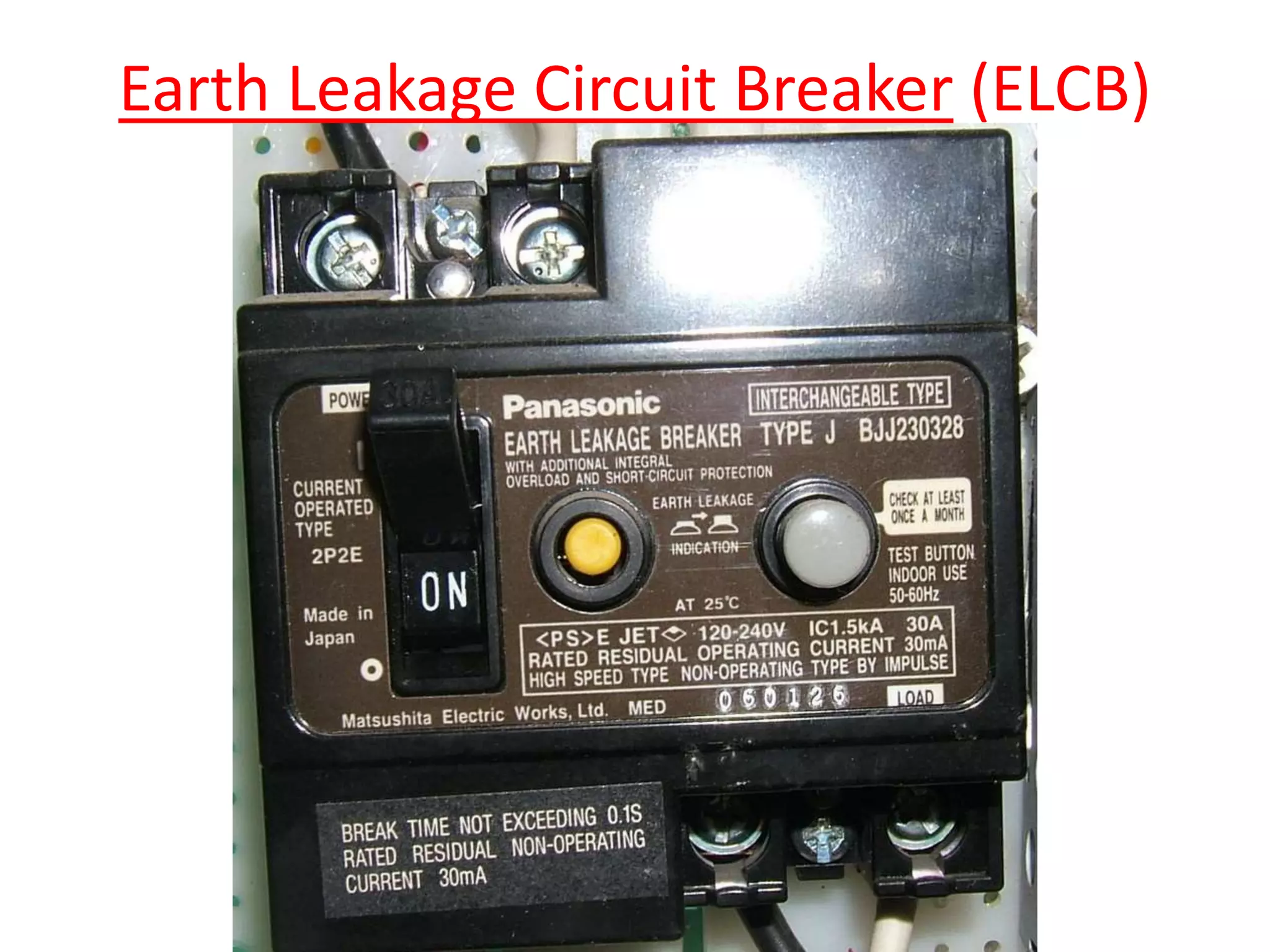
Earth Leakage Circuit Breaker (ELCB)
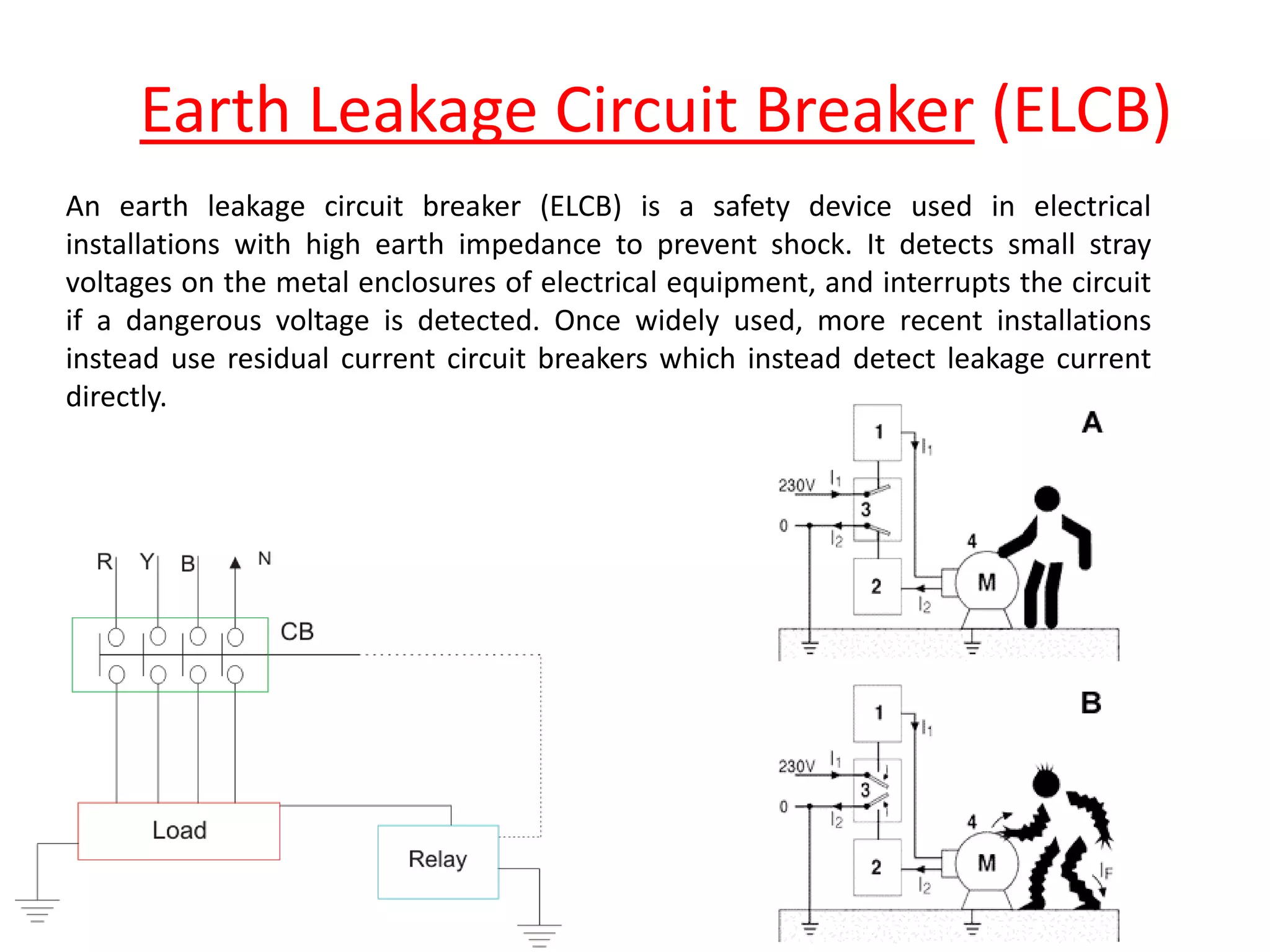
An earth leakage circuit breaker (ELCB) is a safety device used in electrical
installations with high earth impedance to prevent shock. It detects small stray
voltages on the metal enclosures of electrical equipment, and interrupts the circuit
if a dangerous voltage is detected. Once widely used, more recent installations
instead use residual current circuit breakers which instead detect leakage current
directly.
Earth Leakage Circuit Breaker (ELCB)
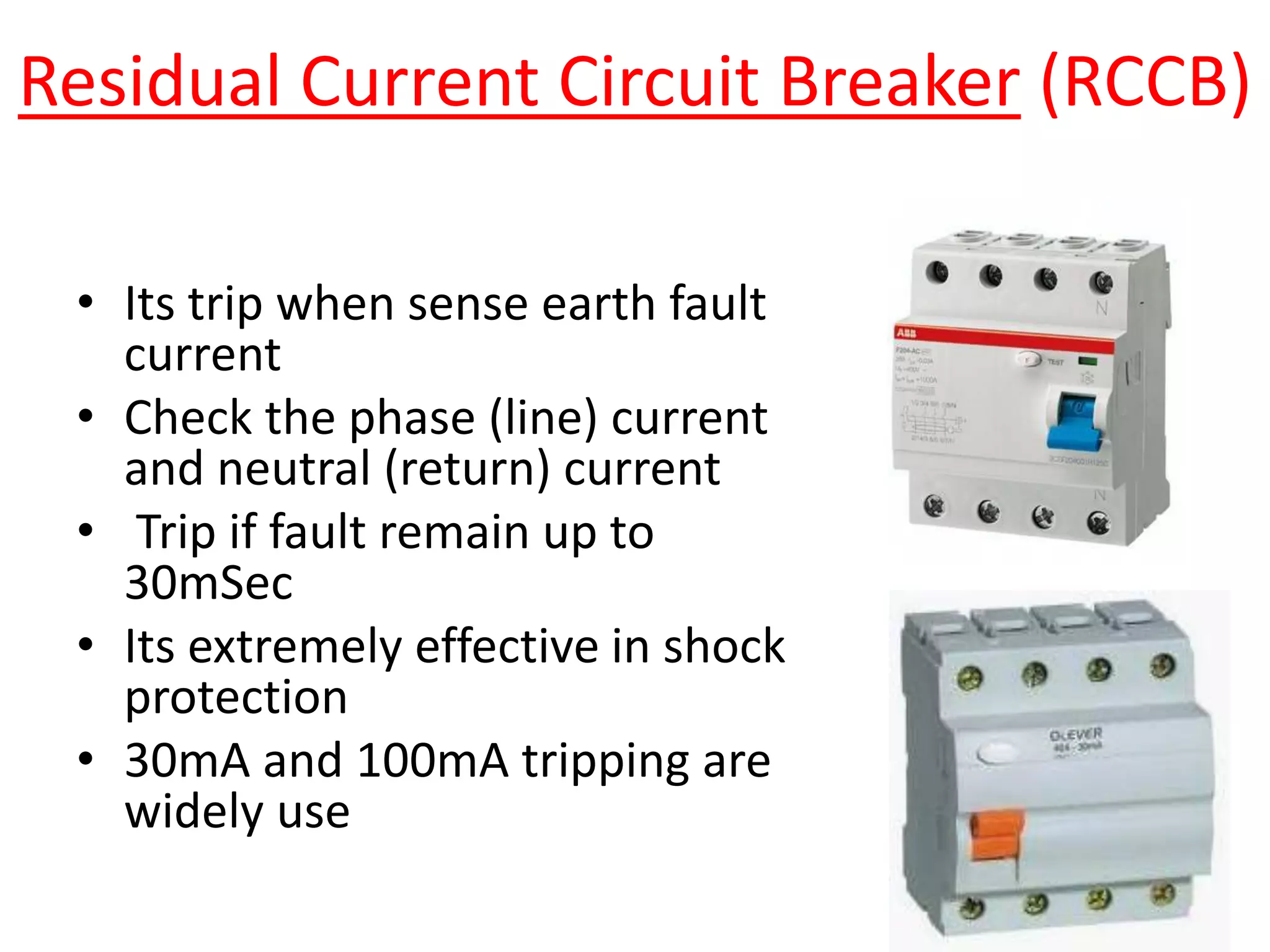
Residual Current Circuit Breaker (RCCB)
• Its trip when sense earth fault
current
• Check the phase (line) current
and neutral (return) current
• Trip if fault remain up to
30mSec
• Its extremely effective in shock
protection
• 30mA and 100mA tripping are
widely use
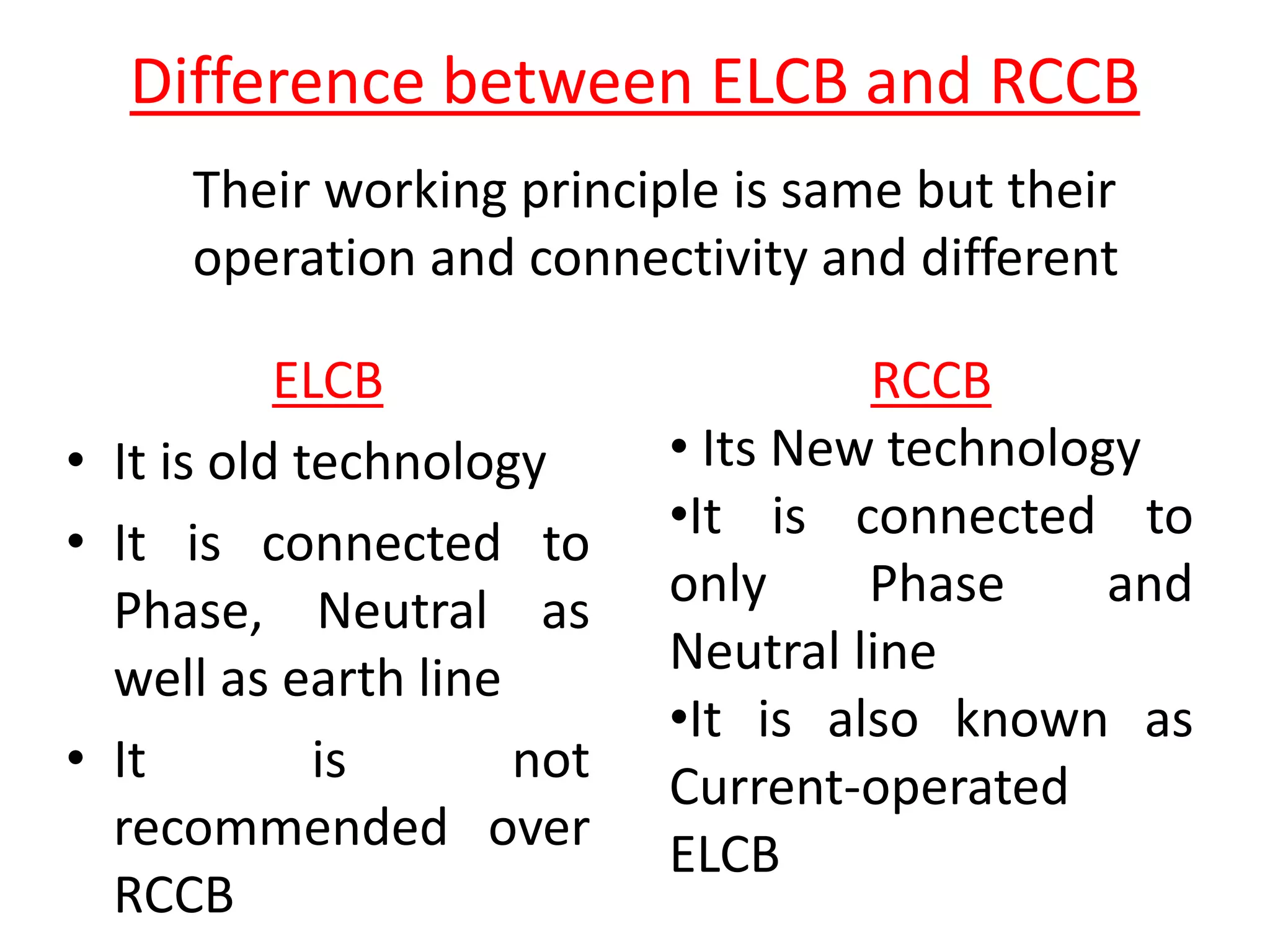
Difference between ELCB and RCCB
ELCB
• It is old technology
• It is connected to
Phase, Neutral as
well as earth line
• It is not
recommended over
RCCB
RCCB
• Its New technology
•It is connected to
only Phase and
Neutral line
•It is also known as
Current-operated
ELCB
Their working principle is same but their
operation and connectivity and different
Thank you

Low Voltage Circuit Breaker

  • 2.
    Circuit Breakers Device designedto open the circuit automatically under abnormal conditions without damage to itself when properly applied within its rating.
  • 3.
    Basic Difference BetweenFuse & Circuit Breaker Fuse • Design to open the circuit when current exceed the desire limit. • If fuse is blow then it has to be replace.
  • 4.
    Circuit Breaker • Notdirectly design to open the circuit like Fuse or Breaker • Its opening depend upon magnitude and time of Overload current • Circuit breaker can be reset (either manually or automatically) to resume normal operation. Basic Difference Between Fuse & Circuit Breaker
  • 5.
    Types of CircuitBreakers • Oil circuit breaker • Air circuit breaker • SF6 circuit breaker • Vacuum circuit breaker
  • 6.
    Self-Actuated Circuit Breaker Twomethods circuit breakers sense circuit current: Thermal • Sense circuit current through the production of heat • Generally uses some type of heating element in series with the load • The heater is located close to a bimetallic strip • The bimetallic strip is mechanically connected to the moveable contacts • There is a time delay before the circuit opens • The time delay depends on the amount of over current Magnetic • It also known as Instantaneous trip circuit breaker • Senses circuit current by connecting a coil in series with the load • When current flows thought the circuit, a magnetic field is established around the coil • The magnetic field attracts the metal arm of a solenoid • When the magnetic field becomes intense enough the metal arm mechanically opens the contacts • There is very little time delay in opening the contacts when an abnormal condition occurs
  • 7.
  • 8.
  • 9.
  • 10.
  • 11.
  • 12.
    Thermo-magnetic circuit breaker •Employs both thermal and magnetic current sensors • More efficient and disconnect within millisecond
  • 13.
    Classification and Typesof Low Voltage Circuit Breaker • Miniature circuit breakers • Molded case circuit breakers
  • 14.
    Miniature Circuit Breaker(MCB) • Normally work with currents below 100 amperes. • They are the type of low voltage circuit breaker that is typically found in the fuse box of a residential or commercial building. • Miniature circuit breakers are designed to be installed in a shared fuse box, from which several electric circuits are protected. • The current ratings of a miniature circuit breaker normally have fixed values that are established during production and can’t me modified by the user
  • 15.
  • 16.
    Single Poles MCB ASingle-Pole low voltage circuit breaker only occupies one space in a fuse box. Single-pole circuit breakers are typically used for electric circuits with low power requirements that only use one live conductor, such as those providing power for lamps or general purpose electric outlets.
  • 17.
    Double-pole MCB A Double-Polelow voltage circuit breaker occupies two spaces in a fuse box, and is used for devices that operate with two live conductors, such as most residential Air Conditioner models. When a double-pole circuit breaker is tripped, both lines are disconnected even if only one of them was involved in the electrical fault.
  • 18.
    Triple-pole MCB A Triple-Polelow voltage circuit breaker occupies three spaces in a fuse box and is used to protect electric equipment that works with three-phase power. The electric motors of elevators and large central Air Conditioning units typically work with three-phase power and are protected with triple- pole low voltage circuit breakers.
  • 19.
    • Higher currentratings when compared to miniature circuit breakers. • But due to their size they can’t be installed in a traditional fuse box. Instead. • Molded case circuit breakers are typically installed in individual metallic boxes or in industrial switchboards which have larger slots to accommodate them. • Some fuse boxes that are designed for miniature circuit breakers may include one slot for a molded case circuit breaker that is used as the main breaker Molded Case Circuit Breaker (MCCB)
  • 20.
    Overheated Circuit breakerApplication • Overload Heater • Its basically used to protect motor from overheating • Its Thermal model of heating and cooling is match with model of Model
  • 21.
    Earth Leakage CircuitBreaker (ELCB) An earth leakage circuit breaker (ELCB) is a safety device used in electrical installations with high earth impedance to prevent shock. It detects small stray voltages on the metal enclosures of electrical equipment, and interrupts the circuit if a dangerous voltage is detected. Once widely used, more recent installations instead use residual current circuit breakers which instead detect leakage current directly.
  • 22.
    Earth Leakage CircuitBreaker (ELCB)
  • 23.
    Residual Current CircuitBreaker (RCCB) • Its trip when sense earth fault current • Check the phase (line) current and neutral (return) current • Trip if fault remain up to 30mSec • Its extremely effective in shock protection • 30mA and 100mA tripping are widely use
  • 24.
    Difference between ELCBand RCCB ELCB • It is old technology • It is connected to Phase, Neutral as well as earth line • It is not recommended over RCCB RCCB • Its New technology •It is connected to only Phase and Neutral line •It is also known as Current-operated ELCB Their working principle is same but their operation and connectivity and different
  • 25.

Editor's Notes

  • #6 Different circuit breakers use vacuum, air, insulating gas, or oil as the medium in which the arc forms
  • #23 Operating Time of ELCB:  The safest limit of Current which Human Body can withstand is 30ma sec. Suppose Human Body Resistance is 500Ω and Voltage to ground is 230 Volt. The Body current will be 500/230=460mA. Hence ELCB must be operated in  30maSec/460mA = 0.65msec