LIMITED PARTNER VS GENERAL PARTNER
IMPORTANT FOR STARTUP
SUCCESS
Limited Partners (LPs) and General
Partners (GPs) are terms
commonly associated with
partnerships, particularly in the
context of venture capital and
private equity. Understanding the
roles of LPs and GPs is crucial for
startup success, as these partners
play distinct but complementary
roles in the investment ecosystem.
Limited Partner (LP):
Role: LPs are passive investors in a partnership, such as a venture capital
fund. They provide capital to the fund but are not involved in its day-to-
day operations or management.
General Partner (GP):
Role: GPs are responsible for managing the partnership or fund. In the
context of venture capital, GPs make investment decisions, provide
strategic guidance to portfolio companies, and oversee the fund's
operations.
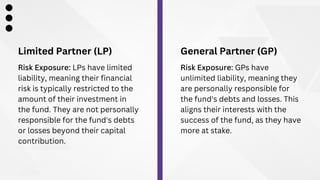
Risk Exposure: LPs have limited
liability, meaning their financial
risk is typically restricted to the
amount of their investment in
the fund. They are not personally
responsible for the fund's debts
or losses beyond their capital
contribution.
Limited Partner (LP)
Risk Exposure: GPs have
unlimited liability, meaning they
are personally responsible for
the fund's debts and losses. This
aligns their interests with the
success of the fund, as they have
more at stake.
General Partner (GP)
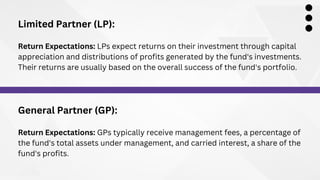
Limited Partner (LP):
Return Expectations: LPs expect returns on their investment through capital
appreciation and distributions of profits generated by the fund's investments.
Their returns are usually based on the overall success of the fund's portfolio.
General Partner (GP):
Return Expectations: GPs typically receive management fees, a percentage of
the fund's total assets under management, and carried interest, a share of the
fund's profits.
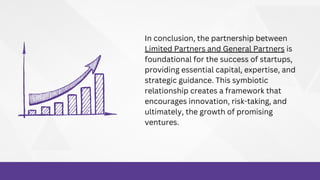
In conclusion, the partnership between
Limited Partners and General Partners is
foundational for the success of startups,
providing essential capital, expertise, and
strategic guidance. This symbiotic
relationship creates a framework that
encourages innovation, risk-taking, and
ultimately, the growth of promising
ventures.
THANK YOU
www.start3r.com | support@start3r.com

Limited Partner vs General Partner

  • 1.
    LIMITED PARTNER VSGENERAL PARTNER IMPORTANT FOR STARTUP SUCCESS
  • 2.
    Limited Partners (LPs)and General Partners (GPs) are terms commonly associated with partnerships, particularly in the context of venture capital and private equity. Understanding the roles of LPs and GPs is crucial for startup success, as these partners play distinct but complementary roles in the investment ecosystem.
  • 3.
    Limited Partner (LP): Role:LPs are passive investors in a partnership, such as a venture capital fund. They provide capital to the fund but are not involved in its day-to- day operations or management. General Partner (GP): Role: GPs are responsible for managing the partnership or fund. In the context of venture capital, GPs make investment decisions, provide strategic guidance to portfolio companies, and oversee the fund's operations.
  • 4.
    Risk Exposure: LPshave limited liability, meaning their financial risk is typically restricted to the amount of their investment in the fund. They are not personally responsible for the fund's debts or losses beyond their capital contribution. Limited Partner (LP) Risk Exposure: GPs have unlimited liability, meaning they are personally responsible for the fund's debts and losses. This aligns their interests with the success of the fund, as they have more at stake. General Partner (GP)
  • 5.
    Limited Partner (LP): ReturnExpectations: LPs expect returns on their investment through capital appreciation and distributions of profits generated by the fund's investments. Their returns are usually based on the overall success of the fund's portfolio. General Partner (GP): Return Expectations: GPs typically receive management fees, a percentage of the fund's total assets under management, and carried interest, a share of the fund's profits.
  • 6.
    In conclusion, thepartnership between Limited Partners and General Partners is foundational for the success of startups, providing essential capital, expertise, and strategic guidance. This symbiotic relationship creates a framework that encourages innovation, risk-taking, and ultimately, the growth of promising ventures.
  • 7.
    THANK YOU www.start3r.com |support@start3r.com