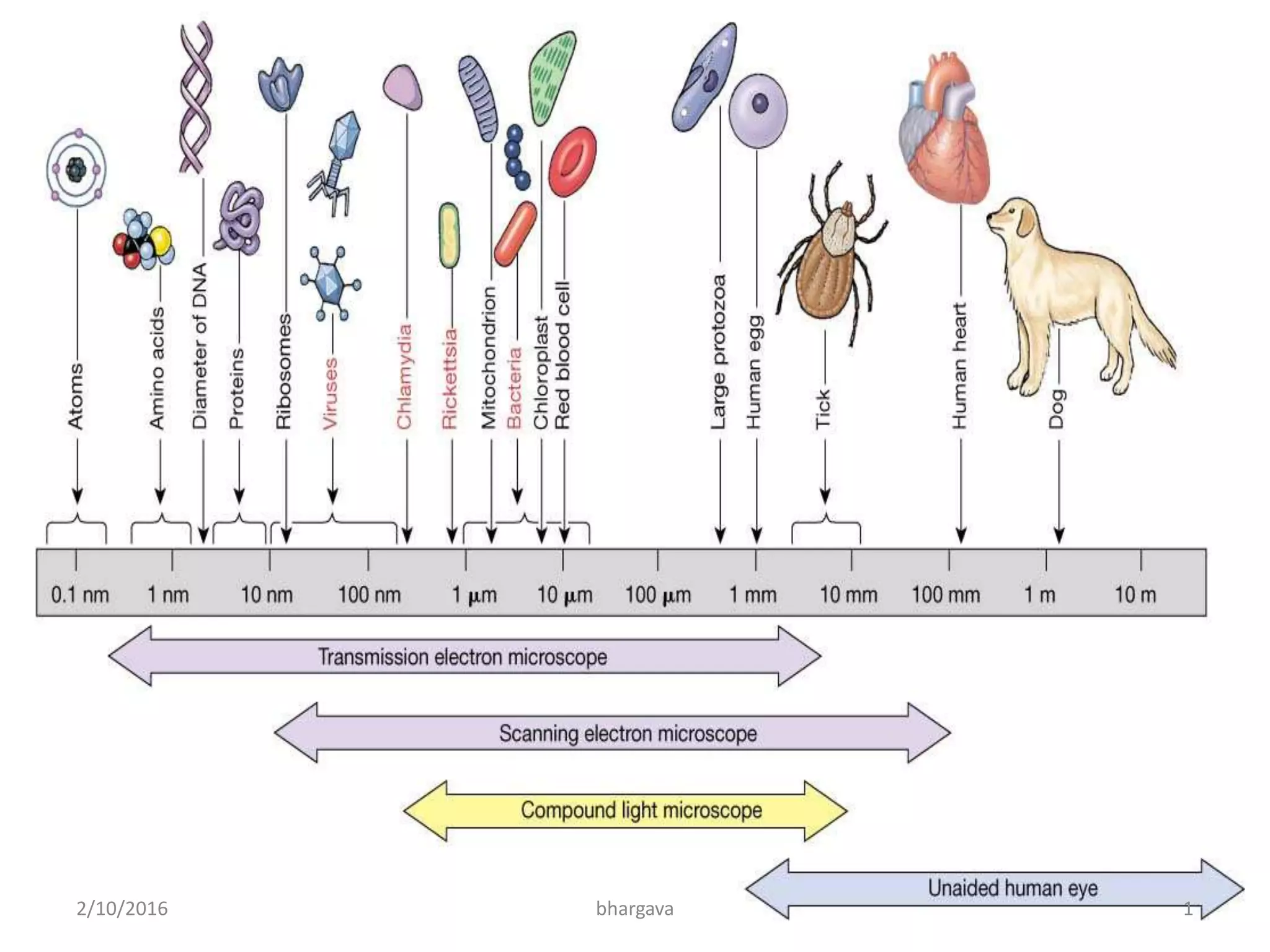
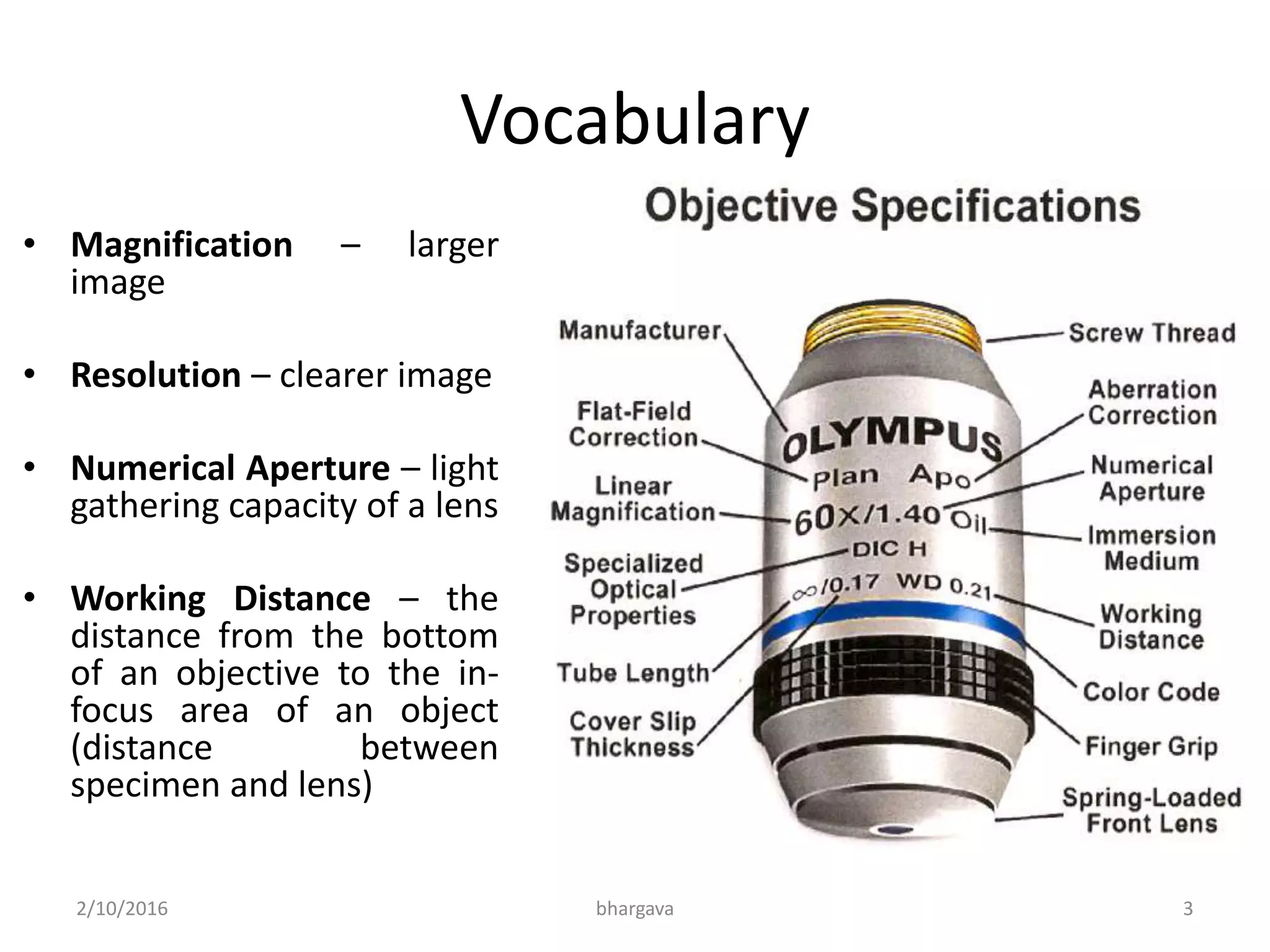
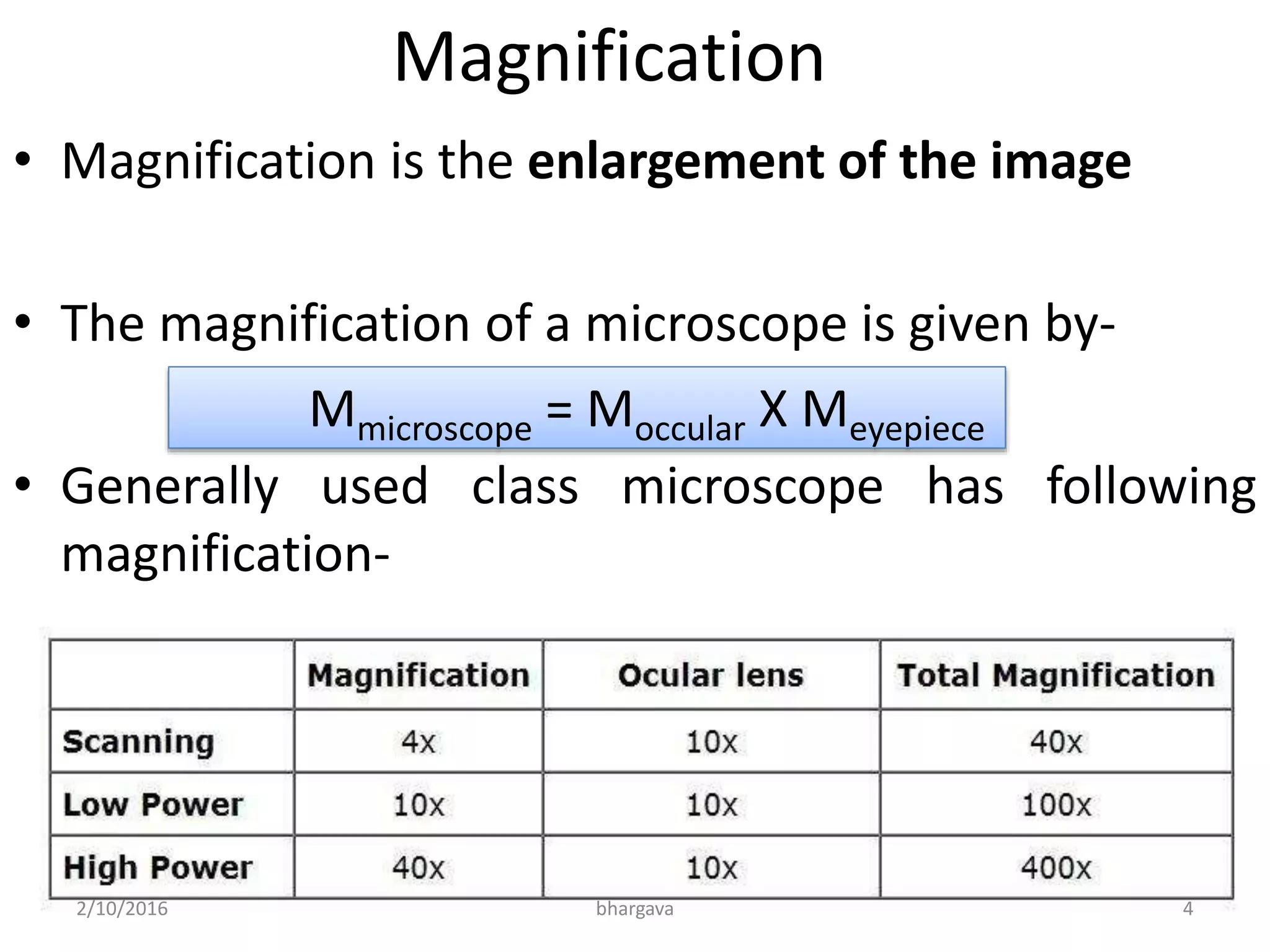
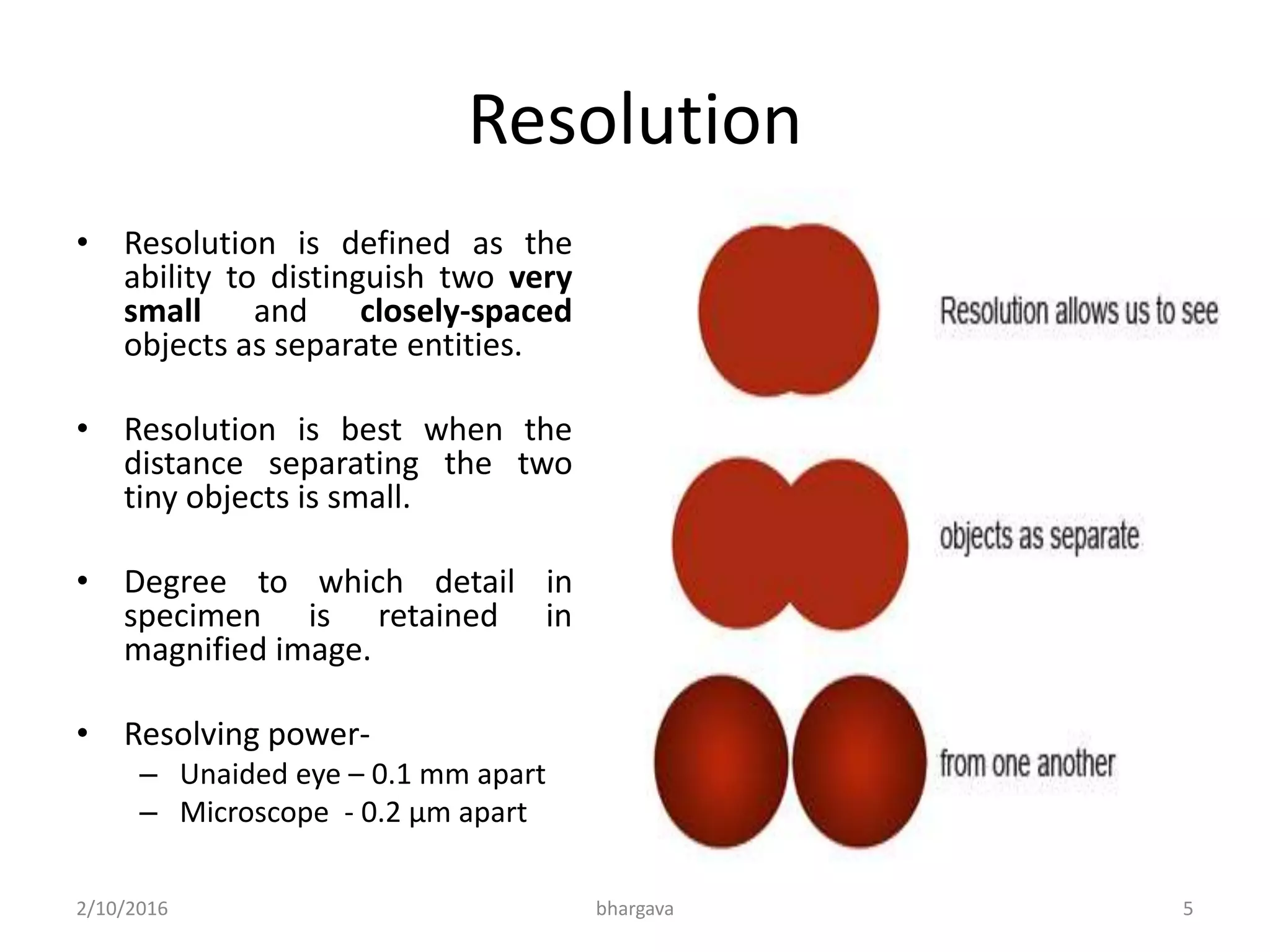
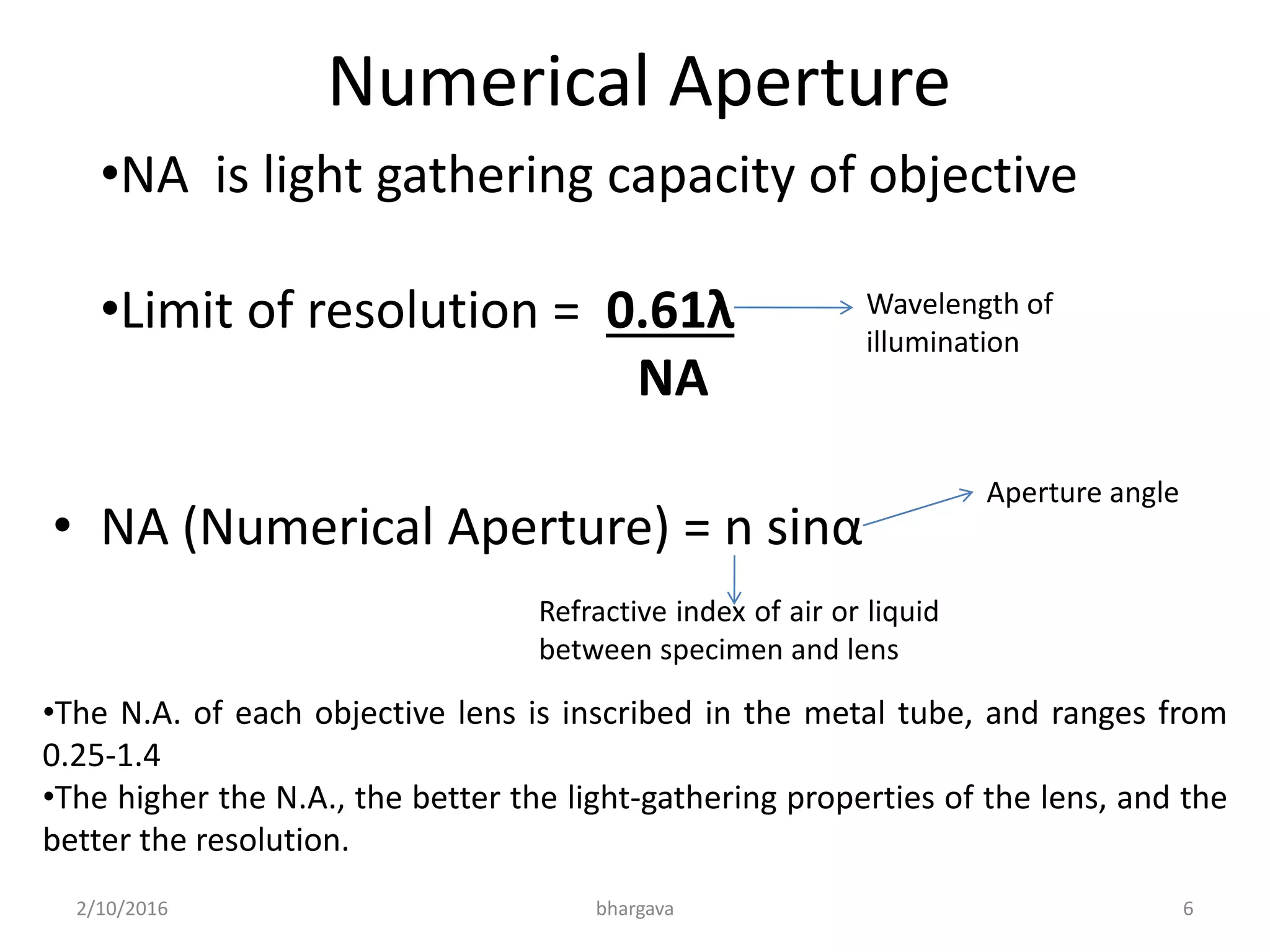
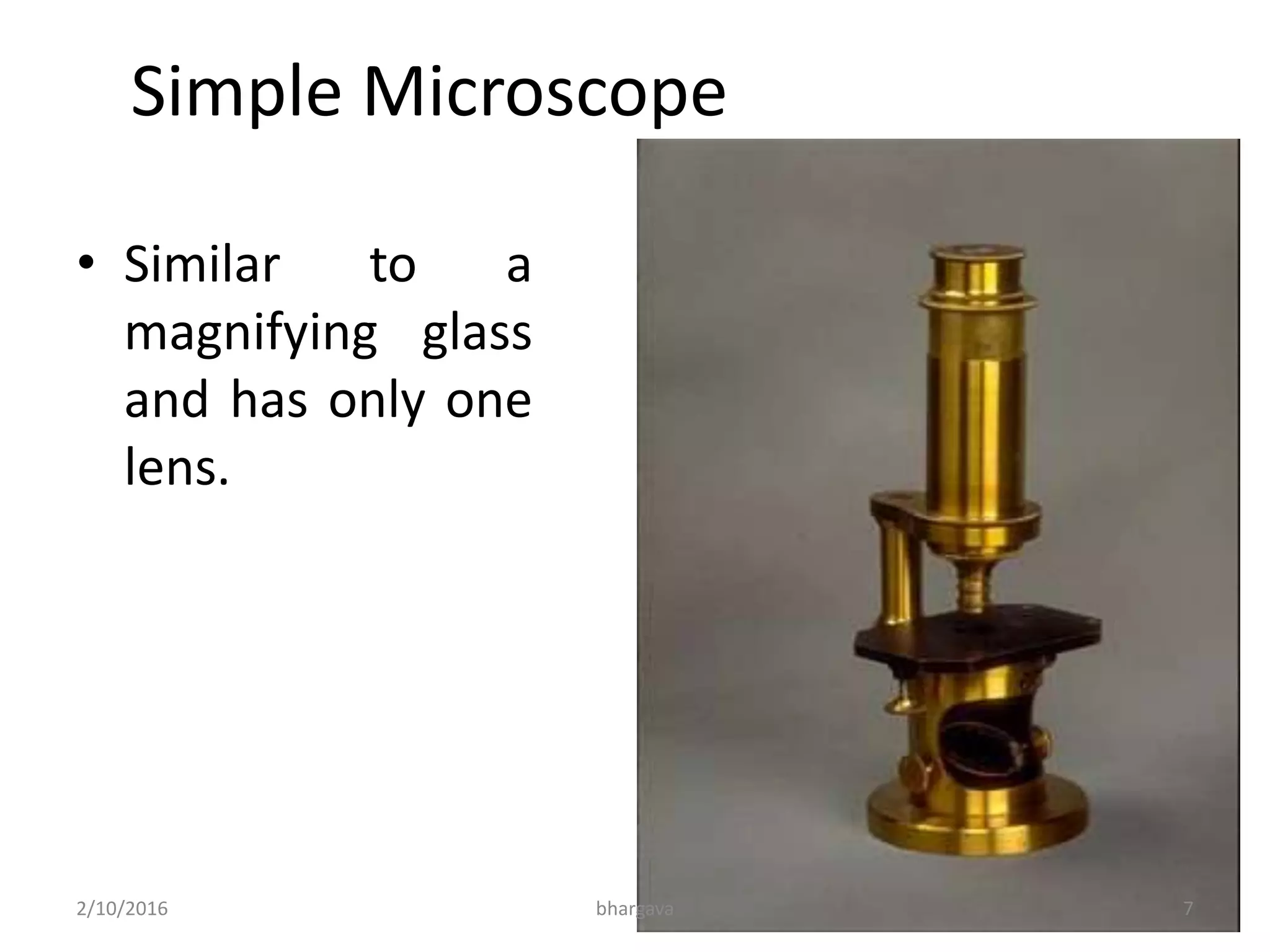
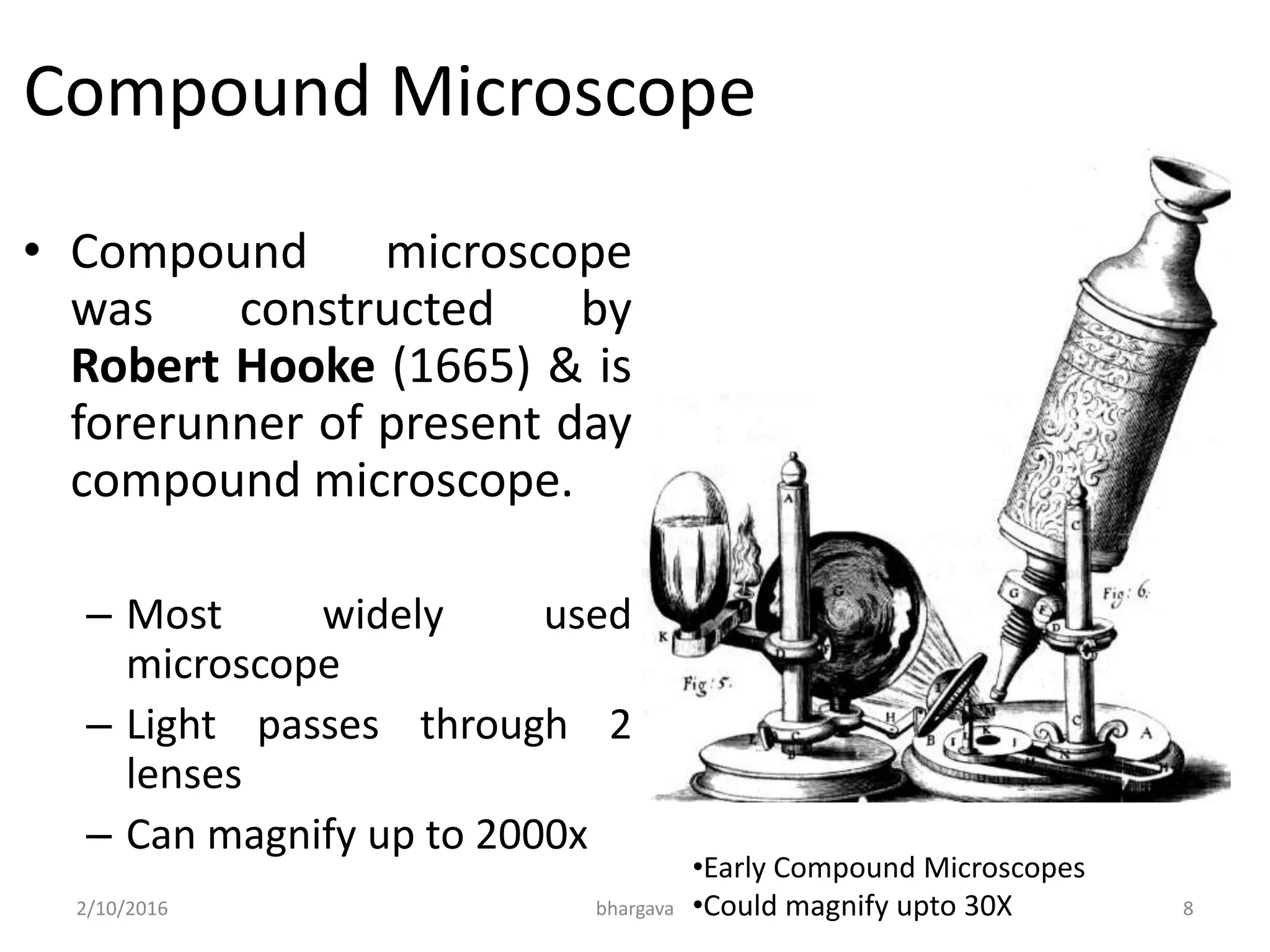
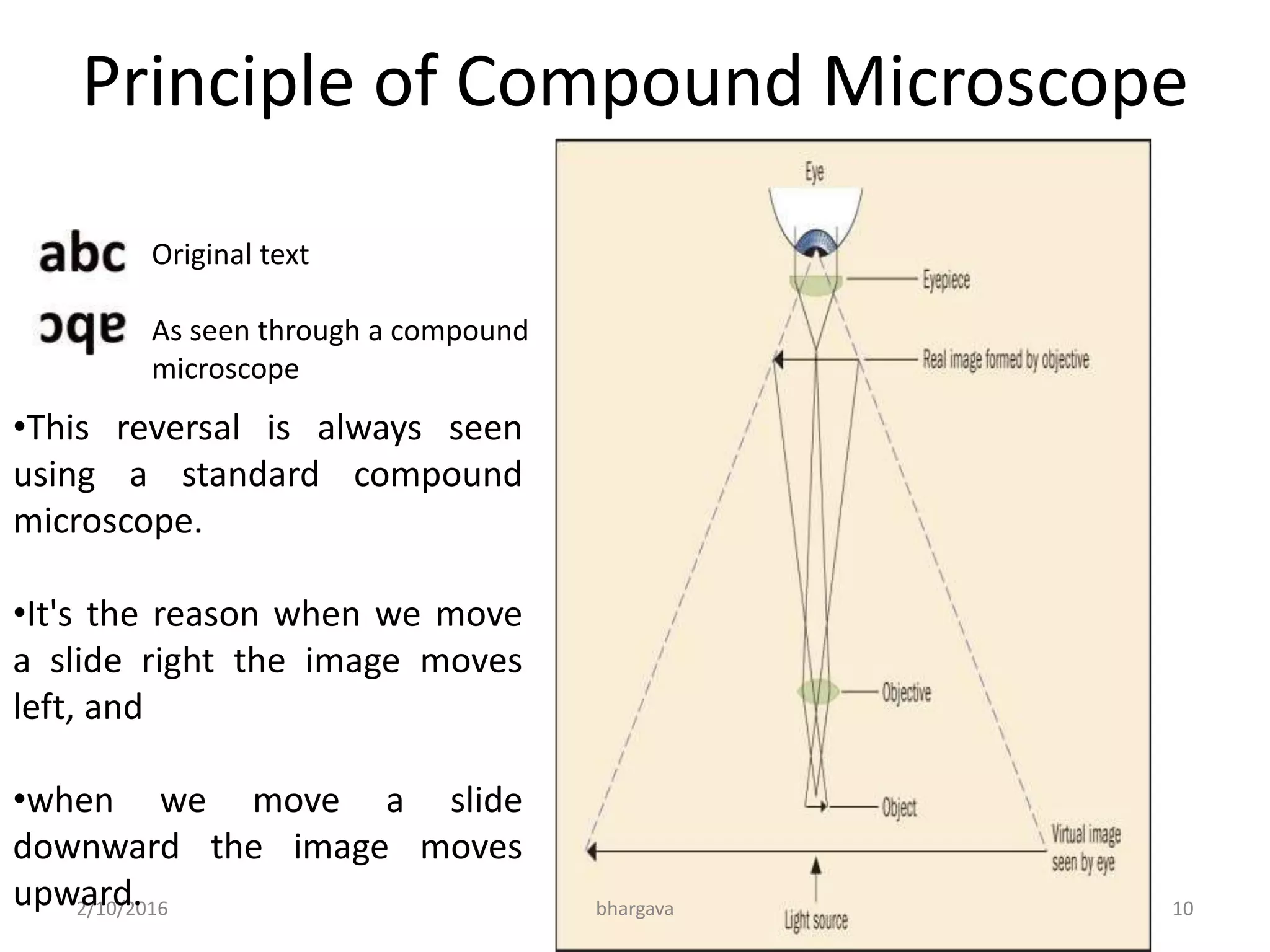
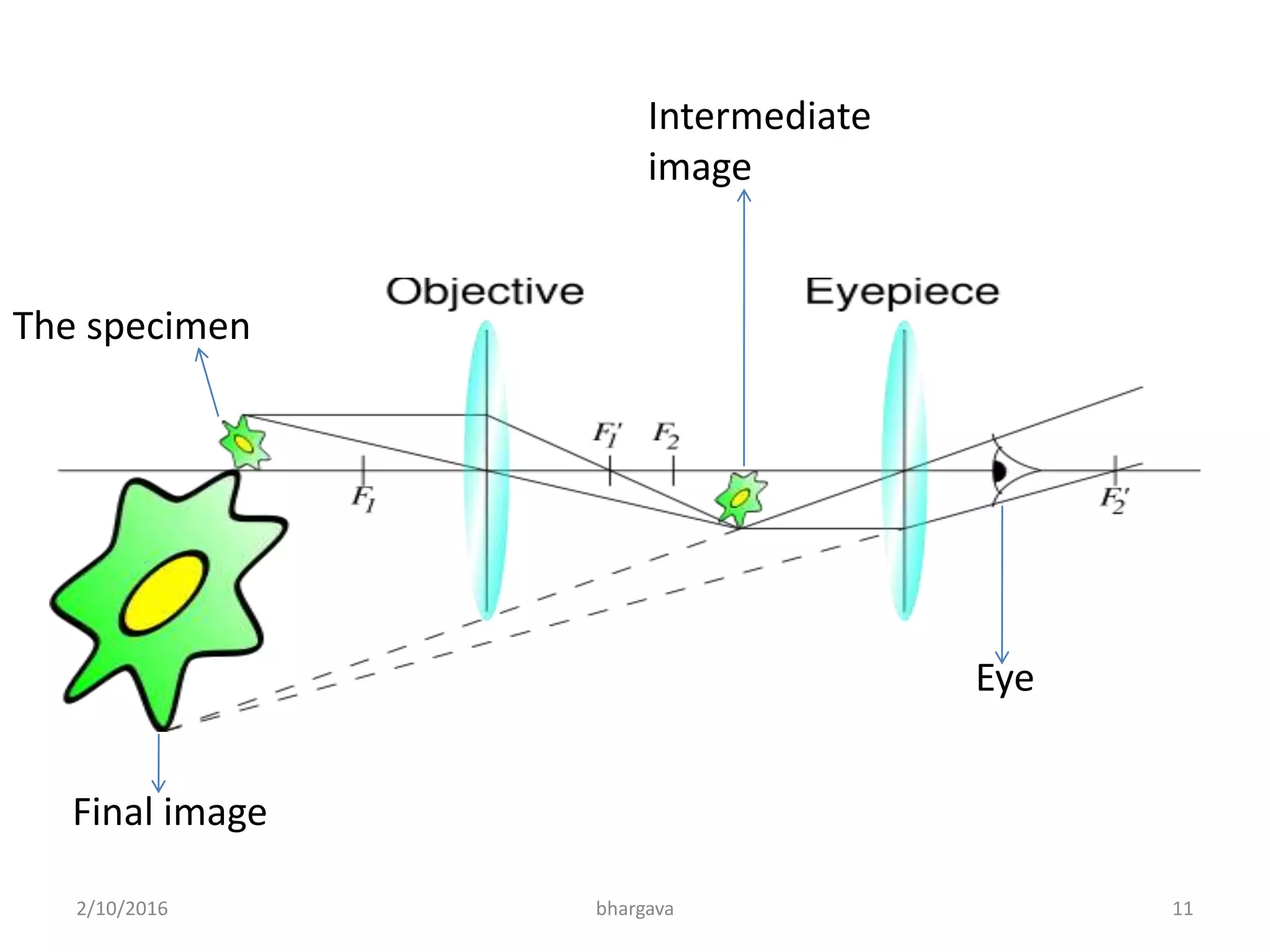
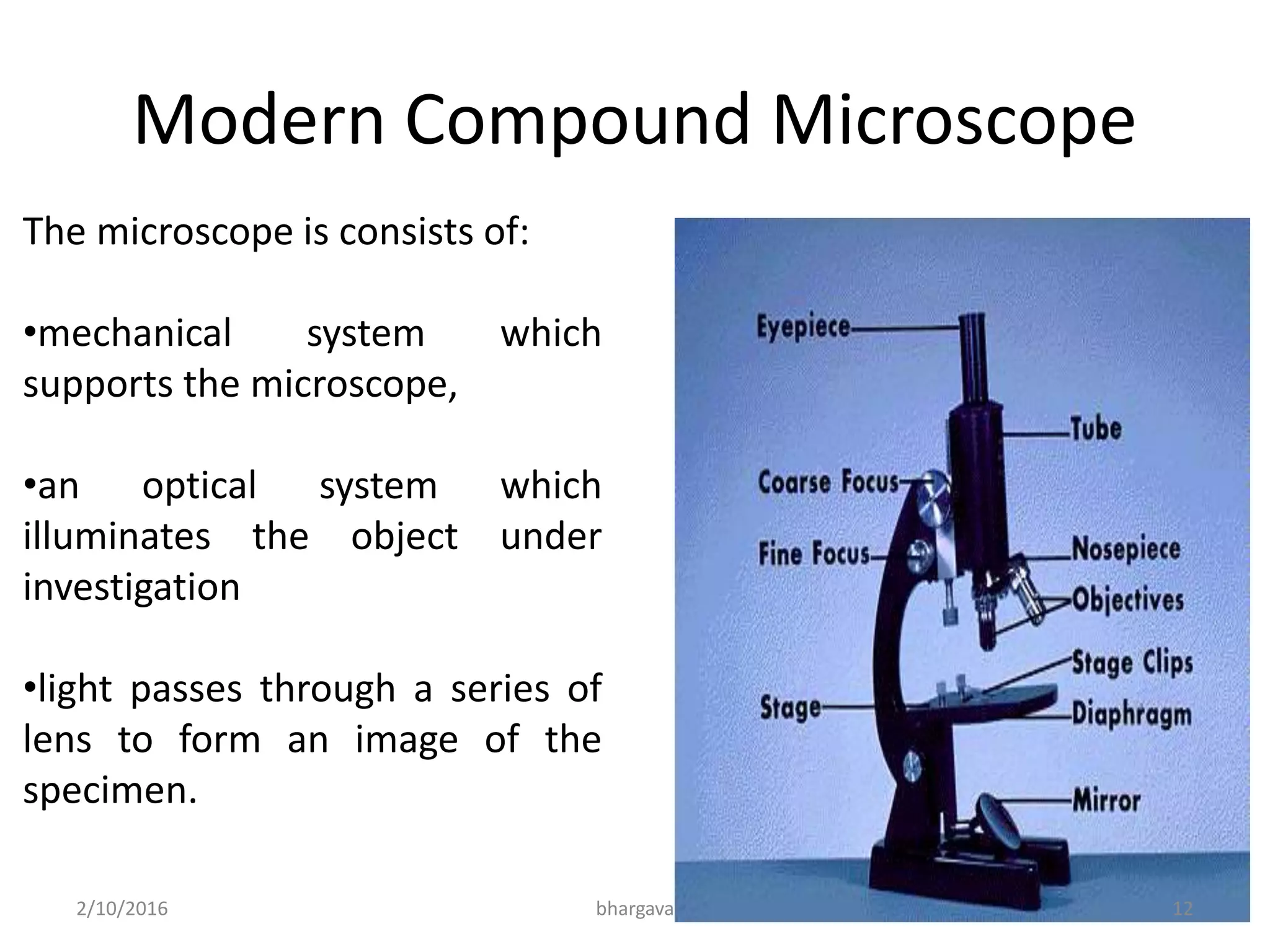
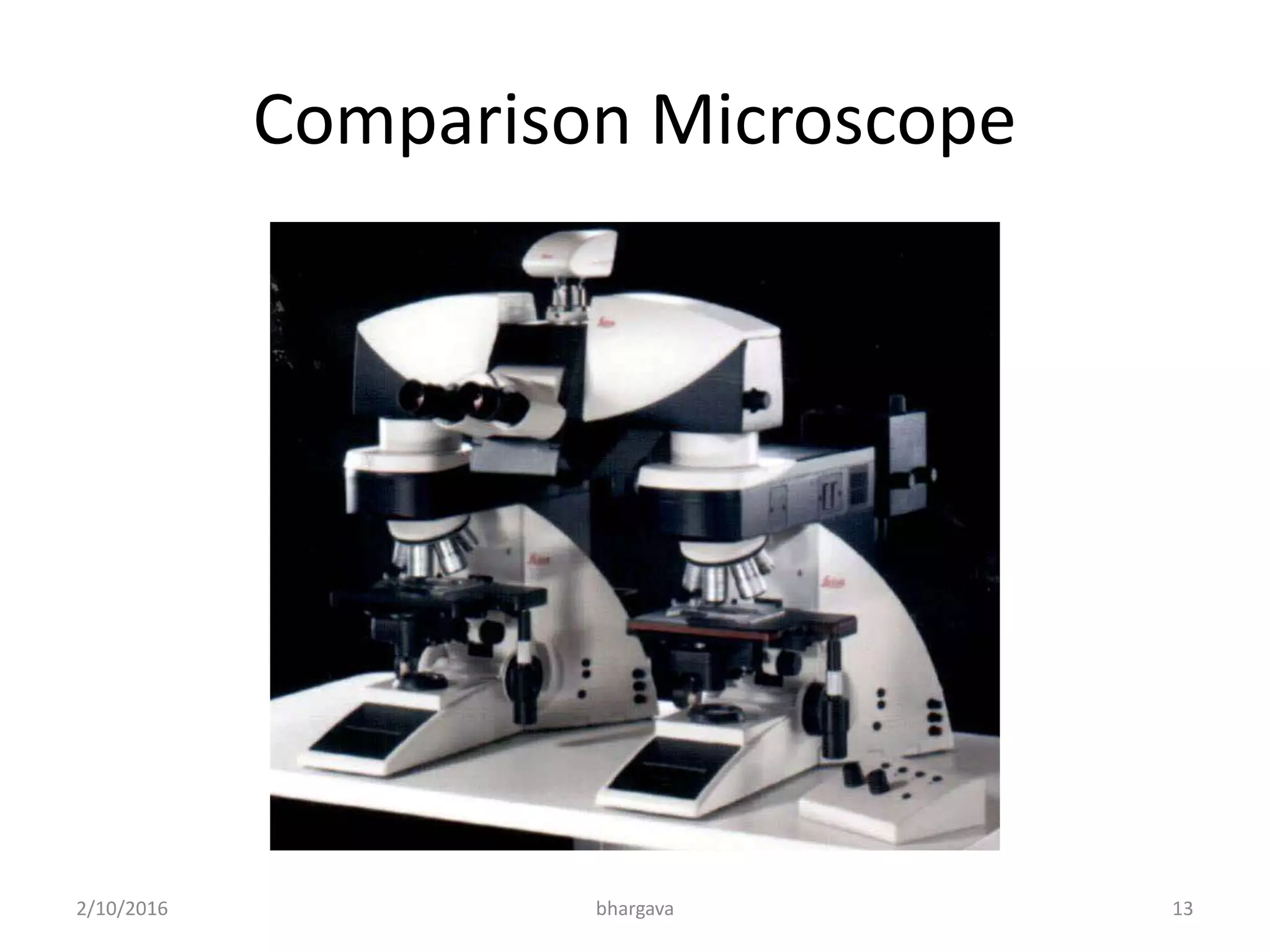
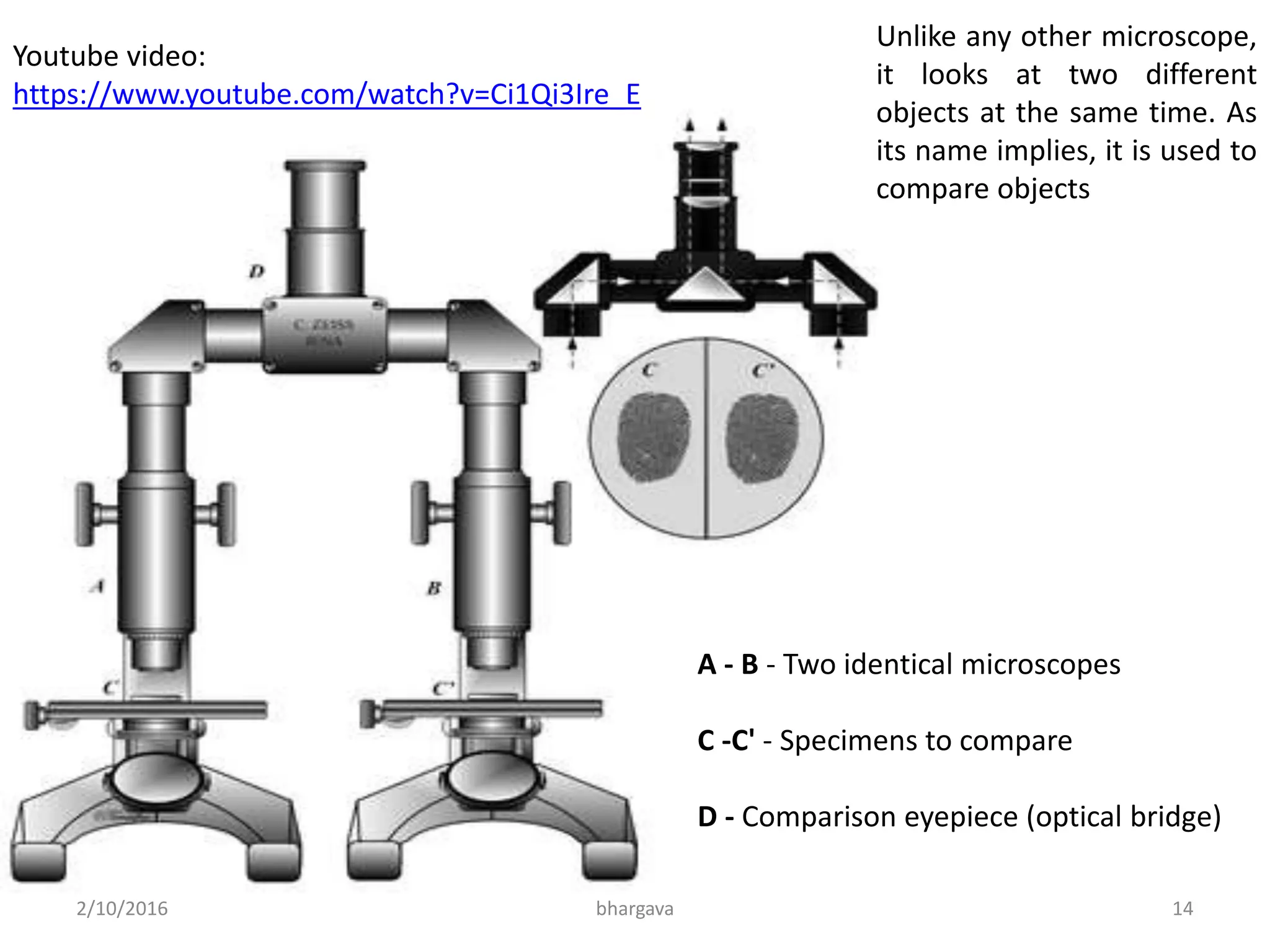
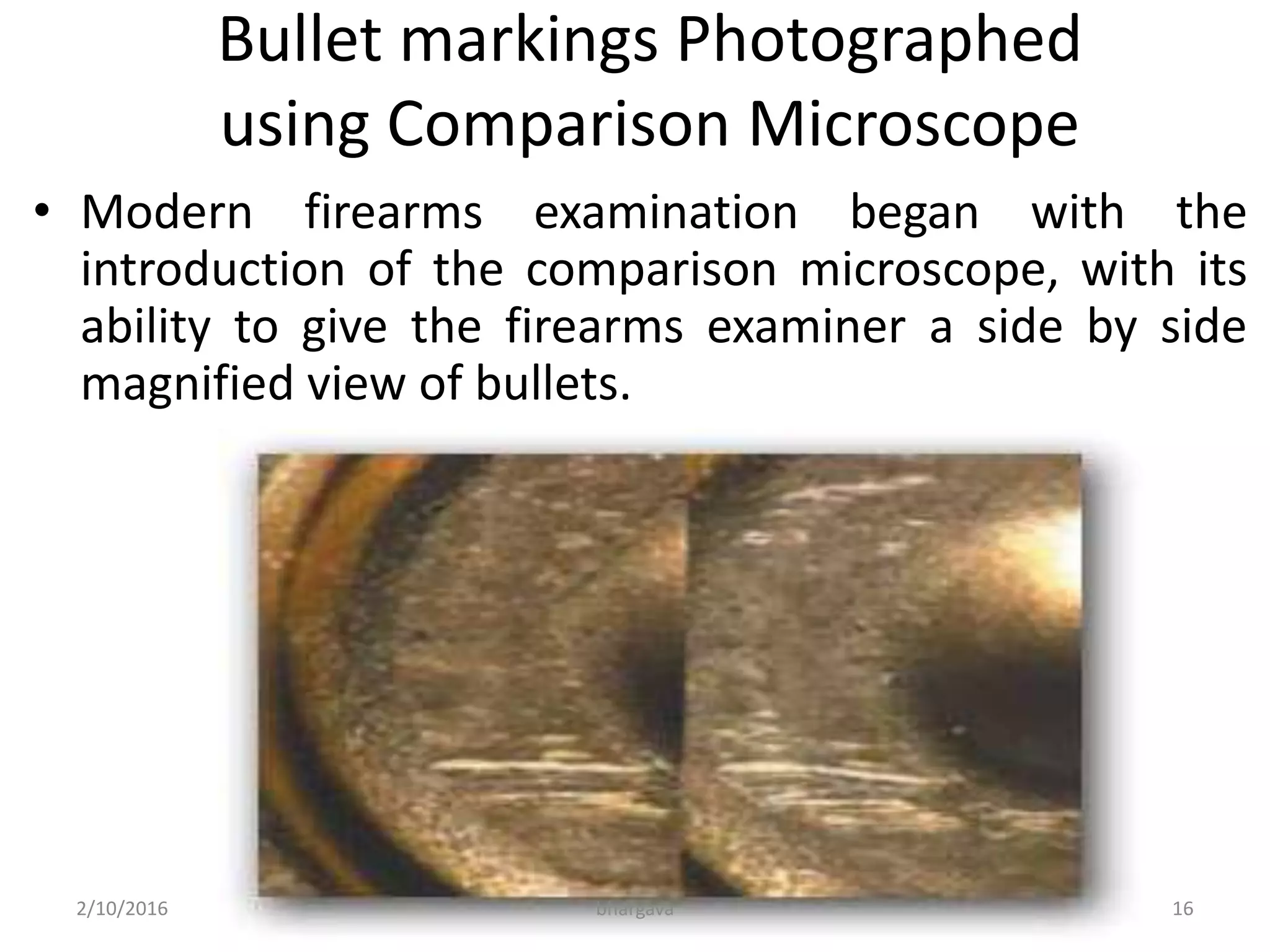
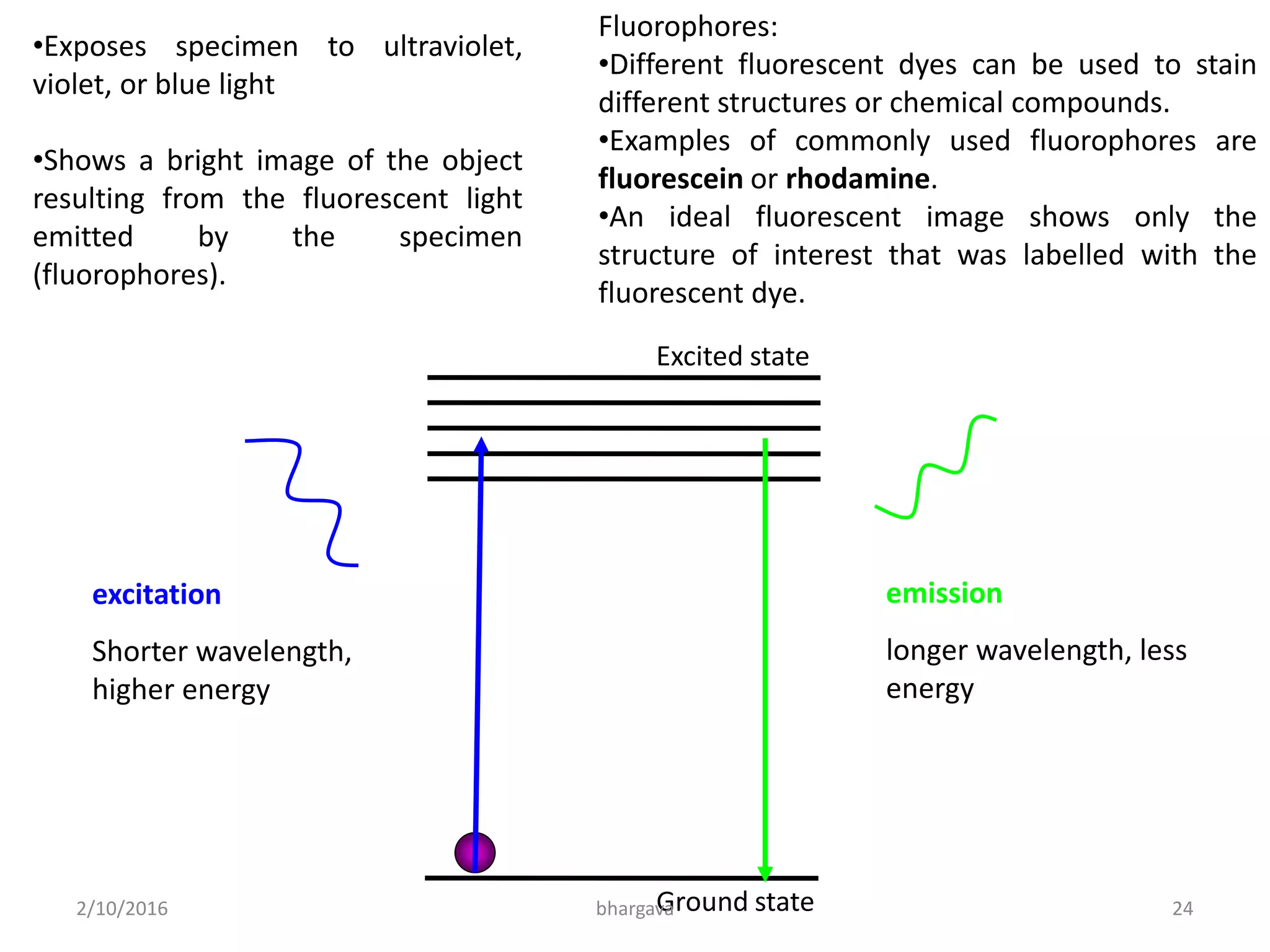
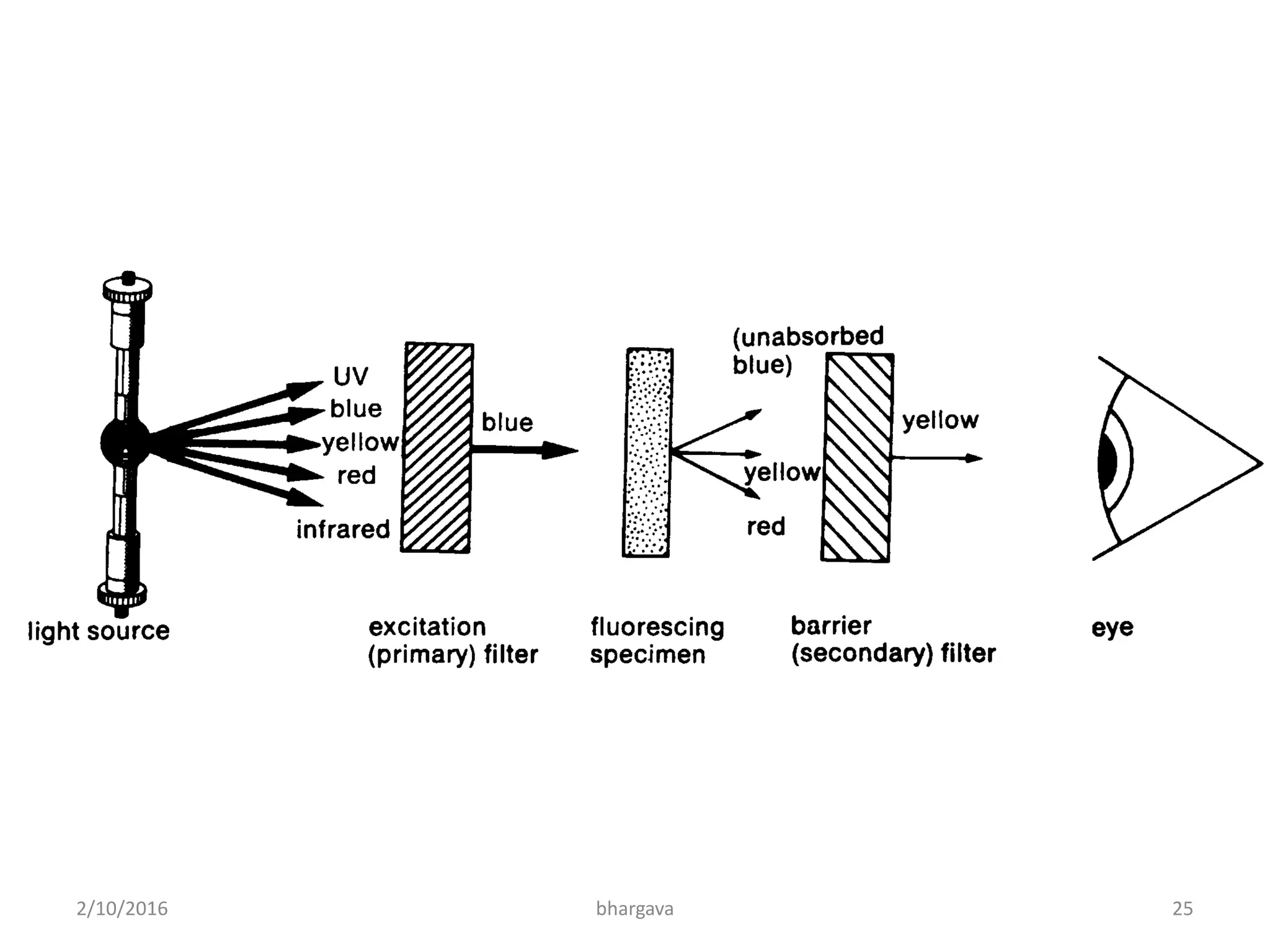
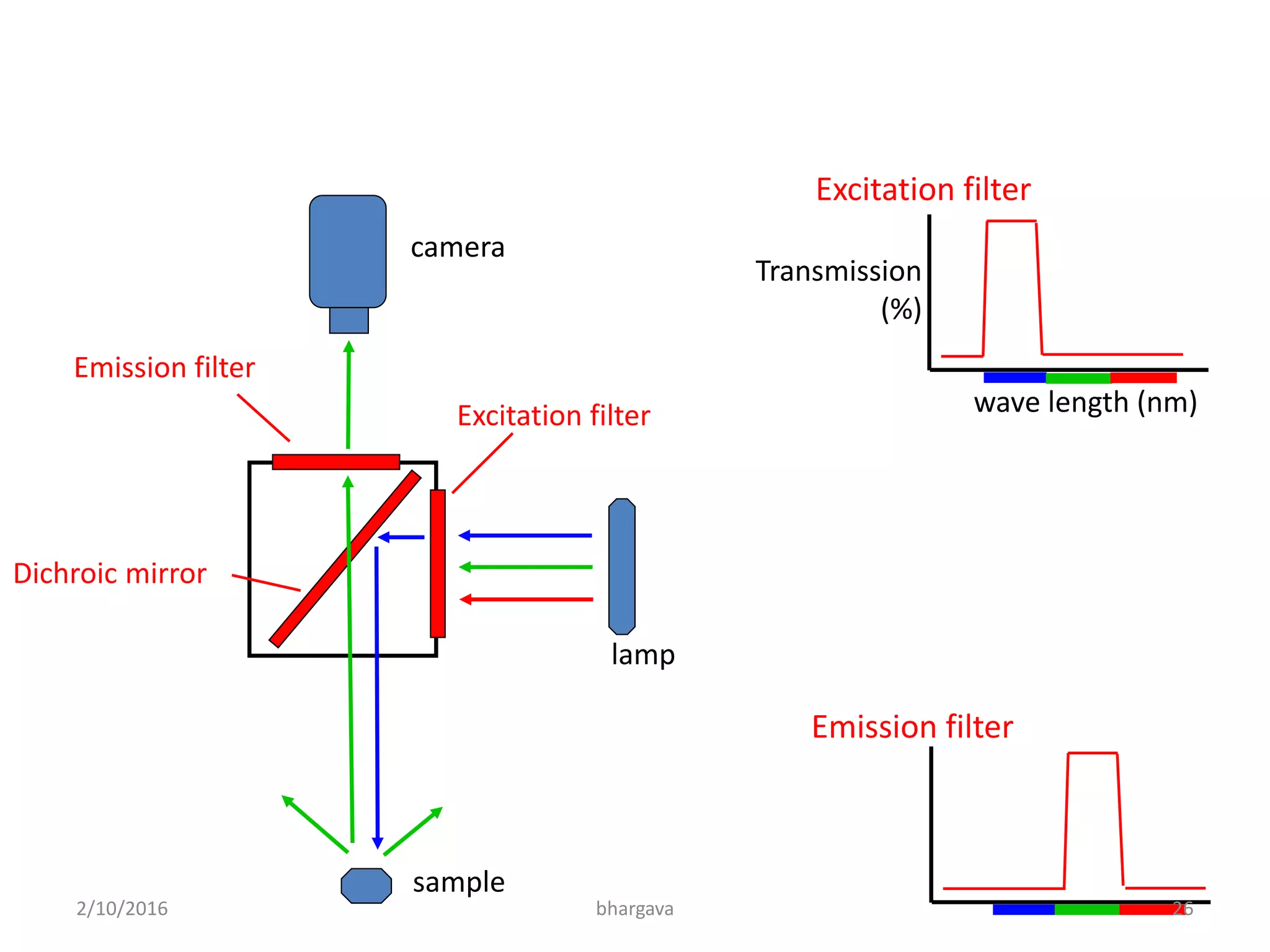
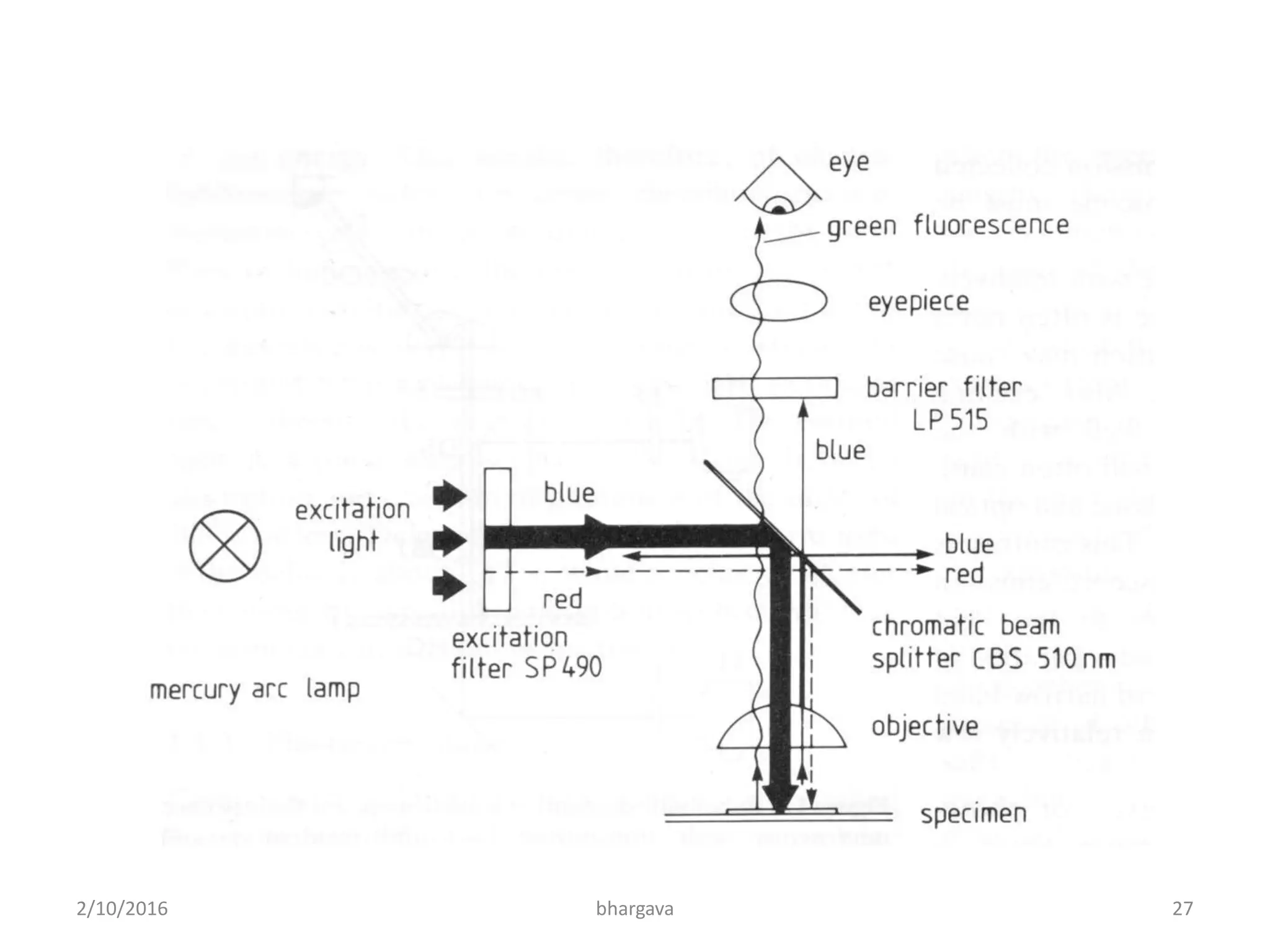
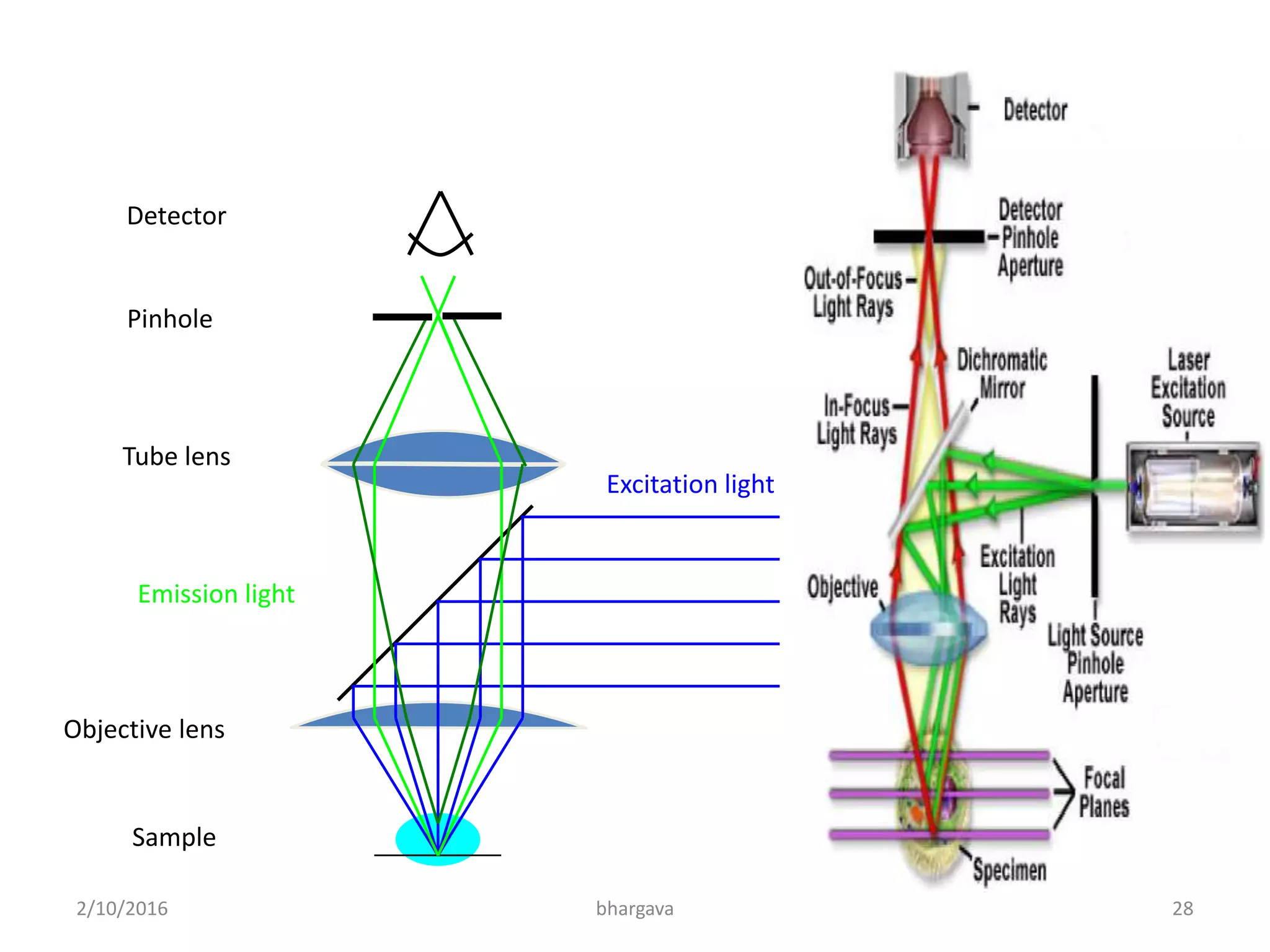
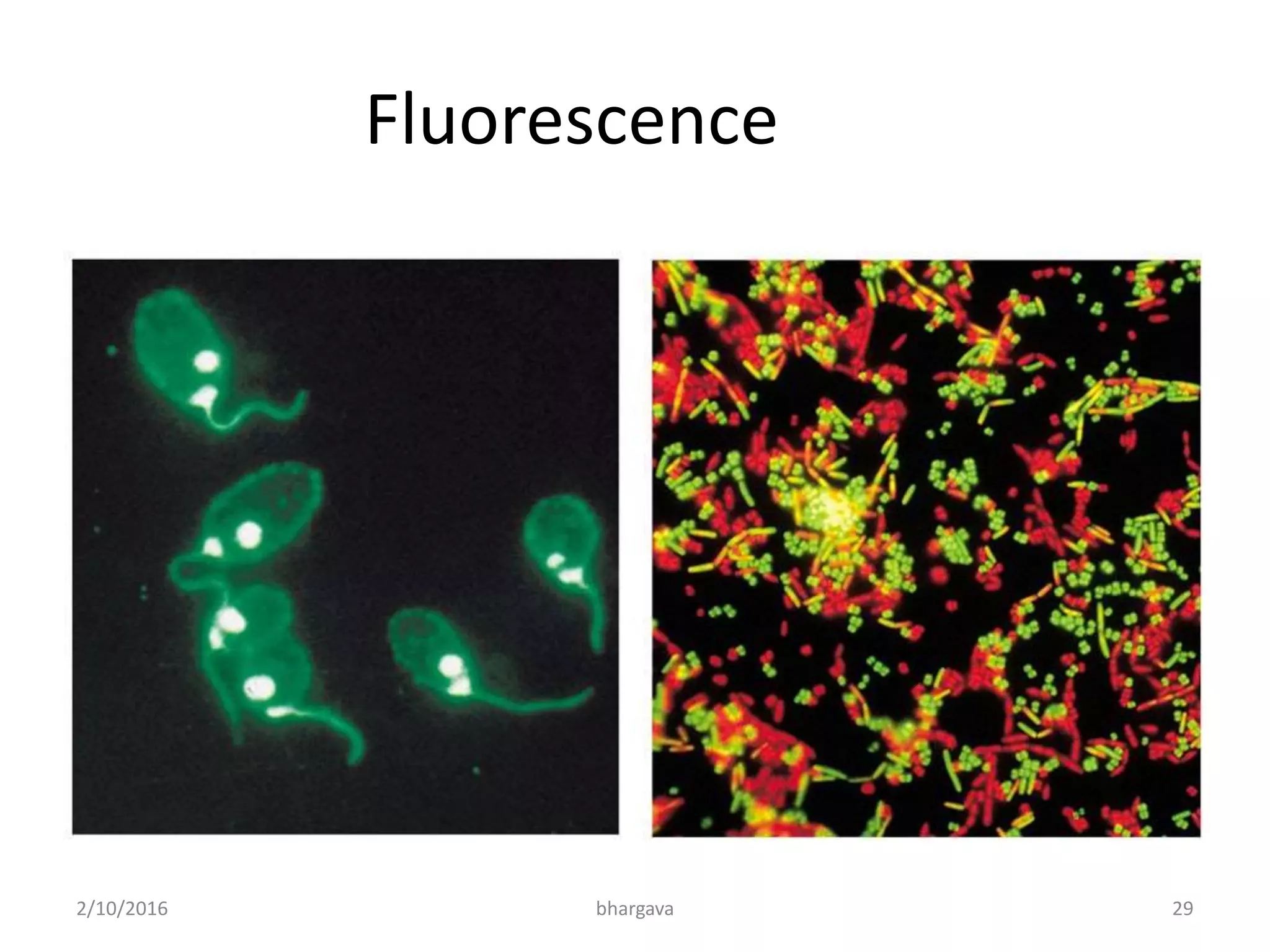

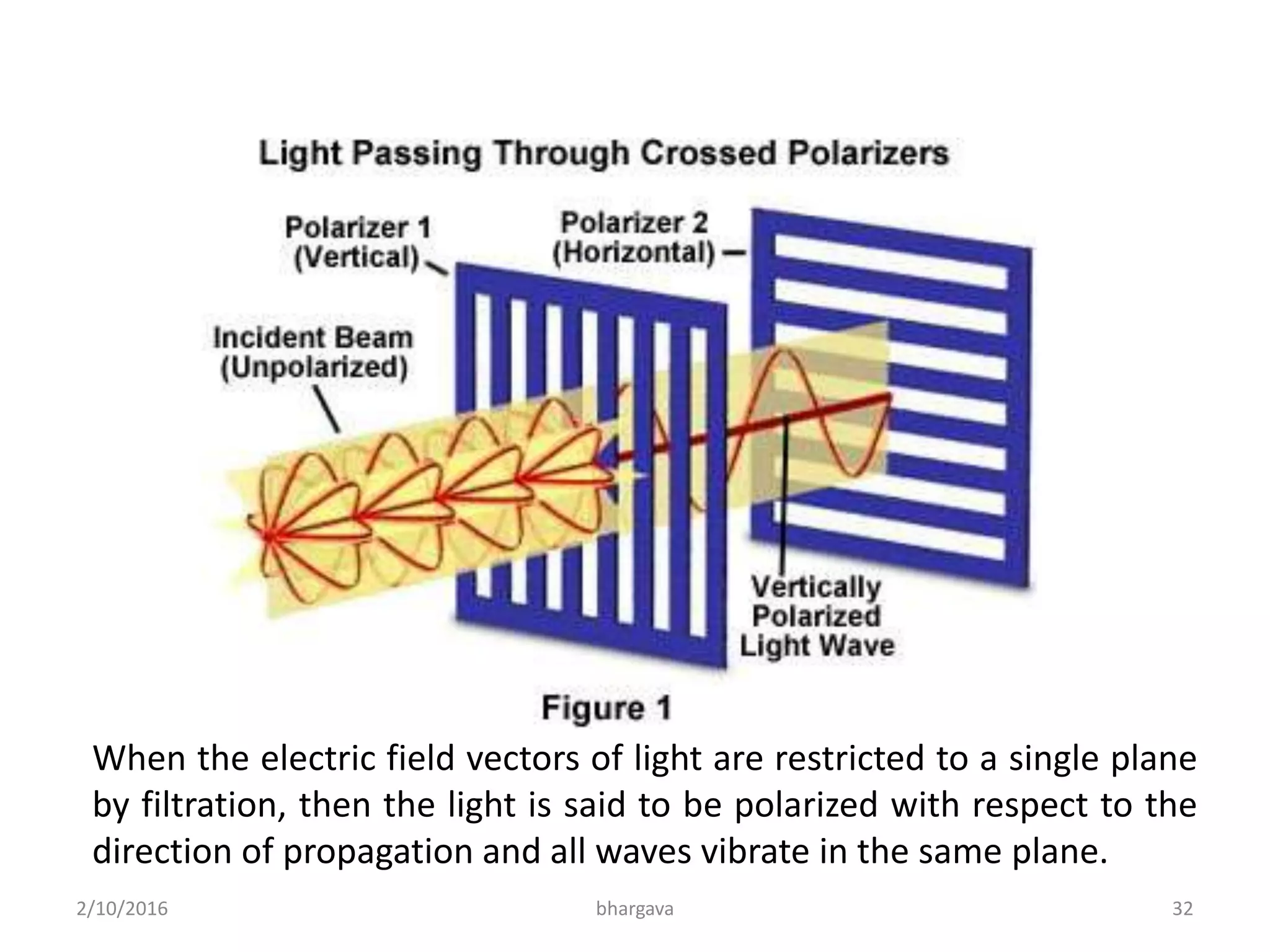
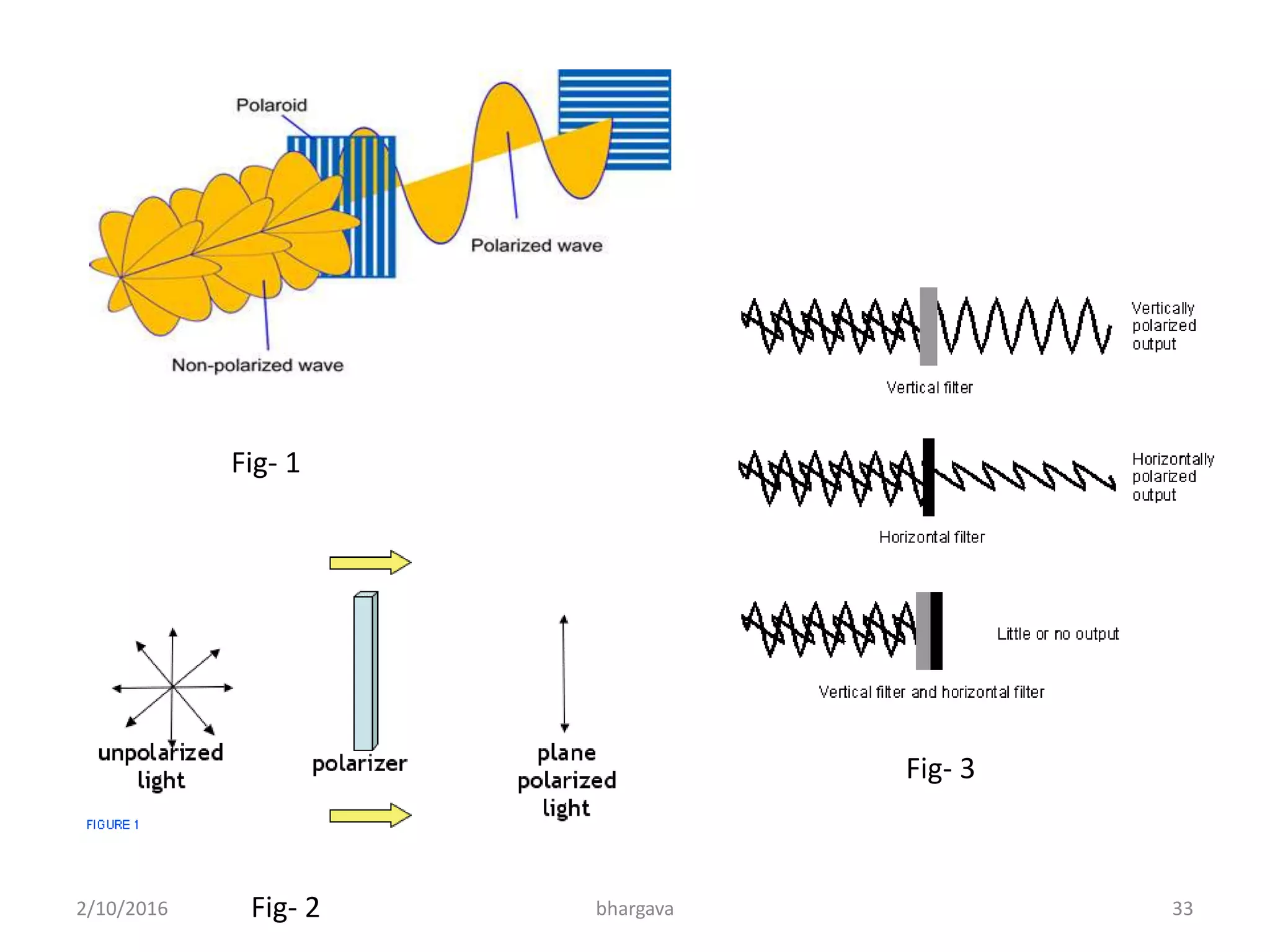
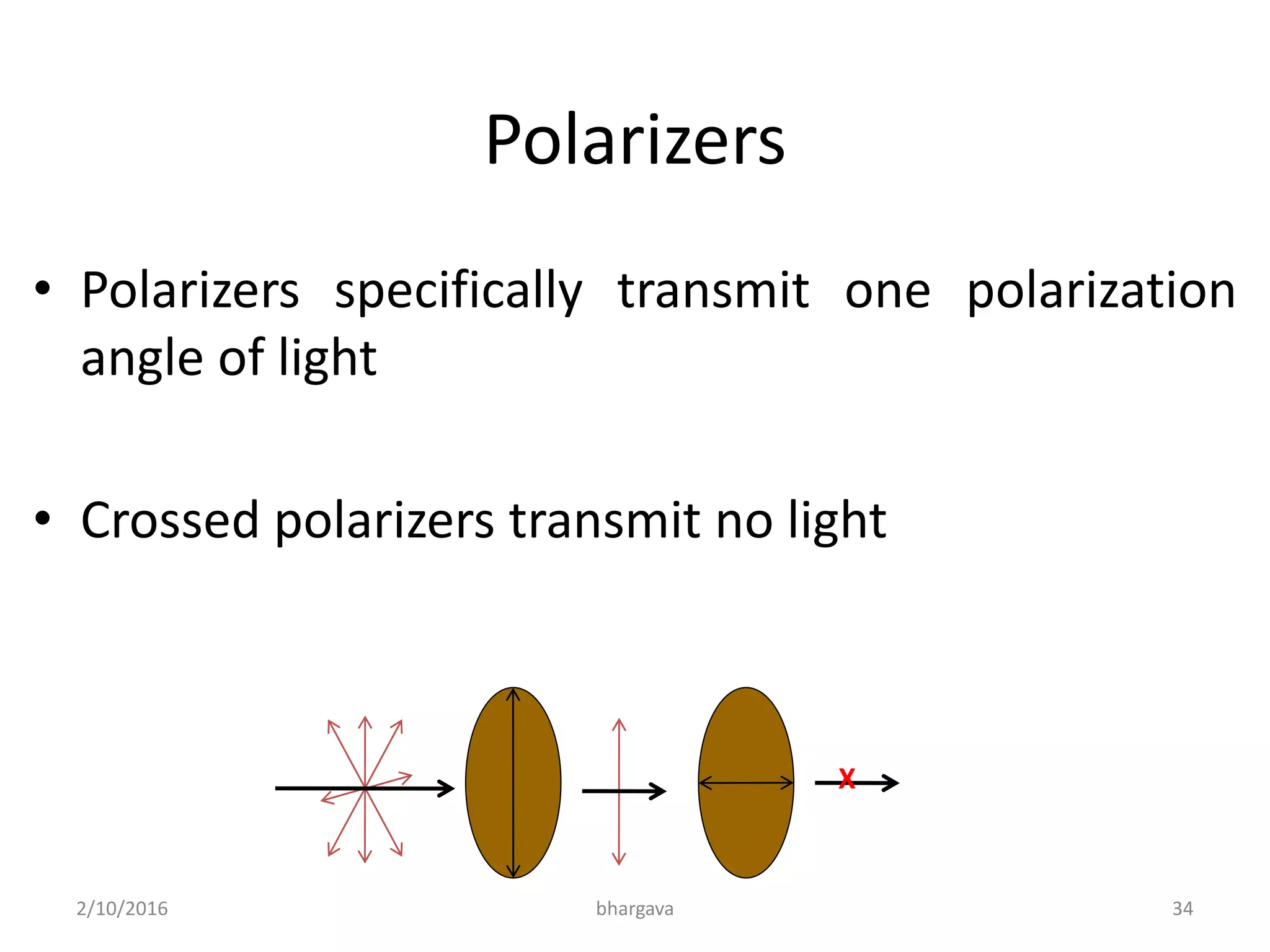
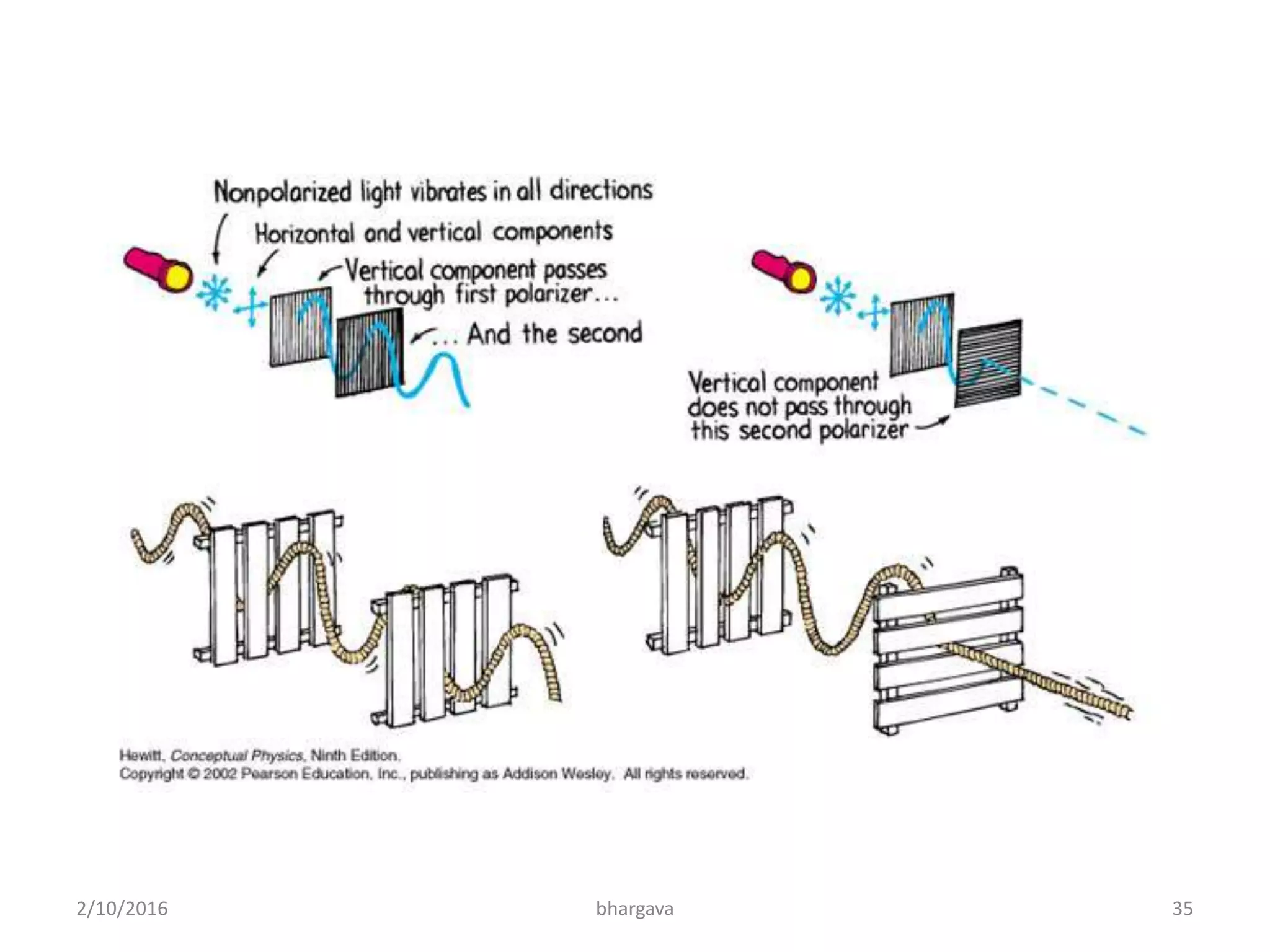
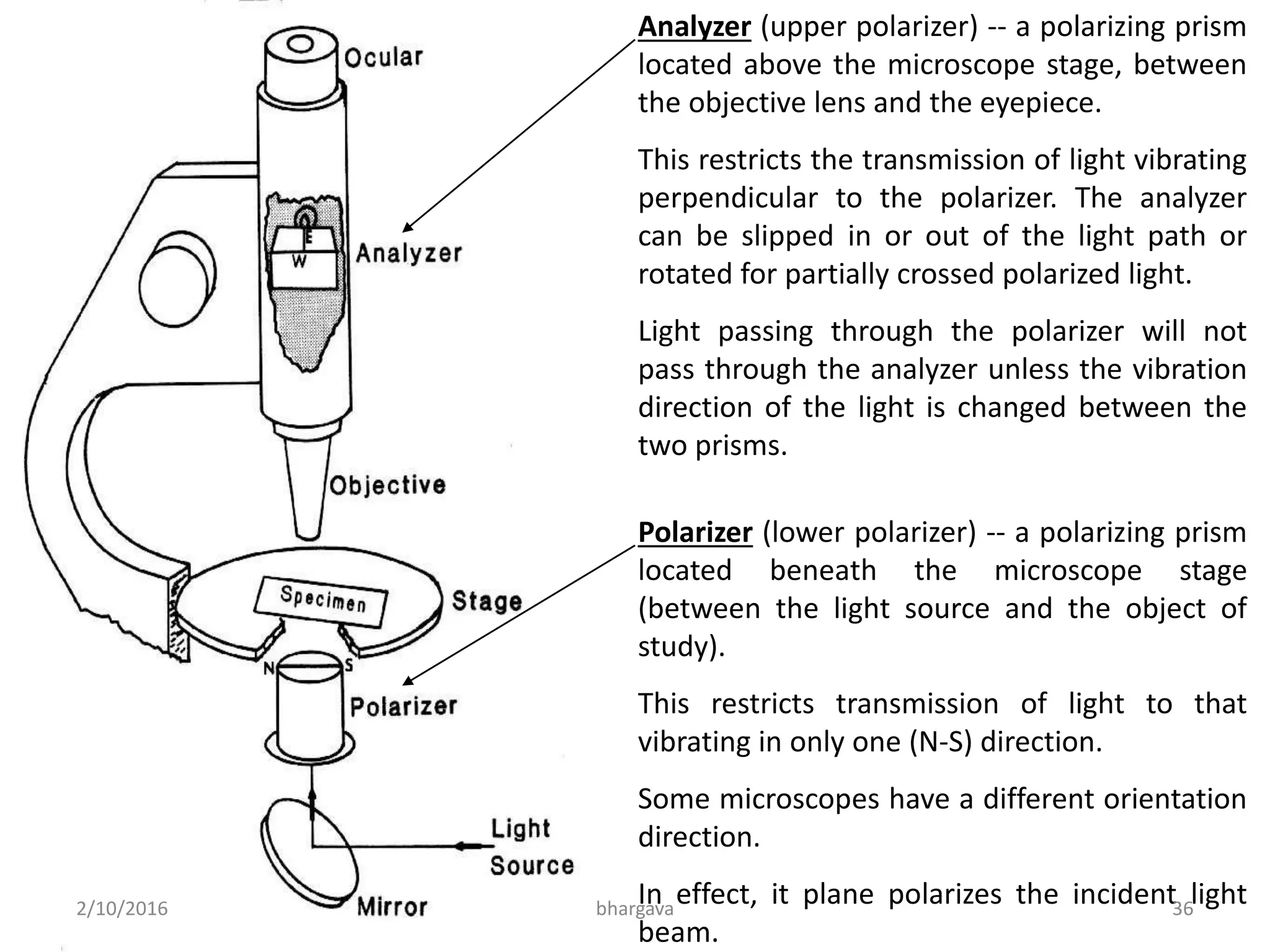

The document discusses various types of microscopes, including simple, compound, comparison, stereo, fluorescence, and polarized light microscopes, detailing their functions, magnification capabilities, resolution definitions, and applications in forensic science. It highlights the importance of features such as numerical aperture and working distance in determining the performance of optical systems, as well as specific uses in comparing forensic evidence like bullets, fibers, and inks. Additionally, it covers the principles of fluorescence microscopy and its applications in studying biological specimens and materials.


