Reworking Myth:
Casting Lots for the Future
 of Library Workplaces
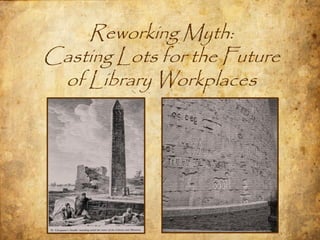
Using the Alexandrian Libraries
to see Past, Present, and Future
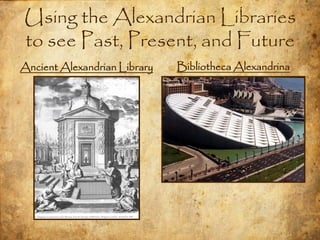
Ancient Alexandrian Library   Bibliotheca Alexandrina
The Ancient Library
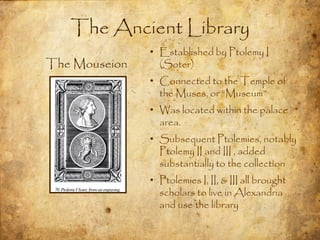
               • Established by Ptolemy I
The Mouseion     (Soter)
               • Connected to the Temple of
                 the Muses, or “Museum”
               • Was located within the palace
                 area.
               • Subsequent Ptolemies, notably
                 Ptolemy II and III , added
                 substantially to the collection
               • Ptolemies I, II, & III all brought
                 scholars to live in Alexandria
                 and use the library
The Ancient Library
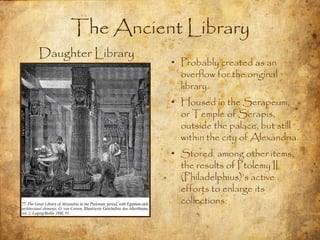
Daughter Library
                   • Probably created as an
                     overflow for the original
                     library.
                   • Housed in the Serapeum,
                     or Temple of Serapis,
                     outside the palace, but still
                     within the city of Alexandria.
                   • Stored, among other items,
                     the results of Ptolemy II
                     (Philadelphius)‟s active
                     efforts to enlarge its
                     collections.
The Ancient Library
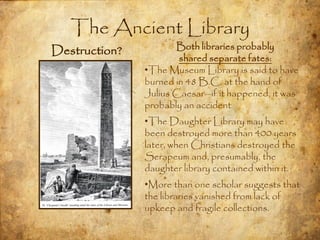
Destruction?          Both libraries probably
                       shared separate fates:
               •The Museum Library is said to have
               burned in 48 B.C. at the hand of
               Julius Caesar—if it happened, it was
               probably an accident
               •The Daughter Library may have
               been destroyed more than 400 years
               later, when Christians destroyed the
               Serapeum and, presumably, the
               daughter library contained within it.
               •More than one scholar suggests that
               the libraries vanished from lack of
               upkeep and fragile collections.
The Modern Library
                    According to J. Tocatlian
Project Genesis    (Formerly of UNESCO)
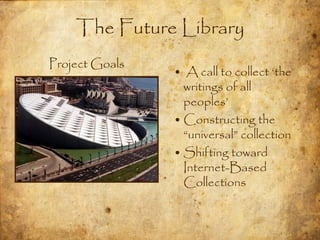
                  “The design of the
                  [Bibliotheca Alexandrina] is
                  in the form of a circle, which
                  becomes its predominant
                  symbol…the circle is a symbol
                  of unity and continuity that
                  embraces the past, present
                  and future…[the library‟s]
                  cylindrical masonry form
                  emerges from the earth like
                  the rebirth of an earlier form”
                  (43).
The Future Library
                •“The granite exterior wall [of the
Project Goals   Bibliotheca Alexandrina] is
                patterned in alphabets, an
                assortment of characters and
                hieroglyphs from 200 different
                writing systems ancient and modern.
                •They mingle to project the sense
                that the building is a mysterious
                receptacle of some sort…crammed
                with strange messages.
                •And the impression is exactly
                right, because the building promises
                an implausible but somehow still
                thrilling answer to an old dream.”
                          Amy E. Schwartz,
                   writer for the Washington Post
The Future Library
Project Goals
                • A call to collect „the
                  writings of all
                  peoples‟
                • Constructing the
                  “universal” collection
                • Shifting toward
                  Internet-Based
                  Collections
The Modern Disconnect
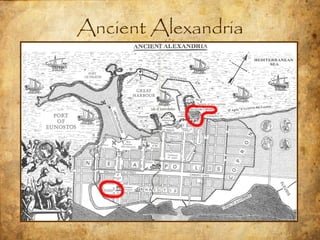
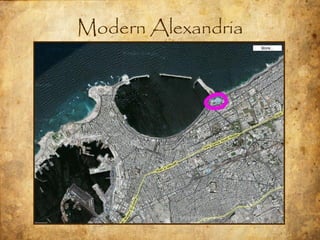
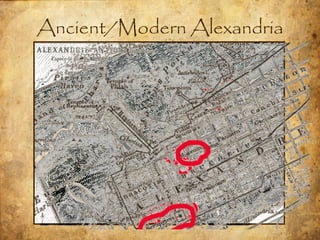
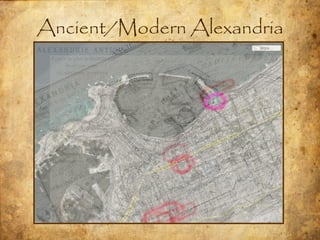
        Claims of the                      The Archaeological and
   Bibliotheca Alexandrina                   Historical Record
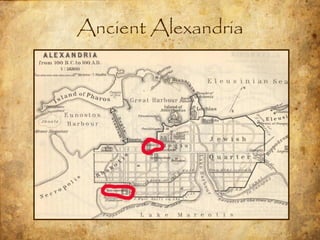
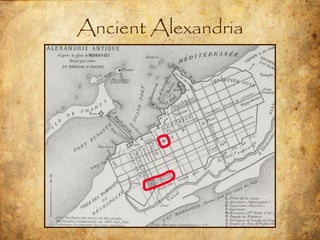
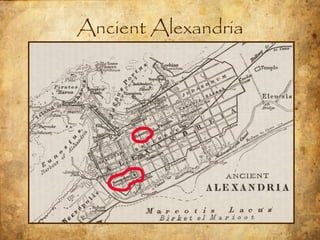
  From the Library‟s Website              Grzegorz Majcherek explains:
“The new Library of Alexandria, the      “Archaeology has proved almost
Bibliotheca Alexandrina,                 completely powerless in the face of
is…[l]ocated on a superb site on the     this myth, failing to keep step with
historic eastern harbor of Alexandria,   changing reality. The Bibliotheca
almost exactly where the old library     Alexandrina stands rebuilt in new
and the royal palace of the Ptolemies    form, as an ultra modern library, yet
once stood…”                             we are still looking for an answer
                                         to…simple questions of key
(“The Landmark Building,” emphasis       importance [including]: Where was
added)                                   the original Library?”

                                         (Academic Life of Late Antique
                                         Alexandria: A View From the Field
                                         191, emphasis added)
Ancient Alexandria
Ancient Alexandria
Ancient Alexandria
Ancient Alexandria
Modern Alexandria
Ancient/Modern Alexandria
Layering and Mythmaking
•The order created by mythology is not fixed, as is sometimes
assumed in historical thinking.

•Mythological order comes from the placing of like stories on
top of one another simultaneously until specificity is blurred
and only the similarities between stories is recognizable.

•This allows an order to form from the hodgepodge of stories
and a mythology forms based upon this order.
Joseph Campbell:
        Four Functions of Myth
•“Myth basically serves four functions. The first is the mystical
function…realizing what a wonder the universe is, and what a
wonder you are, and experienc[ing] awe before this mystery…”

•“The second is a cosmological dimension…showing you what
the shape of the universe is but showing it in such a way that the
mystery comes through…”

•“The third function is the sociological one—supporting and
validating a certain social order…”
•“[and] there is a fourth function of myth…that is the
pedagogical function of how to live a life under any
circumstances.”
(The Power of Myth 38-39, emphasis added)
Hierarchy of Functions
   Primary Mythological Functions
        • Sociological

        • Mystical

  Secondary Mythological Functions
        • Cosmological

        • Pedagogical
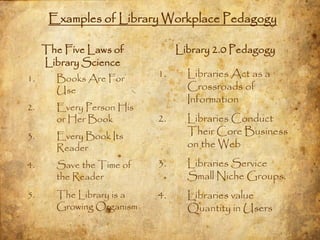
Examples of Library Workplace Pedagogy

     The Five Laws of          Library 2.0 Pedagogy
     Library Science
1.     Books Are For      1.     Libraries Act as a
       Use                       Crossroads of
                                 Information
2.     Every Person His
       or Her Book        2.     Libraries Conduct
3.     Every Book Its            Their Core Business
       Reader                    on the Web
4.     Save the Time of   3.     Libraries Service
       the Reader                Small Niche Groups.
5.     The Library is a   4.     Libraries value
       Growing Organism          Quantity in Users
Common future-library scenarios
    portrayed by scholars:

•The internet is a unique event unlike anything in
the history of libraries.

•The arrival of the internet is the beginning of the
end of libraries.
A Myth to Call Its Own
Library future, viewed through the lens of library
workplace mythology, shows library workplaces as
they have always been:
Groups of people and structures that have been,
are, and will be capable of adapting to cultural,
religious, political, and technological changes,
while maintaining a core identity that represents a
desire to learn, a love of information, a willingness to
adapt, and a fascinating mythology all their own.

Library Workplace Mythology

  • 1.
    Reworking Myth: Casting Lotsfor the Future of Library Workplaces
  • 2.
    Using the AlexandrianLibraries to see Past, Present, and Future Ancient Alexandrian Library Bibliotheca Alexandrina
  • 3.
    The Ancient Library • Established by Ptolemy I The Mouseion (Soter) • Connected to the Temple of the Muses, or “Museum” • Was located within the palace area. • Subsequent Ptolemies, notably Ptolemy II and III , added substantially to the collection • Ptolemies I, II, & III all brought scholars to live in Alexandria and use the library
  • 4.
    The Ancient Library DaughterLibrary • Probably created as an overflow for the original library. • Housed in the Serapeum, or Temple of Serapis, outside the palace, but still within the city of Alexandria. • Stored, among other items, the results of Ptolemy II (Philadelphius)‟s active efforts to enlarge its collections.
  • 5.
    The Ancient Library Destruction? Both libraries probably shared separate fates: •The Museum Library is said to have burned in 48 B.C. at the hand of Julius Caesar—if it happened, it was probably an accident •The Daughter Library may have been destroyed more than 400 years later, when Christians destroyed the Serapeum and, presumably, the daughter library contained within it. •More than one scholar suggests that the libraries vanished from lack of upkeep and fragile collections.
  • 6.
    The Modern Library According to J. Tocatlian Project Genesis (Formerly of UNESCO) “The design of the [Bibliotheca Alexandrina] is in the form of a circle, which becomes its predominant symbol…the circle is a symbol of unity and continuity that embraces the past, present and future…[the library‟s] cylindrical masonry form emerges from the earth like the rebirth of an earlier form” (43).
  • 7.
    The Future Library •“The granite exterior wall [of the Project Goals Bibliotheca Alexandrina] is patterned in alphabets, an assortment of characters and hieroglyphs from 200 different writing systems ancient and modern. •They mingle to project the sense that the building is a mysterious receptacle of some sort…crammed with strange messages. •And the impression is exactly right, because the building promises an implausible but somehow still thrilling answer to an old dream.” Amy E. Schwartz, writer for the Washington Post
  • 8.
    The Future Library ProjectGoals • A call to collect „the writings of all peoples‟ • Constructing the “universal” collection • Shifting toward Internet-Based Collections
  • 9.
    The Modern Disconnect Claims of the The Archaeological and Bibliotheca Alexandrina Historical Record From the Library‟s Website Grzegorz Majcherek explains: “The new Library of Alexandria, the “Archaeology has proved almost Bibliotheca Alexandrina, completely powerless in the face of is…[l]ocated on a superb site on the this myth, failing to keep step with historic eastern harbor of Alexandria, changing reality. The Bibliotheca almost exactly where the old library Alexandrina stands rebuilt in new and the royal palace of the Ptolemies form, as an ultra modern library, yet once stood…” we are still looking for an answer to…simple questions of key (“The Landmark Building,” emphasis importance [including]: Where was added) the original Library?” (Academic Life of Late Antique Alexandria: A View From the Field 191, emphasis added)
  • 10.
  • 11.
  • 12.
  • 13.
  • 14.
  • 15.
  • 16.
  • 17.
    Layering and Mythmaking •Theorder created by mythology is not fixed, as is sometimes assumed in historical thinking. •Mythological order comes from the placing of like stories on top of one another simultaneously until specificity is blurred and only the similarities between stories is recognizable. •This allows an order to form from the hodgepodge of stories and a mythology forms based upon this order.
  • 18.
    Joseph Campbell: Four Functions of Myth •“Myth basically serves four functions. The first is the mystical function…realizing what a wonder the universe is, and what a wonder you are, and experienc[ing] awe before this mystery…” •“The second is a cosmological dimension…showing you what the shape of the universe is but showing it in such a way that the mystery comes through…” •“The third function is the sociological one—supporting and validating a certain social order…” •“[and] there is a fourth function of myth…that is the pedagogical function of how to live a life under any circumstances.” (The Power of Myth 38-39, emphasis added)
  • 19.
    Hierarchy of Functions Primary Mythological Functions • Sociological • Mystical Secondary Mythological Functions • Cosmological • Pedagogical
  • 20.
    Examples of LibraryWorkplace Pedagogy The Five Laws of Library 2.0 Pedagogy Library Science 1. Books Are For 1. Libraries Act as a Use Crossroads of Information 2. Every Person His or Her Book 2. Libraries Conduct 3. Every Book Its Their Core Business Reader on the Web 4. Save the Time of 3. Libraries Service the Reader Small Niche Groups. 5. The Library is a 4. Libraries value Growing Organism Quantity in Users
  • 21.
    Common future-library scenarios portrayed by scholars: •The internet is a unique event unlike anything in the history of libraries. •The arrival of the internet is the beginning of the end of libraries.
  • 22.
    A Myth toCall Its Own Library future, viewed through the lens of library workplace mythology, shows library workplaces as they have always been: Groups of people and structures that have been, are, and will be capable of adapting to cultural, religious, political, and technological changes, while maintaining a core identity that represents a desire to learn, a love of information, a willingness to adapt, and a fascinating mythology all their own.