Lewis & Clark
Briyana Butler & NaomiWilliams
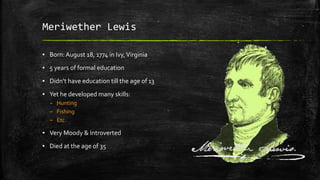
Meriwether Lewis
▪ Born:August 18, 1774 in Ivy,Virginia
▪ 5 years of formal education
▪ Didn’t have education till the age of 13
▪ Yet he developed many skills:
– Hunting
– Fishing
– Etc.
▪ Very Moody & Introverted
▪ Died at the age of 35
Goals of Expedition
▪ Scientifically: Study plants, animals, geography
▪ Economically
▪ Be ambassadors to IndianTribes (Bring messages of friendship;
“Peace Medals” )
▪ President Jefferson chose Lewis to lead the scientific expedition
across the LouisianaTerritory because of his experience in:
• Astronomy
• Botany
• Cartography
• Geology
• Indian affairs
• Mineralogy
• Navigation.
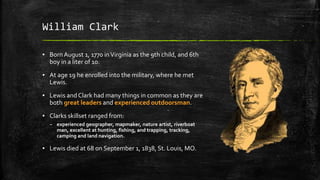
William Clark
▪ BornAugust 1, 1770 inVirginia as the 9th child, and 6th
boy in a liter of 10.
▪ At age 19 he enrolled into the military, where he met
Lewis.
▪ Lewis and Clark had many things in common as they are
both great leaders and experienced outdoorsman.
▪ Clarks skillset ranged from:
– experienced geographer, mapmaker, nature artist, riverboat
man, excellent at hunting, fishing, and trapping, tracking,
camping and land navigation.
▪ Lewis died at 68 on September 1, 1838, St. Louis, MO.
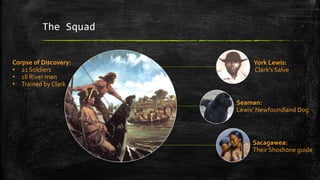
The Squad
York Lewis:
Clark’s Salve
Seaman:
Lewis’ Newfoundland Dog
Sacagawea:
Their Shoshone guide
Corpse of Discovery:
• 21 Soldiers
• 18 River men
• Trained by Clark
The expedition begins! 1804
▪ May 14, 1804 marks the start of the expedition
▪ They travel up the Missouri river from St. Louis
▪ Clark spent most of his time mapping out the area while Lewis
studied the flora and fauna
▪ They were constantly on the look out for Indians
▪ By July they traveled 6000 miles up the river and still ha not seen a
single Indian
Expedition Continues
▪ They met many native tribes including the Oto , theYankton Sioux,
Teton Sioux and the Arikara.
▪ They exchanged gifts like blankets, beads and peace medals which
signified that the “Great Father” (Thomas Jefferson) was now their
new leader.
▪ TheTeton Sioux were not pleased with their gifts and a fight almost
broke out. Jefferson’s hope for friendly relations with the sioux failed.
▪ They continued up north and made shelter for the winter at the
Mandan tribes villages.
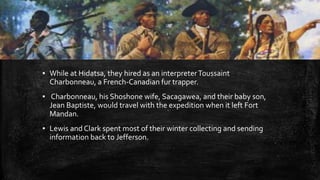
▪ While at Hidatsa, they hired as an interpreterToussaint
Charbonneau, a French-Canadian fur trapper.
▪ Charbonneau, his Shoshone wife, Sacagawea, and their baby son,
Jean Baptiste, would travel with the expedition when it left Fort
Mandan.
▪ Lewis and Clark spent most of their winter collecting and sending
information back to Jefferson.
▪ After they passed though GrizzlyValley, where they spotted bears,
they planned to head to the Rocky Mountains.
▪ On June 13, 1805, they reached the graet falls
▪ In August of 1805, they came into contact with the Shoshone tribe,
whose leader happened to be Sacagawea's brother.
▪ They bargained for the horses they desperately needed to cross the
Continental divide
Final Leg
▪ On November 7, 1805, Clark thinks he see the Pacific when they were
really still 20 miles from the coast.
▪ Storms halt them for three weeks then they reach the pacific.
▪ The then begin their trek back home.
▪ On the way back they split up atTraveler’s Rest in order to explore
more Louisiana territory.
– Lewis’ group encountered the Blackfeet Indians and had a little skirmish.Two
Indians died
– Clarks men had some horses stolen by the row tribe.
They finally reach St. Louis—two years, four months, and ten days
after they had left
Effects of the Expedition
▪ People no longer wondered about the mysteries of the Louisiana
Purchase.
▪ Mostly the information collected was geographical.
▪ One of the long term effects was the increase in rise in the northern
plains fur trade from 1806 to 1812.
▪ The Natives had a very negative outcome from this expedition, the
disease of small pox broke out, which dwindled down and weakened
this once strong and courageous group.
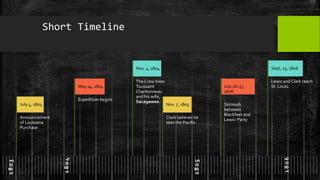
Short Timeline
1803
1804
1805
July 4, 1803
Announcement
of Louisiana
Purchase
May 14, 1804
Expedition begins
Nov. 4, 1804
The Crew hires
Toussaint
Charbonneau
and his wife,
Sacagawea.
Nov. 7, 1805
Clark believes he
sees the Pacific.
July 26-27,
1806
Skirmish
between
Blackfeet and
Lewis’ Party
Sept, 23, 1806
Lewis and Clark reach
St. Louis.
1806

Lewis and Clark

  • 1.
    Lewis & Clark BriyanaButler & NaomiWilliams
  • 2.
    Meriwether Lewis ▪ Born:August18, 1774 in Ivy,Virginia ▪ 5 years of formal education ▪ Didn’t have education till the age of 13 ▪ Yet he developed many skills: – Hunting – Fishing – Etc. ▪ Very Moody & Introverted ▪ Died at the age of 35
  • 3.
    Goals of Expedition ▪Scientifically: Study plants, animals, geography ▪ Economically ▪ Be ambassadors to IndianTribes (Bring messages of friendship; “Peace Medals” ) ▪ President Jefferson chose Lewis to lead the scientific expedition across the LouisianaTerritory because of his experience in: • Astronomy • Botany • Cartography • Geology • Indian affairs • Mineralogy • Navigation.
  • 4.
    William Clark ▪ BornAugust1, 1770 inVirginia as the 9th child, and 6th boy in a liter of 10. ▪ At age 19 he enrolled into the military, where he met Lewis. ▪ Lewis and Clark had many things in common as they are both great leaders and experienced outdoorsman. ▪ Clarks skillset ranged from: – experienced geographer, mapmaker, nature artist, riverboat man, excellent at hunting, fishing, and trapping, tracking, camping and land navigation. ▪ Lewis died at 68 on September 1, 1838, St. Louis, MO.
  • 5.
    The Squad York Lewis: Clark’sSalve Seaman: Lewis’ Newfoundland Dog Sacagawea: Their Shoshone guide Corpse of Discovery: • 21 Soldiers • 18 River men • Trained by Clark
  • 6.
    The expedition begins!1804 ▪ May 14, 1804 marks the start of the expedition ▪ They travel up the Missouri river from St. Louis ▪ Clark spent most of his time mapping out the area while Lewis studied the flora and fauna ▪ They were constantly on the look out for Indians ▪ By July they traveled 6000 miles up the river and still ha not seen a single Indian
  • 7.
    Expedition Continues ▪ Theymet many native tribes including the Oto , theYankton Sioux, Teton Sioux and the Arikara. ▪ They exchanged gifts like blankets, beads and peace medals which signified that the “Great Father” (Thomas Jefferson) was now their new leader. ▪ TheTeton Sioux were not pleased with their gifts and a fight almost broke out. Jefferson’s hope for friendly relations with the sioux failed. ▪ They continued up north and made shelter for the winter at the Mandan tribes villages.
  • 8.
    ▪ While atHidatsa, they hired as an interpreterToussaint Charbonneau, a French-Canadian fur trapper. ▪ Charbonneau, his Shoshone wife, Sacagawea, and their baby son, Jean Baptiste, would travel with the expedition when it left Fort Mandan. ▪ Lewis and Clark spent most of their winter collecting and sending information back to Jefferson.
  • 9.
    ▪ After theypassed though GrizzlyValley, where they spotted bears, they planned to head to the Rocky Mountains. ▪ On June 13, 1805, they reached the graet falls ▪ In August of 1805, they came into contact with the Shoshone tribe, whose leader happened to be Sacagawea's brother. ▪ They bargained for the horses they desperately needed to cross the Continental divide
  • 10.
    Final Leg ▪ OnNovember 7, 1805, Clark thinks he see the Pacific when they were really still 20 miles from the coast. ▪ Storms halt them for three weeks then they reach the pacific. ▪ The then begin their trek back home. ▪ On the way back they split up atTraveler’s Rest in order to explore more Louisiana territory. – Lewis’ group encountered the Blackfeet Indians and had a little skirmish.Two Indians died – Clarks men had some horses stolen by the row tribe. They finally reach St. Louis—two years, four months, and ten days after they had left
  • 11.
    Effects of theExpedition ▪ People no longer wondered about the mysteries of the Louisiana Purchase. ▪ Mostly the information collected was geographical. ▪ One of the long term effects was the increase in rise in the northern plains fur trade from 1806 to 1812. ▪ The Natives had a very negative outcome from this expedition, the disease of small pox broke out, which dwindled down and weakened this once strong and courageous group.
  • 12.
    Short Timeline 1803 1804 1805 July 4,1803 Announcement of Louisiana Purchase May 14, 1804 Expedition begins Nov. 4, 1804 The Crew hires Toussaint Charbonneau and his wife, Sacagawea. Nov. 7, 1805 Clark believes he sees the Pacific. July 26-27, 1806 Skirmish between Blackfeet and Lewis’ Party Sept, 23, 1806 Lewis and Clark reach St. Louis. 1806

Editor's Notes

  • #13 Add your own dates and event details to the flag markers. Move the flags along the timeline to match your event dates. Copy and paste a flag to add more.