Lessons Learned
Where are the real answers in preventing
Fatalities in the Construction Industry?
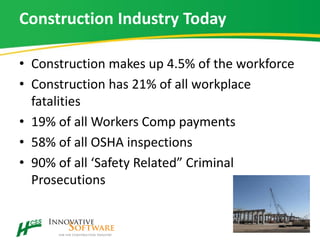
Construction Industry Today
• Construction makes up 4.5% of the workforce
• Construction has 21% of all workplace
fatalities
• 19% of all Workers Comp payments
• 58% of all OSHA inspections
• 90% of all ‘Safety Related” Criminal
Prosecutions
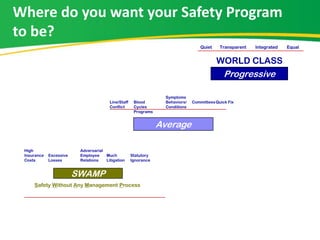
Where do you want your Safety Program
to be?
Safety Without Any Management Process
High Adversarial
Insurance Excessive Employee Much Statutory
Costs Losses Relations Litigation Ignorance
Symptoms
Line/Staff Blood Behaviors/ CommitteesQuick Fix
Conflict Cycles Conditions
Programs
Quiet Transparent Integrated Equal
WORLD CLASS
SWAMP
Average
Progressive
What is your “Safety Focus”?
• Hard Hats
• Safety Glasses
• Hi Viz Vests
• Other Safety Issues
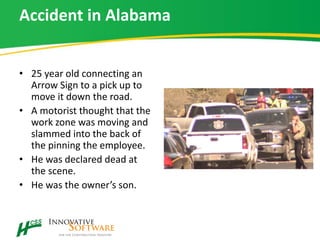
Accident in Alabama
• 25 year old connecting an
Arrow Sign to a pick up to
move it down the road.
• A motorist thought that the
work zone was moving and
slammed into the back of
the pinning the employee.
• He was declared dead at
the scene.
• He was the owner’s son.
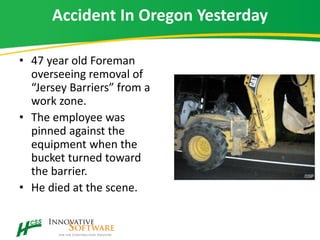
Accident In Oregon Yesterday
• 47 year old Foreman
overseeing removal of
“Jersey Barriers” from a
work zone.
• The employee was
pinned against the
equipment when the
bucket turned toward
the barrier.
• He died at the scene.
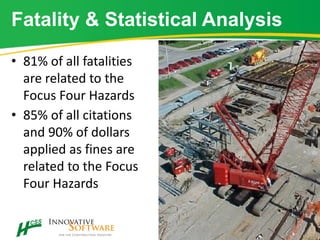
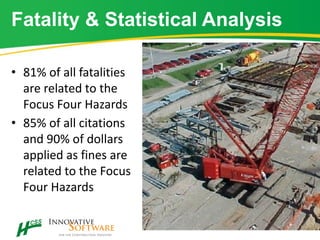
Fatality & Statistical Analysis
• 81% of all fatalities
are related to the
Focus Four Hazards
• 85% of all citations
and 90% of dollars
applied as fines are
related to the Focus
Four Hazards
What Are the
Focus Four Hazards?
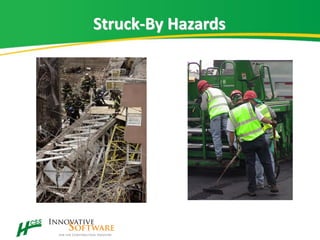
Struck-By Hazards
Primary Causes of Struck-by
Fatalities
• Falling Objects
• Rigging Failure
• Loose or Shifting Materials
• Equipment tip-over or Malfunction
• Lack of Overhead Protection
• Vehicle and Equipment Strikes
• Backing Incidents
• Workers on Foot
• Flying Objects
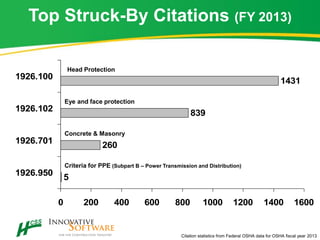
5
260
839
1431
0 200 400 600 800 1000 1200 1400 1600
1926.950
1926.701
1926.102
1926.100
Criteria for PPE (Subpart B – Power Transmission and Distribution)
Concrete & Masonry
Top Struck-By Citations (FY 2013)
Eye and face protection
Head Protection
Citation statistics from Federal OSHA data for OSHA fiscal year 2013
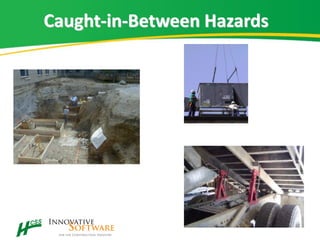
Caught-in-Between Hazards
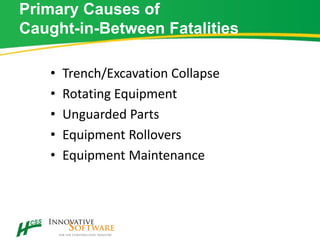
Primary Causes of
Caught-in-Between Fatalities
• Trench/Excavation Collapse
• Rotating Equipment
• Unguarded Parts
• Equipment Rollovers
• Equipment Maintenance
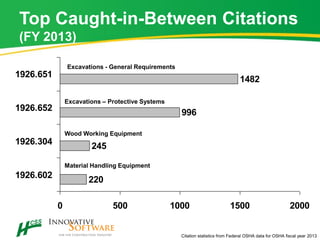
Top Caught-in-Between Citations
(FY 2013)
220
245
996
1482
0 500 1000 1500 2000
1926.602
1926.304
1926.652
1926.651
Excavations – Protective Systems
Wood Working Equipment
Material Handling Equipment
Excavations - General Requirements
Citation statistics from Federal OSHA data for OSHA fiscal year 2013
Fall Hazards
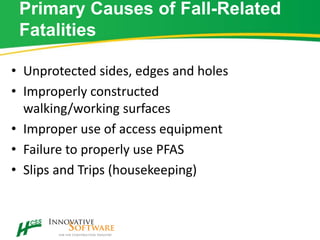
Primary Causes of Fall-Related
Fatalities
• Unprotected sides, edges and holes
• Improperly constructed
walking/working surfaces
• Improper use of access equipment
• Failure to properly use PFAS
• Slips and Trips (housekeeping)
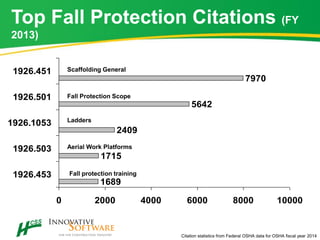
Top Fall Protection Citations (FY
2013)
1689
1715
2409
5642
7970
0 2000 4000 6000 8000 10000
1926.453
1926.503
1926.1053
1926.501
1926.451
Fall protection training
Fall Protection Scope
Ladders
Aerial Work Platforms
Scaffolding General
Citation statistics from Federal OSHA data for OSHA fiscal year 2014
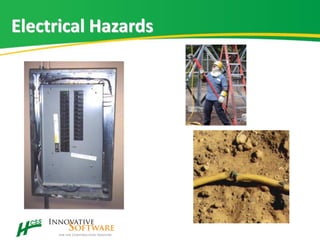
Electrical Hazards
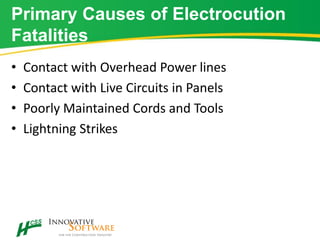
Primary Causes of Electrocution
Fatalities
• Contact with Overhead Power lines
• Contact with Live Circuits in Panels
• Poorly Maintained Cords and Tools
• Lightning Strikes
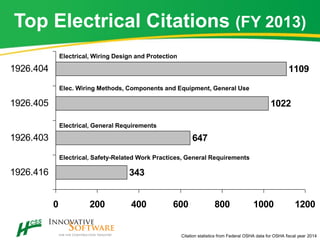
Top Electrical Citations (FY 2013)
343
647
1022
1109
0 200 400 600 800 1000 1200
1926.416
1926.403
1926.405
1926.404
Elec. Wiring Methods, Components and Equipment, General Use
Electrical, General Requirements
Electrical, Safety-Related Work Practices, General Requirements
Electrical, Wiring Design and Protection
Citation statistics from Federal OSHA data for OSHA fiscal year 2014
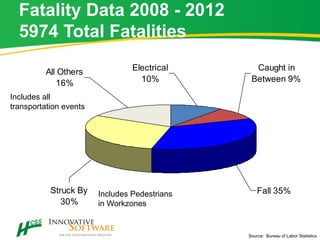
Struck By
30%
All Others
16%
Electrical
10%
Caught in
Between 9%
Fall 35%
Fatality Data 2008 - 2012
5974 Total Fatalities
Source: Bureau of Labor Statistics
Includes Pedestrians
in Workzones
Includes all
transportation events
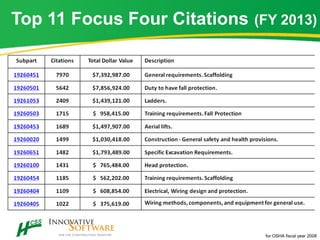
Top 11 Focus Four Citations (FY 2013)
for OSHA fiscal year 2008
Fatality & Statistical Analysis
• 81% of all fatalities
are related to the
Focus Four Hazards
• 85% of all citations
and 90% of dollars
applied as fines are
related to the Focus
Four Hazards
What Have We Learned?
• Our industry is changing
• The “Safety Bar” has been raised
• We have a moral and business obligation to
keep our employees and subcontractors safe
• We have to learn from past mistakes and
never let them be repeated
• We hurt and kill to many of our employees
every year.
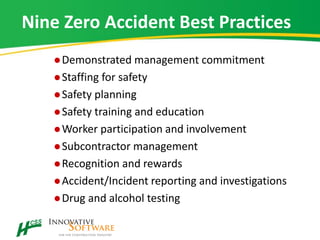
Nine Zero Accident Best Practices
Demonstrated management commitment
Staffing for safety
Safety planning
Safety training and education
Worker participation and involvement
Subcontractor management
Recognition and rewards
Accident/Incident reporting and investigations
Drug and alcohol testing
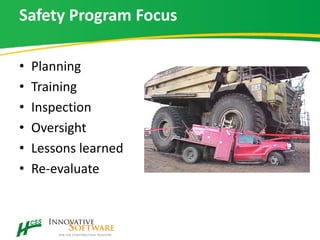
Safety Program Focus
• Planning
• Training
• Inspection
• Oversight
• Lessons learned
• Re-evaluate
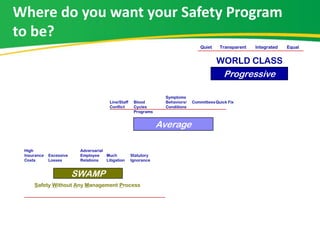
Where do you want your Safety Program
to be?
Safety Without Any Management Process
High Adversarial
Insurance Excessive Employee Much Statutory
Costs Losses Relations Litigation Ignorance
Symptoms
Line/Staff Blood Behaviors/ CommitteesQuick Fix
Conflict Cycles Conditions
Programs
Quiet Transparent Integrated Equal
WORLD CLASS
SWAMP
Average
Progressive
Even if you’re on the right
track, you’ll get run over
if you just sit there.
Will Rogers

HCSS Webinar | Lessons Learned in Construction Safety

  • 1.
    Lessons Learned Where arethe real answers in preventing Fatalities in the Construction Industry?
  • 2.
    Construction Industry Today •Construction makes up 4.5% of the workforce • Construction has 21% of all workplace fatalities • 19% of all Workers Comp payments • 58% of all OSHA inspections • 90% of all ‘Safety Related” Criminal Prosecutions
  • 3.
    Where do youwant your Safety Program to be? Safety Without Any Management Process High Adversarial Insurance Excessive Employee Much Statutory Costs Losses Relations Litigation Ignorance Symptoms Line/Staff Blood Behaviors/ CommitteesQuick Fix Conflict Cycles Conditions Programs Quiet Transparent Integrated Equal WORLD CLASS SWAMP Average Progressive
  • 4.
    What is your“Safety Focus”? • Hard Hats • Safety Glasses • Hi Viz Vests • Other Safety Issues
  • 5.
    Accident in Alabama •25 year old connecting an Arrow Sign to a pick up to move it down the road. • A motorist thought that the work zone was moving and slammed into the back of the pinning the employee. • He was declared dead at the scene. • He was the owner’s son.
  • 6.
    Accident In OregonYesterday • 47 year old Foreman overseeing removal of “Jersey Barriers” from a work zone. • The employee was pinned against the equipment when the bucket turned toward the barrier. • He died at the scene.
  • 7.
    Fatality & StatisticalAnalysis • 81% of all fatalities are related to the Focus Four Hazards • 85% of all citations and 90% of dollars applied as fines are related to the Focus Four Hazards
  • 8.
    What Are the FocusFour Hazards?
  • 9.
  • 10.
    Primary Causes ofStruck-by Fatalities • Falling Objects • Rigging Failure • Loose or Shifting Materials • Equipment tip-over or Malfunction • Lack of Overhead Protection • Vehicle and Equipment Strikes • Backing Incidents • Workers on Foot • Flying Objects
  • 11.
    5 260 839 1431 0 200 400600 800 1000 1200 1400 1600 1926.950 1926.701 1926.102 1926.100 Criteria for PPE (Subpart B – Power Transmission and Distribution) Concrete & Masonry Top Struck-By Citations (FY 2013) Eye and face protection Head Protection Citation statistics from Federal OSHA data for OSHA fiscal year 2013
  • 12.
  • 13.
    Primary Causes of Caught-in-BetweenFatalities • Trench/Excavation Collapse • Rotating Equipment • Unguarded Parts • Equipment Rollovers • Equipment Maintenance
  • 14.
    Top Caught-in-Between Citations (FY2013) 220 245 996 1482 0 500 1000 1500 2000 1926.602 1926.304 1926.652 1926.651 Excavations – Protective Systems Wood Working Equipment Material Handling Equipment Excavations - General Requirements Citation statistics from Federal OSHA data for OSHA fiscal year 2013
  • 15.
  • 16.
    Primary Causes ofFall-Related Fatalities • Unprotected sides, edges and holes • Improperly constructed walking/working surfaces • Improper use of access equipment • Failure to properly use PFAS • Slips and Trips (housekeeping)
  • 17.
    Top Fall ProtectionCitations (FY 2013) 1689 1715 2409 5642 7970 0 2000 4000 6000 8000 10000 1926.453 1926.503 1926.1053 1926.501 1926.451 Fall protection training Fall Protection Scope Ladders Aerial Work Platforms Scaffolding General Citation statistics from Federal OSHA data for OSHA fiscal year 2014
  • 18.
  • 19.
    Primary Causes ofElectrocution Fatalities • Contact with Overhead Power lines • Contact with Live Circuits in Panels • Poorly Maintained Cords and Tools • Lightning Strikes
  • 20.
    Top Electrical Citations(FY 2013) 343 647 1022 1109 0 200 400 600 800 1000 1200 1926.416 1926.403 1926.405 1926.404 Elec. Wiring Methods, Components and Equipment, General Use Electrical, General Requirements Electrical, Safety-Related Work Practices, General Requirements Electrical, Wiring Design and Protection Citation statistics from Federal OSHA data for OSHA fiscal year 2014
  • 21.
    Struck By 30% All Others 16% Electrical 10% Caughtin Between 9% Fall 35% Fatality Data 2008 - 2012 5974 Total Fatalities Source: Bureau of Labor Statistics Includes Pedestrians in Workzones Includes all transportation events
  • 22.
    Top 11 FocusFour Citations (FY 2013) for OSHA fiscal year 2008
  • 23.
    Fatality & StatisticalAnalysis • 81% of all fatalities are related to the Focus Four Hazards • 85% of all citations and 90% of dollars applied as fines are related to the Focus Four Hazards
  • 24.
    What Have WeLearned? • Our industry is changing • The “Safety Bar” has been raised • We have a moral and business obligation to keep our employees and subcontractors safe • We have to learn from past mistakes and never let them be repeated • We hurt and kill to many of our employees every year.
  • 25.
    Nine Zero AccidentBest Practices Demonstrated management commitment Staffing for safety Safety planning Safety training and education Worker participation and involvement Subcontractor management Recognition and rewards Accident/Incident reporting and investigations Drug and alcohol testing
  • 26.
    Safety Program Focus •Planning • Training • Inspection • Oversight • Lessons learned • Re-evaluate
  • 27.
    Where do youwant your Safety Program to be? Safety Without Any Management Process High Adversarial Insurance Excessive Employee Much Statutory Costs Losses Relations Litigation Ignorance Symptoms Line/Staff Blood Behaviors/ CommitteesQuick Fix Conflict Cycles Conditions Programs Quiet Transparent Integrated Equal WORLD CLASS SWAMP Average Progressive
  • 28.
    Even if you’reon the right track, you’ll get run over if you just sit there. Will Rogers