Introduction To Audiences.
Mass and Niche Audiences.
Active and Passive Audiences.
Uses and Gratifications Theory.
Audience Segmentation and TV Scheduling.
Audience
 An individual or collective group of people who read
and consume any media text.
 Examples: Radio Listeners, TV Watchers, Newspaper
Readers, Web Traffic on Websites.
Why is audience important?
 Without audiences there would be no media
 Media organisations use audiences to make profit-
No audience= no profit
 The mass media is becoming more competitive than
ever using new ideas to attract audiences in many
different ways in order to stay profitable
The Impact of New Technology
 Old Media (Radio, Television, Newspapers) which
used to attract large audiences now has to work harder
to maintain audience figures.
 Digital Technology and the introduction of new media
means that audiences now use media differently.
How do Institutions make money?
 Subscription Fees- TV license, Sky/ Virgin
Subscription Fees, Netflix Subscription etc.
 Advertising- TV, Magazine, Newspapers, Websites,
‘Free’ Apps
Types of Audience
 Mass Audience
 Niche Audience
Mass Audience
 Often termed broadcast audience.
 Those who consume mainstream or popular texts such
as soaps or sitcoms.
 Media and communication that targets a very large
audience (men, women, children, adults)
Niche Audience
 Much smaller but every influential .
 A Niche audience is a small and select group of people
with a unique/specific interest.
The Passive Audience
 For many years there was an assumption that the media
had a direct effect on its audiences
 Audiences are Passive in the way the receive media
messages.
 They are accepting of the messages given out by the media
without question.
 There is no doubt media has an effect on audiences.
 Advertising is a prime example in which companies spend
billions each year trying to persuade audiences to purchase
a product or service.
 This links to the ‘hypodermic needle’ effect in which the
media is seen to drip feed information to audiences.
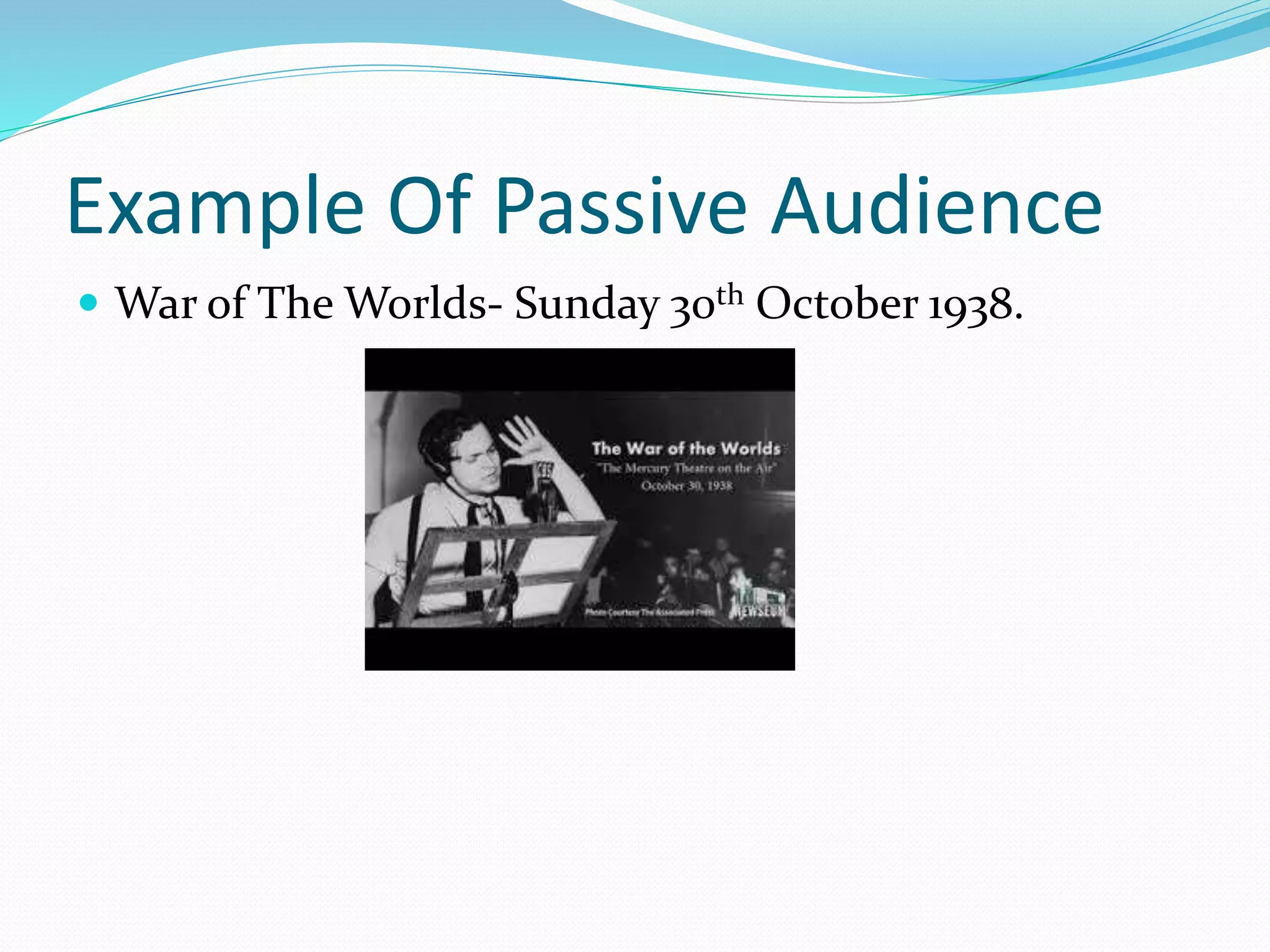
Example Of Passive Audience
 War of The Worlds- Sunday 30th October 1938.
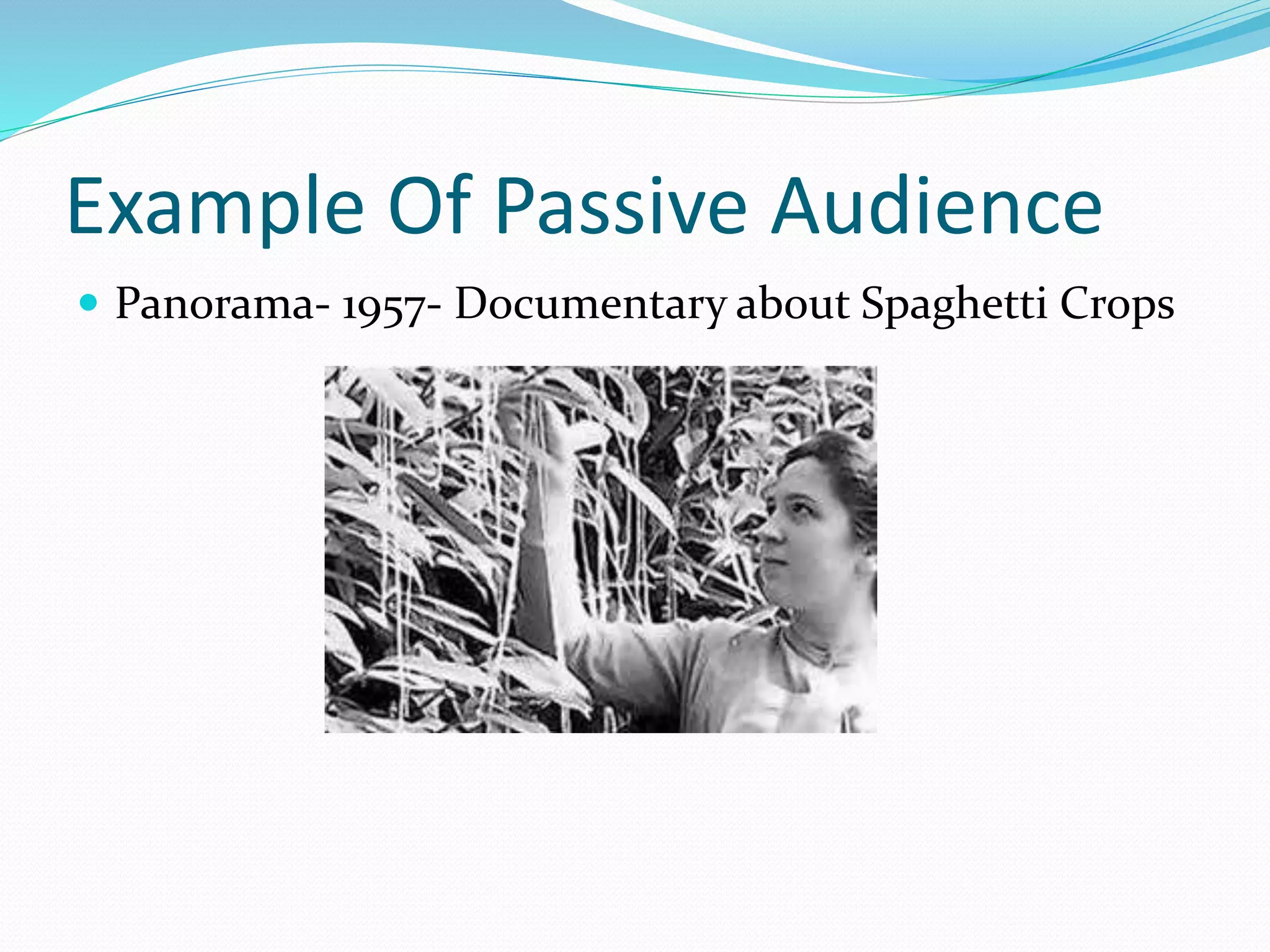
Example Of Passive Audience
 Panorama- 1957- Documentary about Spaghetti Crops
Active Audiences
 In the 1940’s and 50’s, American researchers showed
that audiences use defence mechanisms to resist
media messages.
 Rather than being passive they are active in their
interpretation of media messages?
 Not ‘what does the media do for people’ but ‘what
do the people do for media’
 Audiences may choose to come to a negotiated
reading of particular messages.
Active Audiences
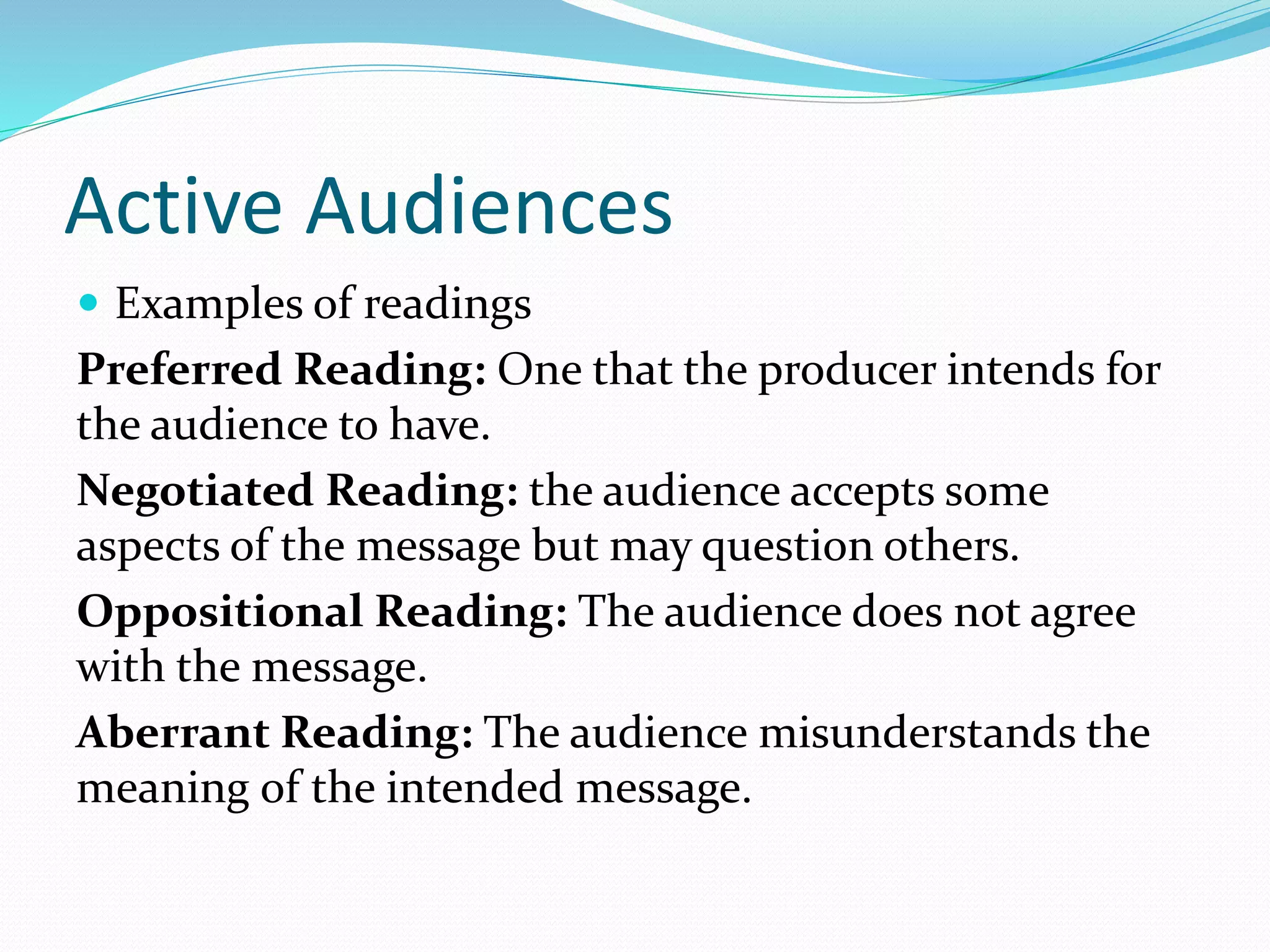
 Examples of readings
Preferred Reading: One that the producer intends for
the audience to have.
Negotiated Reading: the audience accepts some
aspects of the message but may question others.
Oppositional Reading: The audience does not agree
with the message.
Aberrant Reading: The audience misunderstands the
meaning of the intended message.
Uses and Gratifications
 This theory is based on the belief that audiences have
certain needs which they seek to satisfy in the media.
 There is an assumption that people read/listen/watch
certain texts for particular reasons.
 Diversion: the need to escape from everyday worries
 Personal Relationships: for having a sense of being part
of a community. For companionship
 Personal Identity: making a comparison with your own
situation
 Surveillance: seeking information about the world
Task.
Use what we have learnt today to complete the tasks on
the hand out.

Lesson 4 - Media Audiences

  • 1.
    Introduction To Audiences. Massand Niche Audiences. Active and Passive Audiences. Uses and Gratifications Theory. Audience Segmentation and TV Scheduling.
  • 2.
    Audience  An individualor collective group of people who read and consume any media text.  Examples: Radio Listeners, TV Watchers, Newspaper Readers, Web Traffic on Websites.
  • 3.
    Why is audienceimportant?  Without audiences there would be no media  Media organisations use audiences to make profit- No audience= no profit  The mass media is becoming more competitive than ever using new ideas to attract audiences in many different ways in order to stay profitable
  • 4.
    The Impact ofNew Technology  Old Media (Radio, Television, Newspapers) which used to attract large audiences now has to work harder to maintain audience figures.  Digital Technology and the introduction of new media means that audiences now use media differently.
  • 5.
    How do Institutionsmake money?  Subscription Fees- TV license, Sky/ Virgin Subscription Fees, Netflix Subscription etc.  Advertising- TV, Magazine, Newspapers, Websites, ‘Free’ Apps
  • 6.
    Types of Audience Mass Audience  Niche Audience
  • 7.
    Mass Audience  Oftentermed broadcast audience.  Those who consume mainstream or popular texts such as soaps or sitcoms.  Media and communication that targets a very large audience (men, women, children, adults)
  • 8.
    Niche Audience  Muchsmaller but every influential .  A Niche audience is a small and select group of people with a unique/specific interest.
  • 9.
    The Passive Audience For many years there was an assumption that the media had a direct effect on its audiences  Audiences are Passive in the way the receive media messages.  They are accepting of the messages given out by the media without question.  There is no doubt media has an effect on audiences.  Advertising is a prime example in which companies spend billions each year trying to persuade audiences to purchase a product or service.  This links to the ‘hypodermic needle’ effect in which the media is seen to drip feed information to audiences.
  • 10.
    Example Of PassiveAudience  War of The Worlds- Sunday 30th October 1938.
  • 11.
    Example Of PassiveAudience  Panorama- 1957- Documentary about Spaghetti Crops
  • 12.
    Active Audiences  Inthe 1940’s and 50’s, American researchers showed that audiences use defence mechanisms to resist media messages.  Rather than being passive they are active in their interpretation of media messages?  Not ‘what does the media do for people’ but ‘what do the people do for media’  Audiences may choose to come to a negotiated reading of particular messages.
  • 13.
    Active Audiences  Examplesof readings Preferred Reading: One that the producer intends for the audience to have. Negotiated Reading: the audience accepts some aspects of the message but may question others. Oppositional Reading: The audience does not agree with the message. Aberrant Reading: The audience misunderstands the meaning of the intended message.
  • 14.
    Uses and Gratifications This theory is based on the belief that audiences have certain needs which they seek to satisfy in the media.  There is an assumption that people read/listen/watch certain texts for particular reasons.  Diversion: the need to escape from everyday worries  Personal Relationships: for having a sense of being part of a community. For companionship  Personal Identity: making a comparison with your own situation  Surveillance: seeking information about the world
  • 15.
    Task. Use what wehave learnt today to complete the tasks on the hand out.