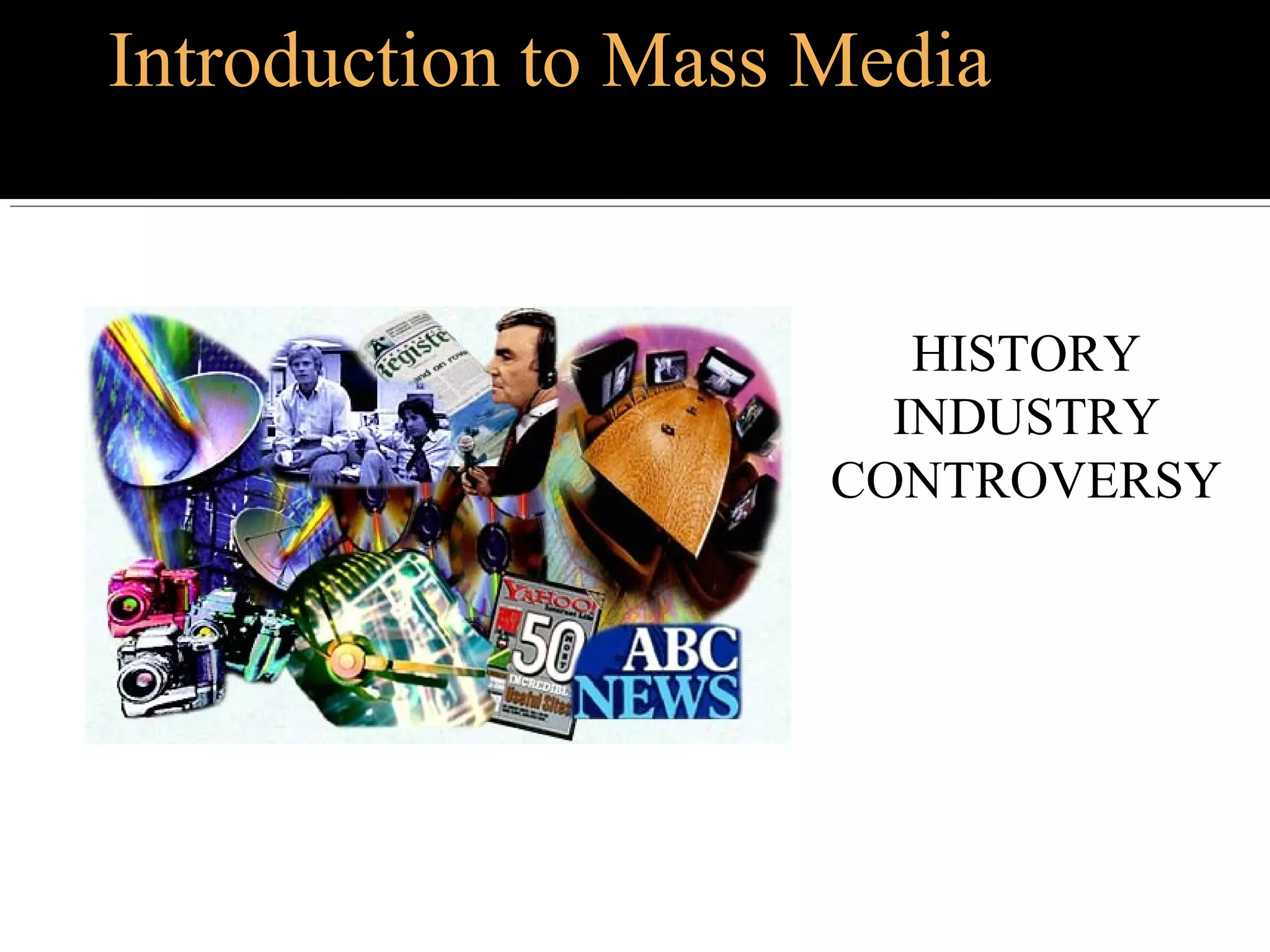

Introduction to Mass Media
HISTORY
INDUSTRY
CONTROVERSY
Chapter Outline
Media Literacy
Basic Terms
History
Industry
Controversies
Video
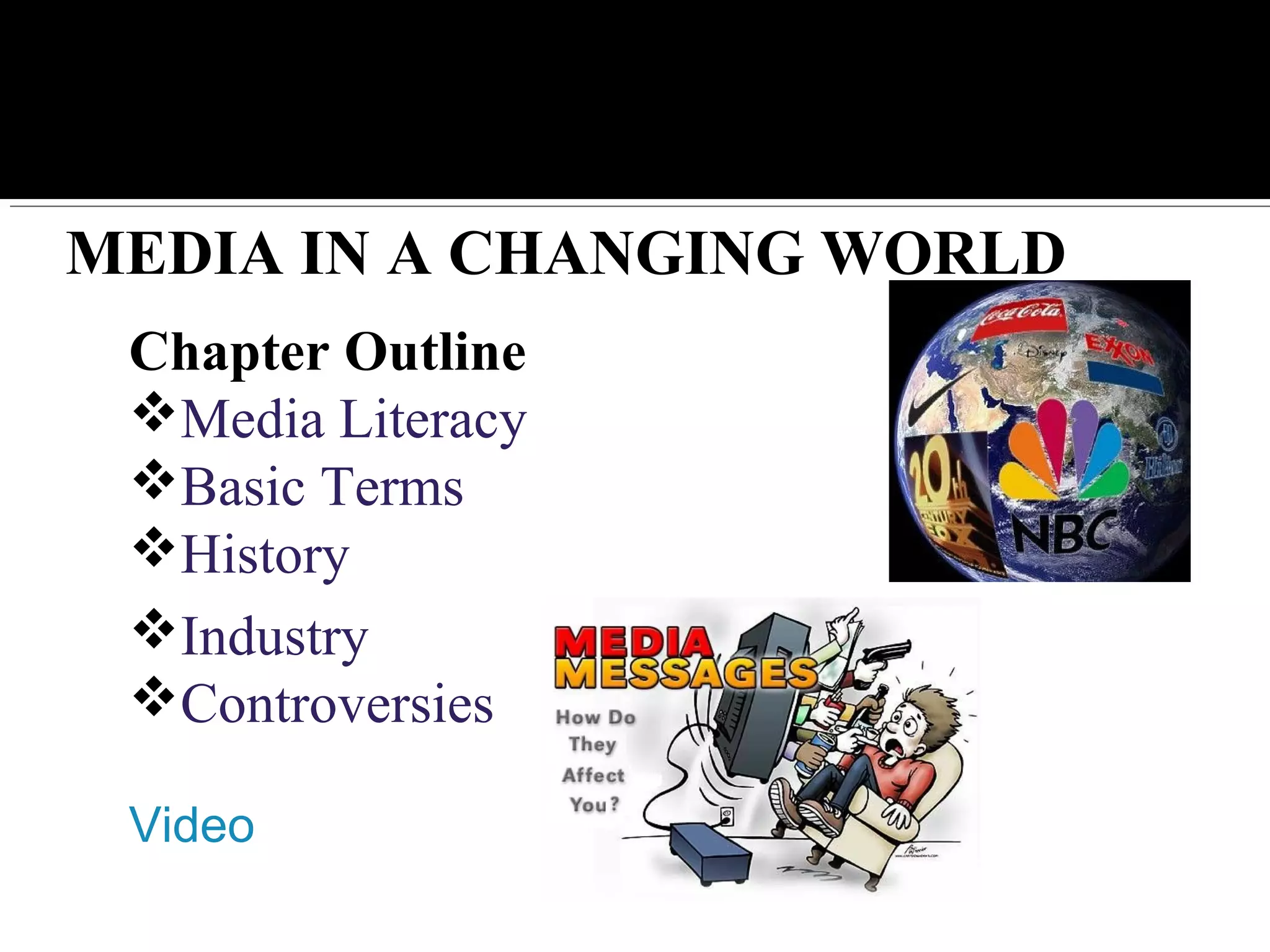
MEDIA IN A CHANGING WORLD
 Media Literacy:
 Ability to understand & make productive
use of the media in one’s life.
▪ Understanding the effect media can have on you
& the society around you.
▪ The difference between being victimized &
being in control of media’s influence.
 Time to Think
▪ How can media victimize some one who is not
media literate?
 Career Preparation
▪ Learn how to use media.
▪ Study careers in the media
▪ Research behind-the-scenes employment
▪ Film production, book editing,
▪ Advertising, web site creation, etc
 Non-media careers may have a media component.
 Media Literacy
 Communication
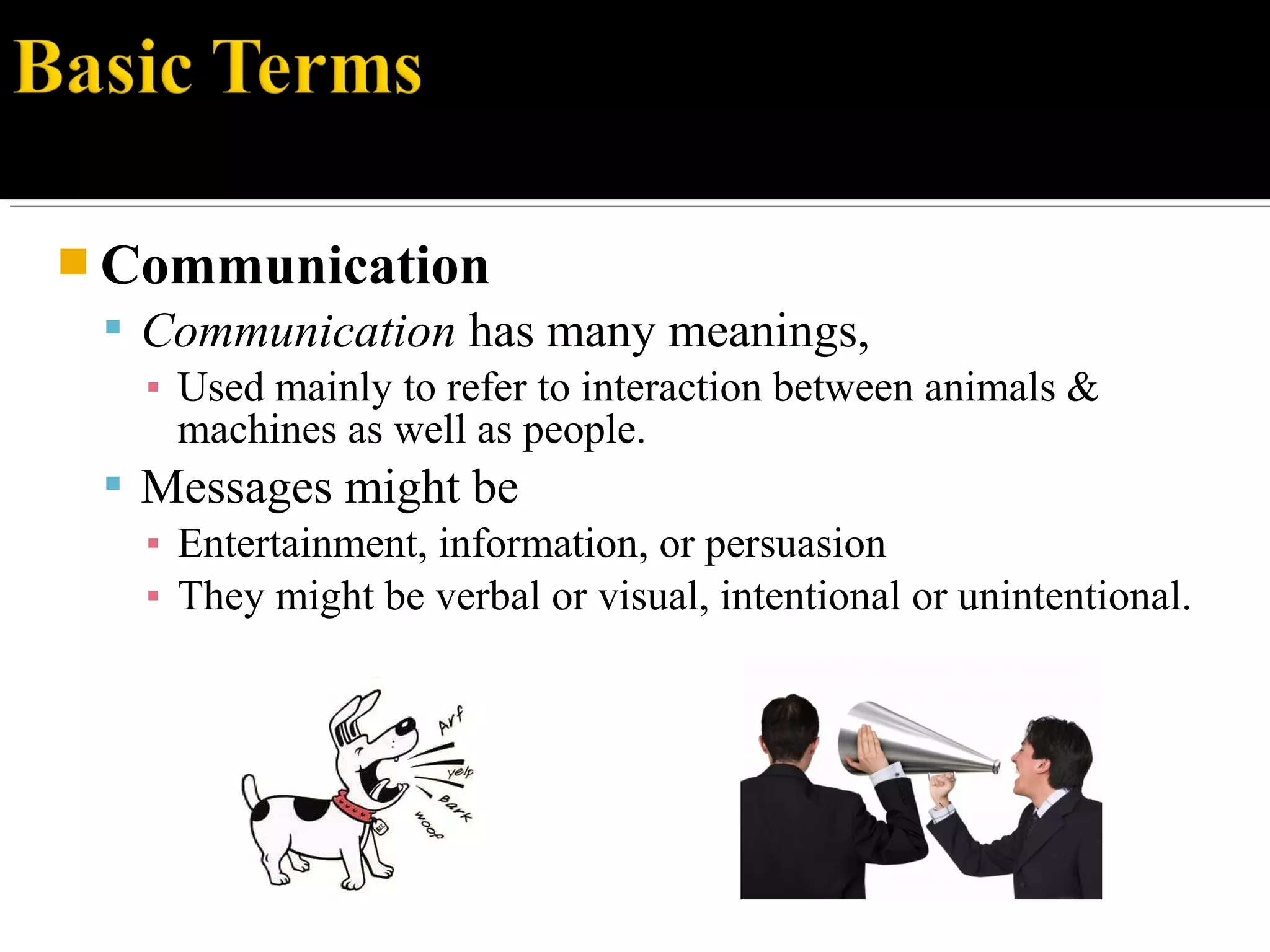
 Communication has many meanings,
▪ Used mainly to refer to interaction between animals &
machines as well as people.
 Messages might be
▪ Entertainment, information, or persuasion
▪ They might be verbal or visual, intentional or unintentional.
 Communication
 Interpersonal communication
▪ Includes the study of intrapersonal communication
 Feedback:
 Noise:
▪ What are examples of each of these
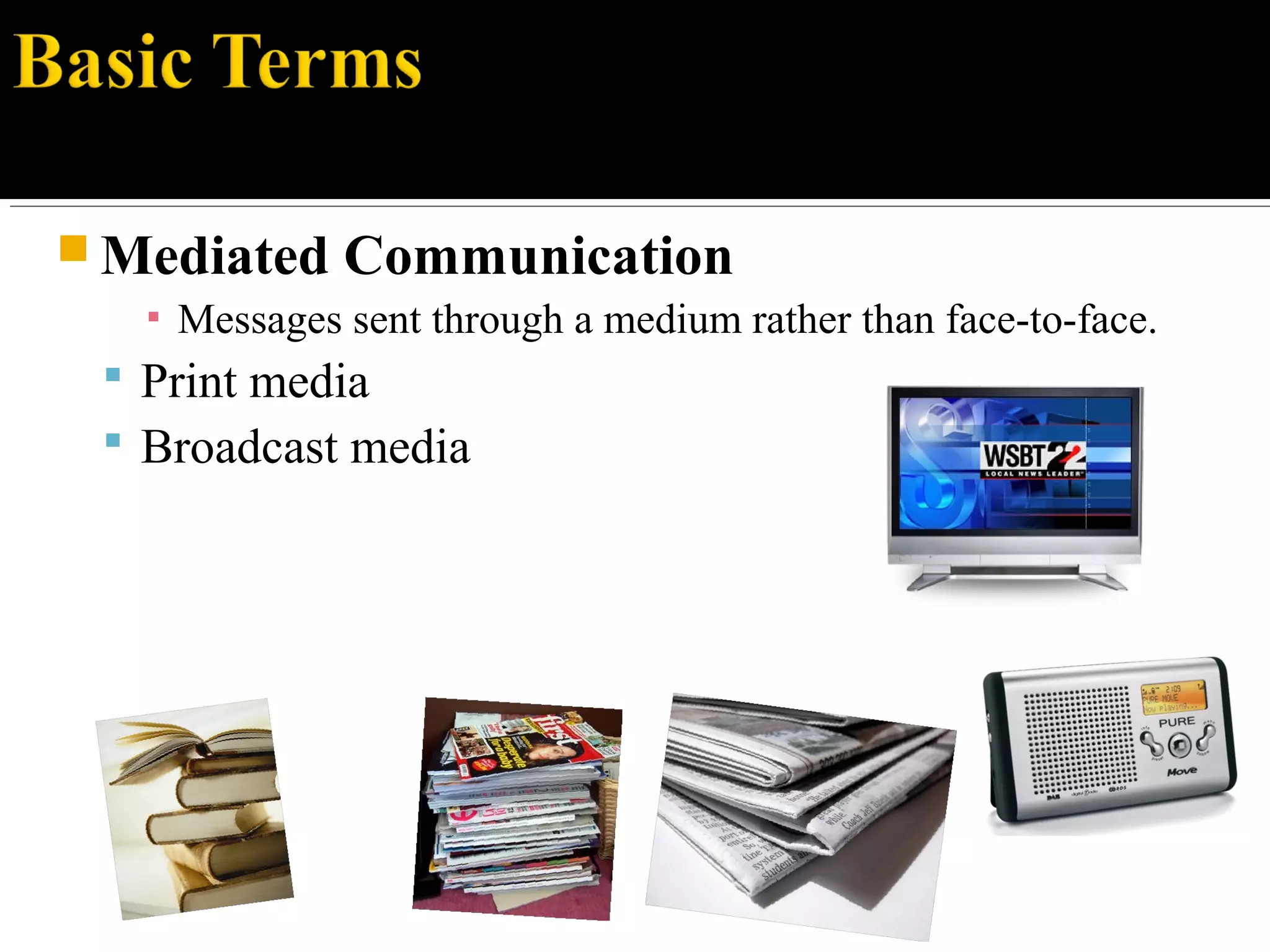
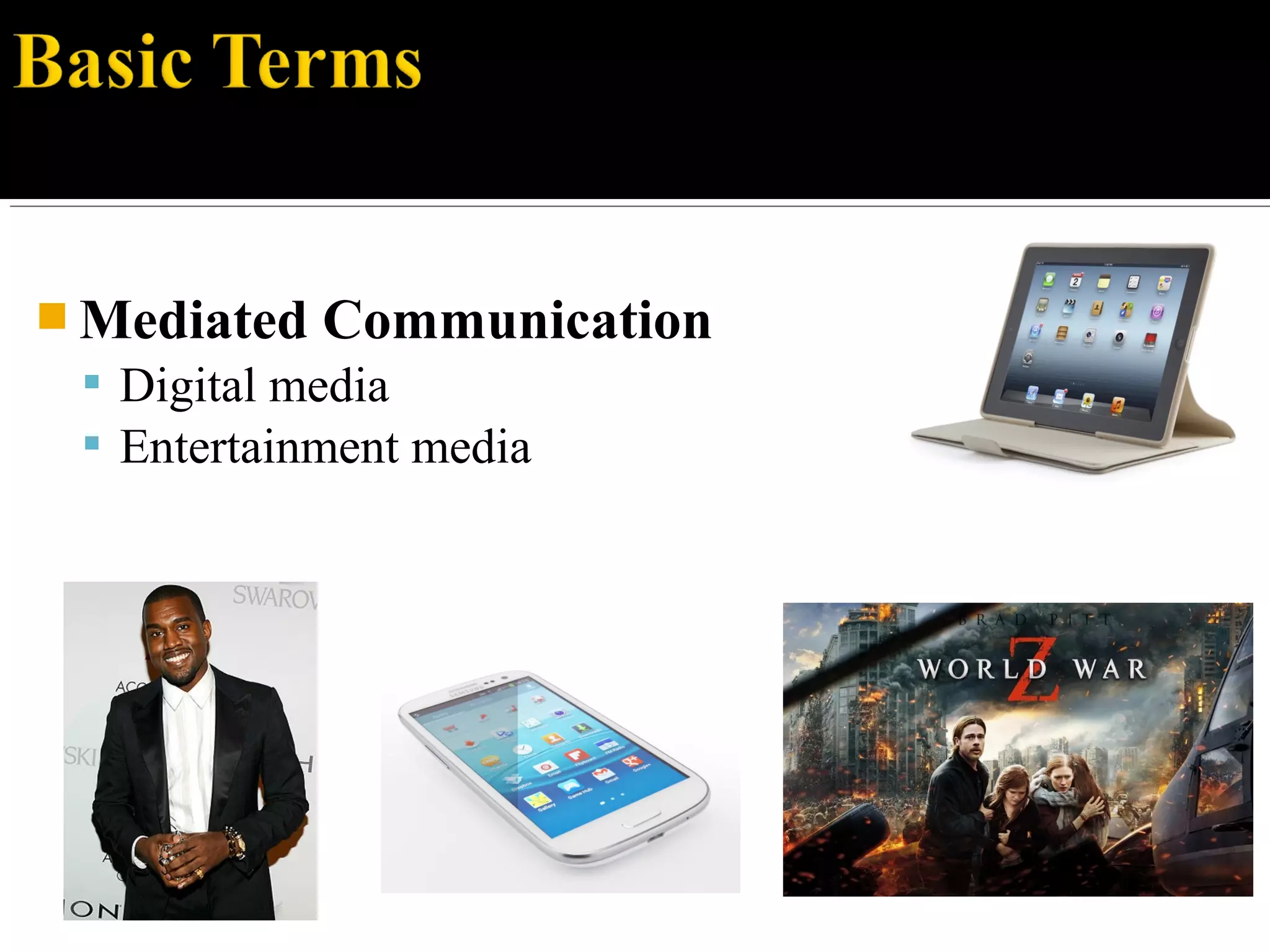
 Mediated Communication
▪ Messages sent through a medium rather than face-to-face.
 Print media
 Broadcast media
 Mediated Communication
 Digital media
 Entertainment media
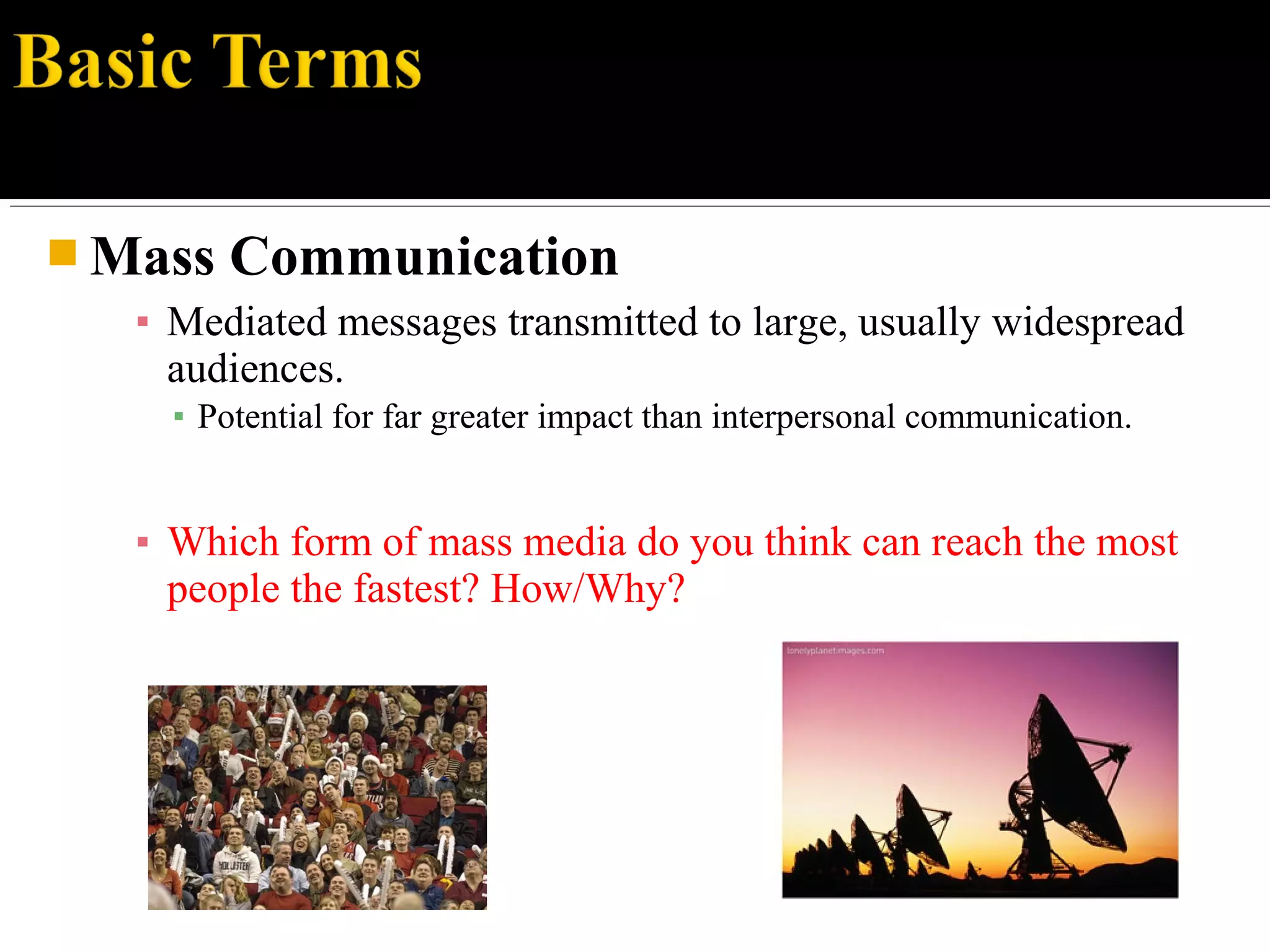
 Mass Communication
▪ Mediated messages transmitted to large, usually widespread
audiences.
▪ Potential for far greater impact than interpersonal communication.
▪ Which form of mass media do you think can reach the most
people the fastest? How/Why?
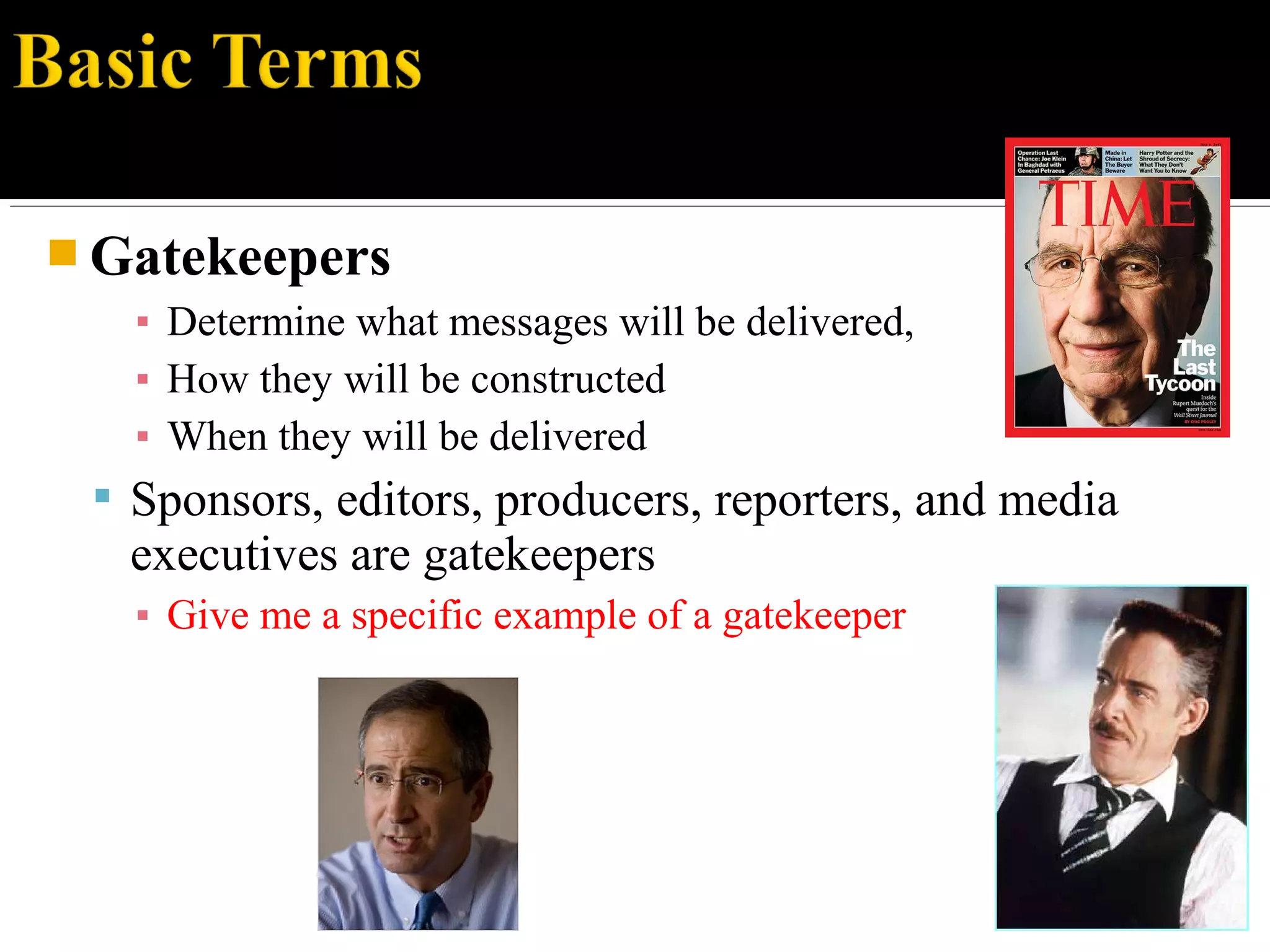
 Gatekeepers
▪ Determine what messages will be delivered,
▪ How they will be constructed
▪ When they will be delivered
 Sponsors, editors, producers, reporters, and media
executives are gatekeepers
▪ Give me a specific example of a gatekeeper
 Converging Communication Media
 Convergence
▪ Convergence technologies
▪ Convergence of industries
▪ Mergers that allow companies to combine their media technologies
 Such as a cable TV company acquiring Internet and telephone divisions.
▪ Media mergers that was HUGE?
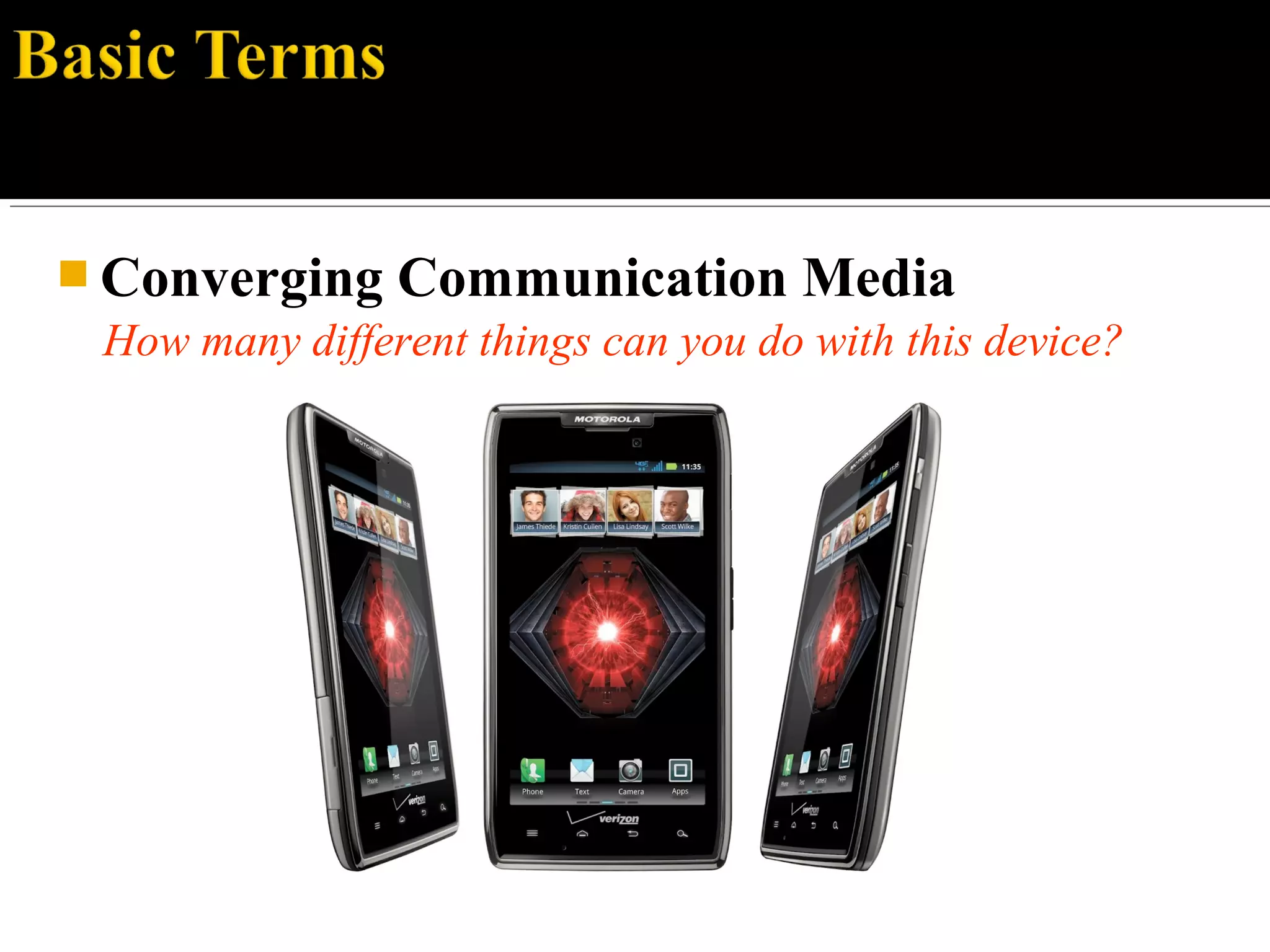
 Converging Communication Media
How many different things can you do with this device?
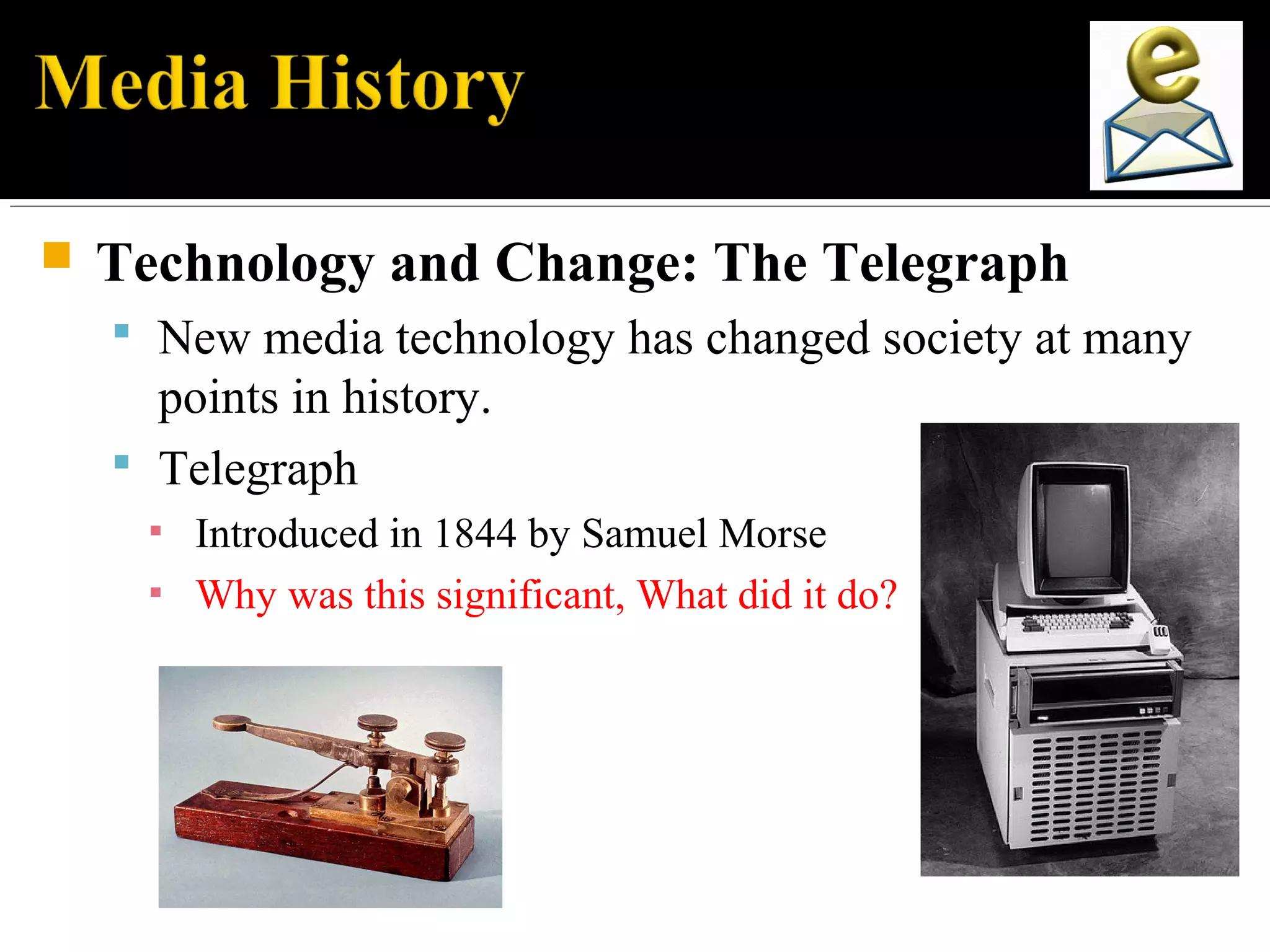
 Technology and Change: The Telegraph
 New media technology has changed society at many
points in history.
 Telegraph
▪ Introduced in 1844 by Samuel Morse
▪ Why was this significant, What did it do?
 Where is the sign up sheet for current events?
 I need that back now
 If you haven’t signed it you can do so after class
 American Media Products Dominate the Global
Scene
 Freedom of expression in the U.S.
 American notion of freedom is embraced internationally.
 Many critics consider U.S. media freedom a mixed blessing
▪ Freedom of speech
▪ vs
▪ Ex. Children are exposed to violence and pornography
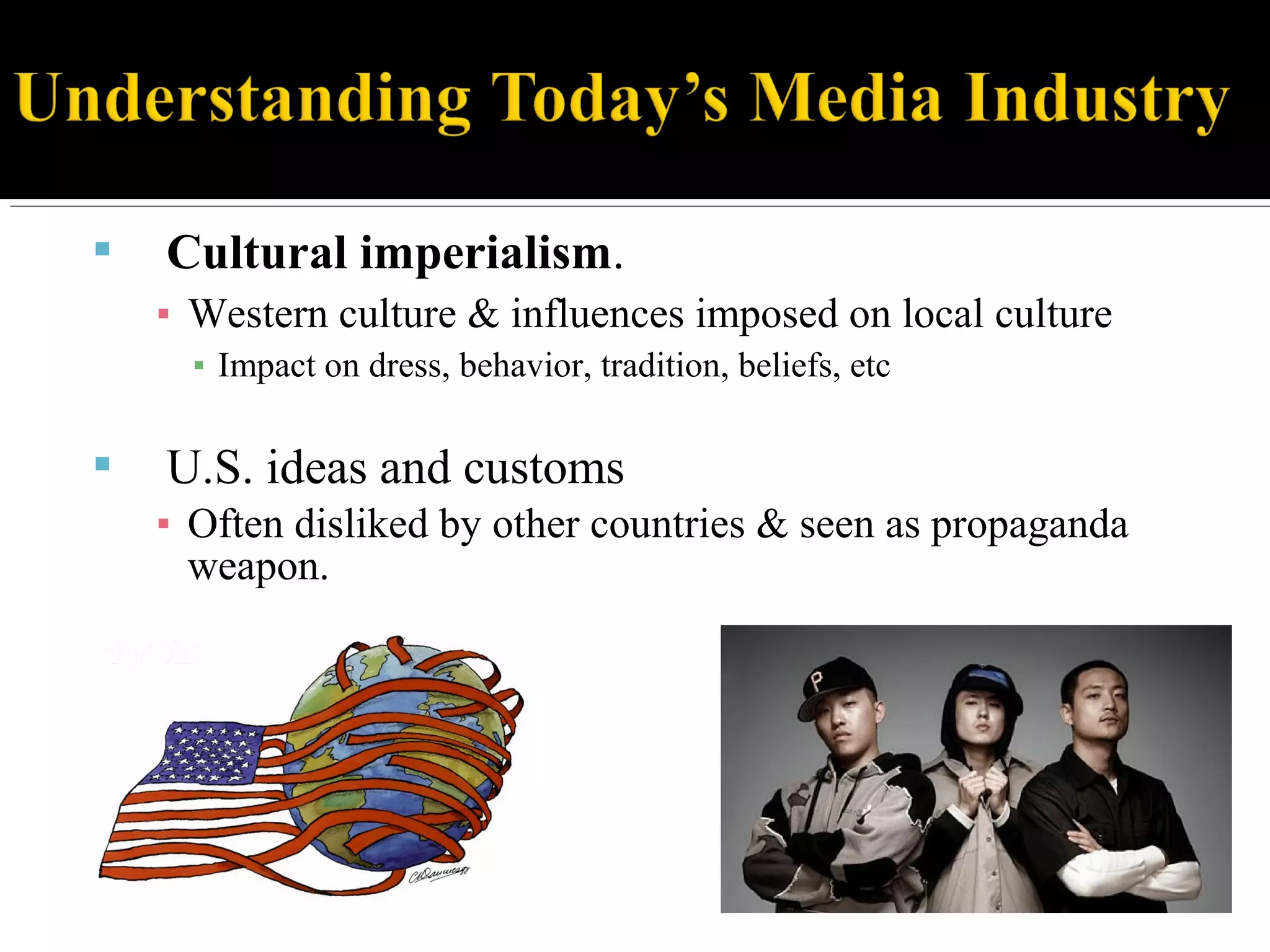
 Cultural imperialism.
▪ Western culture & influences imposed on local culture
▪ Impact on dress, behavior, tradition, beliefs, etc
 U.S. ideas and customs
▪ Often disliked by other countries & seen as propaganda
weapon.
 Foreign Media in the U.S.
 Foreign companies have own a lot of U.S. media.
 French, Italian and Chinese films,
▪ Often of exceptional quality and inspire American directors.
 British
▪ Pop groups & television have been influential in the U.S.
 What are some well known foreign owned media
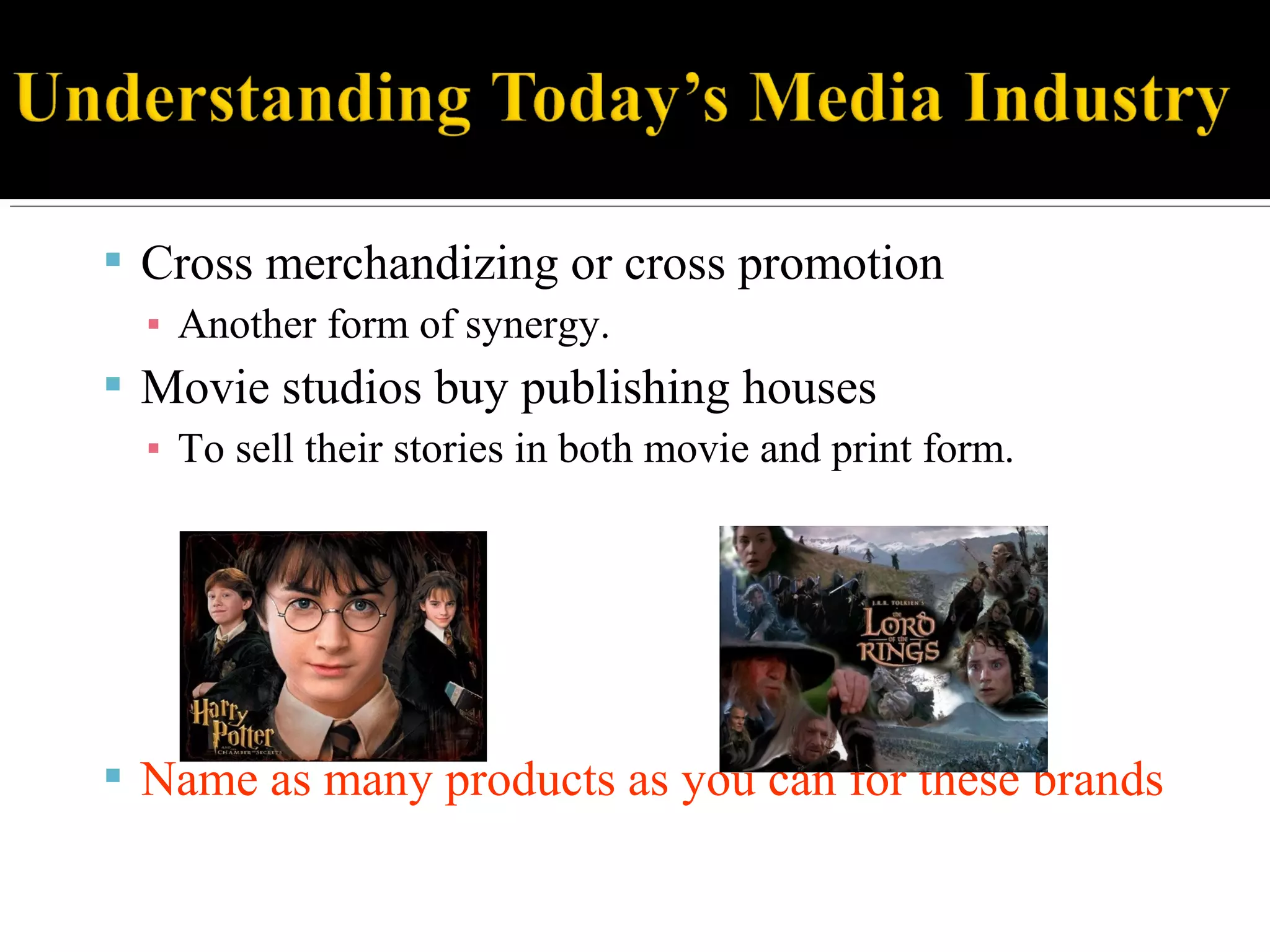
 Cross merchandizing or cross promotion
▪ Another form of synergy.
 Movie studios buy publishing houses
▪ To sell their stories in both movie and print form.
 Name as many products as you can for these brands
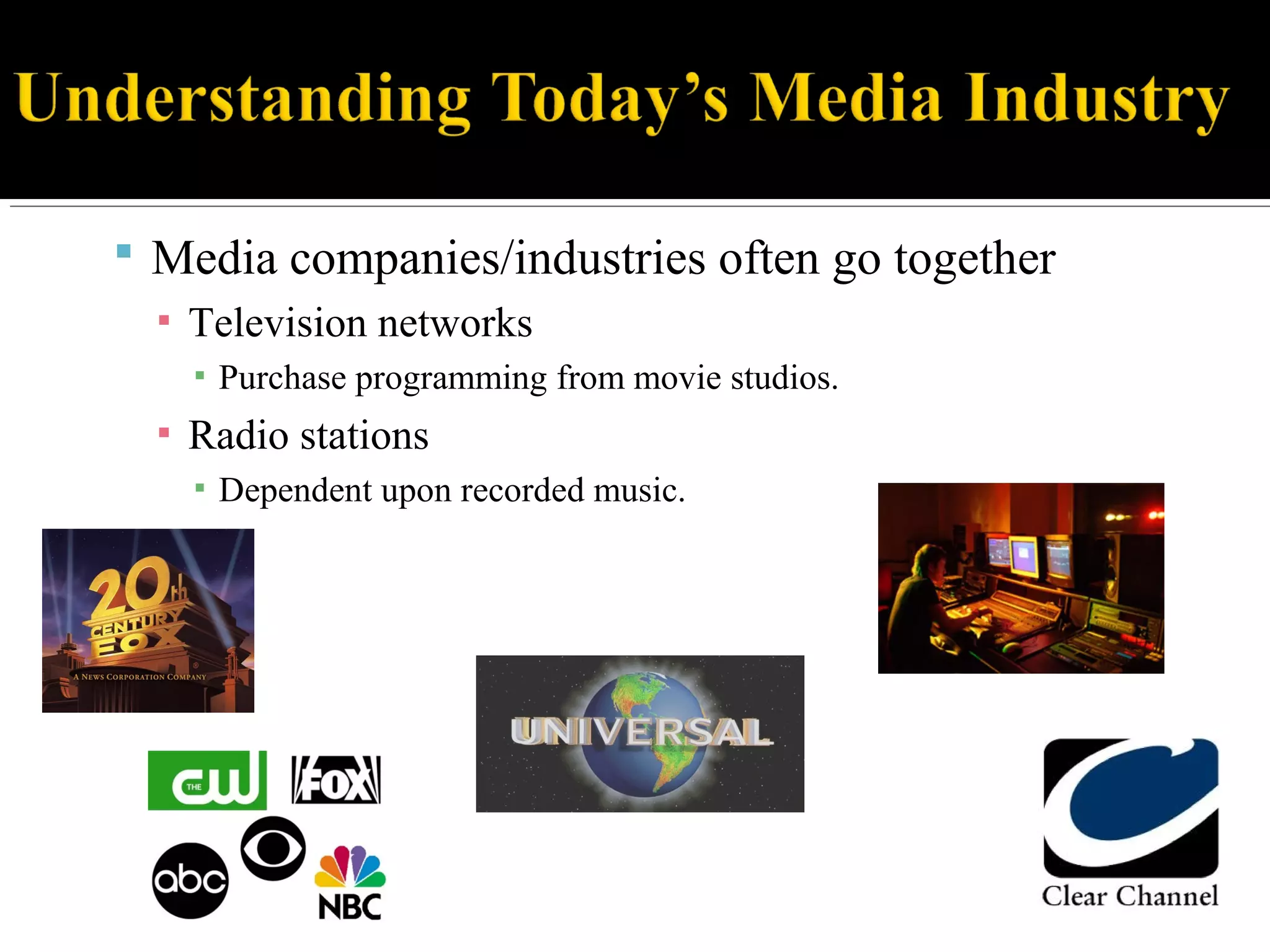
 Media companies/industries often go together
▪ Television networks
▪ Purchase programming from movie studios.
▪ Radio stations
▪ Dependent upon recorded music.
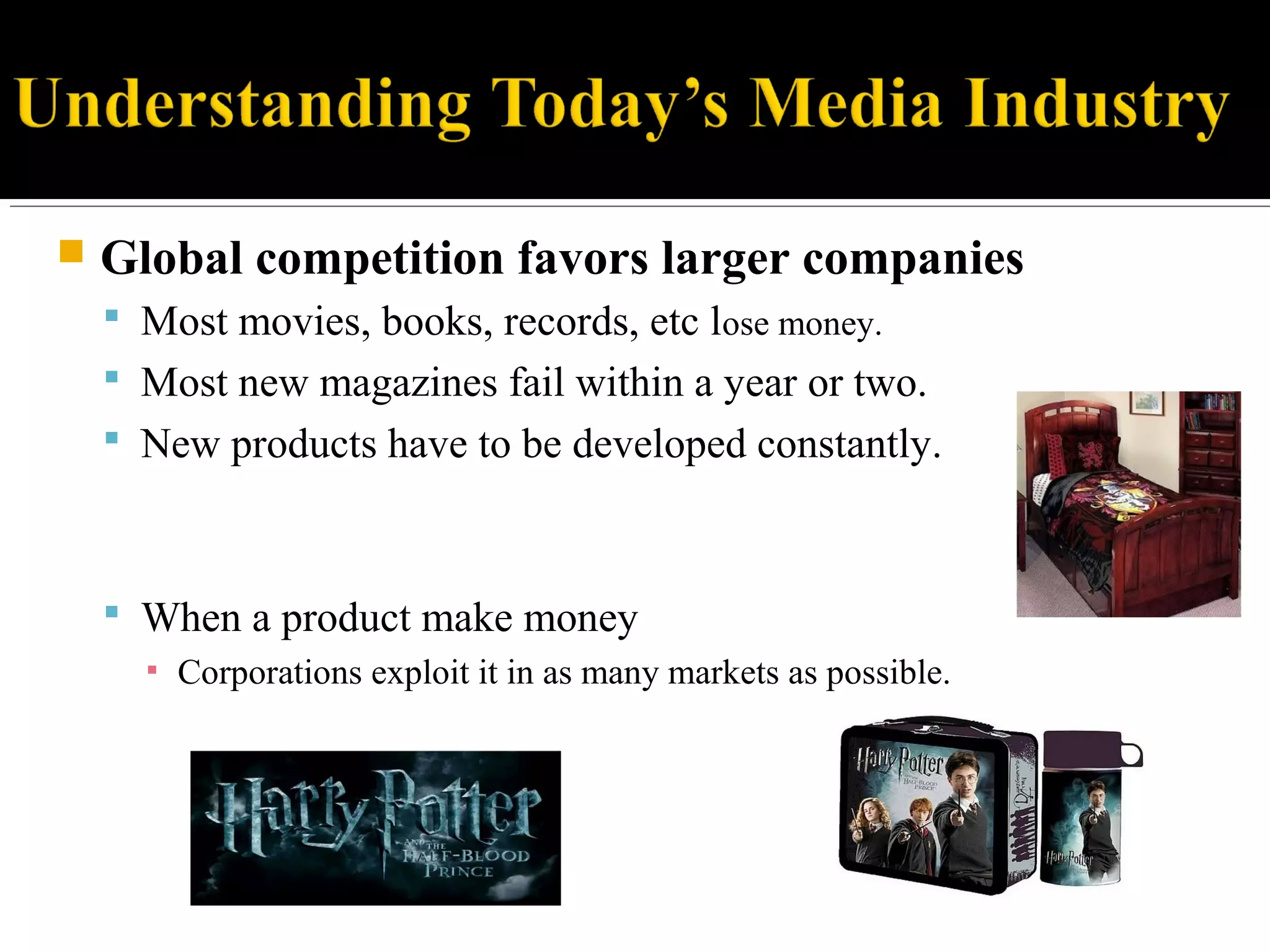
 Global competition favors larger companies
 Most movies, books, records, etc lose money.
 Most new magazines fail within a year or two.
 New products have to be developed constantly.
 When a product make money
▪ Corporations exploit it in as many markets as possible.
 Media and governments around the world
 Media is owned & operated by some governments
 Many countries
▪ Have a government owned or controlled media system.
 The U.S. has a mixed model
▪ Where most media is privately owned
▪ But regulated by the government.
 What are pros/cons of
▪ Govt. owned vs Private owned?
 Media and the audience
▪ Content developers might have a particular message in mind but
audience decides what the final meaning is.
 All media products survive by audience preference
▪ Do you believe this? Why/Why Not
 Audience acceptance establishes new technology.
 Audiences wield power as consumer groups.
▪ How do they wield power?
 Impact issues
▪ How the media affect society & individuals within society.
 Legal issues
▪ Media practices that are governed by law
▪ Such as libel, invasion of privacy, and antitrust actions
 Ethical issues
▪ Ideas of whether certain media practices
▪ Are right or wrong from a moral point of view.

Introduction to mass communications

  • 1.
    Introduction to MassMedia HISTORY INDUSTRY CONTROVERSY
  • 2.
    Chapter Outline Media Literacy BasicTerms History Industry Controversies Video MEDIA IN A CHANGING WORLD
  • 3.
     Media Literacy: Ability to understand & make productive use of the media in one’s life. ▪ Understanding the effect media can have on you & the society around you. ▪ The difference between being victimized & being in control of media’s influence.  Time to Think ▪ How can media victimize some one who is not media literate?
  • 4.
     Career Preparation ▪Learn how to use media. ▪ Study careers in the media ▪ Research behind-the-scenes employment ▪ Film production, book editing, ▪ Advertising, web site creation, etc  Non-media careers may have a media component.  Media Literacy
  • 5.
     Communication  Communicationhas many meanings, ▪ Used mainly to refer to interaction between animals & machines as well as people.  Messages might be ▪ Entertainment, information, or persuasion ▪ They might be verbal or visual, intentional or unintentional.
  • 6.
     Communication  Interpersonalcommunication ▪ Includes the study of intrapersonal communication  Feedback:  Noise: ▪ What are examples of each of these
  • 7.
     Mediated Communication ▪Messages sent through a medium rather than face-to-face.  Print media  Broadcast media
  • 8.
     Mediated Communication Digital media  Entertainment media
  • 9.
     Mass Communication ▪Mediated messages transmitted to large, usually widespread audiences. ▪ Potential for far greater impact than interpersonal communication. ▪ Which form of mass media do you think can reach the most people the fastest? How/Why?
  • 10.
     Gatekeepers ▪ Determinewhat messages will be delivered, ▪ How they will be constructed ▪ When they will be delivered  Sponsors, editors, producers, reporters, and media executives are gatekeepers ▪ Give me a specific example of a gatekeeper
  • 11.
     Converging CommunicationMedia  Convergence ▪ Convergence technologies ▪ Convergence of industries ▪ Mergers that allow companies to combine their media technologies  Such as a cable TV company acquiring Internet and telephone divisions. ▪ Media mergers that was HUGE?
  • 12.
     Converging CommunicationMedia How many different things can you do with this device?
  • 13.
     Technology andChange: The Telegraph  New media technology has changed society at many points in history.  Telegraph ▪ Introduced in 1844 by Samuel Morse ▪ Why was this significant, What did it do?
  • 14.
     Where isthe sign up sheet for current events?  I need that back now  If you haven’t signed it you can do so after class
  • 15.
     American MediaProducts Dominate the Global Scene  Freedom of expression in the U.S.  American notion of freedom is embraced internationally.  Many critics consider U.S. media freedom a mixed blessing ▪ Freedom of speech ▪ vs ▪ Ex. Children are exposed to violence and pornography
  • 16.
     Cultural imperialism. ▪Western culture & influences imposed on local culture ▪ Impact on dress, behavior, tradition, beliefs, etc  U.S. ideas and customs ▪ Often disliked by other countries & seen as propaganda weapon.
  • 17.
     Foreign Mediain the U.S.  Foreign companies have own a lot of U.S. media.  French, Italian and Chinese films, ▪ Often of exceptional quality and inspire American directors.  British ▪ Pop groups & television have been influential in the U.S.  What are some well known foreign owned media
  • 18.
     Cross merchandizingor cross promotion ▪ Another form of synergy.  Movie studios buy publishing houses ▪ To sell their stories in both movie and print form.  Name as many products as you can for these brands
  • 19.
     Media companies/industriesoften go together ▪ Television networks ▪ Purchase programming from movie studios. ▪ Radio stations ▪ Dependent upon recorded music.
  • 20.
     Global competitionfavors larger companies  Most movies, books, records, etc lose money.  Most new magazines fail within a year or two.  New products have to be developed constantly.  When a product make money ▪ Corporations exploit it in as many markets as possible.
  • 21.
     Media andgovernments around the world  Media is owned & operated by some governments  Many countries ▪ Have a government owned or controlled media system.  The U.S. has a mixed model ▪ Where most media is privately owned ▪ But regulated by the government.  What are pros/cons of ▪ Govt. owned vs Private owned?
  • 22.
     Media andthe audience ▪ Content developers might have a particular message in mind but audience decides what the final meaning is.  All media products survive by audience preference ▪ Do you believe this? Why/Why Not  Audience acceptance establishes new technology.  Audiences wield power as consumer groups. ▪ How do they wield power?
  • 23.
     Impact issues ▪How the media affect society & individuals within society.  Legal issues ▪ Media practices that are governed by law ▪ Such as libel, invasion of privacy, and antitrust actions  Ethical issues ▪ Ideas of whether certain media practices ▪ Are right or wrong from a moral point of view.