Presented by: Grace Ann G. Mabutin & Jennifer
Marie A . Sarne
LESSON 3: MATERIALS
EVALUATION
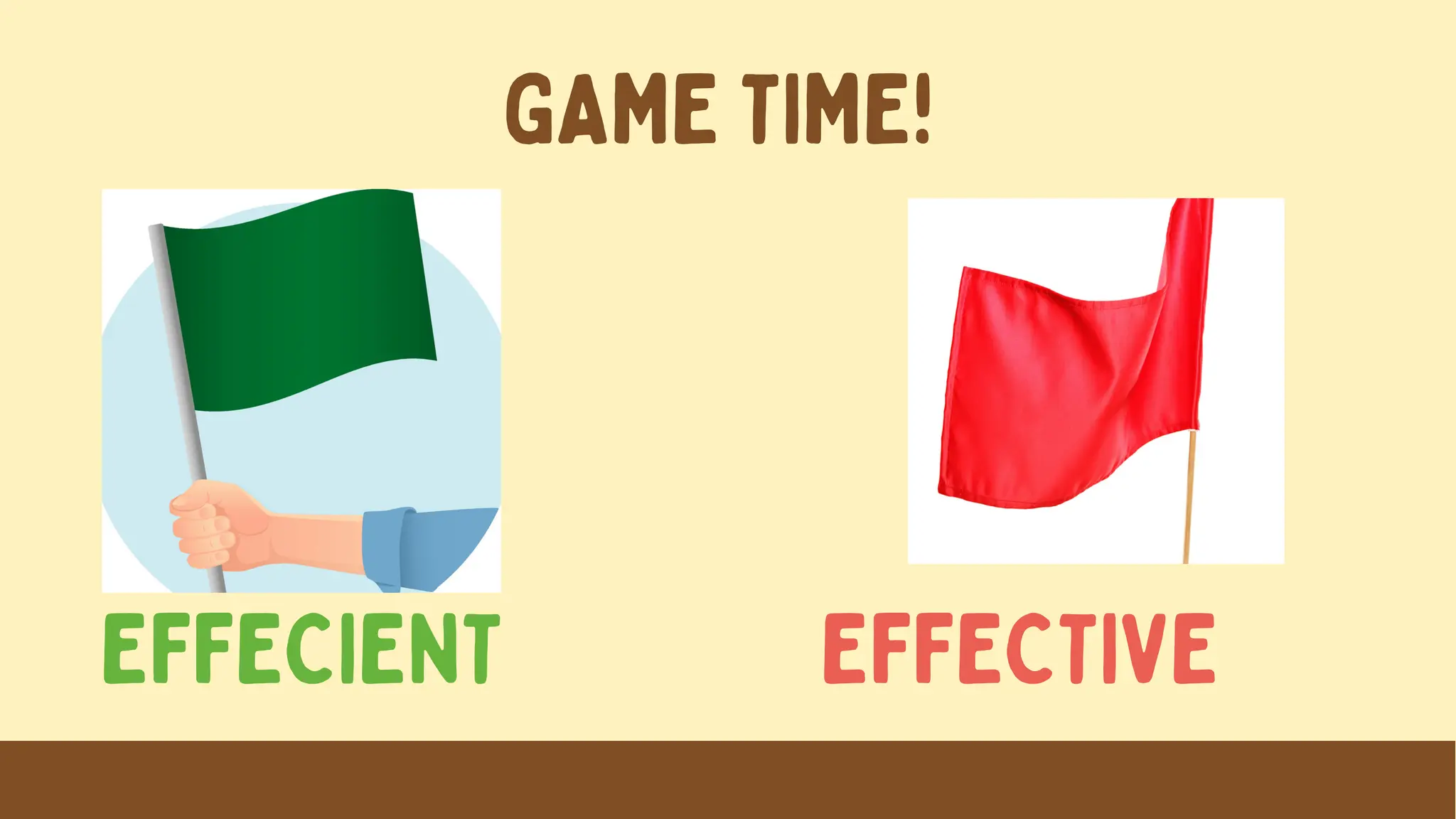
GAME TIME!
EFFECTIVE
EFFECIENT
1.
" Teacher Ella gives her best in teaching and
able to make her students to learn or master
the skills and turned them meaningful,
relevant and applicable in real life situations".
2.
" A teacher and students saving time by
researching information online instead of
checking outbooks from the library".
3.
"Sir Michael of English class always comes to his
class on time and leave on time, with well-
prepared lesson plan , instructional materials,
engaged time on task and everything is
organized regardless of output or result
produced in the teaching-learning process .
4.
" A teacher is saving time by inviting an out of
town guest speaker to speak to her class
using Skype rather than paying for them to
make the trip to her school".
5.
" I did first the things right before
doing the right things".
After completing this lesson, you are expected
to;
1. Discuss the Materials Evaluation .
2. Identify the types of materials evaluation and,
3. Evaluate the instructional materials being used
by the reporters with the following criteria.
OBJECTIVES;
INTRODUCTION
The development and the utilization of instructional materials for
language learning need to be relevant and well-focused. In so doing,
these materials need to be assessed and evaluated anchored in certain
principles for materials development.
The following inputs embody the value of evaluating instructional
materials. Mindful of their role in language learning , then their form and
substance should likewise be given due attention.
MATERIALS
EVALUATION
Is the activity which measures the value of a set of
learning materials by making jugdement about the
effects of the materials on the people using them
including its measure and appeal to the learner;
materials validity/ flexibility ; materials ability to interest
the learners ; materials potential learning value; delivery
& assessment ( Tomlinson & Masura, 2004)
Is a procedure that involves measuring the value
(or potential value) of a set of learning materials. It
involves making jugdement about the effect of the
materials on the people using them like the
appeal, credibility, validity, realibility and flexibility
of materials to learners , teachers and
administrators ( Dick & Johnson. 2002)
MATERIALS
DEVELOPMENT
"Materials need to be flexible
enough to cater to individual
and contextual differences. In
order to use instructional
materials and aid more
effectively, they must make
learning more real and
meaningful " . ( Amadioha.
2009)
"When evaluating the quality of
a textbook's exercises or
activities. There has to be
considerations on their
contribution to language
acquisition , balance in format
and varying and challenging
exercise" . (Garnier, 2002)
" Clarity of instructions is a useful
starting point in materials
evaluation. Often teachers '
books give supporting grammar
advice but the real workings of
materials lie in students
instructions hence need to be
underatanble achievable and
culturally acceptable " .(
Ganpansingh, 2016)
"Evaluation is essential in obtaining
data in order to revise instructions
to make it more effecient and
effective. This includes
enhancement/ revision of the
instructional materials , to make
them as effective as possible. This
ideas give you a clearer picture on
the need to assess instructional
materials " . ( Dick & Carey, 1985)
Evaluating an instructional materials is as important as it's development . Since
language teaching and learning is a complex process as it basically entails
teachers' background and preparation , sensitivity and responsiveness to
students ', varying needs, the added responsibility of examining an instructional
material is integral. More than the preparation and utilization of the instructional
materials. the evaluation phase is considered critical as this involves gathering
feedback both from student and teacher. These would serve as potential input
for improvement. Thus, regular review and evaluation are necessary as these
lead to making the teaching and learning better every single year.
WHY IS MATERIALS
EVALUATION IMPORTANT IN
LANGUAGE LEARNING?
HERE ARE THE ADDED TIPS IN
EVALUATING INSTRUCTIONAL
MATERIALS FOR LANGUAGE
LEARNING
ALIGNMET OF PURPOSE
See to it that the materials intended for use
are aligned to the learning outcomes.
TIPS NO. 1
CAPACITY OF THE LEARNERS
Make sure that the learning materials do not
bore the students with advanced knowledge
and skills and frustrate those who with lesser
capability to perform . In other words, the
material should embrace the idea of
inclusivity as it is beneficial to the entire group
of students.
TIPS NO.2
TIPS NO. 3
LOCALIZATION & CONTEXTUALIZATION
A meaningful learning experience happens
when materials are familiar to the student and
when experience are authentic. One customs
and traditions are taken into consideration,
student value their culture. In effect, they will
be conscious of preserving and promoting
their culture.
PHYSICAL APPEARANCE OF THE
INSTRUCTIONAL MATERIAL
Provide sufficient but attractive graphics that can
capture the interest of the students. The content,
style and structure should be considered to ensure
and continuance of engagement. Further, examine
its durability . For practical reasons, these materials
maybe enhanced for future use.
TIPS NO.4
TIPS NO. 5
CHALLENGE FOR LIFELONG LEARNING
In the advent of the Fourth Industrial Revolution (IR4.
0), technology driven learning engagement is at the
forefront. Every teacher needs to be proactive in
accepting this challenge. Therefore, an instructional
materials should likewise contain challenging activities
that guide the students in the development of their
critical and creative thinking skills may be on paper or
on technology. The utilization of a management
learning system in teaching -learning activities is
encouraged.
" IT IS THEREFORE HELPFUL THAT
INSTRUCTIONAL MATERIALS BE
REGULARLY EVALUATED WITH
COLLABORATION AMONG THE
TEACHERS AS THIS ENGENDERS
IMPROVEMENT OF THE
INSTRUCTIONAL DELIVERY"
THANK YOU~

Lesson 3: MATERIALS EVALUATION ppt download design

  • 1.
    Presented by: GraceAnn G. Mabutin & Jennifer Marie A . Sarne LESSON 3: MATERIALS EVALUATION
  • 2.
  • 3.
    1. " Teacher Ellagives her best in teaching and able to make her students to learn or master the skills and turned them meaningful, relevant and applicable in real life situations".
  • 4.
    2. " A teacherand students saving time by researching information online instead of checking outbooks from the library".
  • 5.
    3. "Sir Michael ofEnglish class always comes to his class on time and leave on time, with well- prepared lesson plan , instructional materials, engaged time on task and everything is organized regardless of output or result produced in the teaching-learning process .
  • 6.
    4. " A teacheris saving time by inviting an out of town guest speaker to speak to her class using Skype rather than paying for them to make the trip to her school".
  • 7.
    5. " I didfirst the things right before doing the right things".
  • 8.
    After completing thislesson, you are expected to; 1. Discuss the Materials Evaluation . 2. Identify the types of materials evaluation and, 3. Evaluate the instructional materials being used by the reporters with the following criteria. OBJECTIVES;
  • 9.
    INTRODUCTION The development andthe utilization of instructional materials for language learning need to be relevant and well-focused. In so doing, these materials need to be assessed and evaluated anchored in certain principles for materials development. The following inputs embody the value of evaluating instructional materials. Mindful of their role in language learning , then their form and substance should likewise be given due attention.
  • 10.
    MATERIALS EVALUATION Is the activitywhich measures the value of a set of learning materials by making jugdement about the effects of the materials on the people using them including its measure and appeal to the learner; materials validity/ flexibility ; materials ability to interest the learners ; materials potential learning value; delivery & assessment ( Tomlinson & Masura, 2004)
  • 11.
    Is a procedurethat involves measuring the value (or potential value) of a set of learning materials. It involves making jugdement about the effect of the materials on the people using them like the appeal, credibility, validity, realibility and flexibility of materials to learners , teachers and administrators ( Dick & Johnson. 2002) MATERIALS DEVELOPMENT
  • 12.
    "Materials need tobe flexible enough to cater to individual and contextual differences. In order to use instructional materials and aid more effectively, they must make learning more real and meaningful " . ( Amadioha. 2009) "When evaluating the quality of a textbook's exercises or activities. There has to be considerations on their contribution to language acquisition , balance in format and varying and challenging exercise" . (Garnier, 2002)
  • 13.
    " Clarity ofinstructions is a useful starting point in materials evaluation. Often teachers ' books give supporting grammar advice but the real workings of materials lie in students instructions hence need to be underatanble achievable and culturally acceptable " .( Ganpansingh, 2016) "Evaluation is essential in obtaining data in order to revise instructions to make it more effecient and effective. This includes enhancement/ revision of the instructional materials , to make them as effective as possible. This ideas give you a clearer picture on the need to assess instructional materials " . ( Dick & Carey, 1985)
  • 14.
    Evaluating an instructionalmaterials is as important as it's development . Since language teaching and learning is a complex process as it basically entails teachers' background and preparation , sensitivity and responsiveness to students ', varying needs, the added responsibility of examining an instructional material is integral. More than the preparation and utilization of the instructional materials. the evaluation phase is considered critical as this involves gathering feedback both from student and teacher. These would serve as potential input for improvement. Thus, regular review and evaluation are necessary as these lead to making the teaching and learning better every single year. WHY IS MATERIALS EVALUATION IMPORTANT IN LANGUAGE LEARNING?
  • 15.
    HERE ARE THEADDED TIPS IN EVALUATING INSTRUCTIONAL MATERIALS FOR LANGUAGE LEARNING
  • 16.
    ALIGNMET OF PURPOSE Seeto it that the materials intended for use are aligned to the learning outcomes. TIPS NO. 1
  • 17.
    CAPACITY OF THELEARNERS Make sure that the learning materials do not bore the students with advanced knowledge and skills and frustrate those who with lesser capability to perform . In other words, the material should embrace the idea of inclusivity as it is beneficial to the entire group of students. TIPS NO.2
  • 18.
    TIPS NO. 3 LOCALIZATION& CONTEXTUALIZATION A meaningful learning experience happens when materials are familiar to the student and when experience are authentic. One customs and traditions are taken into consideration, student value their culture. In effect, they will be conscious of preserving and promoting their culture.
  • 19.
    PHYSICAL APPEARANCE OFTHE INSTRUCTIONAL MATERIAL Provide sufficient but attractive graphics that can capture the interest of the students. The content, style and structure should be considered to ensure and continuance of engagement. Further, examine its durability . For practical reasons, these materials maybe enhanced for future use. TIPS NO.4
  • 20.
    TIPS NO. 5 CHALLENGEFOR LIFELONG LEARNING In the advent of the Fourth Industrial Revolution (IR4. 0), technology driven learning engagement is at the forefront. Every teacher needs to be proactive in accepting this challenge. Therefore, an instructional materials should likewise contain challenging activities that guide the students in the development of their critical and creative thinking skills may be on paper or on technology. The utilization of a management learning system in teaching -learning activities is encouraged.
  • 21.
    " IT ISTHEREFORE HELPFUL THAT INSTRUCTIONAL MATERIALS BE REGULARLY EVALUATED WITH COLLABORATION AMONG THE TEACHERS AS THIS ENGENDERS IMPROVEMENT OF THE INSTRUCTIONAL DELIVERY"
  • 22.