Understanding
Culture, Society
and Politics
2
_ _ _ _ _ _ _ _ _ _ _ _ 3
A n t h r o p o l o g y
4
_ _ _ _ _ _ _
5
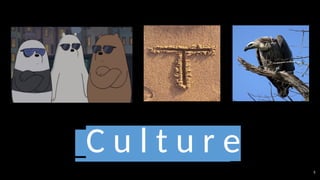
C u l t u r e
_ _ _ _ _ _ _ 6
_ _ _ _ _ _ _ 7
S o c i e t y
_ _ _ _ _ _ _ _ _ 8
_ _ _ _ _ _ _ _ _ 9
E v o l u t i o n
The Nature, Goals and
Perspective of
Anthropology
10
11
Nature
of
ANTHROPOLOGY
• ā€œAnthroposā€ means
ā€œhumankindā€
• ā€œLogosā€ means ā€œstudyā€
• Anthropology is the study
of humankind.
• It is the study of
people throughout the
world, their
evolutionary history,
how they behave,
adapt to different
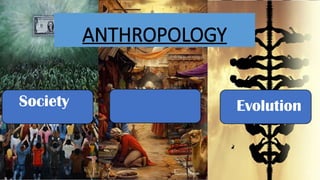
Society Evolution
Culture
ANTHROPOLOGY
12
13
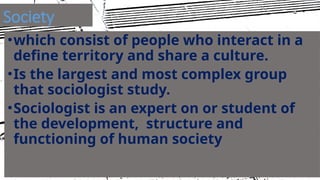
Society
•which consist of people who interact in a
define territory and share a culture.
•Is the largest and most complex group
that sociologist study.
•Sociologist is an expert on or student of
the development, structure and
functioning of human society
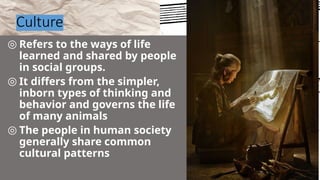
Culture
ā—Ž Refers to the ways of life
learned and shared by people
in social groups.
ā—Ž It differs from the simpler,
inborn types of thinking and
behavior and governs the life
of many animals
ā—Ž The people in human society
generally share common
cultural patterns
14
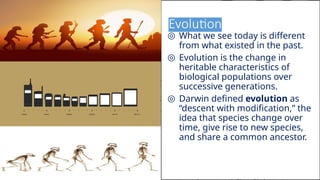
Evolution
ā—Ž What we see today is different
from what existed in the past.
ā—Ž Evolution is the change in
heritable characteristics of
biological populations over
successive generations.
ā—Ž Darwin defined evolution as
ā€œdescent with modification,ā€ the
idea that species change over
time, give rise to new species,
and share a common ancestor.
15
Goals of
Anthropology
•Anthropology aimed to
understand our
evolutionary origin, our
distinctiveness as a
species, and the great
diversity in our forms of
social existence across
the world and through
time.
16
Goals of
Anthropology
providing a deep
understanding of humans,
both past and present
analyzing and organizing
the knowledge gained and
making it accessible
engaging in the practical
application of anthropology
to various areas of
contemporary human
behavior.
17
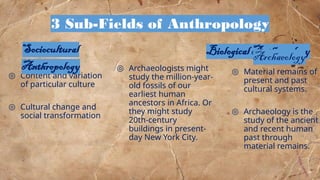
ā—Ž Content and variation
of particular culture
ā—Ž Cultural change and
social transformation
ā—Ž Material remains of
present and past
cultural systems.
ā—Ž Archaeology is the
study of the ancient
and recent human
past through
material remains.
ā—Ž Archaeologists might
study the million-year-
old fossils of our
earliest human
ancestors in Africa. Or
they might study
20th-century
buildings in present-
day New York City.
3 Sub-Fields of Anthropology
18
Sociocultural
Anthropology
Biological Anthropology
Archaeology
ā—Ž Sociocultural anthropology
is the study of human
individuals and societies,
their behaviors and beliefs,
and everything about
human culture.
ā—Ž Aspects of human evolutionary biology
ā—Ž Biological anthropology deals with the
evolution of humans, their variability, and
adaptations to environmental stresses.
3 Sub-Fields of Anthropology
19
Biological Anthropology
1. What we see in the past is the same in what we see in
the present.
2. The key strength of anthropology as a discipline of
social science is its holistic to the study of humans.
3. Anthropology is the study of people throughout the
world, their evolutionary history, how they behave,
adapt to different environments, communicate and
socialize with one another.
True or False
20
True or False
21
4. Sociologist is an expert on or student of
the development, structure and
functioning of human society.
5. There are 5 key concept of
anthropology and that is biological,
society, culture, archeologist and

Lesson 1 Anthropology presentation week 1

  • 1.
  • 2.
  • 3.
    _ _ __ _ _ _ _ _ _ _ _ 3 A n t h r o p o l o g y
  • 4.
  • 5.
    _ _ __ _ _ _ 5 C u l t u r e
  • 6.
    _ _ __ _ _ _ 6
  • 7.
    _ _ __ _ _ _ 7 S o c i e t y
  • 8.
    _ _ __ _ _ _ _ _ 8
  • 9.
    _ _ __ _ _ _ _ _ 9 E v o l u t i o n
  • 10.
    The Nature, Goalsand Perspective of Anthropology 10
  • 11.
    11 Nature of ANTHROPOLOGY • ā€œAnthroposā€ means ā€œhumankindā€ ā€¢ā€œLogosā€ means ā€œstudyā€ • Anthropology is the study of humankind. • It is the study of people throughout the world, their evolutionary history, how they behave, adapt to different
  • 12.
  • 13.
    13 Society •which consist ofpeople who interact in a define territory and share a culture. •Is the largest and most complex group that sociologist study. •Sociologist is an expert on or student of the development, structure and functioning of human society
  • 14.
    Culture ā—Ž Refers tothe ways of life learned and shared by people in social groups. ā—Ž It differs from the simpler, inborn types of thinking and behavior and governs the life of many animals ā—Ž The people in human society generally share common cultural patterns 14
  • 15.
    Evolution ā—Ž What wesee today is different from what existed in the past. ā—Ž Evolution is the change in heritable characteristics of biological populations over successive generations. ā—Ž Darwin defined evolution as ā€œdescent with modification,ā€ the idea that species change over time, give rise to new species, and share a common ancestor. 15
  • 16.
    Goals of Anthropology •Anthropology aimedto understand our evolutionary origin, our distinctiveness as a species, and the great diversity in our forms of social existence across the world and through time. 16
  • 17.
    Goals of Anthropology providing adeep understanding of humans, both past and present analyzing and organizing the knowledge gained and making it accessible engaging in the practical application of anthropology to various areas of contemporary human behavior. 17
  • 18.
    ā—Ž Content andvariation of particular culture ā—Ž Cultural change and social transformation ā—Ž Material remains of present and past cultural systems. ā—Ž Archaeology is the study of the ancient and recent human past through material remains. ā—Ž Archaeologists might study the million-year- old fossils of our earliest human ancestors in Africa. Or they might study 20th-century buildings in present- day New York City. 3 Sub-Fields of Anthropology 18 Sociocultural Anthropology Biological Anthropology Archaeology
  • 19.
    ā—Ž Sociocultural anthropology isthe study of human individuals and societies, their behaviors and beliefs, and everything about human culture. ā—Ž Aspects of human evolutionary biology ā—Ž Biological anthropology deals with the evolution of humans, their variability, and adaptations to environmental stresses. 3 Sub-Fields of Anthropology 19 Biological Anthropology
  • 20.
    1. What wesee in the past is the same in what we see in the present. 2. The key strength of anthropology as a discipline of social science is its holistic to the study of humans. 3. Anthropology is the study of people throughout the world, their evolutionary history, how they behave, adapt to different environments, communicate and socialize with one another. True or False 20
  • 21.
    True or False 21 4.Sociologist is an expert on or student of the development, structure and functioning of human society. 5. There are 5 key concept of anthropology and that is biological, society, culture, archeologist and