Camera Angles/POVs
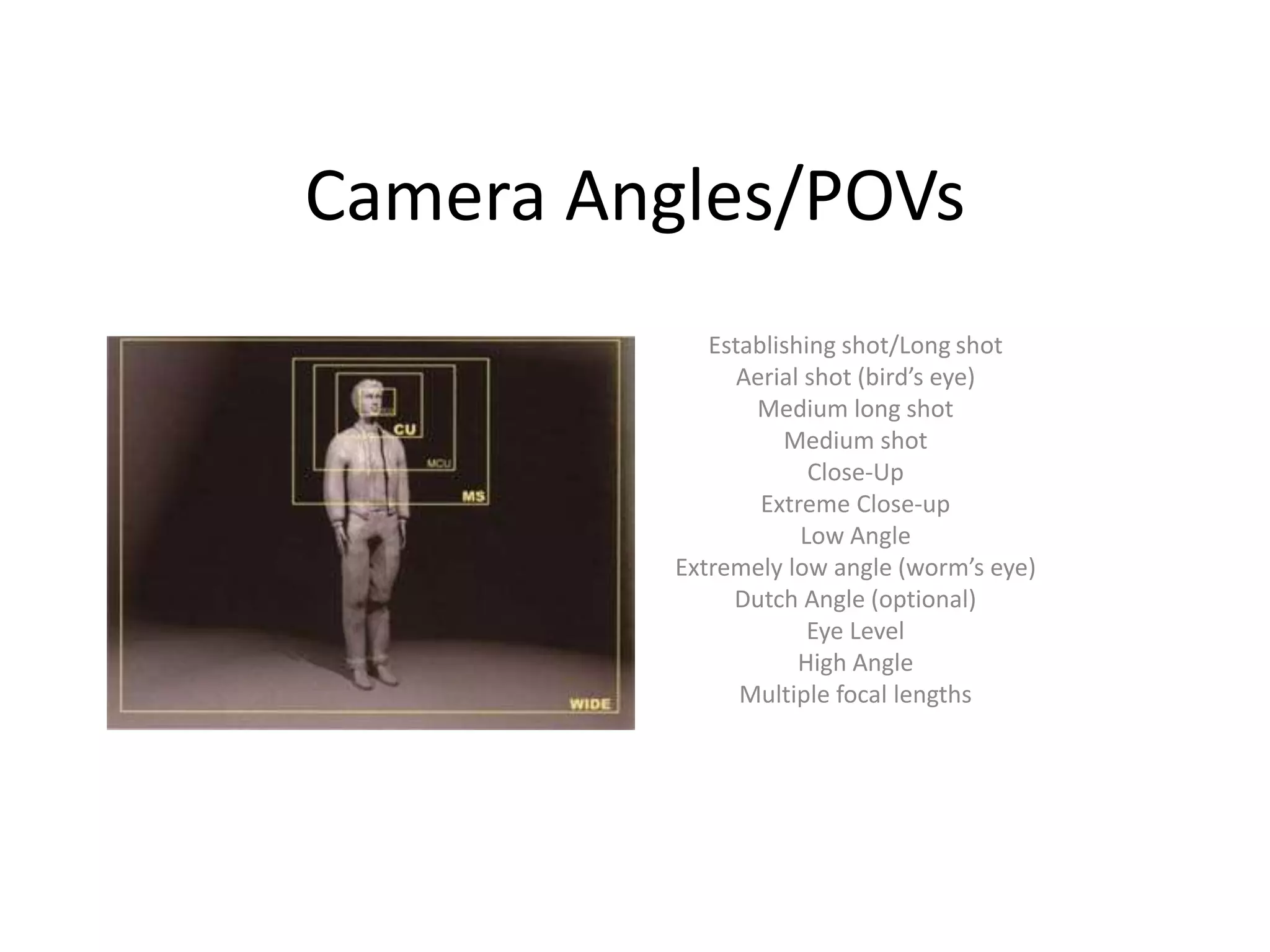
Establishing shot/Long shot
Aerial shot (bird’s eye)
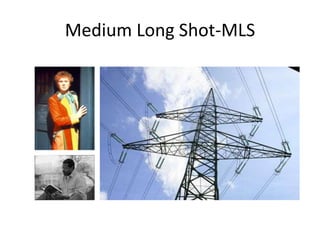
Medium long shot
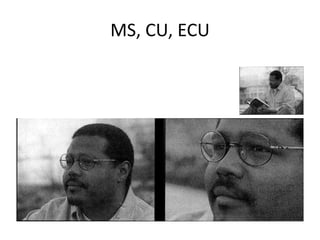
Medium shot
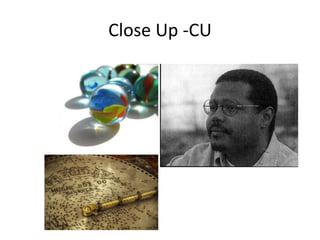
Close-Up
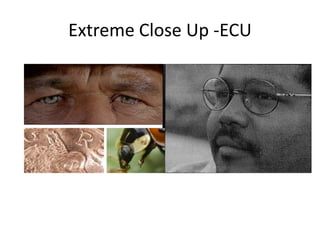
Extreme Close-up
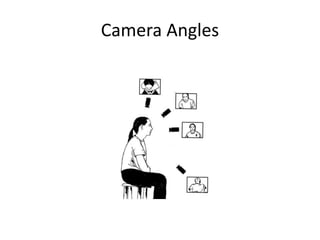
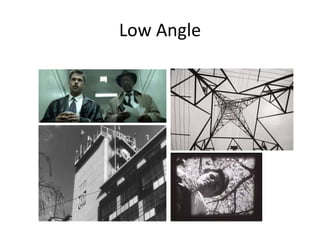
Low Angle
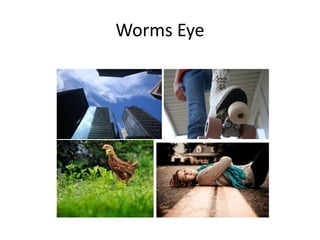
Extremely low angle (worm’s eye)
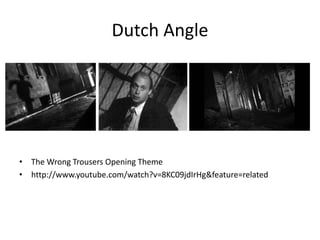
Dutch Angle (optional)
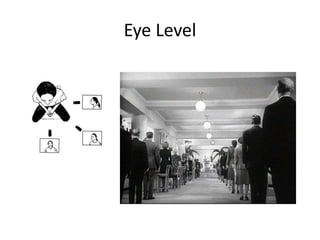
Eye Level
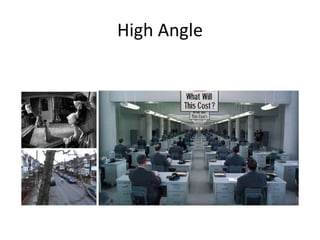
High Angle
Multiple focal lengths
POV: ECU, Arial, MLS to Birds Eye
• Wings of Desire
• http://www.youtube.com/watch?v=13kPsa1j8
I8&feature=related
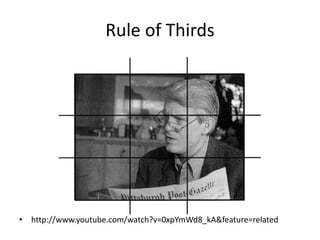
Rule of Thirds
• http://www.youtube.com/watch?v=0xpYmWd8_kA&feature=related
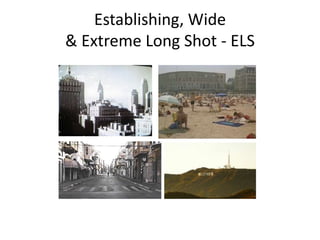
Establishing, Wide
& Extreme Long Shot - ELS
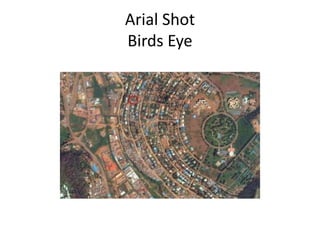
Arial Shot
Birds Eye
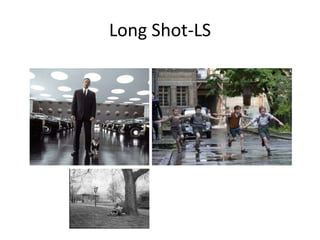
Long Shot-LS
Arial Shot/Birds Eye POV
Establishing Shot
Long Shot
• LES PARAPLUIES DE CHERBOURG
• http://www.youtube.com/watch?v=3JS4JMY0
JWM
Medium Long Shot-MLS
Close Up -CU
Extreme Close Up -ECU
Camera Angles
Low Angle
Dutch Angle
• The Wrong Trousers Opening Theme
• http://www.youtube.com/watch?v=8KC09jdIrHg&feature=related
Worms Eye
Eye Level
Eye Level
High Angle
Multiple Focal length
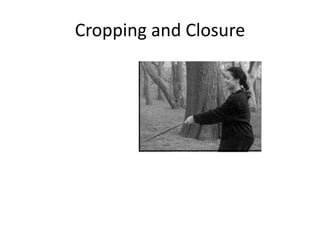
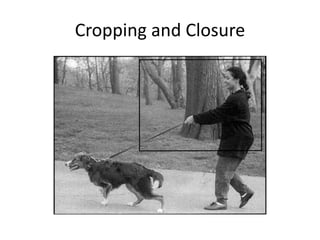
Cropping and Closure
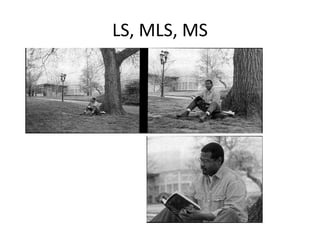
LS, MLS, MS
MS, CU, ECU
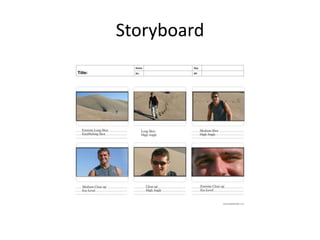
Storyboard

Lecture: Camera Angles/POV

Editor's Notes

  • #3 Extreme close up, cut to extreme arial view. Medium Long shot to Birds Eye. Eyeline matches to an extremely low angle.
  • #4 In order for a composition to be dynamic over time, the rule of thirds is similar to making something asymmetrical and balanced over time, the goal is to keep the focal point moving over time according to these intersections. This create an active visual rhythm and avoids passive, static shots.
  • #5 These are the big picture shots, they offer the audience the most context possible from a visual perspective. Establishing shots, establish context, scene, narrative, and are often the first shot in a film. Therefore, establishing shots are often ELS.
  • #6 Arial shot refers to shots taken from the air. A bird's-eye, or gods eye, shot refers to a shot looking directly down on the subject. This shot can be used to give an overall establishing shot of a scene, or to emphasise the smallness or insignificance of the subjects.
  • #7 Long shots have full body view and some context.
  • #10 Recognition.
  • #11 Extreme closeup you can see the humanity, the intensity of the person, material, texture, etc.
  • #15 This may or may not be a low angle.
  • #19 Use the manual focus to shift the audiences’ eye from subject to subject during one static shot.
  • #22 Long Shot