Microbial Factories
Microbial factoriesrefer to microorganisms—mainly bacteria, yeasts,
or fungi that are engineered or optimized to produce valuable
industrial compounds such as biofuels, pharmaceuticals, enzymes, and
chemicals.
Definition:
A microbial factory is a genetically modified or naturally efficient
microorganism designed to synthesize and secrete industrially
important products using biological processes under controlled
conditions.
2.
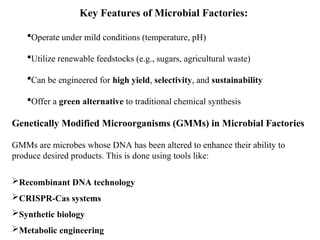
Key Features ofMicrobial Factories:
Operate under mild conditions (temperature, pH)
Utilize renewable feedstocks (e.g., sugars, agricultural waste)
Can be engineered for high yield, selectivity, and sustainability
Offer a green alternative to traditional chemical synthesis
Genetically Modified Microorganisms (GMMs) in Microbial Factories
GMMs are microbes whose DNA has been altered to enhance their ability to
produce desired products. This is done using tools like:
Recombinant DNA technology
CRISPR-Cas systems
Synthetic biology
Metabolic engineering
3.
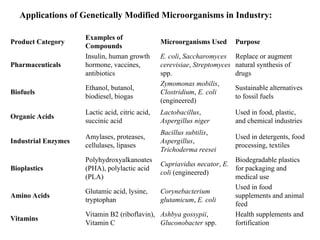
Product Category
Examples of
Compounds
MicroorganismsUsed Purpose
Pharmaceuticals
Insulin, human growth
hormone, vaccines,
antibiotics
E. coli, Saccharomyces
cerevisiae, Streptomyces
spp.
Replace or augment
natural synthesis of
drugs
Biofuels
Ethanol, butanol,
biodiesel, biogas
Zymomonas mobilis,
Clostridium, E. coli
(engineered)
Sustainable alternatives
to fossil fuels
Organic Acids
Lactic acid, citric acid,
succinic acid
Lactobacillus,
Aspergillus niger
Used in food, plastic,
and chemical industries
Industrial Enzymes
Amylases, proteases,
cellulases, lipases
Bacillus subtilis,
Aspergillus,
Trichoderma reesei
Used in detergents, food
processing, textiles
Bioplastics
Polyhydroxyalkanoates
(PHA), polylactic acid
(PLA)
Cupriavidus necator, E.
coli (engineered)
Biodegradable plastics
for packaging and
medical use
Amino Acids
Glutamic acid, lysine,
tryptophan
Corynebacterium
glutamicum, E. coli
Used in food
supplements and animal
feed
Vitamins
Vitamin B2 (riboflavin),
Vitamin C
Ashbya gossypii,
Gluconobacter spp.
Health supplements and
fortification
Applications of Genetically Modified Microorganisms in Industry:
4.
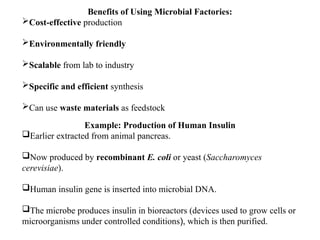
Benefits of UsingMicrobial Factories:
Cost-effective production
Environmentally friendly
Scalable from lab to industry
Specific and efficient synthesis
Can use waste materials as feedstock
Example: Production of Human Insulin
Earlier extracted from animal pancreas.
Now produced by recombinant E. coli or yeast (Saccharomyces
cerevisiae).
Human insulin gene is inserted into microbial DNA.
The microbe produces insulin in bioreactors (devices used to grow cells or
microorganisms under controlled conditions), which is then purified.
5.
Conclusion:
Microbial factories, especiallygenetically engineered ones,
are critical to modern industrial biotechnology.
They provide sustainable and efficient ways to produce a
wide range of biologically and economically valuable
products.



![谷歌留痕技术 [ 𝙩𝙤𝙥 𝟮𝟯𝟯. 𝙘 𝙤𝙢 ]](https://cdn.slidesharecdn.com/ss_thumbnails/top233-260130174328-3833018c-thumbnail.jpg?width=640&height=640&fit=bounds)


