Chapter 1
Introduction to Quality

     Ms. Farwida Tariq
History

The age of Craftsmanship
Manufactures directly dealing with customers

Development of interchangeable component products
       - The Blanc’s muskets


The Early 20th Century
Separation of planning from Execution (Frederick W. Taylor)
         Quality by inspection
                  Quality departments
                           SQC (Bell Telephone Laboratories- 1920)
Early History

 Post War II
 Shortage of goods- Quality not a priority

 SQC introduced in Japan by Juran and Deming


                              - 20 years -


        Kaizen helps Japan beat West in Quality and
               penetrate in Western Markets
Early History


The US Quality Revolution

           “If Japan can … Why Can’t We?”


   Government safety regulations
   Consumer Products Safety Commission
   Product-liability judgments
Early History

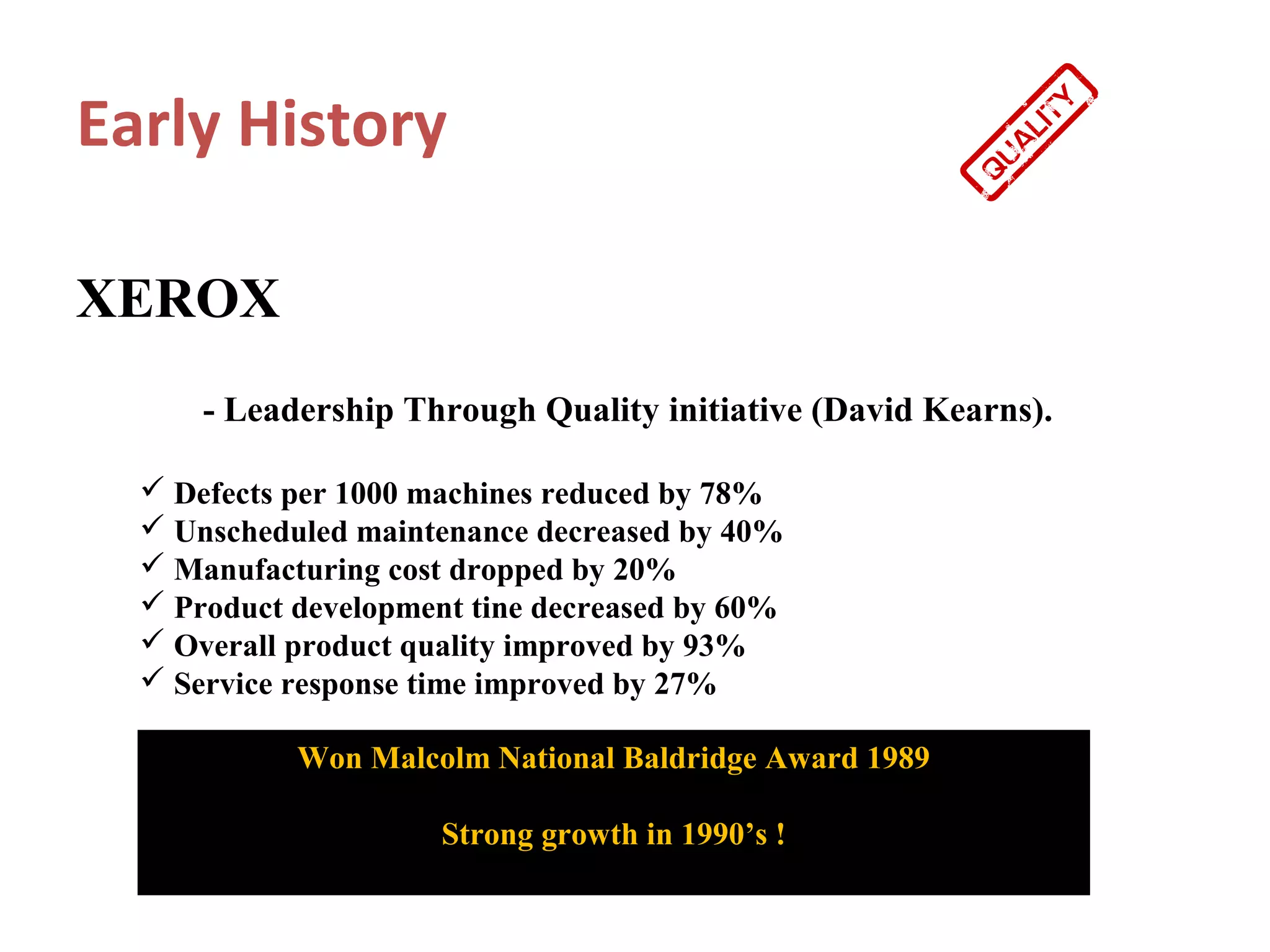
XEROX
      - Leadership Through Quality initiative (David Kearns).

   Defects per 1000 machines reduced by 78%
   Unscheduled maintenance decreased by 40%
   Manufacturing cost dropped by 20%
   Product development tine decreased by 60%
   Overall product quality improved by 93%
   Service response time improved by 27%

            Won Malcolm National Baldridge Award 1989

                      Strong growth in 1990’s !
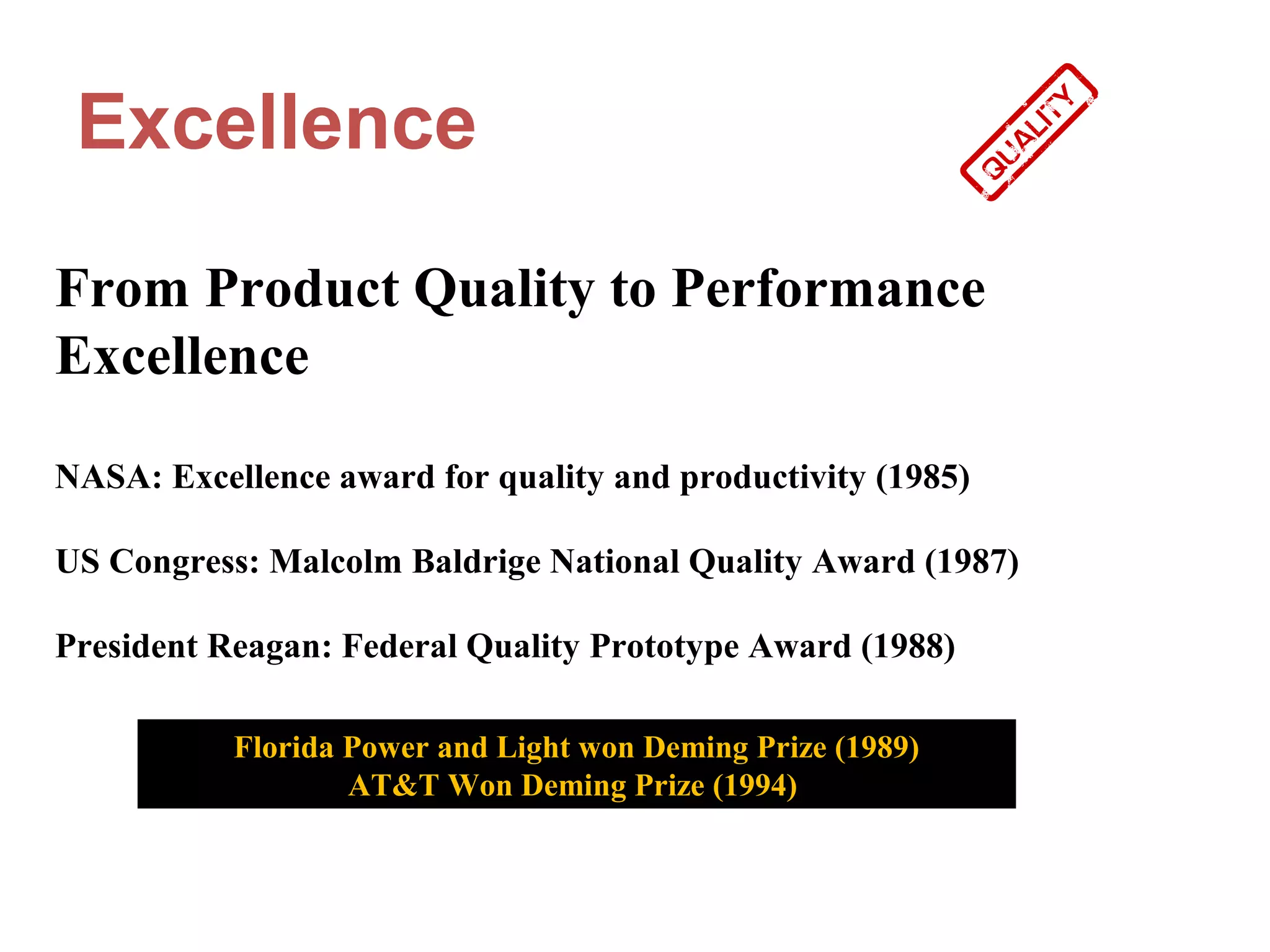
Excellence

From Product Quality to Performance
Excellence

NASA: Excellence award for quality and productivity (1985)

US Congress: Malcolm Baldrige National Quality Award (1987)

President Reagan: Federal Quality Prototype Award (1988)

           Florida Power and Light won Deming Prize (1989)
                   AT&T Won Deming Prize (1994)
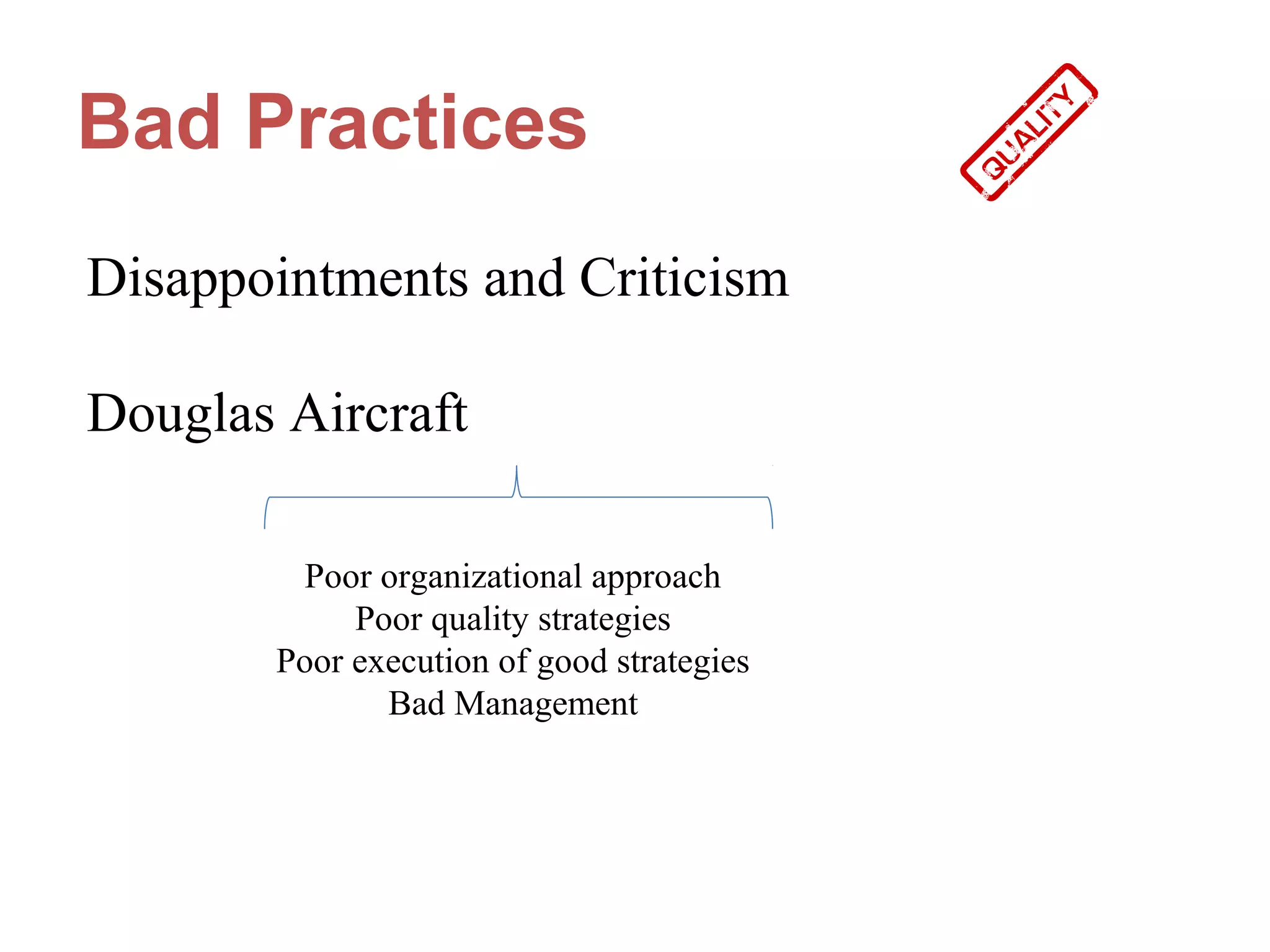
Bad Practices
Disappointments and Criticism

Douglas Aircraft

        Poor organizational approach
            Poor quality strategies
       Poor execution of good strategies
              Bad Management
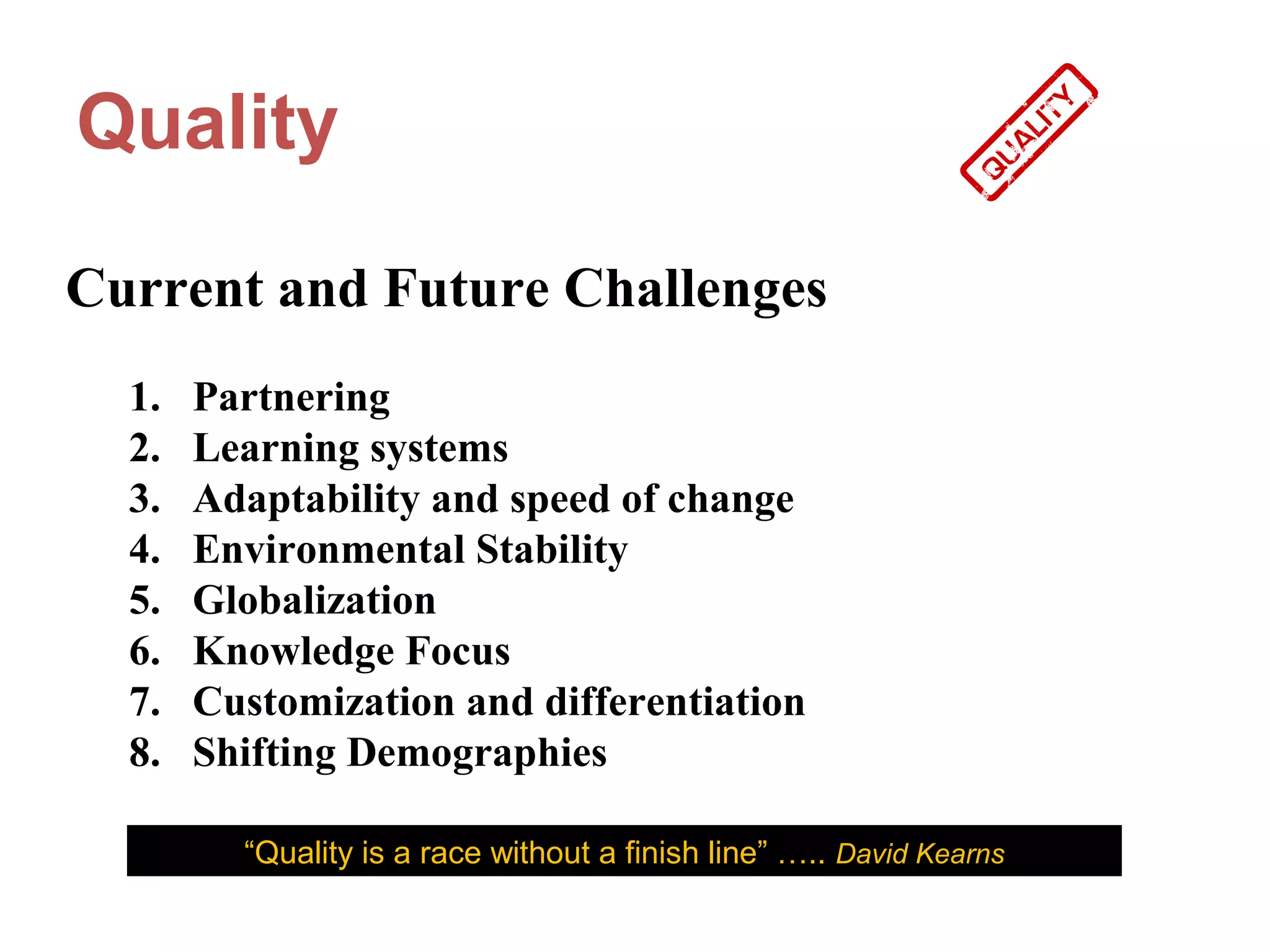
Quality

Current and Future Challenges
  1.   Partnering
  2.   Learning systems
  3.   Adaptability and speed of change
  4.   Environmental Stability
  5.   Globalization
  6.   Knowledge Focus
  7.   Customization and differentiation
  8.   Shifting Demographies

         “Quality is a race without a finish line” ….. David Kearns
Defining Quality


        What is Quality?
Defining Quality

   Perfection
   Consistency
   Eliminating waste
   Speed of delivery
   Compliance with policies and procedure
   Providing a good, usable product
   Doing it right the first time
   Delighting or pleasing costumers
   Total customer service and satisfaction
Defining Quality

Judgmental Perspective
Transcendent/ superior (Absolute recognizable)

        - Rolex watches, BMW, Lexus

Excellence (Abstract/ subjective)
Defining Quality

Product-Based Perspective
Function of some measurable variables
       No. of knots/sq in
       No. of dots/in
       No. of cylinders in an engine


      Mistakenly assumed to be related to price!
Quality

User-Based Perspective

What a customer wants!

Fitness for intended use.
         Service conditions, Environment etc.
Defining Quality

Value-Based Perspective

Usefulness or satisfaction Vs price
(Value pricing)

Better performance for comparable price
       - internet facilities


     What about purchases based on lowest quotations!
Quality

Manufacturing-Based Perspective

Conformance to specifications (measurable)
     - targets, tolerances,
     - dimensions, taste, experience
Quality

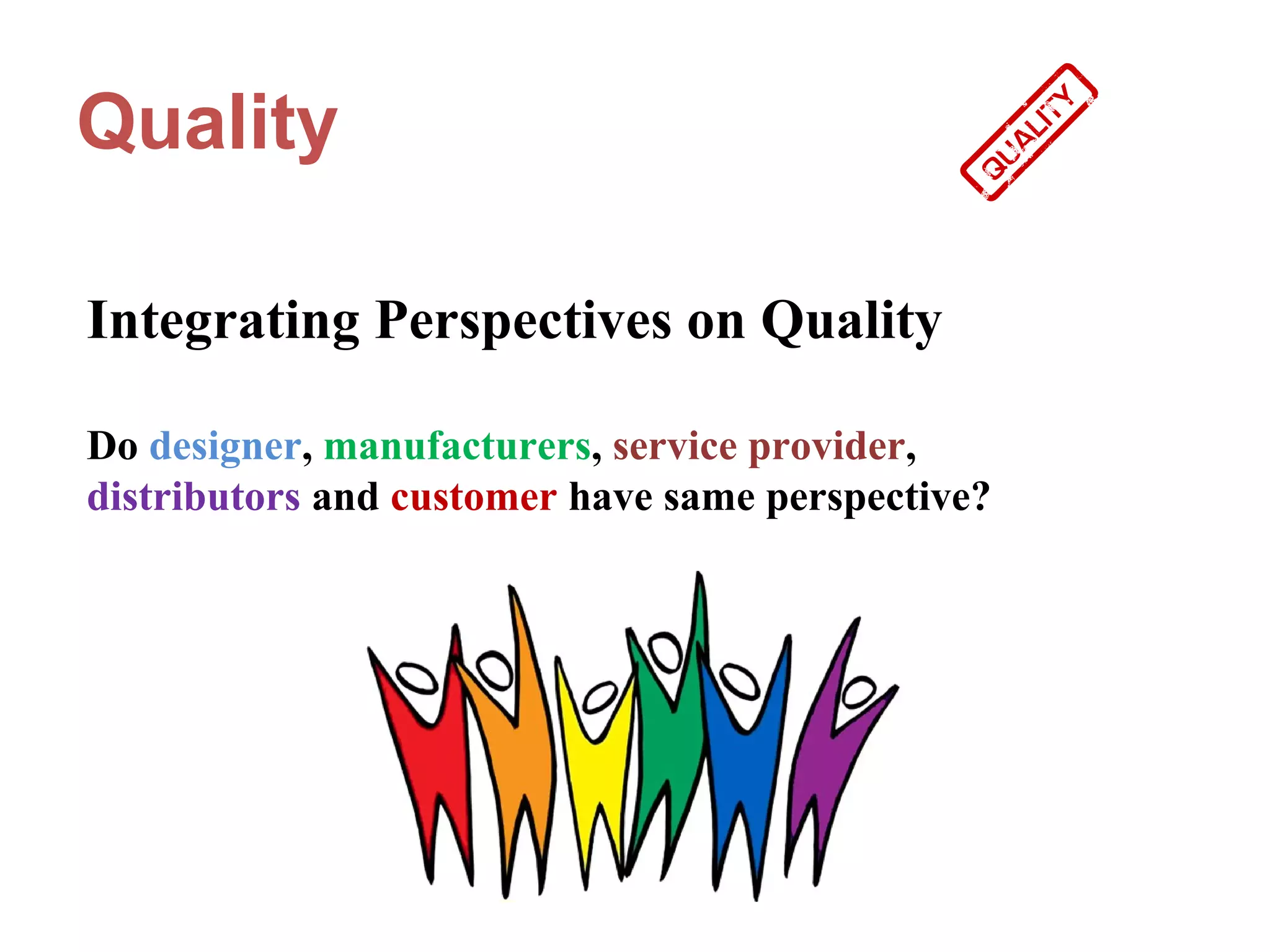
Integrating Perspectives on Quality

Do designer, manufacturers, service provider,
distributors and customer have same perspective?
Quality

Costumer Driven Quality
        Quality is meeting or exceeding customer expectations

Customers, Consumers and Suppliers
       Internal Customers
       External Customers

      “Our costumers are intelligent: they expect us continuously
      evolve to meet their ever-changing needs. They can’t afford to
      have a thousand mediocre suppliers in today’s competitive
      environment. They want a few exceptional ones”
                                                            CEO Fujitsu
Quality

Total Quality Control
- Total System approach

Total quality is a people-focused management system that aims at
continual increase in costumer satisfaction at continual lower real
cost.

Horizontally and vertically integrated approach stressing learning
and adaptation to continual change. Unyielding and continually
improving effort.
Total Quality

Principles of Total Quality
     1.   Customer & stakeholder focus.
     2.   Everyone's participation
     3.   Continual improvement and learning
Total Quality

Customer & Stakeholder Focus
Beyond merely meeting specifications
       Delighting the customer
External costumers are important
      Internal customers are equally important
Knowledge, skills, creativity are key to success.
      Motivation, recognition of employees.
Total Quality

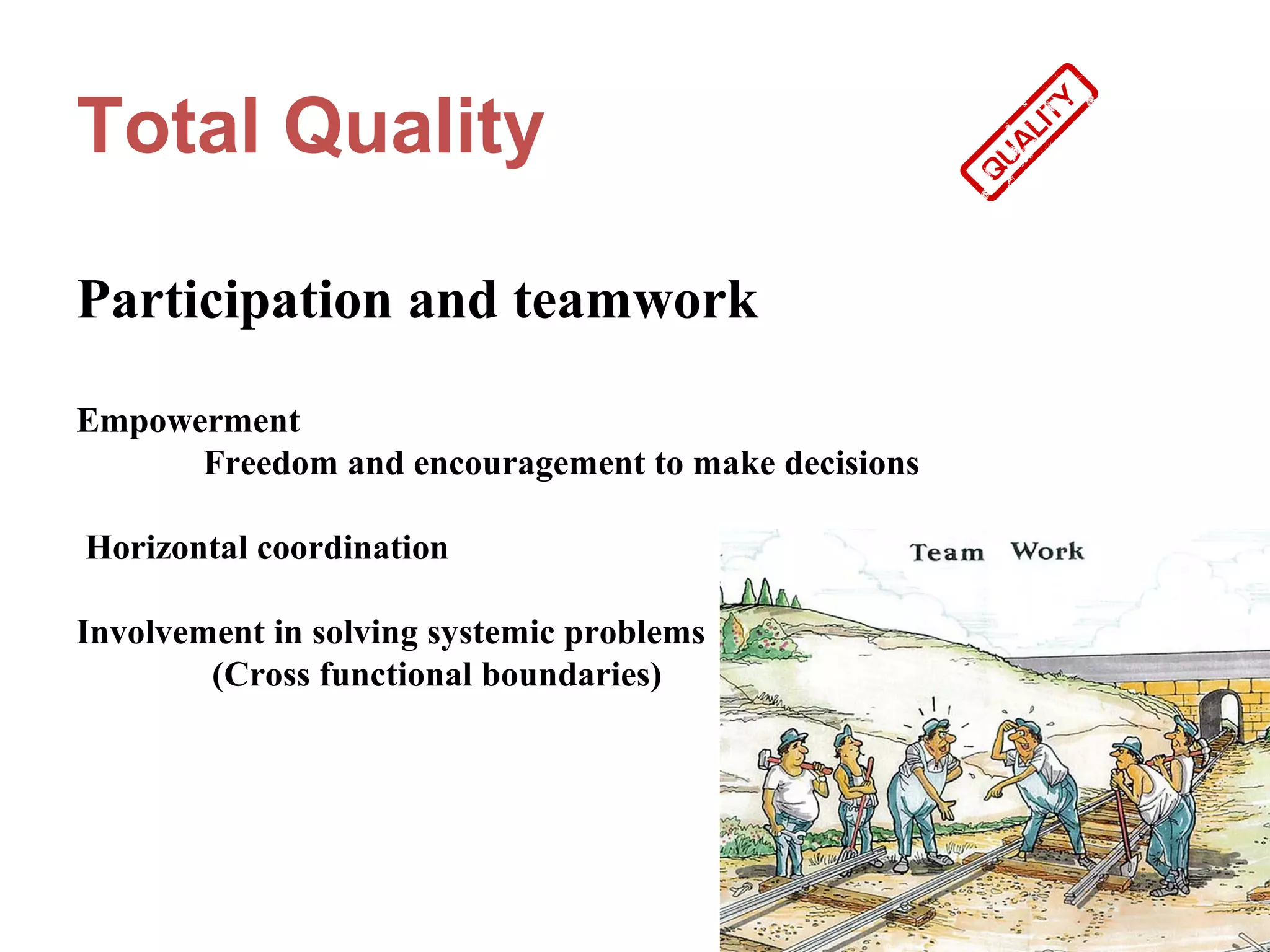
Participation and teamwork

Empowerment
      Freedom and encouragement to make decisions

Horizontal coordination

Involvement in solving systemic problems
        (Cross functional boundaries)
Total Quality

Process Focus and Continual Improvement

1.Enhancing value through improved products
2.Reducing defects, wastes etc.
3.Increasing productivity and effectiveness
4.Improving responsiveness

Improvement depends on learning.
             1.   Planning
             2.   Execution
             3.   Assessment of progress
             4.   Revision of plans
Quality

Quality and Competitive Advantage
        - Ability to achieve market superiority

Characteristics
   1.   Customer need driven
   2.   Contributes to success of the business
   3.   Matches companies unique opportunities
   4.   Difficult to copy
   5.   Potential of further improvement
   6.   Provides direction and motivation to organization

    Product quality provides profitability due to larger market
                     share and premium prices.

Lect 1

  • 2.
    Chapter 1 Introduction toQuality Ms. Farwida Tariq
  • 3.
    History The age ofCraftsmanship Manufactures directly dealing with customers Development of interchangeable component products - The Blanc’s muskets The Early 20th Century Separation of planning from Execution (Frederick W. Taylor) Quality by inspection Quality departments SQC (Bell Telephone Laboratories- 1920)
  • 4.
    Early History PostWar II Shortage of goods- Quality not a priority SQC introduced in Japan by Juran and Deming - 20 years - Kaizen helps Japan beat West in Quality and penetrate in Western Markets
  • 5.
    Early History The USQuality Revolution “If Japan can … Why Can’t We?”  Government safety regulations  Consumer Products Safety Commission  Product-liability judgments
  • 6.
    Early History XEROX - Leadership Through Quality initiative (David Kearns).  Defects per 1000 machines reduced by 78%  Unscheduled maintenance decreased by 40%  Manufacturing cost dropped by 20%  Product development tine decreased by 60%  Overall product quality improved by 93%  Service response time improved by 27% Won Malcolm National Baldridge Award 1989 Strong growth in 1990’s !
  • 7.
    Excellence From Product Qualityto Performance Excellence NASA: Excellence award for quality and productivity (1985) US Congress: Malcolm Baldrige National Quality Award (1987) President Reagan: Federal Quality Prototype Award (1988) Florida Power and Light won Deming Prize (1989) AT&T Won Deming Prize (1994)
  • 8.
    Bad Practices Disappointments andCriticism Douglas Aircraft Poor organizational approach Poor quality strategies Poor execution of good strategies Bad Management
  • 9.
    Quality Current and FutureChallenges 1. Partnering 2. Learning systems 3. Adaptability and speed of change 4. Environmental Stability 5. Globalization 6. Knowledge Focus 7. Customization and differentiation 8. Shifting Demographies “Quality is a race without a finish line” ….. David Kearns
  • 10.
    Defining Quality What is Quality?
  • 11.
    Defining Quality Perfection Consistency Eliminating waste Speed of delivery Compliance with policies and procedure Providing a good, usable product Doing it right the first time Delighting or pleasing costumers Total customer service and satisfaction
  • 12.
    Defining Quality Judgmental Perspective Transcendent/superior (Absolute recognizable) - Rolex watches, BMW, Lexus Excellence (Abstract/ subjective)
  • 13.
    Defining Quality Product-Based Perspective Functionof some measurable variables  No. of knots/sq in  No. of dots/in  No. of cylinders in an engine Mistakenly assumed to be related to price!
  • 14.
    Quality User-Based Perspective What acustomer wants! Fitness for intended use. Service conditions, Environment etc.
  • 15.
    Defining Quality Value-Based Perspective Usefulnessor satisfaction Vs price (Value pricing) Better performance for comparable price - internet facilities What about purchases based on lowest quotations!
  • 16.
    Quality Manufacturing-Based Perspective Conformance tospecifications (measurable) - targets, tolerances, - dimensions, taste, experience
  • 17.
    Quality Integrating Perspectives onQuality Do designer, manufacturers, service provider, distributors and customer have same perspective?
  • 18.
    Quality Costumer Driven Quality Quality is meeting or exceeding customer expectations Customers, Consumers and Suppliers  Internal Customers  External Customers “Our costumers are intelligent: they expect us continuously evolve to meet their ever-changing needs. They can’t afford to have a thousand mediocre suppliers in today’s competitive environment. They want a few exceptional ones” CEO Fujitsu
  • 19.
    Quality Total Quality Control -Total System approach Total quality is a people-focused management system that aims at continual increase in costumer satisfaction at continual lower real cost. Horizontally and vertically integrated approach stressing learning and adaptation to continual change. Unyielding and continually improving effort.
  • 20.
    Total Quality Principles ofTotal Quality 1. Customer & stakeholder focus. 2. Everyone's participation 3. Continual improvement and learning
  • 21.
    Total Quality Customer &Stakeholder Focus Beyond merely meeting specifications Delighting the customer External costumers are important Internal customers are equally important Knowledge, skills, creativity are key to success. Motivation, recognition of employees.
  • 22.
    Total Quality Participation andteamwork Empowerment Freedom and encouragement to make decisions Horizontal coordination Involvement in solving systemic problems (Cross functional boundaries)
  • 23.
    Total Quality Process Focusand Continual Improvement 1.Enhancing value through improved products 2.Reducing defects, wastes etc. 3.Increasing productivity and effectiveness 4.Improving responsiveness Improvement depends on learning. 1. Planning 2. Execution 3. Assessment of progress 4. Revision of plans
  • 24.
    Quality Quality and CompetitiveAdvantage - Ability to achieve market superiority Characteristics 1. Customer need driven 2. Contributes to success of the business 3. Matches companies unique opportunities 4. Difficult to copy 5. Potential of further improvement 6. Provides direction and motivation to organization Product quality provides profitability due to larger market share and premium prices.